Đề thi tham khảo ĐGNL Đại học Sư phạm TP.Hồ Chí Minh môn Tiếng Anh có đáp án - Đề số 3
80 câu hỏi
A. LISTENING
In this section of the test, you will have an opportunity to demonstrate your ability to understand conversations and talks in English. There are three parts in this section with special directions for each part. Answer all the questions on the basis of what is stated or implied by the speakers in the recording. The recording will be played ONCE only.
Part 1: Question 1-8
In this part, you will hear EIGHT short announcements or instructions. There is one question for each announcement or instruction. For each question, choose the right answer A, B, C or D. First you have some time to look at questions 1 to 8.
The reopening of a bridge
Traffic congestion
The repair of a bridge
Road restriction
Đáp án đúng là A
According to the report, what will happen tomorrow? (Theo báo cáo, điều gì sẽ xảy ra vào ngày mai?)
A. the reopening of a bridge (Việc mở cửa trở lại một cây cầu)
" Đúng, dựa vào thông tin “the Port Smith Bridge will reopen tomorrow morning” (cầu Port Smith sẽ mở cửa trở lại vào sáng mai).
B. traffic congestion (Tắc nghẽn giao thông)
" Sai, dựa trên thông tin “No congestion is reported” (Không có báo cáo về tình trạng tắc nghẽn). Ngoài ra, đây là tình trạng của sáng nay, không phải dự báo cho ngày mai.
C. the repair of a bridge (Việc sửa chữa một cây cầu)
" Sai. Việc sửa chữa này đã diễn ra trong suốt 2 tháng qua (“following 2 months of repairs”) và sắp kết thúc để cầu được mở lại vào ngày mai. Ngày mai không phải là ngày bắt đầu hay đang sửa chữa.
D. road restriction (Hạn chế đường bộ)
" Sai vì thông tin này không được nhắc đến trong bài nghe.
Bài nghe | Dịch bài nghe |
You're listening to the morning traffic report on J-49. No congestion is reported in the downtown area. Commuters will also be happy to know that the Port Smith Bridge will reopen tomorrow morning, following 2 months of repairs | Quý vị đang lắng nghe bản tin giao thông buổi sáng trên kênh J-49. Hiện tại không có báo cáo về tình trạng tắc nghẽn ở khu vực trung tâm thành phố. Những người đi làm cũng sẽ rất vui khi biết rằng cầu Port Smith sẽ mở cửa trở lại vào sáng mai, sau 2 tháng tiến hành sửa chữa. |
Progress reports
A list of announcements
Vacation schedules
Presentation ideas
Đáp án đúng là D
What are employees asked to give? (Nhân viên được yêu cầu đưa ra điều gì?)
A. Progress reports (Các bản báo cáo tiến độ)
" Sai. Người nói có đề cập đến tiến độ dự án (progress) và khen ngợi sự chăm chỉ của nhân viên, nhưng không hề yêu cầu họ phải nộp hay đưa ra các bản báo cáo tiến độ vào lúc này.
B. A list of announcements (Một danh sách các thông báo)
" Sai. Chính người nói là người đưa ra các thông báo (announcements), chứ không phải yêu cầu nhân viên làm việc này.
C. Vacation schedules (Lịch trình nghỉ phép)
" Sai vì thông tin này không được nhắc đến trong bài nghe.
D. Presentation ideas (Các ý tưởng cho bài thuyết trình)
" Đúng, dựa trên thông tin “please think of some ideas for our presentation next month. We will meet next week to discuss them.” (vui lòng suy nghĩ một số ý tưởng cho bài thuyết trình vào tháng tới. Chúng ta sẽ họp vào tuần tới để thảo luận về chúng).
Bài nghe | Dịch bài nghe |
Good afternoon. Thanks for coming to the meeting this morning. I have a few announcements. First, the director will be leaving tomorrow for Berlin and won't be back until next Tuesday. Also, our project is nearly two weeks ahead of schedule, thanks to your hard work. We still have a lot to do, but I am pleased with our progress. One last thing: please think of some ideas for our presentation next month. We will meet next week to discuss them. | Chào buổi chiều. Cảm ơn mọi người đã đến buổi họp sáng nay. Tôi có một vài thông báo. Đầu tiên, giám đốc sẽ đi Berlin vào ngày mai và sẽ không quay lại cho đến thứ Ba tới. Ngoài ra, dự án của chúng ta đang sớm hơn kế hoạch gần hai tuần, tất cả là nhờ vào sự làm việc chăm chỉ của các bạn. Chúng ta vẫn còn nhiều việc phải làm, nhưng tôi rất hài lòng với tiến độ hiện tại. Một điều cuối cùng: các bạn vui lòng suy nghĩ một số ý tưởng cho bài thuyết trình vào tháng tới. Chúng ta sẽ họp vào tuần tới để thảo luận về chúng. |
He is a professor of Literature
He designed ancient buildings.
He got this year's award.
He wrote books about literature
What is true about Dr. Johnson? (Điều gì đúng về Tiến sĩ Johnson?)
A. He is a professor of Literature (Ông ấy là giáo sư Văn học)
" Sai, dựa trên thông tin “a professor of history” (giáo sư lịch sử).
B. He designed ancient buildings (Ông ấy đã thiết kế các tòa nhà cổ đại)
" Sai. Dựa trên thông tin “expert in ancient building techniques” (một chuyên gia về kỹ thuật xây dựng cổ đại), ông không phải là người trực tiếp thiết kế chúng.
C. He got this year's award (Ông ấy đã nhận giải thưởng năm nay)
" Đúng, dựa trên thông tin “he's the winner of this year's Gailling Award” (ông là người chiến thắng giải thưởng Gailling năm nay).
D. He wrote books about literature (Ông ấy viết sách về văn học)
" Sai. Ông ấy có viết sách, nhưng chủ đề là về lịch sử và kiến trúc cổ đại (“his book, The Development of Pyramids”) (Sự phát triển của các Kim tự tháp), không phải về văn học.
Bài nghe | Dịch bài nghe |
This morning, we’ll be talking to Dr. Russell Johnson, a professor of history at Dale University. Dr. Johnson is an expert in ancient building techniques, and he's the winner of this year's Gailling Award for his book, The Development of Pyramids. | Sáng nay, chúng ta sẽ trò chuyện với Tiến sĩ Russell Johnson, giáo sư sử học tại Đại học Dale. Tiến sĩ Johnson là một chuyên gia về kỹ thuật xây dựng cổ đại và ông là người chiến thắng giải thưởng Gailling năm nay cho cuốn sách của mình mang tên “Sự phát triển của các Kim tự tháp”. |
Wear warm clothes
Drive carefully
Stay at home
Watch the local news
What does the speaker advise people to do tomorrow? (Người nói khuyên mọi người làm gì vào ngày mai?)
A. Wear warm clothes (Mặc quần áo ấm)
" Sai vì thông tin này không được nhắc đến trong bài nghe.
B. Drive carefully (Lái xe cẩn thận)
" Đúng, dựa trên thông tin “Roads may become quite slippery, so please drive carefully” (Đường xá có thể trở nên khá trơn trượt, vì vậy xin quý vị vui lòng lái xe cẩn thận).
C. Stay at home (Ở nhà)
" Sai vì thông tin này không được nhắc đến trong bài nghe.
D. Watch the local news (Xem tin tức địa phương)
" Sai. Người nói thông báo chương trình tiếp theo là tin tức địa phương (Coming up next is the local news), nhưng đây là một lời giới thiệu chương trình sắp phát sóng ngay bây giờ, không phải lời khuyên cho ngày mai.
Bài nghe | Dịch bài nghe |
Snowstorms are expected this afternoon, continuing through tomorrow. Temperatures are also expected to drop dramatically overnight. Roads 106 may become quite slippery, so please drive carefully. Coming up next is the local news with Amy Howard. | Dự báo sẽ có bão tuyết vào chiều nay và kéo dài cho đến hết ngày mai. Nhiệt độ cũng được dự báo sẽ giảm mạnh vào đêm nay. Đường xá có thể trở nên khá trơn trượt, vì vậy xin quý vị vui lòng lái xe cẩn thận. Tiếp theo ngay sau đây là chương trình tin tức địa phương với Amy Howard. |
A stock market forecast
Building construction
Increasing gas costs
Office maintenance
What is this news report about? (Bản tin này nói về điều gì?)
A. A stock market forecast (Dự báo thị trường chứng khoán)
" Sai. Mặc dù bản tin có nhắc đến các con số và chi phí tăng trưởng (risen by 20 percent), nhưng nó tập trung vào chi phí khí đốt tự nhiên chứ không bàn về các chỉ số chứng khoán hay dự báo tài chính thị trường.
B. Building construction (Việc xây dựng tòa nhà)
" Sai vì thông tin này không được nhắc đến trong bài nghe.
C. Increasing gas costs (Giá khí đốt đang gia tăng)
" Đúng. Đây là chủ đề xuyên suốt từ đầu đến cuối bài.
D. Office maintenance (Bảo trì văn phòng)
" Sai vì thông tin này không được nhắc đến trong bài nghe.
Bài nghe | Dịch bài nghe |
This is Andrea Martin reporting for KG-98 news. Local residents are feeling the effects of the rising cost of natural gas this winter. Many people are trying to find alternate methods of heating their homes because of the expense of gas. City officials report that the cost of natural gas has risen by nearly 20 percent in the past year. Energy experts say that the best way people can save on the cost of heating their homes is to make sure their houses are energy efficient. | Đây là Andrea Martin tường thuật cho bản tin KG-98. Người dân địa phương đang cảm nhận rõ những ảnh hưởng từ việc giá khí đốt tự nhiên tăng cao trong mùa đông năm nay. Nhiều người đang cố gắng tìm kiếm các phương pháp thay thế để sưởi ấm ngôi nhà của mình vì chi phí khí đốt quá đắt đỏ. Các quan chức thành phố báo cáo rằng giá khí đốt tự nhiên đã tăng gần 20% trong năm qua. Các chuyên gia năng lượng cho biết cách tốt nhất để người dân tiết kiệm chi phí sưởi ấm là đảm bảo ngôi nhà của họ sử dụng năng lượng hiệu quả |
In the morning
At noon
In the afternoon
In the evening
When will George attend a meeting? (George sẽ tham gia họp khi nào?)
A. In the morning (Vào buổi sáng)
" Đúng, dựa trên thông tin “I have a meeting this morning, so I will not be back until after lunch” (Tôi có một cuộc họp vào sáng nay, vì vậy tôi sẽ không quay lại cho đến sau giờ nghỉ trưa).
B. At noon (Vào buổi trưa)
" Sai. Thông tin “so I will not be back until after lunch” (tôi sẽ không quay lại cho đến sau giờ nghỉ trưa) cho biết buổi trưa là thời điểm anh ta quay trở lại.
C. In the afternoon (Vào buổi chiều)
" Sai. Dựa trên thông tin “Please call me sometime this afternoon” (Vui lòng gọi cho tôi vào lúc nào đó trong chiều nay), buổi chiều là khoảng thời gian George yêu cầu bà Austen gọi lại cho mình để quyết định việc cài phần mềm, không phải thời gian anh tham gia buổi họp.
D. In the evening (Vào buổi tối)
" Sai. Dựa vào thông tin “anytime before 5:00 this evening to pick it up” (bất cứ lúc nào trước 5 giờ chiều nay để lấy máy), buổi tối (trước 5 giờ) là mốc thời gian George nhắc đến như một thời hạn để bà Austen có thể ghé qua lấy máy tính đã sửa xong, không phải thời gian anh tham gia buổi họp.
Bài nghe | Dịch bài nghe |
Ms. Austen, this is George calling from Sun Valley Computer Repairs. I wanted to let you know that the repairs on your computer have been completed. You can drop by our store anytime before 5:00 this evening to pick it up. However, did find one small problem with your computer that we need to discuss. The anti-virus software on your computer is out of date and I suggest you let us install the newest version. I have a meeting this morning, so I will not be back until after lunch. Please call me sometime this afternoon, and let me know if you would like us to go ahead and install the new anti-virus. | Thưa bà Austen, tôi là George gọi đến từ Sun Valley Computer Repairs. Tôi muốn thông báo để bà biết rằng việc sửa chữa máy tính của bà đã hoàn tất. Bà có thể ghé qua cửa hàng của chúng tôi bất cứ lúc nào trước 5 giờ chiều nay để lấy máy. Tuy nhiên, chúng tôi phát hiện một vấn đề nhỏ với máy tính mà chúng ta cần thảo luận. Phần mềm diệt virus trên máy của bà đã lỗi thời và tôi khuyên bà nên để chúng tôi cài đặt phiên bản mới nhất. Tôi có cuộc họp vào sáng nay, vì vậy tôi sẽ không quay lại cho đến sau giờ nghỉ trưa. Vui lòng gọi cho tôi vào lúc nào đó trong chiều nay và cho tôi biết liệu bà có muốn chúng tôi tiến hành cài đặt phần mềm diệt virus mới hay không. |
Advice about changes in health
Changes in medical industry
Medical industry and its coverage
How to improve health
What is the topic of the show? (Chủ đề của chương trình là gì?)
A. Advice about changes in health (Lời khuyên về những thay đổi của sức khỏe)
" Sai vì thông tin về “advice” không được đề cập trong bài nghe.
B. Changes in medical industry (Những thay đổi trong ngành y tế)
" Sai vì chưa đủ nội dung. Đây là một trong hai nội dung chính được nhắc tới.
C. Medical industry and its coverage (Ngành y tế và bảo hiểm y tế)
" Đúng, dựa trên thông tin “He'll talk about changes in the medical industry over the past years. He'll also discuss his opinions of medical coverage in this country” (Ông ấy sẽ nói về những thay đổi trong ngành y tế trong những năm vừa qua. Ông cũng sẽ thảo luận về những quan điểm của mình đối với bảo hiểm y tế tại quốc gia này).
D. How to improve health (Cách để cải thiện sức khỏe)
" Sai vì thông tin này không được đề cập trong bài nghe.
Bài nghe | Dịch bài nghe |
On today's show, we'll be speaking with Dr. Mark Hamid, a director of the Northshore Medical Center. He'll talk about changes in the medical industry over the past years. He'll also discuss his opinions of medical coverage in this country. | Trong chương trình hôm nay, chúng ta sẽ trò chuyện với Tiến sĩ Mark Hamid, giám đốc của Trung tâm Y tế Northshore. Ông ấy sẽ nói về những thay đổi trong ngành y tế trong những năm vừa qua. Ông cũng sẽ thảo luận về những quan điểm của mình đối với bảo hiểm y tế tại quốc gia này. |
The reopening of a bridge
Traffic congestion
The repair of a bridge
Road restriction
According to the report, what will happen tomorrow? (Theo bản tin, điều gì sẽ xảy ra vào ngày mai?)
A. The reopening of a bridge (Việc mở lại một cây cầu)
" Sai vì thông tin này không được đề cập trong bài nghe.
B. Traffic congestion (Tắc nghẽn giao thông)
" Đúng, dựa trên thông tin “…. because of the congestion, progress is slow. The storm is expected to continue until tomorrow afternoon, so we don’t think the conditions will better anytime soon” (do tình trạng tắc nghẽn, tiến độ diễn ra rất chậm. Cơn bão dự kiến sẽ tiếp tục kéo dài cho đến chiều mai, vì vậy chúng tôi không nghĩ rằng tình hình sẽ khá hơn sớm).
C. The repair of a bridge (Việc sửa chữa một cây cầu)
" Sai vì thông tin này không được đề cập trong bài nghe.
D. Road restriction (Hạn chế đường bộ)
" Sai vì thông tin này không được đề cập trong bài nghe.
Bài nghe | Dịch bài nghe |
It’s 7 o'clock and this is the morning traffic report on WKPR radio. The continuing snowstorm has caused a lot of traffic congestion this morning. Traffic has stopped completely on Pandosy Avenue, so take Gershmar Road if you’re going to the city center. The transportation department reports that they are working on clearing the snow but because of the congestion, progress is slow. The storm is expected to continue until tomorrow afternoon, so we don’t think the conditions will better anytime soon. Stay tuned for our next traffic report at 7:30. | Bây giờ là 7 giờ và đây là bản tin giao thông buổi sáng trên đài phát thanh WKPR. Trận bão tuyết kéo dài đã gây ra tình trạng tắc nghẽn giao thông nghiêm trọng trong sáng nay. Giao thông đã ngưng trệ hoàn toàn trên đại lộ Pandosy, vì vậy hãy đi theo đường Gershmar nếu bạn đang hướng về trung tâm thành phố. Bộ giao thông thông báo rằng họ đang nỗ lực dọn tuyết nhưng do tình trạng tắc nghẽn, tiến độ diễn ra rất chậm. Cơn bão dự kiến sẽ tiếp tục kéo dài cho đến chiều mai, vì vậy chúng tôi không nghĩ rằng tình hình sẽ khá hơn sớm. Hãy tiếp tục theo dõi bản tin giao thông tiếp theo của chúng tôi vào lúc 7:30. |
Part 2: Questions 9-20
In this part, you will hear THREE conversations. The conversations will not be repeated. There are four questions for each conversation. For each question, choose the right answer A, B, C or D. You will hear the recording ONCE only.
Part 2: Questions 9-12
Produce an energy-efficient design.
Adapt an existing energy-saving appliance.
Produce an appliance for the living room.
Develop a new use for current technology.
What do students entering the design competition have to do? (Sinh viên tham gia cuộc thi thiết kế phải làm gì?)
A. produce an energy-efficient design. (Tạo ra một thiết kế tiết kiệm năng lượng.)
⭢ Sai. Dựa trên thông tin “Does it have to save energy for example? - Actually that was the focus in last year's competition. This year’s different” (Ví dụ như nó có phải tiết kiệm năng lượng không? - Thực ra đó là trọng tâm của cuộc thi năm ngoái. Năm nay thì khác ạ), thiết kế tiết kiệm năng lượng là trọng tâm cuộc thi năm ngoái.
B. adapt an existing energy-saving appliance. (Cải biên một thiết bị tiết kiệm năng lượng có sẵn.)
⭢ Sai. Dựa trên thông tin “...a new design for a typical domestic kitchen appliance." (...một thiết kế mới cho một thiết bị gia dụng điển hình trong nhà bếp), cuộc thikhông yêu cầu thiết bị có sẵn phải là loại “tiết kiệm năng lượng” (energy-saving).
C. produce an appliance for the living room. (Tạo ra một thiết bị cho phòng khách.)
⭢ Sai. Dựa trên thông tin “...a new design for a typical domestic kitchen appliance” (...một thiết kế mới cho một thiết bị gia dụng điển hình trong nhà bếp).
D. develop a new use for current technology. (Phát triển một cách sử dụng mới cho công nghệ hiện tại.)
⭢ Đúng. Dựa trên thông tin “We have to adopt an innovative approach to existing technology using it in a way that hasn't been thought of before.” (Tụi em phải áp dụng một phương pháp tiếp cận sáng tạo cho công nghệ hiện có, sử dụng nó theo cách mà trước đây chưa ai nghĩ tới).
Because dishwashers are common in Australian kitchens.
Because they are too expensive.
Because they are not economical.
Because they are not appealing enough.
Why did John choose a dishwasher? (Tại sao John lại chọn máy rửa bát?)
A. because dishwashers are common in Australian kitchens. (Vì máy rửa bát phổ biến trong các nhà bếp ở Úc.)
⭢ Sai. Mặc dù John có nói chúng phổ biến (“they’re an everyday kitchen appliance in most Australian houses”), nhưng đây là bối cảnh, không phải lý do chính để anh ấy chọn nó nhằm mục đích dự thi.
B. because they are too expensive. (Vì chúng quá đắt.)
⭢ Sai vì đây là thông tin không được đề cập trong bài.
C. because they are not economical. (Vì chúng không tiết kiệm.)
⭢ Sai vì đây là thông tin không được đề cập trong bài.
D. because they are not appealing enough. (Vì chúng không đủ hấp dẫn.)
⭢ Đúng. Dựa trên thông tin “But they're all pretty boring and almost identical to each other”. (Nhưng tất cả chúng đều khá nhàm chán và gần như giống hệt nhau). John muốn làm thứ gì đó trông khác biệt vì những mẫu hiện tại quá đơn điệu (boring / not appealing).For decoration
To switch on the dishwasher
To stop water escaping
To remove waste
What is the stone in John’s “Rockpool” design used for? (Viên đá trong thiết kế “Rockpool” của John được dùng để làm gì?)
A. for decoration. (Để trang trí.)
⭢ Sai. Khi Giáo sư hỏi: “Is that just for decoration?” (Đó chỉ là để trang trí thôi sao?), John đã phủ nhận bằng câu: “Actually it does have a function. (Thực ra nó có chức năng đấy ạ).
B. to switch on the dishwasher. (Để bật máy rửa bát.)
⭢ Đúng. Khi John giải thích về cách vận hành “Instead of pushing a button, you turn the stone” (Thay vì nhấn nút, thầy sẽ xoay viên đá đó), giáo sư xác nhận lại: “So it's really just a novel way of starting the dishwasher” (Vậy nó thực sự chỉ là một cách mới lạ để khởi động máy rửa bát) và John đồng ý: “That's right”.
C. to stop water escaping. (Để ngăn nước thoát ra.)
⭢ Sai. Trong bài nghe, John nói thiết bị này “uses carbon dioxide... in place of water” (sử dụng khí CO2 thay cho nước). Vì thiết bị này không dùng đến nước, nên việc hòn đá ngăn nước thoát ra là không hợp lý.
D. to remove waste (Để loại bỏ chất thải)
⭢ Sai. Theo lời giải thích của John, chất thải được đưa đến khu vực gọi là “holding chamber” (khoang chứa) và sau đó được tách ra đưa vào “waste system” (hệ thống chất thải). Viên đá không tham gia vào quá trình này.
It is released into the air.
It is disposed of with the waste.
It is collected ready to be re-used.
It is stored in the waste system.
What happens to the carbon dioxide at the end of the cleaning process? (Điều gì xảy ra với khí carbon dioxide vào cuối quá trình làm sạch?)
A. it is released into the air. (Nó được thải ra không khí.)
⭢ Sai. Thông tin “the liquid carbon dioxide … go to an area called the holding chamber. That’s where the liquid is depressurised and so it reverts to a gas” (chất lỏng carbon dioxide … đi đến một khu vực gọi là khoang chứa. Tại đó, chất lỏng được giảm áp suất và trở lại trạng thái khí) chỉ nêu carbon dioxide trở lại dạng khí, chứ không nêu được thải ra ngoài không khí.
B. it is disposed of with the waste. (Nó được loại bỏ cùng với chất thải.)
⭢ Sai. Dựa trên thông tin “the oil and grease are separated out and sent to the waste system” (dầu và mỡ được tách ra và đưa vào hệ thống chất thải), chỉ có “oil and grease” mới bị loại bỏ vào hệ thống chất thải.
C. it is collected ready to be re-used. (Nó được thu gom để sẵn sàng tái sử dụng.)
⭢ Đúng. Dựa trên câu trả lời của John khi Giáo sư hỏi khí CO2 có bị lãng phí không: “The carbon dioxide is sent back to the cylinder and can be used again and again” (Khí carbon dioxide được gửi ngược trở lại bình chứa và có thể được sử dụng đi sử dụng lại nhiều lần). Cụm từ “used again and again” đồng nghĩa với “re-used”.
D. it is stored in the waste system. (Nó được lưu trữ trong hệ thống chất thải.)
⭢ Sai. Dựa trên thông tin “The carbon dioxide is sent back to the cylinder” (Khí carbon dioxide được gửi ngược trở lại bình chứa), nó được đưa về “the cylinder” (bình chứa) chứ không phải hệ thống chất thải (waste system).
Bài nghe | Dịch bài nghe |
M: Erm ... hello Professor. I'm John Wishart. I'm working on my entry for the Global design competition. My tutor said you might be able to help me with it.
W: Oh, yes, I got a copy of your drawings Come in and tell me about it. What sort of competition is it? M: Well, it’s an international design competition and we have to come up with a new design for a typical domestic kitchen appliance.
W: I see and are there any special conditions? Does it have to save energy for example?
M: Actually that was the focus in last year's competition. This year’s different. We have to adopt an innovative approach to existing technology using it in a way that hasn't been thought of before. W: I see, that sounds tricky. And what kitchen appliance have you chosen? M: Well I decided to choose the dishwasher. W: Interesting, what made you choose that? M: Well, they’re an everyday kitchen appliance in most Australian houses. But they're all pretty boring and almost identical to each other. I think some people will be prepared to pay a little extra for something that looks different. W: It's a nice idea. I see you've called your design “the Rockpool”; why is that? M: Basically, because it looks like the rock pools you find on a beach. The top is made of glass so that you can look down into it.
W: And there's a stone at the bottom. Is that just for decoration? M: Actually it does have a function. Instead of pushing a button, you turn the stone. W: So it's really just a novel way of starting the dishwasher. M: That's right. W: It's a really nice design, but what makes it innovative? M: Well, I decided to make a dishwasher that uses carbon dioxide. W: In place of water and detergent? How will you manage that? M: The idea is to pressurise the carbon dioxide so that it becomes a liquid. The fluid is then released into the dishwasher where it cleans the dishes all by itself. W: Sounds like a brilliant idea! Your system will totally do away with the need for strong detergents. So what happens once the dishes are clean? M: Well, to allow them to dry, the liquid carbon dioxide and the waste materials all go to an area called the holding chamber. That’s where the liquid is depressurised and so it reverts to a gas. Then the oil and grease are separated out and sent to the waste system. W: It sounds like you've thought it all out very thoroughly. So, what happens to the carbon dioxide once the process is complete? Not wasted I hope. M: Actually, that’s where the real savings are made. The carbon dioxide is sent back to the cylinder and can be used again and again.
W: What a terrific idea. Do you think it will ever be built?
M: Probably not, but that’s OK.
W: Well, I’m sure a lot of positive things will come out of your design. | M: Ừm... chào Giáo sư. Em là John Wishart. Em đang thực hiện bài dự thi cho cuộc thi Thiết kế Toàn cầu. Giảng viên hướng dẫn của em nói rằng Giáo sư có thể giúp em về việc này. W: Ồ, đúng rồi, tôi đã nhận được bản sao các bản vẽ của em. Vào đi và kể cho tôi nghe về nó nào. Đó là loại cuộc thi gì vậy? M: Dạ, đó là một cuộc thi thiết kế quốc tế và tụi em phải đưa ra một thiết kế mới cho một thiết bị gia dụng điển hình trong nhà bếp.
W: Tôi hiểu rồi, vậy có điều kiện đặc biệt nào không? Ví dụ như nó có phải tiết kiệm năng lượng không? M: Thực ra đó là trọng tâm của cuộc thi năm ngoái. Năm nay thì khác ạ. Tụi em phải áp dụng một phương pháp tiếp cận sáng tạo cho công nghệ hiện có, sử dụng nó theo cách mà trước đây chưa ai nghĩ tới. W: Tôi hiểu, nghe có vẻ khó đấy. Vậy em đã chọn thiết bị nhà bếp nào? M: Dạ, em đã quyết định chọn máy rửa bát. W: Thú vị đấy, điều gì khiến em chọn nó? M: Chà, chúng là thiết bị nhà bếp hàng ngày trong hầu hết các ngôi nhà ở Úc. Nhưng tất cả chúng đều khá nhàm chán và gần như giống hệt nhau. Em nghĩ một số người sẽ sẵn sàng trả thêm một chút tiền cho thứ gì đó trông khác biệt. W: Một ý tưởng hay. Tôi thấy em gọi thiết kế của mình là Hồ đá thủy triều; tại sao vậy? M: Căn bản là vì nó trông giống như những hồ nước trong kẽ đá mà thầy tìm thấy trên bãi biển. Mặt trên được làm bằng kính để thầy có thể nhìn xuống bên trong. W: Và có một viên đá ở dưới đáy. Đó chỉ là để trang trí thôi sao? M: Thực ra nó có chức năng đấy ạ. Thay vì nhấn nút, thầy sẽ xoay viên đá đó. W: Vậy nó thực sự chỉ là một cách mới lạ để khởi động máy rửa bát. M: Dạ đúng vậy ạ. W: Đó là một thiết kế rất đẹp, nhưng điều gì làm cho nó mang tính đột phá? M: Chà, em quyết định chế tạo một chiếc máy rửa bát sử dụng khí carbon dioxide. W: Thay cho nước và chất tẩy rửa sao? Em sẽ xoay xở việc đó như thế nào? M: Ý tưởng là nén khí carbon dioxide để nó trở thành chất lỏng. Chất lỏng này sau đó được giải phóng vào máy rửa bát, nơi nó tự làm sạch bát đĩa. W: Nghe có vẻ là một ý tưởng tuyệt vời! Hệ thống của em sẽ loại bỏ hoàn toàn nhu cầu về các chất tẩy rửa mạnh. Vậy điều gì xảy ra sau khi bát đĩa đã sạch? M: Dạ, để bát đĩa khô, chất lỏng carbon dioxide và các chất thải đều đi đến một khu vực gọi là khoang chứa (holding chamber). Tại đó, chất lỏng được giảm áp suất và trở lại trạng thái khí. Sau đó, dầu và mỡ được tách ra và đưa vào hệ thống chất thải. W: Có vẻ như em đã suy nghĩ rất thấu đáo về mọi mặt. Vậy điều gì xảy ra với khí carbon dioxide sau khi quá trình hoàn tất? Tôi hy vọng nó không bị lãng phí. M: Thực ra, đó mới là nơi tạo ra sự tiết kiệm thực sự. Khí carbon dioxide được gửi ngược trở lại bình chứa và có thể được sử dụng đi sử dụng lại nhiều lần. W: Thật là một ý tưởng xuất sắc. Em có nghĩ nó sẽ bao giờ được chế tạo thực tế không? M: Có lẽ là không đâu ạ, nhưng không sao ạ. W: Chà, tôi chắc chắn rằng sẽ có rất nhiều điều tích cực đến từ thiết kế này của em. |
Part 2: Questions 13-16
Choose the best answer. You will hear the recording ONCE only. First you will have some time to look at question 13 to 16.
Sorting out all the details
Getting to know the musicians
Listening to lots of good music
Meeting some famous musicians
What does Tim enjoy most about his job? (Tim thích điều gì nhất ở công việc của mình?)
A. sorting out all the details (sắp xếp tất cả các chi tiết)
⭢Sai. Tim nói rằng việc tổ chức chi tiết khiến ông ấy bận rộn (keeps me busy), không phải là điều ông ấy thích nhất.
B. getting to know the musicians (làm quen với các nhạc sĩ)
⭢ Sai. Tim nói: “I don’t get to know them all that well” (Tôi không có điều kiện để làm quen thân thiết với tất cả họ).
C. listening to lots of good music (lắng nghe nhiều bản nhạc hay)
⭢ Đúng, dựa trên thông tin “hearing them play is what gives me most pleasure” (việc lắng nghe họ biểu diễn là điều mang lại cho tôi niềm vui lớn nhất).
D. meeting some famous musicians (gặp gỡ một vài nhạc sĩ nổi tiếng)
⭢ Sai. Dựa trên thông tin “The teachers are well-known musicians” (Các giáo viên đều là những nhạc sĩ nổi tiếng), ta thấy ông chỉ đang cung cấp thông tin về các giáo viên.
They usually enjoy themselves
They are always complaining
They are extremely well-paid
They are difficult.
What does Tim say about the teachers on the course? (Tim nói gì về các giáo viên trong khóa học?)
A. usually enjoy themselves (thường tận hưởng khoảng thời gian của họ)
⭢ Đúng, dựa trên thông tin “They generally have a great time” (Nhìn chung họ có một khoảng thời gian tuyệt vời).
B. are always complaining (luôn luôn phàn nàn)
⭢ Sai. Tim nói họ “sometimes complain” (đôi khi hay phàn nàn), không phải luôn luôn (always).
C. are extremely well-paid (được trả lương cực kỳ cao)
⭢ Sai, dựa trên thông tin “they do this work for a very low salary” (họ làm công việc này với mức lương rất thấp).
D. They are difficult. (Họ rất khó tính.)
⭢ Sai. Tim chỉ nói "some of them can be a bit difficult" (một vài người trong số họ cũng hơi khó tính), không phải tất cả giáo viên đều khó tính.
A place which is specially designed for musicians.
A place which is convenient for public transport.
A place which is a long way from a big City.
In the middle of the countryside.
Where is the course held? (Khóa học được tổ chức ở đâu?)
A. a place which is specially designed for musicians. (một nơi được thiết kế đặc biệt cho các nhạc sĩ.)
⭢ Sai. Khóa học thường tổ chức tại trường đại học (usually a university), không phải nơi chuyên dụng cho nhạc sĩ.
B. a place which is convenient for public transport. (một nơi thuận tiện cho giao thông công cộng.)
⭢ Đúng, dựa trên thông tin “the place has to have good rail, road and air connections” (địa điểm đó phải có kết nối giao thông thuận tiện về đường sắt, đường bộ và đường hàng không).
C. a place which is a long way from a big City. (một nơi cách xa thành phố lớn.)
⭢ Sai. Dựa trên thông tin “Most importantly, though, the place has to have good rail, road and air connections so somewhere in the middle of the countryside’s no good” (Tuy nhiên, quan trọng nhất là địa điểm đó phải có kết nối giao thông thuận tiện về đường sắt, đường bộ và đường hàng không, nên một nơi nào đó ở giữa vùng nông thôn hẻo lánh sẽ không phù hợp), nơi này phải không quá xa thành phố.
D. in the middle of the countryside. (ở giữa vùng nông thôn.)
⭢ Sai. Tim khẳng định: “somewhere in the middle of the countryside’s no good” (một nơi nào đó ở giữa vùng nông thôn hẻo lánh sẽ không phù hợp).
It has to make a lot of money
It needs to be carefully planned
It’s difficult to sell tickets
It’s a good experience for both students and Tim.
What does Tim say about the concert tour after the course? (Tim nói gì về chuyến lưu diễn hòa nhạc sau khóa học?)
A. It has to make a lot of money (Nó phải kiếm được nhiều tiền)
⭢ Sai. Tim nói: “We don’t make a profit” (Chúng tôi không đặt mục tiêu lợi nhuận).
B. It needs to be carefully planned (Nó cần được lên kế hoạch cẩn thận)
⭢ Đúng, Dựa trên thông tin “I book concert halls and work out the programmes months in advance. It’s important to get it right” (Tôi đặt trước các phòng hòa nhạc và lập chương trình từ nhiều tháng trước. Việc chuẩn bị kỹ lưỡng/đúng đắn là rất quan trọng).
C. It’s difficult to sell tickets (Rất khó để bán vé)
⭢ Sai. Tim nói: “lots of people buy them tickets” (có rất nhiều người mua vé).
D. It’s a good experience for both students and Tim. (Đó là trải nghiệm tốt cho cả học sinh và Tim.)
⭢ Sai. Tim chỉ khẳng định: “It’s a fantastic experience for them” (Đó là một trải nghiệm tuyệt vời đối với họ), ông không trực tiếp nhắc đến bản thân mình trong ý này.
Bài nghe | Dịch bài nghe |
W: My guest today is Tim Jones, who organizes an international summer course for young musicians. Tim tell us all about it.
M: Well, I’m lucky to have such a great job. Basically, young musicians come from all over the world and learn to play together as an orchestra. By the end of the six-week course, they’re really good and hearing them play is what gives me most pleasure. Unfortunately, I don’t get to know them all that well, as organizing every single detail of the course keeps me busy.
W: So, how do you find the young musicians?
M: We advertise on the Internet. Anyone between the ages of sixteen and twenty can complete the application form and email it to us along with a short recording of their playing. We’re not looking for perfect performances or the stars of tomorrow, just people good enough to play in an orchestra. The course is in English but only a basic level of spoken language is necessary.
W: And the teachers? M: The teachers are well-known musicians. Because they want to help young people, they do this work for a very low salary, which is very kind of them. But it’s my job to take care of them and make sure they’re happy with their accommodation and so on. They generally have a great time, but some of them can be a bit difficult and sometimes complain about things. W: So where is the course held? M: In different places each year, actually, but it’s usually a university during the summer holidays. They have large halls for practicing, plus plenty of bedrooms and dining rooms. Most importantly, though, the place has to have good rail, road and air connections so somewhere in the middle of the countryside’s no good.
W: Do the students bring their own instruments? M: Mostly, yes. So, another thing to consider is security. Storing instruments in a locked room when they’re not being used is essential. Can you imagine a hundred or more musical instruments lying around violins, trumpets, flutes, cellos - all worth a lot of money. It would be terrible if one got damaged, or even worse stolen! W: And at the end of the course, there’s a concert tour? M: That's right. I book concert halls and work out the programmes months in advance. It’s important to get it right. Ticket prices aren’t high, because we’re not a professional orchestra but lots of people buy them. We don’t make a profit, but take enough money to pay for the students’ travel and living expenses. It’s a fantastic experience for them. | W (Người dẫn chương trình): Khách mời của tôi hôm nay là Tim Jones, người tổ chức khóa học mùa hè quốc tế dành cho các nhạc sĩ trẻ. Tim, hãy kể cho chúng tôi nghe về khóa học này nhé. M (Tim Jones): À, tôi thấy mình thật may mắn khi có một công việc tuyệt vời như vậy. Về cơ bản, các nhạc sĩ trẻ từ khắp nơi trên thế giới sẽ đến và học cách chơi nhạc cùng nhau như một dàn nhạc giao hưởng. Đến cuối khóa học kéo dài sáu tuần, họ chơi rất hay và việc lắng nghe họ biểu diễn là điều mang lại cho tôi niềm vui lớn nhất. Tiếc là tôi không có điều kiện để làm quen thân thiết với tất cả họ, vì việc tổ chức từng chi tiết nhỏ của khóa học đã khiến tôi bận rộn suốt rồi. W: Vậy, ông tìm kiếm các nhạc sĩ trẻ bằng cách nào? M: Chúng tôi quảng cáo trên Internet. Bất kỳ ai trong độ tuổi từ 16 đến 20 đều có thể điền vào đơn đăng ký và gửi email cho chúng tôi kèm theo một bản thu âm ngắn bài biểu diễn của họ. Chúng tôi không tìm kiếm những màn trình diễn hoàn hảo hay những ngôi sao của tương lai, mà chỉ cần những người đủ giỏi để chơi trong một dàn nhạc. Khóa học được dạy bằng tiếng Anh nhưng người tham gia chỉ cần trình độ giao tiếp cơ bản là đủ. W: Thế còn các giáo viên thì sao? M: Các giáo viên đều là những nhạc sĩ nổi tiếng. Vì muốn giúp đỡ những người trẻ, họ làm công việc này với mức lương rất thấp, đó là một hành động rất tử tế. Nhưng nhiệm vụ của tôi là chăm sóc và đảm bảo họ hài lòng với chỗ ở và các vấn đề liên quan. Nhìn chung họ có một khoảng thời gian tuyệt vời, nhưng một vài người trong số họ cũng hơi khó tính và đôi khi hay phàn nàn về mọi thứ. W: Vậy khóa học được tổ chức ở đâu? M: Thực tế là mỗi năm một địa điểm khác nhau, nhưng thường là tại một trường đại học vào kỳ nghỉ hè. Ở đó có những hội trường lớn để luyện tập, cùng với nhiều phòng ngủ và phòng ăn. Tuy nhiên, quan trọng nhất là địa điểm đó phải có kết nối giao thông thuận tiện về đường sắt, đường bộ và đường hàng không, nên một nơi nào đó ở giữa vùng nông thôn hẻo lánh sẽ không phù hợp. W: Các học viên có tự mang theo nhạc cụ của mình không? M: Hầu hết là có. Vì vậy, một vấn đề khác cần cân nhắc là an ninh. Việc cất giữ nhạc cụ trong phòng có khóa khi không sử dụng là điều thiết yếu. Bạn có thể tưởng tượng được không, hàng trăm nhạc cụ nằm rải rác nào là đàn violin, kèn trumpet, sáo, đàn cello - tất cả đều rất đắt tiền. Sẽ thật khủng khiếp nếu một chiếc bị hỏng, hoặc tệ hơn là bị mất trộm! W: Và vào cuối khóa học, sẽ có một chuyến lưu diễn hòa nhạc đúng không? M: Đúng vậy. Tôi đặt trước các phòng hòa nhạc và lập chương trình từ nhiều tháng trước. Việc chuẩn bị kỹ lưỡng là rất quan trọng. Giá vé không cao vì chúng tôi không phải là một dàn nhạc chuyên nghiệp, nhưng vẫn có rất nhiều người mua vé. Chúng tôi không đặt mục tiêu lợi nhuận, nhưng số tiền thu được đủ để chi trả phí đi lại và sinh hoạt cho các học viên. Đó là một trải nghiệm tuyệt vời đối với họ. |
Part 2: Questions 17-20
Choose the best answer. You will hear the recording ONCE only. First you will have some time to look at question 17 to 20.
To teach English there
To improve his Spanish
To learn about Latin American life
To earn a good salary
Why did Paul decided to get work experience in South America? (Tại sao Paul quyết định đi làm việc tại Nam Mỹ?)
A. to teach English there. (để dạy tiếng Anh ở đó.)
⭢ Sai. Việc dạy tiếng Anh là điều xảy ra sau đó (I ended up teaching English there), không phải lựa chọn ban đầu (that wasn’t my original choice).
B. to improve his Spanish. (để cải thiện tiếng Tây Ban Nha của mình.)
⭢ Sai. Paul khẳng định tiếng Tây Ban Nha của mình đã khá tốt (My spoken Spanish was already pretty good).
C. to learn about Latin American life. (để tìm hiểu về cuộc sống của người Mỹ Latinh.)
⭢ Đúng, dựa trên thông tin “my main idea was to find out more about the way people lived there” (ý định chính của em là muốn tìm hiểu thêm về cách sống của người dân ở đó).
D. to earn a good salary. (để kiếm một mức lương tốt.)
⭢ Sai. Đây là các dự án tình nguyện (voluntary projects), việc có được lương cao là không hợp lý.
Construction
Agriculture
Tourism
Education
What project work did Paul originally intend to get involved in? (Dự án nào Paul ban đầu định tham gia?)
A. construction (xây dựng)
B. agriculture (nông nghiệp)
C. tourism (du lịch)
D. education (giáo dục)
- Dựa trên thông tin “getting involved in building projects was an option. Then there was tourism, taking tourists for walks around the volcanoes which I actually chose to do and then there was work with local farmers” (tham gia vào các dự án xây dựng là một lựa chọn. Sau đó là du lịch, dẫn khách đi bộ tham quan quanh các núi lửa, đây thực tế là công việc em đã chọn làm và còn có cả công việc giúp đỡ nông dân địa phương nữa).
" Chọn C, vì Paul chỉ đang liệt kê “construction” và “agriculture” là các dự án công việc mà một đại lý tổ chức.
Phương án D sai vì “education” không phải dự án mà Paul tham gia đầu tiên (I ended up teaching English there, although that wasn’t my original choice of work).
He let Paul do most of the work.
His plans were too ambitious.
He was very supportive of Paul.
He was skilled at managing.
What does Paul say about his project manager? (Paul nói gì về người quản lý dự án của mình?)
A. He let Paul do most of the work. (Ông ấy để Paul làm hầu hết công việc.)
⭢ Sai. Thông tin này không được đề cập đến trong bài nghe.
B. His plans were too ambitious. (Các kế hoạch của ông ấy quá tham vọng.)
⭢ Sai. Thông tin này không được đề cập đến trong bài nghe.
C. He was very supportive of Paul. (Ông ấy rất hỗ trợ Paul.)
⭢ Đúng, dựa trên thông tin “he gave me lots of advice and guidance” (ông ấy đã cho em rất nhiều lời khuyên và hướng dẫn).
D. He was skilled at managing. (Ông ấy có kỹ năng quản lý tốt.)
⭢ Sai. Paul khẳng định ngược lại: “That wasn’t his strong point!” (Đó không phải là điểm mạnh của ông ấy!).
A computer to use.
So little money to live on.
An extension to his contract.
Plenty of food
Paul was surprised to be given ______. (Paul đã ngạc nhiên khi được giao cho ______.)
A. a computer to use. (một chiếc máy tính để sử dụng.)
⭢ Đúng. Dựa trên thông tin “And they gave me all the equipment I needed... even a laptop” – “You didn’t expect that then? – “No” (Họ đã cung cấp cho em tất cả thiết bị... thậm chí là cả một chiếc máy tính xách tay. - Em đã không ngờ tới điều đó đúng không? - Vâng).
B. so little money to live on. (quá ít tiền để sinh sống.)
⭢ Sai. Paul ngạc nhiên vì chi phí sinh hoạt rẻ (7 đô một ngày) chứ không phàn nàn về việc được cho ít tiền.
C. an extension to his contract. (việc gia hạn hợp đồng.)
⭢ Sai. Paul là người chủ động xin ở lại lâu hơn (I asked to stay longer).
D. plenty of food. (nhiều đồ ăn.)
⭢ Sai. Thông tin “there was plenty to eat” (có rất nhiều đồ ăn) không thể hiện sự ngạc nhiên của Paul.
Bài nghe | Dịch bài nghe |
W: I’ve been reading your personal statement, Paul. First, let’s talk about your work experience in South America. What took you there? Was it to gain more fluency in Spanish?
M: Well, as I’m combining Spanish with Latin American studies, my main idea was to find out more about the way people lived there. My spoken Spanish was already pretty good in fact.
W: So you weren’t too worried about language barriers? M: No. In fact, I ended up teaching English there, although that wasn’t my original choice of work. I see. W: How did you find out about all this?
M: I found an agency that runs all kinds of voluntary projects in South America. W: What kind of work? M: Well, there were several possibilities. W: You mean construction? Engineering work? M: Yes, getting involved in building projects was an option. Then there was tourism, taking tourists for walks around the volcanoes which I actually chose to do and then there was work with local farmers. W: But you didn’t continue with that project. Why not? M: Because I never really knew whether I’d be needed or not. I’d thought it might be difficult physically, but I was certainly fit enough ... no, I wanted to do something that had more of a proper structure to it, I suppose. I get demotivated otherwise.
W: What do you think you learned from your experience? It must have been a great opportunity to examine community life. M: Yes, but it was difficult at first to be accepted by the locals. It was a very remote village and some of them were reluctant to speak to me although they were always interested in my clothes and how much I’d had to pay for them. W: Well, that’s understandable. M: Yes, but things soon improved. What struck me was that when people became more comfortable with me and less suspicious, we really connected with each other in a meaningful way. W: You made good friends?
M: Yes, with two of the families in particular. W: Good. What about management. Did you have a project manager? M: Yes, and he gave me lots of advice and guidance. W: And was he good at managing too? M: That wasn’t his strong point! I think he was often more interested in the academic side of things than filing reports. He was a bit of a dreamer. W: And did you have a contract? M: I had to stay for a minimum of three months. My parents were surprised when I asked to stay longer - six months in the end. I was so happy there. W: And did anything on the administration side of things surprise you? What was the food and lodging like? M: Simple ... but there was plenty to eat and I only paid seven dollars a day for that which was amazing really. And they gave me all the equipment I needed ... even a laptop.
W: You didn’t expect that then? M: No W: Well, I’ll look forward to hearing more. | W (Người hỏi): Cô đã đọc bản trình bày cá nhân (personal statement) của em rồi, Paul. Trước hết, hãy nói về kinh nghiệm làm việc của em ở Nam Mỹ nhé. Điều gì đã đưa em đến đó? Có phải là để nói tiếng Tây Ban Nha lưu loát hơn không? M (Paul): À, vì em đang học kết hợp tiếng Tây Ban Nha với nghiên cứu Mỹ Latinh, nên ý định chính của em là muốn tìm hiểu thêm về cách sống của người dân ở đó. Thực tế thì khả năng nói tiếng Tây Ban Nha của em vốn đã khá tốt rồi. W: Vậy là em không quá lo lắng về rào cản ngôn ngữ chứ? M: Không ạ. Thậm chí cuối cùng em lại đi dạy tiếng Anh ở đó, mặc dù đó không phải là lựa chọn công việc ban đầu của em. W: Làm thế nào mà em tìm ra được những cơ hội này? M: Em đã tìm thấy một đại lý chuyên tổ chức tất cả các loại dự án tình nguyện ở Nam Mỹ. W: Đó là loại công việc gì? M: Có một vài khả năng ạ. W: Ý em là xây dựng? Hay công việc kỹ thuật? M: Vâng, tham gia vào các dự án xây dựng là một lựa chọn. Sau đó là du lịch, dẫn khách đi bộ tham quan quanh các núi lửa, đây thực tế là công việc em đã chọn làm và còn có cả công việc giúp đỡ nông dân địa phương nữa. W: Nhưng em đã không tiếp tục dự án đó (dẫn khách du lịch). Tại sao vậy? M: Bởi vì em không bao giờ thực sự biết liệu mình có được cần đến hay không. Em từng nghĩ nó có thể khó khăn về thể chất, nhưng em chắc chắn là mình đủ sức khỏe... không, em nghĩ là em muốn làm một việc gì đó có tổ chức rõ ràng hơn. Nếu không, em sẽ cảm thấy mất động lực. W: Em nghĩ mình đã học được gì từ trải nghiệm đó? Đó hẳn là một cơ hội tuyệt vời để tìm hiểu về đời sống cộng đồng. M: Vâng, nhưng lúc đầu rất khó để được người dân địa phương chấp nhận. Đó là một ngôi làng rất hẻo lánh và một số người trong số họ rất ngại nói chuyện với em, mặc dù họ luôn quan tâm đến quần áo của em và hỏi em đã phải trả bao nhiêu tiền để mua chúng. W: Ồ, điều đó cũng dễ hiểu thôi. M: Vâng, nhưng mọi thứ sớm được cải thiện. Điều khiến em ấn tượng là khi mọi người cảm thấy thoải mái hơn với em và bớt nghi ngờ đi, chúng em thực sự đã kết nối với nhau một cách đầy ý nghĩa. W: Em đã kết thêm được những người bạn tốt chứ? M: Vâng, đặc biệt là với hai gia đình ở đó. W: Tốt lắm. Thế còn về quản lý thì sao? Em có người quản lý dự án không? M: Có ạ, và ông ấy đã cho em rất nhiều lời khuyên và hướng dẫn. W: Và ông ấy quản lý cũng tốt chứ? M: Đó không phải là điểm mạnh của ông ấy! Em nghĩ ông ấy thường quan tâm đến khía cạnh học thuật của mọi thứ hơn là việc nộp các báo cáo. Ông ấy hơi giống một kẻ mộng mơ. W: Và em có hợp đồng không? M: Em phải ở lại ít nhất ba tháng. Bố mẹ em đã rất ngạc nhiên khi em xin ở lại lâu hơn – cuối cùng là sáu tháng. Em đã rất hạnh phúc khi ở đó. W: Có điều gì về mặt hành chính khiến em ngạc nhiên không? Đồ ăn và chỗ ở như thế nào? M: Đơn giản lắm... nhưng có rất nhiều đồ ăn và em chỉ phải trả 7 đô la một ngày cho việc đó, thực sự rất đáng ngạc nhiên. Và họ đã cung cấp cho em tất cả các thiết bị em cần... thậm chí là cả một chiếc máy tính xách tay. W: Em đã không ngờ tới điều đó đúng không? M: Vâng. W: Được rồi, cô rất mong được nghe thêm về chuyện này. |
Part 3: Questions 21-35
In this part, you will hear THREE lectures. The lecture will not be repeated. There are five questions for the lecture. For each question, choose the right answer A, B, C or D. You will hear the recording ONCE only.
Part 3: Questions 21-25
Choose the best answer. You will hear the recording ONCE only. First you will have some time to look at question 21 to 25.
What is the primary function of Vitamin D mentioned in the text?
To help the body absorb and use calcium
To protect the skin from ultraviolet rays
To prevent the head from becoming too small
To replace the need for physical exercise
Đáp án đúng là A
What is the primary function of Vitamin D mentioned in the text? (Chức năng chính của Vitamin D được đề cập trong bài là gì?)
A. To help the body absorb and use calcium (Giúp cơ thể hấp thụ và sử dụng canxi)
⭢ Đúng, dựa trên thông tin “Among other things, it helps our bodies use the important mineral, calcium” (Trong số nhiều công dụng khác, nó giúp cơ thể chúng ta hấp thụ canxi - một loại khoáng chất quan trọng).
B. To protect the skin from ultraviolet rays (Để bảo vệ da khỏi tia cực tím)
⭢ Sai. Ngược lại, da cần tia cực tím để tạo ra Vitamin D: “Ultraviolet rays from the sun transform something in our skin. It becomes what’s called previtamin D3” (Các tia cực tím từ mặt trời biến đổi một chất trong da của chúng ta.Nó trở thành cái gọi là tiền Vitamin D3).
C. To prevent the head from becoming too small(Để ngăn chặn đầu không bị quá nhỏ)
⭢ Sai. Dựa trên thông tin “That’s why their heads are too big. … These children didn’t get enough Vitamin D (Đó là lý do tại sao đầu của chúng quá to. … Những đứa trẻ này đã không được cung cấp đủ Vitamin D), do thiếu vitamin D nên đầu chúng quá to. Như vậy, vitamin D ngăn chặn đầu chúng ta không bị quá to, điều này ngược thông tin trong phương án.
D. To replace the need for physical exercise (Để thay thế nhu cầu tập thể dục)
⭢ Sai. Thông tin này không có trong bài.
Their muscles become too large for their bodies
Their bones become soft and their legs may curve
They develop a fear of being in the sunshine
They graduate from school earlier than others
Đáp án đúng là B
According to the professor, what happens to children who lack Vitamin D? (Theo giáo sư, điều gì xảy ra với những trẻ em thiếu Vitamin D?)
A. Their muscles become too large for their bodies (Cơ bắp của chúng trở nên quá lớn so với cơ thể)
⭢ Sai. Thông tin này không được đề cập đến trong bài nghe.
B. Their bones become soft and their legs may curve (Xương của chúng trở nên mềm và chân có thể bị cong)
⭢ Đúng, dựa trên thông tin “Their legs curve out. The bones are too soft to stand on” (Chân của chúng bị cong ra ngoài. Xương quá mềm để có thể đứng vững).
C. They develop a fear of being in the sunshine (Chúng nảy sinh nỗi sợ hãi khi ở dưới ánh nắng mặt trời)
⭢ Sai. Thông tin này không được đề cập đến trong bài nghe.
D. They graduate from school earlier than others (Chúng tốt nghiệp trường sớm hơn những người khác)
⭢ Sai. Thông tin này không được đề cập đến trong bài nghe.
By eating various types of common foods
By taking minerals like calcium every day
Through the transformation of skin cells by sunlight
By closing windows during the winter and summer
How does the body obtain most of its Vitamin D? (Cơ thể nhận được hầu hết lượng Vitamin D bằng cách nào?)
A. By eating various types of common foods (Bằng cách ăn nhiều loại thực phẩm thông thường)
⭢ Sai, dựa trên thông tin “Vitamin D is not in most of the foods we eat” (Vitamin D không có trong hầu hết các loại thực phẩm chúng ta ăn hằng ngày).
B. By taking minerals like calcium every day (Bằng cách bổ sung khoáng chất như canxi mỗi ngày)
⭢ Sai. Dựa trên thông tin bài nghe nói Vitamin D giúp cơ thể sử dụng canxi chứ không phải canxi tạo ra Vitamin D: “it helps our bodies use the important mineral, calcium” (nó giúp cơ thể chúng ta hấp thụ canxi - một loại khoáng chất quan trọng.)
C. Through the transformation of skin cells by sunlight (Thông qua sự biến đổi của các tế bào da bởi ánh nắng mặt trời)
⭢ Đúng, dựa trên thông tin “We get it mostly from the sun. Ultraviolet rays from the sun transform something in our skin” (Chúng ta nhận được nó chủ yếu từ ánh nắng mặt trời. Các tia cực tím từ mặt trời biến đổi một chất trong da của chúng ta).
D. By closing windows during the winter and summer (Bằng cách đóng cửa sổ vào mùa đông và mùa hè)
⭢ Sai. Việc đóng cửa sổ là lý do khiến con người thiếu Vitamin D.
It makes people feel excited and ready to fight
It helps people feel calm and have a good sleep
It allows people to study without needing rest
It prevents nerves from working
What are the benefits of “active Vitamin D” for the human nervous system? (Lợi ích của “Vitamin D hoạt tính” đối với hệ thần kinh con người là gì?)
A. It makes people feel excited and ready to fight (Nó làm cho mọi người cảm thấy hưng phấn và sẵn sàng chiến đấu)
⭢ Sai. Thông tin này không được đề cập đến trong bài nghe.
B. It helps people feel calm and have a good sleep (Nó giúp mọi người cảm thấy bình tĩnh và có một giấc ngủ ngon)
⭢ Đúng, dựa trên thông tin “Active Vitamin D helps us have enough calcium for our nerves too. This helps us feel calm and sleep well” (Vitamin D hoạt tính cũng giúp chúng ta có đủ canxi cho hệ thần kinh. Điều này giúp chúng ta cảm thấy bình tĩnh và ngủ ngon hơn).
C. It allows people to study without needing rest (Nó cho phép mọi người học tập mà không cần nghỉ ngơi)
⭢ Sai. Thông tin này không được đề cập đến trong bài nghe.
D. It prevents nerves from working (Nó ngăn cản các dây thần kinh hoạt động)
⭢ Sai. Vitamin D giúp cơ thể hấp thụ canxim, mà canxi lại giúp hệ thần kinh hoạt động đúng cách: “Calcium makes our bones strong. It also helps our nerves and muscles work the way they should” (Canxi làm cho xương của chúng ta chắc khỏe. Nó cũng giúp hệ thần kinh và cơ bắp hoạt động đúng cách). Như vậy, việc vitamin D ngăn cản hệ thần kinh hoạt động là không hợp lý.
Why do many older people's bones break easily nowadays?
Because they spend too much time in the sunshine
Because they consume too much active Vitamin D
Because they don't get enough sunlight due to indoor living
Because they open their windows too often in the winter
Why do many older people's bones break easily nowadays? (Tại sao ngày nay xương của nhiều người cao tuổi lại dễ gãy?)
A. Because they spend too much time in the sunshine (Vì họ dành quá nhiều thời gian dưới ánh nắng mặt trời)
B. Because they consume too much active Vitamin D (Vì họ tiêu thụ quá nhiều Vitamin D hoạt tính)
C. Because they don't get enough sunlight due to indoor living (Vì họ không nhận đủ ánh nắng mặt trời do lối sống trong nhà)
D. Because they open their windows too often in the winter (Vì họ mở cửa sổ quá thường xuyên vào mùa đông)
- Dựa trên thông tin “Many older people’s bones, especially, break far too easily. One main reason why is that people don’t get nearly enough sunlight. We close windows to stay warm in the winter. In summer, we close windows for air conditioning. But we really need time in the sunshine almost every day” (Một lý do chính là vì mọi người không tiếp xúc đủ với ánh nắng mặt trời. Chúng ta đóng cửa sổ để giữ ấm vào mùa đông. Vào mùa hè, chúng ta lại đóng cửa để chạy máy điều hòa. Nhưng chúng ta rất cần dành thời gian dưới ánh nắng mặt trời gần như mỗi ngày).
" Chọn C
Bài nghe | Dịch bài nghe |
Let’s begin our study of Vitamin D. It’s something we must have. Among other things, it helps our bodies use the important mineral, calcium. Calcium makes our bones strong. It also helps our nerves and muscles work the way they should.
Let’s open our textbooks to page 623. I’d like you to take a look at these pictures. As you can see, these children don’t look well at all. The bones in their heads haven’t come together as they should. That’s why their heads are too big. Their legs curve out. The bones are too soft to stand on These children didn’t get enough Vitamin D. Happily, we don’t see this often any more.
Vitamin D is not in most of the foods we eat. We get it mostly from the sun. Ultraviolet rays from the sun transform something in our skin. It becomes what’s called previtamin D3. Inside our bodies, it can change again. It becomes what’s called active vitamin D. With active Vitamin D, our bones can make enough calcium to stay hard. Active Vitamin D helps us have enough calcium for our nerves too. This helps us feel calm and sleep well. Today, many people need to have strong bones. Many older people’s bones, especially, break far too easily. One main reason why is that people don’t get nearly enough sunlight. We close windows to stay warm in the winter. In summer, we close windows for air conditioning. But we really need time in the sunshine almost every day. | Hãy cùng bắt đầu nghiên cứu về Vitamin D. Đây là một dưỡng chất mà chúng ta nhất định phải có. Trong số nhiều công dụng khác, nó giúp cơ thể chúng ta hấp thụ canxi - một loại khoáng chất quan trọng. Canxi làm cho xương của chúng ta chắc khỏe. Nó cũng giúp hệ thần kinh và cơ bắp hoạt động đúng cách. Hãy mở sách giáo khoa trang 623. Tôi muốn các em nhìn vào những bức hình này. Như các em có thể thấy, những đứa trẻ này trông không khỏe chút nào. Xương sọ của chúng không liền lại với nhau như bình thường, đó là lý do tại sao đầu của chúng quá to. Chân của chúng bị cong ra ngoài. Xương quá mềm để có thể đứng vững. Những đứa trẻ này đã không được cung cấp đủ Vitamin D. May mắn thay, ngày nay chúng ta không còn thường xuyên thấy tình trạng này nữa. Vitamin D không có trong hầu hết các loại thực phẩm chúng ta ăn hằng ngày. Chúng ta nhận được nó chủ yếu từ ánh nắng mặt trời. Các tia cực tím từ mặt trời biến đổi một chất trong da của chúng ta thành cái gọi là tiền Vitamin D3. Bên trong cơ thể, nó có thể thay đổi một lần nữa để trở thành Vitamin D hoạt tính. Với Vitamin D hoạt tính, xương của chúng ta có thể tạo ra đủ canxi để giữ độ cứng cáp. Vitamin D hoạt tính cũng giúp chúng ta có đủ canxi cho hệ thần kinh. Điều này giúp chúng ta cảm thấy bình tĩnh và ngủ ngon hơn. Ngày nay, có rất nhiều người cần xương chắc khỏe. Đặc biệt là xương của nhiều người cao tuổi rất dễ bị gãy. Một lý do chính là vì mọi người không tiếp xúc đủ với ánh nắng mặt trời. Chúng ta đóng cửa sổ để giữ ấm vào mùa đông. Vào mùa hè, chúng ta lại đóng cửa để chạy máy điều hòa. Nhưng chúng ta rất cần dành thời gian dưới ánh nắng mặt trời gần như mỗi ngày. |
Part 3: Questions 26-30
Choose the best answer. You will hear the recording ONCE only. First you will have some time to look at question 26 to 30.
What is the speaker’s main purpose in this talk?
To explain why a career in television is better than being a pilot.
To share her experiences as a professional weather forecaster.
To explain the technical process of gathering weather data.
To persuade the audience to pursue a job in the weather department.
Đáp án đúng là B
What is the speaker’s main purpose in this talk? (Mục đích chính của người nói trong bài nói này là gì?)
A. To explain why a career in television is better than being a pilot. (Để giải thích tại sao sự nghiệp truyền hình tốt hơn việc làm phi công.)
⭢ Sai. Cô ấy chỉ nhắc đến phi công như là nghề nghiệp của chồng mình và sở thích của bản thân, không có sự so sánh hơn kém.
B. To share her experiences as a professional weather forecaster. (Để chia sẻ những trải nghiệm của cô ấy với tư cách là một người dự báo thời tiết chuyên nghiệp.)
⭢ Đúng. Toàn bộ bài nói kể về công việc, lịch trình, gia đình và những kỷ niệm của cô với nghề. (Chào mọi người, tôi là Sarah Brown, và tôi ở đây để kể cho các bạn nghe về công việc dự báo thời tiết của mình).
C. To explain the technical process of gathering weather data. (Để giải thích quy trình kỹ thuật của việc thu thập dữ liệu thời tiết.)
⭢ Sai. Cô ấy chỉ nhắc qua việc nghiên cứu dữ liệu trên máy tính, không đi sâu vào quy trình kỹ thuật.
D. To persuade the audience to pursue a job in the weather department. (Để thuyết phục khán giả theo đuổi công việc trong bộ phận thời tiết.)
⭢ Sai. Bài nói mang tính chất chia sẻ cá nhân hơn là một bài diễn văn thuyết phục hướng nghiệp.
What does Sarah Brown say about her current position at the company?
She is the first woman to lead the weather department.
She manages a large team of over fifty staff members.
She spends all of her working hours presenting on television.
She was promoted to head of the department seven years ago.
What does Sarah Brown say about her current position at the company? (Sarah Brown nói gì về vị trí hiện tại của cô ấy tại công ty?)
A. She is the first woman to lead the weather department. (Cô ấy là người phụ nữ đầu tiên lãnh đạo bộ phận thời tiết.)
⭢ Đúng, dựa trên thông tin “I’m the youngest ever head of weather and the first woman to do the job” (tôi là trưởng bộ phận thời tiết trẻ nhất từ trước đến nay và cũng là người phụ nữ đầu tiên đảm nhận vị trí này).
B. She manages a large team of over fifty staff members. (Cô ấy quản lý một đội ngũ lớn gồm hơn năm mươi nhân viên.)
⭢ Sai. Cô ấy chỉ quản lý mười một người (managing the weather department which has a staff of eleven).
C. She spends all of her working hours presenting on television. (Cô ấy dành toàn bộ thời gian làm việc của mình để dẫn chương trình trên truyền hình.)
⭢ Sai. Cô chia đều thời gian cho việc dẫn chương trình và việc quản lý (I divide my time equally between presenting weather forecasting on television and managing the weather department).
D. She was promoted to head of the department seven years ago. (Cô ấy được thăng chức trưởng bộ phận từ bảy năm trước.)
⭢ Sai. Cô làm việc tại công ty được bảy năm, nhưng mới làm trưởng bộ phận từ hai năm trước (two years ago I became the head).
Why does Sarah prefer working at night instead of the early morning shift?
Because she doesn't have to prepare as many forecasts at night.
Because she finds it easier than waking up at four o’clock.
Because she has more time to study data on the computer.
Because the news service only goes out locally during the day.
Why does Sarah prefer working at night instead of the early morning shift? (Tại sao Sarah thích làm việc ban đêm hơn là ca sáng sớm?)
A. Because she doesn't have to prepare as many forecasts at night. (Vì cô ấy không phải chuẩn bị nhiều bản tin dự báo vào ban đêm.)
⭢ Sai. Bài nghe không đề cập đến số lượng bản tin ban đêm ít hơn.
B. Because she finds it easier than waking up at four o’clock. (Vì cô ấy thấy nó dễ dàng hơn việc phải thức dậy lúc bốn giờ sáng.)
⭢ Đúng, dựa trên thông tin “I prefer that to doing the show when I have to get up at four in the morning” (tôi thích điều đó hơn là phải dẫn chương trình khi phải thức dậy vào lúc bốn giờ sáng).
C. Because she has more time to study data on the computer. (Vì cô ấy có nhiều thời gian hơn để nghiên cứu dữ liệu trên máy tính.)
⭢ Sai. Cô chỉ nói cô nghiên cứu dữ liệu trước mỗi bản tin, không so sánh thời gian giữa các ca.
D. Because the news service only goes out locally during the day. (Vì dịch vụ tin tức chỉ phát sóng tại địa phương vào ban ngày.)
⭢ Sai, dựa trên thông tin “Since our news and weather service goes out all round the world, we all take turns to work at night” (Vì dịch vụ tin tức và thời tiết của chúng tôi phát sóng trên toàn thế giới, tất cả chúng tôi đều thay phiên nhau làm ca đêm).
What is TRUE about Sarah’s husband and their home life?
They always have the same regular working hours every week.
He spends less time at home than Sarah does due to his job.
He is currently busy decorating their house by painting it.
They are both professional tennis players who win many matches.
What is TRUE about Sarah’s husband and their home life? (Điều nào là ĐÚNG về chồng của Sarah và cuộc sống gia đình của họ?)
A. They always have the same regular working hours every week. (Họ luôn có cùng giờ làm việc cố định hàng tuần.)
⭢ Sai. Cả hai đều không có lịch làm việc cố định (neither of us has a regular pattern of work).
B. He spends less time at home than Sarah does due to his job. (Anh ấy dành ít thời gian ở nhà hơn Sarah do công việc của mình.)
⭢ Sai. Ngược lại, anh ấy có nhiều thời gian ở nhà hơn (he has a lot more time at home than I do).
C. He is currently busy decorating their house by painting it. (Anh ấy hiện đang bận rộn trang trí ngôi nhà của họ bằng cách sơn lại nó.)
⭢ Đúng, dựa trên thông tin “We moved to our present house... and he’s enjoying painting it” (Chúng tôi chuyển đến ngôi nhà hiện tại ... và anh ấy đang tận hưởng việc sơn lại nó).
D. They are both professional tennis players who win many matches. (Họ đều là những người chơi quần vợt chuyên nghiệp, những người đã thắng nhiều trận đấu.)
⭢ Sai. Họ chỉ chơi cùng nhau thỉnh thoảng để tập thể dục (For exercise … we sometimes play together).
Completing a forty-kilometre race in London.
Obtaining her pilot’s licence five years ago.
Winning every tennis match against her husband.
Teaching an old man in India how to forecast the weather.
Which of the following is mentioned as one of Sarah’s personal achievements? (Điều nào sau đây được nhắc đến như một trong những thành tích cá nhân của Sarah?)
A. Completing a forty-kilometre race in London. (Hoàn thành một cuộc đua bốn mươi cây số tại London.)
⭢ Đúng, dựa trên thông tin “I’m really proud of myself for running in the London Marathon it’s a forty-kilometre race” (tôi thực sự tự hào về bản thân vì đã tham gia giải Marathon London - đó là một cuộc đua dài bốn mươi cây số).
B. Obtaining her pilot’s licence five years ago. (Lấy được bằng phi công từ năm năm trước.)
⭢ Sai. Cô ấy mới bắt đầu học từ năm năm trước và hy vọng sẽ lấy được bằng trong năm nay (I took up flying as a hobby five years ago. I hope to get my pilot’s licence this year).
C. Winning every tennis match against her husband. (Chiến thắng mọi trận quần vợt trước chồng mình.)
⭢ Sai. Cô luôn thua khi chơi với chồng (My husband plays tennis, and we sometimes play together, but he’s better than me so I never win).
D. Teaching an old man in India how to forecast the weather. (Dạy một cụ ông ở Ấn Độ cách dự báo thời tiết.)
⭢ Sai. Thông tin này không được đề cập đến trong bài viết.
Bài nghe | Dịch bài nghe |
Hello, I’m Sarah Brown, and I’m here to tell you about my job as a weather forecaster.
I’ve been a weather forecaster for a television company for seven years. Two years ago, I became the head of the weather department. Now, I divide my time equally between presenting weather forecasting on television and managing the weather department which has a staff of eleven. At thirty years old, I’m the youngest ever head of weather and the first woman to do the job. Since our news and weather service goes out all round the world, we all take turns to work at night. I prefer that to doing the show when I have to get up at four in the morning. I normally work an eight-hour day and in that time, I do ten or twelve forecasts. Before doing a weather forecast, I study data on the computer. This is the information I use in my forecasts. There isn’t much time to learn what I have to say, but fortunately I’ve never forgotten my words so I don’t get nervous.
My husband and I try to have the same free days, but neither of us has a regular pattern of work. He’s a pilot on long-distance flights, so although he works hard he has a lot more time at home than I do. We moved to our present house about a year ago, and he’s enjoying painting it. I took up flying as a hobby five years ago. I hope to get my pilot’s licence this year but because of the job, I haven’t been to the flying school for ages.
For exercise I swim and ski, and I like running. I’m really proud of myself for running in the London Marathon. It’s a forty-kilometre race and I never thought I could manage it! My husband plays tennis, and we sometimes play together, but he’s better than me so I never win.
Because I’m on world news, people sometimes recognise me in really distant places. Once, in an Indian village, an old man took me to have my photo taken with all his family. I get some lovely letters one person wrote to say that my smile made her feel happy all day. People occasionally even write and ask me to marry them! | Xin chào, tôi là Sarah Brown, và tôi ở đây để kể cho các bạn nghe về công việc dự báo thời tiết của mình. Tôi đã làm người dẫn chương trình dự báo thời tiết cho một đài truyền hình được 7 năm. Cách đây 2 năm, tôi đã trở thành trưởng bộ phận thời tiết. Hiện tại, tôi chia đều thời gian của mình cho việc dẫn chương trình dự báo trên TV và quản lý bộ phận thời tiết với đội ngũ nhân viên gồm 11 người. Ở tuổi 30, tôi là trưởng bộ phận trẻ nhất từ trước đến nay và cũng là người phụ nữ đầu tiên đảm nhận vị trí này. Vì dịch vụ tin tức và thời tiết của chúng tôi phát sóng trên toàn thế giới, tất cả chúng tôi đều thay phiên nhau làm ca đêm. Tôi thích làm ca đêm hơn là dẫn chương trình vào lúc phải thức dậy từ 4 giờ sáng. Thông thường, tôi làm việc 8 tiếng một ngày và trong khoảng thời gian đó, tôi thực hiện 10 hoặc 12 bản tin dự báo. Trước khi dẫn chương trình, tôi nghiên cứu dữ liệu trên máy tính. Đây chính là thông tin mà tôi sử dụng trong các bản tin của mình. Không có nhiều thời gian để học thuộc những gì cần nói, nhưng may mắn là tôi chưa bao giờ quên lời nên tôi không cảm thấy lo lắng. Chồng tôi và tôi luôn cố gắng có những ngày nghỉ cùng nhau, nhưng cả hai chúng tôi đều không có giờ giấc làm việc cố định. Anh ấy là phi công của các chuyến bay đường dài, nên mặc dù làm việc vất vả, anh ấy lại có nhiều thời gian ở nhà hơn tôi. Chúng tôi chuyển đến ngôi nhà hiện tại khoảng một năm trước và anh ấy đang rất hào hứng với việc sơn sửa lại nó. Tôi bắt đầu học bay như một sở thích từ 5 năm trước. Tôi hy vọng sẽ lấy được bằng phi công trong năm nay, nhưng vì công việc bận rộn, tôi đã lâu rồi chưa thể đến trường dạy bay. Để rèn luyện sức khỏe, tôi đi bơi, trượt tuyết và tôi cũng thích chạy bộ. Tôi thực sự tự hào về bản thân vì đã tham gia giải chạy London Marathon. Đó là một cuộc đua dài 40 cây số và tôi chưa bao giờ nghĩ mình có thể hoàn thành nó! Chồng tôi chơi tennis và thỉnh thoảng chúng tôi chơi cùng nhau, nhưng anh ấy giỏi hơn tôi nên tôi chẳng bao giờ thắng cả. Vì tôi xuất hiện trên tin tức thế giới, mọi người đôi khi nhận ra tôi ở những nơi rất xa xôi. Có lần, tại một ngôi làng ở Ấn Độ, một ông cụ đã dẫn tôi đi chụp ảnh cùng với cả gia đình ông ấy. Tôi cũng nhận được một số bức thư rất đáng yêu; có người viết rằng nụ cười của tôi khiến cô ấy cảm thấy hạnh phúc cả ngày. Thậm chí thỉnh thoảng còn có người viết thư để cầu hôn tôi nữa! |
Part 3: Questions 31-35
Choose the best answer. You will hear the recording ONCE only. First you will have some time to look at question 31 to 35.
According to the talk, what is TRUE about the Green Vale Agricultural Park?
It has been open to the public for several years.
It is a small complex focused only on indoor exhibits.
It serves both educational and scientific research purposes.
It is primarily used for high-rise housing developments.
According to the talk, what is TRUE about the Green Vale Agricultural Park? (Theo bài nói, điều nào là ĐÚNG về Công viên Nông nghiệp Green Vale?)
A. It has been open to the public for several years. (Nó đã mở cửa cho công chúng được vài năm.)
⭢ Sai, dựa trên thông tin “As you know, we have only been open a week so you are amongst our first visitors” (Như các bạn đã biết, chúng tôi mới chỉ mở cửa được một tuần nên các bạn nằm trong số những vị khách đầu tiên của chúng tôi.)
B. It is a small complex focused only on indoor exhibits. (Nó là một khu phức hợp nhỏ chỉ tập trung vào các triển lãm trong nhà.)
⭢ Sai, dựa trên thông tin “We have lots of fascinating indoor and outdoor exhibits on our huge complex, spreading hundreds of hectares” (Chúng tôi có rất nhiều khu trưng bày trong nhà và ngoài trời hấp dẫn trên một khu phức hợp khổng lồ rộng hàng trăm héc-ta.)
C. It serves both educational and scientific research purposes. (Nó phục vụ cho cả mục đích giáo dục và nghiên cứu khoa học.)
⭢ Đúng, dựa trên thông tin "Our remit is to give educational opportunities... as well as to offer research sites” (nhiệm vụ của chúng tôi là mang đến cơ hội giáo dục... cũng như cung cấp các địa điểm nghiên cứu).
D. It is primarily used for high-rise housing developments. (Nó chủ yếu được sử dụng cho các dự án phát triển nhà ở cao tầng.)
⭢ Sai. Thông tin này không được đề cập đến trong bài.
To attract migrant birds to the marsh area.
To raise fish that can later be sold.
To create places for recreational fishing
To support controlled scientific experiments only
What is the main purpose of the Fish Farms in the park? (Mục đích chính của các Trại nuôi cá trong công viên là gì?)
A. To attract migrant birds to the marsh area. (Để thu hút chim di cư đến khu đầm lầy.)
⭢ Sai, đây là thông tin về đầm lầy: “the marsh area which attracts a great many migrant birds” (vùng đầm lầy, nơi thu hút rất nhiều loài chim di cư).
B. To raise fish that can later be sold. (Để nuôi cá rồi bán.)
⭢ Đúng, dựa trên thông tin “These two small rectangular shapes here are the Fish Farms where we rear fish for sale.” (Hai hình chữ nhật nhỏ ở đây là các Trại nuôi cá, nơi chúng tôi nuôi cá để bán.)
C. To create places for recreational fishing. (Để cung cấp nơi câu cá giải trí cho du khách.)
⭢ Sai. Thông tin này không được đề cập đến ở bài nghe.
D. To support controlled scientific experiments only. (Để chỉ phục vụ các thí nghiệm khoa học có kiểm soát.)
⭢ Sai. Thông tin này không được đề cập đến ở bài nghe.
The Forest area
Market Garden area
The Rare Breed section
Experimental Crop Area.
Which is the biggest part of the Park? (Phần lớn nhất của Công viên là gì?)
A. the Forest area (Khu vực Rừng)
⭢ Đúng, dựa trên thông tin “in the largest section of our Park is the Forest Area” (ở phần diện tích lớn nhất của Công viên là Khu vực Rừng).
B. Market Garden area. (Khu vực Vườn thị trường.)
⭢ Sai. Dựa trên thông tin bài nghe trích dẫn vị trí của nó: "In the south-eastern corner, beyond the marsh, is our Market Garden area..." (Ở góc phía Đông Nam, phía sau đầm lầy là khu vực Vườn thị trường...), không có thông tin nào cho thấy đây là phần lớn nhất.
C. the Rare Breed section. (Khu vực Giống vật nuôi quý hiếm)
⭢ Sai. Dựa trên thông tin “As you walk out of the main door into the park... you will immediately come into the Rare Breeds section...” (Khi các bạn đi ra khỏi cửa chính để vào công viên... các bạn sẽ đến ngay khu vực Giống vật nuôi quý hiếm...), không có thông tin nào cho thấy đây là phần lớn nhất.
D. Experimental Crop Area. (Khu vực Cây trồng Thử nghiệm.)
⭢ Sai. Dựa trên thông tin “South of the grazing area and in fact just next to the Reception block is our Experimental Crop Area” (Phía Nam của khu chăn thả và thực tế là ngay cạnh khu Tiếp tân là Khu vực Cây trồng Thử nghiệm của chúng tôi), không có thông tin nào cho thấy đây là phần lớn nhất.
An area that is free of charge for all visitors.
A place where animals are allowed to roam freely.
A restricted area that the public is not allowed to enter.
A section of the park that has not been built yet.
What kind of places does the phrase “out of bounds” probably refer to? (Cụm từ “out of bounds” đề cập tới khu vực nào?)
A. An area that is free of charge for all visitors. (Một khu vực miễn phí cho tất cả khách tham quan.)
B. A place where animals are allowed to roam freely. (Một nơi mà động vật được phép đi lại tự do.)
C. A restricted area that the public is not allowed to enter. (Một khu vực hạn chế mà công chúng không được phép vào.)
D. A section of the park that has not been built yet. (Một phần của công viên vẫn chưa được xây dựng.)
- Dựa trên thông tin “All these areas can be visited by the general public for almost all the year... although please take note of the large signs at the entrance to each area which tell, uh, which tell you when certain areas are being used for particular controlled experiments and are therefore temporarily out of bounds to the public” (Tất cả những khu vực này hầu như đều mở cửa cho công chúng tham quan quanh năm… tuy nhiên xin các bạn chú ý đến những tấm biển lớn ở lối vào mỗi khu vực, chúng sẽ cho biết… à… sẽ cho biết khi nào một số khu vực đang được sử dụng cho các thí nghiệm kiểm soát đặc biệt và vì vậy tạm thời không mở cửa cho công chúng).
" Chọn C
To suggest that walking is the only way to see the Forest Area
To emphasize that cars are strictly prohibited within the park
To point out that the park is too large to be covered in one day
To mention walking as one of the environmentally friendly transport options
Why does the speaker say, “The healthy ones of you can go on foot”? (Tại sao người nói lại nói: “Những ai có sức khỏe tốt có thể đi bộ”?)
A. To suggest that walking is the only way to see the Forest Area. (Để gợi ý rằng đi bộ là cách duy nhất để ngắm Khu vực Rừng.)
B. To emphasize that cars are strictly prohibited within the park. (Để nhấn mạnh rằng xe hơi bị nghiêm cấm trong công viên.)
C. To point out that the park is too large to be covered in one day. (Để chỉ ra rằng công viên quá lớn để có thể đi hết trong một ngày.)
D. To mention walking as one of the environmentally friendly transport options. (Để đề cập đến việc đi bộ như một trong những lựa chọn giao thông thân thiện với môi trường.)
- Dựa trên thông tin “Well you have a choice of means, all environmentally friendly... the healthy ones of you can go on foot and finally there’s our electric tram ...” (Các bạn có nhiều lựa chọn phương tiện và tất cả đều thân thiện với môi trường... những ai có sức khỏe tốt có thể đi bộ, và cuối cùng là xe điện mặt trời...), việc đi bộ đang minh họa cụ thể cho phương tiện giao thông thân thiện với môi trường.
" Chọn D
Bài nghe | Dịch bài nghe |
Welcome to Green Vale Agricultural Park. As you know, we have only been open a week so you are amongst our first visitors. We have lots of fascinating indoor and outdoor exhibits on our huge complex, spreading hundreds of hectares. Our remit is to give educational opportunities to the wider public as well as to offer research sites for a wide variety of agriculturists and other scientists.
Let’s start by seeing what there is to do. As you can see here on our giant wall plan, we are now situated in the Reception block ... here. As you walk out of the main door into the park, there is a path you can follow. If you follow this route, you will immediately come into the Rare Breeds section where we keep a wide variety of animals which I shall be telling you a little more about later. Next to this ... moving east... is the large grazing area for the rare breeds. Then further east... in the largest section of our Park is the Forest Area.
South of the grazing area and in fact just next to the Reception block is our Experimental Crop Area. In the middle of the Park ... this circular area is our lake. These two small rectangular shapes here are the Fish Farms where we rear fish for sale. To the east of those is the marsh area which attracts a great many migrant birds. In the south-eastern corner, beyond the marsh, is our Market Garden area, growing vegetables and flowers. All these areas can be visited by the general public for almost all the year... although please take note of the large signs at the entrance to each area which tell, uh, which tell you when certain areas are being used for particular controlled experiments and are therefore temporarily out of bounds to the public.
You can see for yourself what a huge area the park covers and a key question is always, how can we move around? Well you have a choice of means all environmentally friendly. Cars are banned in the park. We have bicycles which you can hire behind the reception block here the healthy ones of you can go on foot and finally there’s our electric tram, powered from solar cells. You find more information about this at the front entrance. | Chào mừng các bạn đến với Công viên Nông nghiệp Green Vale. Như các bạn đã biết, chúng tôi mới chỉ mở cửa được một tuần nên các bạn nằm trong số những vị khách đầu tiên. Chúng tôi có rất nhiều khu trưng bày thú vị cả trong nhà lẫn ngoài trời trên khu phức hợp rộng lớn trải dài hàng trăm hecta. Nhiệm vụ của chúng tôi là mang đến cơ hội giáo dục cho công chúng nói chung, đồng thời cung cấp địa điểm nghiên cứu cho nhiều nhà nông học và các nhà khoa học khác. Hãy bắt đầu bằng việc xem ở đây có những gì để tham quan. Như các bạn có thể thấy trên sơ đồ lớn treo tường này, hiện giờ chúng ta đang ở khu Lễ tân… tại đây. Khi các bạn bước ra khỏi cửa chính để vào công viên, sẽ có một con đường để đi theo. Nếu đi theo lối này, các bạn sẽ ngay lập tức tới khu Giống vật nuôi quý hiếm, nơi chúng tôi nuôi giữ rất nhiều loài động vật khác nhau mà lát nữa tôi sẽ nói thêm với các bạn. Ngay bên cạnh khu này… về phía đông… là khu đồng cỏ rộng lớn dành cho các giống vật nuôi quý hiếm. Sau đó xa hơn về phía đông… khu lớn nhất của công viên là Khu Rừng. Ở phía nam của khu đồng cỏ và thực tế là ngay cạnh khu Lễ tân là Khu Trồng trọt Thực nghiệm của chúng tôi. Ở trung tâm công viên… khu vực hình tròn này… là hồ nước. Hai hình chữ nhật nhỏ ở đây là các trại nuôi cá, nơi chúng tôi nuôi cá để bán. Ở phía đông của các trại cá là vùng đầm lầy, nơi thu hút rất nhiều loài chim di cư. Ở góc đông nam, phía bên kia vùng đầm lầy, là khu Vườn Rau của chúng tôi, nơi trồng rau và hoa. Tất cả những khu vực này hầu như đều mở cửa cho công chúng tham quan quanh năm… tuy nhiên xin các bạn chú ý đến những tấm biển lớn ở lối vào mỗi khu vực, chúng sẽ cho biết… à… sẽ cho biết khi nào một số khu vực đang được sử dụng cho các thí nghiệm kiểm soát đặc biệt và vì vậy tạm thời không mở cửa cho công chúng. Các bạn có thể tự thấy công viên rộng lớn đến mức nào, và một câu hỏi quan trọng luôn là: chúng ta có thể di chuyển quanh đây bằng cách nào? Vâng, các bạn có nhiều lựa chọn và tất cả đều thân thiện với môi trường. Xe hơi bị cấm trong công viên. Chúng tôi có xe đạp cho thuê ở phía sau khu lễ tân… những ai khỏe mạnh thì có thể đi bộ… và cuối cùng là xe điện của công viên, hoạt động bằng năng lượng mặt trời. Các bạn có thể tìm thêm thông tin về phương tiện này ở lối vào phía trước. |
B. READING
In this section of the test, you will read FOUR different passages, each followed by 10 questions about it. For questions 1-40, you are to choose the best answer to each question. Answer all questions following a passage on the basis of what is stated or implied in that passage.
You have 60 minutes to answer all the questions.
Passage 1:
In recent years, gender equality policies have gained significant attention and advocacy, fueled by a growing recognition of the disparities that persist in the workplace. Over time, the dialogue surrounding these policies continues to evolve, influenced by social factors.
Several key trends are shaping gender equality initiatives across various sectors. One prominent trend is the shift towards transparency in pay scales. Businesses are now more frequently publishing salary ranges for job postings and conducting internal pay audits. These practices aim to address systemic pay disparities and hold organizations accountable for equitable compensation across genders. Another significant trend is the growing emphasis on flexible work arrangements. The COVID-19 pandemic fundamentally changed workplace dynamics, prompting many organizations to adopt remote work policies and flexible schedules. Companies that support work-life balance and offer fair parental leave are set apart as leaders in gender equality. These initiatives not only contribute to employee satisfaction but also attract a diverse talent pool.
Despite progressive trends, gender inequality hasn’t been eradicated. One major problem is societal stereotypes and biases that persist in many workplaces. These can affect hiring decisions, promotion opportunities, and interpersonal relationships among employees. For instance, women may face skepticism about their capabilities in leadership roles, leading to fewer women in senior positions despite similar qualifications. Another issue is the resistance from some employees. Some individuals may perceive policies advocating for gender equality as preferential treatment, leading to workplace divisions rather than unity.
In conclusion, achieving true gender equality requires more than just professional rules; it requires a shift in how we think and behave. By combining policies with open communication and cultural change, companies can overcome deep biases. Ultimately, a workplace that values everyone equally is likely to reach financial success in the long run.
What would be a good title for this passage?
Why Gender Equality Policies Often Lead to Workplace Conflict
Bridging Gender Inequality Through Workplace Reforms and Cultural Change
Workplace Reforms in the Modern Era: Transparency, Flexibility, and Inclusion
Gender Equality in the Workplace: Progress, Challenges and Solutions
What would be a good title for this passage? (Tiêu đề nào tốt nhất cho đoạn văn này?)
A. Why Gender Equality Policies Often Lead to Workplace Conflict. (Tại sao các chính sách bình đẳng giới thường dẫn đến xung đột tại nơi làm việc.)
⭢ Sai. Vì đây chỉ là một ý phụ về sự phản kháng của nhân viên ở đoạn 3.
B. Bridging Gender Inequality Through Workplace Reforms and Cultural Change. (Xóa bỏ bất bình đẳng giới thông qua cải cách nơi làm việc và thay đổi văn hóa.)
⭢ Sai. Ý này đúng nhưng chưa bao quát được sự đánh giá về những tiến bộ đã đạt được.
C. Workplace Reforms in the Modern Era: Transparency, Flexibility, and Inclusion. (Cải cách nơi làm việc trong kỷ nguyên hiện đại: Minh bạch, linh hoạt và hòa nhập.)
⭢ Sai. Tiêu đề này quá rộng và thiếu trọng tâm về bình đẳng giới.
D. Gender Equality in the Workplace: Progress, Challenges and Solutions. (Bình đẳng giới tại nơi làm việc: Tiến bộ, Thách thức, và Giải pháp)
⭢ Đúng vì bao quát nội dung toàn bài về bình đẳng giới tại nơi làm việc: thông tin khái quát (đoạn 1), các xu hướng tích cực (đoạn 2), các vấn đề chưa được giải quyết (đoạn 3), giải pháp (đoạn 4).
Advances in workplace technology
Increased awareness of existing inequalities
Expansion of global markets
Pressure from international organizations
What has fueled the increasing attention to gender equality policies in recent years? (Điều gì đã thúc đẩy sự chú ý ngày càng tăng đối với các chính sách bình đẳng giới trong những năm gần đây?)
A. Advances in workplace technology (Những tiến bộ trong công nghệ nơi làm việc)
B. Increased awareness of existing inequalities. (Nhận thức ngày càng tăng về các bất bình đẳng hiện có.)
C. Expansion of global markets (Sự mở rộng của các thị trường toàn cầu)
D. Pressure from international organizations (Áp lực từ các tổ chức quốc tế)
- Thông tin: In recent years, gender equality policies have gained significant attention and advocacy, fueled by a growing recognition of the disparities that persist in the workplace. (Trong những năm gần đây, các chính sách bình đẳng giới đã thu hút được sự chú ý và ủng hộ đáng kể, được thúc đẩy bởi nhận thức ngày càng tăng về những sự chênh lệch vẫn còn tồn tại nơi làm việc).
" Chọn B. Cụm từ “a growing recognition of the disparities that persist in the workplace” (nhận thức ngày càng tăng về sự chênh lệch vẫn còn tồn tại nơi làm việc) trong bài đọc tương đương với “Increased awareness of existing inequalities” trong phương án B.
fluctuate
stabilize
transform
emerge
The word “evolve” in paragraph 1 is closest in meaning to ______. (Từ “evolve” trong đoạn 1 gần nghĩa nhất với ______.)
A. fluctuate: dao động / thay đổi thất thường
B. stabilize: trở nên ổn định
C. transform: biến đổi
D. emerge: xuất hiện / nổi lên
- Thông tin: Over time, the dialogue surrounding these policies continues to evolve, influenced by social factors.
- Xét nghĩa: Theo thời gian, cuộc đối thoại xung quanh các chính sách này tiếp tục evolve, chịu ảnh hưởng bởi các yếu tố xã hội.
⭢ Chọn C
Lưu ý: “evolve” mang nghĩa “tiến hóa, phát triển dần dần”.
discouraging
hindering
encouraging
triggering
The word “prompting” in paragraph 2 is closest in meaning to ______. (Từ “prompting” trong đoạn 2 gần nghĩa nhất với ______.)
A. discouraging: làm nản lòng
B. hindering: cản trở
C. encouraging: khuyến khích
D. triggering: thúc đẩy / gây ra
- Thông tin: The COVID-19 pandemic fundamentally changed workplace dynamics, prompting many organizations to adopt remote work policies...
- Xét nghĩa: Đại dịch COVID-19 đã thay đổi căn bản cách vận hành nơi làm việc, prompting nhiều tổ chức áp dụng các chính sách làm việc từ xa...
⭢ Chọn D
Lưu ý: “prompt somebody to do something” mang nghĩa “thôi thúc, thúc đẩy, khiến ai quyết định làm gì”.
workplace dynamics
organizations
companies
flexible work arrangements
The word “that” in paragraph 2 refers to ______. (Từ “that” trong đoạn 2 đề cập tới ______.)
A. workplace dynamics: cách vận hành nơi làm việc
B. organizations: các tổ chức
C. companies: các công ty
D. flexible work arrangements: sự sắp xếp công việc linh hoạt
- Thông tin: Companies that support work-life balance and offer fair parental leave are set apart as leaders.
Đại từ quan hệ “that” thay thế cho danh từ đứng ngay trước nó là “Companies”.
⭢ Chọn C
Which of the following is TRUE according to the passage?
The COVID-19 pandemic had a negative impact on the progress of gender equality in the workplace.
Resistance to equality policies mainly results from actual unfair treatment within organizations.
Internal pay audits are conducted to foster organizational accountability.
Flexible work arrangements were primarily introduced to combat the COVID-19 pandemic.
Which of the following is TRUE according to the passage? (Phát biểu nào sau đây là ĐÚNG theo đoạn văn?)
A. The COVID-19 pandemic had a negative impact on the progress of gender equality in the workplace. (Đại dịch COVID-19 có tác động tiêu cực đến tiến trình bình đẳng giới tại nơi làm việc.)
⭢ Sai. Ngược lại, đại dịch đã thúc đẩy các hình thức làm việc linh hoạt, và hình thức làm việc này đã hỗ trợ bình đẳng giới.
B. Resistance to equality policies mainly results from actual unfair treatment within organizations. (Sự phản kháng đối với các chính sách bình đẳng chủ yếu là kết quả của sự đối xử bất công thực tế trong các tổ chức.)
⭢ Sai. Dựa vào thông tin “Some individuals may perceive policies advocating for gender equality as preferential treatment...” (Một số cá nhân có thể nhìn nhận các chính sách ủng hộ bình đẳng giới là sự đối xử ưu tiên...), sự phản kháng bắt nguồn từ “cách nhìn nhận” của cá nhân (perceive), không phải từ sự bất công thực tế của chính sách.
C. Internal pay audits are conducted to foster organizational accountability. (Kiểm toán lương nội bộ được thực hiện để tăng cường trách nhiệm của tổ chức.)
⭢ Đúng, dựa vào thông tin “…conducting internal pay audits. These practices aim to... hold organizations accountable for equitable compensation across genders." (...thực hiện các cuộc kiểm toán lương nội bộ. Những thực hành này nhằm mục đích... buộc các tổ chức phải chịu trách nhiệm về việc bồi thường công bằng giữa các giới tính.)
D. Flexible work arrangements were primarily introduced to combat the COVID-19 pandemic. (Các sắp xếp công việc linh hoạt chủ yếu được đưa ra để chống lại đại dịch COVID-19.)
⭢ Sai. Sắp xếp công việc linh hoạt được áp dụng trong hoàn cảnh đại dịch COVID-19, chứ không phải là một giải pháp chống lại đại dịch.
societal stereotypes and biases
workplace policies
promotion opportunities
leadership roles
The word “these” in paragraph 3 refers to ______. (Từ “these” trong đoạn 3 đề cập tới ______.)
A. societal stereotypes and biases: các khuôn mẫu và định kiến xã hội
B. workplace policies: các chính sách nơi làm việc
C. promotion opportunities: các cơ hội thăng tiến
D. leadership roles: các vai trò lãnh đạo
- Thông tin: One major problem is societal stereotypes and biases that persist in many workplaces. These can affect hiring decisions...
- Xét nghĩa: Một vấn đề lớn là các khuôn mẫu và định kiến xã hội vẫn tồn tại ở nhiều nơi làm việc. These có thể ảnh hưởng đến các quyết định tuyển dụng...
⭢ Chọn A
According to the passage, all of the following are consequences of workplace biases EXCEPT ______.
Doubts about women’s leadership abilities
Women’s faster promotion despite equal qualifications
Negative effects on workplace relationships
Difficulty in making fair hiring decisions
According to the passage, all of the following are consequences of workplace biases EXCEPT ______. (Theo đoạn văn, tất cả những điều sau đây là hệ quả của định kiến nơi làm việc, NGOẠI TRỪ ______.)
A. Doubts about women’s leadership abilities. (Sự nghi ngờ về khả năng lãnh đạo của phụ nữ.) ⭢ Đây là một hậu quả, cụ thể ở thông tin “… women may face skepticism about their capabilities in leadership roles...” (...phụ nữ có thể đối mặt với sự hoài nghi về năng lực của họ trong các vai trò lãnh đạo...)
B. Women’s faster promotion despite equal qualifications. (Thăng tiến nhanh hơn của phụ nữ mặc dù có trình độ tương đương.)
⭢ Thông tin này không được đề cập. Bài viết chỉ nêu định kiến dẫn đến việc phụ nữ có “fewer women in senior positions” (ít phụ nữ ở các vị trí cấp cao hơn), chứ không cung cấp thông tin về tốc độ thăng tiến.
C. Negative effects on workplace relationships. (Tác động tiêu cực đến các mối quan hệ nơi làm việc.)
⭢ Đây là một hậu quả, cụ thể ở thông tin “These can affect... interpersonal relationships among employees “(Những định kiến này có thể ảnh hưởng đến... các mối quan hệ giữa các cá nhân trong số nhân viên).
D. Difficulty in making fair hiring decisions. (Khó khăn trong việc đưa ra các quyết định tuyển dụng công bằng.)
⭢ Đây là một hậu quả, cụ thể ở thông tin “These can affect hiring decisions...” (Những định kiến này có thể ảnh hưởng đến các quyết định tuyển dụng...)
What can be inferred from the author’s mention of “skepticism about their capabilities” in paragraph 3?
Most women are not qualified for high-level management roles.
Subjective biases can be more powerful than objective qualifications.
Men are naturally better suited for leadership positions in business.
Women need to achieve higher qualifications to get executive roles.
What can be inferred from the author’s mention of “skepticism about their capabilities” in paragraph 3? (Có thể suy luận được gì từ việc tác giả đề cập đến “sự hoài nghi về năng lực của họ” ở đoạn 3?)
A. Most women are not qualified for high-level management roles. (Hầu hết phụ nữ không đủ trình độ cho các vai trò quản lý cấp cao.)
⭢ Sai. Vì đoạn văn nêu phụ nữ có trình độ tương đương với nam giới (similar qualifications).
B. Subjective biases can be more powerful than objective qualifications. (Định kiến chủ quan có thể mạnh mẽ hơn trình độ chuyên môn khách quan.)
⭢ Đúng, dựa trên thông tin “For instance, women may face skepticism about their capabilities in leadership roles, leading to fewer women in senior positions despite similar qualifications” (Ví dụ, phụ nữ có thể đối mặt với sự hoài nghi về năng lực của họ trong các vai trò lãnh đạo, dẫn đến việc có ít phụ nữ ở các vị trí cấp cao hơn dù có trình độ tương đương). Dù có trình độ chuyên môn khách quan như nhau (similar qualifications), nhưng chính sự hoài nghi mang tính chủ quan (skepticism) đã ngăn cản phụ nữ đạt được vị trí cao.
C. Men are naturally better suited for leadership positions in business. (Đàn ông tự nhiên phù hợp hơn cho các vị trí lãnh đạo trong kinh doanh.)
⭢ Sai. Đây là một định kiến mà bài viết đang phê phán, không phải quan điểm của tác giả.
D. Women need to achieve higher qualifications to get executive roles. (Phụ nữ cần đạt trình độ cao hơn để có được các vai trò điều hành.)
⭢ Sai. Đoạn văn chỉ nêu họ đã có trình độ tương đương nhưng vẫn bị hạn chế bởi định kiến, nên lí do phụ nữ không có được các vai trò điều hành ở đây không phải do năng lực trình độ, mà là do định kiến giới tính từ lâu.
All of the following are described as potential obstacles to achieving gender equality EXCEPT ______.
Deep-rooted societal stereotypes and subconscious biases
Resistance from employees who perceive policies as unfair
Insufficient legal frameworks in most companies
Doubts about women's ability to perform in senior roles
All of the following are described as potential obstacles to achieving gender equality EXCEPT ______. (Tất cả những điều sau đây được mô tả là trở ngại tiềm tàng để đạt được bình đẳng giới, NGOẠI TRỪ ______.)
A. Deep-rooted societal stereotypes and subconscious biases. (Các khuôn mẫu xã hội ăn sâu và định kiến tiềm thức.)
⭢ Thông tin này có được đề cập, cụ thể ở “One major problem is societal stereotypes and biases that persist in many workplaces” (Một vấn đề lớn là các khuôn mẫu và định kiến xã hội vẫn tồn tại ở nhiều nơi làm việc).
B. Resistance from employees who perceive policies as unfair. (Sự phản kháng từ những nhân viên coi các chính sách là bất công.)
⭢ Thông tin này có được đề cập, cụ thể ở “Another issue is the resistance from some employees. Some individuals may perceive policies advocating for gender equality as preferential treatment...” (Một vấn đề khác là sự phản kháng từ một số nhân viên. Một số cá nhân có thể coi các chính sách ủng hộ bình đẳng giới là sự đối xử ưu tiên...)
C. Insufficient legal frameworks in most companies. (Khung pháp lý không đầy đủ ở hầu hết các công ty.)
⭢ Thông tin này không được đề cập.
D. Doubts about women's ability to perform in senior roles. (Những nghi ngờ về khả năng của phụ nữ trong việc đảm nhận các vai trò cấp cao.)
⭢ Thông tin này có được đề cập, cụ thể ở “...women may face skepticism about their capabilities in leadership roles, leading to fewer women in senior positions…” (...phụ nữ có thể đối mặt với sự hoài nghi về năng lực của họ trong các vai trò lãnh đạo, dẫn đến việc có ít phụ nữ ở các vị trí cấp cao hơn...)
Dịch bài đọc:
Trong những năm gần đây, các chính sách bình đẳng giới đã thu hút được sự chú ý và ủng hộ đáng kể, được thúc đẩy bởi nhận thức ngày càng tăng về sự chênh lệch vẫn còn tồn tại nơi làm việc. Theo thời gian, cuộc đối thoại xung quanh các chính sách này tiếp tục phát triển, chịu ảnh hưởng bởi các yếu tố xã hội.
Một vài xu hướng chính đang định hình các sáng kiến bình đẳng giới trên nhiều lĩnh vực khác nhau. Một xu hướng nổi bật là sự chuyển dịch hướng tới sự minh bạch trong thang lương. Các doanh nghiệp hiện đang thường xuyên công khai mức lương cho các tin tuyển dụng và thực hiện kiểm toán lương nội bộ. Những thực hành này nhằm giải quyết sự chênh lệch lương có hệ thống và buộc các tổ chức phải chịu trách nhiệm về việc trả lương công bằng giữa các giới tính. Một xu hướng quan trọng khác là sự nhấn mạnh ngày càng tăng vào các sự sắp xếp công việc linh hoạt. Đại dịch COVID-19 đã thay đổi căn bản cách vận hành nơi làm việc, thúc đẩy nhiều tổ chức áp dụng các chính sách làm việc từ xa và thời gian biểu linh hoạt. Những công ty mà ủng hộ sự cân bằng giữa công việc - cuộc sống và cung cấp kỳ nghỉ phép công bằng cho cha mẹ được tách biệt như những đơn vị dẫn đầu về bình đẳng giới. Những sáng kiến này không chỉ góp phần vào sự hài lòng của nhân viên mà còn thu hút nguồn nhân tài đa dạng.
Bất chấp những xu hướng tiến bộ, bất bình đẳng giới vẫn chưa được xóa bỏ. Một vấn đề lớn là các khuôn mẫu và định kiến xã hội vẫn tồn tại ở nhiều nơi làm việc. Những định kiến này có thể ảnh hưởng đến các quyết định tuyển dụng, cơ hội thăng tiến và các mối quan hệ giữa các nhân viên. Ví dụ, phụ nữ có thể đối mặt với sự hoài nghi về năng lực của họ trong các vai trò lãnh đạo, dẫn đến việc có ít phụ nữ ở các vị trí cấp cao hơn dù có trình độ tương đương. Một vấn đề khác là sự phản kháng từ một số nhân viên. Một số cá nhân có thể coi các chính sách ủng hộ bình đẳng giới là sự đối xử ưu tiên, dẫn đến sự chia rẽ thay vì đoàn kết nơi làm việc.
Tóm lại, việc đạt được bình đẳng giới thực sự đòi hỏi nhiều hơn là chỉ những quy tắc nghề nghiệp; nó đòi hỏi một sự thay đổi trong cách chúng ta suy nghĩ và hành xử. Bằng cách kết hợp các chính sách với sự giao tiếp cởi mở và thay đổi văn hóa, các công ty có thể vượt qua những định kiến sâu sắc. Cuối cùng, một nơi làm việc coi trọng mọi người như nhau có khả năng đạt được thành công tài chính trong dài hạn.
Passage 2:
In 2007, design graduates Joe Gebbie and Brian Chesky were struggling to pay the rent for their San Francisco apartment. Hearing that there was a conference coming to town and there were no hotel rooms available, they created the website airbedandbreakfast.com, where they advertised three airbeds in their home at $80 each a night, breakfast included. Only six days later, they had three guests sleeping on their floor. They knew immediately that this was the start of something big.
Being budding entrepreneurs, the pair decided to take their idea further. They enlisted Gebbie's former flatmate, Nathan Blecharczyk, a computer science graduate, to develop their website. Their idea was to target conferences and festivals across the USA, getting local people to list their rooms and travelers to book them. The new website was completed just in time for the 2008 Democratic National Convention in Denver, at which Barack Obama was due to speak in front of 80,000 people. Within a week, they had 800 listings - an achievement which helped deal with the shortage of hotel rooms, but did not solve their financial problems, as the site was not making any money.
The team decided that they would have to handle payment for the bookings. They began to charge three per cent to the host and between six and twelve per cent to the traveler, depending on the price of the booking. Meanwhile, investors had started showing interest in the company. By April 2009, when larger investments began to arrive, they moved the company out of their flat into a new state-of-the-art office and hired more staff. Since then, Airbnb has gone from strength to strength. The company now has over 1.5 million listings in 34,000 cities across 190 countries and is rumored to be worth around $20 billion.
(Adapted from Friends Global)
Which of the following is NOT mentioned as the reason for the creation of the website airbedandbreakfast.com?
The founders' urgent need for additional income.
The opportunity to utilize unused space in their home.
The overflow of visitors coming for a specific conference.
The goal of charging service fees to both hosts and travelers.
Which of the following is NOT mentioned as the reason for the creation of the website airbedandbreakfast.com? (Điều nào sau đây KHÔNG được đề cập như là lý do cho việc tạo ra trang web airbedandbreakfast.com?)
A. The founders' urgent need for additional income. (Nhu cầu cấp thiết của những người sáng lập về thu nhập bổ sung.)
⭢ Thông tin này có được đề cập, cụ thể ở “In 2007, design graduates Joe Gebbie and Brian Chesky were struggling to pay the rent for their San Francisco apartment” (Năm 2007, hai sinh viên tốt nghiệp ngành thiết kế là Joe Gebbie và Brian Chesky đang chật vật trả tiền thuê căn hộ của họ tại San Francisco).
B. The opportunity to utilize unused space in their home. (Cơ hội sử dụng không gian không dùng đến trong nhà của họ.)
⭢ Thông tin này có được đề cập, cụ thể ở “...they advertised three airbeds in their home at $80 each a night, breakfast included.” (...họ đã quảng cáo ba chiếc đệm hơi trong nhà mình với giá 80 đô la mỗi chiếc một đêm, bao gồm cả bữa sáng.)
C. The overflow of visitors coming for a specific conference. (Lượng khách tràn ngập đến dự một hội nghị cụ thể.)
⭢ Thông tin này có được đề cập, cụ thể ở “Hearing that there was a conference coming to town and there were no hotel rooms available...” (Nghe tin có một hội nghị sắp diễn ra trong thành phố và không còn phòng khách sạn nào trống...)
D. The goal of charging service fees to both hosts and travelers. (Mục tiêu thu phí dịch vụ từ cả chủ nhà và khách du lịch.)
⭢ Thông tin này không được đề cập là lý do sáng lập. Việc thu phí cả chủ nhà và du lịch chỉ là giải pháp sau này để duy trì công ty.
promising
impulsive
inexperienced
financially limited
The word “budding” in paragraph 2 is closest in meaning to ______. (Từ “budding” trong đoạn 2 gần nghĩa nhất với ______.)
A. promising: đầy hứa hẹn, đầy triển vọng (đang chớm nở)
B. impulsive: bốc đồng, nông nổi
C. inexperienced: thiếu kinh nghiệm
D. financially limited: hạn chế về tài chính
- Thông tin: Being budding entrepreneurs, the pair decided to take their idea further.
- Xét nghĩa: Là những doanh nhân budding, cặp đôi quyết định đưa ý tưởng của mình đi xa hơn.
⭢ Chọn A
Lưu ý: “budding” mang nghĩa “bắt đầu nảy nở, đầy triển vọng”.
conferences
festivals
local people
entrepreneurs
The word “their” in paragraph 2 refers to ______. (Từ “their” trong đoạn 2 đề cập tới ______.)
A. conferences: các hội nghị festivals: các lễ hội
B. festivals: các lễ hội
C. local people: người dân địa phương
D. entrepreneurs: các doanh nhân
- Thông tin: …. getting local people to list their rooms and travelers to book them
- Xét nghĩa: ...thuyết phục người dân địa phương đăng tải danh sách các phòng của họ.
" Chọn C
Timing was irrelevant because the website did not make money initially.
Its success was primarily the result of coincidental timing rather than strategic planning.
Timing amplified existing demand, but the founders’ ability to capitalize on it was also crucial.
It was a secondary factor compared to the technical complexity of the website.
What can be concluded about the importance of timing in the early growth of the company? (Có thể kết luận gì về tầm quan trọng của thời điểm trong sự phát triển ban đầu của công ty?)
A. Timing was irrelevant because the website did not make money initially. (Thời điểm không liên quan vì ban đầu trang web không kiếm ra tiền.)
⭢ Sai. Dựa vào thông tin “The new website was completed just in time for the 2008 Democratic National Convention in Denver, at which Barack Obama was due to speak in front of 80,000 people. Within a week, they had 800 listings…” (Trang web mới đã được hoàn thành vừa kịp lúc cho Đại hội Toàn quốc của Đảng Dân chủ năm 2008 tại Denver, nơi mà Barack Obama dự kiến sẽ phát biểu trước 80.000 người. Chỉ trong vòng một tuần, họ đã có 800 danh sách phòng cho thuê…), vì trùng với sự kiện lớn nên công ty mới có được nhiều lượt đăng ký phòng như vậy. Như vậy, thời điểm đóng vai trò quan trọng đến sự phát triển ban đầu của công ty.
B. Its success was primarily the result of coincidental timing rather than strategic planning. (Thành công của nó chủ yếu là kết quả của sự trùng hợp thời điểm hơn là lập kế hoạch chiến lược.)
" Sai. Dựa trên các thông tin “decided to take their idea further”, “enlisted Gebbie's former flatmate”, “target conferences and festivals across the USA, getting local people to list their rooms and travelers to book them”, và “The new website was completed just in time for …”, sự thành công của công ty còn bắt nguồn từ việc lập kế hoạch chiến lược, và người viết không so sánh tầm quan trọng của yếu tố thời điểm và chiến lược trong bài.
C. Timing amplified existing demand, but the founders’ ability to capitalize on it was also crucial. (Thời điểm đã khuếch đại nhu cầu hiện có, nhưng khả năng tận dụng nó của những người sáng lập cũng rất quan trọng.)
" Đúng. Thời điểm diễn ra Đại hội Toàn quốc của Đảng Dân chủ năm 2008 đã làm gia tăng nhu cầu đặt phòng, nhưng hai nhà thành lập cũng đã có kế hoạch chiến lược để tận dụng thời cơ này.
D. It was a secondary factor compared to the technical complexity of the website. (Nó là một yếu tố phụ so với sự phức tạp về kỹ thuật của trang web.)
" Sai vì tác giả không so sánh tầm quan trọng của yếu tố thời điểm và sự phức tạp kỹ thuật của trang web.
They spent too much on advertising.
They did not charge users for bookings.
Their website was not functional.
They focused only on small cities.
Why did the company initially struggle financially despite gaining many listings? (Tại sao ban đầu công ty gặp khó khăn về tài chính dù có nhiều lượt đăng ký phòng?)
A. They spent too much on advertising. (Họ chi quá nhiều tiền cho quảng cáo.)
⭢ Sai vì bài không đề cập đến chi phí quảng cáo.
B. They did not charge users for bookings. (Họ không thu phí người dùng cho các lượt đặt phòng.)
⭢ Đúng. Theo đoạn 2 và 3, để giải quyết tình trạng “không tạo ra tiền” (, but did not solve their financial problems, as the site was not making any money), họ mới bắt đầu thu phí đặt phòng (handle payment for the bookings). Như vậy, ban đầu công ty gặp khó khăn là do họ không thu phí người dùng cho các lượt đặt phòng.
C. Their website was not functional. (Trang web của họ không hoạt động.)
⭢ Sai. Dựa trên thông tin “The new website was completed just in time... Within a week, they had 800 listings” (Trang web mới đã được hoàn thành vừa kịp lúc... Trong vòng một tuần, họ đã có 800 danh sách phòng), trang web của họ hoạt động rất tốt.
D. They focused only on small cities. (Họ chỉ tập trung vào các thành phố nhỏ.)
⭢ Sai, dựa trên thông tin “Their idea was to target conferences and festivals across the USA” (Ý tưởng của họ là tập trung vào các hội nghị và lễ hội trên khắp nước Mỹ).
refuse
operate
receive
manage
The word “handle” in paragraph 2 could be best replaced by ______. (Từ “handle” trong đoạn 3 có thể được thay thế tốt nhất bởi ______.)
A. refuse: từ chối
B. operate: vận hành
C. receive: nhận
D. manage: quản lý / xử lý
- Thông tin: The team decided that they would have to handle payment for the bookings
- Xét nghĩa: Nhóm quyết định rằng họ sẽ phải handle việc thanh toán cho các đơn đặt phòng.
⭢ Chọn D. Phương án A và C không đúng ngữ cảnh, phương án B “operate” thường dùng cho máy móc, không phù hợp với “payment”.
Lưu ý: “handle” mang nghĩa “xử lý, giải quyết”.
What can be inferred about the investors who started showing interest in 2009?
They only invested after the company had already become highly profitable.
They were attracted by the company’s growing traction despite its earlier lack of profitability.
They were primarily motivated by the founders’ decision to introduce a revenue model.
They were influenced more by external events than by the company’s internal progress.
What can be inferred about the investors who started showing interest in 2009? (Có thể suy luận được gì về các nhà đầu tư bắt đầu quan tâm vào năm 2009?)
A. They only invested after the company had already become highly profitable. (Họ chỉ đầu tư sau khi công ty đã trở nên cực kỳ có lãi.)
⭢ Sai. Vì ở cuối đoạn 2, tác giả nêu rõ trang web chưa kiếm ra tiền vào năm 2008 (but did not solve their financial problems, as the site was not making any money).
B. They were attracted by the company’s growing traction despite its earlier lack of profitability. (Họ bị thu hút bởi sức hút / sự tăng trưởng của công ty mặc dù trước đó nó không có lãi.)
⭢ Đúng. Đoạn 2 mô tả sự tăng trưởng người dùng nhanh chóng: “within a week, they had 800 listings...” (...trong vòng một tuần, họ đã có 800 danh sách phòng...). Sau đó ở đoạn 3: “Meanwhile, investors had started showing interest in the company.” (Trong khi đó, các nhà đầu tư đã bắt đầu thể hiện sự quan tâm đến công ty.) Dù trang web chưa sinh lời (not making any money), nhưng việc có 800 phòng đăng ký trong 1 tuần là minh chứng cho tiềm năng phát triển (traction), và đây là thứ thu hút nhà đầu tư.
C. They were primarily motivated by the founders’ decision to introduce a revenue model. (Họ chủ yếu bị thúc đẩy bởi quyết định đưa ra mô hình doanh thu của những người sáng lập.)
⭢ Sai. Ta thấy thông tin “They began to charge three per cent to the host and between six and twelve per cent to the traveler, depending on the price of the booking” chia thì Quá khứ đơn, trong khi đó thông tin “Meanwhile, investors had started showing interest in the company” lại dùng thì Quá khứ hoàn thành (diễn tả hành động xảy ra trước một hành động / mốc trong quá khứ). Như vậy, các nhà đầu tư đã quan tâm đến công ty này trước khi họ đưa ra mô hình doanh thu.
D. They were influenced more by external events than by the company’s internal progress. (Họ bị ảnh hưởng bởi các sự kiện bên ngoài nhiều hơn là tiến độ nội bộ của công ty.)
⭢ Sai. Sự kiện bên ngoài (Đại hội Đảng) chỉ là đòn bẩy, nhà đầu tư quan tâm đến tiềm năng của công ty (thể hiện qua 800 lượt đăng ký).
All of the following are true about the growth of the company in 2009 EXCEPT that ______.
they moved into a more modern office.
they increased the number of their employees.
the company's value reached $20 billion during this year.
larger amounts of investment began to flow into the company.
All of the following are true about the growth of the company in 2009 EXCEPT that ______. (Tất cả những điều sau đây đều đúng về sự phát triển của công ty năm 2009, NGOẠI TRỪ ______.)
A. they moved into a more modern office. (họ chuyển đến một văn phòng hiện đại hơn.)
⭢ Đây là thông tin đúng, dựa vào thông tin “...they moved the company out of their flat into a new state-of-the-art office…” (...họ đã chuyển công ty ra khỏi căn hộ của mình đến một văn phòng mới hiện đại...)
B. they increased the number of their employees. (họ tăng số lượng nhân viên.)
⭢ Đây là thông tin đúng, dựa vào thông tin “...and hired more staff.” (...và thuê thêm nhân viên.)
C. the company's value reached $20 billion during this year. (giá trị công ty đạt 20 tỷ đô la trong năm này.)
⭢ Đây là thông tin sai, dựa vào thông tin “...The company now has... and is rumored to be worth around $20 billion” (Hiện nay công ty có... và được đồn đại là có giá trị khoảng 20 tỷ đô la). 20 tỷ đô là là ước tính giá trị ở thời điểm hiện tại, không phải là giá trị công ty vào năm 2009.
D. larger amounts of investment began to flow into the company. (các khoản đầu tư lớn hơn bắt đầu đổ vào công ty.)
⭢ Đây là thông tin đúng, dựa vào thông tin “By April 2009, when larger investments began to arrive...” (Đến tháng 4 năm 2009, khi các khoản đầu tư lớn hơn bắt đầu đổ về...)
What can be concluded about the current scale of the company compared to its beginning?
It still focuses primarily on airbeds and conferences across the USA.
It has evolved from a small local solution into a massive global platform.
It is now owned by hotel chains that were initially its competitors.
It has decreased its listings to focus only on 34,000 major cities.
What can be concluded about the current scale of the company compared to its beginning? (Có thể kết luận gì về quy mô hiện tại của công ty so với lúc mới bắt đầu?)
A. It still focuses primarily on airbeds and conferences across the USA. (Nó vẫn tập trung chủ yếu vào đệm hơi và hội nghị trên khắp Hoa Kỳ.)
⭢ Sai, dựa trên thông tin “The company now has over 1.5 million listings in 34,000 cities across 190 countries” (Công ty hiện có hơn 1,5 triệu danh sách cho thuê tại 34.000 thành phố thuộc 190 quốc gia).
B. It has evolved from a small local solution into a massive global platform. (Nó đã phát triển từ một giải pháp địa phương nhỏ thành một nền tảng toàn cầu khổng lồ.)
⭢ Đúng. Bắt đầu cho thuê 3 đệm hơi ở nhà đi thuê (advertised three airbeds in their home at $80 each a night), công ty giờ có phạm vi làm việc toàn cầu (The company now has over 1.5 million listings in 34,000 cities across 190 countries).
C. It is now owned by hotel chains that were initially its competitors. (Hiện nay nó thuộc sở hữu của các chuỗi khách sạn vốn ban đầu là đối thủ của nó.)
⭢ Sai vì đây là thông tin không được đề cập trong bài.
D. It has decreased its listings to focus only on 34,000 major cities. (Nó đã giảm lượng danh sách phòng để chỉ tập trung vào 34.000 thành phố lớn.)
⭢ Sai. Con số 34.000 thành phố là minh chứng cho sự mở rộng của công ty cho đến thời điểm hiện tại, không phải là con số sau sự sụt giảm.
What is the author's purpose in writing this article?
To provide a step-by-step guide on how to build a website
To advertise the services and listings of the company to travelers
To highlight the economic hardships of design graduates
To outline the history and remarkable growth of the company
What is the author's purpose in writing this article? (Mục đích của tác giả khi viết bài báo này là gì?)
A. To provide a step-by-step guide on how to build a website. (Cung cấp hướng dẫn từng bước về cách xây dựng một trang web.)
⭢ Sai. Bài viết chỉ nhắc qua việc họ nhờ người xây dựng web, không hướng dẫn kỹ thuật.
B. To advertise the services and listings of the company to travelers. (Để quảng cáo các dịch vụ và danh sách phòng của công ty tới khách du lịch.)
⭢ Sai vì bài không cung cấp thông tin về các dịch vụ hay danh sách phòng cụ thể của công ty.
C. To highlight the economic hardships of design graduates. (Để làm nổi bật những khó khăn kinh tế của sinh viên tốt nghiệp ngành thiết kế.)
⭢ Sai. Khó khăn kinh tế ở đoạn 1 chỉ là bối cảnh (context) dẫn đến ý tưởng kinh doanh, không phải chủ đề chính.
D. To outline the history and remarkable growth of the company. (Để phác thảo lịch sử và sự phát triển đáng kinh ngạc của công ty.)
⭢ Đúng. Bài viết đi theo dòng thời gian từ năm 2007 (bắt đầu bằng 3 chiếc đệm hơi) cho đến nay (trở thành công ty trị giá hàng tỷ đô la với quy mô toàn cầu).
Dịch bài đọc:
Năm 2007, hai sinh viên tốt nghiệp ngành thiết kế là Joe Gebbie và Brian Chesky đang chật vật trả tiền thuê căn hộ tại San Francisco. Nghe tin có một hội nghị sắp diễn ra trong thành phố và không còn phòng khách sạn nào trống, họ đã tạo ra trang web airbedandbreakfast.com, nơi họ quảng cáo ba chiếc đệm hơi trong nhà mình với giá 80 đô la mỗi đêm, bao gồm cả bữa sáng. Chỉ sáu ngày sau, họ đã có ba vị khách ngủ trên sàn nhà mình. Họ biết ngay rằng đây chính là sự khởi đầu của một điều gì đó to lớn.
Là những doanh nhân đầy triển vọng, cặp đôi quyết định đưa ý tưởng của mình đi xa hơn. Họ đã rủ người bạn cùng phòng cũ của Gebbie là Nathan Blecharczyk, một sinh viên tốt nghiệp ngành khoa học máy tính, để phát triển trang web. Ý tưởng của họ là nhắm vào các hội nghị và lễ hội trên khắp Hoa Kỳ, thuyết phục người dân địa phương đăng tải các phòng của họ và khách du lịch sẽ đặt chúng. Trang web mới đã được hoàn thành vừa kịp lúc cho Đại hội Đảng Dân chủ Quốc gia năm 2008 tại Denver, nơi Barack Obama dự kiến sẽ phát biểu trước 80.000 người. Trong vòng một tuần, họ đã có 800 danh sách đăng ký phòng - một thành tựu giúp giải quyết tình trạng thiếu phòng khách sạn nhưng không giải quyết được các vấn đề tài chính của họ, vì trang web không kiếm ra tiền.
Nhóm quyết định rằng họ sẽ phải xử lý việc thanh toán cho các lượt đặt phòng. Họ bắt đầu thu phí 3% đối với chủ nhà và từ 6% đến 12% đối với khách du lịch, tùy thuộc vào giá của đơn đặt phòng. Trong khi đó, các nhà đầu tư đã bắt đầu thể hiện sự quan tâm đến công ty. Đến tháng 4 năm 2009, khi các khoản đầu tư lớn hơn bắt đầu đổ về, họ đã chuyển công ty ra khỏi căn hộ của mình đến một văn phòng mới hiện đại và thuê thêm nhân viên.
Kể từ đó, Airbnb đã ngày càng phát triển mạnh mẽ. Công ty hiện có hơn 1,5 triệu danh sách đăng ký tại 34.000 thành phố trên 190 quốc gia và được đồn đại là có giá trị khoảng 20 tỷ đô la.
Passage 3:
The agricultural sector has moved into a new stage with the rise of vertical farming, reshaping how crops are grown in cities around the world. What began as small-scale experimental greenhouse setups has developed into fully integrated indoor farming systems, offering promising solutions for sustainable food production in urban areas.
Vertical farming provides substantial benefits for both agricultural producers and urban communities. Farmers achieve year-round crop production, eliminated weather dependency, and significantly increased yield per square meter. Cities benefit from reduced food transportation costs, access to fresh produce regardless of climate, and often decreased environmental impact from agricultural activities. However, these agricultural innovations present considerable obstacles requiring advanced technological infrastructure and substantial energy investments.
Energy consumption represents the most significant challenge in vertical farming operations. LED lighting systems enable controlled photosynthesis, precise nutrient delivery, and optimized growing conditions that soil-based agriculture cannot achieve consistently. Additionally, maintaining sterile growing environments becomes increasingly complex when scaling production to commercial levels. Many vertical farms report struggling with profitability while competing against traditional outdoor agriculture without adequate economic incentives.
Automation plays a fundamental role in vertical farming viability. Robotic harvesting systems, AI-controlled environmental monitoring, and automated nutrient distribution networks are transforming how indoor agricultural operations function efficiently. Facilities investing in comprehensive automation infrastructure often achieve superior crop quality and operational sustainability. Nevertheless, not all crops are economically viable for vertical cultivation, particularly those requiring extensive growing space or producing relatively low market values.
What does the passage mainly discuss?
The historical transition from traditional soil-based agriculture to automated greenhouse experiments.
The development of vertical farming in cities, including its advantages and the obstacles it faces.
The socio-economic impact of reducing food transportation and using sterile indoor environments.
The importance of AI and robotic systems in promoting vertical farming in urban areas.
Đáp án đúng là B
What does the passage mainly discuss? (Đoạn văn chủ yếu thảo luận về vấn đề gì?)
A. The historical transition from traditional soil-based agriculture to automated greenhouse experiments. (Sự chuyển đổi lịch sử từ nông nghiệp dựa trên đất truyền thống sang các thí nghiệm nhà kính tự động.)
⭢ Sai vì hoàn toàn lệch trọng tâm bài.
B. The development of vertical farming in cities, including its advantages and the obstacles it faces. (Sự phát triển của nông nghiệp thẳng đứng ở các thành phố, bao gồm các ưu điểm và những trở ngại mà nó đối mặt.)
⭢ Đúng vì bao quát được nội dung bài về nông nghiệp thẳng đứng: lợi ích (đoạn 2), thách thức (đoạn 3) và vận hành tự động (đoạn 4).
C. The socio-economic impact of reducing food transportation and using sterile indoor environments. (Tác động kinh tế - xã hội của việc giảm vận chuyển thực phẩm và sử dụng môi trường trong nhà vô trùng.)
⭢ Sai vì quá hẹp. “reducing food transportation” là thông tin nhỏ nằm ở đoạn 2, và “sterile indoor environments” là thông tin nhỏ nằm ở đoạn 3.
D. The importance of AI and robotic systems in promoting vertical farming in urban areas. (Tầm quan trọng của AI và hệ thống robot trong việc thúc đẩy nông nghiệp thẳng đứng ở khu vực thành thị.)
⭢ Sai. Đây chỉ là nội dung cụ thể của đoạn 4.
separated
combined
simplified
isolated
The word “integrated” in the first paragraph is closest in meaning to ______. (Từ “integrated” trong đoạn 1 gần nghĩa nhất với ______.)
A. separated: bị chia cắt
B. combined: được kết hợp / tích hợp
C. simplified: được đơn giản hóa
D. isolated: bị cô lập
- Thông tin: The agricultural sector has moved into a new stage with the rise of vertical farming, reshaping how crops are grown in cities around the world. What began as small-scale experimental greenhouse setups has developed into fully integrated indoor farming systems, offering promising solutions for sustainable food production in urban areas.
- Xét nghĩa: Ngành nông nghiệp đã chuyển sang một giai đoạn mới với sự trỗi dậy của nông nghiệp thẳng đứng, tái định hình cách thức trồng trọt tại các thành phố trên khắp thế giới. Những gì khởi đầu từ các thiết lập nhà kính thực nghiệm quy mô nhỏ đã phát triển thành các hệ thống canh tác trong nhà integrated toàn diện, mang lại những giải pháp hứa hẹn cho việc sản xuất thực phẩm bền vững tại các khu vực đô thị.
⭢ Chọn B
Lưu ý: “integrated” mang nghĩa “tích hợp, hội nhập”.
According to paragraph 2, what is one benefit of vertical farming for urban communities?
It provides access to fresh food even during unfavorable weather conditions.
It helps urban residents expand their local traditional land-based farming areas.
It ensures that farming activities no longer affect the environment.
It allows cities to become independent from external energy investments.
According to paragraph 2, what is one benefit of vertical farming for urban communities? (Theo đoạn 2, một lợi ích của nông nghiệp thẳng đứng đối với cộng đồng đô thị là gì?)
A. It provides access to fresh food even during unfavorable weather conditions. (Nó cung cấp khả năng tiếp cận thực phẩm tươi sống ngay cả trong điều kiện thời tiết không thuận lợi.)
⭢ Đúng, dựa trên thông tin “Cities benefit from... access to fresh produceregardless of climate...” (Các thành phố được hưởng lợi từ... việc tiếp cận nông sản tươi sạch bất kể khí hậu...)
B. It helps urban residents expand their local traditional land-based farming areas. (Nó giúp cư dân thành thị mở rộng diện tích canh tác đất truyền thống.)
⭢ Sai. Bài viết nói về canh tác trong nhà (indoor), không phải mở rộng đất truyền thống.
C. It ensures that farming activities no longer affect the environment. (Nó đảm bảo hoạt động canh tác không còn ảnh hưởng đến môi trường.)
⭢ Sai. Bài chỉ nói là “giảm tác động môi trường” (decreased environmental impact), không phải là “không còn ảnh hưởng” (no longer affect).
D. It allows cities to become independent from external energy investments. (Nó cho phép các thành phố độc lập khỏi các khoản đầu tư năng lượng bên ngoài.)
⭢ Sai. Ngược lại, nó cần đầu tư năng lượng rất lớn (substantial energy investments).
restrict
prevent
hinder
allow
The word “enable” in paragraph 3 is closest in meaning to ______. (Từ “enable” trong đoạn 3 gần nghĩa nhất với ______.)
A. restrict: hạn chế
B. prevent: ngăn chặn
C. hinder: cản trở
D. allow: cho phép
- Thông tin: LED lighting systems enable controlled photosynthesis, precise nutrient delivery, and optimized growing conditions that soil-based agriculture cannot achieve consistently.
- Xét nghĩa: Các hệ thống chiếu sáng bằng đèn LED enable kiểm soát quá trình quang hợp, cung cấp dưỡng chất chính xác và tối ưu hóa các điều kiện sinh trưởng – những điều mà phương thức nông nghiệp dựa trên đất trồng truyền thống khó có thể đạt được một cách ổn định.
⭢ Chọn D
Lưu ý: “enable” mang nghĩa “giúp ai có thể làm gì, tạo điều kiện cho”.
According to paragraph 3, what is the main concern regarding energy in vertical farming?
LED lights do not provide enough energy for photosynthesis.
The cost of energy makes it hard to compete with traditional farming.
Traditional farms use more energy than indoor vertical systems.
Energy investments are only necessary for small-scale experiments.
According to paragraph 3, what is the main concern regarding energy in vertical farming? (Theo đoạn 3, mối e ngại chính về năng lượng là gì?)
A. LED lights do not provide enough energy. (Đèn LED không cung cấp đủ năng lượng.)
B. The cost of energy makes it hard to compete with traditional farming. (Chi phí năng lượng khiến nó khó cạnh tranh với canh tác truyền thống.)
C. Traditional farms use more energy. (Nông nghiệp truyền thống dùng nhiều năng lượng hơn.) D. Energy investments are only necessary for small-scale. (Đầu tư năng lượng chỉ cần cho quy mô nhỏ.)
- Ta có các thông tin:
+ Energy consumption represents the most significant challenge in vertical farming operations: nêu ra vấn đề lớn nhất khi vận hành nông nghiệp thẳng đứng là sự tiêu thụ năng lượng.
+ Many vertical farms report struggling with profitability while competing against traditional outdoor agriculture without adequate economic incentives: nêu ra nhiều nông trại thẳng đứng khó kiếm lợi nhuận.
" Chính chi phí là mối e ngại chính về năng lượng trong vận hành nông nghiệp thẳng đứng.
" Chọn B
Why does the author mention “sterile growing environments” in paragraph 3?
To explain why vertical farming is cheaper than traditional farming.
To highlight a technical difficulty that increases as production grows.
To prove that indoor crops are always healthier than outdoor crops.
To suggest that LED lights are the only way to keep plants clean.
Why does the author mention “sterile growing environments” in paragraph 3? (Tại sao tác giả đề cập đến “môi trường trồng trọt vô trùng” trong đoạn 3?)
A. To explain why vertical farming is cheaper. (Để giải thích tại sao nông nghiệp thẳng đứng rẻ hơn.)
B. To highlight a technical difficulty that increases as production grows. (Để nhấn mạnh một khó khăn kỹ thuật gia tăng khi sản xuất mở rộng.)
C. To prove that indoor crops are always healthier. (Để chứng minh cây trong nhà luôn khỏe hơn.)
D. To suggest that LED lights are the only way. (Gợi ý đèn LED là cách duy nhất.)
- Thông tin: “...maintaining sterile growing environments becomes increasingly complex when scaling production to commercial levels” (...việc duy trì môi trường trồng trọt vô trùng trở nên ngày càng phức tạp khi mở rộng sản xuất lên mức thương mại)
" Chọn B
The high amount of energy needed for LED lighting systems.
The difficulty of keeping the growing environment clean at a large scale.
The struggle to make a profit compared to traditional outdoor farming.
The lack of robotic technology for harvesting and monitoring crops.
Which of the following is NOT mentioned as a challenge for vertical farming? (Điều nào sau đây KHÔNG được đề cập như một thách thức đối với nông nghiệp thẳng đứng?)
A. The high amount of energy needed for LED lighting systems. (Lượng năng lượng lớn cho hệ thống đèn LED.)
⭢ Đây là thách thức của nông nghiệp thẳng đứng, cụ thể ở “Energy consumption represents the most significant challenge in vertical farming operations. LED lighting systems enable controlled photosynthesis, precise nutrient delivery, and optimized growing conditions that soil-based agriculture cannot achieve consistently.” (Tiêu thụ năng lượng là thách thức lớn nhất trong các hoạt động nông nghiệp thẳng đứng. Tuy nhiên, các hệ thống đèn LED cho phép kiểm soát quá trình quang hợp, cung cấp dưỡng chất chính xác và tối ưu hóa các điều kiện sinh trưởng – những điều mà nông nghiệp dựa trên đất trồng truyền thống khó có thể đạt được một cách ổn định.)
B. The difficulty of keeping the growing environment clean at a large scale. (Khó khăn trong việc giữ môi trường sạch ở quy mô lớn.)
⭢ Đây là thách thức của nông nghiệp thẳng đứng, cụ thể ở “maintaining sterile growing environments becomes increasingly complex” (Việc duy trì môi trường trồng trọt vô trùng ngày càng trở nên phức tạp).
C. The struggle to make a profit compared to traditional outdoor farming. (Sự chật vật kiếm lời so với canh tác ngoài trời.)
⭢ Đây là thách thức của nông nghiệp thẳng đứng, cụ thể ở “Many vertical farms report struggling with profitability while competing against traditional outdoor agriculture without adequate economic incentives” (Nhiều trang trại thẳng đứng cho biết họ đang phải chật vật để duy trì lợi nhuận khi phải cạnh tranh với nông nghiệp ngoài trời truyền thống mà không có các ưu đãi kinh tế thỏa đáng).
D. The lack of robotic technology for harvesting and monitoring crops. (Sự thiếu hụt công nghệ robot để thu hoạch và giám sát.)
⭢ Đây không phải là thách thức của nông nghiệp thẳng đứng. Thực tế, công nghệ robot để thu hoạch đàn được sử dụng, thông qua thông tin đoạn 4 “Robotic harvesting systems... are transforming how indoor agricultural operations function efficiently” (Hệ thống thu hoạch bằng robot... đang thay đổi cách các hoạt động nông nghiệp trong nhà vận hành hiệu quả.)
facilities
networks
crops
values
The word “those” in the last paragraph refers to ______. (Từ “those” trong đoạn cuối đề cập tới ______.)
A. facilities: cơ sở vật chất
B. networks: các mạng lưới
C. crops: các loại cây trồng
D. values: những giá trị)
- Thông tin: not all crops are economically viable... particularly those requiring extensive growing space...
- Xét nghĩa: ...không phải tất cả cây trồng đều khả thi về kinh tế... đặc biệt là những loại cần không gian rộng lớn...
⭢ Chọn C
According to the final paragraph, why are some crops NOT suitable for vertical farming?
Because they require too much advanced AI monitoring.
Because they cannot grow under LED lighting systems.
Because they need a lot of space or do not sell for high prices.
Because they are too difficult to harvest using robotic systems.
According to the final paragraph, why are some crops NOT suitable for vertical farming? (Theo đoạn cuối, tại sao một số loại cây KHÔNG phù hợp với nông nghiệp thẳng đứng?)
A. Because they require too much advanced AI monitoring. (Vì chúng yêu cầu quá nhiều sự giám sát của AI tiên tiến.)
B. Because they cannot grow under LED lighting systems. (Vì chúng không thể phát triển dưới hệ thống đèn LED.)
C. Because they need a lot of space or do not sell for high prices. (Vì chúng cần nhiều không gian hoặc không bán được giá cao.)
D. Because they are too difficult to harvest using robotic systems. (Vì chúng quá khó để thu hoạch bằng hệ thống robot.)
-Thông tin: “...not all crops are economically viable... particularly those requiring extensive growing space or producing relatively low market values.” (...không phải tất cả cây trồng đều khả thi về kinh tế... đặc biệt là những loại cần không gian rộng lớn hoặc tạo ra giá trị thị trường thấp.)
" Chọn C
Which of the following is TRUE according to the passage?
Energy consumption challenges pose significant difficulties for vertical farming profitability.
Automation systems completely eliminate the need for human oversight in vertical farming operations.
Vertical farms universally achieve superior profitability compared to traditional outdoor agriculture.
Most agricultural crops can be profitably cultivated using vertical farming technologies.
Which of the following is TRUE according to the passage? (Phát biểu nào sau đây là ĐÚNG theo đoạn văn?)
A. Energy consumption challenges pose significant difficulties for vertical farming profitability. (Thách thức năng lượng gây khó khăn cho khả năng sinh lời.)
⭢ Đúng. “Energy consumption represents the most significant challenge in vertical farming operations” nêu ra vấn đề lớn nhất khi vận hành nông nghiệp thẳng đứng là sự tiêu thụ năng lượng, và “Many vertical farms report struggling with profitability while competing against traditional outdoor agriculture without adequate economic incentives” nêu ra nhiều nông trại thẳng đứng khó kiếm lợi nhuận. Vì vậy, sự tiêu thụ năng lượng gây khó khăn cho việc sinh lời.
B. Automation systems completely eliminate the need for human. (Tự động hóa loại bỏ hoàn toàn yêu cầu về con người.)
⭢ Sai. Bài viết chỉ nói tự động hóa đóng vai trò cơ bản (fundamental role), không nói rằng loại bỏ hoàn toàn yêu cầu về con người.
C. Vertical farms universally achieve superior profitability. (Trang trại thẳng đứng nhìn chung đạt lợi nhuận vượt trội hơn.)
⭢ Sai vì mâu thuẫn với thông tin “Many vertical farms report struggling with profitability while competing against traditional outdoor agriculture without adequate economic incentives” (Nhiều trang trại thẳng đứng cho biết họ đang phải chật vật để duy trì lợi nhuận khi phải cạnh tranh với nông nghiệp ngoài trời truyền thống mà không có các ưu đãi kinh tế thỏa đáng).
D. Most agricultural crops can be profitably cultivated. (Hầu hết cây trồng có thể canh tác có lãi.)
⭢ Sai. Đoạn 4 nêu rõ “not all crops are economically viable” (không phải tất cả các loại cây trồng đều khả thi về mặt kinh tế).
Dịch bài đọc:
Lĩnh vực nông nghiệp đã bước sang một giai đoạn mới với sự trỗi dậy của nông nghiệp thẳng đứng, thay đổi cách thức cây trồng được canh tác tại các thành phố trên khắp thế giới. Từ những mô hình nhà kính thực nghiệm quy mô nhỏ ban đầu, lĩnh vực này đã phát triển thành các hệ thống canh tác trong nhà tích hợp toàn diện, mang lại các giải pháp đầy hứa hẹn cho sản xuất thực phẩm bền vững tại các khu vực đô thị.
Nông nghiệp thẳng đứng mang lại lợi ích đáng kể cho cả người sản xuất nông nghiệp và cộng đồng đô thị. Nông dân đạt được việc sản xuất cây trồng quanh năm, loại bỏ sự phụ thuộc vào thời tiết và tăng đáng kể năng suất trên mỗi mét vuông. Các thành phố được hưởng lợi từ việc giảm chi phí vận chuyển thực phẩm, tiếp cận nông sản tươi sạch bất kể khí hậu, và thường là giảm tác động môi trường từ các hoạt động nông nghiệp. Tuy nhiên, những đổi mới nông nghiệp này cũng đặt ra những trở ngại đáng kể đòi hỏi cơ sở hạ tầng công nghệ tiên tiến và các khoản đầu tư năng lượng lớn.
Tiêu thụ năng lượng đại diện cho thách thức đáng kể nhất trong các hoạt động nông nghiệp thẳng đứng. Hệ thống chiếu sáng LED cho phép quang hợp có kiểm soát, cung cấp chất dinh dưỡng chính xác và tối ưu hóa điều kiện phát triển mà nông nghiệp dựa trên đất không thể đạt được một cách nhất quán. Ngoài ra, việc duy trì môi trường trồng trọt vô trùng ngày càng trở nên phức tạp khi mở rộng sản xuất lên quy mô thương mại. Nhiều trang trại thẳng đứng báo cáo đang chật vật với khả năng sinh lời khi phải cạnh tranh với nông nghiệp ngoài trời truyền thống mà không có các ưu đãi kinh tế đầy đủ.
Tự động hóa đóng vai trò cơ bản trong khả năng tồn tại của nông nghiệp thẳng đứng. Các hệ thống thu hoạch bằng robot, giám sát môi trường do AI điều khiển và các mạng lưới phân phối chất dinh dưỡng tự động đang thay đổi cách thức các hoạt động nông nghiệp trong nhà vận hành hiệu quả. Các cơ sở đầu tư vào cơ sở hạ tầng tự động hóa toàn diện thường đạt được chất lượng cây trồng vượt trội và tính bền vững trong vận hành. Tuy nhiên, không phải tất cả các loại cây trồng đều khả thi về mặt kinh tế để nông nghiệp thẳng đứng, đặc biệt là những loại cây cần không gian trồng trọt rộng lớn hoặc có giá trị thị trường thấp.
Passage 4:
Digital media have dramatically changed how we consume information, largely due to the effects of social media. These digital sites provide users with highly personalized news feeds, carefully curated to align with their past interactions such as what they have liked, followed, commented on, etc. This algorithmic tailoring often leads to the formation of “echo chambers”, situations where individuals are mainly exposed to information that reinforces their existing beliefs. Such selective exposure not only limits intellectual growth but also cultivates a fragmented understanding of complex issues, where diverse perspectives are systematically sidelined. Because of this lack of variety, a shared reality can become elusive, replaced by separate, one-sided versions.
[A] The root cause of these echo chambers lies in confirmation bias, a human cognitive tendency. It drives individuals to seek out, interpret, and favor information that supports their pre-existing beliefs, while simultaneously downplaying or rejecting information that contradicts those views. Every social media platform, in pursuit of maximizing user engagement and, consequently, advertising revenue, unintentionally amplifies this natural tendency. By prioritizing content that resonates with a user’s current belief system, its algorithms create a feedback loop, making it less likely for individuals to encounter challenging or differing viewpoints. This continuous belief validation, while psychologically comforting, significantly impedes the development of critical thinking skills and open-mindedness. [B]
The impact of echo chambers on society is also concerning. Social media sites that restrict users’ access to opposing viewpoints and reinforce their existing beliefs could potentially exacerbate societal division. For instance, on the issue of climate change, one user might only see posts downplaying environmental risks, while another is exposed exclusively to catastrophic warnings. Since each group relies on completely disparate bodies of fact, there is little basis for them to share any kind of mutual understanding. [C]
Breaking free from these echo chambers requires a conscious effort. Doing so involves cultivating digital literacy, actively seeking out diverse and credible sources of information, and critically evaluating content rather than passively consuming what algorithms present to us. Only through such proactive measures can individuals cultivate a more comprehensive understanding of the world, thereby fostering a more inclusive exchange of ideas across the increasingly fractured digital landscape. [D]
(Adapted from https://www.wired.com)
simple to reach
clear to everyone
commonly known
difficult to attain
The word “elusive” in paragraph 1 mostly means ______. (Từ “elusive” trong đoạn 1 chủ yếu có nghĩa là ______.)
A. simple to reach: dễ dàng đạt được
B. clear to everyone: rõ ràng với mọi người
C. commonly known: được biết đến phổ biến
D. difficult to attain: khó đạt được / khó nắm bắt
- Thông tin: Because of this lack of variety, a shared reality can become elusive, replaced by separate, one-sided versions.
- Xét nghĩa: Chính vì sự thiếu đa dạng này, một thực tại chung có thể trở nên elusive, và bị thay thế bằng các phiên bản một chiều, tách biệt.
⭢ Chọn D
Lưu ý: “elusive” mang nghĩa “khó tìm thấy, khó bắt kịp, khó định nghĩa, hoặc khó ghi nhớ”.
minimizing
dismissing
overlooking
distorting
The word “downplaying” in paragraph 2 is closest in meaning to ______. (Từ “downplaying” trong đoạn 2 gần nghĩa nhất với ______.)
A. minimizing: xem nhẹ / giảm thiểu tầm quan trọng
B. dismissing: bác bỏ ngay lập tức
C. overlooking: vô tình bỏ qua
D. distorting: xuyên tạc
- Thông tin: The root cause of these echo chambers lies in confirmation bias, a human cognitive tendency. It drives individuals to seek out, interpret, and favor information that supports their pre-existing beliefs, while simultaneously downplaying or rejecting information that contradicts those views.
- Xét nghĩa: Nguyên nhân gốc rễ của những “buồng vang thông tin” này nằm ở thiên kiến xác nhận – một xu hướng nhận thức của con người. Nó thúc đẩy các cá nhân tìm kiếm, diễn giải và ưu tiên những thông tin ủng hộ các niềm tin sẵn có của họ, đồng thời downplaying hoặc bác bỏ những thông tin mâu thuẫn với các quan điểm đó.
Trong ngữ cảnh này, “downplaying” đi kèm với “rejecting” để chỉ việc hạ thấp giá trị của thông tin đối nghịch, đồng nghĩa với “minimizing”.
⭢ Chọn A
Lưu ý: “downplaying” mang nghĩa “làm giảm nhẹ, hạ thấp”.
current belief system's
this natural tendency's
social media platform's
confirmation bias's
The word “its” in paragraph 2 refers to ______. (Từ “its” trong đoạn 2 đề cập tới ______.)
A. current belief system's: của hệ thống niềm tin hiện tại
B. this natural tendency's: của xu hướng tự nhiên này
C. social media platform's: của nền tảng mạng xã hội
D. confirmation bias's: của thiên kiến xác nhận
- Thông tin: Every social media platform, in pursuit of maximizing user engagement and, consequently, advertising revenue, unintentionally amplifies this natural tendency. By prioritizing content that resonates with a user’s current belief system, its algorithms create a feedback loop, making it less likely for individuals to encounter challenging or differing viewpoints.
- Xét nghĩa: Mọi nền tảng mạng xã hội, trong nỗ lực tối đa hóa sự tương tác của người dùng và từ đó là doanh thu quảng cáo, đã vô tình khuếch đại xu hướng tự nhiên này. Bằng cách ưu tiên những nội dung đồng điệu với hệ thống niềm tin hiện có của người dùng, các thuật toán its tạo ra một vòng lặp phản hồi, khiến các cá nhân ít có khả năng bắt gặp những quan điểm thách thức hoặc khác biệt.
⭢ Chọn C
In paragraph 2, the author mentions all of the following as negative consequences of algorithmic feedback loops EXCEPT ______.
The limitation of an individual's critical thinking skills
A lower chance of encountering challenging or differing viewpoints
The psychological comfort provided by continuous belief validation
The hindrance to the development of open-mindedness
In paragraph 2, the author mentions all of the following as negative consequences of algorithmic feedback loops EXCEPT ______. (Ở đoạn 2, tác giả đề cập tất cả hệ quả tiêu cực của vòng lặp phản hồi thuật toán, NGOẠI TRỪ ______.)
A. The limitation of an individual's critical thinking skills. (Sự hạn chế trong kỹ năng tư duy phản biện của một cá nhân)
⭢ Thông tin tiêu cực này được đề cập, cụ thể ở “…significantly impedes the development of critical thinking skills...” (...cản trở đáng kể sự phát triển của các kỹ năng tư duy phản biện...).
B. A lower chance of encountering challenging or differing viewpoints. (Cơ hội thấp hơn trong việc bắt gặp những quan điểm thách thức hoặc khác biệt.)
⭢ Thông tin tiêu cực này được đề cập, cụ thể ở “…making it less likely for individuals to encounter challenging or differing viewpoints.” (...khiến các cá nhân ít có khả năng gặp phải những quan điểm thách thức hoặc khác biệt.).
C. The psychological comfort provided by continuous belief validation. (Sự thoải mái về mặt tâm lý có được nhờ vào việc liên tục được xác nhận niềm tin)
⭢ Thông tin này là ảnh hưởng tích cực, dựa trên thông tin “This continuous belief validation, while psychologically comforting…” (Sự xác nhận niềm tin liên tục này, mặc dù mang lại sự an ủi về mặt tâm lý, nhưng lại cản trở đáng kể...).
D. The hindrance to the development of open-mindedness.
⭢ Thông tin tiêu cực này được đề cập, cụ thể ở “...significantly impedes the development of... open-mindedness” (...cản trở đáng kể sự phát triển của... sự cởi mở).
The word “them” in paragraph 3 refers to _______.
the conflicting narratives presented by social media
the opposing viewpoints encountered by users
the groups exposed to entirely different sets of information
the bodies of fact constructed within each information environment
The word “them” in paragraph 3 refers to ______. (Từ “them” trong đoạn 3 đề cập đến ______.)
A. the conflicting narratives presented by social media (Những cách diễn giải gây xung đột được đưa ra bởi mạng xã hội)
B. the opposing viewpoints encountered by users (Những quan điểm đối lập mà người dùng bắt gặp)
C. the groups exposed to entirely different sets of information (Các nhóm người tiếp xúc với những tập hợp thông tin hoàn toàn khác nhau)
D. the bodies of fact constructed within each information environment (Các hệ thống sự thật được xây dựng bên trong mỗi môi trường thông tin)
- Thông tin: Since each group relies on completely disparate bodies of fact, there is little basis for them to share any kind of mutual understanding.
- Xét nghĩa:Vì mỗi nhóm dựa vào những tập hợp sự thật hoàn toàn khác biệt, nên hầu như không có cơ sở nào để họ chia sẻ bất kỳ loại hiểu biết lẫn nhau nào.
“Them” thay thế cho danh từ “each group” ở đầu câu, chỉ những con người thuộc các nhóm khác nhau đó.
⭢ Chọn C
In which space (marked [A], [B], [C], and [D] in the passage) will the following sentence fit?
“Ultimately, this absence of common understanding can hinder the cooperation necessary to address shared global challenges.”
[A]
[B]
[C]
[D]
In which space (marked [A], [B], [C], and [D]) will the following sentence fit? (Câu sau sẽ phù hợp vào vị trí nào trong các khoảng trống [A], [B], [C], và [D]?)
“Ultimately, this absence of common understanding can hinder the cooperation necessary to address shared global challenges.” (Cuối cùng, sự thiếu vắng hiểu biết chung này có thể cản trở sự hợp tác cần thiết để giải quyết các thách thức toàn cầu chung.)
⭢ Dựa trên cụm từ “This absence of common understanding”, câu này cần được đặt sau một câu mô tả về việc thiếu sự hiểu biết.
Dựa vào thông tin câu trước [C]: “Since each group relies on completely disparate bodies of fact, there is little basis for them to share any kind of mutual understanding.” (Vì mỗi nhóm dựa vào những tập hợp sự thật hoàn toàn khác biệt, nên hầu như không có cơ sở nào để họ chia sẻ bất kỳ loại hiểu biết lẫn nhau nào.)
Ta thấy câu này có thông tin về việc thiếu hiểu biết chung: “there is little basis for them to share any kind of mutual understanding”.
" Chọn C. Như vậy, “This absence of common understanding” sẽ liên kết với ý “there is little basis for them to share any kind of mutual understanding”.
Which of the following best expresses the essential information in the highlighted sentence in the last paragraph?
The increasingly fragmented nature of the digital landscape makes it difficult for individuals to achieve a comprehensive understanding, even when they take proactive steps.
People can only improve their global perspective and encourage diverse discussions in a divided digital environment by taking active steps.
Individuals can broaden their perspectives and support inclusive discussions, provided that they reduce their reliance on algorithm-driven content.
A more inclusive exchange of ideas will emerge naturally once individuals develop a better understanding of the world.
Which of the following best expresses the essential information in the highlighted sentence in the last paragraph? (Câu nào diễn đạt tốt nhất thông tin cốt lõi của câu được làm nổi bật ở đoạn cuối?)
Only through such proactive measures can individuals cultivate a more comprehensive understanding of the world, thereby fostering a more inclusive exchange of ideas across the increasingly fractured digital landscape. (Chỉ thông qua những biện pháp chủ động như vậy, các cá nhân mới có thể trau dồi một sự hiểu biết toàn diện hơn về thế giới, từ đó thúc đẩy việc trao đổi ý tưởng một cách cởi mở và bao trùm hơn trên một bối cảnh kỹ thuật số đang ngày càng trở nên rạn nứt.)
A. The increasingly fragmented nature of the digital landscape makes it difficult for individuals to achieve a comprehensive understanding, even when they take proactive steps. (Bản chất ngày càng phân mảnh của bối cảnh kỹ thuật số khiến các cá nhân khó có thể đạt được một sự hiểu biết toàn diện, ngay cả khi họ đã thực hiện các biện pháp chủ động.)
⭢ Sai. Vì phương án này cho rằng dù có nỗ lực vẫn khó đạt được hiểu biết, trái ngược với khẳng định của câu gốc là nỗ lực chủ động sẽ mang lại kết quả.
B. People can only improve their global perspective and encourage diverse discussions in a divided digital environment by taking active steps. (Mọi người chỉ có thể cải thiện tầm nhìn toàn cầu và khuyến khích các cuộc thảo luận đa dạng trong một môi trường kỹ thuật số đầy chia rẽ bằng cách thực hiện các bước đi chủ động.)
⭢ Đúng vì khớp nghĩa với câu gốc và đúng ngữ pháp.
C. Individuals can broaden their perspectives and support inclusive discussions, provided that they reduce their reliance on algorithm-driven content. (Các cá nhân có thể mở rộng quan điểm của mình và ủng hộ các cuộc thảo luận mang tính bao trùm, với điều kiện là họ phải giảm bớt sự lệ thuộc vào các nội dung do thuật toán điều phối.)
⭢ Sai vì thiếu thông tin quan trọng là “chỉ có thể đạt được thông qua các biện pháp chủ động” (Only through) để đối phó với môi trường chia rẽ. Ngoài ra, câu gốc cũng không có thông tin “reduce their reliance on algorithm-driven content”.
D. A more inclusive exchange of ideas will emerge naturally once individuals develop a better understanding of the world. (Một sự trao đổi ý tưởng mang tính bao trùm hơn sẽ xuất hiện một cách tự nhiên một khi các cá nhân phát triển được một sự hiểu biết tốt hơn về thế giới.)
⭢ Sai. Vì văn bản nhấn mạnh tính chủ động (proactive measures), không phải một quá trình diễn ra “tự nhiên” (naturally).
According to the passage, what is true about the nature of echo chambers on social media?
Algorithmic filtering ensures users are frequently exposed to relevant and reliable information.
Digital platforms have successfully bridged the gap between diverse social groups.
Social media reflects existing societal divisions rather than contributing to them.
The convenience of personalized content comes at the expense of a multifaceted perspective.
According to the passage, what is true about the nature of echo chambers on social media? (Theo đoạn văn, điều gì đúng về bản chất của buồng vang thông tin?)
A. Algorithmic filtering ensures users are frequently exposed to relevant and reliable information. (Lọc thuật toán đảm bảo người dùng thường xuyên tiếp xúc với thông tin liên quan và đáng tin cậy.)
⭢ Sai. Dựa trên thông tin “These digital sites provide users with highly personalized news feeds, carefully curated to align with their past interactions such as what they have liked, followed, commented on, etc.” (Các trang web kỹ thuật số này cung cấp cho người dùng những bảng tin được cá nhân hóa cao độ, được chọn lọc kỹ lưỡng để phù hợp với các tương tác trong quá khứ của họ, chẳng hạn như những gì họ đã thích, theo dõi, bình luận, v.v.), thuật toán lọc theo sở thích, không đảm bảo thông tin đó là “đáng tin cậy” (reliable).
B. Digital platforms have successfully bridged the gap between diverse social groups. (Các nền tảng số đã thành công trong việc thu hẹp khoảng cách giữa các nhóm xã hội khác nhau.)
⭢ Sai vì mâu thuẫn với thông tin “Social media sites that restrict users’ access to opposing viewpoints and reinforce their existing beliefs could potentially exacerbate societal division” (Các trang mạng xã hội hạn chế việc người dùng tiếp cận với những quan điểm đối lập và củng cố các niềm tin sẵn có của họ có khả năng làm trầm trọng thêm sự chia rẽ trong xã hội).
C. Social media reflects existing societal divisions rather than contributing to them. (Mạng xã hội phản ánh sự chia rẽ xã hội hiện có thay vì góp phần tạo ra chúng.)
⭢ Sai. Dựa trên thông tin “Social media sites that restrict users’ access to opposing viewpoints and reinforce their existing beliefs could potentially exacerbate societal division” (Các trang mạng xã hội hạn chế việc người dùng tiếp cận với những quan điểm đối lập và củng cố các niềm tin sẵn có của họ có khả năng làm trầm trọng thêm sự chia rẽ trong xã hội), mạng xã hội không phản ảnh – tức chỉ đúng trung lập, mà chúng đã góp phần dẫn đến sự chia rẽ xã hội ngày nay.
D. The convenience of personalized content comes at the expense of a multifaceted perspective. (Sự tiện lợi của nội dung cá nhân hóa phải trả giá bằng việc mất đi góc nhìn đa chiều.)
⭢ Đúng, dựa trên thông tin “...highly personalized news feeds... often leads to the formation of “echo chambers” ... where diverse perspectives are systematically sidelined. (...các dòng tin tức được cá nhân hóa cao độ... thường dẫn đến việc hình thành các “buồng vang thông tin” ... nơi các quan điểm đa dạng bị gạt ra ngoài một cách có hệ thống). “At the expense of" nghĩa là sự đánh đổi. Chúng ta có sự tiện lợi về nội dung được cá nhân hóa nhưng lại mất đi cái nhìn đa chiều (multifaceted perspective).
Skeptical and dismissive
Analytical and cautionary
Neutral and indifferent
Optimistic and celebratory
What is the tone of the passage? (Giọng điệu của đoạn văn là gì?)
A. Skeptical and dismissive (Hoài nghi và bác bỏ)
⭢ Sai. Tác giả phân tích vấn đề dựa trên thực tế, không bác bỏ nó.
B. Analytical and cautionary (Phân tích và cảnh báo)
⭢ Đúng. Bài mang tính chất phân tích “analytical” qua thông tin chi tiết về cơ chế tại sao có “echo chamber” (do thuật toán + thiên kiến xác nhận), và mang tính chất “cautionary” thông qua việc sử dụng các từ mạnh để cảnh báo hậu quả như “concerning” (đáng lo ngại), “exacerbate societal division” (làm trầm trọng thêm chia rẽ).
C. Neutral and indifferent (Trung lập và thờ ơ).
⭢ Sai. Tác giả thể hiện sự lo ngại rõ rệt, được thể hiện qua việc dùng các tính từ mạnh như “alarming” và “concerning”.
D. Optimistic and celebratory (Lạc quan và tán dương)
⭢ Sai. Bài viết tập trung vào mặt tối của mạng xã hội (chia rẽ, hạn chế tư duy phản biện, thiên kiến) và không có thông tin mang tính chất tán dương hay lạc quan.
What could be the best title for this passage?
Echo Chambers in Information Fragmentation Environments: The Limits of Personalized News Consumption
Echo Chambers and Digital Literacy: Addressing the Challenges of Fragmented Information Environments
Echo Chambers and Cognitive Bias: Why Individuals Resist Contradictory Information Online
Echo Chambers in Modern Media: How Algorithms and Psychology Shape Our Digital Reality.
What could be the best title for this passage? (Tiêu đề nào tốt nhất cho đoạn văn này?)
A. Echo Chambers in Information Fragmentation Environments: The Limits of Personalized News Consumption. (Buồng vang thông tin trong môi trường phân mảnh thông tin: Những hạn chế của việc tiêu thụ tin tức cá nhân hóa.)
⭢ Sai vì quá hẹp. Phương án này tập trung vào việc tiếp nhận tin tức cá nhân hóa (thông tin ở đoạn 1).
B. Echo Chambers and Digital Literacy: Addressing the Challenges of Fragmented Information Environments. (Buồng vang thông tin và kiến thức kỹ thuật số: Giải quyết những thách thức của môi trường thông tin bị phân mảnh.)
⭢ Sai vì quá hẹp. Phương án này tập trung quá nhiều vào phần giải pháp ở đoạn cuối (digital literacy).
C. Echo Chambers and Cognitive Bias: Why Individuals Resist Contradictory Information Online. (Buồng vang thông tin và thiên kiến nhận thức: Tại sao cá nhân kháng cự lại thông tin trái chiều trên mạng.)
⭢ Sai vì quá hẹp. Phương án này chỉ tập trung vào khía cạnh tâm lý của cá nhân ở đoạn 2.
D. Echo Chambers in Modern Media: How Algorithms and Psychology Shape Our Digital Reality. (Buồng vang thông tin trong truyền thông hiện đại: Cách thuật toán và tâm lý định hình thực tại kỹ thuật số của chúng ta.)
⭢ Đúng vì nhìn chung đã bao quát được nội dung bài. Phương án này bao hàm cả yếu tố tâm lý (confirmation bias ở đoạn 2) qua từ “psychology”, yếu tố thuật toán (đoạn 1 và 2) qua từ “algorithms”, ảnh hưởng của buồng vang thông tin (đoạn 3) thông qua cụm “shape our digital reality”.
Dịch bài đọc:
Truyền thông kỹ thuật số đã thay đổi một cách chóng mặt cách chúng ta tiếp nhận thông tin, mà nguyên nhân chủ yếu là do tác động của mạng xã hội. Các trang web kỹ thuật số này cung cấp cho người dùng những dòng tin tức được cá nhân hóa cao, được chọn lọc cẩn thận để phù hợp với các tương tác trong quá khứ của họ, chẳng hạn như những gì họ đã thích, theo dõi, bình luận, v.v. Việc cắt xén nội dung theo thuật toán này thường dẫn đến việc hình thành các “buồng vang thông tin” – tức là những tình huống mà các cá nhân chủ yếu chỉ tiếp xúc với thông tin củng cố cho những niềm tin sẵn có của họ. Sự tiếp xúc có chọn lọc như vậy không chỉ hạn chế sự phát triển về trí tuệ mà còn hình thành một cách hiểu phân mảnh về các vấn đề phức tạp, nơi các quan điểm đa dạng bị gạt ra ngoài một cách có hệ thống. Chính vì sự thiếu đa dạng này, một thực tại chung có thể trở nên khó nắm bắt, và bị thay thế bằng các phiên bản một chiều, tách biệt nhau.
Nguyên nhân gốc rễ của những “buồng vang thông tin” này nằm ở thiên kiến xác nhận – một xu hướng nhận thức tự nhiên của con người. Nó thúc đẩy các cá nhân tìm kiếm, diễn giải và ưu tiên những thông tin hỗ trợ cho niềm tin sẵn có của họ, đồng thời xem nhẹ hoặc bác bỏ những thông tin trái ngược với những quan điểm đó. Mỗi nền tảng mạng xã hội, trong nỗ lực tối đa hóa sự tương tác của người dùng và từ đó là doanh thu quảng cáo, đã vô tình khuếch đại xu hướng tự nhiên này. Bằng cách ưu tiên những nội dung cộng hưởng với hệ thống niềm tin hiện tại của người dùng, các thuật toán của nó tạo ra một vòng lặp phản hồi, khiến các cá nhân ít có khả năng bắt gặp những quan điểm thách thức hoặc khác biệt. Sự xác nhận niềm tin liên tục này, mặc dù mang lại cảm giác thoải mái về mặt tâm lý, nhưng lại cản trở đáng kể sự phát triển của các kỹ năng tư duy phản biện và sự cởi mở.
Tác động của các các “buồng vang thông tin” đối với xã hội cũng rất đáng lo ngại. Các trang mạng xã hội hạn chế quyền tiếp cận của người dùng đối với các quan điểm trái chiều và củng cố niềm tin hiện có của họ có khả năng làm trầm trọng thêm sự chia rẽ xã hội. Ví dụ, về vấn đề biến đổi khí hậu, một người dùng có thể chỉ thấy những bài đăng xem nhẹ các rủi ro môi trường, trong khi một người khác lại chỉ tiếp xúc với những cảnh báo về thảm họa. Vì mỗi nhóm dựa vào những tập hợp sự thật hoàn toàn khác biệt, nên hầu như không có cơ sở nào để họ có thể chia sẻ bất kỳ loại hiểu biết chung nào. Cuối cùng, sự thiếu vắng hiểu biết chung này có thể cản trở sự hợp tác cần thiết để giải quyết các thách thức toàn cầu chung.
Việc thoát khỏi những “buồng vang thông tin” này đòi hỏi một nỗ lực có ý thức. Để làm được điều đó, chúng ta cần trau dồi kiến thức về kỹ thuật số, chủ động tìm kiếm các nguồn thông tin đa dạng và đáng tin cậy, đồng thời đánh giá nội dung một cách phản biện thay vì tiêu thụ một cách thụ động những gì các thuật toán trình bày cho chúng ta. Chỉ thông qua những biện pháp chủ động như vậy, các cá nhân mới có thể xây dựng một sự hiểu biết toàn diện hơn về thế giới, từ đó thúc đẩy việc trao đổi ý tưởng bao trùm hơn trên bối cảnh kỹ thuật số ngày càng bị rạn nứt.
C. WRITING
In this section of the test, there are TWO writing tasks, with specific directions for each parts. You have 60 minutes to finish the two tasks.
Task 1: You should spend about 20 minutes on this task.
You received an email from your friend, Liam. He is the leader of a local "Green Living" club and is asking for your help with an upcoming event. Read his email below.
Hi there!
As you know, our club is organizing an event for Earth Day next month. We want to attract more students to join, but we haven't finalized the plan.
Could you suggest a fun activity that helps protect the environment? Also, we need to decide on a location – should we do it at the city park or right at the university campus? Finally, do you think we should give away recycled notebooks or small plants as souvenirs for attendees?
Looking forward to your advice!
Best,
Liam
Write an email to reply to Liam and:
· Suggest an interesting environmental activity.
· Compare the two locations and recommend the better one.
· Give your opinion on the best souvenir to give away.
You should write at least 120 words. DO NOT include your name or addresses. Your response will be evaluated in terms of Task Fulfillment, Organization, Vocabulary, and Grammar.
Sample answer:
Hi Liam,
I’m really happy to help with the “Green Living” event because it sounds meaningful and fun.
For the activity, I think organizing a “Recycled Art Workshop” would be a great idea. Students could use plastic bottles, paper, or old cans to create useful items or decorations. This activity is creative and also helps raise awareness about protecting the environment.
Regarding the location, I believe the city park is better than the school campus. Although the campus is more convenient for students, the park has more open space and fresh air. It would also attract local residents, so more people could join the event and learn about green living.
As for souvenirs, I think small plants are the best choice. Recycled notebooks are useful, but plants are more memorable and environmentally friendly. They can also encourage students to take care of nature at home.
I hope these ideas will help. Let me know if you need anything else!
Best,
A
Bản dịch:
Chào Liam,
Mình rất sẵn lòng hỗ trợ sự kiện “Sống Xanh” vì chương trình nghe vừa ý nghĩa lại vừa thú vị.
Về phần hoạt động, mình nghĩ tổ chức một “Hội thảo Nghệ thuật Tái chế” sẽ là một ý tưởng tuyệt vời. Các bạn học sinh có thể dùng chai nhựa, giấy hoặc lon cũ để sáng tạo thành những vật dụng hữu ích hoặc đồ trang trí. Hoạt động này vừa kích thích sự sáng tạo, vừa giúp nâng cao nhận thức về bảo vệ môi trường.
Về địa điểm, mình tin rằng công viên thành phố sẽ tốt hơn là khuôn viên trường. Dù ở trường thì thuận tiện cho học sinh hơn, nhưng công viên lại có không gian mở và không khí trong lành. Điều này cũng giúp thu hút thêm người dân địa phương, để có thêm nhiều người cùng tham gia sự kiện và tìm hiểu về lối sống xanh.
Còn về quà lưu niệm, mình nghĩ những chậu cây nhỏ là lựa chọn tốt nhất. Sổ tay tái chế cũng hữu ích đấy, nhưng cây xanh thì đáng nhớ và thân thiện với môi trường hơn. Chúng còn giúp khuyến khích các bạn học sinh rèn luyện thói quen chăm sóc thiên nhiên ngay tại nhà.
Hy vọng những ý tưởng này sẽ giúp ích cho bạn. Cứ nhắn mình nếu bạn cần thêm gì nhé!
Thân ái,
A
Task 2: You should spend about 40 minutes on this task.
Read the following topic.
Some students use Artificial Intelligence (AI) to help them with their homework. Some teachers think this is a great way to learn, while others believe it encourages laziness and cheating.
Write an essay to express your point of view.
Some students use Artificial Intelligence (AI) to help them with their homework. Some teachers think this is a great way to learn, while others believe it encourages laziness and cheating. (Một số học sinh dùng AI để làm bài tập. Một số giáo viên nghĩ đây là cách học hay, số khác lại cho rằng nó khuyến khích sự lười biếng và gian lận.)
Sample answer:
Nowadays, many students use Artificial Intelligence (AI) tools such as ChatGPT to help them with their homework. Some teachers believe this is an effective way to support learning, while others think it leads to academic passivity and encourages cheating. In my opinion, AI can be beneficial if students use it responsibly and under proper guidance.
On the one hand, AI offers many advantages for students. First, it can provide quick explanations and useful information, helping learners understand difficult lessons more easily. For example, students can ask AI to explain grammar rules, solve math problems, or suggest ideas for essays. This can optimize the learning process and boost self-study. In addition, AI tools are available at any time, so students can receive support even when teachers or parents are unavailable.
On the other hand, relying too much on AI may create negative effects. Some students may simply copy answers without much thought. As a result, they can become less creative and less responsible for their own learning. Furthermore, using AI to complete homework without permission may be considered a form of cheating, especially if students submit AI-generated work as their own.
In my opinion, AI should be used as a learning assistant rather than a replacement for students’ effort. Schools should teach students how to use AI ethically and effectively. For example, students can use AI to check grammar mistakes or understand difficult concepts, but they should still complete assignments by themselves.
In conclusion, although AI can sometimes encourage laziness and cheating, it also has great educational benefits. Therefore, students should learn how to use AI wisely in order to improve their learning experience.
Bản dịch:
Ngày nay, nhiều học sinh sử dụng các công cụ Trí tuệ nhân tạo (AI) như ChatGPT để hỗ trợ làm bài tập về nhà. Một số giáo viên tin rằng đây là một cách hiệu quả để hỗ trợ việc học, trong khi những người khác lại cho rằng điều này dẫn đến sự thụ động trong học tập và khuyến khích hành vi gian lận. Theo quan điểm của tôi, AI có thể mang lại lợi ích nếu học sinh sử dụng nó một cách có trách nhiệm và dưới sự hướng dẫn đúng đắn.
Một mặt, AI mang lại nhiều lợi thế cho học sinh. Thứ nhất, nó có thể cung cấp các lời giải thích nhanh chóng và thông tin hữu ích, giúp người học hiểu các bài học khó một cách dễ dàng hơn. Ví dụ, học sinh có thể yêu cầu AI giải thích các quy tắc ngữ pháp, giải các bài toán hoặc gợi ý ý tưởng cho các bài luận. Điều này có thể tối ưu hóa quá trình học tập và thúc đẩy khả năng tự học. Ngoài ra, các công cụ AI luôn sẵn sàng vào bất kỳ lúc nào, vì vậy học sinh có thể nhận được sự hỗ trợ ngay cả khi giáo viên hoặc phụ huynh không có mặt.
Mặt khác, việc phụ thuộc quá nhiều vào AI có thể gây ra những tác động tiêu cực. Một số học sinh có thể chỉ đơn giản là sao chép câu trả lời mà không suy nghĩ nhiều. Kết quả là, các em có thể trở nên kém sáng tạo hơn và thiếu trách nhiệm hơn đối với việc học của chính mình. Hơn nữa, việc sử dụng AI để hoàn thành bài tập về nhà mà không có sự cho phép có thể được coi là một hình thức gian lận, đặc biệt nếu học sinh nộp các sản phẩm do AI tạo ra như là bài làm của chính mình.
Theo ý kiến của tôi, AI nên được sử dụng như một trợ lý học tập thay vì thay thế cho nỗ lực của học sinh. Nhà trường nên dạy học sinh cách sử dụng AI một cách có đạo đức và hiệu quả. Ví dụ, học sinh có thể sử dụng AI để kiểm tra lỗi ngữ pháp hoặc hiểu các khái niệm khó, nhưng các em vẫn phải tự mình hoàn thành các bài tập được giao.
Tóm lại, mặc dù AI đôi khi có thể khuyến khích sự lười biếng và gian lận, nó cũng mang lại những lợi ích giáo dục to lớn. Do đó, học sinh nên học cách sử dụng AI một cách khôn ngoan để cải thiện trải nghiệm học tập của mình.
D. SPEAKING
PART ONE: SOCIAL INTERACTIONS
Let’s talk about Transportation
1. What is the most popular means of transport in your hometown?
2. Do you prefer traveling by private vehicle or public transport? Why?
3. How can we encourage more people to use bicycles in big cities?
Let’s talk about Shopping Habits
1. Do you enjoy going shopping in your free time?
2. Do you prefer shopping at traditional markets or modern supermarkets?
3. What are the advantages of buying things online?
Let’s talk about Transportation
1. What is the most popular means of transport in your hometown? (Phương tiện giao thông phổ biến nhất ở quê hương/thành phố của bạn là gì?)
Sample answer: In my hometown, motorbikes are definitely the most popular form of transport. Most people use them because they are affordable, convenient, and suitable for crowded streets.
Bản dịch: Ở quê tôi, xe máy chắc chắn là phương tiện giao thông phổ biến nhất. Hầu hết mọi người sử dụng nó vì giá cả phải chăng, tiện lợi và phù hợp với những con đường đông đúc.
2. Do you prefer traveling by private vehicle or public transport? Why? (Bạn thích di chuyển bằng phương tiện cá nhân hay phương tiện công cộng hơn? Tại sao?)
Sample answer: I prefer public transport, especially buses, because it is cheaper and More environmentally friendly. I can also relax or listen to music instead of focusing on driving.
Bản dịch: Em thích sử dụng phương tiện công cộng, đặc biệt là xe buýt, vì nó rẻ hơn và thân thiện với môi trường hơn. Em cũng có thể thư giãn hoặc nghe nhạc thay vì phải tập trung lái xe.
3. How can we encourage more people to use bicycles in big cities? (Làm thế nào để chúng ta có thể khuyến khích nhiều người sử dụng xe đạp hơn ở các thành phố lớn?)
Sample answer: I think the government should build more bicycle lanes and improve safety for cyclists. Schools and companies could also organize cycling campaigns to encourage people to change their habits.
Bản dịch: Em nghĩ chính phủ nên xây thêm làn đường dành cho xe đạp và cải thiện sự an toàn cho người đi xe đạp. Trường học và công ty cũng có thể tổ chức các chiến dịch đạp xe để khuyến khích mọi người thay đổi thói quen.
Let’s talk about Shopping habits
1. Do you enjoy going shopping in your free time? (Em có thích đi mua sắm vào thời gian rảnh không?)
Sample answer: Yes, I enjoy exploring different stores to see how fashion is evolving. It helps me sharpen my sense of style and ensure that my wardrobe is always up-to-date
Bản dịch: Có chứ, tôi rất thích khám phá các cửa hàng khác nhau để xem thời trang đang thay đổi và phát triển như thế nào. Việc này giúp tôi cải thiện gu thẩm mỹ cá nhân và đảm bảo rằng tủ đồ của mình luôn bắt kịp xu hướng.
2. Do you prefer shopping at traditional markets or modern supermarkets? (Em thích mua sắm ở chợ truyền thống hay siêu thị hiện đại hơn?)
Sample answer: I prefer traditional markets. I love the variety of fresh produce that is often brought directly from farms. Additionally, shopping at a local market is a great way to improve my bargaining skills and interact with friendly vendors, which is something you can't find in a supermarket.
Bản dịch: Tôi thích chợ truyền thống hơn. Tôi thích sự đa dạng của nông sản tươi sống thường được đưa trực tiếp từ trang trại đến. Thêm vào đó, mua sắm ở chợ địa phương là một cách tuyệt vời để cải thiện kỹ năng mặc cả và tương tác với những người bán hàng thân thiện, điều mà bạn không thể tìm thấy ở siêu thị.
3. What are the advantages of buying things online? (Lợi ích của việc mua hàng trực tuyến là gì?)
Sample answer: I think the biggest plus is the convenience. You can buy anything you need with just a few clicks on your phone without leaving your house. On top of that, it’s much easier to compare prices between different shops to find the best deal, which helps save a bit of money.
Bản dịch: Tôi nghĩ điểm cộng lớn nhất là sự tiện lợi. Bạn có thể mua bất cứ thứ gì mình cần chỉ với vài cú chạm trên điện thoại mà không cần rời khỏi nhà. Thêm vào đó, việc so sánh giá giữa các cửa hàng khác nhau để tìm ra mức giá hời nhất cũng dễ dàng hơn nhiều, giúp tiết kiệm được một khoản tiền.
PART TWO: SOLUTION DISCUSSION
Situation:
A high school is looking for the best way to help grade 12 students reduce stress and anxiety before the National High School Exam. Three options are suggested:
- Organizing a “Career & Motivation Talk” with successful alumni.
- Hosting a “Sports & Game Day” with various physical activities.
- Providing a “Counseling Service” where students can talk to psychologists about their pressure.
Which do you think is the best option for 12th graders? Why?
Sample answer:
In my opinion, providing a counseling service is the best option for grade 12 students.
The main reason is that students preparing for the National High School Exam often experience serious stress and pressure. Some students may feel anxious about their future, family expectations, or academic results. Professional psychologists can listen to their problems and give useful advice to help them feel calmer and more confident.
Although sports activities are fun and motivation talks can inspire students, these solutions may only have short-term effects. Counseling services are more personal and effective because students can receive direct emotional support.
Moreover, mental health is becoming an important issue among teenagers nowadays. Therefore, schools should pay more attention to students’ emotional well-being, not only their academic performance.
For these reasons, I believe counseling services would be the most beneficial choice for 12th graders.
Bản dịch:
Theo tôi, cung cấp dịch vụ tư vấn tâm lý là lựa chọn tốt nhất cho học sinh lớp 12.
Lý do chính là vì học sinh chuẩn bị cho kỳ thi THPT Quốc gia thường phải chịu áp lực và căng thẳng nghiêm trọng. Một số bạn có thể lo lắng về tương lai, kỳ vọng của gia đình hoặc kết quả học tập. Các chuyên gia tâm lý có thể lắng nghe vấn đề của họ và đưa ra lời khuyên hữu ích để giúp họ bình tĩnh và tự tin hơn.
Mặc dù các hoạt động thể thao rất vui và những buổi truyền động lực có thể truyền cảm hứng cho học sinh, các giải pháp này có thể chỉ mang lại tác động ngắn hạn. Dịch vụ tư vấn mang tính cá nhân và hiệu quả hơn vì học sinh có thể nhận được sự hỗ trợ tinh thần trực tiếp.
Hơn nữa, sức khỏe tinh thần đang trở thành một vấn đề quan trọng đối với thanh thiếu niên ngày nay. Vì vậy, trường học nên chú ý nhiều hơn đến sức khỏe cảm xúc của học sinh chứ không chỉ là thành tích học tập.
Vì những lý do đó, tôi tin rằng dịch vụ tư vấn tâm lý sẽ là lựa chọn có lợi nhất cho học sinh lớp 12.
PART THREE: TOPIC DEVELOPMENT
TOPIC: Learning a foreign language is becoming important for high school students.
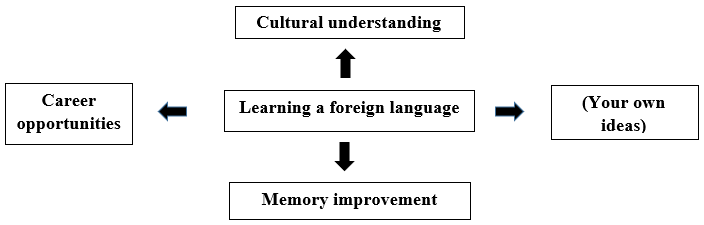
Follow-up questions:
1. Do you think English is the only important language to learn nowadays? Why?
2. In what ways can technology (like AI) affect the motivation of language learners?
Topic: Learning a foreign language is becoming important for high school students. (Việc học ngoại ngữ đang trở nên quan trọng đối với học sinh THPT.)
Sample answer:
Learning a foreign language has become very important for high school students nowadays. First of all, it can create better job opportunities in the future because many international companies prefer employees who can speak more than one language. Besides that, learning another language helps students understand different cultures and communicate with people from other countries more easily.
I also think language learning improves brain functions such as memory and concentration because students need to remember vocabulary and grammar structures regularly. Moreover, when students can communicate confidently in another language, they often feel more independent and motivated. In my opinion, learning foreign languages not only supports academic success but also helps young people become more open-minded in today’s connected world.
Bản dịch:
Việc học ngoại ngữ đã trở nên rất quan trọng đối với học sinh trung học ngày nay. Trước hết, nó có thể tạo ra những cơ hội việc làm tốt hơn trong tương lai vì nhiều công ty quốc tế ưu tiên những nhân viên có thể nói được nhiều hơn một ngôn ngữ. Bên cạnh đó, việc học một ngôn ngữ khác giúp học sinh hiểu được các nền văn hóa khác nhau và giao tiếp với những người từ các quốc gia khác một cách dễ dàng hơn.
Tôi cũng nghĩ rằng việc học ngôn ngữ giúp cải thiện các chức năng của não bộ như trí nhớ và sự tập trung vì học sinh cần phải ghi nhớ từ vựng và cấu trúc ngữ pháp thường xuyên. Hơn nữa, khi học sinh có thể giao tiếp tự tin bằng một ngôn ngữ khác, các bạn thường cảm thấy độc lập và có động lực hơn. Theo quan điểm của tôi, học ngoại ngữ không chỉ hỗ trợ thành công trong học tập mà còn giúp những người trẻ trở nên cởi mở hơn trong thế giới kết nối ngày nay.
Follow-up questions:
1. 1. Do you think English is the only important language to learn nowadays? Why? (Bạn có nghĩ tiếng Anh là ngôn ngữ quan trọng duy nhất cần học ngày nay không? Tại sao?)
Sample answer:
In my opinion, although English is widely used in global business and technology, it is definitely not the only important language to learn. I think the best language often depends on a person’s career goals and where they live. For example, in Southeast Asia, languages like Chinese, Japanese, and Korean are becoming more valuable because many companies from these countries are investing heavily in the region.
Moreover, since many people can already speak English nowadays, learning another foreign language can help students stand out and gain more job opportunities in the future. Therefore, while English is still extremely important, learning additional languages can provide even greater advantages.
Bản dịch:
Theo quan điểm của tôi, mặc dù tiếng Anh được sử dụng rộng rãi trong kinh doanh và công nghệ toàn cầu, nhưng nó chắc chắn không phải là ngôn ngữ duy nhất quan trọng để học. Tôi nghĩ rằng ngôn ngữ tốt nhất để lựa chọn thường phụ thuộc vào mục tiêu nghề nghiệp và nơi sinh sống của mỗi người. Ví dụ, ở Đông Nam Á, các ngôn ngữ như tiếng Trung, tiếng Nhật và tiếng Hàn đang trở nên giá trị hơn vì nhiều công ty từ các quốc gia này đang đầu tư mạnh mẽ vào khu vực.
Hơn nữa, vì ngày nay có rất nhiều người đã có thể nói được tiếng Anh, việc học thêm một ngoại ngữ khác có thể giúp học sinh trở nên nổi bật và giành được nhiều cơ hội việc làm hơn trong tương lai. Do đó, trong khi tiếng Anh vẫn cực kỳ quan trọng, việc học thêm các ngôn ngữ khác có thể mang lại những lợi thế thậm chí còn lớn hơn.
2. In what ways can technology (like AI) affect the motivation of language learners? (Công nghệ (như AI) có thể ảnh hưởng đến động lực của người học ngôn ngữ theo những cách nào?).
Sample answer:
In my view, technology, especially AI, can affect learners’ motivation in both positive and negative ways. On the positive side, AI tools like ChatGPT or language-learning apps can provide instant feedback and personalized practice, which helps students stay more engaged in learning. Instead of waiting for teachers to correct their mistakes, students can improve immediately.
However, relying too much on technology may reduce motivation over time. If students know AI can translate texts or write essays for them within seconds, they may become less willing to practice independently or think critically. Therefore, I believe technology is most effective when it is used as a support tool rather than a replacement for real learning.
Bản dịch:
Theo quan điểm của tôi, công nghệ, đặc biệt là AI, có thể ảnh hưởng đến động lực của người học theo cả hai hướng tích cực và tiêu cực. Về mặt tích cực, các công cụ AI như ChatGPT hoặc các ứng dụng học ngôn ngữ có thể cung cấp phản hồi tức thì và các bài thực hành mang tính cá nhân hóa, giúp học sinh duy trì sự hứng thú hơn trong việc học. Thay vì phải chờ đợi giáo viên sửa lỗi, học sinh có thể cải thiện các kỹ năng ngay lập tức.
Tuy nhiên, việc phụ thuộc quá nhiều vào công nghệ có thể làm giảm động lực theo thời gian. Nếu học sinh biết rằng AI có thể dịch văn bản hoặc viết các bài luận cho mình chỉ trong vài giây, các em có thể trở nên ít sẵn sàng hơn trong việc tự mình luyện tập hoặc tư duy phản biện. Do đó, tôi tin rằng công nghệ hiệu quả nhất khi nó được sử dụng như một công cụ hỗ trợ hơn là sự thay thế cho việc học thực thụ.
Let’s talk about Shopping Habits
PART THREE: TOPIC DEVELOPMENT
TOPIC: Learning a foreign language is becoming important for high school students.