Đề thi tham khảo ĐGNL Đại học Sư phạm TP.Hồ Chí Minh môn Tiếng Anh có đáp án - Đề số 2
80 câu hỏi
A. LISTENING
In this section of the test, you will have an opportunity to demonstrate your ability to understand conversations and talks in English. There are three parts in this section with special directions for each part. Answer all the questions on the basis of what is stated or implied by the speakers in the recording. The recording will be played ONCE only.
Part 1: Question 1-8
In this part, you will hear EIGHT short announcements or instructions. There is one question for each announcement or instruction. For each question, choose the right answer A, B, C or D. First you have some time to look at questions 1 to 8.
Confirm an order
Request some furniture
Ship some furniture
Cancel the order
Đáp án đúng là A
What should Rebecca do? (Rebecca nên làm gì?)
A. Confirm an order (Xác nhận một đơn hàng)
" Đúng, dựa trên thông tin “want to confirm her order before we ship her purchases” (muốn xác nhận đơn hàng của cô ấy trước khi chúng tôi giao hàng).
B. Request some furniture (Yêu cầu / Đặt mua một số đồ nội thất)
" Sai. Việc yêu cầu này thực tế Rebecca đã làm rồi (“the number of desks she requested” - thì quá khứ). Bây giờ là giai đoạn xác nhận lại chứ không phải bắt đầu yêu cầu mua thêm.
C. Ship some furniture (Vận chuyển một số đồ nội thất)
" Sai. Đây là công việc của phía công ty nội thất, không phải việc của khách hàng là Rebecca. Người gọi nói “before we ship her purchases” (trước khi chúng tôi giao hàng).
D. Cancel the order (Hủy đơn hàng)
" Sai. Trong toàn bộ lời nhắn, không có thông tin nào nói về việc hủy đơn hàng.
Bài nghe | Dịch bài nghe |
Good morning, this is Maria Gray calling from Dilbert Furniture. This message is for Rebecca Rhodes. I need to speak with her about the number of desks she requested, and want to confirm her order before we ship her purchases. | Chào buổi sáng, tôi là Maria Gray gọi đến từ công ty Nội thất Dilbert. Lời nhắn này xin được gửi tới cô Rebecca Rhodes. Tôi cần trao đổi với cô ấy về số lượng bàn làm việc mà cô ấy đã yêu cầu, và muốn xác nhận lại đơn hàng của cô ấy trước khi chúng tôi vận chuyển các món hàng đã mua đi. |
Phone the technical personnel
Use the computers in the conference room
Go to the wireless coffee shop in the building
Use the computers at home
Đáp án đúng là B
What can employees do if they need to use the internet? (Nhân viên có thể làm gì nếu họ cần sử dụng internet?)
A. Phone the technical personnel (Gọi điện cho nhân viên kỹ thuật)
" Sai. Bài nghe có nhắc đến kỹ thuật viên (technician) đang tiến hành nâng cấp hệ thống, nhưng không hề đưa ra việc nhân viên phải gọi điện cho họ để lấy quyền truy cập Internet.
B. Use the computers in the conference room (Sử dụng máy tính trong phòng hội nghị)
" Đúng, dựa trên thông tin “If you need access to the Internet, you can use the wireless computers in the conference room” (Nếu bạn cần truy cập Internet, bạn có thể sử dụng các máy tính không dây trong phòng hội nghị).
C. Go to the wireless coffee shop in the building (Đi đến quán cà phê có Wi-Fi trong tòa nhà)
" Sai vì không có thông tin về quán cà phê xuất hiện trong bài.
D. Use the computers at home (Sử dụng máy tính tại nhà)
" Sai vì thông tin này không xuất hiện trong bài nghe.
Bài nghe | Dịch bài nghe |
Our technician has discovered some problems with our computer system and will be doing upgrades. This means there will be no internet access tomorrow. If you need access to the Internet, you can use the wireless computers in the conference room. | Kỹ thuật viên của chúng tôi đã phát hiện ra một số vấn đề với hệ thống máy tính và sẽ tiến hành nâng cấp. Điều này có nghĩa là ngày mai sẽ không có quyền truy cập Internet. Nếu bạn cần sử dụng Internet, bạn có thể sử dụng các máy tính kết nối không dây tại phòng hội nghị. |
To provide information about a tour
To introduce a new exhibit
To offer a new audio service
To announce the closing of the facility
Đáp án đúng là D
What is the purpose of the announcement? (Mục đích của thông báo này là gì?)
A. To provide information about a tour (Để cung cấp thông tin về một chuyến tham quan)
" Sai. Bài nghe có nhắc đến cụm từ “audio tour”, nhưng họ chỉ nhắc khách đang tham quan hãy trả lại thiết bị, chứ không giới thiệu về thiết bị này.
B. To introduce a new exhibit (Để giới thiệu một cuộc triển lãm mới)
" Sai vì thông tin này không xuất hiện trong bài nghe.
C. To offer a new audio service (Để cung cấp một dịch vụ âm thanh mới)
" Sai. Dịch vụ “audio tour” được nhắc đến duy nhất đã có sẵn và khách đang sử dụng nó. Thông báo yêu cầu trả lại thiết bị cũ chứ không phải giới thiệu một dịch vụ mới.
D. To announce the closing of the facility (Để thông báo về việc đóng cửa cơ sở/phòng trưng bày)
" Đúng. Đây là mục đích chính và xuất hiện ngay đầu thông báo “The Royal Gallery will be closing in just 10 minutes...” (Phòng trưng bày Hoàng gia sẽ đóng cửa chỉ trong 10 phút tới...).
Bài nghe | Dịch bài nghe |
Good evening, ladies and gentlemen. The Royal Gallery will be closing in just 10 minutes, so we ask that you make your way to the nearest exit.
For those of you taking the audio tour, please return the audio equipment to the front desk in our lobby. Thank you for visiting us today, and we hope you enjoyed your visit to the gallery. | Chào buổi tối, thưa quý ông và quý bà. Phòng trưng bày Hoàng gia sẽ đóng cửa trong vòng 10 phút tới, vì vậy chúng tôi yêu cầu quý khách vui lòng di chuyển ra lối thoát hiểm gần nhất. Đối với những quý khách đang sử dụng dịch vụ hướng dẫn âm thanh, xin vui lòng trả lại thiết bị âm thanh tại bàn tiếp tân ở sảnh đợi. Cảm ơn quý khách đã ghé thăm chúng tôi ngày hôm nay, và chúng tôi hy vọng quý khách đã có một chuyến tham quan phòng trưng bày thú vị. |
He wrote a book on weight loss.
He works in a hospital.
He is starting a new business.
He operates a restaurant.
What is mentioned about Julio Barbosa? (Điều gì được nhắc đến về Julio Barbosa?)
A. He wrote a book on weight loss. (Ông ấy đã viết một cuốn sách về giảm cân.)
" Sai vì thông tin này không được nhắc đến trong bài nghe.
B. He works in a hospital. (Ông ấy làm việc trong một bệnh viện.)
" Sai vì thông tin này không được nhắc đến trong bài nghe.
C. He is starting a new business. (Ông ấy đang bắt đầu một công việc kinh doanh mới.)
" Đúng, dựa trên thông tin “...his plans to open a new fitness center in Grassoville” (kế hoạch mở một trung tâm thể hình mới tại Grassoville). Việc mở một trung tâm mới chính là bắt đầu một hoạt động kinh doanh mới (starting a new business).
D. He operates a restaurant. (Ông ấy điều hành một nhà hàng.)
" Sai vì thông tin này không được nhắc đến trong bài nghe.
Bài nghe | Dịch bài nghe |
You're listening to Gym Fitness. I'm your host, Sylvia Brasher. After this long winter, many of us want to lose some weight. We'll be speaking with Julio Barbosa, a physical fitness expert. He is going to provide us with some suggestions for losing weight and how to maintain your ideal weight by starting a simple exercise routine. He will also tell us about his plans to open a new fitness center in Grassoville. Thanks for joining us today, Julio. | Quý vị đang lắng nghe chương trình Gym Fitness. Tôi là người dẫn chương trình, Sylvia Brasher. Sau một mùa đông dài, nhiều người trong chúng ta muốn giảm đi vài cân. Chúng ta sẽ cùng trò chuyện với Julio Barbosa, một chuyên gia về thể hình. Ông ấy sẽ đưa ra một số lời khuyên về việc giảm cân và cách duy trì cân nặng lý tưởng bằng cách bắt đầu một chế độ tập luyện đơn giản. Ông ấy cũng sẽ chia sẻ với chúng ta về kế hoạch mở một trung tâm thể hình mới tại Grassoville. Cảm ơn ông đã tham gia cùng chúng tôi hôm nay, Julio. |
A business news report
A weather report
A traffic report
A commercial
What will the listeners probably hear next? (Thính giả có thể sẽ nghe thấy gì tiếp theo?)
A. A business news report (Một bản tin tin tức tài chính)
" Sai. Trong bài có nhắc đến “financial report” (bản tin tài chính). Tuy nhiên, bản tin này chỉ xuất hiện sau phần quảng cáo (“right after the commercial break”). Do đó, nó không phải là nội dung ngay tiếp theo.
B. a weather report (Một bản tin thời tiết)
" Sai vì thông tin này không được nhắc đến trong bài nghe.
C. a traffic report (Một bản tin giao thông)
" Sai vì đây là nội dung mà thính giả đang nghe ở hiện tại (You're listening to the morning traffic report), không phải cái sẽ diễn ra tiếp theo.
D. A commercial (Một đoạn quảng cáo)
" Đúng, dựa vào thông tin “Stay tuned for the financial report coming up right after the commercial break” (Hãy tiếp tục giữ sóng để theo dõi bản tin tài chính sẽ diễn ra ngay sau phần quảng cáo). Điều này có nghĩa là ngay sau khi người dẫn chương trình dứt lời, đài phát thanh sẽ phát phần quảng cáo trước khi tiếp tục với bản tin tài chính.
Bài nghe | Dịch bài nghe |
You're listening to the morning traffic report. Traffic is moving steadily this morning with only minor problems on Washington Avenue due to some roadwork. Those headed north may want to take Stewart Road instead. Stay tuned for the financial report coming up right after the commercial break. | Quý vị đang lắng nghe bản tin giao thông buổi sáng. Giao thông sáng nay đang di chuyển ổn định, chỉ có một vài vấn đề nhỏ trên Đại lộ Washington do đang có công trình sửa đường. Những ai đang đi về hướng Bắc có thể cân nhắc chuyển sang đi đường Stewart thay thế. Hãy tiếp tục giữ sóng để theo dõi bản tin tài chính sẽ diễn ra ngay sau phần quảng cáo. |
To request account statements
To introduce new software
To announce a schedule change
To explain some office policies
What is the purpose of the talk? (Mục đích của bài nói là gì?)
A. To request account statements (Để yêu cầu các sao kê tài khoản)
" Sai vì thông tin này không được nhắc đến trong bài nghe.
B. To introduce new software (Để giới thiệu một phần mềm mới)
" Đúng. David Ford giới thiệu mình là lập trình viên và trực tiếp khẳng định “Today I’m going to show you how our new accounting program works and go over some of its interesting features” (Hôm nay tôi sẽ giới thiệu cho quý vị cách thức hoạt động của chương trình kế toán mới và điểm qua các tính năng thú vị của nó).
C. To announce a schedule change (Để thông báo về sự thay đổi lịch trình)
" Sai vì thông tin này không được nhắc đến trong bài nghe.
D. To explain some office policies (Để giải thích một số chính sách văn phòng)
" Sai vì thông tin này không được nhắc đến trong bài nghe.
Bài nghe | Dịch bài nghe |
My name is David Ford, and I'm one of the programmers at Jade Software. Today I’m going to show you how our new accounting program works and go over some of its interesting features. The program was designed to make accounting a lot easier by organizing figures automatically. Now I will show you a short video about the development of this software. | Tôi tên là David Ford, và tôi là một trong những lập trình viên tại Jade Software. Hôm nay, tôi sẽ giới thiệu cho quý vị cách thức hoạt động của chương trình kế toán mới của chúng tôi và điểm qua một số tính năng thú vị của nó. Chương trình này được thiết kế để giúp công việc kế toán trở nên dễ dàng hơn nhiều bằng cách tự động sắp xếp các số liệu. Bây giờ, tôi sẽ cho quý vị xem một đoạn video ngắn về quá trình phát triển của phần mềm này. |
Read a brochure
Board the bus
Wear raincoats
Stay seated
What is the audience told to do? (Khán giả / Hành khách được bảo phải làm gì?)
A. Read a brochure (Đọc một cuốn sách hướng dẫn / tờ rơi)
" Sai vì thông tin “brochure” không được nhắc đến trong bài nghe.
B. Board the bus (Lên xe buýt)
" Sai vì thông tin “bus” không được nhắc đến trong bài nghe.
C. Wear raincoats (Mặc áo mưa)
" Đúng. Hướng dẫn viên đưa ra yêu cầu trực tiếp “please be sure to put on your raincoat to avoid getting wet” (làm ơn hãy nhớ mặc áo mưa vào để tránh bị ướt
D. Stay seated (Ngồi yên tại chỗ)
" Sai. Ngược lại, hướng dẫn viên yêu cầu mọi người di chuyển theo mình “Now follow me” để chuẩn bị lên thuyền, chứ không bảo họ ngồi yên.
Bài nghe | Dịch bài nghe |
Welcome to the Niagara Falls tour. We will take a boat tour of Horeshoe Falls on the Canadian side. You will have incredible views of this one great natural wonder. During the tour, please be sure to put on your raincoat to avoid getting wet. At the end of our tour, we will visit the Niagara Falls museum, where you can read about the history of the falls and see some local Indian artifacts. Now follow me. | Chào mừng quý khách đến với chuyến tham quan thác Niagara. Chúng ta sẽ thực hiện một chuyến tham quan bằng thuyền đến thác Móng Ngựa ở phía Canada. Quý khách sẽ có những góc nhìn tuyệt đẹp về một trong những kỳ quan thiên nhiên vĩ đại này. Trong suốt chuyến tham quan, quý khách hãy nhớ mặc áo mưa vào để tránh bị ướt. Cuối hành trình, chúng ta sẽ ghé thăm bảo tàng thác Niagara, nơi quý khách có thể tìm hiểu về lịch sử của thác và chiêm ngưỡng một số cổ vật của người Da đỏ địa phương. Bây giờ, xin hãy đi theo tôi. |
To reschedule an interview
To arrange a class
To postpone an exhibition
To request an application
What is the main purpose of the call? (Mục đích chính của cuộc gọi là gì?)
A. To reschedule an interview (Để đổi lịch một buổi phỏng vấn)
" Đúng. Mặc dù Julie dùng từ “cancel” (hủy) cho buổi gặp chiều nay, nhưng ngay sau đó cô ấy đã yêu cầu ứng viên liên lạc với thư ký để gặp vào ngày mai (“let her know if you are available to meet with me tomorrow”).
B. To arrange a class (Để sắp xếp một lớp học)
" Sai vì thông tin này không được nhắc đến trong bài nghe.
C. To postpone an exhibition (Để hoãn một cuộc triển lãm)
" Sai vì thông tin này không được nhắc đến trong bài nghe.
D. To request an application (Để yêu cầu nộp hồ sơ ứng tuyển)
" Sai. Ông Andrews đã nộp hồ sơ rồi nên Julie mới gọi để phỏng vấn. Cô ấy nói: “we are very interested in your application” (chúng tôi rất quan tâm đến hồ sơ của ông).
Bài nghe | Dịch bài nghe |
This is Julie calling from the Stylista Hair Salon. I'm trying to reach Mr. Andrews concerning the interview we scheduled for this afternoon. I'm not feeling well today, so I’m afraid I'll have to cancel our meeting. However, we are very interested in your application for our hairstylist position. I hope to be back in the office tomorrow, so please call my secretary and let her know if you are available to meet with me tomorrow. | Chào ông, tôi là Julie gọi đến từ tiệm tóc Stylista. Tôi đang cố gắng liên lạc với ông Andrews liên quan đến buổi phỏng vấn mà chúng ta đã lên lịch vào chiều nay. Hôm nay tôi cảm thấy không được khỏe, vì vậy tôi e rằng mình sẽ phải hủy buổi gặp mặt của chúng ta. Tuy nhiên, chúng tôi rất quan tâm đến hồ sơ ứng tuyển của ông cho vị trí nhà tạo mẫu tóc. Tôi hy vọng sẽ quay lại văn phòng vào ngày mai, vì vậy ông vui lòng gọi cho thư ký của tôi và cho cô ấy biết liệu ông có thể gặp tôi vào ngày mai hay không. |
Part 2: Questions 9-20
In this part, you will hear THREE conversations. The conversations will not be repeated. There are four questions for each conversation. For each question, choose the right answer A, B, C or D. You will hear the recording ONCE only.
Part 2: Questions 9-12
Choose the best answer. You will hear the recording ONCE only. First you will have some time to look at question 9 to 12.
his childhood hobby
his interest in landscape design
his visit to another park
his children’s interests
Đáp án đúng là C
Where did Simon’s idea for a theme park come from? (Ý tưởng về công viên giải trí của Simon đến từ đâu?)
A. his childhood hobby. (Sở thích thời thơ ấu của ông ấy.)
⭢ Sai. Trong toàn bộ bài nói, Simon không hề nhắc đến từ khóa “childhood” (thời thơ ấu) hay sở thích cá nhân của ông khi còn nhỏ.
B. his interest in landscape design. (Sự quan tâm của ông ấy đối với thiết kế cảnh quan.)
⭢ Sai. Dựa trên thông tin “We began to extend the railway track and lay it among more interesting landscape by planting trees...” (Chúng tôi bắt đầu mở rộng đường ray và đặt nó giữa cảnh quan thú vị hơn bằng cách trồng cây,...). Việc cải tạo cảnh quan chỉ diễn ra sau khi công viên đã hình thành và bắt đầu mở rộng, không phải là nguồn gốc của ý tưởng.
C. his visit to another park. (Chuyến tham quan của ông ấy đến một công viên khác.)
⭢ Đúng, dựa trên thông tin “...until I went on a trip to a theme park near Birmingham and decided we could do a much better job!” (cho đến khi tôi có một chuyến đi tới một công viên giải trí gần Birmingham và quyết định rằng chúng tôi có thể làm tốt hơn thế nhiều!). Câu này xác định rõ thời điểm và lý do ý tưởng mở công viên ra đời.
D. his children’s interests (Sở thích của các con ông ấy)
⭢ Sai. Dựa trên thông tin “The place was wonderful for the kids: they particularly loved trains and gradually built up an enormous network of miniature railway track ... but we didn’t think anything more of it until I went on a trip...” (Nơi đó thật tuyệt vời đối với bọn trẻ: chúng đặc biệt yêu thích tàu hỏa và đã dần dần lắp ghép được một mạng lưới đường ray mô hình khổng lồ... nhưng chúng tôi chẳng mảy may suy nghĩ gì thêm về điều đó cho đến khi tôi đi thực tế một chuyến..), sở thích của các con không phải là yếu tố trực tiếp dẫn đến ý tưởng mở công viên kinh doanh.
the weather was expected to be good.
they earned enough money to set up.
there was little farm work.
the children weren’t at school.
Đáp án đúng là A
When did they start to open the park? (Họ bắt đầu mở cửa công viên khi nào?)
A. the weather was expected to be good. (Thời tiết được dự báo là sẽ tốt.)
⭢ Đúng, Dựa trên thông tin “1984 - in July - our driest month because our children said they didn’t want our guests to have a miserable, wet visit” (Năm 1984 - vào tháng Bảy - tháng khô ráo nhất của chúng tôi vì các con tôi nói rằng chúng không muốn khách của mình có một chuyến tham quan ướt át, khổ sở). Điều này cho thấy họ chọn thời điểm mở cửa dựa trên kỳ vọng về thời tiết khô ráo (tốt).
B. they earned enough money to set up. (Họ đã kiếm đủ tiền để thiết lập.)
⭢ Sai vì thông tin này không được đề cập đến trong bài nghe.
C. there was little farm work. (Có ít công việc nông trại.)
⭢ Sai. Dựa trên thông tin “I dealt with Park business and Liz carried on with the farm work” (Tôi giải quyết công việc kinh doanh của Công viên và Liz tiếp tục công việc nông trại). Điều này cho thấy công việc nông trại vẫn diễn ra song song, chứ không phải đợi ít việc nông trại thì họ mới mở công viên.
D. the children weren’t at school. (Lũ trẻ không phải đi học.)
⭢ Sai vì thông tin này không được đề cập đến trong bài nghe.
50,000 visitors
1,000,000 visitors
1,500,000 visitors
500,000 visitors
How many visitors has the park had since opening? (Công viên đã có bao nhiêu lượt khách kể từ khi mở cửa?)
A. 50,000 visitors. (50.000 lượt khách.)
⭢ Sai. Dựa trên thông tin “...with 50,000 visitors a year” (với 50.000 lượt khách mỗi năm), đâylà con số tính theo năm, không phải tổng số kể từ khi mở cửa.
B. 1,000,000 visitors. (1.000.000 lượt khách.)
⭢ Sai. Con số này không xuất hiện trong bài nghe.
C. 1,500,000 visitors. (1.500.000 lượt khách.)
⭢ Đúng. Dựa trên thông tin “...a million and a half people have been through our doors since we opened.” (một triệu rưỡi người đã đi qua cánh cửa của chúng tôi kể từ khi mở cửa).
D. 500,000 visitors. (500.000 lượt khách.)
⭢ Sai. Con số này không xuất hiện trong bài nghe.
Simon
Liz
Sarah
Duncan
Who is in charge of providing food and drinks in the Park? (Ai phụ trách việc cung cấp đồ ăn và thức uống trong Công viên?)
A. Simon
⭢ Sai. Dựa trên thông tin “I only concern myself with looking after the mechanical side of things - keeping the trains going.” (Tôi chỉ quan tâm đến việc chăm sóc khía cạnh kỹ thuật - giữ cho các đoàn tàu hoạt động).
B. Liz
⭢ Sai. Dựa trên thông tin “Liz now devotes all her energies to recruiting and supporting the large squadron of workers” (Liz hiện dành toàn bộ tâm sức để tuyển dụng và hỗ trợ đội ngũ nhân viên đông đảo).
C. Sarah
⭢ Đúng. Dựa trên thông tin “...Sarah has now returned to the park and makes sure the visitors are kept fed and watered” (...Sarah hiện đã trở lại công viên và đảm bảo khách tham quan được phục vụ ăn uống).
D. Duncan
⭢ Sai, dựa trên thông tin “Our son Duncan... taking over from me in the area of construction”. (Con trai Duncan của chúng tôi... thay thế tôi trong lĩnh vực xây dựng).
Bài nghe | Dịch bài nghe |
W: For the second in our series about locally-run businesses, we meet Simon Winridge, co-founder of the hugely-successful Winridge Forest Railway Park. Welcome, Simon. Now, perhaps you can begin by telling us a little bit about how it all started.
M: Well, during the 1970s, my wife, Liz and I had just acquired 80 acres of sheep-farming land, and we decided to settle down and have children. Pretty soon we had a daughter, Sarah, and a son, Duncan. The place was wonderful for the kids: they particularly loved trains and gradually built up an enormous network of miniature railway track. I began to develop largerscale models of locomotives but we didn’t think anything more of it until I went on a trip to a theme park near Birmingham and decided we could do a much better job! So we set up a small one ourselves based on the miniature railway and we opened to the public for just a month that year. 1984 - in July - our driest month because our children said they didn’t want our guests to have a miserable, wet visit. I dealt with Park business and Liz carried on with the farm work. It soon became clear that we were onto a winner. We began to extend the railway track and lay it among more interesting landscape by planting trees, which in turn attracted more wildlife, and by making cuttings through the rock.
Nowadays, we’re open all year round and we’re pleased to say that Winridge is one of the most popular visitor attractions in the area with 50,000 visitors a year - a million and a half people have been through our doors since we opened. All these visitors mean we have had to expand our operation and it’s now a truly family concern I’m near to retirement age so I only concern myself with looking after the mechanical side of things - keeping the trains going. Liz now devotes all her energies to recruiting and supporting the large squadron of workers, which keep the place running smoothly.
We’re really pleased that after some years away teaching, Sarah has now returned to the park and makes sure the visitors are kept fed and watered, which keeps her pretty busy as you can imagine. Our son Duncan has been a stalwart at the park for the last 10 years taking over from me in the area of construction and I’ll say a little bit more about that in a moment and his new wife Judith, has also joined the team in charge of retail. That’s becoming a tremendous growth area for us a lot of people want to buy souvenirs. | W: Trong phần thứ hai của loạt bài về các doanh nghiệp do địa phương điều hành, chúng ta sẽ gặp Simon Winridge, người đồng sáng lập Công viên Đường sắt Winridge Forest cực kỳ thành công. Chào mừng ông, Simon. Bây giờ, có lẽ ông có thể bắt đầu bằng việc kể cho chúng tôi một chút về việc tất cả đã bắt đầu như thế nào không? M: Chà, trong những năm 1970, vợ tôi, Liz và tôi vừa mới mua được 80 mẫu đất chăn nuôi cừu, và chúng tôi quyết định định cư và sinh con. Chẳng bao lâu sau, chúng tôi có một cô con gái, Sarah, và một cậu con trai, Duncan. Nơi này thật tuyệt vời cho lũ trẻ: chúng đặc biệt yêu thích tàu hỏa và dần dần xây dựng nên một mạng lưới đường ray xe lửa mini khổng lồ. Tôi bắt đầu phát triển các mô hình đầu máy xe lửa quy mô lớn hơn nhưng chúng tôi không nghĩ gì thêm về việc đó cho đến khi tôi đi tham quan một công viên giải trí gần Birmingham và quyết định rằng chúng tôi có thể làm tốt hơn thế nhiều! Vì vậy, chúng tôi đã tự mình thiết lập một công viên nhỏ dựa trên đường sắt mini và mở cửa cho công chúng chỉ trong một tháng năm đó. Đó là năm 1984 - vào tháng Bảy - tháng khô ráo nhất của chúng tôi vì các con tôi nói rằng chúng không muốn khách của mình có một chuyến tham quan ướt át, khổ sở. Tôi giải quyết công việc kinh doanh của Công viên và Liz tiếp tục công việc nông trại. Sớm muộn gì cũng rõ ràng là chúng tôi đã đi đúng hướng để thành công. Chúng tôi bắt đầu mở rộng đường ray và đặt nó giữa cảnh quan thú vị hơn bằng cách trồng cây, điều này lần lượt thu hút thêm nhiều động vật hoang dã, và bằng cách xẻ đá làm đường. Ngày nay, chúng tôi mở cửa quanh năm và rất vui khi nói rằng Winridge là một trong những điểm thu hút khách tham quan phổ biến nhất trong khu vực với 50.000 lượt khách mỗi năm - một triệu rưỡi người đã đi qua cánh cửa của chúng tôi kể từ khi mở cửa. Tất cả những vị khách này đồng nghĩa với việc chúng tôi phải mở rộng hoạt động và hiện tại đây thực sự là một doanh nghiệp gia đình. Tôi đã gần đến tuổi nghỉ hưu nên chỉ quan tâm đến việc chăm sóc khía cạnh kỹ thuật - giữ cho các đoàn tàu hoạt động. Liz hiện dành toàn bộ tâm sức để tuyển dụng và hỗ trợ đội ngũ nhân viên đông đảo giúp nơi này vận hành trơn tru. Chúng tôi thực sự vui mừng khi sau vài năm đi dạy học, Sarah hiện đã trở lại công viên và đảm bảo khách tham quan được phục vụ ăn uống, điều này khiến con bé khá bận rộn như bạn có thể tưởng tượng. Con trai Duncan của chúng tôi đã là một trụ cột tại công viên trong 10 năm qua, thay thế tôi trong lĩnh vực xây dựng và tôi sẽ nói thêm một chút về điều đó trong giây lát; và vợ mới của nó, Judith, cũng đã gia nhập đội ngũ để phụ trách mảng bán lẻ. Đó đang trở thành một lĩnh vực tăng trưởng to lớn đối với chúng tôi vì rất nhiều người muốn mua quà lưu niệm. |
Part 2: Questions 13-16
Choose the best answer. You will hear the recording ONCE only. First you will have some time to look at question 13 to 16.
Scenery for stage plays
Pictures of pop stars
The walls in people’s homes
Pictures on people’s homes
Đáp án đúng là A
What does Lucy usually paint? (Lucy thường vẽ cái gì?)
A. scenery for stage plays (bối cảnh cho các vở kịch sân khấu)
⭢ Đúng, dựa trên thông tin “I work in the theatre painting the background scenery for plays” (Chủ yếu tôi làm việc trong nhà hát, vẽ bối cảnh sân khấu cho các vở kịch).
B. pictures of pop stars (tranh về các ngôi sao nhạc pop)
⭢ Sai. Dựa trên thông tin “I got to meet my favourite pop stars” (tôi đã có cơ hội gặp gỡ những ngôi sao nhạc pop mà mình yêu thích), cô nói mình gặp gỡ các ngôi sao nhạc pop, chứ không nói là vẽ chân dung họ.
C. the walls in people’s homes (tường trong nhà của mọi người)
⭢ Sai. Cô khẳng định ngay từ đầu: “I don’t paint pretty pictures you can hang on your walls at home” (Tôi không vẽ những bức tranh xinh xắn mà bạn có thể treo trên tường nhà đâu).
D. pictures on people’s homes (tranh trên nhà của mọi người)
⭢ Sai. Thông tin này không được đề cập đến trong bài nghe.
She enjoys working by herself.
She chose it because she couldn’t get a job in advertising.
She earns a good salary.
It does not need any special skills.
Đáp án đúng là C
What does Lucy say about her present job? (Lucy nói gì về công việc hiện tại của mình?)
A. she enjoys working by herself. (cô ấy thích làm việc một mình.)
⭢ Sai. Cô nói mình thấy chán khi làm việc một mình (I got bored working alone) và hiện tại cô làm việc với một đội ngũ (work with a team of wonderful people).
B. she chose it because she couldn’t get a job in advertising. (cô ấy chọn nó vì không thể tìm được việc trong ngành quảng cáo.)
⭢ Sai, dựa trên thông tin “I was offered a job in an advertising agency” (Tôi từng được mời làm việc tại một công ty quảng cáo).
C. She earns a good salary. (Cô ấy kiếm được mức lương tốt.)
⭢ Đúng, dựa trên thông tin “I get paid reasonably well” (Tôi được trả lương khá ổn).
D. It does not need any special skills. (Nó không cần bất kỳ kỹ năng đặc biệt nào.)
⭢ Sai vì thông tin về “special skills” không được đề cập đến trong bài nghe.
She sometimes misses lunch.
Some days are too busy.
She always has too much work to do.
She feel bored because she doesn’t have much to do.
What does Lucy find difficult about her work? (Lucy thấy điều gì khó khăn về công việc của mình?)
A. She sometimes misses lunch. (Thỉnh thoảng cô ấy bỏ lỡ bữa trưa.)
⭢ Sai. Cô khẳng định: “I always make sure I stop for lunch” (Tôi luôn đảm bảo rằng mình sẽ dừng lại để ăn trưa).
B. Some days are too busy. (Có những ngày quá bận rộn.)
⭢ Đúng, dựa trên thông tin “The only thing that causes me stress is that often I have too many things to do at the same time" (Điều duy nhất khiến tôi căng thẳng là đôi khi tôi có quá nhiều việc phải làm cùng một lúc).
C. She always has too much work to do. (Cô ấy luôn có quá nhiều việc phải làm.)
⭢ Sai, dựa trên thông tin “at other times I have nothing to do” (những lúc khác lại chẳng có việc gì để làm).
D. She feel bored because she doesn’t have much to do. (Cô ấy cảm thấy chán vì không có nhiều việc để làm.)
⭢ Sai. Lucy nói cô ấy yêu công việc của mình (Mostly, I love it). Cô ấy chỉ cảm thấy việc không có gì để làm khiến mình khó sắp xếp thời gian (difficult to organise my time), chứ không nói là cô ấy thấy nhàm chán (feel bored).
By bus or train
By car
On foot
By bike
How does Lucy get to work? (Lucy đi làm bằng phương tiện gì?)
A. by bus or train (bằng xe buýt hoặc tàu hỏa)
⭢ Đúng. Dựa trên thông tin “I get a lot of my best ideas when I’m on my way to work, on the bus or train” (Tôi thường nảy ra nhiều ý tưởng hay nhất khi đang trên đường đi làm bằng xe buýt hoặc tàu hỏa).
B. by car (bằng ô tô)
⭢ Sai. Cô nói: “I could drive... but that makes me tired” (Tôi có thể lái xe... nhưng việc đó làm tôi mệt mỏi), ngụ ý rằng cô không chọn cách này.
C. on foot (đi bộ)
⭢ Sai. Cô nói đó là công việc mơ ước (My dream job would be one where I could walk to work) nhưng nó “hasn't happened yet” (vẫn chưa thành hiện thực).
D. by bike (bằng xe đạp)
⭢ Sai. Thông tin này không có trong bài nghe.
Bài nghe | Dịch bài nghe |
M: Today we have with us in the studio Lucy Rainbow, who earns her living as a painter. Good morning, Lucy. Can you tell us about your job?
W: Well, I don’t paint pretty pictures you can hang on your walls at home. Mainly I work in the theatre painting the background scenery for plays. I’ve also done a couple of CD covers. That was great, because I got to meet my favourite pop stars.
M : So how did all this start? W: Well, I always intended to become a proper artist. But I couldn’t sell any of my paintings, and anyway I got bored working alone! I was offered a job in an advertising agency but the idea of working in a theatre attracted me more. I get the chance to paint something different every day. I get paid reasonably well, and I work with a team of wonderful people.
M: So you enjoy your work, but doesn’t it have any disadvantages? W: Mostly, I love it. The only thing that causes me stress is that often I have too many things to do at the same time while at other times I have nothing to do. It’s difficult to organise my time, but I always make sure I stop for lunch. M: How many hours do you work on an average day? W: There’s no such thing as an average day! But generally, I start work at eight in the morning, and go through until seven. That makes it an eleven-hour day, which is much longer than the eight hours that most people work. M: Is your journey to work difficult?
W: Not really. My dream job would be one where I could walk to work but that hasn’t happened yet. I could drive to the theatre, but that makes me tired and I get a lot of my best ideas when I’m on my way to work, on the bus or train.
M: Do you have time for any hobbies?
W: Not as much as I’d like. I used to play a lot of tennis until I hurt my ankle and I was a regular visitor to an art gallery near my home until it closed down. In the little spare time I have, I’m doing a course in computer graphics. I hope what I learn will help me in my job.
M: Well, thank you, Lucy. It’s been interesting talking to you. | M (Người dẫn chương trình): Hôm nay chúng ta có sự góp mặt của Lucy Rainbow tại trường quay, một người kiếm sống bằng nghề họa sĩ. Chào buổi sáng, Lucy. Cô có thể chia sẻ cho chúng tôi về công việc của mình không? W (Lucy): À, tôi không vẽ những bức tranh xinh xắn mà bạn có thể treo trên tường nhà đâu. Chủ yếu tôi làm việc trong nhà hát, vẽ bối cảnh sân khấu cho các vở kịch. Tôi cũng từng thiết kế một vài bìa đĩa CD nữa. Việc đó rất tuyệt vì tôi đã có cơ hội gặp gỡ những ngôi sao nhạc pop mà mình yêu thích. M: Vậy mọi chuyện đã bắt đầu như thế nào? W: Thực ra, tôi luôn dự định trở thành một họa sĩ thực thụ. Nhưng tôi chẳng bán được bức tranh nào cả, và dù sao thì tôi cũng thấy chán khi phải làm việc một mình! Tôi từng được mời làm việc tại một công ty quảng cáo, nhưng ý tưởng làm việc trong nhà hát lại thu hút tôi hơn. Tôi có cơ hội được vẽ những thứ khác nhau mỗi ngày. Tôi được trả lương khá ổn và được làm việc với một đội ngũ những con người tuyệt vời. M: Cô rất tận hưởng công việc của mình, nhưng liệu nó có nhược điểm nào không? W: Phần lớn là tôi yêu nó. Điều duy nhất khiến tôi căng thẳng là đôi khi tôi có quá nhiều việc phải làm cùng một lúc, trong khi những lúc khác lại chẳng có việc gì để làm. Rất khó để sắp xếp thời gian của mình, nhưng tôi luôn đảm bảo rằng mình sẽ dừng lại để ăn trưa. M: Trung bình một ngày cô làm việc bao nhiêu tiếng? W: Không có cái gọi là “ngày trung bình” đâu! Nhưng nhìn chung, tôi bắt đầu làm việc từ 8 giờ sáng và kéo dài cho đến 7 giờ tối. Như vậy là một ngày làm việc 11 tiếng, dài hơn nhiều so với mức 8 tiếng của hầu hết mọi người.
M: Việc đi lại đến chỗ làm của cô có khó khăn không? W: Không hẳn. Công việc mơ ước của tôi là một nơi mà tôi có thể đi bộ đi làm, nhưng điều đó vẫn chưa thành hiện thực. Tôi có thể lái xe đến nhà hát, nhưng việc đó làm tôi mệt mỏi; trong khi đó, tôi thường nảy ra nhiều ý tưởng hay nhất khi đang trên đường đi làm bằng xe buýt hoặc tàu hỏa. M: Cô có thời gian cho sở thích cá nhân nào không? W: Không nhiều như tôi mong muốn. Tôi từng chơi tennis rất nhiều cho đến khi bị chấn thương mắt cá chân, và tôi cũng từng là khách quen của một triển lãm nghệ thuật gần nhà cho đến khi nó đóng cửa. Trong chút thời gian rảnh rỗi hiếm hoi, tôi đang theo học một khóa về đồ họa máy tính. Tôi hy vọng những gì mình học được sẽ giúp ích cho công việc hiện tại. M: Vâng, cảm ơn Lucy. Rất thú vị khi được trò chuyện cùng cô. |
Part 2: Questions 17-20
Choose the best answer. You will hear the recording ONCE only. First you will have some time to look at question 17 to 20.
Make an outline of it
Include a contents page
Include more information
Avoid formatting problem
According to the tutor, what should Sandra do with her proposal? (Theo giảng viên, Sandra nên làm gì với bản đề án của mình?)
A. make an outline of it. (lập dàn ý cho nó.)
⭢ Sai. Dựa trên thông tin “even in an outline document like this” (ngay cả trong một văn bản phác thảo như thế này), văn bản này đã hoàn thiện, còn “make an outline of it” chỉ văn bản chưa hoàn thiện. Ngoài ra, theo bài nghe, giảng viên đang bảo học Sandra sửa lại văn bản, chứ không phải đi lập dàn ý.
B. include a contents page. (bao gồm / thêm vào một trang mục lục.)
⭢ Sai. Dựa trên thông tin “you really have to be careful to avoid typos and problems with layout in the proposal and even in the contents page” (em thực sự phải cẩn thận để tránh các lỗi đánh máy và các vấn đề về bố cục trong đề án, thậm chí là ở cả trang mục lục nữa), giảng viên chỉ nhắc cô kiểm tra lỗi ở trang mục lục. Như vậy, trang mục lục đã có rồi.
C. include more information. (bao gồm thêm thông tin.)
⭢ Sai. Thông tin này không được đề cập đến trong bài nghe.
D. Avoid formatting problem. (Tránh các vấn đề về định dạng.)
⭢ Đúng. Dựa trên thông tin "you really have to be careful to avoid typos and problems with layout in the proposal” (em thực sự phải cẩn thận để tránh các lỗi đánh máy và các vấn đề về bố cục trong đề án).
Insert subheadings
Use more paragraphs
Shorten her sentences
Use some complex sentences
What should Sandra do to make it easier to follow her proposal? (Sandra nên làm gì để bản đề án của mình dễ theo dõi hơn?)
A. insert subheadings. (chèn thêm các tiêu đề phụ.)
⭢ Sai. Dựa trên thông tin “although your paragraphing and inclusion of subheadings help ... it’s quite hard to follow your train of thought at times” (mặc dù cách chia đoạn và việc thêm các tiêu đề phụ của em đã giúp ích phần nào... nhưng đôi khi vẫn khá khó để theo kịp mạch suy nghĩ của em), tiêu đề phụ chưa đủ để giúp bản đề án.
B. use more paragraphs. (sử dụng nhiều đoạn văn hơn)
⭢ Sai. Dựa trên thông tin “although your paragraphing and inclusion of subheadings help ... it’s quite hard to follow your train of thought at times” (mặc dù cách chia đoạn và việc thêm các tiêu đề phụ của em đã giúp ích phần nào... nhưng đôi khi vẫn khá khó để theo kịp mạch suy nghĩ của em), giảng viên có khen cách chia đoạn, nhưng không bảo Sandra sử dụng nhiều đoạn văn hơn.
C. shorten her sentences. (cắt ngắn các câu văn của mình.)
⭢ Đúng, dựa trên thông tin “you’ve often used complex structures and long sentences... so cut them down a bit, can you?” (em thường sử dụng các cấu trúc phức tạp và câu văn quá dài... vì vậy hãy cắt ngắn chúng đi một chút nhé?).
D. use some complex sentences. (sử dụng một số câu phức)
⭢ Sai. Dựa trên thông tin “you’ve often used complex structures and long sentences... so cut them down a bit, can you?” (em thường sử dụng các cấu trúc phức tạp và câu văn quá dài... vì vậy hãy cắt ngắn chúng đi một chút nhé?), các câu phức đang khiến cho bản đề án khó theo dõi.
Separate points were not clearly identified.
There were no headers.
The headings were not always clear.
Page numbers were not inserted.
What was the problem with the formatting on Sandra’s proposal? (Vấn đề với định dạng trong đề án của Sandra là gì?)
A. Separate points were not clearly identified. (Các ý riêng biệt không được xác định rõ ràng.)
⭢ Đúng. Dựa trên thông tin "listing ideas clearly is important. Number them or use bullet points, which is even clearer" (việc liệt kê các ý tưởng một cách rõ ràng là rất quan trọng. Hãy đánh số chúng hoặc sử dụng dấu đầu dòng, cách đó thậm chí còn rõ ràng hơn), điều này ngụ ý hiện tại các ý của cô chưa được liệt kê rõ ràng.
B. There were no headers. (Không có tiêu đề đầu trang.)
⭢ Sai. Giảng viên nói: “you’ve remembered to include headers and footers, which is good” (em đã nhớ thêm phần tiêu đề đầu trang và chân trang, điều đó rất tốt).
C. The headings were not always clear. (Các tiêu đề không phải lúc nào cũng rõ ràng.)
⭢ Sai. Bài nghe không có thông tin phê bình chất lượng tiêu đề.
D. Page numbers were not inserted. (Số trang không được chèn vào.)
⭢ Sai. Khi Sandra hỏi “Didn’t I use page numbers?”, giảng viên trả lời “I didn’t mean that”, ý nói ông không phàn nàn về số trang.
The research she read
The movies she saw as a child
The photographs she found on the internet
The stories her father told
What originally made Sandra want to visit the Navajo National Park? (Điều gì ban đầu đã khiến Sandra muốn đến thăm Công viên Quốc gia Navajo?)
A. the research she read. (những nghiên cứu cô ấy đã đọc)
⭢ Sai. Dựa trên thông tin “The subsequent research I did and the online photographs made me even keener” (Những nghiên cứu sau đó do em làm và những bức ảnh trực tuyến càng khiến em khao khát đến đó hơn nữa), Sandra tự mình nghiên cứu chứ không đi đọc những bài nghiên cứu của người khác.
B. the movies she saw as a child. (những bộ phim cô ấy đã xem khi còn nhỏ.)
⭢ Đúng. Dựa trên thông tin “My father was a great fan of cowboy films... so I was subjected to seeing all the epics, many of which were shot there. As a consequence, it feels very familiar to me and it’s awesome both geographically and visually, so it’s somewhere I’ve always wanted to visit.” (Cha em là một người hâm mộ cuồng nhiệt dòng phim cao bồi... vì thế nên em đã phải xem hết những bộ phim kinh điển đó, và rất nhiều trong số chúng đã được quay tại nơi đây. Kết quả là, em cảm thấy nơi này vô cùng quen thuộc; nó thực sự hùng vĩ cả về mặt địa lý lẫn hình ảnh, nên đó là nơi mà tôi đã luôn ao ước được ghé thăm).
C. the photographs she found on the internet. (những bức ảnh cô ấy tìm thấy trên mạng.)
⭢ Sai. Những bức ảnh này chỉ làm cô khao khát thêm (made me even keener), chứ không phải nguồn cơn ban đầu.
D. the stories her father told. (những câu chuyện cha cô ấy kể.)
⭢ Sai. Cha cô cho cô xem phim, chứ không phải kể chuyện.
Bài nghe | Dịch bài nghe |
M: Right, Sandra. You wanted to see me to get some feedback on your group’s proposal. The one you’re submitting for the Geography Society field trip competition. I’ve had a look through your proposal and I think it’s a really good choice. In fact, I only have a few things to say about it but even in an outline document like this you really have to be careful to avoid typos and problems with layout in the proposal and even in the contents page. So read it through carefully before submitting it, okay? W: Will do. M: And I’ve made a few notes on the proposal about things which could have been better sequenced. W: Okay. M: As for the writing itself, I’ve annotated the proposal as and where I thought it could be improved. Generally speaking, I feel you’ve often used complex structures and long sentences for the sake of it and as a consequence although your paragraphing and inclusion of subheadings help ... it’s quite hard to follow your train of thought at times. So cut them down a bit, can you? W: Really? M: Yes. And don’t forget simple formatting like numbering. W: Didn’t I use page numbers? M: I didn’t mean that. Look, you’ve remembered to include headers and footers, which is good, but listing ideas clearly is important. Number them or use bullet points, which is even clearer. Then you’ll focus the reader on your main points. I thought your suggestion to go to the Navajo Tribal Park was a very good idea.
W: I’ve always wanted to go there. My father was a great fan of cowboy films and the Wild West so I was subjected to seeing all the epics, many of which were shot there. As a consequence, it feels very familiar to me and it’s awesome both geographically and visually, so it’s somewhere I’ve always wanted to visit. The subsequent research I did and the online photographs made me even keener. | M (Giảng viên): Được rồi, Sandra. Em muốn gặp tôi để nhận phản hồi về bản đề án của nhóm em đúng không? Bản đề án mà các em định nộp cho cuộc thi chuyến đi thực địa của Hội Địa lý ấy. Tôi đã xem qua và nghĩ rằng đó là một lựa chọn rất tốt. Thực ra, tôi chỉ có vài điều cần góp ý thôi, nhưng ngay cả trong một văn bản phác thảo như thế này, em thực sự phải cẩn thận để tránh các lỗi đánh máy và các vấn đề về bố cục trong đề án, thậm chí là ở cả trang mục lục nữa. Vì vậy, hãy đọc lại thật kỹ trước khi nộp nhé, được chứ? W (Sandra): Em sẽ làm ạ. M: Và tôi đã ghi chú một vài điểm trong bản đề án về những nội dung lẽ ra nên được sắp xếp trình tự tốt hơn. W: Vâng ạ. M: Về cách viết, tôi đã chú thích vào đề án những chỗ mà tôi nghĩ là có thể cải thiện. Nói chung, tôi cảm thấy em thường sử dụng các cấu trúc phức tạp và câu văn quá dài một cách không cần thiết, và hậu quả là mặc dù cách chia đoạn và việc thêm các tiêu đề phụ của em đã giúp ích phần nào... nhưng đôi khi vẫn khá khó để theo kịp mạch suy nghĩ của em. Vì vậy, hãy cắt ngắn chúng đi một chút nhé? W: Thật vậy sao ạ? M: Đúng vậy. Và đừng quên việc định dạng đơn giản như đánh số. W: Chẳng phải em đã đánh số trang rồi sao ạ? M: Ý tôi không phải vậy. Nhìn này, em đã nhớ thêm phần tiêu đề đầu trang và chân trang, điều đó rất tốt, nhưng việc liệt kê các ý tưởng một cách rõ ràng là rất quan trọng. Hãy đánh số chúng hoặc sử dụng dấu đầu dòng, cách đó thậm chí còn rõ ràng hơn. Khi đó, em sẽ giúp người đọc tập trung vào các ý chính của mình. Tôi nghĩ gợi ý đến Công viên bộ lạc Navajo là một ý tưởng rất hay. W: Em đã luôn muốn đến đó. Cha em là một người hâm mộ cuồng nhiệt các bộ phim cao bồi và miền Tây hoang dã, nên em đã được xem tất cả các bộ phim sử thi, nhiều bộ trong số đó được quay tại đây. Kết quả là nơi đó mang lại cảm giác rất quen thuộc với em; nó thực sự kỳ vĩ cả về mặt địa lý lẫn hình ảnh, vì vậy đó là nơi em luôn ao ước được ghé thăm. Những nghiên cứu sau đó em làm và những bức ảnh trực tuyến càng khiến em khao khát đến đó hơn nữa. |
Part 3: Questions 21-35
In this part, you will hear THREE lectures. The lecture will not be repeated. There are five questions for the lecture. For each question, choose the right answer A, B, C or D. You will hear the recording ONCE only.
Part 3: Questions 21-25
Choose the best answer. You will hear the recording ONCE only. First you will have some time to look at question 21 to 25.
Why do scientists need to use microscopes to study cells?
Because cells move too quickly to be seen
Because cells are too small to see without magnification
Because cells only exist inside light microscopes
Because magnification changes the color of the cells
Why do scientists need to use microscopes to study cells? (Tại sao các nhà khoa học cần sử dụng kính hiển vi để nghiên cứu tế bào?)
A. Because cells move too quickly to be seen (Vì tế bào di chuyển quá nhanh để có thể nhìn thấy)
B. Because cells are too small to see without magnification (Vì tế bào quá nhỏ để có thể nhìn thấy nếu không có độ phóng đại)
C. Because cells only exist inside light microscopes (Vì tế bào chỉ tồn tại bên trong kính hiển vi quang học)
D. Because magnification changes the color of the cells (Vì độ phóng đại làm thay đổi màu sắc của tế bào)
- Dựa trên thông tin “Because cells are so small, we can't see them without magnification” (Vì tế bào rất nhỏ nên chúng ta không thể nhìn thấy chúng nếu không có độ phóng đại).
" Chọn B
The dyes made the specimens look too large.
The dyes were too expensive for most scientists.
The dyes often resulted in the death of the cells.
The dyes made the light move more slowly.
Đáp án đúng là C
What was a major disadvantage of using dyes with light microscopes? (Nhược điểm lớn của việc sử dụng thuốc nhuộm với kính hiển vi quang học là gì?)
A. The dyes made the specimens look too large (Thuốc nhuộm làm cho mẫu vật trông quá lớn)
⭢ Sai. Dựa trên thông tin “The dyes helped them see the specimens more clearly” (Thuốc nhuộm giúp họ quan sát mẫu vật rõ ràng hơn), thuốc nhuộm giúp nhìn mẫu vật rõ hơn, chứ không khiến mẫu vật nhìn to hơn.
B. The dyes were too expensive for most scientists (Thuốc nhuộm quá đắt đối với hầu hết các nhà khoa học)
⭢ Sai. Thông tin này không được đề cập đến trong bài nghe.
C. The dyes often resulted in the death of the cells (Thuốc nhuộm thường dẫn đến cái chết của các tế bào)
⭢ Đúng, dựa trên thông tin “Unfortunately, dyes often killed the cells, too” (Thật không may, thuốc nhuộm cũng thường làm chết các tế bào).
D. The dyes made the light move more slowly (Thuốc nhuộm làm cho ánh sáng di chuyển chậm hơn)
⭢ Sai. Thuốc nhuộm không ảnh hưởng tới tốc độ di chuyển của ánh sáng. Thứ thay đổi tốc độ di chuyển ánh sáng là một loại kính hiển vi: “…the phase-contrast microscope. It's made in such a way that part of the light passing through it moves more slowly than the rest of the light” … kính hiển vi tương phản pha. Nó được chế tạo theo cách mà một phần ánh sáng đi qua nó di chuyển chậm hơn phần ánh sáng còn lại).
By making part of the light move more slowly than the rest.
By using electrons instead of light waves.
By staining the living cells with permanent dark dyes.
By increasing the wavelength of light by 100,000 times.
Đáp án đúng là A
How does a phase-contrast microscope allow scientists to see living specimens? (Kính hiển vi tương phản pha cho phép các nhà khoa học quan sát các mẫu vật sống bằng cách nào?)
A. By making part of the light move more slowly than the rest (Bằng cách làm cho một phần ánh sáng di chuyển chậm hơn phần còn lại)
⭢ Đúng. Dựa trên thông tin “…the phase-contrast microscope. It's made in such a way that part of the light passing through it moves more slowly than the rest of the light” … kính hiển vi tương phản pha. Nó được chế tạo theo cách mà một phần ánh sáng đi qua nó di chuyển chậm hơn phần ánh sáng còn lại).
B. By using electrons instead of light waves (Bằng cách sử dụng các electron thay vì sóng ánh sáng)
⭢ Sai. Đây là đặc điểm của kính hiển vi điện tử: “Another type of new microscope is the electron microscope. This uses electrons to form images, instead of light” (Một loại kính hiển vi mới khác là kính hiển vi điện tử. Loại này sử dụng các electron để tạo ra hình ảnh thay vì ánh sáng).
C. By staining the living cells with permanent dark dyes (Bằng cách nhuộm các tế bào sống bằng thuốc nhuộm tối màu vĩnh viễn)
⭢ Sai. Trong phần thông tin về loại kính hiển vi này, người nói không đề cập đến thuốc nhuộm.
D. By increasing the wavelength of light by 100,000 times (Bằng cách tăng bước sóng ánh sáng lên 100.000 lần)
⭢ Sai. Đây là thông tin về kính hiển vi điện tử: “Electrons travel in waves, similar to light, but their wavelengths are over 100,000 times shorter than those of light” (Các electron di chuyển theo dạng sóng, tương tự như ánh sáng, nhưng bước sóng của chúng ngắn hơn bước sóng của ánh sáng hơn 100.000 lần).
The electron microscope uses light but has no magnification.
The electron microscope uses electrons to form images instead of light.
The electron microscope is much simpler to use than light microscopes.
The electron microscope requires cutting specimens into thicker sections.
What is the primary difference between an electron microscope and a light microscope? (Sự khác biệt chính giữa kính hiển vi điện tử và kính hiển vi quang học là gì?)
A. The electron microscope uses light but has no magnification (Kính hiển vi điện tử sử dụng ánh sáng nhưng không có độ phóng đại)
⭢ Sai, dựa trên thông tin “This uses electrons to form images, instead of light.” (Loại này sử dụng các electron để tạo ra hình ảnh thay vì ánh sáng). Kính hiển vi điện tử không sử dụng ánh sáng.
B. The electron microscope uses electrons to form images instead of light (Kính hiển vi điện tử sử dụng các electron để tạo ra hình ảnh thay vì ánh sáng)
⭢ Đúng, dựa trên thông tin “This uses electrons to form images, instead of light.” (Loại này sử dụng các electron để tạo ra hình ảnh thay vì ánh sáng
C. The electron microscope is much simpler to use than light microscopes (Kính hiển vi điện tử đơn giản hơn nhiều để sử dụng so với kính hiển vi quang học)
⭢ Sai. Thông tin này không được đề cập đến trong bài.
D. The electron microscope requires cutting specimens into thicker sections (Kính hiển vi điện tử yêu cầu cắt mẫu vật thành các lát dày hơn)
⭢ Sai. Thông tin này không được đề cập đến trong bài.
They use light waves that are 100,000 times longer.
They allow scientists to take pictures with traditional cameras.
They do not require the use of any light or electricity.
Their wavelengths are significantly shorter than those of light.
Why can electron microscopes provide much clearer magnification? (Tại sao kính hiển vi điện tử có thể đem lại độ phóng đại rõ nét hơn nhiều?)
A. They use light waves that are 100,000 times longer(Chúng sử dụng sóng ánh sáng dài hơn 100.000 lần)
⭢ Sai, dựa trên thông tin “their wavelengths are over 100,000 times shorter than those of light." (bước sóng của chúng ngắn hơn bước sóng của ánh sáng hơn 100.000 lần). Ngoài ra, kính hiển vi điện tử không dùng ánh sáng để tạo ra hình ảnh, nên việc bảo chúng dùng “light waves” cũng không hợp lý.
B. They allow scientists to take pictures with traditional cameras (Chúng cho phép các nhà khoa học chụp ảnh bằng máy ảnh truyền thống)
⭢ Sai. Thông tin “Electron microscopes even allow scientists to take pictures of the cells they are studying!” (Kính hiển vi điện tử thậm chí còn cho phép các nhà khoa học chụp ảnh các tế bào mà họ đang nghiên cứu!) không nhắc đến “traditional cameras”.
C. They do not require the use of any light or electricity (Chúng không yêu cầu sử dụng bất kỳ ánh sáng hay điện năng nào)
⭢ Sai. Thông tin này không được đề cập trong bài nghe.
D. Their wavelengths are significantly shorter than those of light (Bước sóng của chúng ngắn hơn đáng kể so với bước sóng của ánh sáng)
⭢ Đúng. Dựa trên thông tin “their wavelengths are over 100,000 times shorter than those of light” (bước sóng của chúng ngắn hơn bước sóng của ánh sáng hơn 100.000 lần).
Bài nghe | Dịch bài nghe |
We use microscopes to help us study cells. Because cells are so small, we can't see them without magnification, the ability to make them look bigger.
The first microscopes were called light microscopes. They were pretty simple devices. They were also simple to use. Scientists first cut the cells, or specimens, into thin sections. Then they stained the specimens with different colored materials, called dyes. The dyes helped them see the specimens more clearly. Unfortunately, dyes often killed the cells, too. That limited what scientists could find out about the specimen.
In recent years, we have developed more powerful microscopes. These help us view living specimens. One of these new microscopes is called the phase-contrast microscope. It's made in such a way that part of the light passing through it moves more slowly than the rest of the light. We say this part of the light is “out of phase” with the rest of the light. This enables scientists to see differences in living specimens as light and shade.
Another type of new microscope is the electron microscope. This uses electrons to form images, instead of light. Electrons travel in waves, similar to light, but their wavelengths are over 100,000 times shorter than those of light. Therefore, they can give much clearer magnification. Electron microscopes even allow scientists to take pictures of the cells they are studying! | Chúng ta sử dụng kính hiển vi để giúp nghiên cứu các tế bào. Vì tế bào rất nhỏ nên chúng ta không thể nhìn thấy chúng nếu không có độ phóng đại - khả năng làm cho chúng trông to hơn. Những chiếc kính hiển vi đầu tiên được gọi là kính hiển vi quang học. Chúng là những thiết bị khá đơn giản và cũng dễ sử dụng. Đầu tiên, các nhà khoa học cắt các tế bào, hay các mẫu vật, thành các lát mỏng. Sau đó, họ nhuộm mẫu vật bằng các vật liệu có màu sắc khác nhau, được gọi là thuốc nhuộm. Thuốc nhuộm giúp họ quan sát mẫu vật rõ ràng hơn. Thật không may, thuốc nhuộm cũng thường làm chết các tế bào. Điều đó đã hạn chế những gì các nhà khoa học có thể tìm hiểu về mẫu vật. Trong những năm gần đây, chúng ta đã phát triển được những loại kính hiển vi mạnh hơn. Chúng giúp chúng ta quan sát được các mẫu vật sống. Một trong những loại kính hiển vi mới này được gọi là kính hiển vi tương phản pha. Nó được chế tạo theo cách mà một phần ánh sáng đi qua nó di chuyển chậm hơn phần ánh sáng còn lại. Chúng ta gọi phần ánh sáng này là "lệch pha" so với phần còn lại. Điều này cho phép các nhà khoa học nhìn thấy sự khác biệt trong các mẫu vật sống dưới dạng các vùng sáng và bóng tối. Một loại kính hiển vi mới khác là kính hiển vi điện tử. Loại này sử dụng các electron để tạo ra hình ảnh thay vì ánh sáng. Các electron di chuyển theo dạng sóng, tương tự như ánh sáng, nhưng bước sóng của chúng ngắn hơn bước sóng của ánh sáng hơn 100.000 lần. Do đó, chúng có thể đem lại độ phóng đại rõ nét hơn nhiều. Kính hiển vi điện tử thậm chí còn cho phép các nhà khoa học chụp ảnh các tế bào mà họ đang nghiên cứu! |
Part 3: Questions 26-30
Choose the best answer. You will hear the recording ONCE only. First you will have some time to look at question 26 to 30.
What is the speaker’s main purpose in this talk?
To interview famous authors about their latest works
To provide a brief review of several new books
To persuade the audience to become writers
To give a detailed report on how to choose birthday gifts
What is the speaker’s main purpose in this talk? (Mục đích chính của người nói trong bài nói này là gì?)
A. To interview famous authors about their latest works (Để phỏng vấn các tác giả nổi tiếng về các tác phẩm mới nhất của họ)
⭢ Sai. Người nói chỉ đang giới thiệu sách một mình, không có cuộc phỏng vấn nào diễn ra.
B. To provide a brief review of several new books (Để đưa ra bài đánh giá ngắn gọn về một vài cuốn sách mới)
⭢ Đúng, dựa trên câu mở đầu “Welcome to this week’s book programme. We’ve got lots of great new books to tell you about” (Chào mừng các bạn đến với chương trình điểm sách tuần này. Chúng tôi có rất nhiều cuốn sách mới tuyệt vời muốn giới thiệu đến các bạn).
C. To persuade the audience to become writers (Để thuyết phục khán giả trở thành nhà văn)
⭢ Sai. Nội dung bài nói về việc đọc và mua sách, không phải khuyến khích viết sách.
D. To give a detailed report on how to choose birthday gifts (Để đưa ra báo cáo chi tiết về cách chọn quà sinh nhật)
⭢ Sai. Đây là nội dung của chương trình tuần tới (Next week, there’s a special report on giving books as presents), không phải tuần này.
It is too long and takes many hours to finish.
It lacks information about the author's successful books.
It can be hard to follow for those who haven't read his previous works.
The ideas in the book are too simple for most readers.
According to the speaker, what might be a disadvantage of the book My life by Joe Wrigley? (Theo người nói, nhược điểm của cuốn sách My life của Joe Wrigley có thể là gì?)
A. It is too long and takes many hours to finish. (Nó quá dài và mất nhiều giờ để đọc hết.)
⭢ Sai. Thông tin này không được đề cập đến trong bài.
B. It lacks information about the author's successful books. (Nó thiếu thông tin về những cuốn sách thành công của tác giả.)
⭢ Sai. Cuốn sách cung cấp hình ảnh về cuộc đời ông khi ông thực hiện những cuốn sách thành công nhất (gives a picture of what was happening in his life when he was working on his most successful books).
C. It can be hard to follow for those who haven't read his previous works. (Nó có thể khó theo dõi đối với những người chưa đọc các tác phẩm trước đây của ông.)
⭢ Đúng, dựa trên thông tin “some of it is difficult to understand if you haven’t read his other books” (có một số đoạn sẽ khó hiểu nếu bạn chưa đọc những cuốn sách khác của ông).
D. The ideas in the book are too simple for most readers. (Các ý tưởng trong cuốn sách quá đơn giản đối với hầu hết độc giả.)
⭢ Sai. Ngược lại, cuốn sách được nhận xét là có những phần khó hiểu nếu chưa đọc các sách khác của ông (some of it is difficult to understand if you haven’t read his other books).
Goodbye to the fields by Susan Marks
Cooking for one by Adrian White
Holidays in Europe by Mary Curtis
The A-Z of photography
Which book is recommended for someone who wants to start a new hobby? (Cuốn sách nào được khuyên dùng cho người muốn bắt đầu một sở thích mới?)
A. Goodbye to the fields by Susan Marks (Vĩnh biệt những cánh đồng của Susan Marks)
B. Cooking for one by Adrian White (Nấu ăn cho một người của Adrian White)
C. Holidays in Europe by Mary Curtis (Những kỳ nghỉ ở Châu Âu của Mary Curtis)
D. The A-Z of photography (Từ điển nhiếp ảnh từ A đến Z)
- Dựa trên thông tin: “the A-Z of photography would make a great present for anyone just starting out with a camera. It has everything you need to know to take really good photos, and learn about cameras, film, lighting and so on” (cuốn “The A-Z of photography” (Từ điển nhiếp ảnh từ A đến Z) sẽ là một món quà tuyệt vời cho bất kỳ ai mới bắt đầu làm quen với máy ảnh. Nó có mọi thứ bạn cần biết để chụp được những bức ảnh thực sự đẹp, cũng như tìm hiểu về máy ảnh, phim, ánh sáng và nhiều thứ khác).
" Chọn D
She can now boil an egg perfectly.
She has started to find cooking enjoyable.
She has mastered all Italian dishes.
She decided to write her own cookbook.
What has the speaker gained from reading Cooking for one? (Người nói đã đạt được điều gì sau khi đọc cuốn Cooking for one?)
A. She struggles to boil an egg perfectly. (Bây giờ cô ấy vật lộn để luộc trứng một cách hoàn hảo.)
⭢ Sai. Hiện tại kỹ năng nấu nướng của cô ấy đã cải thiện, thậm chí còn làm được đủ loại món ăn (A month ago, I couldn’t even boil an egg but now I’m producing all sorts of dishes, some quite difficult).
B. She has started to find cooking enjoyable. (Cô ấy đã bắt đầu cảm thấy việc nấu nướng thú vị.)
⭢ Đúng. Dựa trên thông tin “I’m actually enjoying cooking now” (hiện tại tôi thực sự đang tận hưởng việc nấu nướng).
C. She has mastered all Italian dishes. (Cô ấy đã thành thạo tất cả các món Ý.)
⭢ Sai. Cô ấy chỉ mới chuẩn bị thử một cuốn sách mới về đồ ăn Ý (I’m now going to try a new book about cooking Italian food).
D. She decided to write her own cookbook. (Cô ấy quyết định viết cuốn sách nấu ăn của riêng mình.)
⭢ Sai. Thông tin này không được đề cập trong bài nghe.
It is not worth the money because the maps are too small.
It is a great guide for visiting famous tourist attractions.
It is useful for planning a trip to less well-known locations.
It provides very practical and large maps for travelers.
What does the speaker think about the book Holidays in Europe? (Người nói nghĩ gì về cuốn sách Holidays in Europe?)
A. It is not worth the money because the maps are too small. (Nó không đáng tiền vì bản đồ quá nhỏ.)
⭢ Sai. Người nói khẳng định: “the book is still good value for money” (cuốn sách vẫn rất đáng đồng tiền bát gạo).
B. It is a great guide for visiting famous tourist attractions. (Nó là một hướng dẫn tuyệt vời để tham quan các điểm du lịch nổi tiếng.)
⭢ Sai. Dựa trên thông tin “It doesn’t matter that the writer doesn’t talk about the famous places everyone visits but describes lots of small places away from the main tourist areas” (Việc tác giả không nói về những địa điểm nổi tiếng mà ai cũng ghé thăm không thành vấn đề; thay vào đó, bà mô tả rất nhiều địa điểm nhỏ nằm cách xa các khu du lịch chính), người viết không viết về những nơi nổi tiếng.
C. It is useful for planning a trip to less well-known locations. (Nó hữu ích cho việc lập kế hoạch cho một chuyến đi đến những địa điểm ít người biết đến hơn.)
⭢ Đúng, dựa trên thông tin “describes lots of small places away from the main tourist areas” (mô tả rất nhiều địa điểm nhỏ nằm xa các khu du lịch chính).
D. It provides very practical and large maps for travelers. (Nó cung cấp những bản đồ rất thực tế và lớn cho khách du lịch.)
⭢ Sai. Người nói cho biết “The maps are too small to be useful” (các bản đồ quá nhỏ để có thể sử dụng hiệu quả).
Bài nghe | Dịch bài nghe |
Welcome to this week’s book programme. We’ve got lots of great new books to tell you about. My life, by Joe Wrigley, will keep all fans of Joe's stories happy for hours. It explains a lot about where his ideas come from and gives a picture of what was happening in his life when he was working on his most successful books. I must say, though, that some of it is difficult to understand if you haven’t read his other books.
Now, for those of you who like a good cry. Goodbye to the fields, by Susan Marks tells the sad story of John, a small boy who has to leave the countryside he loves when the family move to London because of his father’s job. John and his mother would prefer to stay where they are. It’s a long time before the family begins to feel comfortable living in the big city.
There are plenty of books with helpful advice this week. First, the A-Z of photography would make a great present for anyone just starting out with a camera. It has everything you need to know to take really good photos, and learn about cameras, film, lighting and so on. This is not one for the experienced photographer, though there’s not much advanced information here.
Turning to the kitchen Cooking for one, by Adrian White, says on its cover that even people who hate cooking will find it useful. A month ago, I couldn’t even boil an egg but now I’m producing all sorts of dishes, some quite difficult and, yes, they taste quite good, too. I’m actually enjoying cooking now. I’m now going to try a new book about cooking Italian food.
The last book this week is Holidays in Europe, by Mary Curtis. This is an enjoyable read, which will start your imagination working as you plan for next year’s holiday. It doesn’t matter that the writer doesn’t talk about the famous places everyone visits but describes lots of small places away from the main tourist areas. The maps are too small to be useful, but the book is still good value for money.
That’s it for this week, then. Next week, there’s a special report ongiving books as presents, so if you’ve saved up your money and you’re wondering what to get for a friend or relation for their birthdays, you might get some good ideas ... I’ll look forward to talking to you then ... | Chào mừng bạn đến với chương trình điểm sách tuần này. Chúng tôi có rất nhiều cuốn sách mới tuyệt vời muốn chia sẻ với các bạn. Cuốn “My Life” (Cuộc đời tôi) của Joe Wrigley chắc chắn sẽ khiến những người hâm mộ các câu chuyện của Joe cảm thấy hài lòng trong nhiều giờ liền. Cuốn sách giải thích rất nhiều về việc những ý tưởng của ông bắt nguồn từ đâu và phác họa lại những gì đã xảy ra trong cuộc đời ông khi ông đang viết những cuốn sách thành công nhất của mình. Tuy nhiên, tôi phải nói rằng, một vài phần trong đó sẽ hơi khó hiểu nếu bạn chưa từng đọc các tác phẩm khác của ông. Tiếp theo, dành cho những ai thích một câu chuyện cảm động. Cuốn “Goodbye to the fields” (Tạm biệt những cánh đồng) của Susan Marks kể về câu chuyện buồn của John, một cậu bé nhỏ tuổi phải rời xa vùng quê yêu dấu để chuyển đến London vì công việc của cha. John và mẹ cậu đều muốn ở lại nơi cũ hơn. Phải mất một thời gian dài gia đình họ mới bắt đầu cảm thấy thoải mái với cuộc sống tại thành phố lớn này. Tuần này cũng có rất nhiều sách đưa ra những lời khuyên hữu ích. Đầu tiên, cuốn “The A-Z of photography” (Từ điển nhiếp ảnh từ A đến Z) sẽ là một món quà tuyệt vời cho bất kỳ ai mới bắt đầu làm quen với máy ảnh. Nó có mọi thứ bạn cần biết để chụp được những bức ảnh thực sự đẹp, cũng như tìm hiểu về máy ảnh, phim, ánh sáng và nhiều thứ khác. Tuy nhiên, đây không phải là cuốn sách dành cho những nhiếp ảnh gia chuyên nghiệp vì không có nhiều thông tin nâng cao ở đây. Chuyển sang chủ đề bếp núc, cuốn “Cooking for one” (Nấu ăn cho một người) của Adrian White có ghi trên bìa rằng ngay cả những người ghét nấu nướng cũng sẽ thấy nó hữu ích. Một tháng trước, tôi thậm chí còn không biết luộc một quả trứng, nhưng giờ đây tôi đã có thể nấu đủ loại món ăn, một số món khá khó và, đúng vậy, chúng cũng rất ngon nữa. Thực sự thì bây giờ tôi đang rất tận hưởng việc nấu nướng. Tôi chuẩn bị dùng thử một cuốn sách mới về nấu món Ý đây. Cuốn sách cuối cùng trong tuần này là “Holidays in Europe” (Những kỳ nghỉ ở Châu Âu) của Mary Curtis. Đây là một cuốn sách thú vị, giúp kích thích trí tưởng tượng của bạn khi lên kế hoạch cho kỳ nghỉ năm tới. Việc tác giả không nói về những địa điểm nổi tiếng mà ai cũng ghé thăm không thành vấn đề; thay vào đó, bà mô tả rất nhiều địa điểm nhỏ nằm cách xa các khu du lịch chính. Các bản đồ trong sách hơi quá nhỏ để có thể sử dụng hiệu quả, nhưng nhìn chung cuốn sách vẫn rất đáng đồng tiền bát gạo. Chương trình tuần này đến đây là hết. Tuần tới sẽ có một báo cáo đặc biệt về việc tặng sách làm quà, vì vậy nếu bạn đang tiết kiệm tiền và phân vân không biết nên mua gì cho bạn bè hoặc người thân nhân dịp sinh nhật, bạn có thể tìm thấy vài ý tưởng hay đấy... Hẹn gặp lại và trò chuyện với các bạn vào tuần tới nhé! |
Part 3: Questions 31-35
Choose the best answer. You will hear the recording ONCE only. First you will have some time to look at question 31 to 35.
Why does the guide mention “comfortable shoes”?
To advertise a specific brand of footwear for the tour
To warn visitors about the rocky terrain of the nature reserve
To ensure visitors are prepared for the pace of the walking tour
To explain the safety regulations of the Bicentennial Park
Đáp án đúng là C
Why does the guide mention “comfortable shoes”? (Tại sao hướng dẫn viên lại đề cập đến “đôi giày thoải mái”?)
A. To advertise a specific brand of footwear for the tour. (Để quảng cáo một thương hiệu giày dép cụ thể cho chuyến tham quan.)
⭢ Sai. Người hướng dẫn không nhắc đến bất kỳ thương hiệu nào, chỉ khuyên về tính tiện dụng.
B. To warn visitors about the rocky terrain of the nature reserve. (Để cảnh báo du khách về địa hình đá lởm chởm của khu bảo tồn thiên nhiên.)
⭢ Sai. Bài nghe không cung cấp thông tin mô tả địa hình công viên gập ghềnh đá.
C. To ensure visitors are prepared for the pace of the walking tour. (Để đảm bảo du khách đã sẵn sàng cho tốc độ của chuyến đi bộ tham quan.)
⭢ Đúng. Dựa trên thông tin “I hope that you’re all wearing your most comfortable shoes and that you can keep up the pace” (Tôi hi vọng tất cả các bạn đều đang mang đôi giày thoải mái nhất và có thể theo kịp tốc độ di chuyển).
D. To explain the safety regulations of the Bicentennial Park. (Để giải thích các quy định an toàn của Công viên Bicentennial.)
⭢ Sai. Việc đi giày, qua việc sử dụng “I hope”, ta thấy nó chỉ điều nên làm, chứ không phải là quy định bắt buộc.
It has been a public park since the early 1960s.
The site was formerly occupied by factories and warehouses.
A high-rise housing development was built here in the 1960s.
The local community preferred an indoor sports complex over a park.
Đáp án đúng là B
According to the talk, what is TRUE about the history of the park area? (Theo bài nói, điều nào là ĐÚNG về lịch sử của khu vực công viên?)
A. It has been a public park since the 1960s. (Nó đã là một công viên công cộng từ đầu những năm 1960.)
⭢ Sai. Dựa trên thông tin “There used to be a lot of factories in this area until the 1960s” (Từng có rất nhiều nhà máy ở khu vực này cho đến tận những năm 1960), ta chỉ biếtđến những năm 1960, thì các nhà máy ở đó đã bị phá bỏ, chứ không biết cụ thể khu vực công viên dành cho công cộng bắt đầu từ năm nào.
B. The site was formerly occupied by factories and warehouses. (Khu đất này trước đây từng là các nhà máy và kho bãi.)
⭢ Đúng, dựa trên thông tin “There used to be a lot of factories in this area until the 1960s” (từng có rất nhiều nhà máy ở khu vực này cho đến tận những năm 1960) và “...originally warehouses and storehouses” (...ban đầu là các kho bãi và nhà kho).
C. A high-rise housing development was built here in the 1960s. (Một dự án phát triển nhà ở cao tầng đã được xây dựng tại đây vào những năm 1960.)
⭢ Sai. Dựa trên thông tin “...a property developer proposed a high-rise housing development, but the local community wasn’t happy” (...một nhà phát triển bất động sản đã đề xuất dự án phát triển nhà ở cao tầng nhưng cộng đồng địa phương đã không hài lòng), đây chỉ là đề xuất của một nhà phát triển bất động sản và đã bị cộng đồng phản đối.
D. The local community preferred an indoor sports complex over a park. (Cộng đồng địa phương thích một khu phức hợp thể thao trong nhà hơn là một công viên.)
⭢ Sai. Dựa trên thông tin cư dân muốn không gian mở cho các hoạt động ngoài trời hơn là một khu phức hợp thể thao trong nhà "Residents wanted open space for outdoor activities rather than housing or even an indoor sports complex." (Cư dân mong muốn có không gian mở cho các hoạt động ngoài trời hơn là nhà ở hay thậm chí là một khu phức hợp thể thao trong nhà.)
To explain what the property developer intended to build on the site
To highlight the contrast between the park's past and its current appearance
To describe the types of buildings that the local community wanted to preserve
To justify the high cost of cleaning up the derelict buildings in the area
Why does Sally say, “Originally warehouses and storehouses”? (Tại sao Sally lại nói: “Vốn dĩ là các kho bãi và nhà kho”?)
A. To explain what the property developer intended to build on the site. ((Để giải thích những gì nhà phát triển bất động sản dự định xây dựng trên khu đất này.)
⭢ Sai. Dựa trên thông tin “...a property developer proposed a high-rise housing development) (...một nhà phát triển bất động sản đã đề xuất dự án phát triển nhà ở cao tầng), nhà phát triển bất động sản muốn xây nhà cao tầng, chứ không phải các kho bãi và nhà kho.
B. To highlight the contrast between the park's past and its current appearance. (Để làm nổi bật sự tương phản giữa quá khứ của công viên và diện mạo hiện tại của nó.)
⭢ Đúng. Dựa trên thông tin “Creating the park required the demolition of lots of derelict buildings on the site, so most of the exciting park space all around you was originally warehouses and storehouses” (Việc xây dựng công viên đòi hỏi phải phá bỏ nhiều tòa nhà bỏ hoang trên khu đất này, vì vậy phần lớn không gian công viên thú vị xung quanh các bạn trước đây vốn là các nhà kho và kho chứa hàng), các tòa nhà cũ (warehouses, storehouses) đã bị phá dỡ để tạo nên những không gian công viên thú vị (exciting park space), cho thấy sự thay đổi diện mạo của nơi này.
C. To describe the types of buildings that the local community wanted to preserve. (Để mô tả các loại tòa nhà mà cộng đồng địa phương muốn bảo tồn.)
⭢ Sai. Dựa trên thông tin “Residents wanted open space for outdoor activities rather than housing or even an indoor sports complex” (Người dân muốn có không gian mở cho các hoạt động ngoài trời thay vì nhà ở hay thậm chí là một khu liên hợp thể thao trong nhà), người dân muôn xây cơ sở giải trí ngoài trời chứ không phải xây bãi kho, nhà bãi.
D. To justify the high cost of cleaning up the derelict buildings in the area. (Để biện minh cho chi phí tốn kém của việc dọn dẹp các tòa nhà đổ nát trong khu vực.)
⭢ Sai. Thông tin về chi phí dọn dẹp không được đề cập đến trong bài nghe.
To treat someone unfairly for personal gain
To make good use of an opportunity or feature
To climb a structure without permission
To pay a fee for a better viewing position
What does the phrase “take advantage of” probably mean in this context? (Cụm từ "take advantage of" có thể có nghĩa là gì trong ngữ cảnh này?)
A. To treat someone unfairly for personal gain. (Đối xử bất công với ai đó vì lợi ích cá nhân.)
B. To make good use of an opportunity or feature. (Tận dụng tốt một cơ hội hoặc tính năng.)
C. To climb a structure without permission. (Leo lên một công trình mà không có sự cho phép.)
D. To pay a fee for a better viewing position. (Trả một khoản phí để có vị trí quan sát tốt hơn.)
- Sau thông tin “...follow me up the stairs to where we can take advantage of the fantastic views” (...hãy theo tôi lên cầu thang để chúng ta có thể take advantage oftầm nhìn tuyệt vời), người hướng dẫn cung cấp thông tin về những địa điểm có thể nhìn thấy được từ tầm nhìn.
⭢ Chọn B. Ở đây, người nói đang tận dụng tầm nhìn để giới thiệu những địa điểm ở bên dưới.
It is located directly inside the formal gardens.
It is used exclusively for gymnastics and synchronized swimming.
It is the only place where visitors can find a car park.
It promotes environmental friendliness through its transport options.
What can be inferred about the Olympic site from the top of the Tower? (Có thể suy ra điều gì về khu vực Olympic từ đỉnh Tòa Tháp?)
A. It is located directly inside the formal gardens. (Nó nằm ngay bên trong các khu vườn chính thức.)
⭢ Sai. Tòa tháp nằm trong “formal gardens” (The tall blue-and-white building in front of us is called The Tower and is the centre point for the formal gardens), và khu vực Olympic cách tòa tháp 1 cây số (The large buildings about a kilometre away are on the Olympic site). Như vậy, ta chỉ biết khu vực Olympic cách tòa tháp bao xa, chứ không biết nó có nằm trong “formal gardens” hay không.
B. It is used exclusively for gymnastics and synchronized swimming. (Nó được sử dụng duy nhất cho môn thể dục dụng cụ và bơi nghệ thuật.)
⭢ Sai, dựa trên thông tin “There’s an indoor arena for gymnastics, a stadium for track and field and a swimming pool for races and synchronised swimming and also diving” (Ở đó có một nhà thi đấu trong nhà dành cho môn thể dục dụng cụ, một sân vận động cho điền kinh và một bể bơi dành cho các cuộc thi bơi, bơi nghệ thuật cũng như nhảy cầu).
C. It is the only place where visitors can find a car park. (Nó là nơi duy nhất du khách có thể tìm thấy bãi đậu xe.)
⭢ Sai. Nơi đó có một bãi đậu xe nhưng không khẳng định là duy nhất (There is also a car park, but it only holds a limited number of cars).
D. It promotes environmental friendliness through its transport options. (Nó thúc đẩy sự thân thiện với môi trường thông qua các lựa chọn giao thông.)
⭢ Đúng, dựa trên thông tin “The Olympic site has its own station to encourage the use of public transport” (Khu vực Olympic có ga tàu riêng để khuyến khích sử dụng phương tiện giao thông công cộng).
Bài nghe | Dịch bài nghe |
Welcome to all of you, can everybody see and hear me? Good. I’m Sally, your guide for this tour of the Bicentennial Park. I hope that you’re all wearing your most comfortable shoes and that you can keep up the pace. So let’s get under way on our tour around this wonderful park.
I’ll start today with some general background information. There used to be a lot of factories in this area until the 1960s. Creating the park required the demolition of lots of derelict buildings on the site, so most of the exciting park space all around you was originally warehouses and storehouses. The idea of building a public park here was first discussed when a property developer proposed a high-rise housing development, but the local community wasn’t happy. If the land was to be cleaned up, they wanted to use the site for recreation. Residents wanted open space for outdoor activities rather than housing or even an indoor sports complex.
Now to the Bicentennial Park itself. It has two areas, a nature reserve and a formal park with man-made features and gardens. The tall blue-and-white building in front of us is called The Tower and is the centre point for the formal gardens. It stands twelve metres high so follow me up the stairs to where we can take advantage of the fantastic views.
Well here we are at the top of The Tower, and we’re going to look at the view from each direction. Out to the east, the large buildings about a kilometre away are on the Olympic site. There’s an indoor arena for gymnastics, a stadium for track and field and a swimming pool for races and synchronised swimming and also diving. If you look carefully down there, you can see the train lines. The Olympic site has its own station to encourage the use of public transport. There is also a car park, but it only holds a limited number of cars.
The formal park has some specially-created water features. If you look out here to the south, you can see a circular ornamental pond. And around to the west, you can relax and sit on a bench to smell the flowers in the rose garden and finally up to the north. If you look in front of you now there’s a lake with a small island in the centre you can hire rowing boats at the boat shed which you can’t see from here. But if you look through the trees, you can see the café, which has lovely views across the water.
Okay, let's climb down now. | Chào mừng tất cả các bạn, mọi người có thể nhìn thấy và nghe rõ tôi chứ? Tốt lắm. Tôi là Sally, hướng dẫn viên của chuyến tham quan Công viên Bicentennial hôm nay. Tôi hi vọng tất cả các bạn đều đang mang đôi giày thoải mái nhất và có thể theo kịp tốc độ di chuyển. Vậy giờ chúng ta hãy bắt đầu chuyến tham quan quanh công viên tuyệt vời này nhé. Trước tiên hôm nay, tôi sẽ cung cấp một số thông tin khái quát. Đã từng có rất nhiều nhà máy ở khu vực này cho đến những năm 1960. Việc xây dựng công viên đòi hỏi phải phá bỏ nhiều tòa nhà bỏ hoang trên khu đất này, vì vậy phần lớn không gian công viên thú vị xung quanh các bạn trước đây vốn là các nhà kho và kho chứa hàng. Ý tưởng xây dựng một công viên công cộng ở đây lần đầu được đưa ra khi một nhà phát triển bất động sản đề xuất xây dựng khu nhà ở cao tầng, nhưng cộng đồng địa phương không hài lòng. Nếu khu đất được cải tạo sạch sẽ, họ muốn sử dụng nơi này cho mục đích giải trí. Người dân muốn có không gian mở cho các hoạt động ngoài trời thay vì nhà ở hay thậm chí là một khu liên hợp thể thao trong nhà. Bây giờ nói về chính Công viên Bicentennial. Nó có hai khu vực: một khu bảo tồn thiên nhiên và một công viên quy hoạch với các công trình nhân tạo cùng những khu vườn. Tòa nhà cao màu xanh trắng phía trước chúng ta được gọi là The Tower và là điểm trung tâm của khu vườn quy hoạch. Nó cao mười hai mét, vậy nên hãy theo tôi lên cầu thang để chúng ta có thể tận hưởng khung cảnh tuyệt đẹp. Giờ thì chúng ta đã ở trên đỉnh của The Tower, và chúng ta sẽ ngắm quang cảnh theo từng hướng. Ở phía đông, những tòa nhà lớn cách khoảng một ki-lô-mét nằm trong khu vực Olympic. Ở đó có một nhà thi đấu trong nhà dành cho môn thể dục dụng cụ, một sân vận động cho điền kinh và một bể bơi dành cho các cuộc thi bơi, bơi nghệ thuật cũng như nhảy cầu. Nếu nhìn kỹ xuống phía dưới, các bạn có thể thấy các tuyến đường tàu. Khu Olympic có nhà ga riêng nhằm khuyến khích việc sử dụng phương tiện công cộng. Ngoài ra còn có một bãi đỗ xe, nhưng chỉ chứa được số lượng xe hạn chế. Công viên quy hoạch còn có một số công trình nước được tạo dựng đặc biệt. Nếu nhìn xuống phía nam, các bạn có thể thấy một hồ cảnh hình tròn. Và về phía tây, các bạn có thể thư giãn và ngồi trên ghế dài để ngửi hương hoa trong vườn hồng. Cuối cùng là phía bắc. Nếu nhìn phía trước bây giờ, các bạn sẽ thấy một cái hồ với một hòn đảo nhỏ ở giữa. Các bạn có thể thuê thuyền chèo ở nhà thuyền, nơi mà từ đây chúng ta không nhìn thấy được. Nhưng nếu nhìn xuyên qua những hàng cây, các bạn có thể thấy quán cà phê với tầm nhìn tuyệt đẹp ra mặt nước. Được rồi, giờ chúng ta xuống dưới nhé. |
B. READING
In this section of the test, you will read FOUR different passages, each followed by 10 questions about it. For questions 1-40, you are to choose the best answer to each question. Answer all questions following a passage on the basis of what is stated or implied in that passage.
You have 60 minutes to answer all the questions.
Passage 1:
Brainrot (sometimes written as “brain rot”) is internet slang for the mental fog and shortened attention span that comes from spending too much time consuming low-quality online content. It also refers to the content itself: the bizarre, nonsensical, algorithmically boosted videos and memes that flood platforms like TikTok, YouTube Shorts, and Instagram Reels.
Part of what makes brainrot recognizable is its own micro-language. Young people who consume large amounts of this content often pepper their speech with internet-native references: “skibidi” (from the YouTube series Skibidi Toilet), “rizz” (charisma), “gyatt” (a reaction to someone’s body), “fanum tax” (jokingly stealing food from someone’s plate), and “sigma” (a self-reliant, lone-wolf male archetype). If you’ve heard a child or teenager string these words together in a sentence that sounds like nonsense, you’ve witnessed brainrot vocabulary in action. For many parents and teachers, this language is the most visible sign that something has shifted in how kids interact with media.
The term started as slang, but research suggests the underlying concern is real. The core mechanism is something researchers call “dopamine-scrolling”: each swipe releases a small hit of dopamine, and because you never know whether the next video will be boring or hilarious, the unpredictability keeps you hooked. This variable reward schedule is the same psychological principle that makes slot machines compelling. Over time, your brain builds tolerance, meaning you need more scrolling to get the same satisfaction.
A 2024 study measuring brain activity in college-age participants found that higher levels of short-video addiction correlated with weaker executive control in the prefrontal cortex, the part of your brain responsible for focus, planning, and impulse control. The same study found a significant negative relationship between short-video addiction and self-control. In plain terms: the more hooked someone was on short videos, the harder it was for them to regulate their own attention and behavior.
A broader review published in Brain Sciences linked excessive screen time and low-quality content consumption to brain fog, decreased concentration, impaired brain development in adolescents, increased anxiety and depression, social withdrawal, and distorted perceptions of reality. Some researchers have raised concerns about potential connections to early-onset cognitive decline in later adulthood, though that long-term picture is still developing.
(Adapted from https://scienceinsights.org/what-does-brainrot-mean-and-why-it-affects-your-brain/)
What would be a good title for this passage?
Brainrot and the spread of Internet slang among teen users
Brainrot: Understanding digital behavior and online attention span
The evolution of digital slang and its socio-linguistic implications
Brainrot: from viral content to long-term effects of screen use
What would be a good title for this passage? (Tiêu đề nào phù hợp nhất cho đoạn văn này?)
A. Brainrot and the spread of Internet slang among teen users (Brainrot và sự lan truyền tiếng lóng Internet trong người dùng thanh thiếu niên)
⭢ Sai vì đây chỉ là nội dung đoạn 2, không bao quát được các nghiên cứu về não bộ và hệ lụy y khoa.
B. Brainrot: Understanding digital behavior and online attention span (Brainrot: Hiểu về hành vi kỹ thuật số và khoảng chú ý trực tuyến)
⭢ Sai. Bài không đi nghiên cứu về các hành vi kỹ thuật số, mà chỉ tập trung vào hiện tượng brainrot (thông tin tổng quát, từ liên quan, tác động lên não bộ và cảm xúc). Ngoài ra, “khoảng chú ý” cũng chỉ là một trong những khía cạnh mà brainrot ảnh hưởng lên não bộ.
C. The evolution of digital slang and its socio-linguistic implications (Sự tiến hóa của tiếng lóng kỹ thuật số và những hàm ý ngôn ngữ học xã hội của nó)
⭢ Sai. Đây không phải là một bài phân tích chuyên sâu về ngôn ngữ học. Ngôn ngữ trong đoạn hai của bài chỉ là “dấu hiệu dễ thấy nhất” của Brainrot chứ không phải nội dung cốt lõi.
D. Brainrot: from viral content to long-term effects of screen use. (Brainrot: từ nội dung lan truyền đến các tác động lâu dài của việc sử dụng màn hình.)
⭢ Đúng. Tiêu đề này bao quát trọn vẹn tiến trình của bài viết: bắt đầu từ định nghĩa nội dung lan truyền (đoạn 1, 2) đến phân tích cơ chế gây nghiện và các hệ lụy sức khỏe lâu dài (đoạn 3, 4, 5).
internet slang
brainrot
low-quality online content
spending too much time
The word “it” in paragraph 1 refers to _____. (Từ “it” trong đoạn 1 đề cập tới _____.)
A. internet slang: tiếng lóng internet
B. brainrot: tình trạng brainrot
C. low-quality online content: nội dung trực tuyến kém chất lượng
D. spending too much time: việc dành quá nhiều thời gian
- Thông tin: “Brainrot (sometimes written as “brain rot”) is internet slang for the mental fog and shortened attention span that comes from spending too much time consuming low-quality online content.It also refers to the content itself...”. (Brainrot (đôi khi được viết là “brain rot”) là một thuật ngữ lóng trên Internet dùng để chỉ tình trạng “sương mù não” và sự suy giảm khả năng tập trung do dành quá nhiều thời gian tiêu thụ các nội dung trực tuyến kém chất lượng. Thuật ngữ này cũng dùng để ám chỉ chính những nội dung đó...).
⭢ “It” thay thế cho “brainrot”.
According to the passage, which of the following is TRUE about brainrot?
People who are addicted to brainrot tend to release more dopamine than those who aren’t.
It primarily refers to algorithm-driven content replacing meaningful forms of online media.
It describes low-quality digital content and its impacts on users’ attention and cognition.
Tolerance to dopamine means users require less screen time to achieve satisfaction.
According to the passage, which of the following is TRUE about brainrot? (Theo đoạn văn, điều nào sau đây ĐÚNG về brainrot?)
A. People who are addicted to brainrot tend to release more dopamine than those who aren’t. (Người nghiện brainrot có xu hướng giải phóng nhiều dopamine hơn những người không nghiện.)
⭢ Sai. Bài viết chỉ mô tả cơ chế giải phóng dopamine mỗi lần lướt (each swipe releases a small hit of dopamine), không cung cấp dữ liệu so sánh hay khẳng định người nghiện giải phóng “nhiều dopamine hơn” người bình thường.
B. It primarily refers to algorithm-driven content replacing meaningful forms of online media. (Nó chủ yếu chỉ nội dung do thuật toán thúc đẩy đang thay thế các hình thức truyền thông trực tuyến có ý nghĩa.)
⭢ Sai. Dựa trên thông tin “It also refers to the content itself: the bizarre, nonsensical, algorithmically boosted videos and memes that flood platforms like TikTok, YouTube Shorts, and Instagram Reels” (Nó cũng dùng để chỉ chính những nội dung đó: những video và meme kỳ quái, vô nghĩa, được thuật toán thúc đẩy và tràn ngập trên các nền tảng như TikTok, YouTube Shorts và Instagram Reels), những nội dung do thuật toán thúc đẩy chỉ là một trong những nội dung brainrot, không phải nội dung chính của brainrot. Ngoài ra, trong bài không có thông tin những nội dung này thay thế các hình thức truyền thông có ý nghĩa.
C. It describes low-quality digital content and its impacts on users’ attention and cognition. (Nó mô tả nội dung kỹ thuật số kém chất lượng và tác động của nó đến sự chú ý và nhận thức của người dùng.)
⭢ Đúng. Dẫn chứng tổng hợp từ đoạn 1 “low-quality online content” (nội dung trực tuyến chất lượng kém) và đoạn 5 “… linked excessive screen time and low-quality content consumption to brain fog, decreased concentration, impaired brain development in adolescents...” (... đã liên kết việc sử dụng màn hình quá mức và tiêu thụ nội dung kém chất lượng với tình trạng sương mù não, giảm sự tập trung, suy giảm sự phát triển não bộ ở thanh thiếu niên...).
D. Tolerance to dopamine means users require less screen time to achieve satisfaction. (Sự dung nạp dopamine nghĩa là người dùng cần ít thời gian màn hình hơn để đạt được sự thỏa mãn.)
⭢ Sai vì mâu thuẫn với thông tin “Over time, your brain builds tolerance, meaning you need more scrolling to get the same satisfaction.” (Theo thời gian, não bạn xây dựng sự dung nạp, nghĩa là bạn cần lướt nhiều hơn (more) để có được cùng một mức độ thỏa mãn).
the variable reward schedule
the psychological principle
unpredictability
satisfaction
The word “that” in paragraph 3 refers to _____. (Từ “that” trong đoạn 3 đề cập tới _____.)
A. the variable reward schedule: lịch trình phần thưởng thay đổi
B. the psychological principle: nguyên lý tâm lý
C. unpredictability: tính không thể đoán trước
D. satisfaction: sự thỏa mãn
- Thông tin: This variable reward schedule is the same psychological principle that makes slot machines compelling".
Đại từ quan hệ “that” đứng ngay sau và bổ nghĩa cho cụm danh từ “the psychological principle”.
⭢ Chọn B
To highlight the financial cost of subscribing to social media platforms
To explain how the unpredictability of content creates a cycle of addiction
To argue that social media algorithms are regulated by the same laws as gambling.
To imply that users can accurately predict which videos will be entertaining
Why does the author compare short-video consumption to a “slot machine” in paragraph 3? (Tại sao tác giả so sánh việc tiêu thụ video ngắn với “máy đánh bạc” ở đoạn 3?)
A. To highlight the financial cost of subscribing to social media platforms (Để làm nổi bật chi phí tài chính của việc đăng ký các nền tảng mạng xã hội)
B. To explain how the unpredictability of content creates a cycle of addiction (Để giải thích cách tính không đoán trước được của nội dung tạo ra một chu kỳ gây nghiện)
C. To argue that social media algorithms are regulated by the same laws as gambling. (Để lập luận rằng các thuật toán mạng xã hội được điều chỉnh bởi các đạo luật giống như cờ bạc.)
D. To imply that users can accurately predict which videos will be entertaining (Để ngụ ý rằng người dùng có thể dự đoán chính xác video nào sẽ mang tính giải trí)
- Ta có thông tin: … because you never know whether the next video will be boring or hilarious, the unpredictability keeps you hooked. This variable reward schedule is the same psychological principle that makes slot machines compelling. (… bởi vì bạn không bao giờ biết liệu video tiếp theo sẽ nhàm chán hay vui nhộn, sự không đoán trước được khiến bạn bị cuốn vào.Cơ chế “phần thưởng biến đổi” này chính là nguyên lý tâm lý khiến các máy đánh bạc có sức hấp dẫn khó cưỡng.)
" Tác giả sử dụng phép so sánh này để đánh vào cơ chế tâm lý: sự không chắc chắn về nội dung tiếp theo tạo ra một sự kích thích liên tục, tương tự như việc người chơi đánh bạc luôn kỳ vọng vào ván bài tiếp theo, từ đó hình thành thói quen lướt không ngừng nghỉ.
⭢ Chọn B
The brain becomes resistant to negative effects of brainrot over time.
It requires increased scrolling to achieve the same level of satisfaction.
The prefrontal cortex shows increased activity and improved focus control.
It no longer responds to dopamine released during short video scrolling.
According to the passage, what happens when the brain builds a “tolerance” to scrolling? (Theo đoạn văn, điều gì xảy ra khi não bộ tạo ra sự “dung nạp” với việc lướt mạng?)
A. The brain becomes resistant to negative effects of brainrot over time. (Não bộ trở nên kháng lại các tác động tiêu cực của brainrot theo thời gian.)
⭢ Sai. Bài viết không hề đề cập đến việc não bộ có khả năng tự đề kháng hay chống lại các tác hại này.
B. It requires increased scrolling to achieve the same level of satisfaction. (Nó đòi hỏi phải lướt nhiều hơn để đạt được cùng một mức độ thỏa mãn.)
⭢ Đúng, dựa trên thông tin “Over time, your brain builds tolerance, meaning you need more scrolling to get the same satisfaction.” (Theo thời gian, não bạn xây dựng sự dung nạp, nghĩa là bạn cần lướt nhiều hơn để có được cùng một mức độ thỏa mãn.)
C. The prefrontal cortex shows increased activity and improved focus control. (Vỏ não trước trán gia tăng hoạt động và cải thiện khả năng kiểm soát tập trung.)
⭢ Sai, dựa trên thông tin “… higher levels of short-video addiction correlated with weaker executive control in the prefrontal cortex, the part of your brain responsible for focus, planning, and impulse control” (Một nghiên cứu năm 2024... tìm thấy mức độ nghiện video ngắn càng cao tương quan với khả năng kiểm soát điều hành yếu hơn ở vỏ não trước trán, bộ phận chịu trách nhiệm cho sự tập trung, lập kế hoạch và kiểm soát xung động).
D. It no longer responds to dopamine released during short video scrolling. (Nó không còn phản hồi với dopamine được giải phóng khi lướt video ngắn.)
⭢ Sai. dựa trên thông tin “Over time, your brain builds tolerance, meaning you need more scrolling to get the same satisfaction.” (Theo thời gian, não bạn xây dựng sự dung nạp, nghĩa là bạn cần lướt nhiều hơn để có được cùng một mức độ thỏa mãn), não vẫn phản hồi, nhưng do hiện tượng dung nạp (tolerance), nó đòi hỏi cường độ và thời gian lướt web lớn hơn để kích thích mức thỏa mãn cũ.
convincing
predictable
demanding
captivating
A. convincing: có sức thuyết phục
B. predictable: có thể dự đoán
C. demanding: đòi hỏi khắt khe
D. captivating: quyến rũ, hấp dẫn, khó cưỡng lại
- Thông tin: This variable reward schedule is the same psychological principle that makes slot machines compelling(Đây là cùng một nguyên lý tâm lý khiến cho các máy đánh bạc trở nên compelling).
⭢ Chọn D
Lưu ý: “Compelling” mang nghĩa “thuyết phục / lôi cuốn, hấp dẫn”.
College students with video addiction have stronger prefrontal cortexes.
There is a positive correlation between short-video addiction and impulse control.
Addiction to short videos is linked to a decreased ability to plan and focus.
Brain activity in participants was unaffected by their scrolling habits.
Which statement accurately reflects the findings of the 2024 study? (Phát biểu nào phản ánh chính xác kết quả của nghiên cứu năm 2024?)
A. College students with video addiction have stronger prefrontal cortexes. (Sinh viên đại học bị nghiện video có vỏ não trước trán mạnh hơn.)
⭢ Sai vì mâu thuẫn với thông tin “A 2024 study... found that higher levels of short-video addiction correlated with weaker executive control in the prefrontal cortex...” . (Một nghiên cứu năm 2024... thấy rằng mức độ nghiện video ngắn càng cao tương quan với khả năng kiểm soát điều hành yếu hơn ở vỏ não trước trán...).
B. There is a positive correlation between short-video addiction and impulse control. (Có một sự tương quan thuận giữa việc nghiện video ngắn và việc kiểm soát xung động.)
⭢ Sai. Sự tương quan thuận tức là cái này tăng thì cái kia cũng tăng. Tuy nhiên, dựa vào thông tin “higher levels of short-video addiction correlated with weaker executive control in the prefrontal cortex, the part of your brain responsible for … impulse control” (Mức độ nghiện video ngắn càng cao thì khả năng kiểm soát điều hành của vỏ não trước trán càng suy yếu – đây vốn là bộ phận của não bộ chịu trách nhiệm... kiểm soát các xung động), việc nghiện nặng hơn thì việc kiểm soát xung động lại yếu đi, nên đây không phải là sự tương quan thuận.
C. Addiction to short videos is linked to a decreased ability to plan and focus. (Nghiện video ngắn liên quan đến việc giảm khả năng lập kế hoạch và tập trung.)
⭢ Đúng, dựa trên thông tin “...higher levels of short-video addiction correlated with weaker executive control in the prefrontal cortex, the part of your brain responsible for focus, planning, and impulse control.” . ( ...mức độ nghiện video ngắn càng cao tương quan với khả năng kiểm soát điều hành yếu hơn ở vỏ não trước trán, bộ phận não chịu trách nhiệm cho sự tập trung, lập kế hoạch và kiểm soát xung động).
D. Brain activity in participants was unaffected by their scrolling habits.(Hoạt động não của những người tham gia không bị ảnh hưởng bởi thói quen lướt mạng của họ.)
⭢ Sai. Dựa vào thông tin: “A 2024 study measuring brain activity in college-age participants found that higher levels of short-video addiction correlated with weaker executive control in the prefrontal cortex...” (Một nghiên cứu năm 2024 đo hoạt động não ở những người tham gia độ tuổi đại học đã phát hiện ra rằng mức độ nghiện video ngắn càng cao càng tương quan với khả năng kiểm soát điều hành yếu hơn ở vỏ não trước trán...), thói quen lướt có ảnh hưởng tiêu cực đến chức năng của vỏ não trước trán.
The attention ability of viewers deteriorates as a result of addiction to short videos.
Early-onset cognitive decline in later adulthood is proven to correlate with excessive exposure to low-quality content.
Consumption of low-quality content positively affects the brain's ability to regulate attention and behavior.
A lot of people are hooked on brainrot due to rewarding content it provides.
Which of the following is TRUE about the effects of brainrot on human brains? (Điều nào sau đây ĐÚNG về tác động của brainrot đối với não người?)
A. The attention ability of viewers deteriorates as a result of addiction to short videos. (Khả năng chú ý của người xem bị suy giảm do kết quả của việc nghiện video ngắn.)
⭢ Đúng, dựa trên thông tin “A 2024 study measuring brain activity … found that higher levels of short-video addictioncorrelated with weaker executive control in the prefrontal cortex, the part of your brain responsible for focus, planning, and impulse control.” (Một nghiên cứu năm 2024... tìm thấy mức độ nghiện video ngắn càng cao tương quan với khả năng kiểm soát điều hành yếu hơn ở vỏ não trước trán, bộ phận chịu trách nhiệm cho sự tập trung, lập kế hoạch và kiểm soát xung động.).
B. Early-onset cognitive decline in later adulthood is proven to correlate with excessive exposure to low-quality content. (Tình trạng suy giảm nhận thức sớm ở người trưởng thành giai đoạn muộn được chứng minh là có mối tương quan với việc tiếp xúc quá nhiều với các nội dung kém chất lượng.)
⭢ Sai. Dựa trên thông tin “Some researchers have raised concerns about potential connections to early-onset cognitive decline in later adulthood, though that long-term picture is still developing.”(Một số nhà nghiên cứu đã bày tỏ lo ngại về mối liên hệ tiềm tàng với tình trạng suy giảm nhận thức khởi phát sớm ở giai đoạn cuối của tuổi trưởng thành, mặc dù bức tranh toàn cảnh về dài hạn vẫn đang trong quá trình được làm rõ), ta thấy mối quan hệ giữa suy giảm nhận thức và việc tiếp xúc quá nhiều với nội dung chất lượng kém vẫn đang được nghiên cứu, chưa có kết luận cuối cùng.
C. Consumption of low-quality content positively affects the brain's ability to regulate attention and behavior. (Việc tiêu thụ các nội dung kém chất lượng có tác động tích cực đến khả năng điều chỉnh sự chú ý và hành vi của não bộ.)
⭢ Sai, dựa trên thông tin “The same study found a significant negative relationship between short-video addiction and self-control.” (Nghiên cứu tương tự tìm thấy một mối quan hệ tiêu cực đáng kể giữa việc nghiện video ngắn và sự tự kiểm soát.).
D. A lot of people are hooked on brainrot due to rewarding content it provides. (Nhiều người bị cuốn vào brainrot do nội dung có ích mà nó cung cấp.)
⭢ Sai. Dựa trên thông tin “...because you never know whether the next video will be boring or hilarious, the unpredictability keeps you hooked.” (...bởi vì bạn không bao giờ biết liệu video tiếp theo sẽ nhàm chán hay vui nhộn, chính sự không đoán trước được khiến bạn bị cuốn vào)m cái gây nghiện không phải là “nội dung”, mà là việc không đoán được nội dung của video tiếp theo.
the role of variable reward patterns in keeping users engaged
the impact of short-video addiction on executive control in the brain
the connection between excessive screen time and mental health issues
the definitive proof that brainrot causes early-onset dementia in all teenagers
The passage mentions all of the following EXCEPT ______. (Đoạn văn đề cập đến tất cả những ý sau NGOẠI TRỪ ______)
A. the role of variable reward patterns in keeping users engaged (Vai trò của các mô hình phần thưởng thay đổi trong việc giữ chân người dùng)
⭢ Thông tin này được đề cập, cụ thể ở thông tin “This variable reward schedule is the same psychological principle that makes slot machines compelling.” (Cơ chế “phần thưởng biến đổi” này chính là nguyên lý tâm lý khiến các máy đánh bạc có sức hấp dẫn khó cưỡng).
B. the impact of short-video addiction on executive control in the brain (Tác động của nghiện video ngắn lên khả năng kiểm soát điều hành của não bộ)
⭢ Thông tin này được đề cập, cụ thể ở thông tin “...higher levels of short-video addiction correlated with weaker executive control in the prefrontal cortex...” (...mức độ nghiện video ngắn càng cao tương quan với khả năng kiểm soát điều hành yếu hơn ở vỏ não trước trán...).
C. the connection between excessive screen time and mental health issues (Mối liên hệ giữa thời gian màn hình quá mức và các vấn đề sức khỏe tâm thần)
⭢ Thông tin này được đề cập, cụ thể ở thông tin “… linked excessive screen time … to brain fog, decreased concentration, impaired brain development in adolescents, increased anxiety and depression, social withdrawal...” (… đã liên kết việc sử dụng màn hình quá mức … với tình trạng sương mù não, giảm tập trung, suy giảm phát triển não bộ ở thanh thiếu niên, gia tăng lo âu và trầm cảm, thu mình khỏi xã hội...).
D. the definitive proof that brainrot causes early-onset dementia in all teenagers. (Bằng chứng xác thực rằng brainrot gây ra sa sút trí tuệ khởi phát sớm ở tất cả thanh thiếu niên.)
⭢ Thông tin này không được đề cập. Dựa trên thông tin đoạn 5 “Some researchers have raised concerns about potential connections to early-onset cognitive decline in later adulthood, though that long-term picture is still developing.” (Một số nhà nghiên cứu đã đưa ra những lo ngại về các kết nối tiềm năng dẫn đến suy giảm nhận thức khởi phát sớm ở tuổi trưởng thành sau này, mặc dù bức tranh dài hạn đó vẫn đang phát triển), bài viết chỉ dừng ở mức “lo ngại” (raised concerns), chứ không có một bằng chứng xác thực nào về vấn đề này.
Dịch bài đọc:
Brainrot (đôi khi được viết là “brain rot”) là tiếng lóng trên Internet chỉ tình trạng sương mù não và khoảng chú ý bị rút ngắn do dành quá nhiều thời gian tiêu thụ nội dung trực tuyến kém chất lượng. Nó cũng ám chỉ chính nội dung đó: những video và meme kỳ quặc, vô nghĩa, được thuật toán thúc đẩy tràn ngập trên các nền tảng như TikTok, YouTube Shorts và Instagram Reels.
Một phần điều làm nên sự nhận diện của “brainrot” chính là ngôn ngữ vi mô riêng biệt của nó. Những người trẻ tiêu thụ lượng lớn nội dung này thường lồng ghép vào lời nói của họ các tham chiếu thuần mạng: “skibidi” (từ loạt phim YouTube Skibidi Toilet), “rizz” (sức hút / quyến rũ), “gyatt” (phản ứng trước cơ thể của ai đó), “fanum tax” (đùa vui về việc lấy trộm đồ ăn từ đĩa của người khác), và “sigma” (hình mẫu nam giới độc lập, sói đầu đàn). Nếu bạn nghe thấy một đứa trẻ hoặc thanh thiếu niên xâu chuỗi những từ này thành một câu nghe như vô nghĩa, bạn đã chứng kiến vốn từ vựng brainrot đang vận hành. Đối với nhiều phụ huynh và giáo viên, ngôn ngữ này là dấu hiệu rõ ràng nhất cho thấy đã có sự thay đổi trong cách trẻ em tương tác với phương tiện truyền thông.
Thuật ngữ này bắt đầu như một từ lóng, nhưng nghiên cứu cho thấy mối lo ngại tiềm ẩn là có thật. Cơ chế cốt lõi là thứ mà các nhà nghiên cứu gọi là “lướt dopamine”: mỗi lần vuốt màn hình sẽ giải phóng một lượng nhỏ dopamine, và bởi vì bạn không bao giờ biết liệu video tiếp theo sẽ nhàm chán hay vui nhộn, sự không đoán trước được đó sẽ giữ chân bạn.Cơ chế phần thưởng thay đổi này chính là nguyên lý tâm lý màlàm cho các máy đánh bạc trở nên hấp dẫn. Theo thời gian, não bộ của bạn xây dựng sự dung nạp, nghĩa là bạn cần lướt nhiều hơn để có được cùng một mức độ thỏa mãn.
Một nghiên cứu năm 2024 đo lường hoạt động não ở những người tham gia độ tuổi đại học đã phát hiện ra rằng mức độ nghiện video ngắn càng cao tương quan với khả năng kiểm soát điều hành yếu hơn ở vỏ não trước trán, bộ phận não chịu trách nhiệm cho sự tập trung, lập kế hoạch và kiểm soát xung động. Nghiên cứu tương tự cũng tìm thấy mối quan hệ tiêu cực đáng kể giữa việc nghiện video ngắn và điểm số tự kiểm soát. Nói một cách dễ hiểu: một người càng bị cuốn vào các video ngắn, họ càng khó điều chỉnh sự chú ý và hành vi của chính mình.
Một bài đánh giá rộng hơn được công bố trên tạp chí Brain Sciences đã liên kết việc sử dụng màn hình quá mức và tiêu thụ nội dung kém chất lượng với tình trạng sương mù não, giảm khả năng tập trung, suy giảm sự phát triển não bộ ở thanh thiếu niên, gia tăng lo âu và trầm cảm, thu mình khỏi xã hội và nhận thức sai lệch về thực tế. Một số nhà nghiên cứu đã đưa ra những lo ngại về các mối liên hệ tiềm năng dẫn đến suy giảm nhận thức khởi phát sớm ở tuổi trưởng thành sau này, mặc dù bức tranh dài hạn đó vẫn đang trong quá trình phát triển.
Passage 2:
Present-day climate change refers not only to global warming, the gradual increase in Earth’s average temperature, but also to its wider climatic consequences. It also encompasses historical long-term shifts in the planet’s climate. The recent rise in temperature is largely driven by human actions, particularly the burning of fossil fuels since the Industrial Revolution. Activities such as deforestation, agriculture, and industrial production release greenhouse gases into the atmosphere.
Climate change is having a growing impact on the environment. Deserts are expanding, while heatwaves and wildfires are becoming more frequent. The Arctic is warming more rapidly than other regions, leading to thawing permafrost, shrinking glaciers, and declining sea ice. Rising temperatures are also intensifying storms, droughts, and other extreme weather events. Rapid environmental changes in ecosystems such as mountains, coral reefs, and polar regions are forcing many species to migrate or face extinction. Even if future warming is reduced, some consequences will persist for centuries. These include rising ocean temperatures, increasing ocean acidity, and higher sea levels.
It also poses a major threat to humans, increasing the risk of flooding, heat stress, food and water shortages, disease outbreaks, and economic losses. It may also force population displacement and contribute to conflict. The World Health Organization identifies climate change as one of the most serious health risks of the 21st century. Without mitigation, both human societies and natural ecosystems will face significantly greater dangers.
Climate change can be addressed by reducing greenhouse gas emissions and enhancing the removal of carbon dioxide from the atmosphere. To limit global warming to 1.5°C, net-zero emissions must be achieved by 2050, or by 2070 to stay below 2°C. Achieving this requires major transformations in energy systems, land use, urban development, transport, construction, and industry.
The text describes “thawing permafrost” as a consequence. Why is this significant?
It immediately stops the formation of glaciers in the Arctic.
It helps the Arctic region warm more slowly than other regions.
It is a critical indicator of rapid warming in polar regions.
It represents a shift that may force species to adapt or face extinction.
Đáp án đúng là C
The text describes “thawing permafrost” as a consequence. Why is this significant?
(Văn bản mô tả “tan tầng đất đóng băng vĩnh cửu” là một hệ quả. Tại sao điều này quan trọng?)
A. It immediately stops the formation of glaciers in the Arctic. (Nó ngay lập tức làm dừng sự hình thành sông băng ở Bắc Cực.)
⭢ Sai. Bài viết không cung cấp thông tin về việc dừng hình thành sông băng.
B. It helps the Arctic region warm more slowly than other regions. (Nó giúp vùng Bắc Cực nóng lên chậm hơn các vùng khác.)
⭢ Sai. Bài viết khẳng định Bắc Cực nóng lên nhanh hơn (The Arctic is warming more rapidly than other regions).
C. It is a critical indicator of rapid warming in polar regions. (Nó là một chỉ báo quan trọng về sự nóng lên nhanh chóng ở các vùng cực.)
⭢ Đúng, dựa trên thông tin đoạn 2 “The Arctic is warming more rapidly than other regions, leading to thawing permafrost, shrinking glaciers, and declining sea ice.”(Bắc Cực đang nóng lên nhanh chóng hơn các vùng khác, dẫn đến việc tan tầng đất đóng băng vĩnh cửu, thu hẹp các sông băng và giảm băng biển.).
D. It represents a shift that may force species to adapt or face extinction. (Nó đại diện cho một sự thay đổi buộc các loài phải thích nghi hoặc đối mặt tuyệt chủng.)
⭢ Sai. Trong đoạn 2, việc các loài phải thích nghi hoặc tuyệt chủng là hậu quả của “rapid environmental changes”.
strengthening
complicating
diminishing
inducing
Đáp án đúng là A
The word “intensifying” in paragraph 2 is closest in meaning to _____ (Từ “intensifying” trong đoạn 2 gần nghĩa nhất với _____)
A. strengthening: làm mạnh thêm / tăng cường
B. complicating: làm phức tạp thêm
C. diminishing: làm giảm bớt
D. inducing: gây ra
-Thông tin: “Rising temperatures are also intensifying storms, droughts, and other extreme weather events.”(Nhiệt độ tăng cũng intensifyingcác cơn bão, hạn hán và các hiện tượng thời tiết cực đoan khác).
" Chọn A
Lưu ý: “intensifying” mang nghĩa “tăng cường / làm nghiêm trọng, mạnh mẽ hơn”.
sea levels
consequences
environmental changes
ocean temperatures
The word “these” in paragraph 2 refers to ____. (Từ “these” trong đoạn 2 ám chỉ điều gì?)
A. sea levels (mực nước biển)
B. consequences (các hệ quả)
C. environmental changes (các thay đổi môi trường)
D. ocean temperatures (nhiệt độ đại dương)
- Thông tin: “Even if future warming is reduced, some consequences will persist for centuries. These include rising ocean temperatures, increasing ocean acidity, and higher sea levels.” (Ngay cả khi sự ấm lên trong tương lai được giảm bớt, một số hệ quả vẫn sẽ kéo dài hàng thế kỷ. Chúng bao gồm việc nhiệt độ đại dương tăng, tính axit của đại dương tăng và mực nước biển dâng cao).
⭢ Chọn B
The acidity levels of the Earth's oceans
The frequency of catastrophic disasters
The overall temperature of the world’s seas
The elevation of global sea levels
Even if future warming is mitigated, the text states that the following will NOT be easily reversed EXCEPT ______ (Ngay cả khi sự nóng lên trong tương lai được giảm nhẹ, bài đọc tuyên bố rằng những điều sau đây sẽ KHÔNG dễ dàng đảo ngược NGOẠI TRỪ ______)
A. The acidity levels of the Earth's oceans (Mức độ axit của các đại dương trên Trái Đất)
B. The frequency of catastrophic disasters (Tần suất của các thảm họa thảm khốc)
C. The overall temperature of the world’s seas (Nhiệt độ tổng thể của các vùng biển trên thế giới)
D. The elevation of global sea levels (Sự dâng cao của mực nước biển toàn cầu)
- Thông tin: Even if future warming is reduced, some consequences will persist for centuries. These include rising ocean temperatures, increasing ocean acidity, and higher sea levels.
" Chọn B
Climate change mainly affects certain regions that often experience unusual weather conditions.
Ocean warming and rising sea levels are likely to reverse naturally without human intervention.
Most environmental changes caused by climate change can be fixed within a short period of time.
Human actions are widely recognized as a primary factor contributing to the current global warming.
Which of the following is TRUE according to the passage? (Điều nào sau đây ĐÚNG theo đoạn văn?)
A. Climate change mainly affects certain regions that often experience unusual weather conditions. (Biến đổi khí hậu chủ yếu ảnh hưởng đến một số khu vực thường xuyên có điều kiện thời tiết bất thường.)
⭢ Sai. Dựa trên thông tin “Rapid environmental changes in ecosystems such as mountains, coral
reefs, and polar regions are forcing many species to migrate or face extinction”, ta thấy tác giả liệt kê một số khu vực địa lý khác nhau đang chịu ảnh hưởng của biến đổi khí hậu. Như vậy, rõ ràng các tác động không giới hạn ở “một số khu vực” nhất định.
B. Ocean warming and rising sea levels are likely to reverse naturally without human intervention. (Sự ấm lên của đại dương và mực nước biển dâng có khả năng đảo ngược tự nhiên mà không cần sự can thiệp của con người.)
⭢ Sai, dựa trên thông tin đoạn 2 “Even if future warming is reduced, some consequences will persist for centuries. These include rising ocean temperatures, increasing ocean acidity, and higher sea levels. (Ngay cả khi sự ấm lên trong tương lai giảm bớt, một số hệ quả vẫn sẽ kéo dài hàng thế kỷ. Chúng bao gồm việc nhiệt độ đại dương tăng... và mực nước biển dâng cao hơn).
C. Most environmental changes caused by climate change can be fixed within a short period of time.(Hầu hết các thay đổi môi trường do biến đổi khí hậu gây ra có thể được khắc phục trong một khoảng thời gian ngắn.)
⭢ Sai. Dựa trên thông tin đoạn 2 “Even if future warming is reduced, some consequences will persist for centuries. These include rising ocean temperatures, increasing ocean acidity, and higher sea levels. (Ngay cả khi sự ấm lên trong tương lai giảm bớt, một số hệ quả vẫn sẽ kéo dài hàng thế kỷ. Chúng bao gồm việc nhiệt độ đại dương tăng... và mực nước biển dâng cao hơn.)., nhiều hệ quả sẽ “persist for centuries” (kéo dài hàng thế kỷ), và không thể khắc phục trong thời gian ngắn.
D. Human actions are widely recognized as a primary factor contributing to the current global warming. (Các hoạt động của con người được công nhận rộng rãi là nhân tố chính góp phần vào sự nóng lên toàn cầu hiện nay.)
⭢ Đúng, dựa trên thông tin 1 “The recent rise in temperature is largely driven by human actions, particularly the burning of fossil fuels since the Industrial Revolution.” (Sự gia tăng nhiệt độ gần đây phần lớn được thúc đẩy bởi các hành động của con người, đặc biệt là việc đốt nhiên liệu hóa thạch kể từ Cách mạng Công nghiệp).
People being forced to leave their homes.
Increased potential for societal disputes.
A decrease in the global population's average age.
Higher risks of serious illnesses
Which of the following is NOT a social consequence of climate change mentioned? (Hệ quả xã hội nào của biến đổi khí hậu KHÔNG được nhắc tới?)
A. People being forced to leave their homes. (Mọi người bị buộc phải rời bỏ nhà cửa.)
⭢ Thông tin này được đề cập, cụ thể ở thông tin “It may also force population displacement and contribute to conflict.”(Nó cũng có thể buộc người dân phải di cư / rời bỏ nơi ở và góp phần gây ra xung đột).
B. Increased potential for societal disputes. (Gia tăng tiềm năng tranh chấp xã hội.)
⭢ Thông tin này được đề cập, cụ thể ở thông tin “It may also force population displacement and contribute to conflict.”(Nó cũng có thể buộc người dân phải di cư / rời bỏ nơi ở và góp phần gây ra xung đột). “Conflict” tương đương với “societal disputes”.
C. A decrease in the global population's average age. (Sự sụt giảm độ tuổi trung bình của dân số toàn cầu.)
⭢ Thông tin này không được đề cập trong bài.
D. Higher risks of serious illnesses. (Nguy cơ mắc các bệnh nghiêm trọng cao hơn.)
⭢ Thông tin này được đề cập, cụ thể ở thông tin “The World Health Organization identifies climate change as one of the most serious health risks of the 21st century.” (Tổ chức Y tế Thế giới xác định biến đổi khí hậu là một trong những rủi ro sức khỏe nghiêm trọng nhất của thế kỷ 21).
alleviation
aggravation
enforcement
prevention
The word “mitigation” in paragraph 3 is closest in meaning to _______. (Từ “mitigation” trong đoạn 3 gần nghĩa nhất với từ _______.)
A. alleviation: sự làm nhẹ bớt /giảm nhẹ
B. aggravation: sự làm trầm trọng thêm
C. enforcement: sự thực thi
D. prevention: sự ngăn chặn, phòng ngừa
- Thông tin: Without mitigation, both human societies and natural ecosystems will face significantly greater dangers.
- Xét nghĩa: Nếu không có mitigation, cả xã hội loài người và hệ sinh thái tự nhiên sẽ đối mặt với những nguy hiểm lớn hơn đáng kể.
⭢ Chọn A
Lưu ý: “mitigation” mang nghĩa “sự giảm nhẹ, sự giảm thiếu”.
The WHO considers climate change the greatest threat to human health in the 21st century.
Substantial changes in human consumption can reduce the effect of climate.
Governments worldwide have already made progress in curbing climate change.
Climate change is a global issue that can be solved quickly with minimal effort and resources.
Which of the following can be inferred from the passage? (Điều nào sau đây có thể suy luận từ đoạn văn?)
A. The WHO considers climate change the greatest threat to human health in the 21st century.
(WHO coi biến đổi khí hậu là mối đe dọa lớn nhất đối với sức khỏe con người trong thế kỷ 21.)
⭢ Sai. Dựa trên thông tin 3 “The World Health Organization identifies climate change as one of the most serious health risks of the 21st century”. (Tổ chức Y tế Thế giới xác định biến đổi khí hậu là một trong những rủi ro sức khỏe nghiêm trọng nhất...). “Một trong những” (one of the most) không đồng nghĩa với “lớn nhất” (the greatest).
B. Substantial changes in human consumption can reduce the effect of climate. (Những thay đổi đáng kể trong tiêu dùng của con người có thể giảm bớt tác động của khí hậu.)
⭢ Đúng. Ta có thể suy luận từ thông tin đoạn 1 (The recent rise in temperature is largely driven by human actions) và đoạn 4 “Achieving this requires major transformations in energy systems, land use, urban development, transport, construction, and industry” (Để đạt được điều này đòi hỏi những biến đổi lớn trong hệ thống năng lượng, sử dụng đất, phát triển đô thị, giao thông, xây dựng và công nghiệp).
C. Governments worldwide have already made progress in curbing climate change. (Chính phủ trên toàn thế giới đã đạt được tiến bộ trong việc kiềm chế biến đổi khí hậu.)
⭢ Sai. Bài viết chỉ nêu ra các mục tiêu cần đạt được (phải đạt net-zero vào năm 2050 và 2070), không cung cấp thông tin về tiến độ thực tế hiện tại của các chính phủ.
D. Climate change is a global issue that can be solved quickly with minimal effort and resources. (Biến đổi khí hậu là vấn đề toàn cầu có thể giải quyết nhanh chóng với nỗ lực và nguồn lực tối thiểu.)
⭢ Sai. Bài viết nhấn mạnh cần những “major transformations” (biến đổi lớn) ở nhiều lĩnh vực quy mô lớn.
To point out the sectors responsible for the most pollution.
To show examples of human activities that cannot be modified
To exemplify the areas where carbon dioxide removal is most effective
To highlight the complexity and scale of the required changes
The author mentions “land use, urban development, transport, construction, and industry” primarily ______. (Tác giả nhắc đến 'việc sử dụng đất, phát triển đô thị, giao thông, xây dựng và công nghiệp' chủ yếu nhằm mục đích ______.)
A. To point out the sectors responsible for the most pollution. (Để chỉ ra các lĩnh vực chịu trách nhiệm gây ô nhiễm nhất.)
B. To show examples of human activities that cannot be modified. (Để đưa ra ví dụ về các hoạt động không thể sửa đổi.)
C. To exemplify the areas where carbon dioxide removal is most effective. (Để minh họa các khu vực mà việc loại bỏ CO2 hiệu quả nhất.)
D. To highlight the complexity and scale of the required changes. (Để làm nổi bật sự phức tạp và quy mô của những thay đổi cần thiết.)
- Ta có thông tin: “Achieving this requires major transformations in energy systems, land use, urban development, transport, construction, and industry.” (Để đạt được điều này đòi hỏi những biến đổi lớn (major transformations) trong hệ thống năng lượng, sử dụng đất, phát triển đô thị, giao thông, xây dựng và công nghiệp).
" “land use, urban development, transport, construction, and industry” là các lĩnh vực cần được thay đổi để giải quyết biến đổi khí hậu. Việc liệt kê hàng loạt lĩnh vực then chốt cho thấy quy mô thay đổi rất lớn.
" Chọn D. Cụm từ “major transformations” (những biến đổi lớn / toàn diện) tương ứng với cụm “complexity and scale”.
What is the author's purpose in writing this article?
To emphasize the inevitability of climate change consequences regardless of human intervention
To present climate change as a multifaceted problem and stress the necessity of large-scale systemic mitigation
To argue that climate change impacts are exaggerated and often misunderstood by the public
To highlight the severity of climate change impacts on both natural systems and human societies
What is the author's purpose in writing this article? (Mục đích của tác giả khi viết bài này là gì?)
A. To emphasize the inevitability of climate change consequences regardless of human intervention. (Để nhấn mạnh tính tất yếu của các hệ quả khí hậu bất kể sự can thiệp của con người.)
⭢ Sai. Tác giả vẫn đưa ra các mục tiêu và giải pháp cụ thể để giải quyết vấn đề ở đoạn cuối.
B. To present climate change as a multifaceted problem and stress the necessity of large-scale systemic mitigation. (Để trình bày biến đổi khí hậu như một vấn đề đa diện và nhấn mạnh sự cần thiết của việc giảm nhẹ hệ thống quy mô lớn.)
⭢ Đúng. Bài viết liệt kê rất nhiều khía cạnh: định nghĩa, tác động môi trường (đoạn 2), tác động xã hội (đoạn 3) và kết thúc bằng việc kêu gọi thay đổi toàn diện các hệ thống xã hội (đoạn 4: “major transformations in energy systems... industry”).
C. To argue that climate change impacts are exaggerated and often misunderstood by the public. (Để tranh luận rằng tác động khí hậu bị thổi phồng và thường bị công chúng hiểu lầm.)
⭢ Sai. Tác giả khẳng định tính nghiêm trọng (serious health risks, greater dangers).
D. To highlight the severity of climate change impacts on both natural systems and human societies. (Để làm nổi bật mức độ nghiêm trọng của tác động khí hậu lên cả hệ thống tự nhiên và xã hội loài người.)
⭢ Sai. Ý này đúng nhưng chỉ bao quát được đoạn 2 và 3, chưa bao hàm được nội dung quan trọng về giải pháp và mục tiêu hành động ở đoạn 4.
Dịch bài đọc:
Biến đổi khí hậu hiện nay không chỉ đề cập đến hiện tượng nóng lên toàn cầu - sự gia tăng dần dần nhiệt độ trung bình của Trái đất - mà còn bao gồm các hệ quả khí hậu rộng lớn hơn của nó. Nó cũng bao hàm những sự chuyển dịch lịch sử dài hạn trong khí hậu của hành tinh. Sự gia tăng nhiệt độ gần đây phần lớn được thúc đẩy bởi các hành động của con người, đặc biệt là việc đốt nhiên liệu hóa thạch kể từ cuộc Cách mạng Công nghiệp. Các hoạt động như phá rừng, nông nghiệp và sản xuất công nghiệp giải phóng khí nhà kính vào bầu khí quyển.
Biến đổi khí hậu đang có tác động ngày càng lớn đến môi trường. Các sa mạc đang mở rộng, trong khi các đợt nắng nóng và cháy rừng đang trở nên thường xuyên hơn. Bắc Cực đang nóng lên nhanh chóng hơn các khu vực khác, dẫn đến tình trạng tan tầng đất đóng băng vĩnh cửu, thu hẹp các sông băng và giảm băng biển. Nhiệt độ tăng cũng đang làm cường độ mạnh thêm các cơn bão, hạn hán và các hiện tượng thời tiết cực đoan khác. Những thay đổi môi trường nhanh chóng trong các hệ sinh thái như vùng núi, rặng san hô và các vùng cực đang buộc nhiều loài phải di cư hoặc đối mặt với sự tuyệt chủng. Ngay cả khi sự ấm lên trong tương lai được giảm bớt, một số hệ quả vẫn sẽ kéo dài hàng thế kỷ. Chúng bao gồm nhiệt độ đại dương tăng, tính axit của đại dương tăng và mực nước biển dâng cao hơn.
Nó cũng đặt ra một mối đe dọa lớn đối với con người, làm gia tăng nguy cơ lũ lụt, sốc nhiệt, thiếu hụt lương thực và nước sạch, bùng phát dịch bệnh và tổn thất kinh tế. Nó cũng có thể buộc người dân phải di dời và góp phần gây ra xung đột. Tổ chức Y tế Thế giới xác định biến đổi khí hậu là một trong những rủi ro sức khỏe nghiêm trọng nhất của thế kỷ 21. Nếu không có các biện pháp giảm nhẹ, cả xã hội loài người và hệ sinh thái tự nhiên sẽ phải đối mặt với những nguy hiểm lớn hơn đáng kể.
Biến đổi khí hậu có thể được giải quyết bằng cách giảm phát thải khí nhà kính và tăng cường loại bỏ carbon dioxide khỏi khí quyển. Để giới hạn sự nóng lên toàn cầu ở mức 1.5°C, mục tiêu phát thải ròng bằng không phải đạt được vào năm 2050, hoặc vào năm 2070 để giữ mức tăng dưới 2°C. Việc đạt được điều này đòi hỏi những biến đổi lớn trong các hệ thống năng lượng, sử dụng đất, phát triển đô thị, giao thông, xây dựng và công nghiệp.
Passage 3:
As forests are razed at a dizzying pace and rainforests steadily shrink, the ecological importance of trees is frequently thrust into the spotlight. Yet to judge them solely by their environmental utility is to miss the forest for the trees. Far more than passive components of ecosystems, trees occupy a deep cultural and spiritual terrain, having taken firm root in the human imagination. Across ages and civilizations, they have shaped mythologies, enriched language, and anchored social values, serving as enduring symbols through which humanity has interpreted the world.
From the very cradle of human history, trees were indispensable to survival. They supplied early communities with tools, weapons, and shelter, and even with the advent of metal, their relevance did not fade into obscurity. Long before an axe ever met bark, trees sustained life directly: fruits, nuts, berries, and medicinal leaves provided a crucial buffer when hunting yielded slim pickings. Wood also fed the fires that transformed human existence, enabling cooking, warmth, and protection. Through these varied roles, trees came to be seen not merely as raw materials, but as steadfast benefactors and silent guardians, the backbone of early human life.
Given this intimacy, it is hardly surprising that trees acquired symbolic and even sacred significance. Their resemblance to the human form - roots anchoring them like feet, a trunk standing like a torso, and branches reaching skyward like arms - invited anthropomorphic reverence. This bond is etched into language itself: problems have roots, families branch out, and ideas take root before bearing fruit. Across cultures, individual trees embody particular virtues, while the tree as a whole often serves as a metaphor for lineage, continuity, and the fragile balance between past, present, and future. Trees are also closely bound up with knowledge and insight. Tales of enlightenment beneath a tree or forbidden wisdom plucked from one recur across traditions, implying that knowledge is a double-edged sword. Their longevity further burnishes this symbolism, as ancient trees appear to bottle the accumulated experience of generations.
Although modern societies may no longer cloak trees in mythic reverence, emotional ties remain deeply ingrained. Rituals such as planting trees to mark life's milestones keep this enduring bond alive, and may ensure it does not quietly go by the wayside.
(Adapted from Reading and Use of English)
What does the passage mainly discuss?
The critical role of trees in maintaining ecological balance and preventing deforestation
The historical development of human dependence on forests for survival
The multifaceted significance of trees in human survival, culture, and symbolism
The changing perception of trees from natural resources to cultural symbols in human thought
Đáp án đúng là C
What does the passage mainly discuss? (Đoạn văn chủ yếu thảo luận về điều gì?)
A. The critical role of trees in maintaining ecological balance and preventing deforestation. (Vai trò quan trọng của cây trong việc duy trì cân bằng sinh thái và ngăn chặn nạn phá rừng.)
⭢ Sai. Dựa trên thông tin tại đoạn 1 “Yet to judge them solely by their environmental utility is to miss the forest for the trees”, tác giả khẳng định “nếu chỉ đánh giá chúng dựa trên tiện ích môi trường thì quả thực là một cái nhìn hạn hẹp”, vì vậy đây không thể là nội dung chính của cả bài.
B. The historical development of human dependence on forests for survival. (Sự phát triển lịch sử của việc con người phụ thuộc vào rừng để sinh tồn.)
⭢ Sai vì quá hẹp. Phương án này chỉ bao quát đoạn 2.
C. The multifaceted significance of trees in human survival, culture, and symbolism. (Ý nghĩa đa diện của loài cây trong sự sinh tồn, văn hóa và biểu tượng của con người.)
⭢ Đúng. Bài viết bao quát từ giá trị thực tiễn (sinh tồn - đoạn 2) đến giá trị (biểu tượng, ngôn ngữ, thần thoại - đoạn 3) và sự kết nối bền vững (đoạn 4).
D. The changing perception of trees from natural resources to cultural symbols in human thought.
(Sự thay đổi nhận thức về cây từ tài nguyên thiên nhiên sang biểu tượng văn hóa trong tư tưởng con người.)
⭢ Sai. Bài viết không nói về sự thay đổi từ cái này “sang” cái kia mà nhấn mạnh cây cối đồng thời đóng vai trò là xương sống cho đời sống vật chất và là gốc rễ cho đời sống tinh thần ngay từ đầu.
destroyed
protected
restored
enlarged
The word “razed” in the first paragraph is closest in meaning to _____ (Từ “razed” ở đoạn 1 gần nghĩa nhất với _____)
A. destroyed: phá hủy / san phẳng
B. protected: bảo vệ
C. restored: phục hồi
D. enlarged: mở rộng
-Thông tin: As forests are razed at a dizzying pace and rainforests steadily shrink, the ecological importance of trees is frequently thrust into the spotlight.
- Xét nghĩa: Khi những cánh rừng bị razed với tốc độ chóng mặt và các khu rừng mưa nhiệt đới đang dần thu hẹp lại, tầm quan trọng về mặt sinh thái của cây cối thường xuyên trở thành tâm điểm của sự chú ý.
⭢ Chọn A
Lưu ý: “razed” mang nghĩa “phá hủy hoàn toàn”.
The phrase “miss the forest for the trees” in paragraph 1 suggests that _______
People focus too much on the big picture and ignore details.
It is impossible to count all the trees in a large forest.
People focus on one detail and fail to see the whole situation.
Environmentalists are doing a poor job of protecting rainforests.
The phrase “miss the forest for the trees” in paragraph 1 suggests that _______ (Cụm từ miss the forest for the trees” ở đoạn 1 ngụ ý rằng _______)
A. People focus too much on the big picture and ignore details. (Mọi người tập trung quá nhiều vào bức tranh lớn và phớt lờ chi tiết.)
B. It is impossible to count all the trees in a large forest. (Không thể đếm hết tất cả các cây trong một khu rừng lớn.)
C. People focus on one detail and fail to see the whole situation. (Mọi người tập trung vào một chi tiết và không nhìn thấy toàn bộ tình huống.)
D. Environmentalists are doing a poor job of protecting rainforests. (Các nhà môi trường đang làm việc kém hiệu quả trong việc bảo vệ rừng nhiệt đới.)
- Thông tin: Yet to judge them solely by their environmental utility is to miss the forest for the trees. Far more than passive components of ecosystems, trees occupy a deep cultural and spiritual terrain, having taken firm root in the human imagination.
- Xét nghĩa: Tuy nhiên, nếu chỉ đánh giá chúng dựa trên giá trị sử dụng đối với môi trường thì miss the forest for the trees. Không chỉ đơn thuần là những thành phần thụ động của hệ sinh thái, cây cối còn chiếm giữ một địa hạt sâu sắc trong văn hóa và tâm linh, chúng đã cắm rễ vững chắc vào trong trí tưởng tượng của con người.
" Như vậy ý câu là, nếu chỉ nhìn vào giá trị môi trường (environmetal utility) thì sẽ bỏ qua những vai trò khác của cây (vai trò về văn hóa và tâm linh).
" Chọn C, phương án A ngược nghĩa và hai phương án còn lại không liên quan đến ngữ cảnh.
Lưu ý: “miss the forest for the trees” là một thành ngữ mang nghĩa “vì tiểu tiết mà bỏ qua toàn thể / cái nhìn hạn hẹp”.
According to paragraph 2, what was the primary importance of trees before the use of metal?
They were used to produce modern weapons.
They provided essential resources for survival like food and shelter.
They were primarily used for decorative purposes in early shelters.
They served as a buffer for successful hunting expeditions.
According to paragraph 2, what was the primary importance of trees before the use of metal? (Theo đoạn 2, tầm quan trọng chính của cây trước khi sử dụng kim loại là gì?)
- Thông tin: They supplied early communities with tools, weapons, and shelter, and even with the advent of metal, their relevance did not fade into obscurity. Long before an axe ever met bark, trees sustained life directly: fruits, nuts, berries, and medicinal leaves provided a crucial buffer when hunting yielded slim pickings. (Chúng cung cấp cho các cộng đồng sơ khai công cụ, vũ khí và nơi trú ẩn; và ngay cả khi kim loại ra đời, tầm quan trọng của chúng cũng không hề bị lu mờ. Từ rất lâu trước khi lưỡi rìu đầu tiên chạm vào vỏ cây, cây cối đã duy trì sự sống một cách trực tiếp: hoa quả, các loại hạt và lá thuốc đã tạo ra một “vùng đệm” sinh tồn thiết yếu vào những khi việc săn bắn không đem lại kết quả).
A. They were used to produce modern weapons. (Chúng được sử dụng để sản xuất vũ khí hiện đại.)
⭢ Sai vì thông tin này không được đề cập.
B. They provided essential resources for survival like food and shelter. (Chúng cung cấp các nguồn lực thiết yếu cho sự sinh tồn như thức ăn và nơi trú ẩn.)
⭢ Đúng, dựa trên thông tin “they supplied … and shelter…” và “trees sustained life … fruits, nuts, berries”.
C. They were primarily used for decorative purposes in early shelters. (Chúng chủ yếu được sử dụng cho mục đích trang trí trong các nơi trú ẩn sơ khai.)
⭢ Sai vì bài viết không đề cập đến mục đích trang trí.
D. They served as a buffer for successful hunting expeditions. (Chúng phục vụ như một sự dự phòng cho các cuộc săn bắn thành công.)
⭢ Sai. Dựa vào thông tin “medicinal leaves provided a crucial buffer when hunting yielded slim pickings” (lá thuốc đã cung cấp một sự dự phòng quan trọng khi săn bắn thu hoạch được ít), chúng là nguồn dự phòng khi việc săn bắn thu hoạch kém (“slim pickings”), tức là khi săn bắn thất bại.
The phrase “fade into obscurity” most nearly means _________.
being deliberately concealed from public view
becoming widely recognized over time
remaining unchanged despite social developments
gradually losing importance or public attention
The phrase “fade into obscurity” most nearly means _________. (Cụm từ “fade into obscurity” gần nghĩa nhất với _________.)
A. being deliberately concealed from public view (bị cố tình che giấu khỏi tầm nhìn công chúng)
B. becoming widely recognized over time (trở nên được công nhận rộng rãi theo thời gian)
C. remaining unchanged despite social developments (không thay đổi bất chấp sự phát triển xã hội)
D. gradually losing importance or public attention. (dần dần mất đi tầm quan trọng hoặc sự chú ý của công chúng.)
- Thông tin: They supplied early communities with tools, weapons, and shelter, and even with the advent of metal, their relevance did not fade into obscurity. Long before an axe ever met bark, trees sustained life directly: fruits, nuts, berries, and medicinal leaves provided a crucial buffer when hunting yielded slim pickings.
- Xét nghĩa: Chúng cung cấp cho các cộng đồng sơ khai công cụ, vũ khí và nơi trú ẩn; và ngay cả khi thời đại kim loại ra đời, tầm quan trọng của chúng cũng không fade into obscurity. Từ rất lâu trước khi lưỡi rìu đầu tiên chạm vào vỏ cây, cây cối đã duy trì sự sống một cách trực tiếp: hoa quả, các loại hạt, quả mọng và lá thuốc đã tạo ra một “vùng đệm” sinh tồn thiết yếu vào những khi việc săn bắn không đem lại kết quả.
⭢ Chọn D
Lưu ý: “fade into obscurity” mang nghĩa “chìm vào quên lãng”.
Why does the author use the phrase “silent guardians” in paragraph 2?
To emphasize that trees protect the environment from noise pollution
To highlight the protective and supportive role of trees in early human history
To suggest that trees communicate with each other in a secret language.
To describe trees as mysterious beings with supernatural powers
Why does the author use the phrase “silent guardians” in paragraph 2? (Tại sao tác giả sử dụng cụm từ “những người bảo vệ thầm lặng” ở đoạn 2?)
A. To emphasize that trees protect the environment from noise pollution. (Để nhấn mạnh rằng cây bảo vệ môi trường khỏi ô nhiễm tiếng ồn.)
⭢ Sai. Cách hiểu này dựa trên nghĩa đen từ “silent” (yên lặng), không phù hợp với ngữ cảnh đoạn văn.
B. To highlight the protective and supportive role of trees in early human history. (Để làm nổi bật vai trò bảo vệ và hỗ trợ của cây trong lịch sử sơ khai của con người.)
⭢ Đúng. Dựa vào thông tin: “...trees came to be seen not merely as raw materials, but as steadfast benefactors and silent guardians, the backbone of early human life.” (...cây cối dần được xem không chỉ là nguyên liệu thô, mà còn là những ân nhân kiên định và những người bảo vệ thầm lặng, xương sống của đời sống con người sơ khai).
C. To suggest that trees communicate with each other in a secret language. (Để gợi ý rằng cây cối giao tiếp với nhau bằng một ngôn ngữ bí mật.)
⭢ Sai. Bài viết không đề cập đến việc cây giao tiếp.
D. To describe trees as mysterious beings with supernatural powers. (Để mô tả cây cối như những sinh vật bí ẩn với sức mạnh siêu nhiên.)
⭢ Sai. Từ “guardians” ở đây nhấn mạnh vào chức năng bảo vệ thực tế (cung cấp gỗ, lửa, nơi trú ẩn).
Because they have been etched into human language.
Because their physical structure resembles the human body.
Because they are seen as forbidden sources of wisdom.
Because they provide the backbone of modern ecosystems.
According to the passage, why did trees inspire “anthropomorphic reverence”? (Theo đoạn văn, tại sao cây lại khơi dậy “sự tôn kính mang tính nhân hóa”?)
A. Because they have been etched into human language. (Bởi vì chúng đã được khắc sâu vào ngôn ngữ con người.)
B. Because their physical structure resembles the human body. (Bởi vì cấu trúc vật lý của chúng giống với cơ thể con người.)
C. Because they are seen as forbidden sources of wisdom. (Bởi vì chúng được coi là nguồn trí tuệ bị cấm đoán.)
D. Because they provide the backbone of modern ecosystems. (Bởi vì chúng cung cấp xương sống cho các hệ sinh thái hiện đại.)
- Thông tin: “Their resemblance to the human form - roots anchoring them like feet, a trunk standing like a torso, and branches reaching skyward like arms - invited anthropomorphic reverence.” (Sự tương đồng của chúng với hình dáng con người - rễ bám chặt như bàn chân, thân cây đứng như thân mình, và cành lá vươn lên trời như những cánh tay - đã mời gọi sự tôn kính mang tính nhân hóa.).
" Chọn B
The phrase “this intimacy” in paragraph 3 refers to _________.
the emotional comfort trees provide humans in modern life
the importance of humans in the protection of forests
the close mutual dependence between early humans and forests
the long-standing relationship between humans and trees
The phrase “this intimacy” in paragraph 3 refers to _________. (Cụm từ “this intimacy” (sự thân thiết này) ở đoạn 3 ám chỉ điều gì?)
A. the emotional comfort trees provide humans in modern life. (sự thoải mái về cảm xúc mà cây cung cấp cho con người trong đời sống hiện đại.)
B. the importance of humans in the protection of forests. (tầm quan trọng của con người trong việc bảo vệ rừng.)
C. the close mutual dependence between early humans and forests. (sự phụ thuộc lẫn nhau chặt chẽ giữa con người sơ khai và rừng.)
D. the long-standing relationship between humans and trees. (mối quan hệ lâu đời giữa con người và loài cây.)
- Ta thấy: Toàn bộ đoạn 2 mô tả việc cây cung cấp thức ăn, lửa, nơi trú ẩn trong quá khứ. Câu đầu đoạn 3: “Given this intimacy, it is hardly surprising that trees acquired symbolic and even sacred significance.”.
" “This intimacy” thay thế cho toàn bộ sự gắn bó đã nêu ở đoạn 2.
⭢ Chọn D
Phương án A sai vì nói về “modern life”.
Phương án B và C sai vì đoạn 3 không đề cập đến việc rừng phụ thuộc vào con người như thế nào.
Which of the following statements is TRUE according to the passage?
Trees are valued for their practical uses and have little symbolic meaning across cultures.
The symbolic meaning of trees is unrelated to human language and cultural expression.
The physical structure of trees led humans to view them in human-like ways.
Metal tools completely replaced the need for wood in early civilizations..
Which of the following statements is TRUE according to the passage? (Điều nào sau đây là ĐÚNG theo đoạn văn?)
A. Trees are valued for their practical uses and have little symbolic meaning. (Cây được trân trọng vì công dụng thực tế và có ít ý nghĩa biểu tượng.)
⭢ Sai. Bài viết nhấn mạnh cây có ý nghĩa biểu tượng cực kỳ sâu sắc (“deep cultural and spiritual terrain”).
B. The symbolic meaning of trees is unrelated to human language. (Ý nghĩa biểu tượng của cây không liên quan đến ngôn ngữ con người.)
⭢ Sai. Dựa vào thông tin “This bond is etched into language itself: problems have roots, families branch out, and ideas take root before bearing fruit”(Mối liên kết này đã được khắc sâu vào chính ngôn ngữ của chúng ta: các vấn đề thì có gốc rễ, gia đình thì đâm cành kết nhánh, và các ý tưởng thì bén rễ trước khi đơm hoa kết trái), ngôn ngữ con người mượn chính các đặc điểm của cây để đặt tên cho tư duy, nên việc nói chúng “không liên quan” là hoàn toàn sai lệch với nội dung bài. Cụ thể: roots – chỉ nguyên nhân (Causes), branch out – chỉ sự mở rộng (expand), và take root và bearing fruit – chỉ quá trình hình thành và gặt hái thành công.
C. The physical structure of trees led humans to view them in human-like ways. (Cấu trúc vật lý của cây dẫn dắt con người nhìn nhận chúng theo những cách giống con người.)
⭢ Đúng. Dựa vào thông tin: “Their resemblance to the human form... invited anthropomorphic reverence.”. (Sự tương đồng với hình dáng con người... mời gọi sự tôn kính mang tính nhân hóa).
D. Metal tools completely replaced the need for wood in early civilizations. (Công cụ kim loại đã thay thế hoàn toàn nhu cầu về gỗ.)
⭢ Sai. Dựa vào thông tin: “...and even with the advent of metal, their relevance did not fade into obscurity.” (và ngay cả khi kim loại ra đời, tầm quan trọng của chúng cũng không hề bị lãng quên.)
Although the sacred meaning of trees has become less strong, some traditions still show that people maintain symbolic connections with trees.
As mythological ideas about trees have decreased, modern societies have stopped engaging with their symbolic meanings.
Modern environmental thinking has replaced older spiritual views of trees, so trees are now mainly seen in practical terms.
Because trees are no longer central in shared beliefs, their cultural importance has greatly declined.
Which of the following can be inferred from the passage? (Điều nào sau đây có thể suy luận từ đoạn văn?)
A. Although the sacred meaning of trees has become less strong, some traditions still show that people maintain symbolic connections with trees. (Mặc dù ý nghĩa thiêng liêng của cây đã trở nên ít mạnh mẽ hơn, một số truyền thống vẫn cho thấy con người duy trì các kết nối biểu tượng với cây.)
⭢ Đúng, dựa vào thông tin “Although modern societies may no longer cloak trees in mythic reverence, emotional ties remain deeply ingrained. Rituals such as planting trees to mark life's milestones keep this enduring bond alive...” (Mặc dù các xã hội hiện đại có thể không còn bao phủ cây cối trong sự tôn kính mang tính thần thoại, nhưng các mối liên kết cảm xúc vẫn ăn sâu bám rễ. Các nghi lễ như trồng cây để đánh dấu các mốc quan trọng trong đời giúp duy trì mối liên kết bền bỉ này...).
B. As mythological ideas about trees have decreased, modern societies have stopped engaging with their symbolic meanings. (Khi các ý tưởng mang tính thần thoại về cây cối giảm đi, các xã hội hiện đại đã ngừng kết nối với những ý nghĩa biểu tượng của chúng.)
⭢ Sai, dựa vào thông tin “Rituals such as planting trees to mark life's milestones keep this enduring bond alive.” (Các nghi lễ như trồng cây để đánh dấu các mốc quan trọng trong đời giúp duy trì mối liên kết bền bỉ này). Ngược lại, họ vẫn duy trì qua các nghi lễ như trồng cây.
C. Modern environmental thinking has replaced older spiritual views of trees, so trees are now mainly seen in practical terms. (Tư duy môi trường hiện đại đã thay thế các quan điểm tâm linh cũ về cây cối, vì vậy hiện nay cây cối chủ yếu được nhìn nhận dưới góc độ thực tế)
⭢ Sai. Bài nói kết nối cảm xúc vẫn “deeply ingrained” (ăn sâu bám rễ).
D. Because trees are no longer central in shared beliefs, their cultural importance has greatly declined. (Bởi vì cây không còn là trung tâm trong tín ngưỡng chung, tầm quan trọng văn hóa của chúng đã giảm mạnh.)
⭢ Sai. Bài nhấn mạnh mối liên kết này là “enduring” (bền bỉ).
Dịch bài đọc:
Khi những khu rừng bị san phẳng với tốc độ chóng mặt và các khu rừng nhiệt đới thu hẹp dần, tầm quan trọng về mặt sinh thái của cây cối thường xuyên được đưa vào tâm điểm của sự chú ý. Tuy nhiên, nếu chỉ đánh giá chúng dựa trên tiện ích môi trường thì quả thực là một cái nhìn hạn hẹp. Không chỉ dừng lại ở những thành phần thụ động của hệ sinh thái, cây cối còn chiếm lĩnh một địa hạt văn hóa và tâm linh sâu sắc, bén rễ vững chắc trong trí tưởng tượng của con người. Qua các thời đại và nền văn minh, chúng đã định hình các hệ thống thần thoại, làm phong phú ngôn ngữ và neo giữ các giá trị xã hội, đóng vai trò như những biểu tượng bền bỉ mà qua đó nhân loại giải thích thế giới.
Ngay từ buổi bình minh của lịch sử nhân loại, cây cối đã không thể thiếu đối với sự sinh tồn. Chúng cung cấp cho các cộng đồng sơ khai công cụ, vũ khí và nơi trú ẩn, và ngay cả khi kim loại ra đời, tầm quan trọng của chúng cũng không hề bị lãng quên. Rất lâu trước khi chiếc rìu chạm vào vỏ cây, cây cối đã duy trì sự sống một cách trực tiếp: các loại trái cây, hạt, quả mọng và lá thuốc đã cung cấp một nguồn dự phòng quan trọng khi việc săn bắn thu hoạch được ít. Gỗ cũng nuôi dưỡng những ngọn lửa làm biến đổi sự tồn tại của con người, cho phép việc nấu nướng, sưởi ấm và bảo vệ. Thông qua những vai trò đa dạng này, cây cối dần được xem không chỉ là nguyên liệu thô, mà còn là những ân nhân kiên định và những người bảo vệ thầm lặng, xương sống của đời sống con người sơ khai.
Với sự gắn bó mật thiết này, không có gì ngạc nhiên khi cây cối có được ý nghĩa biểu tượng và thậm chí là thiêng liêng. Sự tương đồng của chúng với hình dáng con người - rễ bám chặt như bàn chân, thân cây đứng như thân mình, và cành lá vươn lên trời như những cánh tay - đã mời gọi sự tôn kính mang tính nhân hóa. Mối liên kết này được khắc sâu vào chính ngôn ngữ: các vấn đề có “rễ” (gốc rễ), các gia đình “đâm cành” (nhánh), và các ý tưởng “bén rễ” trước khi “đơm hoa kết trái”. Giữa các nền văn hóa, từng loại cây riêng lẻ hiện thân cho các đức tính cụ thể, trong khi cây cối nói chung thường đóng vai trò là một ẩn dụ cho dòng tộc, sự tiếp nối và sự cân bằng mong manh giữa quá khứ, hiện tại và tương lai. Cây cối cũng gắn bó chặt chẽ với kiến thức và sự sáng suốt. Những câu chuyện về sự giác ngộ dưới gốc cây hoặc trí tuệ bị cấm đoán hái từ trên cây lặp lại qua các truyền thống, ngụ ý rằng kiến thức là một con dao hai lưỡi. Sự trường thọ của chúng càng làm rạng rỡ thêm tính biểu tượng này, vì những cây cổ thụ dường như đang kết tinh trải nghiệm tích lũy của nhiều thế hệ.
Mặc dù các xã hội hiện đại có thể không còn bao phủ cây cối trong sự tôn kính mang tính thần thoại, nhưng các mối liên kết cảm xúc vẫn ăn sâu bám rễ. Các nghi lễ như trồng cây để đánh dấu các cột mốc quan trọng trong đời giúp duy trì mối liên kết bền bỉ này và có thể đảm bảo rằng nó không lặng lẽ bị lãng quên.
Passage 4:
Green buildings are designed to minimise environmental impact and enhance the well-being of occupants. These buildings incorporate sustainable materials, energy-efficient technologies, and water-saving features, making them more environmentally friendly than traditional buildings. Green building practices have gained attention as society increasingly recognises the importance of reducing greenhouse gas emissions, conserving resources, and promoting sustainable living. By adopting these practices, communities can contribute to a cleaner environment and a healthier future.
[A] One of the key benefits of green buildings is their energy efficiency. [B] Green buildings often use renewable energy sources, such as solar panels or wind turbines, to power their operations. [C] Additionally, energy-efficient lighting and HVAC systems help reduce electricity consumption. By cutting down on energy usage, green buildings reduce both costs and carbon footprints, making them more sustainable in the long run. [D]
Water conservation is another focus of green buildings. These buildings are equipped with water-saving fixtures, such as low-flow faucets and dual-flush toilets, which reduce water consumption significantly. In some cases, green buildings also collect and reuse rainwater for non-potable purposes, such as irrigation and toilet flushing. This approach helps alleviate pressure on local water resources and reduces the environmental impact of water use.
Although green buildings offer many advantages, they are often more expensive to construct due to the cost of sustainable materials and advanced technology. However, the long-term savings on energy and water bills can offset these initial costs. In addition, green buildings tend to have higher property values and attract environmentally conscious tenants, which can be advantageous for property owners.
As more people become aware of the benefits of green buildings, demand for sustainable construction is expected to rise. Green buildings have the potential to transform the construction industry, reduce environmental impact, and create healthier, more sustainable communities. By embracing these practices, society can help pave the way toward a more sustainable and resilient future.
curtail
undermine
neglect
abolish
The word “minimise” in paragraph 1 is closest in meaning to______. (Từ “minimise” trong đoạn 1 gần nghĩa nhất với ______.)
A. curtail: cắt bớt, giảm bớt, hạn chế
B. undermine: làm suy yếu
C. neglect: lờ đi
D. abolish: bãi bỏ, xóa bỏ
- Thông tin: Green buildings are designed to minimiseenvironmental impact and enhance the well-being of occupants.
- Xét nghĩa: Các tòa nhà xanh được thiết kế đểminimisetác động đến môi trường và nâng cao sức khỏe của người cư ngụ.
" Chọn A
Lưu ý: “minimise” mang nghĩa “giảm thiểu, tối thiểu hóa”.
In which space (marked [A], [B], [C], and [D] in the passage) will the following sentence fit?
“This practice also helps protect the environment by decreasing dependence on finite energy sources.”
[A]
[B]
[C]
[D]
Đáp án đúng là C
In which space (marked [A], [B], [C], and [D] in the passage) will the following sentence fit?
(Câu sau sẽ phù hợp vào vị trí nào trong các khoảng trống [A], [B], [C], [D]?)
“This practice helps protect the environment by decreasing dependence on finite energy sources.” (Cách này giúp bảo vệ môi trường bằng cách giảm sự phụ thuộc vào các nguồn năng lượng hữu hạn.)
- Ta thấy câu này bắt đầu bằng “This practice”, nên câu trước nó phải nêu ra một phương pháp / hoạt động nào đó.
A. [A] (Vị trí đầu đoạn 2) ⭢ Sai vì nếu đặt ở vị trí này, ta sẽ không rõ “this practice” cụ thể cách thực hiện nào.
B. [B] (Vị trí sau câu khái quát lợi ích thứ nhất: hiệu quả năng lượng) ⭢ Sai vì nếu đặt ở vị trí này, ta sẽ không rõ “this practice” cụ thể cách thực hiện nào.
C. [C] (Vị trí sau câu về “use renewable energy sources”)
⭢ Đúng
Câu ngay trước vị trí [C] là “Green buildings often use renewable energy sources, such as solar panels or wind turbines, to power their operations” (Các tòa nhà xanh thường sử dụng những nguồn năng lượng tái tạo, chẳng hạn như tấm pin năng lượng mặt trời hoặc tua-bin gió, để vận hành các hoạt động của mình).
- Mối liên hệ: Cụm từ “This practice” (Cách này) trong câu cần chèn sẽ thay thế trực tiếp cho việc “use renewable energy sources” (sử dụng các nguồn năng lượng tái tạo).
- Cụ thể hóa: Việc sử dụng năng lượng tái tạo (vô hạn như nắng, gió) chính là hành động trực tiếp giúp “decreasing dependence on finite energy sources” (giảm sự phụ thuộc vào các nguồn năng lượng hữu hạn như than đá, dầu mỏ). Đặt ở đây giúp giải thích ngay lập tức ý nghĩa môi trường của việc dùng năng lượng tái tạo.
D. [D] (Vị trí cuối đoạn 2)
⭢ Sai. Nếu đặt ở đây, nó nằm quá xa so với câu đề cập đến “renewable energy” - đối trọng trực tiếp của “finite energy”.
green buildings
costs
carbon footprints
systems
Đáp án đúng là A
The word “them” in paragraph 2 refers to _______. (Từ “them” trong đoạn 2 chỉ điều gì?)
A. green buildings: các tòa nhà xanh
B. costs: chi phí
C. carbon footprints: dấu chân carbon
D. systems: hệ thống
-Thông tin: By cutting down on energy usage, green buildings reduce both costs and carbon footprints, making them more sustainable in the long run.
- Xét nghĩa: Bằng cách cắt giảm sử dụng năng lượng, các tòa nhà xanh giảm cả chi phí và dấu chân carbon, khiến them trở nên bền vững hơn về lâu dài.
⭢ Chọn A
inappropriate for storage
unsuitable for plants
unsafe for cleaning
unfit for drinking
The word “non-potable” in paragraph 2 is closest in meaning to _______. (Từ “non-potable” trong đoạn 2 gần nghĩa nhất với ______.)
A. inappropriate for storage (không thích hợp để lưu trữ)
B. unsuitable for plants (không phù hợp cho cây trồng)
C. unsafe for cleaning (không an toàn để lau dọn)
D. unfit for drinking (không phù hợp để uống)
- Thông tin: In some cases, green buildings also collect and reuse rainwater for non-potable purposes, such as irrigation and toilet flushing.
- Xét nghĩa: Trong một số trường hợp, các tòa nhà xanh cũng thu thập và tái sử dụng nước mưa cho các mục đích non-potable, chẳng hạn như tưới tiêu và xả bồn cầu.
⭢ Chọn D, vì các hoạt động “tưới tiêu” và “xả bồn cầu” đều ám chỉ việc nước này không nên uống.
Lưu ý: “non-potable” mang nghĩa “không uống được”.
surpass
exaggerate
counterbalance
correlate
The word “offset” in paragraph 4 is closest in meaning to ______. (Từ “offset” trong đoạn 4 gần nghĩa nhất với ______.)
A. surpass: vượt quá
B. exaggerate: phóng đại, nói quá
C. counterbalance: cân bằng lại
D. correlate: tương quan
- Thông tin: Although green buildings offer many advantages, they are often more expensive to construct due to the cost of sustainable materials and advanced technology. However, the long-term savings on energy and water bills can offset these initial costs.
- Xét nghĩa: Mặc dù các tòa nhà xanh mang lại nhiều ưu điểm, nhưng chúng thường có chi phí xây dựng đắt đỏ hơn do giá thành của các vật liệu bền vững và công nghệ tiên tiến. Tuy nhiên, khoản tiết kiệm dài hạn từ hóa đơn điện nước có thể offset cho những chi phí ban đầu này.
" Chọn C
Lưu ý: “offset” mang nghĩa “bù đắp lại”.
Which of the following best expresses the essential information in the highlighted sentence in paragraph 4?
Property owners benefit from green buildings because they are worth more and appeal to tenants who care about the environment.
Green buildings are more expensive to maintain, but they help property owners find tenants who are willing to pay higher rents for sustainability.
Environmentally conscious tenants prefer green buildings, even though these properties usually have lower market values than traditional ones.
Although green buildings are valued less than conventional ones, they are more effective at attracting tenants who prioritize the environment.
Đáp án đúng là A
Which of the following best expresses the essential information in the highlighted sentence in paragraph 4? (Câu nào diễn đạt tốt nhất thông tin cốt lõi của câu được làm nổi bật trong đoạn 4?)
Câu gốc: “In addition, green buildings tend to have higher property values and attract environmentally conscious tenants, which can be advantageous for property owners.” (Ngoài ra, các tòa nhà xanh có xu hướng có giá trị bất động sản cao hơn và thu hút những người thuê nhà có ý thức về môi trường, điều này có thể mang lại lợi thế cho các chủ sở hữu bất động sản.)
A. Property owners benefit from green buildings because they are worth more and appeal to tenants who care about the environment. (Chủ sở hữu bất động sản được lợi từ các tòa nhà xanh vì chúng đáng giá hơn và thu hút những người thuê nhà quan tâm đến môi trường.)
⭢ Đúng. Câu này bao hàm đủ hai ý chính: giá trị cao hơn (worth more = higher property values) và thu hút người thuê quan tâm môi trường (appeal to tenants who care... = attract environmentally conscious tenants).
B. Green buildings are more expensive to maintain, but they help property owners find tenants who are willing to pay higher rents for sustainability. (Tòa nhà xanh đắt hơn để bảo trì, nhưng chúng giúp chủ sở hữu tìm được người thuê sẵn sàng trả tiền thuê cao hơn cho sự bền vững.)
⭢ Sai vì câu gốc không đề cập đến phí bảo trì.
C. Environmentally conscious tenants prefer green buildings, even though these properties usually have lower market values than traditional ones. (Người thuê có ý thức về môi trường thích tòa nhà xanh, mặc dù những bất động sản này thường có giá trị thị trường thấp hơn truyền thống.)
⭢ Sai. Sai ở ý “giá trị thấp hơn”, vì câu gốc nói chúng có giá trị cao hơn (higher property values).
D. Although green buildings are valued less than conventional ones, they are more effective at attracting tenants who prioritize the environment. (Mặc dù tòa nhà xanh được định giá thấp hơn tòa nhà thông thường, chúng hiệu quả hơn trong việc thu hút người thuê ưu tiên môi trường.)
⭢ Sai. Sai ở ý “giá trị thấp hơn”, vì câu gốc nói chúng có giá trị cao hơn (higher property values).
They utilize sustainable materials and energy-efficient technologies to minimise environmental footprints.
They incorporate water-saving fixtures and sometimes repurpose rainwater for non-drinking needs.
They are generally more affordable to develop than traditional buildings due to government subsidies.
They can increase property values and attract tenants who prioritize environmental sustainability.
According to the passage, all of the following are mentioned as features or benefits of green buildings EXCEPT _______.(Theo đoạn văn, tất cả các ý sau đây đều được đề cập như là đặc điểm hoặc lợi ích của tòa nhà xanh, NGOẠI TRỪ _______.)
A. They utilize sustainable materials and energy-efficient technologies to minimise environmental footprints. (Chúng sử dụng vật liệu bền vững và công nghệ tiết kiệm năng lượng để giảm thiểu dấu chân môi trường.)
⭢ Thông tin này có được đề cập, cụ thể ở “These buildings incorporate sustainable materials, energy-efficient technologies, and water-saving features, making them more environmentally friendly than traditional buildings.” (Những tòa nhà này tích hợp các vật liệu bền vững, công nghệ tiết kiệm năng lượng và các tính năng tiết kiệm nước, giúp chúng thân thiện với môi trường hơn so với các tòa nhà truyền thống.)
B. They incorporate water-saving fixtures and sometimes repurpose rainwater for non-drinking needs. (Chúng tích hợp thiết bị tiết kiệm nước và đôi khi tái sử dụng nước mưa cho nhu cầu không phải để uống.)
⭢ Thông tin này có được đề cập, cụ thể ở “In some cases, green buildings also collect and reuse rainwater for non-potable purposes, such as irrigation and toilet flushing” (Trong một số trường hợp, các tòa nhà xanh cũng thu thập và tái sử dụng nước mưa cho các mục đích không dùng để uống, chẳng hạn như tưới tiêu và xả bồn cầu).
C. They are generally more affordable to develop than traditional buildings due to government subsidies. (Chúng thường rẻ hơn để phát triển so với tòa nhà truyền thống nhờ trợ cấp chính phủ.)
⭢ Thông tin này không được đề cập.
D. They can increase property values and attract tenants who prioritize environmental sustainability. (Chúng có thể tăng giá trị bất động sản và thu hút người thuê ưu tiên sự bền vững.)
⭢ Thông tin này có được đề cập, cụ thể ở “In addition, green buildings tend to have higher property values and attract environmentally conscious tenants...” (Ngoài ra, các tòa nhà xanh có xu hướng có giá trị bất động sản cao hơn và thu hút những người thuê nhà có ý thức về môi trường...)
Which of the following is TRUE according to the passage?
The high initial investment in green construction is permanent and cannot be recovered.
Green buildings use a combination of renewable energy and efficient systems to lower power usage.
Green buildings are mainly designed to replace traditional architecture rather than improve it.
Traditional buildings are currently more popular than green buildings due to their lower maintenance costs.
Which of the following is TRUE according to the passage? (Điều nào sau đây là ĐÚNG theo đoạn văn?)
A. The high initial investment in green construction is permanent and cannot be recovered. (Khoản đầu tư ban đầu cao vào xây dựng xanh là vĩnh viễn và không thể thu hồi.)
⭢ Đây là thông tin sai, dựa vào thông tin “However, the long-term savings on energy and water bills can offset these initial costs.” (Tuy nhiên, các khoản tiết kiệm dài hạn từ hóa đơn điện và nước có thể bù đắp cho những chi phí ban đầu này.). “Offset” (bù đắp) có nghĩa là khoản đầu tư có thể được thu hồi theo thời gian.
B. Green buildings use a combination of renewable energy and efficient systems to lower power usage. (Các tòa nhà xanh sử dụng sự kết hợp giữa năng lượng tái tạo và các hệ thống hiệu quả để giảm mức sử dụng điện.)
⭢ Đây là thông tin đúng, dựa vào thông tin “Green buildings often use renewable energy sources, such as solar panels or wind turbines... Additionally, energy-efficient lighting and HVAC systems help reduce electricity consumption.” (Các tòa nhà xanh thường sử dụng các nguồn năng lượng tái tạo, chẳng hạn như tấm pin mặt trời hoặc tuabin gió... Ngoài ra, hệ thống chiếu sáng và HVAC tiết kiệm năng lượng giúp giảm tiêu thụ điện).
C. Green buildings are mainly designed to replace traditional architecture rather than improve it. (Tòa nhà xanh chủ yếu được thiết kế để thay thế kiến trúc truyền thống thay vì cải thiện nó.)
⭢ Đây là thông tin không được đề cập trong bài. Bài viết mô tả tòa nhà xanh là những công trình thân thiện với môi trường hơn truyền thống (more environmentally friendly than traditional buildings) và có tiềm năng chuyển đổi ngành công nghiệp, nhưng không khẳng định mục tiêu chính là “thay thế” hoàn toàn các kiến trúc truyền thống.
D. Traditional buildings are currently more popular than green buildings due to their lower maintenance costs. (Tòa nhà truyền thống hiện phổ biến hơn tòa nhà xanh do chi phí bảo trì thấp hơn.)
⭢ Đây là thông tin không được đề cập trong bài. Bài viết không đưa ra số liệu so sánh về độ phổ biến (popular) hiện tại.
Sarcastic and cynical
Informative and supportive
Skeptical and critical
Indifferent and neutral
What is the tone of the passage? (Giọng văn của đoạn văn là gì?)
A. Sarcastic and cynical (Mỉa mai và hoài nghi tiêu cực)
⭢ Sai. Bài viết không có ý châm biếm hay tiêu cực.
B. Informative and supportive (Cung cấp thông tin và mang tính ủng hộ)
⭢ Đúng. Xuyên suốt bài viết, tác giả cung cấp nhiều thông tin khách quan về công trình xanh và dùng những cụm từ thể hiện sự ủng hộ / kỳ vọng tích cực: “By embracing these practices, society can help pave the way toward a more sustainable and resilient future.” (Bằng cách áp dụng những thực hành này, xã hội có thể giúp mở đường hướng tới một tương lai bền vững và kiên cường hơn.).
C. Skeptical and critical (Hoài nghi và chỉ trích)
⭢ Sai. Tác giả nhìn nhận công trình xanh là giải pháp tích cực chứ không chỉ trích.
D. Indifferent and neutral (Thờ ơ và trung lập)
⭢ Sai. Tác giả không thờ ơ mà thể hiện rõ sự khuyến khích cộng đồng áp dụng xu hướng này.
What could be the best title for this passage?
The Decline of Traditional Construction Methods in Modern Society
Green Buildings: A Path to a Sustainable and Healthier Future
The Expanding Benefits of Environmentally Friendly Architecture
Sustainable Construction: Balancing Ecological Needs and Economic Benefits
What could be the best title for this passage? (Tiêu đề nào tốt nhất cho bài viết này?)
A. The Decline of Traditional Construction Methods in Modern Society (Sự suy tàn của các phương pháp xây dựng truyền thống trong xã hội hiện đại)
⭢ Sai. Bài viết tập trung vào ưu điểm của tòa nhà xanh, không phân tích sâu về sự suy thoái của phương pháp truyền thống.
B. Green Buildings: A Path to a Sustainable and Healthier Future (Tòa nhà xanh: Con đường dẫn đến một tương lai bền vững và khỏe mạnh hơn)
⭢ Đúng. Tiêu đề này bao quát trọn vẹn từ khái niệm, lợi ích môi trường / kinh tế cho đến thông điệp cuối bài về một tương lai bền vững: “...create healthier, more sustainable communities... pave the way toward a more sustainable and resilient future”.
C. The Expanding Benefits of Environmentally Friendly Architecture (Lợi ích ngày càng mở rộng của kiến trúc thân thiện với môi trường)
⭢ Sai vì không bao quát thông điệp về tương lai bền vững hơn ở cuối bài.
D. Sustainable Construction: Balancing Ecological Needs and Economic Benefits (Xây dựng bền vững: Cân bằng nhu cầu sinh thái và lợi ích kinh tế)
⭢ Sai vì phương án này chỉ tập trung ở đoạn 4 khi nói về việc bù đắp chi phí ban đầu.
Dịch bài đọc:
Các tòa nhà xanh được thiết kế để giảm thiểu tác động đến môi trường và nâng cao sức khỏe cho những người cư ngụ bên trong. Những tòa nhà này tích hợp các vật liệu bền vững, công nghệ tiết kiệm năng lượng và các tính năng tiết kiệm nước, giúp chúng thân thiện với môi trường hơn so với các tòa nhà truyền thống. Các phương pháp xây dựng xanh đã thu hút được sự chú ý khi xã hội ngày càng nhận ra tầm quan trọng của việc giảm phát thải khí nhà kính, bảo tồn tài nguyên và thúc đẩy lối sống bền vững. Bằng cách áp dụng các phương pháp này, cộng đồng có thể đóng góp vào một môi trường sạch hơn và một tương lai khỏe mạnh hơn.
Một trong những lợi ích then chốt của các tòa nhà xanh là hiệu quả năng lượng. Các tòa nhà xanh thường sử dụng các nguồn năng lượng tái tạo, chẳng hạn như các tấm pin mặt trời hoặc tuabin gió, để cung cấp năng lượng cho hoạt động của chúng. Cách này giúp bảo vệ môi trường bằng cách giảm sự phụ thuộc vào các nguồn năng lượng hữu hạn. Ngoài ra, hệ thống chiếu sáng và hệ thống HVAC tiết kiệm năng lượng giúp giảm lượng điện tiêu thụ. Bằng cách cắt giảm việc sử dụng năng lượng, các tòa nhà xanh giảm được cả chi phí và dấu chân carbon, giúp chúng bền vững hơn về lâu dài.
Bảo tồn nước là một trọng tâm khác của các tòa nhà xanh. Những tòa nhà này được trang bị các thiết bị tiết kiệm nước, chẳng hạn như vòi nước lưu lượng thấp và bồn cầu xả kép, giúp giảm đáng kể lượng nước tiêu thụ. Trong một số trường hợp, các tòa nhà xanh còn thu thập và tái sử dụng nước mưa cho các mục đích không dùng để uống, chẳng hạn như tưới tiêu và xả bồn cầu. Cách tiếp cận này giúp giảm bớt áp lực lên nguồn nước địa phương và giảm tác động môi trường của việc sử dụng nước.
Mặc dù các tòa nhà xanh mang lại nhiều lợi thế, chúng thường đắt hơn để xây dựng do chi phí vật liệu bền vững và công nghệ tiên tiến. Tuy nhiên, các khoản tiết kiệm dài hạn từ hóa đơn điện và nước có thể bù đắp cho những chi phí ban đầu này. Ngoài ra, các tòa nhà xanh có xu hướng có giá trị bất động sản cao hơn và thu hút những người thuê nhà có ý thức về môi trường, điều này có thể mang lại lợi thế cho các chủ sở hữu bất động sản.
Khi có nhiều người nhận thức được lợi ích của các tòa nhà xanh, nhu cầu về xây dựng bền vững dự kiến sẽ tăng lên. Các tòa nhà xanh có tiềm năng chuyển đổi ngành xây dựng, giảm tác động môi trường và tạo ra các cộng đồng lành mạnh hơn, bền vững hơn. Bằng cách đón nhận những thực hành này, xã hội có thể giúp mở đường hướng tới một tương lai bền vững và kiên cường hơn.
C. WRITING
In this section of the test, there are TWO writing tasks, with specific directions for each parts. You have 60 minutes to finish the two tasks.
Task 1: You should spend about 20 minutes on this task.
You received an email from your friend, Lucas. He is planning a surprise graduation party for his older sister and needs your advice. Read his email below.
Hi!
My sister, Chloe, is finally graduating from university next month, and I want to throw her a surprise party. Since you know her well, I was wondering what you think.
Should we host the party at a cozy café or rent a large hall for a big celebration? Also, what kind of activities or games should we organize to make it fun? Lastly, I’m stuck on gift ideas - do you think a personalized photo album or a new laptop bag would be better?
Let me know what you think soon so I can start the preparations!
Best,
Lucas
Write an email to reply to Lucas and:
· Suggest a suitable venue for the party.
· Recommend some fun activities or games.
· Give your opinion on which gift would be better.
You should write at least 120 words. DO NOT include your name or addresses. Your response will be evaluated in terms of Task Fulfillment, Organization, Vocabulary, and Grammar.
Sample answer:
Hi Lucas,
That sounds like such a lovely surprise for your sister! I’m sure she’ll be really happy when she finds out about it.
For the venue, I think a small rooftop café or a garden restaurant would be perfect. The atmosphere would feel more relaxed and special than having the party at home, and everyone could take nice photos together.
As for activities, you could prepare a short slideshow with pictures of her from childhood until graduation. I also think a simple game like “Guess the Memory” would be fun. Each guest could write down a funny or memorable moment with her, and she would try to guess who wrote it.
About the gift, I personally think the digital camera would be a better choice. Since she’s starting a new stage in her life, she could use it to capture important memories and future trips.
Hope the party goes well! Let me know if you need more ideas.
Best,
A
Bản dịch:
Chào Lucas,
Nghe có vẻ là một bất ngờ tuyệt vời dành cho chị gái cậu đấy! Tớ tin chắc là chị ấy sẽ rất hạnh phúc khi biết về kế hoạch này cho mà xem.
Về địa điểm, tớ nghĩ một quán cà phê sân thượng nhỏ hoặc một nhà hàng sân vườn sẽ rất hoàn hảo. Không khí ở đó sẽ cảm thấy thư giãn và đặc biệt hơn là tổ chức tiệc tại nhà, và mọi người cũng có thể cùng nhau chụp những bức ảnh thật đẹp nữa.
Đối với các hoạt động, cậu có thể chuẩn bị một đoạn video ngắn trình chiếu những hình ảnh của chị ấy từ thời thơ ấu cho đến lúc tốt nghiệp. Tớ cũng nghĩ một trò chơi đơn giản như “Đoán kỷ niệm” sẽ rất vui. Mỗi khách mời sẽ viết ra một khoảnh khắc hài hước hoặc đáng nhớ với cô ấy, và cô ấy sẽ phải đoán xem ai là người đã viết nội dung đó.
Về món quà, cá nhân tớ nghĩ một chiếc máy ảnh kỹ thuật số sẽ là lựa chọn tốt hơn. Vì cô ấy đang bắt đầu một giai đoạn mới trong cuộc sống, cô ấy có thể dùng nó để ghi lại những kỷ niệm quan trọng và những chuyến đi trong tương lai.
Hy vọng bữa tiệc sẽ diễn ra tốt đẹp! Hãy cho tớ biết nếu cậu cần thêm ý tưởng gì nhé.
Thân ái,
A
Task 2: You should spend about 40 minutes on this task.
Read the following topic.
Nowadays, many people prefer to live in large cities because of better job opportunities and modern facilities. However, others believe that living in the countryside provides a better quality of life due to the peaceful environment and lower cost of living.
Write an essay to express your point of view.
Nowadays, many people prefer to live in large cities because of better job opportunities and modern facilities. However, others believe that living in the countryside provides a better quality of life due to the peaceful environment and lower cost of living. (Ngày nay, nhiều người thích sống ở các thành phố lớn vì có cơ hội việc làm tốt hơn và cơ sở vật chất hiện đại. Tuy nhiên, những người khác lại tin rằng sống ở nông thôn mang lại chất lượng cuộc sống tốt hơn nhờ vào môi trường yên tĩnh và chi phí sinh hoạt thấp hơn.)
Sample answer:
Nowadays, a large number of individuals choose to reside in large cities because of better employment prospects and modern facilities. However, others believe that dwelling in the rural regions offers a higher quality of life thanks to its peacefulness and low living costs. In my opinion, although cities provide more opportunities for personal development, the countryside is a preferable place to settle down in the long run.
On the one hand, urban life brings several merits. First of all, cities offer a wider range of career opportunities, especially for young adults who want to build successful careers. These areas are also equipped with modern infrastructure such as advanced hospitals, prestigious universities, and efficient public transit systems. In addition, city dwellers can easily access entertainment services, technology, and various social activities.
On the other hand, the countryside provides a calmer and healthier lifestyle that urban areas cannot replicate. One major benefit is the cleaner environment, since rural areas usually suffer less from air pollution, traffic congestion, and noise. As a result, people may experience lower levels of stress and enjoy better physical health. Furthermore, the cost of living in the countryside is generally more affordable. For instance, housing prices and daily expenses are often much lower than those in major cities, allowing families to live more comfortably without financial pressure. Rural communities are also known for their strong sense of neighborhood and closer social relationships.
In conclusion, both cities and the countryside have their own advantages. However, I believe that the peaceful environment and healthier lifestyle in rural areas make the countryside a more suitable place for people who want long-term happiness and balance in life.
Bản dịch:
Hiện nay, ngày càng có nhiều người lựa chọn sinh sống tại các thành phố lớn vì cơ hội việc làm tốt hơn và cơ sở vật chất hiện đại. Tuy nhiên, những người khác lại tin rằng cư trú tại các vùng nông thôn mang lại chất lượng cuộc sống cao hơn nhờ sự yên bình và chi phí sinh hoạt tiết kiệm. Theo quan điểm của tôi, mặc dù thành phố cung cấp nhiều cơ hội để phát triển cá nhân, nhưng nông thôn là nơi đáng sống hơn để ổn định về lâu dài.
Về một mặt, cuộc sống thành thị mang lại một số lợi ích nhất định. Trước hết, các thành phố cung cấp phạm vi cơ hội nghề nghiệp rộng mở hơn, đặc biệt là đối với những người trẻ muốn xây dựng sự nghiệp thành công. Những khu vực này cũng được trang bị cơ sở hạ tầng hiện đại như các bệnh viện tiên tiến, các trường đại học uy tín và hệ thống giao thông công cộng hiệu quả. Ngoài ra, cư dân thành phố có thể dễ dàng tiếp cận các dịch vụ giải trí, công nghệ và các hoạt động xã hội đa dạng.
Mặt khác, vùng nông thôn mang lại một lối sống bình lặng và lành mạnh hơn mà các khu vực thành thị không thể có được. Một lợi ích lớn là môi trường sạch hơn, vì các vùng nông thôn thường ít bị ảnh hưởng bởi ô nhiễm không khí, tắc nghẽn giao thông và tiếng ồn. Kết quả là, con người có thể giảm bớt mức độ căng thẳng và tận hưởng sức khỏe thể chất tốt hơn. Hơn nữa, chi phí sinh hoạt ở nông thôn nhìn chung phải chăng hơn. Chẳng hạn, giá nhà ở và chi phí sinh hoạt hàng ngày thường thấp hơn nhiều so với ở các thành phố lớn, cho phép các gia đình sống thoải mái hơn mà không gặp áp lực về tài chính. Các cộng đồng nông thôn cũng nổi tiếng với tình làng nghĩa xóm bền chặt và các mối quan hệ xã hội gần gũi hơn.
Tóm lại, cả thành phố và nông thôn đều có những ưu điểm riêng. Tuy nhiên, tôi tin rằng môi trường yên bình và lối sống lành mạnh ở vùng nông thôn khiến nơi đây trở thành địa điểm phù hợp hơn cho những ai mong muốn có được hạnh phúc lâu dài và sự cân bằng trong cuộc sống.
D. SPEAKING
PART ONE: SOCIAL INTERACTIONS
Let’s talk about Free Time Activities
1. What do you usually do in your free time?
2. Do you prefer spending your weekends at home or going out? Why?
3. Is there a new hobby or skill you would like to learn in the future?
Let’s talk about Environment and Nature
1. Are there many parks or green spaces near where you live?
2. Do you think people in your country care enough about environmental protection?
3. What is the most effective way to reduce plastic waste in our daily lives?
Let’s talk about Free Time Activities
1. What do you usually do in your free time? (Bạn thường làm gì vào thời gian rảnh?)
Sample answer: I normally spend my free time listening to music or watching short videos online. Sometimes I also read books when I want to unwind and stay away from social media for a while.
Bản dịch: Tôi thường dành thời gian rảnh để nghe nhạc hoặc xem các video ngắn trực tuyến. Đôi khi tôi cũng đọc sách khi muốn thư giãn và tạm tránh xa mạng xã hội một thời gian
2. Do you prefer spending your weekends at home or going out? Why? (Bạn thích dành cuối tuần ở nhà hay ra ngoài hơn? Tại sao?)
Sample answer: I prefer going out because staying indoors for too long makes me feel bored. Going to cafés or hanging out with friends helps me clear my mind after a busy week.
Bản dịch: Tôi thích ra ngoài hơn vì ở trong nhà quá lâu khiến tôi cảm thấy chán. Đi cà phê hoặc gặp bạn bè giúp tôi thư giãn đầu óc sau một tuần bận rộn.
3. Is there a new hobby or skill you would like to learn in the future? (Có sở thích hay kỹ năng mới nào bạn muốn học trong tương lai không)
Sample answer: Yes, I’d love to learn photography. I think it’s a creative hobby, and it would allow me to capture memorable moments during trips or special events.
Bản dịch: Có, tôi rất muốn học nhiếp ảnh. Tôi nghĩ đó là một sở thích sáng tạo và nó cho phép tôi lưu giữ những khoảnh khắc đáng nhớ trong các chuyến đi hoặc sự kiện đặc biệt.
Let’s talk about Environment and Nature
1. Are there many parks or green spaces near where you live? (Có nhiều công viên hoặc không gian xanh gần nơi bạn sống không?)
Sample answer: Yes, there are a few green spaces in my neighborhood. Many people go there in the morning or evening to exercise and relax.
Bản dịch: Có, có một vài không gian xanh gần khu tôi sống. Nhiều người đến đó vào buổi sáng hoặc buổi tối để tập thể dục và thư giãn.
2. Do you think people in your country care enough about environmental protection? (Bạn có nghĩ mọi người ở đất nước bạn quan tâm đủ đến việc bảo vệ môi trường không?)
Sample answer: I think people are becoming more environmentally conscious nowadays, especially students and young adults. However, some people still ignore problems like littering and wasting plastic products.
Bản dịch: Tôi nghĩ ngày nay mọi người quan tâm đến môi trường hơn, đặc biệt là học sinh và người trẻ. Tuy nhiên, vẫn có nhiều người phớt lờ các vấn đề như xả rác và lãng phí đồ nhựa.
3. What is the most effective way to reduce plastic waste in our daily lives? (Cách hiệu quả nhất để giảm rác thải nhựa trong cuộc sống hằng ngày là gì?)
Sample answer: In my opinion, people should start with small daily habits, such as bringing reusable shopping bags or using refillable water bottles instead of disposable ones.
Bản dịch: Theo tôi, mọi người nên bắt đầu từ những thói quen nhỏ hằng ngày như mang túi tái sử dụng hoặc dùng bình nước có thể đổ lại thay vì đồ dùng một lần.
PART TWO: SOLUTION DISCUSSION
Situation:
A high school is looking for the best way to encourage its students to read more books instead of spending too much time on social media. There are three options suggested:
- Opening a modern school library with comfortable seating and coffee
- Organizing a monthly book review competition with attractive prizes
- Inviting famous authors to give inspiring talks at the school
Which do you think is the best option? Why?
Sample answer:
In my opinion, building a modern school library would be the best way to encourage students to read more books. If the library has comfortable seating and a relaxing atmosphere, students may see reading as an enjoyable activity instead of a school obligation.
Although competitions with prizes can attract attention, they may only motivate students for a short period of time. Similarly, talks by famous authors can be inspiring, but they do not happen regularly. A modern library, however, can positively influence students every day and help them gradually develop a reading habit.
Bản dịch:
Theo tôi, xây dựng một thư viện hiện đại sẽ là cách tốt nhất để khuyến khích học sinh đọc sách nhiều hơn. Nếu thư viện có chỗ ngồi thoải mái và không gian thư giãn, học sinh có thể xem việc đọc sách là một hoạt động thú vị thay vì nghĩa vụ học tập.
Mặc dù các cuộc thi có giải thưởng có thể thu hút sự chú ý, nhưng chúng chỉ tạo động lực cho học sinh trong thời gian ngắn. Tương tự, những buổi nói chuyện của tác giả nổi tiếng có thể truyền cảm hứng nhưng không diễn ra thường xuyên.
Tuy nhiên, một thư viện hiện đại có thể tác động tích cực đến học sinh mỗi ngày và giúp các em dần hình thành thói quen đọc sách.
PART THREE: TOPIC DEVELOPMENT
TOPIC: Traveling has become an essential part of many people's lives today.
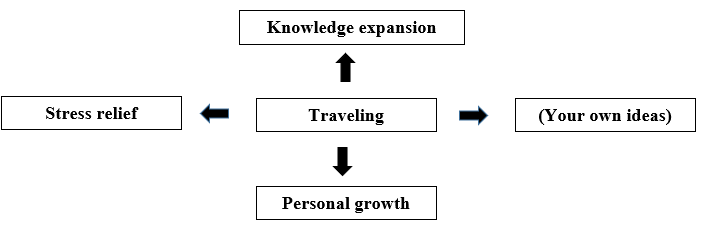
Follow-up questions:
1. Do you think international travel is always better than domestic travel? Why?
2. In what ways can tourism have a negative impact on a local destination?Topic: Traveling has become an essential part of many people's lives today. (Ngày nay, du lịch đã trở thành một phần thiết yếu trong cuộc sống của nhiều người.)
Sample answer:
In this fast-paced modern world, I believe traveling has evolved from a mere luxury into a fundamental necessity.
Firstly, it serves as an excellent means of stress relief, allowing individuals to unwind and escape the monotony of their daily routines. Secondly, the knowledge gained through travel is invaluable, as it provides first-hand insights into history and geography that no textbook can fully offer. Moreover, traveling fosters personal growth by pushing people out of their comfort zones and helping them become more resilient and adaptable.
Beyond these benefits, I am convinced that traveling promotes cultural appreciation. By immersing ourselves in different traditions and lifestyles, we can develop a deeper understanding of global diversity, which ultimately contributes to a more tolerant and open-minded society.
Bản dịch:
Trong thế giới hiện đại đầy hối hả này, tôi tin rằng du lịch đã tiến hóa từ một thứ xa xỉ thuần túy trở thành một nhu cầu thiết yếu cơ bản.
Trước hết, nó đóng vai trò như một phương tiện giải tỏa căng thẳng tuyệt vời, cho phép mỗi cá nhân được thư giãn và thoát khỏi sự đơn điệu của nhịp sống thường nhật. Thứ hai, những kiến thức thu được thông qua du lịch là vô giá, vì nó cung cấp những cái nhìn thực tế về lịch sử và địa lý mà không một cuốn sách giáo khoa nào có thể truyền tải trọn vẹn. Hơn nữa, du lịch thúc đẩy sự phát triển cá nhân bằng cách đẩy con người ra khỏi vùng an toàn, giúp họ trở nên kiên cường và dễ thích nghi hơn.
Ngoài những lợi ích này, tôi tin chắc rằng du lịch còn thúc đẩy sự trân trọng văn hóa. Bằng cách đắm mình vào các truyền thống và lối sống khác nhau, chúng ta có thể phát triển sự hiểu biết sâu sắc hơn về sự đa dạng toàn cầu, điều mà cuối cùng sẽ góp phần xây dựng một xã hội bao dung và cởi mở hơn.
Follow-up questions:
1. Do you think international travel is always better than domestic travel? Why or why not? (Bạn có nghĩ du lịch quốc tế luôn tốt hơn du lịch trong nước không? Tại sao hoặc tại sao không?)
Sample answer: Not necessarily. International travel can be exciting because people can experience different cultures and lifestyles. However, domestic travel is often more affordable and convenient, and there are still many beautiful places to discover within one’s own country.
Bản dịch: Không hẳn. Du lịch quốc tế có thể rất thú vị vì mọi người được trải nghiệm những nền văn hóa và lối sống khác nhau. Tuy nhiên, du lịch trong nước thường rẻ hơn và thuận tiện hơn, và vẫn có rất nhiều địa điểm đẹp để khám phá ngay trong chính đất nước mình.
2. In what ways can tourism have a negative impact on a local destination? (Du lịch có thể gây ảnh hưởng tiêu cực đến một địa điểm địa phương như thế nào?)
Sample answer: Tourism can create environmental problems such as pollution and overcrowding. In some places, too many tourists may damage natural attractions or historical sites. It can also increase living costs for local residents, especially in popular tourist destinations.
Bản dịch: Du lịch có thể gây ra các vấn đề môi trường như ô nhiễm và quá tải du khách. Ở một số nơi, quá nhiều khách du lịch có thể làm hư hại các địa điểm thiên nhiên hoặc di tích lịch sử. Ngoài ra, nó còn làm tăng chi phí sinh hoạt của người dân địa phương, đặc biệt tại các điểm du lịch nổi tiếng.