Đề thi tham khảo ĐGNL Đại học Sư phạm TP.Hồ Chí Minh môn Tiếng Anh có đáp án - Đề số 1
80 câu hỏi
A. LISTENING
In this section of the test, you will have an opportunity to demonstrate your ability to understand conversations and talks in English. There are three parts in this section with special directions for each part. Answer all the questions on the basis of what is stated or implied by the speakers in the recording. The recording will be played ONCE only.
Part 1: Question 1-8
In this part, you will hear EIGHT short announcements or instructions. There is one question for each announcement or instruction. For each question, choose the right answer A, B, C or D. First you have some time to look at questions 1 to 8.
Where can visitors see the ducks?
In the cages
In the pond
Near the wastebaskets
In the field
Đáp án đúng là C
Where can visitors see the ducks? (Du khách có thể nhìn thấy những con vịt ở đâu?)
A. in the cages (Trong chuồng)
" Sai. “cages” được nhắc đến ở thông tin “In front of us are some empty cages where the rabbits live”, đây là nơi thỏ sống.
B. in the pond (Ở trong ao)
" Sai, dựa trên thông tin “If you’re interested in ducks, surprisingly they’re not right here in the pond” (Nếu bạn quan tâm đến loài vịt, có một điều khá bất ngờ là chúng không nằm ở trong ao ngay đây đâu).
C. near the wastebaskets (Gần những chiếc thùng rác)
" Đúng, dựa trên thông tin “...over there in one of their favorite places, near the dustbins” (mà đang tụ tập ở đằng kia , một trong những nơi yêu thích của chúng, gần khu vực thùng rác).
Ta có: wastebaskets = dustbins: thùng rác
D. in the field (Ở trên cánh đồng)
" Sai, dựa trên thông tin “we keep goats in the field here, together with some sheep” (Còn ở cánh đồng này, chúng tôi nuôi dê chung với một vài con cừu).
Bài nghe | Dịch bài nghe |
Hi everyone, and welcome to City Wildlife Park. I’ll explain where things are and then you’re free to go wherever you want.
In front of us are some empty cages where the rabbits live. They’re free to run about in the long grass, but come back to their cages when they’re hungry!
If you’re interested in ducks, surprisingly they’re not right here in the pond, but over there in one of their favorite places, near the dustbins.
And we keep goats in the field here, together with some sheep. | Chào mọi người, chào mừng các bạn đến với Công viên Động vật Hoang dã Thành phố. Tôi sẽ giới thiệu qua về vị trí các khu vực, sau đó các bạn có thể tự do tham quan bất cứ đâu mình muốn. Phía trước mặt chúng ta là những chiếc chuồng trống, nơi ở của loài thỏ. Hiện tại chúng đang được thả tự do chạy nhảy trên thảm cỏ cao, nhưng sẽ tự quay về chuồng khi thấy đói! Nếu bạn quan tâm đến loài vịt, có một điều khá bất ngờ là chúng không nằm ở trong ao ngay đây đâu, mà đang tụ tập ở đằng kia, một trong những nơi yêu thích của chúng, gần khu vực thùng rác. Còn ở cánh đồng này, chúng tôi nuôi dê chung với một vài con cừu. |
Sunny
Cloudy
Rainy
Rainy and cloudy
Đáp án đúng là A
What will the weather be like when the festival starts? (Thời tiết sẽ như thế nào khi lễ hội bắt đầu?)
A. sunny (Có nắng)
" Đúng, dựa trên thông tin “the music festival starting on Saturday” (lễ hội âm nhạc bắt đầu vào thứ Bảy) và “Saturday will bring bright sunshine” (thứ Bảy sẽ có nắng rực rỡ). Vì lễ hội bắt đầu vào thứ Bảy nên thời tiết lúc đó chính là nắng.
B. cloudy (Có mây / Âm u)
" Sai, dựa trên thông tin “Overnight, however, clouds are expected to move in and Sunday will see dull skies” (Tuy nhiên, về đêm, dự báo mây sẽ kéo đến và ngày Chủ nhật bầu trời sẽ âm u). Trạng thái nhiều mây chỉ bắt đầu từ đêm thứ Bảy và kéo dài sang Chủ nhật, không phải lúc lễ hội mới bắt đầu.
C. rainy (Có mưa)
" Sai, dựa trên thông tin “ … Sunday … there will be a good chance of rain later on” (… Chủ nhật … khả năng cao sẽ có mưa vào cuối ngày). Mưa là dự báo thời tiết cho chủ nhật, không phải lúc lễ hội bắt đầu.
D. rainy and cloudy (Có mưa và có mây)
" Sai. Đây là tổng hợp thời tiết của ngày Chủ nhật (dull skies và chance of rain), không phải lúc lễ hội mới bắt đầu.
Bài nghe | Dịch bài nghe |
And now for the weather forecast for this Saturday and Sunday. People heading to the music festival starting on Saturday on the South coast should be prepared for different conditions over the next two days. Saturday will bring bright sunshine but cool temperatures for this time of year. Overnight, however, clouds are expected to move in and Sunday will see dull skies bringing a further drop in temperatures, and there will be a good chance of rain later on. | Và sau đây là phần dự báo thời tiết cho thứ Bảy và Chủ nhật tuần này. Những người đang tiến về phía bờ biển phía Nam để tham dự lễ hội âm nhạc bắt đầu vào thứ Bảy nên chuẩn bị sẵn sàng cho các điều kiện thời tiết khác nhau trong hai ngày tới. Thứ Bảy sẽ có nắng rực rỡ nhưng nhiệt độ lại khá thấp so với thời điểm này hàng năm. Tuy nhiên, về đêm, dự báo mây sẽ kéo đến và ngày Chủ nhật sẽ có bầu trời âm u, khiến nhiệt độ giảm thêm nữa, và có khả năng cao sẽ có mưa vào cuối ngày. |
An iron in a damaged box
A damaged iron in a good-condition box
A damaged iron in a damaged box
An iron in a good-condition box
What has the man sent back to the company? (Người đàn ông đã gửi trả lại cái gì cho công ty?)
A. an iron in a damaged box (Một chiếc bàn là trong một chiếc hộp bị hỏng)
" Đúng, dựa trên thông tin “the box was badly damaged when it arrived” (chiếc hộp đã bị hư hỏng nặng khi được giao đến), và “and the iron didn’t look damaged at all” (chiếc bàn là trông cũng không có vẻ gì là bị hỏng cả).
B. a damaged iron in a good-condition box (Một chiếc bàn là bị hỏng trong một chiếc hộp còn tốt)
" Sai, dựa trên thông tin “the box was badly damaged” (chiếc hộp bị hỏng nặng).
C. a damaged iron in a damaged box (Một chiếc bàn là bị hỏng trong một chiếc hộp bị hỏng)
" Sai, dựa trên thông tin “the iron didn't look damaged at all” (chiếc bàn là trông không có vẻ gì là bị hỏng cả).
D. an iron in a good-condition box (Một chiếc bàn là trong một chiếc hộp còn tốt)
" Sai, dựa trên thông tin “the box was badly damaged when it arrived” (chiếc hộp đã bị hư hỏng nặng khi được giao đến).
Bài nghe | Dịch bài nghe |
Hello. My name's John Masters. This is a message for the person I spoke to yesterday in Customer Services. You asked me to return the iron I bought from you in its box. I’ve done this, although as I mentioned to you the box was badly damaged when it arrived. Anyway, that’s not the problem and the iron didn’t look damaged at all. But when I switched it on, it didn’t heat up. My order reference is 01376XB. I hope you’ll replace the iron as soon as possible. Thank you. | Xin chào. Tôi tên là John Masters. Đây là lời nhắn gửi đến nhân viên mà tôi đã nói chuyện cùng vào ngày hôm qua ở bộ phận Chăm sóc Khách hàng. Anh / chị có yêu cầu tôi gửi trả lại chiếc bàn là đã mua trong hộp của nó. Tôi đã thực hiện việc này, mặc dù như tôi đã đề cập với anh / chị, cái hộp đã bị hư hỏng nặng khi được giao đến. Tuy nhiên, đó không phải là vấn đề chính và chiếc bàn là trông cũng không có vẻ gì là bị hỏng cả. Thế nhưng, khi tôi bật nó lên thì nó lại không nóng. Mã đơn hàng của tôi là 01376XB. Tôi hy vọng các bạn sẽ đổi cho tôi chiếc bàn là khác sớm nhất có thể. Cảm ơn các bạn. |
An open-air concert area
A cinema
An art gallery
A restaurant
Which part of the Arts Centre only opened recently? (Phần nào của Trung tâm Nghệ thuật chỉ vừa mới mở gần đây?)
A. an open-air concert area (Khu vực hòa nhạc ngoài trời)
" Đúng, dựa trên thông tin “The open-air concert area is the new home to the City Orchestra” (Khu vực hòa nhạc ngoài trời là 'ngôi nhà' mới của Dàn nhạc Thành phố).
B. a cinema (Rạp chiếu phim)
" Sai. Thông tin “The cinema is presenting a programme of films by younger film-makers and is attracting larger audiences than ever” (Rạp chiếu phim đang giới thiệu một chương trình gồm các bộ phim của những nhà làm phim trẻ và đang thu hút lượng khán giả lớn hơn bao giờ hết) không cung cấp thời điểm mở cửa rạp chiếu phim.
C. an art gallery (Phòng trưng bày nghệ thuật)
" Sai. Thông tin “the City Art Gallery has a major programme of exhibitions all summer” (Phòng trưng bày Nghệ thuật Thành phố có một chương trình triển lãm lớn kéo dài suốt cả mùa hè) không cung cấp thời điểm mở cửa phòng trưng bày này.
D. a restaurant (Nhà hàng)
" Sai. Thông tin “Guests can enjoy dinner in the popular restaurant and enjoy the wonderful views of the City and river” (Du khách có thể thưởng thức bữa tối tại nhà hàng nổi tiếng và ngắm nhìn khung cảnh tuyệt đẹp của thành phố và dòng sông) cũng không đề cập đến thời điểm mở cửa nhà hàng.
Bài nghe | Dịch bài nghe |
In the heart of the City the Arts Centre includes a concert hall, cinema and an art gallery. The cinema is presenting a programme of films by younger film-makers and is attracting larger audiences than ever. The open-air concert area is the new home to the City Orchestra with an exciting concert programme of new composers and guest performers, while the City Art Gallery has a major programme of exhibitions all summer. Guests can enjoy dinner in the popular restaurant and enjoy the wonderful views of the City and river. | Nằm tại trung tâm thành phố, Trung tâm Nghệ thuật bao gồm một nhà hát lớn, rạp chiếu phim và phòng trưng bày nghệ thuật. Rạp chiếu phim đang giới thiệu một chương trình gồm các bộ phim của những nhà làm phim trẻ và đang thu hút lượng khán giả lớn hơn bao giờ hết. Khu vực hòa nhạc ngoài trời là “ngôi nhà” mới của Dàn nhạc Thành phố với chương trình hòa nhạc đầy thú vị của các nhà soạn nhạc mới và các nghệ sĩ khách mời, trong khi Phòng trưng bày Nghệ thuật Thành phố có một chương trình triển lãm lớn kéo dài suốt cả mùa hè. Du khách có thể thưởng thức bữa tối tại nhà hàng nổi tiếng và ngắm nhìn khung cảnh tuyệt đẹp của thành phố và dòng sông. |
Tomatoes
Potatoes
Cabbage
Onion
Which vegetable is used in all today's recipes? (Loại rau củ nào được dùng trong tất cả các công thức nấu ăn hôm nay?)
A. tomatoes (Cà chua)
B. potatoes (Khoai tây)
C. cabbage (Bắp cải)
D. onion (Hành tây)
- Thông tin “You can do wonderful things with tomatoes, potatoes - and I don’t mean chips or fries! even cabbage, yes cabbage rolls, tilled with tasty rice and herbs” (Bạn có thể làm nên những điều kỳ diệu với cà chua, khoai tây — và tôi không có ý nói đến khoai tây chiên đâu nhé! — thậm chí là cả bắp cải nữa, món bắp cải cuốn nhân cơm thảo mộc thơm ngon) không nói ba loại rau củ này có trong mọi công thức nấu ăn hôm nay.
- Thông tin “And the essential vegetable in all my recipes is the ordinary onion” (Và loại rau củ thiết yếu trong tất cả các công thức nấu ăn của tôi là hành tây bình thường) đề cập “onion” luôn có trong tất cả các công thức nấu ăn.
" Chọn D
Bài nghe | Dịch bài nghe |
On today’s student Cookery programme, I’m going to show you how to make some really cheap and healthy meals. Forget about opening tins and think fresh! You can do wonderful things with tomatoes, potatoes - and I don’t mean chips or fries! even cabbage, yes cabbage rolls, tilled with tasty rice and herbs.
And the essential vegetable in all my recipes is the ordinary onion, red or white or brown. Colour doesn’t matter. First of all, you need a Sharp knife. So, watch carefully and off we go. | Trong chương trình Nấu ăn dành cho sinh viên hôm nay, tôi sẽ hướng dẫn các bạn cách chế biến một số bữa ăn thực sự rẻ và lành mạnh. Hãy quên việc mở những hộp đồ đóng sẵn đi và hãy nghĩ đến thực phẩm tươi sống! Bạn có thể làm nên những điều kỳ diệu với cà chua, khoai tây - và tôi không có ý nói đến khoai tây chiên đâu nhé! thậm chí là cả bắp cải nữa, món bắp cải cuốn nhân cơm thảo mộc thơm ngon. Và loại rau củ không thể thiếu trong tất cả các công thức nấu ăn của tôi chính là những củ hành tây bình thường, loại màu đỏ, trắng hay nâu đều được. Màu sắc không quan trọng. Trước hết, bạn cần một con dao sắc. Vì vậy, hãy quan sát thật kỹ và chúng ta bắt đầu thôi. |
In cash
By credit card
By cheque
Bank transfer
How did the man want to pay? (Người đàn ông đã muốn thanh toán bằng cách nào?)
A. in cash (Bằng tiền mặt)
" Đúng, dựa trên thông tin “I made the mistake of trying to pay a hotel bill in cash” (Tôi đã mắc sai lầm khi cố gắng thanh toán hóa đơn khách sạn bằng tiền mặt).
B. by credit card (Bằng thẻ tín dụng)
" Sai. Đây là phương thức mà phía khách sạn yêu cầu (insisted on me using a credit card), chứ không phải là cách người đàn ông muốn dùng từ đầu. Thậm chí lúc đó ông ấy còn không mang theo thẻ bên mình.
C. by cheque (Bằng séc)
" Sai vì bài nghe không đề cập đến cách thanh toán này.
D. bank transfer (Chuyển khoản ngân hàng)
" Sai. Bài nghe có nhắc đến “internet banking site” (trang web ngân hàng trực tuyến). Tuy nhiên, ông ấy vào đó không phải để thực hiện lệnh chuyển khoản (transfer), mà là để lấy thông tin thẻ (get my card details) nhằm đáp ứng yêu cầu dùng thẻ của khách sạn.
Bài nghe | Dịch bài nghe |
You’d think that paying a bill would be easy. On tonight’s Money Today, I’m looking at some of the difficulties there can be. The story starts with my own experience. Thinking it’d be simpler, I made the mistake of trying to pay a hotel bill in cash. Well, amazingly they insisted on me using a credit card. I didn’t have one with me, so had to get onto my internet banking site using my mobile phone to try and get my card details. Nothing’s easy. | Bạn cứ ngỡ rằng việc thanh toán một hóa đơn sẽ dễ dàng. Trong chương trình Money Today tối nay, tôi sẽ xem xét một số khó khăn có thể xảy ra. Câu chuyện bắt đầu từ chính trải nghiệm của cá nhân tôi. Cứ nghĩ rằng mọi chuyện sẽ đơn giản hơn, tôi đã mắc sai lầm khi cố gắng thanh toán hóa đơn khách sạn bằng tiền mặt. Thật đáng ngạc nhiên, họ lại khăng khăng yêu cầu tôi phải sử dụng thẻ tín dụng. Lúc đó tôi lại không mang theo thẻ, vì vậy đã phải đăng nhập vào trang ngân hàng trực tuyến trên điện thoại di động để cố gắng lấy thông tin thẻ của mình. Chẳng có gì là dễ dàng cả! |
A guitar
A book
Glasses
The library
What is the woman phoning about? (Người phụ nữ gọi điện về việc gì?)
A. a guitar (Một cây đàn guitar)
" Đúng. Ngay câu đầu tiên, cô ấy đã xác nhận mục đích “I arranged to collect a guitar I ordered” (Tôi đã hẹn đến lấy một cây đàn guitar mà mình đặt mua). Toàn bộ nội dung sau đó là để giải thích lý do cô ấy không thể đến lấy đàn đúng hẹn.
B. a book (Một cuốn sách)
" Sai. Việc lấy sách (get a book from the library) chỉ là nguyên nhân khiến cô ấy lỡ chuyến xe buýt, và “sách” không phải thứ khiến cô ấy gọi điện để giải quyết.
C. glasses (Kính mắt)
" Sai. Cô ấy nhắc đến việc đi chọn kính mới (choose some new glasses) vào ngày mai. Đây là kế hoạch của cô ấy tại trung tâm thị trấn, và cô ấy tận dụng chuyến đi đó để ghé lấy đàn. Cô ấy không gọi điện cho cửa hàng để hỏi về kính.
D. the library (thư viện)
" Sai. Thư viện chỉ là nơi cô ấy đã ghé qua trước đó. Người phụ nữ đang gọi điện cho một cửa hàng (nơi bán đàn), không phải gọi cho thư viện.
Bài nghe | Dịch bài nghe |
Hello, this is Sarah Wright. I arranged to collect a guitar I ordered. I was meant to come this afternoon, but there’s a problem. I had to get a book from the library and I’ve just missed the bus so I won’t be able to get out to the shop before you close. I’ve got an appointment in the town centre to choose some new glasses tomorrow so I could come in and pick it up then. I hope that’s ok. | Xin chào, tôi là Sarah Wright. Tôi đã hẹn đến lấy một cây đàn guitar mà mình đặt mua. Đúng ra là tôi sẽ đến vào chiều nay, nhưng có một chút vấn đề. Tôi phải ghé qua thư viện để lấy một cuốn sách và vừa mới bị lỡ chuyến xe buýt, nên tôi sẽ không thể đến cửa hàng trước giờ đóng cửa được. Ngày mai tôi có một cuộc hẹn ở trung tâm thị trấn để chọn kính mới, vì vậy tôi có thể ghé qua và lấy đàn vào lúc đó. Hy vọng như vậy vẫn ổn. |
Sunny
Icy
Rainy
Cloudy
What will the weather be like for the race? (Thời tiết sẽ như thế nào trong cuộc đua?)
A. sunny (Có nắng)
" Sai. Vì “sunny” là thời tiết cả tuần qua (it’s been clear and sunny all week), không phải thời tiết hôm diễn ra cuộc đua.
B. icy (rất lạnh)
" Đúng, dựa trên thông tin “but it looks as if it’s going to turn really cold tonight, and with ice on the track, conditions for racing could be difficult” (nhưng có vẻ như đêm nay trời sẽ chuyển rất lạnh, và với tình trạng mặt đường đua bị đóng băng, các điều kiện cho cuộc đua có thể sẽ rất khó khăn).
C. rainy (Có mưa)
" Sai, dựa trên thông tin “It doesn’t look like there’ll be any rain until the weekend” (Dường như sẽ không có bất kỳ cơn mưa nào cho đến tận cuối tuần).
D. cloudy (Nhiều mây)
" Sai. Thông tin “later in the afternoon there’ll be a bit of sun coming out from behind the clouds” (vào cuối buổi chiều mai, sẽ có một chút nắng hửng lên từ sau những đám mây) cho biết trời sẽ tan mây vào chiếu tối, không có thông tin đề cập tới trời có mây vào buổi sáng diễn ra cuộc đua.
Bài nghe | Dịch bài nghe |
... and now for the weather. What’s it going to be like for the big race tomorrow morning, Mike? -Well, it’s been clear and sunny all week, but it looks as if it’s going to turn really cold tonight, and with ice on the track, conditions for racing could be difficult. It doesn’t look like there’ll be any rain until the weekend though, and later in the afternoon there’ll be a bit of sun coming out from behind the clouds. | ... và bây giờ là phần dự báo thời tiết. Thời tiết cho chặng đua lớn vào sáng mai sẽ như thế nào vậy Mike? - Ồ, suốt cả tuần qua trời đều trong xanh và có nắng, nhưng có vẻ như đêm nay trời sẽ chuyển rất lạnh, và với tình trạng mặt đường đua bị đóng băng, các điều kiện cho cuộc đua có thể sẽ rất khó khăn. Tuy nhiên, dự báo là sẽ không có mưa cho đến tận cuối tuần, và vào cuối buổi chiều mai, sẽ có một chút nắng hửng lên từ sau những đám mây. |
Part 2: Questions 9-20
In this part, you will hear THREE conversations. The conversations will not be repeated. There are four questions for each conversation. For each question, choose the right answer A, B, C or D. You will hear the recording ONCE only.
Part 2: Questions 9-12
Choose the best answer. You will hear the recording ONCE only. First you have some time to look at question 9 to 12.
They enjoy the variety of equipment.
They like being able to work on their own.
It is an important part of their studies.
They can share learning materials there.
Đáp án đúng là C
Why do students want to keep the Self-Access Centre? (Tại sao sinh viên muốn giữ Trung tâm Tự học?)
A. They enjoy the variety of equipment. (họ thích sự đa dạng của thiết bị.)
" Sai. Ngược lại, Jun phàn nàn rằng thiết bị cần được cải thiện (we would like to see some improvements to the equipment) và không đủ máy tính cho mỗi người (particularly the computers; there aren’t enough for one each at the moment and we always have to share).
B. They like being able to work on their own. (họ thích có thể tự làm việc một mình.)
" Sai. Jun nhấn mạnh rằng sinh viên thích đi cùng giáo viên và làm việc theo nhóm (they really like going... with their teacher and staying together as a group).
C. It is an important part of their studies. (nó là một phần quan trọng trong việc học của họ.)
" Đúng, dựa trên thông tin “they see it as a pretty major component of their course” (họ coi đó là một phần khá quan trọng trong khóa học của mình).
D. They can share learning materials there. (họ có thể chia sẻ tài liệu học tập ở đó.)
" Sai vi đây là thông tin không được đề cập trong bài nghe.
It should be closed.
It should be moved elsewhere.
Restricted computer access should be given.
The computers should be used for both personal and study purposes.
What do some teachers think of the Self Access Centre? (Một số giáo viên nghĩ gì về Trung tâm Tự học?)
A. It should be closed. (nó nên được đóng cửa.)
" Sai. Các giáo viên đều đồng ý đây là nguồn tài nguyên quý giá (teachers agree that it is a very valuable resource).
B. It should be moved elsewhere. (nó nên được chuyển đi nơi khác.)
" Đúng, dựa trên thông tin “Some of us also think that we could benefit a lot more by relocating the Self-Access Centre to the main University library building” (Một số chúng tôi cũng nghĩ rằng có thể hưởng lợi nhiều hơn bằng cách chuyển trung tâm sang tòa nhà thư viện chính).
C. Restricted computer access should be given. (Nên giới hạn quyền truy cập máy tính.)
" Sai, dựa trên thông tin “We don’t want to stop you students using it, but we think the computers should be used as a learning resource, not for emails” (Chúng tôi không muốn ngăn cản các em sử dụng, nhưng chúng tôi nghĩ rằng máy tính nên được dùng như một công cụ học tập chứ không phải để gửi email), giáo viên chỉ muốn học sinh không nên sử dụng máy tính cho mục đích cá nhân.
D. The computers should be used for both personal and study purposes. (Máy tính nên được dùng cho cả mục đích cá nhân và học tập.)
" Sai, dựa trên thông tin “the computers should be used as a learning resource, not for emails” (máy tính nên được dùng như công cụ học tập, không phải để gửi email). Emails trong bài nghe chỉ mục đích cá nhân.
The size of the library
Difficulty in getting help
The lack of materials
Choosing a class activity
What are students mainly concerned about using the library? (Sinh viên chủ yếu lo lắng điều gì về việc sử dụng thư viện?)
A. The size of the library. (kích thước của thư viện.)
" Sai. Jun thừa nhận thư viện đủ lớn (the library is big enough).
B. Difficulty in getting help. (khó khăn trong việc nhận được sự giúp đỡ.)
" Đúng, dựa trên thông tin “Our main worry would be not being able to go to a teacher for advice” (Lo lắng chính của chúng em là sẽ không thể tìm gặp giáo viên để xin lời khuyên).
C. The lack of materials. (sự thiếu hụt tài liệu.)
" Sai. Bài nghe không đề cập đến việc thiếu tài liệu tại thư viện.
D. Choosing a class activity. (việc chọn một hoạt động lớp học.)
" Sai. Mặc dù Jun nói sinh viên cần giáo viên giúp chọn hoạt động, nhưng đó là hệ quả của việc thiếu giáo viên hướng dẫn, không phải lo lắng về bản thân hoạt động đó.
The cost of upgrading the centre
The lack of space in the centre
The difficulty in supervising the centre
Students’ using the centre for personal emails
What is the Director of Studies concerned about? (Giám đốc đào tạo lo lắng về điều gì?)
A. The cost of upgrading the centre. (chi phí nâng cấp trung tâm.)
" Sai, dựa trên thông tin “It’s not so much the expense that I’m worried about” (Tôi không quá lo lắng về chi phí).
B. The lack of space in the centre. (sự thiếu hụt không gian trong trung tâm.)
" Sai, dựa trên thông tin “we’ve certainly got room to do it” (chúng ta chắc chắn có đủ không gian để thực hiện).
C. The difficulty in supervising the centre. (khó khăn trong việc giám sát trung tâm.)
" Đúng, dựa trên thông tin “it’s the problem of timetabling a teacher to be in there outside class hours” (vấn đề là việc sắp xếp thời khóa biểu để một giáo viên có mặt ở đó ngoài giờ lên lớp) và cần đảm bảo mọi thứ được “looked after properly” (chăm sóc đúng cách).
D. Students’ using the centre for personal emails. (việc sinh viên dùng trung tâm để gửi email cá nhân.)
" Sai. Mặc dù bài nghe có nhắc đến thông tin này, nhưng trong câu trả lời cuối, người phụ nữ không nhắc đến thông tin này như là một lý do khó khăn.
Bài nghe | Dịch bài nghe |
W: Hi Jun. As you know, I’ve asked you here today to discuss the future of our Self-Access Centre. We have to decide what we want to do about this very important resource for our English language students. So, can you tell me what the students think about this? M: Well, from the students’ point of view, we would like to keep it. The majority of students say that they enjoy using it because it provides a variation on the classroom routine, and they see it as a pretty major component of their course. But we would like to see some improvements to the equipment, particularly the computers; there aren’t enough for one each at the moment and we always have to share. W: Well yes, the teachers agree that it is a very valuable resource, but one thing we have noticed is that a lot of the students are using it to check their personal emails. We don’t want to stop you students using it, but we think the computers should be used as a learning resource, not for emails. Some of us also think that we could benefit a lot more by relocating the Self-Access Centre to the main University library building. How do you think the students would feel about that, Jun?
M: Well, the library is big enough to incorporate the Self-Access Centre, but it wouldn’t be like a class activity anymore. Our main worry would be not being able to go to a teacher for advice. I'm sure there would be plenty of things to do but we really need teachers to help us choose the best activities.
W: Well, there would still be a teacher present and he or she would guide the activities of the students. We wouldn't just leave him to get on with it. M: Yes, but I think the students would be much happier keeping the existing set-up; they really like going to the Self-Access Centre with their teacher and staying together as a group to do activities. If we could just improve the resources and facilities, I think it would be fine. Is the cost going to be a problem? W: It’s not so much the expense that I’m worried about, and we’ve certainly got room to do it, but it’s the problem of timetabling a teacher to be in there outside class hours. If we’re going to spend a lot of money on equipment and resources, we really need to make sure that everything is looked after properly. Anyway, let’s make some notes to see just what needs doing to improve the Centre. | W: Chào Jun. Như em đã biết, tôi mời em đến đây hôm nay để thảo luận về tương lai của Trung tâm Tự học. Chúng ta phải quyết định sẽ làm gì với nguồn tài nguyên rất quan trọng này dành cho các sinh viên học tiếng Anh. Vậy, em có thể cho tôi biết sinh viên nghĩ gì về điều này không? M: Vâng, từ góc độ của sinh viên, chúng em muốn giữ trung tâm này lại. Đa số sinh viên nói rằng họ thích sử dụng nó vì nó mang lại sự thay đổi so với các thói quen trên lớp, và họ coi đó là một phần khá quan trọng trong khóa học. Tuy nhiên, chúng em muốn thấy một số cải thiện về thiết bị, đặc biệt là máy tính; hiện tại không đủ máy để mỗi người dùng một chiếc và chúng em luôn phải dùng chung.
W: À đúng rồi, các giáo viên cũng đồng ý rằng đó là một nguồn tài nguyên rất giá trị, nhưng có một điều chúng tôi nhận thấy là rất nhiều sinh viên đang sử dụng nó để kiểm tra email cá nhân. Chúng tôi không muốn ngăn cản các em sử dụng, nhưng chúng tôi nghĩ rằng máy tính nên được dùng như một công cụ học tập chứ không phải để gửi email. Một số giáo viên cũng nghĩ rằng chúng ta có thể được hưởng lợi nhiều hơn bằng cách chuyển Trung tâm Tự học sang tòa nhà thư viện chính của trường Đại học. Em nghĩ các sinh viên sẽ cảm thấy thế nào về điều đó, Jun? M: Chà, thư viện đủ lớn để sáp nhập Trung tâm Tự học vào, nhưng khi đó nó sẽ không còn giống như một hoạt động của lớp học nữa. Lo lắng chính của chúng em là sẽ không thể tìm gặp giáo viên để xin lời khuyên. Em chắc chắn là sẽ có rất nhiều việc để làm nhưng chúng em thực sự cần giáo viên giúp lựa chọn những hoạt động tốt nhất. W: Ồ, vẫn sẽ có giáo viên túc trực ở đó và họ sẽ hướng dẫn các hoạt động của sinh viên. Chúng tôi sẽ không để mặc sinh viên tự xoay xở đâu. M: Vâng, nhưng em nghĩ sinh viên sẽ hạnh phúc hơn nhiều nếu giữ nguyên mô hình hiện tại; họ thực sự thích đến Trung tâm Tự học cùng với giáo viên của mình và ở cùng nhau như một nhóm để thực hiện các hoạt động. Nếu chúng ta có thể cải thiện nguồn lực và cơ sở vật chất, em nghĩ mọi thứ sẽ ổn thôi. Liệu chi phí có phải là một vấn đề không ạ? W: Tôi không quá lo lắng về chi phí, và chúng ta chắc chắn có đủ không gian để thực hiện, nhưng vấn đề là việc sắp xếp thời khóa biểu để một giáo viên có mặt ở đó ngoài giờ lên lớp. Nếu chúng ta định chi nhiều tiền cho thiết bị và tài nguyên, chúng ta thực sự cần đảm bảo rằng mọi thứ được chăm sóc đúng cách. Dù sao thì, hãy cùng ghi chú lại xem chính xác cần làm gì để cải thiện Trung tâm này nhé.
|
Part 2: Questions 13-16
Choose the best answer. You will hear the recording ONCE only. First you will have some time to look at question 13 to 16.
He paid her well.
He was kind to her.
He sent her on a training course.
He made her become confident.
Đáp án đúng là B
Why did Linda like her first boss? (Tại sao Linda quý người sếp đầu tiên của mình?)
A. He paid her well. (ông trả lương hậu hĩnh cho cô ấy.)
⭢ Sai. Linda nói: “He didn’t pay us well” (Ông ấy trả lương không cao).
B. He was kind to her. (ông tử tế với cô ấy.)
⭢Đúng. Dựa trên thông tin “He was always polite, never shouted at us... and that was good for a young girl like me who wasn’t very confident” (Ông ấy luôn lịch sự, không bao giờ quát mắng... điều đó thực sự tốt cho một cô gái trẻ chưa tự tin lắm như tôi). Việc ông luôn tử tế, không la mắng là biểu hiện của “kind”.
C. He sent her on a training course. (ông gửi cô ấy đi học một khóa đào tạo.)
⭢Sai, dựa trên thông tin cô nói “I had no proper training” (Tôi không được đào tạo bài bản).
D. He made her become confident. (ông giúp cô ấy trở nên tự tin hơn.)
⭢Sai. Dựa trên thông tin “He was always polite, never shouted at us... and that was good for a young girl like me who wasn’t very confident” (Ông ấy luôn lịch sự, không bao giờ quát mắng... điều đó thực sự tốt cho một cô gái trẻ chưa tự tin lắm như tôi), ông không chủ động giúp cô tự tin hơn.
Eating the cakes
The smell of baking
The clean workplace
Friendly co-workers
Đáp án đúng là B
What did Linda enjoy about working in the shop? (Linda thích điều gì khi làm việc tại cửa hàng?)
A. Eating the cakes (ăn bánh ngọt)
⭢Sai. Dựa trên thông tin “The first week was difficult because I just wanted to eat the cakes which wasn’t allowed but then I lost interest in them” (Tuần đầu tiên khá khó khăn vì tôi chỉ muốn ăn những chiếc bánh đó thôi, điều mà chúng tôi không được phép làm, nhưng sau đó tôi cũng dần mất hứng thú với chúng), cô ấy thậm chí không được phép ăn; ngoài ra, dần dần cô ấy ấy không còn thích việc này nữa.
B. The smell of baking (mùi bánh nướng)
⭢Đúng, dựa trên thông tin “Then in the morning there was this wonderful smell of bread baking” (Vào buổi sáng, luôn có mùi bánh mì nướng thơm phức tuyệt vời).
C. The clean workplace (nơi làm việc sạch sẽ)
⭢Sai. Dựa trên thông tin “We had to keep everything clean, and that was hard work” (Chúng tôi phải giữ mọi thứ luôn sạch bóng, và đó là một công việc vất vả), việc giữ mọi thứ sạch sẽ đối với cô là "hard work" (công việc vất vả) chứ không phải là điều cô tận hưởng.
D. Friendly co-workers (đồng nghiệp thân thiện)
⭢Sai. Dựa trên thông tin “the full-time staff some treated us like silly schoolgirls because we couldn’t cook” (nhân viên toàn thời gian đối xử với chúng tôi như những nữ sinh ngốc nghếch vì chúng tôi không biết nấu ăn),nhân viên toàn thời gian không thân thiện.
Baking bread
Displaying cakes
Making sandwiches
Creating new bread recipes
In the shop, what did Linda help with? (Tại cửa hàng, Linda đã giúp việc gì?)
A. Baking bread (nướng bánh mì)
⭢Sai, dựa trên thông tin “There were two chefs who were specialists in making cakes for celebrations and creating new bread recipes” (Có hai đầu bếp chuyên làm bánh cho các bữa tiệc kỷ niệm và sáng tạo các công thức bánh mì mới). Việc này do “two chefs who were specialists” (hai đầu bếp chuyên gia) đảm nhận.
B. Displaying cakes (trưng bày bánh)
⭢Sai, dựa trên thông tin Linda nói: “I wasn’t allowed to touch the ones on display” (Tôi không được phép chạm vào những chiếc bánh đang trưng bày).
C. Making sandwiches (làm bánh mì kẹp)
⭢Đúng, dựa trên thông tin “We sold sandwiches at lunchtime; again, very luxurious ones, and the shop assistants had to make those. I learn to put in really generous fillings, much more than I used at home” (Chúng tôi có bán bánh mì kẹp vào giờ trưa; một lần nữa, chúng đều là loại rất cao cấp và các nhân viên cửa hàng phải tự tay làm chúng. Tôi đã học được cách cho phần nhân thật đầy đặn, nhiều hơn mức tôi thường làm ở nhà.)
D. Creating new bread recipes (sáng tạo công thức bánh mì mới)
⭢Sai. dựa trên thông tin “There were two chefs who were specialists in making cakes for celebrations and creating new bread recipes” (Có hai đầu bếp chuyên làm bánh cho các bữa tiệc kỷ niệm và sáng tạo các công thức bánh mì mới). Việc này cũng do “two chefs who were specialists” (hai đầu bếp chuyên gia) đảm nhận..
They were friendly to her.
They hadn’t got the same skills as her.
They helped her a lot with her work.
They didn’t work as hard as her.
What does Linda say about the full-time shop assistants? (Linda nói gì về các trợ lý cửa hàng toàn thời gian?)
A. They were friendly to her. (họ thân thiện với cô ấy.)
⭢Sai. Dựa trên thông tin “the full-time staff some treated us like silly schoolgirls because we couldn’t cook” (nhân viên toàn thời gian đối xử với chúng tôi như những nữ sinh ngốc nghếch vì chúng tôi không biết nấu ăn),nhân viên toàn thời gian không thân thiện.
B. They hadn’t got the same skills as her. (họ không có những kỹ năng giống như cô ấy.)
⭢Đúng, dựa trên thông tin “the full-time assistants couldn’t add up in their head. I was good at it” (các trợ lý toàn thời gian đó không thể tính nhẩm trong đầu. Tôi thì rất giỏi việc đó).
C. They helped her a lot with her work. (Họ giúp đỡ cô ấy rất nhiều trong công việc.)
⭢Sai. Bài nghe không đề cập đến việc họ giúp đỡ cô, ngược lại họ còn có thái độ coi thường.
D. They didn’t work as hard as her. (họ không làm việc chăm chỉ bằng cô ấy.)
⭢Sai. Bài nghe không có thông tin so sánh mức độ chăm chỉ giữa Linda và các nhân viên toàn thời gian.
Bài nghe | Dịch bài nghe |
M: Now Linda, let’s talk about your first job.
W: Well, I was an assistant in an expensive cake shop in the small town where I lived. It was my last year at school, before I went to college. I wanted to earn extra money for myself because I come from a family of seven and my parents couldn’t afford to give us much pocket money. M: Did you like your first boss?
W: He was always polite, never shouted at us, even when we dropped thing and that was good for a young girl like me who wasn’t very confident. He knew everything about the business. I had no proper training, but it was good experience working for someone with so much knowledge. He didn’t pay us well, but I didn’t expect to earn much in my first job.
M: And what about the shop? Was it a nice place to work? W: As I say, it was an expensive shop, and the cakes were beautiful. Then in the morning there was this wonderful smell of bread baking. The first week was difficult because I just wanted to eat the cakes which wasn’t allowed but then I lost interest in them. We had to keep everything clean, and that was hard work.
M: Did you do any of the baking yourself? W: There were two chefs who were specialists in making cakes for celebrations and creating new bread recipes. I loved watching them at work, but I wasn’t allowed to touch the ones on display in the windows. We sold sandwiches at lunchtime; again, very luxurious ones, and the shop assistants had to make those. I learn to put in really generous fillings, much more than I used at home. M: How did you get on with the other shop assistants? W: One of them was my best friend, which was great, but the full-time staff some treated us like silly schoolgirls because we couldn’t cook. But I was surprised because the full-time assistants couldn’t add up in their head. I was good at it, but they used calculators if there was anything difficult to work out.
M: Did you enjoy serving customers in the shop? W: The best part of the day was lunchtime, when we were busy. Time just flew. Then it was interesting when people came in to plan a party or a wedding. One of the chefs would come through to discuss the design of the cake. Some customers thought the prices were too high, but usually ended up buying the cakes anyway. | M (Người hỏi): Linda này, chúng ta hãy cùng trò chuyện về công việc đầu tiên của cô nhé. W (Linda): À, tôi từng làm trợ lý trong một cửa hàng bánh ngọt đắt tiền tại thị trấn nhỏ nơi tôi sống. Đó là năm cuối cấp ba, trước khi tôi vào đại học. Tôi muốn tự kiếm thêm tiền vì tôi sinh ra trong một gia đình có bảy người và bố mẹ tôi không có đủ điều kiện để cho chúng tôi nhiều tiền tiêu vặt. M: Cô có quý người sếp đầu tiên của mình không? W: Ông ấy luôn lịch sự, không bao giờ quát mắng chúng tôi, ngay cả khi chúng tôi làm rơi đồ vật; điều đó thực sự tốt cho một cô gái trẻ chưa tự tin lắm như tôi lúc bấy giờ. Ông ấy am hiểu mọi thứ về kinh doanh. Tôi không được đào tạo bài bản, nhưng làm việc cho một người có kiến thức sâu rộng như vậy là một trải nghiệm tốt. Ông ấy trả lương không cao, nhưng tôi cũng không kỳ vọng kiếm được nhiều tiền ở công việc đầu tiên. M: Thế còn cửa hàng thì sao? Đó có phải là một nơi làm việc thú vị không? W: Như tôi đã nói, đó là một cửa hàng sang trọng và những chiếc bánh rất đẹp. Vào buổi sáng, luôn có mùi bánh mì nướng thơm phức tuyệt vời. Tuần đầu tiên khá khó khăn vì tôi chỉ muốn ăn những chiếc bánh đó thôi – điều mà chúng tôi không được phép làm – nhưng sau đó tôi cũng dần mất hứng thú với chúng. Chúng tôi phải giữ mọi thứ luôn sạch bóng, và đó là một công việc vất vả. M: Cô có tự tay nướng cái bánh nào không? W: Có hai đầu bếp chuyên làm bánh cho các bữa tiệc kỷ niệm và sáng tạo các công thức bánh mì mới. Tôi rất thích xem họ làm việc, nhưng tôi không được phép chạm vào những chiếc bánh đang trưng bày trong tủ kính. Chúng tôi có bán bánh mì kẹp vào giờ trưa; một lần nữa, chúng đều là loại rất cao cấp và các nhân viên cửa hàng phải tự tay làm chúng. Tôi đã học được cách cho phần nhân thật đầy đặn, nhiều hơn mức tôi thường làm ở nhà. M: Cô hòa hợp với các nhân viên khác như thế nào? W: Một trong số họ là bạn thân nhất của tôi, điều đó thật tuyệt, nhưng nhân viên toàn thời gian đối xử với chúng tôi như những nữ sinh ngốc nghếch vì chúng tôi không biết nấu ăn. Tuy nhiên, tôi đã khá ngạc nhiên khi thấy các trợ lý toàn thời gian đó không thể tính nhẩm trong đầu. Tôi rất giỏi việc đó, còn họ thì phải dùng máy tính nếu có bất kỳ con số nào hơi khó tính toán. M: Cô có thích việc phục vụ khách hàng trong cửa hàng không? W: Khoảng thời gian tuyệt nhất trong ngày là giờ ăn trưa, khi chúng tôi bận rộn. Thời gian trôi rất nhanh. Ngoài ra, việc chứng kiến mọi người đến để lên kế hoạch cho một bữa tiệc hay đám cưới cũng rất thú vị. Một trong những đầu bếp sẽ ra ngoài để thảo luận về thiết kế của chiếc bánh. Một số khách hàng nghĩ giá cả quá cao, nhưng cuối cùng thì họ thường vẫn quyết định mua bánh. |
Part 2: Questions 17-20
Choose the best answer. You will hear the recording ONCE only. First you will have some time to look at question 17 to 20.
According to Amy, what is the most important skill for a designer?
Remaining patient in difficult situations
Knowing about different materials
Knowing how to make clothes
Turning your idea into product
Đáp án đúng là C
According to Amy, what is the most important skill for a designer? (Theo Amy, kỹ năng quan trọng nhất đối với một nhà thiết kế là gì?)
A. Remaining patient in difficult situations. (giữ kiên nhẫn trong những tình huống khó khăn.)
⭢ Sai. Amy có nói “You also have to be patient, especially at the start of your career” (Bạn cũng phải kiên nhẫn, , đặc biệt là khi mới bắt đầu sự nghiệp), nhưng bà không nói đó là kỹ năng quan trọng nhất.
B. Knowing about different materials. (am hiểu về các loại chất liệu khác nhau.)
⭢ Sai. Dựa trên thông tin “It’s useful to know about materials” (Việc am hiểu về chất liệu là hữu ích), việc biết các loại chất liệt khác nhau giúp ích, chứ không phải quan trọng nhất.
C. Knowing how to make clothes. (biết cách may quần áo.)
⭢ Đúng, dựa trên thông tin “The essential thing though is a knowledge of the techniques used in creating clothes” (Điều cốt yếu là kiến thức về các kỹ thuật được sử dụng trong việc tạo ra trang phục). “Essential” mang nghĩa “cốt lõi, then chốt”, ở đây tương đương với “most important”.
D. Turning your idea into product. (biến ý tưởng của bạn thành sản phẩm.)
⭢ Sai. Đây là một phần công việc (You need to know how to turn your first idea into clothes), bà không nêu đây là kĩ năng quan trọng nhất.
Being able to sell her designs
Seeing her clothes on display
Having her name recognized
Earning a good salary
What does Amy particularly like about her work? (Amy đặc biệt thích điều gì về công việc của mình?)
A. Being able to sell her designs (có thể bán được các thiết kế của mình)
⭢ Sai. Dựa trên thông tin “It’s hard work selling my designs” (Việc bán các thiết kế của mình là một công việc vất vả), Amy thấy việc bán thiết kế là công việc vất vả.
B. Seeing her clothes on display (nhìn thấy quần áo của mình được trưng bày)
⭢ Sai. Thông tin “It’s pleasing to see an idea come to life when you see the clothes in a show” (Thật vui khi thấy một ý tưởng trở thành hiện thực khi bạn nhìn thấy những bộ quần áo trong một buổi biểu diễn) chưa thể hiện rõ sự đặc biệt thích(particularly like).
C. Having her name recognized. (tên tuổi của mình được công nhận / biết đến.)
⭢ Đúng, dựa trên thông tin “to fashion stores knowing exactly who you are when you ring up; that’s the best thing about it for me” (các cửa hàng thời trang biết chính xác bạn là ai khi bạn gọi điện; đó là điều tuyệt vời nhất đối với tôi).
D. Earning a good salary. (kiếm được mức lương tốt)
⭢ Sai. Amy chỉ nói “it’s good to earn money doing something you love” (thật tốt khi kiếm được tiền từ công việc mình yêu thích) chứ không nhấn mạnh vào mức lương cao.
Talking with other designers
Going to visit museums
Looking at photos of clothes
Seeing things around her
What helps Amy find new ideas for designs? (Điều gì giúp Amy tìm thấy những ý tưởng thiết kế mới?)
A. Talking with other designers. (Trò chuyện với các nhà thiết kế khác)
⭢ Sai. Thông tin này không được đề cập trong bài nghe.
B. Going to visit museums. (đi thăm các bảo tàng)
⭢ Sai. Amy nói: I don’t get many ideas from clothes in museums” (Tôi không lấy được nhiều ý tưởng từ quần áo trong bảo tàng).
C. Looking at photos of clothes. (ngắm nhìn những bức ảnh về quần áo.)
⭢ Sai. Amy nói bà :chụp ảnh” (take photos) để ghi lại ý tưởng của chính mình chứ không phải lấy ý tưởng từ ảnh.
D. Seeing things around her. (nhìn thấy những thứ xung quanh mình.)
⭢ Đúng, dựa trên thông tin “I often get my ideas from things I see when I’m out in streets and parks” (Tôi thường lấy ý tưởng từ những thứ mình nhìn thấy khi đi dạo trên đường phố hay trong công viên).
A collection of clothes for a film
A fashion show in New York
A new range for a London store
Special clothes for her own store
What project is Amy working on at the moment? (Hiện tại Amy đang thực hiện dự án nào?)
A. A collection of clothes for a film (một bộ sưu tập quần áo cho một bộ phim)
⭢ Đúng, dựa trên thông tin “I’ve been asked to design the clothes for a film though, so I’m working on that” (Tôi đã được mời thiết kế trang phục cho một bộ phim, vì vậy tôi đang tập trung vào việc đó).
B. A fashion show in New York (một buổi trình diễn thời trang ở New York)
⭢ Sai. Dựa trên thông tin “my big ambition is to put on a fashion show in New York, but no luck yet!” (Tham vọng lớn của tôi là tổ chức một buổi trình diễn thời trang ở New York, nhưng vẫn chưa gặp may), đây vẫn chỉ là tham vọng, hiện tại bà chưa thực hiện được.
C. A new range for a London store (một dòng sản phẩm mới cho một cửa hàng ở London)
⭢ Sai. Amy mới chỉ đang “talking with a big store” (đang thảo luận) về khả năng (possibility) thực hiện, chưa phải là dự án đang làm.
D. Special clothes for her own store. (quần áo đặc biệt cho cửa hàng của chính mình.)
⭢ Sai. Thông tin này không được đề cập đến trong bài nghe.
Bài nghe | Dịch bài nghe |
M: My guest today is Amy Rowntree, who’s a fashion designer. Amy, when did you decide you wanted a career in fashion?
W: Well, I started experimenting with the clothes I wore myself while I was still at school. It wasn’t until I left school and worked as an assistant in a big store though that I knew I wanted a career in fashion. It was after that I got involved in running fashion shows.
M: So, what skills does a fashion designer need? W: Well, you need to know how to turn your first idea into clothes that are ready for someone to wear. It’s useful to know about materials like wool and cotton. The essential thing though is a knowledge of the techniques used in creating clothes. You also have to be patient, especially at the start of your career. M: What do you find most enjoyable about working in fashion? W: It’s pleasing to see an idea come to life when you see the clothes in a show. It’s also great to go from being completely unknown, to fashion stores knowing exactly who you are when you ring up; that’s the best thing about it for me. It’s hard work selling my designs but it’s good to earn money doing something you love.
M: And what about the current fashion scene?
W: I feel that the main aim now is to make clothes easy for people to wear. I understand that’s important and actually sports clothes are what make the most money for the fashion industry. But I think you need to design really beautiful clothes too. I’d like to see more of fashion as a kind of art.
M: Do you find it easy to think of new designs? W: Oh, yes. I get ideas all the time, and I draw them so that I don’t forget them. And I take photos too. I often get my ideas from things I see when I’m out in streets and parks. I don’t get many ideas from clothes in museums although I know other designers do. M: And are you working on any new projects at the moment? W: Well, my big ambition is to put on a fashion show in New York, but no luck yet! I’ve been asked to design the clothes for a film though, so I’m working on that. It’ll be out next summer. And I’m talking with a big store in London about the possibility of doing a special range of suits for men.
M: Really. | M (Người dẫn chương trình): Khách mời của tôi hôm nay là Amy Rowntree, một nhà thiết kế thời trang. Amy, cô quyết định muốn theo đuổi sự nghiệp trong ngành thời trang từ khi nào? W (Amy): À, tôi bắt đầu thử nghiệm với những bộ quần áo tôi mặc từ khi còn đi học. Tuy nhiên, mãi cho đến khi tôi rời trường và làm trợ lý trong một cửa hàng lớn thì tôi mới biết mình muốn theo nghiệp thời trang. Sau đó, tôi mới bắt đầu tham gia vào việc tổ chức các buổi trình diễn thời trang. M: Vậy một nhà thiết kế thời trang cần những kỹ năng gì? W: Bạn cần biết cách biến ý tưởng đầu tiên của mình thành những bộ quần áo sẵn sàng cho ai đó mặc. Việc am hiểu về các loại chất liệu như len và bông cũng rất hữu ích. Tuy nhiên, điều cốt yếu là kiến thức về các kỹ thuật được sử dụng trong việc tạo ra trang phục. Bạn cũng phải kiên nhẫn, đặc biệt là khi mới bắt đầu sự nghiệp. M: Cô thấy điều gì thú vị nhất khi làm việc trong ngành thời trang? W: Thật vui khi thấy một ý tưởng trở thành hiện thực khi bạn nhìn thấy những bộ quần áo trong một buổi biểu diễn. Đối với tôi, điều tuyệt vời nhất là từ một người hoàn toàn vô danh, nay các cửa hàng thời trang đã biết chính xác bạn là ai khi bạn gọi điện đến. Việc bán các thiết kế của mình là một công việc vất vả, nhưng thật tốt khi kiếm được tiền từ công việc mà mình yêu thích. M: Vậy cô nghĩ sao về làng thời trang hiện nay? W: Tôi cảm thấy mục tiêu chính hiện nay là làm sao cho quần áo dễ mặc. Tôi hiểu điều đó quan trọng và thực tế là quần áo thể thao mang lại nhiều tiền nhất cho ngành công nghiệp thời trang. Nhưng tôi nghĩ bạn cũng cần thiết kế những bộ đồ thực sự đẹp mắt nữa. Tôi muốn thấy thời trang được coi như một loại hình nghệ thuật. M: Cô có thấy dễ dàng khi nghĩ ra các thiết kế mới không? W: Ồ, có chứ. Tôi luôn nảy ra ý tưởng mọi lúc, và tôi vẽ chúng lại để không quên. Tôi cũng chụp ảnh nữa. Tôi thường lấy ý tưởng từ những thứ mình nhìn thấy khi đi dạo trên đường phố hay trong công viên. Tôi không lấy được nhiều ý tưởng từ quần áo trong bảo tàng, mặc dù tôi biết các nhà thiết kế khác thì có. M: Hiện tại cô có đang thực hiện dự án mới nào không? W: Tham vọng lớn của tôi là tổ chức một buổi trình diễn thời trang ở New York, nhưng vẫn chưa gặp may! Tuy nhiên, tôi đã được mời thiết kế trang phục cho một bộ phim, vì vậy tôi đang tập trung vào việc đó. Bộ phim sẽ ra mắt vào mùa hè tới. Và tôi cũng đang thảo luận với một cửa hàng lớn ở London về khả năng thực hiện một dòng sản phẩm vest đặc biệt dành cho nam giới. M: Thật vậy sao. |
Part 3: Questions 21-35
In this part, you will hear THREE lectures. The lecture will not be repeated. There are five questions for the lecture. For each question, choose the right answer A, B, C or D. You will hear the recording ONCE only.
Part 3: Questions 21-25
Choose the best answer. You will hear the recording ONCE only. First you will have some time to look at question 21 to 25.
Where can caffeine be found naturally?
In all types of carbonated soft drinks
In coffee beans, tea leaves, and cocoa nuts
Only in plants grown in the United States
In the chemical adenosine produced by the brain
Đáp án đúng là B
Where can caffeine be found naturally? (Caffeine có thể được tìm thấy tự nhiên ở đâu?)
A. In all types of carbonated soft drinks (Trong tất cả các loại nước ngọt có ga)
⭢ Sai. Caffeine trong nước ngọt thường là do con người thêm vào một cách nhân tạo (It's also added artificially to many other kinds of food and drinks).
B. In coffee beans, tea leaves, and cocoa nuts (Trong hạt cà phê, lá trà và hạt ca cao)
⭢ Đúng, dựa trên thông tin “Caffeine is found naturally in many plants, such as coffee beans, tea leaves and cocoa nuts” (Caffeine được tìm thấy tự nhiên trong nhiều loại thực vật, chẳng hạn như hạt cà phê, lá trà và hạt ca cao).
C. Only in plants grown in the United States (Chỉ trong các loại cây trồng ở Hoa Kỳ)
⭢ Sai. Bài nghe không nói caffeine chỉ có ở thực vật tại Mỹ.
D. In the chemical adenosine produced by the brain (Trong chất hóa học adenosine do não sản xuất)
⭢ Sai. Adenosine và caffeine là hai chất khác nhau.
Exactly 2300 milligrams every week
Less than half of what children consume
More than 2300 milligrams per day
Just enough to help them sleep better
According to the speaker, how much caffeine do most American adults consume? (Theo người nói, hầu hết người trưởng thành ở Mỹ tiêu thụ bao nhiêu caffeine?)
A. Exactly 2300 milligrams every week (Chính xác 2300 miligam mỗi tuần)
B. Less than half of what children consume (Ít hơn một nửa so với lượng trẻ em tiêu thụ)
C. More than 2300 milligrams per day (Hơn 2300 miligam mỗi ngày)
D. Just enough to help them sleep better (Vừa đủ để giúp họ ngủ ngon hơn)
- Dựa trên thông tin “More than half of all adults in the United States consume more than 2300 milligrams of caffeine each day” (Hơn một nửa số người trưởng thành ở Hoa Kỳ tiêu thụ hơn 2300 miligam caffeine mỗi ngày).
" Chọn C
It speeds up nerve cells to provide energy
It helps the body prepare for rest and sleep
It opens breathing tubes during exercise
It increases blood pressure and heart rate
Đáp án đúng là B
What is the main function of adenosine in the human body? (Chức năng chính của adenosine trong cơ thể người là gì?)
A. It speeds up nerve cells to provide energy (Nó tăng tốc các tế bào thần kinh để cung cấp năng lượng)
⭢ Sai, Dựa trên thông tin “Instead of slowing down your nerve cells, caffeine speeds them up.” (Thay vì làm chậm các tế bào thần kinh, caffeine lại tăng tốc chúng). Đây là tác động của caffeine, không phải của adenosine.
B. It helps the body prepare for rest and sleep (Nó giúp cơ thể chuẩn bị nghỉ ngơi và ngủ)
⭢ Đúng, dựa trên thông tin “normally adenosine helps prepare your body for rest. This chemical slows down nerve cells, which causes you to become sleepy” (Bình thường, adenosine giúp chuẩn bị cho cơ thể bạn nghỉ ngơi. Chất này làm chậm các tế bào thần kinh, khiến bạn cảm thấy buồn ngủ).
C. It opens breathing tubes during exercise (Nó mở rộng các ống dẫn khí trong khi tập thể dục)
⭢ Sai. Dựa trên thông tin “Instead of slowing down your nerve cells, caffeine speeds them up. … Your breathing tubes open wider..” (Thay vì làm chậm các tế bào thần kinh, caffeine lại tăng tốc chúng. Kết quả là, tim bạn bắt đầu đập nhanh hơn. Các ống dẫn khí (phế quản) mở rộng hơn). Đây là một phản ứng khi có caffeine.
D. It increases blood pressure and heart rate (Nó làm tăng huyết áp và nhịp tim)
⭢ Sai, dựa trên thông tin “Instead of slowing down your nerve cells, caffeine speeds them up. As a result, your heart starts to beat faster. … Your blood pressure rises” (Thay vì làm chậm các tế bào thần kinh, caffeine lại tăng tốc chúng. Kết quả là, tim bạn bắt đầu đập nhanh hơn. ... Huyết áp tăng lên). Đây là một phản ứng khi có caffeine.
They treat caffeine as a nutrient for the heart
They slow down much faster when caffeine is present
They mistake caffeine for adenosine but speed up instead
They ignore caffeine and focus on tightening muscles
Đáp án đúng là C
How do nerve cells react differently to caffeine compared to adenosine? (Tế bào thần kinh phản ứng với caffeine khác với adenosine như thế nào?)
A. They treat caffeine as a nutrient for the heart (Chúng coi caffeine như một chất dinh dưỡng cho tim)
⭢ Sai. Thông tin này không được đề cập đến trong bài.
B. They slow down much faster when caffeine is present (Chúng chậm lại nhanh hơn nhiều khi có mặt caffeine)
⭢ Sai, dựa trên thông tin “Instead of slowing down your nerve cells, caffeine speeds them up.” (Thay vì làm chậm các tế bào thần kinh, caffeine lại tăng tốc chúng.). Caffeine làm chúng hoạt động nhanh hơn.
C. They mistake caffeine for adenosine but speed up instead (Chúng nhầm caffeine là adenosine nhưng thay vào đó lại tăng tốc)
⭢ Đúng, dựa trên thông tin “To the nerve cells in your brain, caffeine looks just like adenosine... Instead of slowing down your nerve cells, caffeine speeds them up” (Đối với các tế bào thần kinh trong não, caffeine trông giống hệt như adenosine... Thay vì làm chậm các tế bào thần kinh, caffeine lại tăng tốc chúng).
D. They ignore caffeine and focus on tightening muscles (Chúng phớt lờ caffeine và tập trung vào việc làm căng cơ)
⭢ Sai. Tế bào thần kinh không phớt lờ mà bị caffeine “đánh lừa” để tăng tốc.
Breathing tubes opening wider
The heart beating at a faster pace
Muscles tightening and getting ready for action
Increased blood flow into the stomach
Which of the following is NOT a physical effect of consuming too much caffeine? (Điều nào sau đây KHÔNG phải là tác động vật lý của việc tiêu thụ quá nhiều caffeine?)
A. Breathing tubes opening wider (Các ống dẫn khí mở rộng hơn)
⭢ Đây là một ảnh hưởng của tiêu thụ quá nhiên caffeine, dựa trên thông tin “Your breathing tubes open wider” (Các ống dẫn khí (phế quản) mở rộng hơn).
B. The heart beating at a faster pace (Tim đập với tốc độ nhanh hơn)
⭢ Đây là một ảnh hưởng của tiêu thụ quá nhiên caffeine, dựa trên thông tin “your heart starts to beat faster” (tim bạn bắt đầu đập nhanh hơn).
C. Muscles tightening and getting ready for action (Cơ bắp thắt chặt và sẵn sàng hành động)
⭢ Đây là một ảnh hưởng của tiêu thụ quá nhiên caffeine “Your muscles tighten up, ready for action” (Các cơ bắp của bạn thắt chặt, sẵn sàng hành động).
D. Increased blood flow into the stomach (Tăng lưu lượng máu vào dạ dày)
⭢ Đây không phải là một ảnh hưởng của tiêu thụ quá nhiên caffeine, dựa trên thông tin “The blood flowing into your stomach slows down” (Lưu lượng máu chảy vào dạ dày chậm lại). Như vậy, việc “tăng lưu lượng máu” là sai.
Bài nghe | Dịch bài nghe |
Mmm. I love coffee. It wakes me up! You know why? Because it has caffeine. Caffeine is a kind of drug. Ah! Caffeine is found: naturally in many plants, such as coffee beans, tea leaves and cocoa nuts. It's also added artificially to many other kinds of food and drinks. So, it's safe to say that the typical American gets plenty of caffeine. As a matter of fact, most of us get too much. More than half of all adults in the United States consume more than 2300 milligrams of caffeine each day. Including me!
Seriously, though too much caffeine is not good for your body. Caffeine interferes with a chemical in your brain called adenosine. That's A-D-E-N-O-S-l-N-E. Now normally adenosine helps prepare your body for rest. This chemical slows down nerve cells, which causes you to become sleepy. To the nerve cells in your brain, caffeine looks just like adenosine, but caffeine acts differently. Instead of slowing down your nerve cells, caffeine speeds them up.
As a result, your heart starts to beat faster. Your breathing tubes open wider. Your blood pressure rises. Blood vessels tighten near the surface of your skin. The blood flowing into your stomach slows down. Your muscles tighten up, ready for action. This is why, after consuming a big cup of coffee, you feel excited You can feel your heartbeat increasing. You're ready to do something, go somewhere, run, play, fight, conquer the world... or else start studying to get ready for the next test! | Mmm. Tôi yêu cà phê. Nó giúp tôi tỉnh táo hẳn ra! Bạn biết tại sao không? Bởi vì trong đó có caffeine. Caffeine là một loại dược chất. Á hà! Caffeine được tìm thấy tự nhiên trong nhiều loại thực vật, chẳng hạn như hạt cà phê, lá trà và hạt ca cao. Nó cũng được thêm vào một cách nhân tạo trong nhiều loại thực phẩm và đồ uống khác. Vì vậy, có thể nói rằng một người Mỹ điển hình nạp vào cơ thể rất nhiều caffeine. Thậm chí trên thực tế, hầu hết chúng ta đều dùng quá mức. Hơn một nửa số người trưởng thành ở Hoa Kỳ tiêu thụ hơn 2300 miligam caffeine mỗi ngày. Trong đó có cả tôi nữa! Nhưng nghiêm túc mà nói... quá nhiều caffeine sẽ không tốt cho cơ thể bạn đâu. Caffeine can thiệp vào một chất hóa học trong não được gọi là adenosine. Đánh vần là A-D-E-N-O-S-I-N-E. Bình thường, adenosine giúp chuẩn bị cho cơ thể bạn nghỉ ngơi. Chất này làm chậm các tế bào thần kinh, khiến bạn cảm thấy buồn ngủ. Đối với các tế bào thần kinh trong não, caffeine trông giống hệt như adenosine, nhưng caffeine lại hoạt động theo cách khác. Thay vì làm chậm các tế bào thần kinh, caffeine lại tăng tốc chúng. Kết quả là, tim bạn bắt đầu đập nhanh hơn. Các ống dẫn khí (phế quản) mở rộng hơn. Huyết áp tăng lên. Các mạch máu gần bề mặt da co lại. Lưu lượng máu chảy vào dạ dày chậm lại. Các cơ bắp của bạn thắt chặt, sẵn sàng hành động. Đây là lý do tại sao, sau khi uống một cốc cà phê lớn, bạn cảm thấy hưng phấn. Bạn có thể cảm thấy nhịp tim mình đang tăng dần. Bạn đã sẵn sàng để làm điều gì đó, đi đâu đó, chạy nhảy, vui chơi, chiến đấu, chinh phục cả thế giới... hoặc là bắt đầu học bài để chuẩn bị cho kỳ thi sắp tới! |
Part 3: Questions 26-30
Choose the best answer. You will hear the recording ONCE only. First you will have some time to look at question 26 to 30.
The challenges of becoming a professional artist
A speaker’s journey and passion for painting
The benefits of attending art college full-time
How to organize a successful art exhibition
Đáp án đúng là B
What is the passage mainly about? (Nội dung chính của đoạn văn là gì?)
A. The challenges of becoming a professional artist (Những thách thức để trở thành một nghệ sĩ chuyên nghiệp)
⭢ Sai. Bài nói tập trung vào đam mê cá nhân hơn là những khó khăn mang tính hệ thống của nghề.
B. A speaker’s journey and passion for painting (Hành trình và niềm đam mê hội họa của người nói)
⭢ Đúng. Dựa trên toàn bộ nội dung: Người nói kể từ lúc bắt đầu thích vẽ ở trường tiểu học cho đến khi đi du lịch để vẽ và tổ chức triển lãm hiện tại. (Tôi đến đây để trò chuyện với các bạn về niềm đam mê hội họa của mình).
C. The benefits of attending art college full-time (Lợi ích của việc theo học trường nghệ thuật chính quy)
⭢ Sai. Cô ấy chỉ nói cô ấy ước mình có thể đi học chính quy chứ không phân tích lợi ích của nó.
D. How to organize a successful art exhibition (Cách để tổ chức một buổi triển lãm nghệ thuật thành công)
⭢ Sai. Cô ấy chỉ thông báo về buổi triển lãm sắp tới chứ không hướng dẫn cách thực hiện.
Because she enjoys working with computers more than art.
Because painting does not bring in any income at all.
Because her computer job provides the high salary needed for her living expenses.
Because she is required to work five days a week instead of four.
Đáp án đúng là C
According to the speaker, why can’t she give up her current job? (Theo người nói, tại sao cô ấy không thể từ bỏ công việc hiện tại?)
A. Because she enjoys working with computers more than art. (Vì cô ấy thích làm việc với máy tính hơn là nghệ thuật.)
⭢ Sai. Cô ấy nói mình rất muốn bỏ việc để dành toàn bộ thời gian cho hội họa (I’d love to give up my job and spend all my time painting).
B. Because painting does not bring in any income at all. (Vì việc vẽ tranh không mang lại bất kỳ khoản thu nhập nào.)
⭢ Sai. Cô ấy có kiếm được tiền từ việc bán tranh, đủ để trả tiền họa cụ và học phí (I do make some money from selling my pictures – enough to pay for all my paint, brushes and paper and a few art lessons).
C. Because her computer job provides the high salary needed for her living expenses. (Vì công việc máy tính mang lại mức lương cao cần thiết cho các chi phí sinh hoạt.)
⭢ Đúng, dựa trên thông tin “I’d love to give up my job... but I work with computers and I earn more that way! I’ve got all the rent on my flat to pay and a car to run” (Tôi rất muốn bỏ việc... nhưng tôi đang làm việc với máy tính và công việc đó giúp tôi kiếm được nhiều tiền hơn! Tôi còn phải trả tiền thuê căn hộ và chi phí vận hành xe hơi).
D. Because she is required to work five days a week instead of four. (Vì cô ấy bị yêu cầu làm việc năm ngày một tuần thay vì bốn ngày.)
⭢ Sai. Hiện tại cô ấy đã giảm xuống làm bốn ngày một tuần (I work four days a week instead of five).
She is currently a full-time student at an art college for a three-year course.
She first started drawing during break times at primary school.
Her secondary school only offered classes on how to use pencils
She has been entirely self-taught and never attended any formal classes.
Which of the following is TRUE about the speaker’s art education? (Điều nào sau đây là ĐÚNG về quá trình học nghệ thuật của người nói?)
A. She is currently a full-time student at an art college for a three-year course. (Cô ấy hiện là sinh viên chính quy tại một trường nghệ thuật cho khóa học ba năm.)
⭢ Sai. Cô ấy nói mình rất muốn đi học, chứ thực tế chưa thể đi vì lý do tài chính (I’d love to go to art college full-time for three years, but I’ve got all the rent on my flat to pay and a car to run).
B. She first started drawing during break times at primary school. (Cô ấy bắt đầu vẽ lần đầu tiên vào các giờ giải lao tại trường tiểu học.)
⭢ Đúng, dựa trên thông tin “I first became interested in art when I was at primary school. I used to go out with some paper and a few pencils during break time and draw” (Tôi bắt đầu yêu thích nghệ thuật từ khi còn học tiểu học, tôi thường mang theo giấy và vài chiếc bút chì vào giờ giải lao để vẽ).
C. Her secondary school only offered classes on how to use pencils. (Trường trung học của cô ấy chỉ cung cấp các lớp học về cách sử dụng bút chì.)
⭢ Sai. Ở trường trung học cô ấy còn học dùng phấn màu, màu nước và sơn dầu (Then at secondary school we had art classes twice a week, and I learnt how to use chalk and then different kinds of paint: water colours, oils and so on).
D. She has been entirely self-taught and never attended any formal classes. (Cô ấy hoàn toàn tự học và chưa bao giờ tham gia bất kỳ lớp học chính quy nào.)
⭢ Sai. Cô ấy đã tham gia các lớp học ở trường trung học (at secondary school we had art classes twice a week), lớp học buổi tối (I’ve attended evening classes) và các kỳ nghỉ hội họa (been on what they call painting “holidays”).
The opportunity to travel to many different countries alone.
Painting desert scenes and sunrises in Morocco.
The chance to sell her pictures to other artists after dinner.
Learning through discussions with the teacher and other students.
What does the speaker like about “painting holidays”? (Người nói thích điều gì về những "kỳ nghỉ hội họa"?)
A. The opportunity to travel to many different countries alone. (Cơ hội được đi du lịch một mình đến nhiều quốc gia khác nhau.)
B. Painting desert scenes and sunrises in Morocco. (Vẽ các cảnh sa mạc và bình minh ở Morocco.)
C. The chance to sell her pictures to other artists after dinner. (Cơ hội bán tranh của mình cho các nghệ sĩ khác sau bữa tối.)
D. Learning through discussions with the teacher and other students. (Học hỏi thông qua thảo luận với giáo viên và các học viên khác.)
- Dựa trên thông tin: “discuss your work with a teacher and the other artists after dinner. Those holidays are great; you learn so much talking to other people studying with you” (sau bữa tối sẽ ngồi lại thảo luận về tác phẩm của mình với giáo viên và các nghệ sĩ khác. Những kỳ nghỉ đó thật tuyệt vời; bạn học hỏi được rất nhiều điều khi trò chuyện với những người cùng học với mình).
⭢ Chọn D
By describing her personal experiences and future plans.
By comparing the landscapes of Scotland with those of Greece.
By arguing why painting is a better hobby than working with computers.
By providing a technical guide on how to use oil paints.
How does the speaker organize her talk? (Người nói sắp xếp bài nói của mình như thế nào?)
A. By describing her personal experiences and future plans. (Bằng cách mô tả những trải nghiệm cá nhân và các kế hoạch tương lai.)
⭢ Đúng. Cô ấy kể về công việc hiện tại, quá trình học tập trong quá khứ, những nơi đã đi qua và kết thúc bằng việc thông báo về triển lãm sắp tới.
B. By comparing the landscapes of Scotland with those of Greece. (Bằng cách so sánh phong cảnh của Scotland với phong cảnh của Hy Lạp.)
⭢ Sai. Cô ấy chỉ liệt kê các nơi mình thích chứ không dùng phương pháp so sánh làm chủ đạo.
C. By arguing why painting is a better hobby than working with computers. (Bằng cách tranh luận tại sao vẽ tranh là một sở thích tốt hơn làm việc với máy tính.)
⭢ Sai. Cô ấy không tranh luận xem cái nào tốt hơn, cô ấy coi máy tính là phương tiện kiếm sống để nuôi đam mê.
D. By providing a technical guide on how to use oil paints. (Bằng cách cung cấp một bản hướng dẫn kỹ thuật về cách sử dụng sơn dầu.)
⭢ Sai. Bài nói mang tính chất chia sẻ hành trình cá nhân, không phải một bài hướng dẫn kỹ thuật.
Bài nghe | Dịch bài nghe |
Well, good evening everyone. I’ve come along to talk to you about my painting.
It was just a hobby, but it’s really more than that now. I used to paint in the evenings after work, but now I work four days a week instead of five. That means I spend Friday, Saturday and Sunday on my painting. I have pictures in local exhibitions at least once a month. I’d love to give up my job and spend all my time painting, but I work with computers and I earn more that way!
I do make some money from selling my pictures enough to pay for all my paint, brushes and paper and a few art lessons. I’d love to go to art college full-time for three years, but I’ve got all the rent on my flat to pay and a car to run. I first became interested in art when I was at primary school. I used to go out with some paper and a few pencils during break time and draw anything I saw: houses, gardens, people. Then at secondary school we had art classes twice a week, and I learnt how to use chalk and then different kinds of paint: water colours, oils and so on. Those classes were really useful for me, and ever since then I’ve had lessons of some kind. I’ve attended evening classes and been on what they call painting “holidays”, where you go out into the countryside and paint during the day and then sit and discuss your work with a teacher and the other artists after dinner. Those holidays are great; you learn so much talking to other people studying with you.
I’ve enjoyed painting in lots of different countries. I’ve been to Morocco and painted desert scenes with beautiful sunrises. I’ve been to Greece and Spain and painted pictures of the local people working in the fields near their homes. My favourite place is still Scotland. I love walking in the Scottish mountains, and there are so many different birds to see, especially in spring.
Well, I’m going to finish now by showing you a video of the places I’ve visited. After that there’ll be a chance to relax with a cup of coffee and then there’ll be time for some questions. Oh, and I’ve got some information about my next art exhibition for you. It’s going to be at the Queen’s Gallery. Now, if someone would turn off the lights ... | Vâng, chào buổi tối mọi người, tôi đến đây để trò chuyện với các bạn về niềm đam mê hội họa của mình. Ban đầu đó chỉ là một sở thích thôi nhưng giờ đây nó đã thực sự trở nên ý nghĩa hơn thế, tôi từng thường vẽ vào các buổi tối sau giờ làm việc nhưng hiện tại tôi làm việc bốn ngày một tuần thay vì năm ngày, điều đó có nghĩa là tôi dành trọn ngày Thứ Sáu, Thứ Bảy và Chủ Nhật cho việc vẽ tranh. Ít nhất mỗi tháng một lần, tôi đều có tranh trưng bày tại các cuộc triển lãm địa phương. Tôi rất muốn bỏ việc để dành toàn bộ thời gian cho hội họa nhưng tôi đang làm việc với máy tính và công việc đó giúp tôi kiếm được nhiều tiền hơn! Dù vậy, tôi cũng kiếm được một khoản tiền từ việc bán tranh - đủ để chi trả cho tiền sơn, cọ, giấy vẽ và một vài khóa học nghệ thuật. Tôi rất muốn vào trường nghệ thuật hệ chính quy trong ba năm nhưng tôi còn phải trả tiền thuê căn hộ và chi phí vận hành xe hơi nữa. Tôi bắt đầu yêu thích nghệ thuật từ khi còn học tiểu học, tôi thường mang theo giấy và vài chiếc bút chì vào giờ giải lao để vẽ bất cứ thứ gì mình thấy như nhà cửa, khu vườn, con người. Sau đó ở trường trung học chúng tôi có các lớp nghệ thuật hai lần một tuần, và tôi đã học cách sử dụng phấn màu, rồi đến các loại màu khác nhau như màu nước, sơn dầu và vân vân. Những lớp học đó thực sự rất hữu ích với tôi và kể từ đó tôi luôn duy trì việc học theo một hình thức nào đó. Tôi đã tham gia các lớp học buổi tối và cả những gì người ta gọi là "kỳ nghỉ hội họa" - nơi bạn đi về vùng nông thôn để vẽ tranh suốt cả ngày rồi sau bữa tối sẽ ngồi lại thảo luận về tác phẩm của mình với giáo viên và các nghệ sĩ khác. Những kỳ nghỉ đó thật tuyệt vời vì bạn học hỏi được rất nhiều điều khi trò chuyện với những người cùng học với mình. Tôi đã tận hưởng việc vẽ tranh ở rất nhiều quốc gia khác nhau, tôi từng đến Morocco và vẽ những cảnh sa mạc với bình minh tuyệt đẹp. Tôi từng đến Hy Lạp và Tây Ban Nha để vẽ những người dân địa phương đang làm việc trên cánh đồng gần nhà họ. Nhưng nơi yêu thích của tôi vẫn là Scotland. Tôi yêu việc đi bộ trên những dãy núi ở Scotland và ở đó có rất nhiều loài chim khác nhau để ngắm nhìn, đặc biệt là vào mùa xuân. Vâng, tôi sẽ kết thúc phần nói chuyện của mình bằng cách cho các bạn xem một đoạn video về những nơi tôi đã đi qua. Sau đó, chúng ta sẽ có thời gian thư giãn bên một tách cà phê và tôi sẽ dành thời gian cho các câu hỏi. Ồ, tôi cũng có một ít thông tin về buổi triển lãm nghệ thuật sắp tới của mình tại Phòng triển lãm Queen dành cho các bạn. Bây giờ nếu ai đó có thể giúp tôi tắt đèn... |
Part 3: Questions 31-35
Choose the best answer. You will hear the recording ONCE only. First you will have some time to look at question 31 to 35.
According to the talk, what is TRUE about the “sponsored” aspect of the holiday?
Participants must pay the full amount of $3,200 immediately.
Donors give money based on the distance the participant walks.
The charity keeps 100% of the money raised by walkers.
The deposit for the trip is 35% of the total sponsorship goal.
Đáp án đúng là B
According to the talk, what is TRUE about the “sponsored” aspect of the holiday? (Theo bài nói, điều nào là ĐÚNG về khía cạnh “được tài trợ” của kỳ nghỉ?)
A. Participants must pay the full amount of $3,200 immediately.(Người tham gia phải đóng toàn bộ số tiền 3.200 đô la ngay lập tức.)
⭢ Sai. Dựa trên thông tin “We require you to raise sponsorship money of at least $3,200, paying $250 of it up front as a deposit and the rest in stages throughout the year” (Chúng tôi yêu cầu bạn huy động số tiền tài trợ ít nhất là 3.200 USD, trả trước 250 USD tiền đặt cọc và phần còn lại theo các giai đoạn trong suốt cả năm), người tham gia chỉ cần đóng 250 đô la trước và phần còn lại đóng theo từng giai đoạn trong năm.
B. Donors give money based on the distance the participant walks. (Những người quyên góp đưa tiền dựa trên quãng đường mà người tham gia đi bộ được.)
⭢ Đúng, dựa trên thông tin “people promise to donate money to the charity if you achieve your goal, in this case to walk a certain number of miles” (mọi người hứa sẽ quyên góp tiền cho tổ chức từ thiện nếu bạn đạt được mục tiêu, trong trường hợp này là đi bộ được một số dặm nhất định).
C. The charity keeps 100% of the money raised by walkers. (Tổ chức từ thiện giữ 100% số tiền mà những người đi bộ huy động được.)
⭢ Sai. Dựa trên thông tin “Out of this, about 35% will go on your expenses, and that leaves 65% guaranteed to go to the charity” (Từ số tiền này, khoảng 35% sẽ chi cho chi phí của bạn, và còn lại 65% được đảm bảo sẽ chuyển đến hội từ thiện), chỉ có 65% số tiền được chuyển đến tổ chức từ thiện, 35% còn lại dùng cho chi phí chuyến đi.
D. The deposit for the trip is 35% of the total sponsorship goal. (Tiền đặt cọc cho chuyến đi là 35% tổng mục tiêu tài trợ.)
⭢ Sai. Tiền đặt cọc là 250 đô la (paying $250 of it up front as a deposit), còn 35% là tỷ lệ chi phí dành cho chuyến đi (about 35% will go on your expenses).
To explain who will be leading the trek this year.
To highlight the focus of this year's fundraising efforts.
To provide background on the charity's past achievements.
To recruit volunteers for training programs in the mountains.
Đáp án đúng là C
Why does the speaker mention the “teachers for the disabled”? (Tại sao người nói lại nhắc đến "giáo viên cho người khuyết tật"?)
A. To explain who will be leading the trek this year. (Để giải thích ai sẽ là người dẫn đầu chuyến leo núi năm nay.)
⭢ Sai. Thông tin về người dẫn đầu chuyến leo núi năm nay không được đề cập đến.
B. To highlight the focus of this year's fundraising efforts. (Để làm nổi bật trọng tâm của các nỗ lực gây quỹ năm nay.)
⭢ Sai. Dựa trên thông tin “Last year we helped train teachers for the disabled, and this year we’re focusing on the pupils” (Năm ngoái chúng tôi đã giúp đào tạo giáo viên cho người khuyết tật, và năm nay chúng tôi tập trung vào các học sinh), “teachers for the disabled” là trọng tâm của năm ngoái; trọng tâm năm nay là “pupils”.
C. To provide background on the charity's past achievements. (Để cung cấp thông tin nền tảng về những thành tựu trong quá khứ của tổ chức từ thiện.)
⭢ Đúng, dựa trên thông tin “Last year we helped train teachers for the disabled, and this year we’re focusing on the pupils” (Năm ngoái chúng tôi đã giúp đào tạo giáo viên cho người khuyết tật, và năm nay chúng tôi tập trung vào các học sinh). Việc nhắc lại chuyện năm ngoái là để nêu bật những gì họ đã làm được.
D. To recruit volunteers for training programs in the mountains. (Để tuyển tình nguyện viên cho các chương trình đào tạo trên núi.)
⭢ Sai. Mục đích bài nói là tìm người tham gia đi bộ gây quỹ, không phải tuyển giáo viên.
To encourage elderly people to join the current trek.
To praise the most successful walker from the previous trip.
To show that the trek is easy enough for anyone to finish.
To explain why they decided to change the age limits.
Đáp án đúng là D
Why does the speaker mention the “eighty-year-old” person? (Tại sao người nói lại nhắc đến người “tám mươi tuổi”?)
A. To encourage elderly people to join the current trek. (Để khuyến khích những người lớn tuổi tham gia chuyến leo núi hiện tại.)
B. To praise the most successful walker from the previous trip. (Để khen ngợi người đi bộ thành công nhất từ chuyến đi trước.)
C. To show that the trek is easy enough for anyone to finish. (Để cho thấy rằng chuyến leo núi đủ dễ để bất cứ ai cũng có thể hoàn thành.)
D. To explain why they decided to change the age limits. (Để giải thích tại sao họ quyết định thay đổi giới hạn độ tuổi.)
- Dựa trên thông tin “But we found it was wise to establish limits this time. You have to be at least eighteen and the top limit is now seventy though you need to obtain a health certificate from your doctor if you are over sixty years old” (Nhưng chúng tôi thấy rằng thiết lập các giới hạn lần này là khôn ngoan. Bạn phải ít nhất mười tám tuổi và giới hạn tối đa hiện nay là bảy mươi mặc dù bạn cần có giấy chứng nhận sức khỏe từ bác sĩ nếu bạn trên sáu mươi tuổi).
Người nói đang giải thích lý do tại sao họ phải hạ giới hạn độ tuổi xuống 70.
⭢ Chọn D
What does the speaker imply about the physical requirements of the trek?
Only professional athletes should consider joining.
The foothills are flat and require very little effort.
Participants have sufficient time to improve their fitness levels.
You must be under sixty to participate without a medical check.
What does the speaker imply about the physical requirements of the trek? (Người nói ngụ ý điều gì về yêu cầu thể chất của chuyến đi bộ?)
A. Only professional athletes should consider joining. (Chỉ các vận động viên chuyên nghiệp mới nên cân nhắc tham gia.)
⭢ Sai. Người thường vẫn có thể tham gia, nhưng họ cần phải cực kỳ khỏe mạnh (you will need to be extremely fit).
B. The foothills are flat and require very little effort.(Vùng chân núi bằng phẳng và đòi hỏi rất ít nỗ lực.)
⭢ Sai. Dựa trên thông tin “you mustn’t be too daunted we will mainly be trekking in the foothills only … However, you will need to be extremely fit if you aren’t now and you’re interested in coming with us” (bạn không được quá nản lòng chúng ta sẽ chủ yếu đi bộ ở các vùng chân núi thôi … mặc dù sẽ có những khung cảnh ngoạn mục ngay cả ở vùng chân núi. Tuy nhiên, bạn sẽ cần phải cực kỳ khỏe mạnh nếu hiện tại bạn chưa được như vậy và bạn quan tâm đến việc đi cùng chúng tôi), mặc dù là vùng chân núi nhưng bài nghe vẫn yêu cầu người tham gia phải cực kỳ khỏe mạnh.
C. Participants have sufficient time to improve their fitness levels. (Người tham gia có đủ thời gian để cải thiện mức độ thể lực của họ.)
⭢ Đúng. Dựa trên thông tin “However, you will need to be extremely if you aren’t now and you’re interested in coming with us. You have plenty of time to get into shape.” (Tuy nhiên, bạn sẽ cần phải cực kỳ khỏe mạnh nếu hiện tại bạn chưa được như vậy và bạn quan tâm đến việc đi cùng chúng tôi. Bạn có nhiều thời gian để tập luyện thể hình).
D. You must be under sixty to participate without a medical check. (Bạn phải dưới sáu mươi tuổi để tham gia mà không cần kiểm tra y tế.)
⭢ Sai. Điều kiện tiên quyết là có khả năng sức khỏe và nếu không đáp ứng được thì đi luyện tập (you will need to be extremely fit if you aren’t now and you’re interested in coming with us). Như vậy, người trên 60 tuổi nếu có chứng chỉ sức khỏe (you need to obtain a health certificate from your doctor if you are over sixty years old) và đồng thời đáp ứng được điều kiện tiên quyết vừa nêu thì có thể tham gia cuộc đi bộ này.
What is the speaker’s attitude towards the local culture of the Semira region?
He is concerned that tourism will ruin the local landscape.
He is impressed by the traditional and evolving craftsmanship.
He believes the villages are too historic and need modernizing.
He thinks the small group sizes are necessary because locals are shy.
What is the speaker’s attitude towards the local culture of the Semira region? (Thái độ của người nói đối với văn hóa địa phương của vùng Semira là gì?)
A. He is concerned that tourism will ruin the local landscape. (Ông ấy lo ngại rằng du lịch sẽ hủy hoại cảnh quan địa phương.)
⭢ Sai vì sắc thái tiêu cực. Ông ấy chỉ nói là chủ động giữ nhóm nhỏ để “giảm thiểu” sự ảnh hưởng, thái độ chủ đạo vẫn là tích cực (We deliberately keep the parties small in size to minimize disruption to people and landscape).
B. He is impressed by the traditional and evolving craftsmanship. (Ông ấy bị ấn tượng bởi nghề thủ công truyền thống và đang phát triển.)
⭢ Đúng. Dựa trên thông tin “The area has been famous for centuries for making beautiful carpets although recently there has been a trend to move into weaving blankets and wood carving” (Vùng này đã nổi tiếng trong nhiều thế kỷ với việc làm ra những tấm thảm đẹp, mặc dù gần đây có xu hướng chuyển sang dệt chăn và chạm khắc gỗ), “traditional craftsmanship” thể hiện ở “making beautiful carpets”, và “evolving craftsmanship” thể hiện ở “a move into weaving blankets and wood carving”. Dựa trên thông tin “marvellous historic villages”, ta thấy được việc anh ta bị ấn tượng (marvellous mang nghĩa “tuyệt vời, kì diệu đến mức đáng kinh ngạc”).
C. He believes the villages are too historic and need modernizing. (Ông ấy tin rằng các ngôi làng quá cổ kính và cần được hiện đại hóa.)
⭢ Sai. Ông ấy dùng từ “marvellous historic villages” (những ngôi làng lịch sử tuyệt diệu) với ý khen ngợi chứ không chê bai.
D. He thinks the small group sizes are necessary because locals are shy. (Ông ấy nghĩ rằng quy mô nhóm nhỏ là cần thiết vì người dân địa phương nhút nhát.)
⭢ Sai. Người dân được mô tả là "extremely friendly and welcoming" (cực kỳ thân thiện và hiếu khách).
Bài nghe | Dịch bài nghe |
Good morning, I’m very pleased to been invited along to your club to talk about our Charity Sponsored Walking Holiday for Education Aid. I’ll start by giving you a brief overview of what it entails.
First of all, let me explain what we mean by “sponsored” here. This is where people promise to donate money to the charity if you achieve your goal, in this case to walk a certain number of miles. Basically we are organizing a ten-day holiday, from the sixth to the sixteenth of November with eight days actual walking, trekking in the Semira Mountains. Let’s have a look at some of the details. We require you to raise sponsorship money of at least $3,200, paying $250 of it up front as a deposit and the rest in stages throughout the year. Out of this, about 35% will go on your expenses, and that leaves 65% guaranteed to go to the charity, which brings me to the most important part. This trek is being specifically organized to help education in the Semira region. Last year we helped train teachers for the disabled, and this year we’re focusing on the pupils. Each of the walkers’ sponsorship money will go to help an individual special needs pupil in one of the mountain schools.
In the second part of the talk, I’ll be giving you a lot more details, but back to the basic information. Age limits: This is the second time we have run this kind of holiday and um, on the first we even had an eighty-year old. But we found it was wise to establish limits this time. You have to be at least eighteen and the top limit is now seventy though you need to obtain a health certificate from your doctor if you are over sixty years old.
Now, the Semira Mountains are among the highest in the world, but you mustn’t be too daunted we will mainly be trekking in the foothills only, although there will be spectacular views even in the foothills. However, you will need to be extremely fit if you aren’t now and you’re interested in coming with us. You have plenty of time to get into shape. You will be sleeping in tents, so you must have quite a bit of equipment with you but you will be helped by local assistants. Your bedding and so forth will be carried by them. We ask that you only walk with a small rucksack with needs for the day. I don’t think I’ve really said enough about the marvellous area you’ll be walking in. Let’s have a look at some of the sights you’ll be seeing. Apart from these spectacular snow-covered peaks and valleys, there are marvellous historic villages. The area has been famous for centuries for making beautiful carpets although recently there has been a trend to move into weaving blankets and wood carving. The people are extremely friendly and welcoming. We deliberately keep the parties small in size to minimize disruption to people and landscape. | Chào buổi sáng, tôi rất vui vì được mời đến câu lạc bộ của các bạn để nói về Kỳ nghỉ Đi bộ Tài trợ Từ thiện cho Quỹ Hỗ trợ Giáo dục của chúng tôi. Tôi sẽ bắt đầu bằng việc đưa ra một cái nhìn tổng quan ngắn gọn về những gì nó bao hàm. Trước hết, hãy để tôi giải thích ý chúng tôi muốn nói là “được tài trợ” ở đây. Đây là nơi mọi người hứa sẽ quyên góp tiền cho hội từ thiện nếu bạn đạt được mục tiêu của mình, trong trường hợp này là đi bộ một số dặm nhất định. Về cơ bản, chúng tôi đang tổ chức một kỳ nghỉ mười ngày, từ ngày sáu đến ngày mười sáu tháng Mười một với tám ngày đi bộ thực tế, leo núi ở dãy núi Semira. Hãy cùng xem qua một số chi tiết. Chúng tôi yêu cầu bạn huy động số tiền tài trợ ít nhất là 3.200 USD, trả trước 250 USD tiền đặt cọc và phần còn lại theo các giai đoạn trong suốt cả năm. Từ số tiền này, khoảng 35% sẽ chi cho chi phí của bạn, và còn lại 65% được đảm bảo sẽ chuyển đến hội từ thiện, điều này dẫn tôi đến phần quan trọng nhất. Chuyến đi bộ này được tổ chức đặc biệt để giúp đỡ giáo dục ở vùng Semira. Năm ngoái chúng tôi đã giúp đào tạo giáo viên cho người khuyết tật, và năm nay chúng tôi tập trung vào các học sinh. Tiền tài trợ của mỗi người đi bộ sẽ được dùng để giúp đỡ một học sinh có nhu cầu đặc biệt cá nhân tại một trong những ngôi trường vùng núi. Trong phần thứ hai của bài nói chuyện, tôi sẽ cung cấp cho các bạn nhiều chi tiết hơn, nhưng quay lại với thông tin cơ bản. Giới hạn độ tuổi: Đây là lần thứ hai chúng tôi điều hành loại hình kỳ nghỉ này và ừm, ở lần đầu tiên chúng tôi thậm chí đã có một người tám mươi tuổi. Nhưng chúng tôi thấy rằng thiết lập các giới hạn lần này là khôn ngoan. Bạn phải ít nhất mười tám tuổi và giới hạn tối đa hiện nay là bảy mươi mặc dù bạn cần có giấy chứng nhận sức khỏe từ bác sĩ nếu bạn trên sáu mươi tuổi. Bây giờ, dãy núi Semira nằm trong số những dãy núi cao nhất thế giới, nhưng bạn không được quá nản lòng chúng ta sẽ chủ yếu đi bộ ở các vùng chân núi thôi, mặc dù sẽ có những khung cảnh ngoạn mục ngay cả ở vùng chân núi. Tuy nhiên, bạn sẽ cần phải cực kỳ khỏe mạnh nếu hiện tại bạn chưa được như vậy và bạn quan tâm đến việc đi cùng chúng tôi. Bạn có nhiều thời gian để tập luyện thể hình. Bạn sẽ ngủ trong lều, vì vậy bạn phải mang theo khá nhiều thiết bị nhưng bạn sẽ được giúp đỡ bởi các trợ lý địa phương. Đồ dùng ngủ của bạn và những thứ tương tự sẽ được họ mang giúp. Chúng tôi yêu cầu bạn chỉ đi bộ với một chiếc ba lô nhỏ đựng các vật dụng cần thiết cho trong ngày. Tôi không nghĩ rằng tôi đã thực sự nói đủ về khu vực kỳ diệu mà bạn sẽ đi bộ ở đó. Hãy cùng xem qua một số thắng cảnh mà bạn sẽ được thấy. Ngoài những đỉnh núi và thung lũng phủ đầy tuyết ngoạn mục này, còn có những ngôi làng lịch sử tuyệt vời. Khu vực này đã nổi tiếng trong nhiều thế kỷ về việc làm ra những tấm thảm đẹp mặc dù gần đây đã có xu hướng chuyển sang dệt chăn và chạm khắc gỗ. Người dân cực kỳ thân thiện và hiếu khách. Chúng tôi cố ý giữ các nhóm có quy mô nhỏ để giảm thiểu sự xáo trộn đối với con người và cảnh quan. |
B. READING
In this section of the test, you will read FOUR different passages, each followed by 10 questions about it. For questions 1-40, you are to choose the best answer to each question. Answer all questions following a passage on the basis of what is stated or implied in that passage.
You have 60 minutes to answer all the questions.
Passage 1:
In recent years, the concept of a “digital detox” - a period during which an individual refrains from using electronic devices - has surged in popularity. From luxury retreats that confiscate guests’ smartphones to mobile applications designed to limit screen time, the market for “unplugging” is expanding. While the idea of resetting the brain by disconnecting from technology is appealing to many chronically connected users, researchers are now questioning whether this practice provides genuine psychological benefits or is merely a passing health trend.
To understand the phenomenon, one must first define its scope. For some, a digital detox involves complete abstention from all digital tools for a week. For others, it is more targeted, such as silencing notifications or deleting a specific social media app that consumes excessive time. The primary motivations behind these efforts are usually to break compulsive habits, reclaim focus, and redirect energy toward more productive, real-world activities. Proponents of the practice claim that it reduces stress and improves mental clarity.
However, the growing demand for these interventions does not necessarily guarantee their effectiveness. Much of the support for digital detoxing comes from anecdotal evidence and online testimonials. While these positive reviews can be persuasive, they are often biased. For instance, an individual who invests a significant amount of money in an expensive tech-free retreat may feel psychologically compelled to report a positive outcome to justify the expense. This is a common bias in self-reported wellness data.
To determine if digital detoxing truly works, scientific scrutiny is essential. Controlled experimental studies are needed to distinguish between the “placebo effect” of taking a vacation and the actual benefits of removing technology. Early research suggests that while temporary disconnection can lower immediate anxiety, the effects often vanish once the individual returns to their normal routine.
Therefore, the long-term solution may not be a total detox, but rather the development of sustainable digital habits. As the debate continues, the focus is shifting from “quitting” technology to finding a healthier balance in an increasingly digital world.
(Adapted from https://www.medicalnewstoday.com/articles/digital-detox#benefits)
The Rise and Effectiveness of Digital Detox Practices
How to Completely Disconnect from the Digital World
How a Digital Detox Will Change Your Life Forever
Digital Detox: A Scientific Solution or a Passing Trend?
What would be a good title for this passage? (Tiêu đề nào phù hợp nhất cho đoạn văn này?)
A. The Rise and Effectiveness of Digital Detox Practices (Sự gia tăng và tính hiệu quả của các hoạt động cai nghiện kỹ thuật số)
⭢ Sai. Bài viết đề cập đến sự gia tăng, nhưng lại đặt dấu hỏi lớn về tính hiệu quả ở đoạn 3 và 4, không khẳng định nó hoàn toàn hiệu quả.
B. How to Completely Disconnect from the Digital World (Cách để ngắt kết nối hoàn toàn khỏi thế giới kỹ thuật số)
⭢ Sai. Đây là bài cung cấp thông tin về một hiện tượng xã hội, không phải bài hướng dẫn các bước thực hiện.
C. How a Digital Detox Will Change Your Life Forever (Cai nghiện kỹ thuật số sẽ thay đổi cuộc đời bạn mãi mãi như thế nào)
⭢ Sai. Dựa trên thông tin đoạn 4 “the effects often vanish once the individual returns to their normal routine” (hiệu ứng thường biến mất khi cá nhân quay lại thói quen bình thường), nên tiêu đề “mãi mãi” (“forever”) là sai lệch.
D. Digital Detox: A Scientific Solution or a Passing Trend? (Cai nghiện kỹ thuật số: Một giải pháp khoa học hay một xu hướng nhất thời?)
⭢ Đúng. Tiêu đề này phản ánh đúng nội dung bao quát: giới thiệu về cơn sốt “digital detox” nhưng đồng thời đưa ra các nghi vấn về tính hiệu quả của nó.
avoids
eliminates
replaces
practices
The word “refrains from” in paragraph 1 is closest in meaning to ______. (Từ “refrains from” ở đoạn 1 gần nghĩa nhất với ______.)
- Thông tin đoạn 1: In recent years, the concept of a “digital detox” - a period during which an individual refrains from using electronic devices - has surged in popularity. From luxury retreats that confiscate guests’ smartphones to mobile applications designed to limit screen time, the market for “unplugging” is expanding.
- Xét nghĩa: Trong những năm gần đây, khái niệm “cai nghiện kỹ thuật số”– một khoảng thời gian mà cá nhân refrains from sử dụng các thiết bị điện tử – đã trở nên vô cùng phổ biến. Từ những khu nghỉ dưỡng sang trọng thực hiện việc thu giữ điện thoại thông minh của khách hàng, cho đến các ứng dụng di động được thiết kế để giới hạn thời gian sử dụng màn hình, thị trường cho việc “ngắt kết nối” đang ngày càng mở rộng.
A. avoids: tránh / kiêng " Đúng
B. eliminates: loại bỏ hoàn toàn , xóa sổ " Sai vì đoạn thông tin đang nói về một “giai đoạn” (a period), tức là hành động tạm thời, chứ không phải kéo dài vĩnh viễn.
C. replaces: thay thế " Sai vì hoàn toàn không phù hợp về nghĩa. Đoạn thông tin không đề cập đến việc thay thế bằng một thiết bị khác.
D. practises: thực hành " Sai vì “practises using electronic devices” mang nghĩa “thực hiện việc sử dụng thiết bị điện tử” ngược nghĩa hoàn toàn với đoạn thông tin.
" Chọn A
Lưu ý: “Refrain from doing something” mang nghĩa là “tránh / nhịn / kiềm chế không làm gì).
notifications
electronic devices
digital detox activities
social media apps
The phrase “these efforts” in paragraph 2 refers to_____. (Cụm từ “these efforts” ở đoạn 2 đề cập tới _____.)
- Thông tin đoạn 2: For some, a digital detox involves complete abstention from all digital toolsfor a week. For others, it is more targeted, such as silencing notifications or deleting a specific social media app that consumes excessive time. The primary motivations behind these efforts … (Với một số người, cai nghiện kỹ thuật số có nghĩa là ngừng sử dụng hoàn toàn tất cả các thiết bị công nghệ trong một tuần. Với những người khác, quá trình này có mục tiêu cụ thể hơn, chẳng hạn như tắt thông báo hoặc xóa một ứng dụng mạng xã hội tiêu tốn quá nhiều thời gian. Những động lực chính đằng sau những nỗ lực này …)
⭢ “These efforts” đang đề cập tới hoạt động cai nghiện kỹ thuật số được nhắc đến ở các câu văn trước đó.
" Chọn C
habitual but manageable
difficult to regulate
socially encouraged
consciously maintained
The word “compulsive” in paragraph 2 is closest in meaning to ______. (Từ “compulsive” ở đoạn 2 gần nghĩa nhất với từ ______.)
A. habitual but manageable (mang tính thói quen nhưng có thể kiểm soát)
B. difficult to regulate (khó điều chỉnh / khó kiểm soát)
C. socially encouraged (được xã hội khuyến khích)
D. consciously maintained (được duy trì một cách có ý thức)
- Thông tin: The primary motivations behind these efforts are usually to break compulsive habits, reclaim focus, and redirect energy toward more productive, real-world activities.
- Xét nghĩa: Động lực chính đằng sau những nỗ lực này thường là để phá bỏ các thói quen ______, lấy lại sự tập trung và chuyển hướng năng lượng sang các hoạt động thực tế, hữu ích hơn
⭢ Chọn B
Lưu ý: tính từ “compulsive” được dùng để miêu tả thói quen, hành động lặp đi lặp lại mà khó kiểm soát được).
To minimize exposure to all forms of digital communication
To reduce the financial costs associated with digital consumption
To completely detach from technological systems in the long term
To regain control over how they allocate their attention and effort
According to the passage, what is a primary motivation for people to try a digital detox? (Theo đoạn văn, động lực chính để mọi người thử cai nghiện kỹ thuật số là gì?)
A. To minimize exposure to all forms of digital communication (Để giảm thiểu tiếp xúc với tất cả các hình thức giao tiếp kỹ thuật số)
B. To reduce the financial costs associated with digital consumption (Để giảm chi phí tài chính liên quan đến việc tiêu thụ kỹ thuật số)
C. To completely detach from technological systems in the long term (Để tách biệt hoàn toàn khỏi hệ thống công nghệ trong dài hạn)
D. To regain control over how they allocate their attention and effort (Để giành lại quyền kiểm soát cách họ phân bổ sự chú ý và nỗ lực)
⭢ Chọn D, dựa trên thông tin đoạn 2 “The primary motivations... are usually to break compulsive habits, reclaim focus, and redirect energy toward more productive, real-world activities.” (Những động lực chính... thường là để phá vỡ thói quen cưỡng bách, lấy lại sự tập trung và chuyển hướng năng lượng sang các hoạt động thực tế hiệu quả hơn).
reviews
proponents
interventions
testimonials
In the passage, the word “they” in paragraph 3 refers to ______. (Trong đoạn văn, từ “they” ở đoạn 3 đề cập tới ______.?)
- Thông tin: “Much of the support for digital detoxing comes from anecdotal evidence and online testimonials. While these positive reviews can be persuasive, theyare often biased.” (Phần lớn sự ủng hộ đến từ bằng chứng truyền miệng và các lời chứng thực trực tuyến. Mặc dù các đánh giá tích cực này có tính thuyết phục, theythường bị thiên kiến).
⭢ Chọn A
It is primarily derived from controlled and verifiable research findings.
Online testimonials are basically considered an objective source of information.
Individuals may present favorable outcomes to justify their investment.
It is largely independent of participants’ prior expectations.
According to paragraph 3, which of the following is TRUE about the effectiveness of digital detoxing? (Theo đoạn 3, điều nào sau đây là ĐÚNG về tính hiệu quả của cai nghiện kỹ thuật số?)
A. It is primarily derived from controlled and verifiable research findings. (Nó chủ yếu bắt nguồn từ các kết quả nghiên cứu được kiểm chứng.)
⭢ Sai. Trong đoạn 3, dựa trên thông tin “Much of the support for digital detoxing comes from anecdotal evidence and online testimonials” (Phần lớn sự ủng hộ cho việc cai nghiện kỹ thuật số đến từ bằng chứng truyền miệng và những lời chứng thực trực tuyến) và “To determine if digital detoxing truly works, scientific scrutiny is essential” (Để xác định liệu việc cai nghiện kỹ thuật số có thực sự hiệu quả hay không, các đánh giá/kiểm chứng khoa học khắt khe là điều vô cùng thiết yếu), hiệu quả của cai nghiện kỹ thuật số mới được ghi nhận từ phía các cá nhân, chứ chưa được kiểm chứng khoa học.
B. Online testimonials are basically considered an objective source of information. (Các lời chứng thực trực tuyến cơ bản được coi là nguồn thông tin khách quan.)
⭢ Sai. Dựa trên thông tin tại đoạn 3 “While these positive reviews can be persuasive, they are often biased” (Mặc dù những đánh giá tích cực này có thể mang tính thuyết phục, chúng thường bị thiên kiến), lời chứng thực trực tuyến (online testimonials) không phải là nguồn khách quan (objective).
C. Individuals may present favorable outcomes to justify their investment. (Cá nhân có thể đưa ra kết quả thuận lợi để biện minh cho sự đầu tư của họ.)
⭢ Đúng, dựa trên thông tin đoạn 3 “an individual who invests a significant amount of money... may feel psychologically compelled to report a positive outcome to justify the expense." (một cá nhân đầu tư một số tiền lớn... có thể cảm thấy bị thôi thúc về tâm lý phải báo cáo kết quả tích cực để biện minh cho chi phí bỏ ra).
D. It is largely independent of participants’ prior expectations. (Nó phần lớn không liên quan tới mong đợi trước đó của người tham gia.)
⭢ Sai. Bài viết nêu ví dụ về một người bỏ nhiều tiền (đầu tư) sẽ có tâm lý muốn thấy kết quả tốt để tương xứng với số tiền đó (justify the expense). Cụm từ “psychologically compelled” (bị thôi thúc về mặt tâm lý) cho thấy đánh giá của họ về sự hiệu quả của hoạt động cai nghiện kỹ thuật số bị chi phối bởi kỳ vọng và chi phí đã bỏ ra, chứ không hề khách quan hay độc lập.
They primarily work by removing external distractions permanently.
The benefits of digital detox may be overstated due to subjective reporting.
Their success depends on the duration of disconnection.
They tend to produce more lasting effects than other forms of rest.
Which of the following can be inferred about digital detox practices? (Điều nào sau đây có thể suy luận được về các hoạt động cai nghiện kỹ thuật số?)
A. They primarily work by removing external distractions permanently. (Chúng hoạt động chủ yếu bằng cách loại bỏ vĩnh viễn các tác nhân gây xao nhãng bên ngoài.)
⭢ Sai. Dựa trên thông tin “For some, a digital detox involves complete abstention from all digital tools for a week. For others, it is more targeted, such as silencing notifications or deleting a specific social media app that consumes excessive time” (Đối với một số người, cai nghiện kỹ thuật số bao gồm việc hoàn toàn ngưng sử dụng mọi công cụ điện tử trong vòng một tuần. Với những người khác, quá trình này có mục tiêu cụ thể hơn, chẳng hạn như tắt thông báo hoặc xóa một ứng dụng mạng xã hội nhất định vốn đang tiêu tốn quá nhiều thời gian), ta thấy thời gian loại bỏ những tác nhân gây xao nhãng tùy thuộc vào các cá nhân. Bài đọc không đưa thông tin về cách hoạt động chủ yếu là loại bỏ vĩnh viễn những tác nhân gây xao nhãng.
B. The benefits of digital detox may be overstated due to subjective reporting. (Lợi ích của cai nghiện kỹ thuật số có thể bị nói quá do báo cáo chủ quan.)
⭢ Đúng. Dựa trên thông tin “Much of the support for digital detoxing comes from anecdotal evidence and online testimonials... they are often biased” (Phần lớn sự ủng hộ cho việc cai nghiện kỹ thuật số đến từ bằng chứng truyền miệng và những lời chứng thực trực tuyến... chúng thường bị thiên kiến/định kiến.) và “may feel psychologically compelled to report a positive outcome to justify the expense” (...có thể cảm thấy bị thôi thúc về mặt tâm lý phải báo cáo một kết quả tích cực để biện minh cho chi phí), ta suy luận được rằng lợi ích có thể bị thổi phồng (overstated) do tính chủ quan (subjective).
C. Their success depends on the duration of disconnection. (Sự thành công của chúng phụ thuộc vào thời gian ngắt kết nối.)
⭢ Sai. Dựa trên thông tin đoạn 2, bài viết chỉ liệt kê các cách tiếp cận khác nhau “For some... for a week. For others... silencing notifications...” (Với một số người... trong một tuần. Với những người khác... tắt thông báo...). Bài viết không đưa ra bất kỳ kết luận nào khẳng định sự thành công phụ thuộc vào thời gian (duration).
D. They tend to produce more lasting effects than other forms of rest. (Chúng có xu hướng tạo ra ảnh hưởng lâu dài hơn các hình thức nghỉ ngơi khác.) \
⭢ Sai. Dựa trên thông tin tại đoạn 4 “...the effects often vanish once the individual returns to their normal routine” (các hiệu ứng thường biến mất một khi cá nhân quay trở lại với thói quen bình thường của họ), các hoạt động cai nghiện kỹ thuật số không tạo ra hiệu ứng lâu dài (lasting effects); ngoài ra, trong bài không so sánh sự hiệu quả của các hoạt động này với các hình thức khác.
They are associated with permanent reductions in anxiety.
They may diminish once individuals resume their daily habits.
They are stronger than any medical treatment for stress.
They are widely accepted despite limited scientific validation.
What does the passage suggest about the long-term effects of digital detox practices? (Đoạn văn gợi ý gì về tác động lâu dài của việc cai nghiện kỹ thuật số?)
A. They are associated with permanent reductions in anxiety. (Chúng liên quan đến việc giảm lo âu vĩnh viễn.)
⭢ Sai. Thông tin “Early research suggests that while temporary disconnection can lower immediate anxiety, the effects often vanish once the individual returns to their normal routine” (Các nghiên cứu ban đầu cho thấy rằng mặc dù việc tạm thời ngắt kết nối có thể làm giảm bớt sự lo âu tức thời, nhưng những hiệu quả này thường biến mất ngay khi cá nhân đó quay trở lại với thói quen sinh hoạt bình thường của mình) chỉ nói chung giúp giảm lo âu tức thời (immediate anxiety).
B. They may diminish once individuals resume their daily habits. (Chúng có thể giảm dần / biến mất khi cá nhân quay lại thói quen hàng ngày.)
⭢ Đúng, dựa trên thông tin “effects often vanish once the individual returns to their normal routine” (các hiệu ứng thường biến mất một khi cá nhân quay lại với thói quen bình thường của họ).
C. They are stronger than any medical treatment for stress. (Chúng mạnh hơn bất kỳ phương pháp điều trị y tế nào cho căng thẳng.)
⭢ Sai. Bài viết không có thông tin so sánh với các biện pháp y tế.
D. They are widely accepted despite limited scientific validation. (Chúng được chấp nhận rộng rãi mặc dù xác nhận khoa học còn hạn chế.)
⭢ Sai vì không có thông tin trong bài nói về việc hiệu quả lâu dài của hoạt động cai nghiện kỹ thuật số được chấp nhận rộng rãi.
Variations in how individuals approach digital detoxing
The role of subjective accounts in supporting the effectiveness of digital detox
The potential influence of personal investment on perceived outcomes
The specific amount of time for a digital detox to result in permanent change.
The passage mentions all of the following EXCEPT_____ (Đoạn văn đề cập đến tất cả các ý sau NGOẠI TRỪ_____)
A. Variations in how individuals approach digital detoxing (Sự khác biệt trong cách tiếp cận cai nghiện kỹ thuật số)
⭢ Thông tin này được đề cập. Thông tin “For some, a digital detox involves complete abstention from all digital tools for a week. For others, it is more targeted, such as silencing notifications or deleting a specific social media app...” (Đối với một số người, cai nghiện kỹ thuật số bao gồm việc tiết chế hoàn toàn... trong một tuần. Đối với những người khác, nó mang tính mục tiêu cụ thể hơn, chẳng hạn như tắt thông báo hoặc xóa ứng dụng...) cho thấy sự khác biệt (variations) trong cách tiếp cận.
B. The role of subjective accounts in supporting the effectiveness of digital detox (Vai trò của các báo cáo chủ quan trong việc ủng hộ tính hiệu quả)
⭢ Thông tin này được đề cập, dựa trên thông tin “Much of the support for digital detoxing comes from anecdotal evidence and online testimonials” (Phần lớn sự ủng hộ... đến từ bằng chứng truyền miệng và những lời chứng thực trực tuyến.). “Anecdotal evidence” và “testimonials” chính là những báo cáo mang tính chủ quan (subjective accounts)
C. The potential influence of personal investment on perceived outcomes (Ảnh hưởng của sự đầu tư cá nhân lên kết quả cảm nhận được)
⭢ Thông tin này được đề cập, dựa trên thông tin. “… an individual who invests a significant amount of money... may feel psychologically compelled to report a positive outcome to justify the expense” (...một cá nhân đầu tư một khoản tiền đáng kể... có thể cảm thấy bị thôi thúc về mặt tâm lý phải báo cáo một kết quả tích cực để biện minh cho chi phí đó.). Ở đây, “money” là “personal investment” và kết quả báo cáo là “perceived outcomes”.
D. The specific amount of time for a digital detox to result in permanent change. (Lượng thời gian cụ thể để cai nghiện kỹ thuật số mang lại sự thay đổi vĩnh viễn.)
⭢ Thông tin này không được đề cập. Mặc dù bài viết có nhắc đến “a week” (một tuần), nhưng đó chỉ là một ví dụ về cách tiếp cận của một nhóm người, không phải là khoảng thời gian được khoa học khẳng định sẽ tạo ra “permanent change” (thay đổi vĩnh viễn).
Dịch bài đọc:
Trong những năm gần đây, khái niệm “cai nghiện kỹ thuật số” – một khoảng thời gian mà một cá nhân kiềm chế việc sử dụng các thiết bị điện tử – đã gia tăng mạnh mẽ về mức độ phổ biến. Từ các khu nghỉ dưỡng sang trọng thực hiện việc thu giữ điện thoại thông minh của khách hàng cho đến các ứng dụng di động được thiết kế để giới hạn thời gian nhìn vào màn hình, thị trường cho việc “ngắt kết nối” đang ngày càng mở rộng. Mặc dù ý tưởng thiết lập lại bộ não bằng cách ngắt kết nối với công nghệ đang thu hút nhiều người dùng vốn luôn trong trạng thái kết nối trực tuyến, các nhà nghiên cứu hiện đang đặt câu hỏi liệu thực hành này có mang lại lợi ích tâm lý thực sự hay chỉ đơn thuần là một xu hướng sức khỏe nhất thời.
Để hiểu hiện tượng này, trước tiên người ta phải xác định được phạm vi của nó. Đối với một số người, cai nghiện kỹ thuật số bao gồm việc tiết chế tất cả các công cụ kỹ thuật số trong một tuần. Đối với những người khác, nó mang tính mục tiêu cụ thể hơn, chẳng hạn như tắt thông báo hoặc xóa một ứng dụng mạng xã hội cụ thể gây tiêu tốn quá nhiều thời gian. Động lực chính đằng sau những nỗ lực này thường là để phá vỡ các thói quen cưỡng bách, lấy lại sự tập trung và chuyển hướng năng lượng sang các hoạt động thực tế, hiệu quả hơn. Những người ủng hộ phương pháp này khẳng định rằng nó giúp giảm căng thẳng và cải thiện sự minh mẫn về tinh thần.
Tuy nhiên, nhu cầu ngày càng tăng đối với các biện pháp can thiệp này không nhất thiết đảm bảo tính hiệu quả của chúng. Phần lớn sự ủng hộ cho việc cai nghiện kỹ thuật số đến từ các bằng chứng truyền miệng và những lời chứng thực trực tuyến. Mặc dù những đánh giá tích cực này có thể mang tính thuyết phục, chúngthường bị thiên kiến. Chẳng hạn, một cá nhân đầu tư một khoản tiền đáng kể vào một khu nghỉ dưỡng không sử dụng công nghệ có chi phí đắt đỏ có thể cảm thấy bị thôi thúc về mặt tâm lý rằng phải báo cáo một kết quả tích cực để biện minh cho chi phí đó. Đây là một thiên kiến phổ biến trong các dữ liệu chăm sóc sức khỏe tự báo cáo.
Để xác định xem liệu cai nghiện kỹ thuật số có thực sự hiệu quả hay không, sự xem xét kỹ lưỡng về mặt khoa học là điều thiết yếu. Các nghiên cứu thử nghiệm có kiểm soát là cần thiết để phân biệt giữa “hiệu ứng giả dược” của việc đi nghỉ dưỡng và những lợi ích thực sự của việc loại bỏ công nghệ. Nghiên cứu ban đầu gợi ý rằng mặc dù việc ngắt kết nối tạm thời có thể làm giảm lo âu tức thời, nhưng các hiệu ứng này thường biến mất một khi cá nhân quay trở lại với thói quen bình thường của họ.
Do đó, giải pháp lâu dài có thể không phải là một đợt cai nghiện hoàn toàn, mà là sự phát triển của các thói quen kỹ thuật số bền vững. Khi cuộc tranh luận vẫn tiếp tục, trọng tâm đang dịch chuyển từ việc “từ bỏ” công nghệ sang việc tìm kiếm một sự cân bằng lành mạnh hơn trong một thế giới ngày càng kỹ thuật số.
Passage 2:
Imagine the following scenario: on your way home, a so-called tourist approaches you in the street and politely asks you to take a photograph with their camera. You oblige, and afterwards they begin describing how they recently purchased the camera and how it happens to be on special offer. This is the essence of stealth marketing. You may assume you have never encountered such a tactic, yet that assumption is precisely what makes it effective. In all probability, you already have.
Unlike conventional advertising, stealth or so-called word-of-mouth marketing is not openly recognizable. We immediately identify advertisements on billboards or in glossy magazines, but stealth marketing is deliberately concealed; it relies on subtle manipulation. Globally, more than $500 billion is spent on advertising each year, yet compared with large-scale campaigns, stealth strategies are comparatively inexpensive and strikingly effective. How does this mechanism function in practice? Consider Company X. Hoping to launch a product aimed at teenagers, the company seeks to ensure that it appears cool and desirable. To achieve this, they recruit young people to discreetly promote it. Seventeen-year-old Tanya Fulham is one such participant. As the campaign expanded online, Company X gradually took over several popular teen blogs without users realizing they were being commercially influenced.
Tanya is attractive, athletic, and academically capable. She follows fashion, enjoys shopping, and listens to the latest music trends. With over 150 friends on her social media page, she exerts considerable influence over her peers' opinions and choices. She is now engaged by an undercover marketing agency. Individuals like Tanya promote brands in blogs and across digital platforms. “It’s exciting to receive free samples of fashionable new products that my friends don't yet know about,” Tanya remarks. “It makes me feel significant, as though I possess privileged, insider knowledge.” But do her friends realize she is financially compensated? “No, they don't,” she admits, “but I don't regard it as dishonest. If I genuinely like something, I share it. Payment does not change that fact.”
Nonetheless, critics remain concerned. “We assume that a person is simply being helpful,” explains retail psychologist David Green, “yet it is entirely different when their comments are motivated by payment. Such practices erode authenticity, leaving us uncertain about whom to trust." In reality, stealth marketers are already among us – and what makes the phenomenon so disquieting is that they are indistinguishable from everyone else.
(Adapted from Insight)
It relies on trusted individuals rather than traditional advertisements.
It is easily recognizable on billboards and in glossy magazines.
Consumers are unaware that they are being targeted by an advertisement.
It primarily uses famous celebrities to promote products to teenagers.
Đáp án đúng là C
According to the passage, what is the primary reason why stealth marketing is so effective? (Theo đoạn văn, lý do chính khiến tiếp thị ngầm hiệu quả như vậy là gì?)
A. It relies on trusted individuals rather than traditional advertisements. (Nó dựa vào những cá nhân đáng tin cậy thay vì quảng cáo truyền thống.)
⭢ Sai. Mặc dù bài viết có nhắc đến việc sử dụng những người có sức ảnh hưởng như Tanya , nhưng đây chỉ là công cụ / phương thức thực hiện. Lý do “cốt lõi” khiến nó hiệu quả không nằm ở bản thân người truyền tin, mà nằm ở việc người nghe không biết đó là quảng cáo.
B. It is easily recognizable on billboards and in glossy magazines. (Nó dễ dàng nhận diện trên bảng quảng cáo và tạp chí bóng bẩy.)
⭢ Sai vì ngược với thông tin trong bài “Unlike conventional advertising, stealth... is not openly recognizable... but stealth marketing is deliberately concealed ...”(Không giống như quảng cáo thông thường, tiếp thị ngầm ... không thể nhận diện một cách công khai ... mà tiếp thị ngầm được cố tình che giấu...)
C. Consumers are unaware that they are being targeted by an advertisement. (Người tiêu dùng không biết rằng họ đang là mục tiêu của một quảng cáo.)
⭢ Đúng, dựa trên thông tin đoạn 1 “You may assume you have never encountered such a tactic, yet that assumption is precisely what makes it effective” (Bạn có thể giả định rằng mình chưa bao giờ gặp phải chiến thuật như vậy, nhưng chính giả định đó (việc không nhận ra mình đang bị tiếp thị) chính xác là điều làm nên hiệu quả của nó).
D. It primarily uses famous celebrities to promote products to teenagers. (Nó chủ yếu sử dụng người nổi tiếng để quảng bá sản phẩm cho thanh thiếu niên.)
⭢ Sai. Dựa trên thông tin tại đoạn 2 “To achieve this, they recruit young people to discreetly promote it” (Để đạt được điều này, họ tuyển dụng những người trẻ tuổi để quảng bá nó một cách kín đáo), và đoạn cuối “In reality, stealth marketers are already among us … they are indistinguishable from everyone else” (Trong thực tế, những người làm tiếp thị ngầm đã ở ngay xung quanh chúng ta rồi... họ chẳng có điểm gì khác biệt so với bất kỳ ai khác...). Điều này ngược lại với việc sử dụng người nổi tiếng (famous celebrities) vốn rất dễ bị nhận diện.
ignore
hesitate
agree
complain
Đáp án đúng là C
The word “oblige” in paragraph 1 is closest in meaning to ______. (Từ “oblige” ở đoạn 1 gần nghĩa nhất với từ ______.)
A. ignore: phớt lờ
B. hesitate: do dự
C. agree: đồng ý
D. complain: phàn nàn
- Thông tin: Imagine the following scenario: on your way home, a so-called tourist approaches you in the street and politely asks you to take a photograph with their camera. You oblige, and afterwards they begin describing how they recently purchased the camera and how it happens to be on special offer.
- Xét nghĩa: Hãy tưởng tượng kịch bản sau: trên đường về nhà, một người trông có vẻ là khách du lịch tiến lại gần bạn trên phố và lịch sự nhờ bạn chụp hộ một bức ảnh bằng máy ảnh của họ. Bạn oblige, và sau đó, họ bắt đầu mô tả việc mình vừa mới mua chiếc máy ảnh này ra sao và nó đang được giảm giá đặc biệt như thế nào.
⭢ Chọn C
Lưu ý: “oblige somebody” là giúp đỡ / chiều lòng ai.
the act of purchasing a camera on special offer
the effectiveness of stealth marketing strategies
the interaction with a so-called tourist
the belief that one has never encountered stealth marketing
The word “that” in paragraph 1 refers to _______. (Từ “that” ở đoạn 1 đề cập tới _______.)
A. the act of purchasing a camera on special offer (việc mua máy ảnh giảm giá)
B. the effectiveness of stealth marketing strategies (tính hiệu quả của chiến lược tiếp thị ngầm)
C. the interaction with a so-called tourist (việc tương tác với người gọi là khách du lịch).
D. the belief that one has never encountered stealth marketing (niềm tin rằng một người chưa từng gặp tiếp thị ngầm)
- Thông tin đoạn 1: You may assume you have never encountered such a tactic, yet that assumption is precisely what makes it effective. (Bạn có thể giả định rằng mình chưa bao giờ gặp chiến thuật đó, nhưng chính giả định that làm nên hiệu quả của nó).
⭢ Chọn D, “that” ở đây chỉ cả mệnh đề đầu tiên trong câu.
Individuals with professional expertise in advertising and media production.
Socially influential teenagers who can subtly shape their peers’ preferences.
Consumers who openly disclose their commercial partnerships online.
Individuals with wide social connections and strong academic backgrounds.
Which of the following best describes the type of individuals Company X selects to promote its product? (Mô tả nào đúng nhất về kiểu người mà Công ty X chọn để quảng bá sản phẩm?)
A. Individuals with professional expertise in advertising and media production. (Những cá nhân có chuyên môn về quảng cáo và sản xuất truyền thông.)
⭢ Sai. Dựa trên thông tin đoạn 2 “To achieve this, they recruit young people to discreetly promote it” (Để đạt được điều này, họ tuyển dụng những người trẻ tuổi để quảng bá nó một cách kín đáo), mục tiêu của công ty là sự tự nhiên, không phải sự chuyên nghiệp từ các chuyên gia quảng cáo.
B. Socially influential teenagers who can subtly shape their peers’ preferences. (Những thanh thiếu niên có sức ảnh hưởng xã hội, có thể định hình sở thích của bạn bè một cách tinh tế.)
⭢ Đúng, dựa trên thông tin đoạn 3 “With over 150 friends on her social media page, she exerts considerable influence over her peers' opinions and choices” (Với hơn 150 người bạn trên trang mạng xã hội, cô ấy tạo ra sức ảnh hưởng đáng kể lên ý kiến và lựa chọn của bạn bè).
C. Consumers who openly disclose their commercial partnerships online. (Những người tiêu dùng công khai các mối quan hệ đối tác thương mại trực tuyến.)
⭢ Sai, dựa trên thông tin về Tanya, một người được thuê để trở thành một tiếp thị ngầm “She is now engaged by an undercover marketing agency” (Cô ấy giờ đây được thuê bởi một đại diện tiếp thị bí mật). Ngoài ra, bản chất của tiếp thị ngầm là “deliberately concealed” (cố tình che giấu), trái ngược hoàn toàn với việc công khai (openly disclose).
D. Individuals with wide social connections and strong academic backgrounds. (Những cá nhân có kết nối xã hội rộng và nền tảng học thuật tốt.)
⭢ Sai. Mặc dù bài đọc có nhắc Tanya là người “academically capable” (có khả năng học thuật), nhưng đây chỉ là một đặc điểm cá nhân giúp cô ấy thu hút bạn bè. Tuy nhiên, lý do chủ chốt mà Công ty X chọn cô ấy là khả năng gây ảnh hưởng đến ý kiến và lựa chọn của người khác (influence over her peers' opinions and choices), chứ không phải vì thành tích học tập của cô ấy.
By investing more than $500 billion in traditional media campaigns.
By hiring academic experts to give lectures on the latest music trends.
By utilizing the social influence of peers who seem naturally relatable.
By using relatable influencers to promote products authentically.
How does Company X ensure their new products for teenagers are perceived as “cool”? (Công ty X đảm bảo các sản phẩm mới cho thanh thiếu niên được coi là “ngầu” bằng cách nào?)
A. By investing more than $500 billion in traditional media campaigns. (Bằng cách đầu tư hơn 500 tỷ đô la vào các chiến dịch truyền thống.)
⭢ Sai. Đây là con số chi tiêu quảng cáo toàn cầu nói chung.
B. By hiring academic experts to give lectures on the latest music trends. (Bằng cách thuê chuyên gia học thuật giảng bài về xu hướng âm nhạc.)
⭢ Sai vì đây là thông tin không được đề cập trong bài.
C. By utilizing the social influence of peers who seem naturally relatable. (Bằng cách tận dụng sức ảnh hưởng xã hội của bạn bè cùng lứa mang lại cảm giác gần gũi tự nhiên.)
⭢ Đúng. Dựa trên thông tin đoạn 2 “they recruit young people to discreetly promote it” (họ tuyển dụng những người trẻ tuổi để quảng bá nó một cách kín đáo) và thông tin đoạn 3 về Tanya “With over 150 friends on her social media page, she exerts considerable influence over her peers' opinions and choices” (Với hơn 150 người bạn trên trang mạng xã hội, cô ấy tạo ra sức ảnh hưởng đáng kể lên ý kiến và lựa chọn của bạn bè), công ty X sử dụng Tanya, một học sinh bình thường để quáng bá ngầm. Vì là “bạn bè” nên sự ảnh hưởng của Tanya đến bạn bè (peers) diễn ra một cách tự nhiên và không lộ tiếp thị.
D. By using relatable influencers to promote products authentically. (Bằng cách dùng những người ảnh hưởng dễ gần để quảng bá sản phẩm một cách chân thực.)
⭢ Sai. Đặc điểm của tiếp thị ngầm là “deliberately concealed” (cố ý che giấu) và “subtle manipulation” (thao túng tinh vi), ngược với “promote products authentically” (chỉ việc quảng bá sản phẩm một cách chân thực, không theo nội dung biên sẵn). Ngoài ra, ông David Green cũng chỉ ra tiếp thị ngầm xói mòn sự chân thực (erode authenticity) – đối ngược với “promote products authentically” trong phương án này.
she possesses certain qualities that make her influential to her peers
she feels a sense of importance from having exclusive product information
she is transparent with her friends about the money she earns from brands
she maintains that her endorsements are based on her actual preferences
According to the passage, all of the following are true about Tanya Fulham EXCEPT that ______. (Theo đoạn văn, tất cả các điều sau đều đúng về Tanya Fulham NGOẠI TRỪ việc _______)
A. she possesses certain qualities that make her influential to her peers (cô ấy sở hữu những phẩm chất khiến mình có ảnh hưởng tới bạn bè)
⭢ Thông tin này đúng, cụ thể ở thông tin “Tanya is attractive, athletic, and academically capable. She follows fashion, enjoys shopping, and listens to the latest music trends. With over 150 friends on her social media page, she exerts considerable influence over her peers' opinions and choices” (Tanya là một cô gái lôi cuốn, yêu thích thể thao và có năng lực học tập tốt. Cô ấy luôn bắt kịp các xu hướng thời trang, thích mua sắm và nghe những dòng nhạc thịnh hành nhất. Với hơn 150 người bạn trên trang mạng xã hội, cô ấy có sức ảnh hưởng đáng kể đến quan điểm và sự lựa chọn của bạn bè đồng trang lứa).
B. she feels a sense of importance from having exclusive product information (cô ấy cảm thấy mình quan trọng khi có thông tin độc quyền về sản phẩm)
⭢ Thông tin này đúng, cụ thể ở thông tin “It makes me feel significant, as though I possess privileged, insider knowledge.” (Nó khiến tôi cảm thấy mình quan trọng, như thể tôi sở hữu những kiến thức nội bộ đặc quyền vậy.). Cụm “privileged, insider knowledge” tương đương với “exclusive product information”.
C. she is transparent with her friends about the money she earns from brands (cô ấy minh bạch với bạn bè về số tiền mình kiếm được từ các nhãn hàng)
⭢ Thông tin này sai. Dựa trên thông tin đoạn 3 “Do her friends realize she is financially compensated? “No, they don't,” she admits.” (Bạn bè cô ấy có nhận ra cô ấy được trả tiền không? "Không," cô ấy thừa nhận). Việc thừa nhận bạn bè không biết chứng tỏ cô ấy không hề minh bạch (not transparent) về nguồn thu nhập này.
D. she maintains that her endorsements are based on her actual preferences (cô ấy khẳng định sự ủng hộ của mình dựa trên sở thích thực tế)
⭢ Thông tin này đúng. Dựa trên thông tin: “...but I don't regard it as dishonest. If I genuinely like something, I share it. Payment does not change that fact.”(...nhưng tôi không coi đó là sự không trung thực. Nếu tôi thực sự thích thứ gì đó, tôi mới chia sẻ nó. Việc trả tiền không thay đổi sự thật đó.”). Cụm “genuinely like” tương đương nghĩa với "actual preferences”.
values the social status that comes with knowing about products before others.
is concerned that her friends might discover her secret financial motives.
intends to share the technical details of the products with academic capability.
feels obligated to tell her friends the truth about the marketing agency.
In the context of the third paragraph, the phrase “privileged, insider knowledge” suggests that Tanya ______. (Trong ngữ cảnh đoạn 3, cụm từ “privileged, insider knowledge” gợi ý rằng Tanya ______)
A. values the social status that comes with knowing about products before others. (coi trọng vị thế xã hội từ việc biết về sản phẩm trước người khác.)
⭢ Đúng. Dựa trên lời khẳng định trực tiếp của Tanya ở đoạn 3: “It’s exciting to receive free samples of fashionable new products that my friends don't yet know about,” và “It makes me feel significant, as though I possess privileged, insider knowledge.” . Việc biết trước những thứ mà bạn bè chưa biết ("friends don't yet know about") tạo cho cô ấy cảm giác mình quan trọng ("feel significant"), điều này chính là sự coi trọng vị thế xã hội trong nhóm bạn .
B. is concerned that her friends might discover her secret financial motives. (lo lắng bạn bè sẽ phát hiện ra động cơ tài chính bí mật.)
⭢ Sai. Dựa trên thông tin đoạn 3 “Do her friends realize she is financially compensated? “No, they don't,” she admits.” “...but I don't regard it as dishonest. If I genuinely like something, I share it. Payment does not change that fact.” (Bạn bè cô ấy có nhận ra cô ấy được trả tiền không? “Không,” cô ấy thừa nhận ...”nhưng tôi không coi đó là sự không trung thực. Nếu tôi thực sự thích thứ gì đó, tôi mới chia sẻ nó. Việc trả tiền không thay đổi sự thật đó.”), ta thấy cô ấy hoàn toàn thản nhiên, không hề lo lắng.
C. intends to share the technical details of the products with academic capability. (có ý định chia sẻ chi tiết kỹ thuật bằng khả năng học thuật.)
⭢ Sai vì thông tin này không được đề cập trong bài đọc.
D. feels obligated to tell her friends the truth about the marketing agency. (cảm thấy có nghĩa vụ phải nói cho bạn bè sự thật.)
⭢ Sai. Ngược lại, Tanya thừa nhận bạn bè không biết sự thật (“No, they don't”) và cô không cảm thấy việc tiếp thị ngầm như vậy là thiếu trung thực (thể hiện ở thông tin “If I genuinely like something, I share it. Payment does not change that fact”).
is only harmful when the products being promoted are of low quality.
can lead to a general sense of social distrust among individuals.
is more ethical than traditional advertising because it is more personal.
underpins consumers’ ability to distinguish genuine opinions from paid ones.
It can be inferred from the comments of David Green that stealth marketing _______ (Có thể suy ra từ ý kiến của David Green rằng tiếp thị ngầm _______)
A. is only harmful when the products being promoted are of low quality. (chỉ có hại khi sản phẩm được quảng bá có chất lượng thấp.)
⭢ Sai vì không có thông tin về “low-quality products” được đề cập trong bài.
B. can lead to a general sense of social distrust among individuals. (có thể dẫn đến cảm giác mất lòng tin xã hội nói chung giữa các cá nhân.)
⭢ Đúng, dựa trên thông tin đoạn cuối “Such practices erode authenticity, leaving us uncertain about whom to trust.” (Những hoạt động như vậy làm xói mòn tính xác thực, khiến chúng ta không chắc chắn nên tin tưởng ai).
C. is more ethical than traditional advertising (đạo đức hơn quảng cáo truyền thống bởi vì nó mang tính cá nhân hơn.).
⭢ Sai. Ngược lại với ý kiến này, David Green coi đây là hành vi lừa dối niềm tin của mọi người: “We assume that a person is simply being helpful... yet it is entirely different when their comments are motivated by payment.” (Chúng ta cho rằng một người chỉ đơn giản là đang giúp đỡ... nhưng thực tế lại hoàn toàn khác khi họ được trả tiền.). Điều này không hề mang tính đạo đức (ethical).
D. underpins consumers’ ability to distinguish genuine opinions from paid ones. (củng cố khả năng phân biệt ý kiến thật và ý kiến được trả tiền của người tiêu dùng.)
⭢ Sai. Dựa trên thông tin tại đoạn cuối: “...stealth marketers are already among us – and what makes the phenomenon so disquieting is that they are indistinguishable from everyone else.”.
(...những người tiếp thị ngầm đã ở quanh ta – và điều khiến hiện tượng này đáng lo ngại là họ không thể phân biệt được với những người khác.). Vì không thể phân biệt (indistinguishable) nên nó làm suy yếu chứ không phải củng cố (underpins) khả năng nhận biết của người dùng.
deafening
challenging
refreshing
worrying
The word “disquieting” in the last paragraph is closest in meaning to _______. (Từ “disquieting” ở đoạn cuối gần nghĩa nhất với từ _______.)
A. deafening: chói tai
B. challenging: thách thức
C. refreshing: tươi mới
D. worrying: lo lắng
- Thông tin: In reality, stealth marketers are already among us – and what makes the phenomenon so disquieting is that they are indistinguishable from everyone else. (Trong thực tế, những người tiếp thị ngầm đã ở xung quanh chúng ta – và điều làm cho hiện tượng này trở nên disquieting là họ không thể phân biệt được với những người khác.)
⭢ Chọn D.
Lưu ý: tính từ “disquieting” mang nghĩa “gây bất an, đáng lo ngại”.
To promote stealth marketing as an innovative and highly effective advertising strategy.
To provide a balanced comparison between stealth marketing and traditional ads.
To alert consumers to the deceptive nature and social impact of stealth marketing.
To criticize teenagers for being easily influenced by modern marketing techniques.
What is the author’s primary purpose in writing this article? (Mục đích chính của tác giả khi viết bài này là gì?)
A. To promote stealth marketing as an innovative strategy. (Để quảng bá tiếp thị ngầm như một chiến lược đổi mới.)
⭢ Sai. Bài viết mang tính cảnh báo / vạch trần nhiều hơn là quảng bá hình thức tiếp thị này.
B. To provide a balanced comparison between stealth marketing and traditional ads. (Để đưa ra sự so sánh cân bằng giữa tiếp thị ngầm và quảng cáo truyền thống.)
⭢ Sai. Bài viết tập trung chủ yếu vào tiếp thị ngầm.
C. To alert consumers to the deceptive nature and social impact of stealth marketing. (Để cảnh báo người tiêu dùng về bản chất lừa dối và tác động xã hội của tiếp thị ngầm.)
⭢ Đúng. Xuyên suốt bài viết là sự phơi bày các góc khuất, sự che giấu thông tin và hệ quả là sự mất lòng tin (theo David Green).
D. To criticize teenagers for being easily influenced. (Để chỉ trích thanh thiếu niên vì dễ bị ảnh hưởng.)
⭢ Sai vì đây là thông tin không được đề cập trong bài đọc.
Dịch bài đọc:
Hãy tưởng tượng kịch bản sau: trên đường về nhà, một người được gọi là khách du lịch tiếp cận bạn trên phố và lịch sự nhờ bạn chụp hộ một bức ảnh bằng máy ảnh của họ. Bạn giúp đỡ, và sau đó họ bắt đầu mô tả việc họ vừa mới mua chiếc máy ảnh này như thế nào và nó tình cờ đang được giảm giá đặc biệt ra sao. Đây chính là bản chất của tiếp thị ngầm. Bạn có thể cho rằng mình chưa bao giờ gặp phải chiến thuật như vậy, nhưng chính giả định đólà điều làm nên hiệu quả của nó. Trong mọi khả năng, thực tế là bạn đã từng gặp rồi.
Khác với quảng cáo thông thường, tiếp thị ngầm – hay còn gọi là tiếp thị truyền miệng – không thể nhận diện một cách công khai. Chúng ta nhận ra ngay lập tức các quảng cáo trên bảng hiệu hoặc trong các tạp chí bóng bẩy, nhưng tiếp thị ngầm được cố tình che giấu; nó dựa trên sự thao túng tinh tế . Trên toàn cầu, hơn 500 tỷ đô la được chi cho quảng cáo mỗi năm, nhưng so với các chiến dịch quy mô lớn, các chiến lược ngầm lại tương đối rẻ tiền và hiệu quả một cách đáng kinh ngạc. Cơ chế này hoạt động như thế nào trong thực tế? Hãy xem xét Công ty X. Với hy vọng tung ra một sản phẩm hướng đến giới trẻ, công ty tìm cách đảm bảo rằng sản phẩm đó xuất hiện một cách “ngầu” và đáng khao khát. Để đạt được điều này, họ tuyển dụng những người trẻ tuổi để quảng bá nó một cách kín đáo. Tanya Fulham, 17 tuổi, là một trong những người tham gia như vậy. Khi chiến dịch mở rộng trên mạng, Công ty X dần dần tiếp quản vài blog phổ biến của giới trẻ mà người dùng không hề nhận ra họ đang bị ảnh hưởng về mặt thương mại.
Tanya là một cô gái hấp dẫn, năng động và có học lực tốt. Cô ấy theo đuổi thời trang, thích mua sắm và nghe những xu hướng âm nhạc mới nhất. Với hơn 150 người bạn trên trang mạng xã hội, cô ấy tạo ra sức ảnh hưởng đáng kể lên ý kiến và lựa chọn của bạn bè. Hiện cô đang được thuê bởi một đại diện tiếp thị bí mật. Những cá nhân như Tanya quảng bá thương hiệu trong các blog và trên các nền tảng kỹ thuật số. “Thật thú vị khi nhận được các mẫu dùng thử miễn phí của những sản phẩm thời trang mới mà bạn bè tôi chưa biết tới,” Tanya nhận xét. “Nó khiến tôi cảm thấy mình quan trọng, như thể tôi sở hữu những kiến thức nội bộ đặc quyền vậy”. Nhưng bạn bè cô có nhận ra cô được trả tiền không? “Không, họ không biết,” cô thừa nhận, “nhưng tôi không coi đó là sự không trung thực. Nếu tôi thực sự thích thứ gì đó, tôi sẽ chia sẻ nó. Việc trả tiền không thay đổi sự thật đó”.
Tuy nhiên, các nhà phê bình vẫn lo ngại. “Chúng ta cho rằng một người chỉ đơn giản là đang giúp đỡ mình,” nhà tâm lý học bán lẻ David Green giải thích, “nhưng mọi chuyện hoàn toàn khác khi những nhận xét của họ được thúc đẩy bởi tiền bạc. Những hoạt động như vậy làm xói mòn tính xác thực, khiến chúng ta không chắc chắn nên tin tưởng ai”. Trong thực tế, những người tiếp thị ngầm đã ở xung quanh chúng ta – và điều làm cho hiện tượng này trở nên đáng lo ngại là họ không thể phân biệt được với những người khác.
Passage 3:
The Olympic Games have long been a symbol of unity, athleticism, and international cooperation. Dating back thousands of years, the history of the Olympic Games is as fascinating as it is inspiring.
The roots of the Olympic Games can be traced back to 776 BC in Olympia, Greece. Initially established as a festival honoring Zeus, these athletic competitions were held every four years and featured participants from various Greek city-states. The games included events like running, wrestling, boxing, and chariot racing, emphasizing physical prowess and skill. The Olympics not only showcased athletic talent but also served as a unifying event that fostered peace among rival city-states during its celebration.
As centuries passed, the Olympic Games evolved significantly. However, in 393 AD Emperor Theodosius I banned pagan festivals including the Olympics as part of his effort to promote Christianity across his empire. This led to a decline in popularity until they faded into obscurity for over a millennium.
In 1896, French educator Pierre de Coubertin spearheaded efforts to revive the ancient tradition by establishing the International Olympic Committee (IOC). In the same year, the first modern Olympics took place in Athens with 13 nations participating in 43 events. This revival aimed not only to restore athletic competition but also to promote international unity through sportsmanship - principles that continue to define today’s games.
Since its revival in 1896, participation has expanded dramatically. The introduction of winter sports in 1924 allowed athletes from colder climates to compete alongside their summer counterparts. As countries worldwide began sending teams and athletes emerged on an international scale, barriers about gender and race were gradually dismantled – culminating in significant milestones such as women competing for medals starting in 1900 and diverse representation becoming more prominent over time.
Today’s Olympic Games are celebrated globally but face challenges such as political controversies and concerns about doping among athletes. Despite these issues, they remain an enduring symbol of resilience and unity among nations — a platform where athletes can showcase their talents while inspiring hope across borders during times of uncertainty.
From their ancient beginnings rooted deeply within Greek culture to their current status as one of humanity’s most beloved sporting events, understanding the history behind the Olympic Games helps people appreciate both its past achievements and future potential.
The history and evolution of the Olympics from ancient times to the present
The role of the Olympics in promoting unity through athletic competition
Key transformations in Olympic structure and participation over time
Challenges that have shaped the current Olympic Games
Đáp án đúng là A
What does the passage mainly discuss? (Đoạn văn chủ yếu thảo luận về điều gì?)
A. The history and evolution of the Olympics from ancient times to the present. (Lịch sử và sự tiến hóa của Olympic từ thời cổ đại đến hiện tại.)
⭢ Đúng. Dựa trên cấu trúc toàn bài: Bài viết đi từ nguồn gốc năm 776 TCN (đoạn 2), giai đoạn bị cấm (đoạn 3), sự hồi sinh năm 1896 (đoạn 4), sự mở rộng về quy mô và đối tượng (đoạn 5) cho đến thực trạng hiện nay (đoạn 6).
B. The role of the Olympics in promoting unity through athletic competition. (Vai trò của Olympic trong việc thúc đẩy sự đoàn kết thông qua thi đấu thể thao.)
⭢ Sai. Đây chỉ là một khía cạnh ý nghĩa / mục đích của giải đấu, không bao quát được toàn bộ tiến trình lịch sử mà bài viết mô tả.
C. Key transformations in Olympic structure and participation over time. (Những chuyển đổi chính trong cấu trúc và sự tham gia Olympic theo thời gian.)
⭢ Sai vì chỉ tập trung vào cấu trúc và người tham gia, không bao quát nội dung bài đọc.
D. Challenges that have shaped the current Olympic Games. (Những thách thức đã định hình Thế vận hội Olympic hiện nay.)
⭢ Sai. Thách thức chỉ được nhắc đến ở đoạn 6, không phải nội dung chính của cả bài.
He sought to reform athletic traditions to align with imperial values.
He objected to the religious foundations associated with the Games.
He considered the Games outdated in the context of social progress.
He aimed to replace them with alternative forms of public entertainment.
Đáp án đúng là B
What can be inferred about Emperor Theodosius I’s decision to ban the Olympics? (Có thể suy luận điều gì về quyết định cấm Olympic của Hoàng đế Theodosius I?)
A. He sought to reform athletic traditions to align with imperial values. (Ông tìm cách cải cách các truyền thống thể thao để phù hợp với các giá trị của đế quốc.)
⭢ Sai. Dựa trên thông tin “...Emperor Theodosius I banned pagan festivals including the Olympics...” (...Hoàng đế Theodosius I đã cấm các lễ hội ngoại giáo bao gồm cả Olympic...). Ông thực hiện lệnh cấm hoàn toàn (banned), không phải là một cuộc cải cách (reform).
B. He objected to the religious foundations associated with the Games. (Ông phản đối các nền tảng tôn giáo gắn liền với Thế vận hội.)
⭢ Đúng, dựa trên thông tin “Emperor Theodosius I banned pagan festivals including the Olympics as part of his effort to promote Christianity..." (Hoàng đế Theodosius I đã cấm các lễ hội ngoại giáo bao gồm cả Olympic như một phần nỗ lực thúc đẩy Cơ đốc giáo...). Vì Olympic nguyên thủy là lễ hội vinh danh thần Zeus (ngoại giáo), nên nó bị cấm để nhường chỗ cho Cơ đốc giáo.
C. He considered the Games outdated in the context of social progress. (Ông coi Thế vận hội là lỗi thời trong bối cảnh tiến bộ xã hội.)
⭢ Sai vì thông tin này không được đề cập trong bài đọc.
D. He aimed to replace them with alternative forms of public entertainment. (Ông nhằm mục đích thay thế chúng bằng các hình thức giải trí công cộng thay thế.)
⭢ Sai vì thông tin này không được đề cập trong bài đọc.
They persisted in modified forms within different regions.
They were replaced by alternative religious or cultural events.
They lost their significance and were largely forgotten by the public.
They continued on a smaller scale without official recognition.
According to paragraph 3, what was the status of the Olympic Games during the “millennium” after 393 AD? (Theo đoạn 3, tình trạng của Olympic trong “thiên niên kỷ” sau năm 393 sau Công nguyên là gì?)
A. They persisted in modified forms within different regions. (Chúng tồn tại dưới các hình thức sửa đổi ở các vùng khác nhau.)
B. They were replaced by alternative religious or cultural events. (Chúng được thay thế bằng các sự kiện tôn giáo hoặc văn hóa thay thế.)
C. They lost their significance and were largely forgotten by the public. (Chúng mất đi ý nghĩa và phần lớn bị công chúng lãng quên.)
D. They continued on a smaller scale without official recognition. (Chúng tiếp tục ở quy mô nhỏ hơn mà không có sự công nhận chính thức.)
- Ta có thông tin đoạn 3: “...until they faded into obscurity for over a millennium” (...cho đến khi chúng chìm vào quên lãng trong hơn một thiên niên kỷ). “Obscurity” tương đương với việc bị lãng quên.
" Chọn C
initiated
championed
facilitated
pioneered
The phrase “spearheaded” in paragraph 4 is closest in meaning to ______. (Cụm từ “spearheaded” trong đoạn 4 gần nghĩa nhất với ______.)
A. initiated: bắt đầu
B. championed: đứng ra bảo vệ, ủng hộ, đấu tranh cho người / quyền / nguyên tắc nào đó
C. facilitated: tạo điều kiện thuận lợi cho việc gì
D. pioneered: tiên phong, mở đường
- Thông tin: In 1896, French educator Pierre de Coubertin spearheaded efforts to revive the ancient tradition by establishing the International Olympic Committee (IOC).
- Xét nghĩa thông tin: Vào năm 1896, nhà giáo dục người Pháp Pierre de Coubertin spearheaded những nỗ lực nhằm khôi phục truyền thống cổ xưa bằng cách thành lập Ủy ban Olympic Quốc tế (IOC).
⭢ Chọn D. Vì nhà giáo dục người Pháp Pierre de Coubertin là người khởi đầu nỗ lực khôi phục Olympic nên “pioneered” sẽ sát nghĩa hơn so với “initiated” để nhấn mạnh vai trò người đầu tiên dẫn dắt. Hai phương án B và C không đúng ngữ cảnh ở đây.
Lưu ý: “Spearhead” mang nghĩa “ tiên phong, dẫn đầu”.
Female athletes were not entitled to compete for Olympic medals.
Diverse representation was already a prominent feature of the games.
Only athletes from colder climates were allowed to participate.
Participation was limited to nations that were part of the IOC.
Which of the following can be inferred from paragraph 5 about the Olympic Games before 1900? (Điều nào sau đây có thể được suy luận từ đoạn 5 về Thế vận hội Olympic trước năm 1900?)
A. Female athletes were not entitled to compete for Olympic medals. (Các vận động viên nữ không có quyền tranh tài để giành huy chương Olympic.)
⭢ Đúng. Dựa trên thông tin đoạn 5 “...women competing for medals starting in 1900..." phụ nữ bắt đầu tranh huy chương từ năm 1900...)., ta suy ra trước mốc 1900, phụ nữ không được tham gia tranh huy chương.
B. Diverse representation was already a prominent feature of the games. (Sự đại diện đa dạng đã là một đặc điểm nổi bật của thế vận hội.)
⭢ Sai, dựa trên thông tin đoạn 5 “...diverse representation becoming more prominent over time” (...sự đại diện đa dạng trở nên nổi bật hơn theo thời gian.). Điều này có nghĩa là sự đa dạng không phải là đặc điểm nổi bật ngay từ đầu (already) mà là kết quả của một quá trình phát triển lâu dài.
C. Only athletes from colder climates were allowed to participate. (Chỉ những vận động viên từ vùng khí hậu lạnh hơn mới được phép tham gia.)
⭢ Sai. Dựa trên thông tin đoạn 5 “The introduction of winter sports in 1924 allowed athletes from colder climates to compete...”(Việc đưa vào các môn thể thao mùa đông vào năm 1924 đã cho phép các vận động viên từ vùng khí hậu lạnh hơn tranh tài...), trước năm 1900, thậm chí chưa có Thế vận hội Mùa đông để nhóm vận động viên này tham gia theo cách chuyên biệt như vậy.
D. Participation was limited to nations that were part of the IOC. (Sự tham gia bị giới hạn ở các quốc gia là thành viên của IOC.)
⭢ Sai vì thông tin này không được đề cập trong bài.
was established at the very first modern Olympics.
began shortly after the reestablishment of the Games
emerged alongside the expansion into winter sports
reflected a continuation of ancient Olympic traditions
According to the passage, women's participation in competing for medals _______. (Theo đoạn văn, sự tham gia tranh huy chương của phụ nữ _______.)
A. was established at the very first modern Olympics. (đã được thiết lập ngay tại kỳ Thế vận hội hiện đại đầu tiên.)
⭢ Sai. Kỳ hiện đại đầu tiên là 1896, phụ nữ bắt đầu tham gia Olympic từ năm 1900.
B. began shortly after the reestablishment of the Games. (bắt đầu một thời gian ngắn sau khi Thế vận hội được tái thiết lập.)
⭢ Đúng. Thế vận hội được hồi sinh (reestablishment) năm 1896, và phụ nữ tham gia năm 1900 (chỉ 4 năm sau đó - một khoảng thời gian ngắn).
C. emerged alongside the expansion into winter sports. (xuất hiện cùng với sự mở rộng sang các môn thể thao mùa đông.)
⭢ Sai. Thể thao mùa đông bắt đầu năm 1924, sau mốc 1900 – năm phụ nữ tham gia giảnh huy chương Olympic.
D. reflected a continuation of ancient Olympic traditions. (phản ánh sự tiếp nối của các truyền thống Olympic cổ đại.)
⭢ Sai. Ở đoạn 2, Olympic cổ đại nhấn mạnh thể lực và kỹ năng nam giới (wrestling, boxing...), không đề cập đến truyền thống phụ nữ tranh huy chương.
leading to
concluding in
gradually forming
marking the beginning of
The word “culminating in” in paragraph 5 is closest in meaning to ______. (Từ “culminatingin” trong đoạn 5 gần nghĩa nhất với ______.)
A. leading to: dẫn đến
B. concluding in: kết thúc bằng
C. gradually forming: dần dần hình thành
D. marking the beginning of: đánh dấu sự bắt đầu của
- Thông tin: ...barriers about gender and race were gradually dismantled — culminating in significant milestones such as women competing for medals starting in 1900...
- Xét nghĩa: ...các rào cản về giới tính và sắc tộc dần được dỡ bỏ — culminating in những cột mốc quan trọng như việc phụ nữ tranh huy chương bắt đầu từ năm 1900...
" Chọn A
Lưu ý: “culiminate in” mang nghĩa “kết thúc bằng / dẫn đến kết quả cuối cùng là”.
the potential risks threatening the continuation of the Games
the primary differences between ancient and modern sports competitions.
the ongoing difficulties that the Olympic movement has to navigate.
the decline of international unity among participating nations.
According to the passage, the author mentions “political controversies and doping” to illustrate _______. (Theo đoạn văn, tác giả đề cập đến “tranh cãi chính trị và doping” để minh họa cho _______.)
A. the potential risks threatening the continuation of the Games. (những rủi ro tiềm ẩn đe dọa sự tiếp nối của Thế vận hội.)
⭢ Sai. Tác giả nói dù có những vấn đề này, Thế vận hội vẫn bền bỉ tồn tại (remain an enduring symbol), không nói chúng đe dọa làm chấm dứt giải đấu.
B. the primary differences between ancient and modern sports competitions. (sự khác biệt chính giữa các cuộc thi thể thao cổ đại và hiện đại.)
⭢ Sai. Các vấn đề này chỉ được nhắc đến ở bối cảnh hiện đại (Today's Olympic Games).
C. the ongoing difficulties that the Olympic movement has to navigate. (những khó khăn đang diễn ra mà phong trào Olympic phải vượt qua.)
⭢ Đúng. Dựa trên thông tin đoạn 6 “Today’s Olympic Games... face challenges such as political controversies and concerns about doping...” (Olympic ngày nay... đối mặt với những thách thức như tranh cãi chính trị và lo ngại về doping...). Đây là những “difficulties” (khó khăn) mà giải đấu đang phải đối mặt.
D. the decline of international unity among participating nations. (sự suy giảm tinh thần đoàn kết quốc tế giữa các quốc gia tham gia.)
⭢ Sai. Dù có thách thức, chúng vẫn là biểu tượng của sự đoàn kết (symbol of resilience and unity).
the Olympic Games
challenges
controversies
athletes
The word “they” in paragraph 6 refer to ______? (Từ “they” trong đoạn 6 đề cập tới _____?)
- Thông tin: Today’s Olympic Games are celebrated globally but face challenges such as political controversies and concerns about doping among athletes. Despite these issues, they remain an enduring symbol...
- Xét nghĩa: Thế vận hội Olympic ngày nay được tôn vinh trên toàn cầu nhưng cũng phải đối mặt với những thách thức như tranh cãi chính trị và lo ngại về doping trong các vận động viên. Bất chấp những vấn đề này, they vẫn là một biểu tượng bền bỉ…
⭢ Chọn A
Contemporary issues have undermined the core values of the Games.
The Olympic Games are gradually losing their importance due to ongoing global issues.
The historical legacy of the Olympics outweighs their present relevance.
The Olympic Games have retained their significance despite evolving challenges.
What can be inferred from the passage about the Olympics? (Có thể suy luận điều gì từ bài đọc về thế vận hội Olympic?)
A. Contemporary issues have undermined the core values of the Games. (Các vấn đề đương đại đã làm xói mòn các giá trị cốt lõi của Thế vận hội.)
⭢ Sai. Dựa trên thông tin “Despite these issues, they remain an enduring symbol of resilience and unity among nations — a platform where athletes can showcase their talents while inspiring hope across borders during times of uncertainty” (Bất chấp những vấn đề này, chúng vẫn duy trì là một biểu tượng trường tồn của sự kiên cường và tinh thần đoàn kết giữa các quốc gia — một nền tảng nơi các vận động viên có thể phô diễn tài năng, đồng thời khơi dậy hy vọng xuyên biên giới trong những thời điểm đầy biến động), thế vận hội vẫn duy trì được giá trị cốt lõi.
B. The Olympic Games are gradually losing their importance due to ongoing global issues. (Thế vận hội Olympic đang dần mất đi tầm quan trọng do các vấn đề toàn cầu đang diễn ra.)
⭢ Sai, dựa trên thông tin “their current status as one of humanity’s most beloved sporting events” (vị thế hiện tại là một trong những sự kiện thể thao được yêu thích nhất của nhân loại). Một sự kiện “được yêu thích bậc nhất nhân loại” thì không thể “đang mất dần đi tầm quan trọng được”.
C. The historical legacy of the Olympics outweighs their present relevance. (Di sản lịch sử của Olympic lớn hơn ý nghĩa của chúng ở hiện tại.)
⭢ Sai. Bài viết đặt yếu tố lịch sử - hiện tại ngang bằng nhau: “appreciate both its past achievements and future potential” (trân trọng cả những thành tựu trong quá khứ và tiềm năng trong tương lai).
D. The Olympic Games have retained their significance despite evolving challenges. (Thế vận hội Olympic vẫn giữ được tầm quan trọng của mình bất chấp những thách thức không ngừng thay đổi.)
⭢ Đúng, dựa trên thông tin “Despite these issues, they remain an enduring symbol of resilience and unity among nations — a platform where athletes can showcase their talents while inspiring hope across borders during times of uncertainty” (Bất chấp những vấn đề này, chúng vẫn duy trì là một biểu tượng trường tồn của sự kiên cường và tinh thần đoàn kết giữa các quốc gia — một nền tảng nơi các vận động viên có thể phô diễn tài năng, đồng thời khơi dậy hy vọng xuyên biên giới trong những thời điểm đầy biến động).
Dịch bài đọc:
Thế vận hội Olympic từ lâu đã là biểu tượng của sự đoàn kết, tinh thần thể thao và sự hợp tác quốc tế. Bắt nguồn từ hàng ngàn năm trước, lịch sử của Thế vận hội Olympic vừa hấp dẫn vừa đầy cảm hứng.
Nguồn gốc của Thế vận hội có thể được truy nguyên từ năm 776 trước Công nguyên tại Olympia, Hy Lạp. Ban đầu được thiết lập như một lễ hội vinh danh thần Zeus, những cuộc tranh tài thể thao này được tổ chức bốn năm một lần và có sự tham gia của các thành bang Hy Lạp khác nhau. Các trò chơi bao gồm các nội dung như chạy, vật, đấm bốc và đua xe ngựa, nhấn mạnh vào năng lực thể chất và kỹ năng. Thế vận hội không chỉ phô diễn tài năng thể thao mà còn đóng vai trò như một sự kiện thống nhất giúp thúc đẩy hòa bình giữa các thành bang đối địch trong thời gian diễn ra lễ hội.
Khi nhiều thế kỷ trôi qua, Thế vận hội Olympic đã phát triển đáng kể. Tuy nhiên, vào năm 393 sau Công nguyên, Hoàng đế Theodosius I đã cấm các lễ hội ngoại giáo bao gồm cả Olympic như một phần trong nỗ lực thúc đẩy Cơ đốc giáo trên khắp đế chế của mình. Điều này dẫn đến sự sụt giảm về mức độ phổ biến cho đến khi chúng chìm vào quên lãng trong hơn một thiên niên kỷ.
Vào năm 1896, nhà giáo dục người Pháp Pierre de Coubertin đã dẫn đầu các nỗ lực nhằm hồi sinh truyền thống cổ xưa bằng cách thành lập Ủy ban Olympic Quốc tế (IOC). Trong cùng năm đó, kỳ Olympic hiện đại đầu tiên đã diễn ra tại Athens với 13 quốc gia tham gia 43 nội dung thi đấu. Sự hồi sinh này không chỉ nhằm khôi phục việc tranh tài thể thao mà còn để thúc đẩy sự đoàn kết quốc tế thông qua tinh thần thể thao - những nguyên tắc tiếp tục định nghĩa các kỳ đại hội ngày nay.
Kể từ khi hồi sinh vào năm 1896, quy mô tham gia đã mở rộng đáng kể. Việc đưa vào các môn thể thao mùa đông vào năm 1924 đã cho phép các vận động viên từ vùng khí hậu lạnh hơn tranh tài cùng với các đối thủ mùa hè. Khi các quốc gia trên toàn thế giới bắt đầu gửi các đội tuyển và các vận động viên nổi lên trên quy mô quốc tế, các rào cản về giới tính và chủng tộc dần dần bị dỡ bỏ - dẫn đến những cột mốc quan trọng như phụ nữ tham gia tranh huy chương bắt đầu từ năm 1900 và sự đại diện đa dạng trở nên nổi bật hơn theo thời gian.
Thế vận hội Olympic ngày nay được tôn vinh trên toàn cầu nhưng cũng phải đối mặt với những thách thức như tranh cãi chính trị và lo ngại về doping trong các vận động viên. Bất chấp những vấn đề này, chúng vẫn là một biểu tượng bền bỉ của sự kiên cường và đoàn kết giữa các quốc gia - một nền tảng nơi các vận động viên có thể phô diễn tài năng của mình đồng thời truyền cảm hứng hy vọng xuyên biên giới trong những thời điểm bất định.
Từ những ngày đầu cổ xưa bắt rễ sâu trong văn hóa Hy Lạp đến vị thế hiện tại là một trong những sự kiện thể thao được yêu thích nhất của nhân loại, việc hiểu rõ lịch sử đằng sau Thế vận hội Olympic giúp mọi người trân trọng cả những thành tựu trong quá khứ và tiềm năng trong tương lai của nó.
Passage 4:
[A] In the past, television programs aimed at young viewers using email as the main form of interaction. [B] Today, in Europe, this has largely shifted to mobile phones, allowing viewers to text shows. [C] In fact, texting has become even more popular than Internet use among teenagers in countries like France, Britain, and Germany, making it a major tool for engaging with TV content. [D]
This shift is strongly influenced by reality shows such as Big Brother, where viewers vote via text to affect the results. Beyond voting, texting is used in many other ways: news programs collect audience opinions, game shows involve viewers in contests, music programs accept song requests, and broadcasters even offer live on-screen chats. As a result, television has become more interactive, with viewers actively participating instead of just watching.
Text messaging has also proven to be highly profitable. For instance, the British version of Big Brother received 5.4 million votes, earning over £1 million. Similarly, Germany’s MTV show Videoclash gets tens of thousands of texts per hour, while Belgian quiz shows attract large numbers of participants each month. Typically, mobile network operators take 40–50% of the revenue, with the remainder shared among broadcasters and other partners. Some companies, such as Endemol, are now working on direct billing systems to increase their share of profits.
One important reason for the success of TV texting is the use of short, easy-to-remember codes. These codes, which were once controlled separately by different providers, are now more standardized, making it simpler for viewers to participate across various networks. These codes are easier to remember on-screen and have made participation simpler, boosting engagement.
Cooperation among mobile operators has also played a key role. Earlier technologies like WAP failed partly because providers were unwilling to share profits. Learning from this, firms like Orange now offer clear and flexible revenue-sharing systems, helping interactive mobile services grow.
Television itself is also changing. Instead of being a one-way medium, it now includes audience interaction. Earlier attempts at interactive TV using set-top boxes were expensive and not widely adopted. In contrast, mobile phones are more accessible, cheaper to develop, and quicker to implement. Some providers are even combining texting features with set-top boxes to merge traditional and modern approaches.
Overall, the rise of TV texting shows that audiences prefer active participation over passive viewing. Even simple technologies can successfully replace more complex systems, meeting the demand for interaction. This trend demonstrates that interactive services are both popular and profitable, transforming the way people experience television.
The word “this” in paragraph 1 refers to ______.
the use of email as the main form of interaction
the aim of involving at young viewers
the shift from email to mobile phones
the popularity of internet use among teenagers
Đáp án đúng là A
The word “this” in paragraph 1 refers to ______. (Từ “this” trong đoạn 1 đề cập tới ______.)
A. the use of email as the main form of interaction (việc sử dụng email như hình thức tương tác chính)
B. the aim of involving at young viewers (mục tiêu lôi cuốn người xem trẻ)
C. the shift from email to mobile phones (sự chuyển dịch từ email sang điện thoại di động)
D. the popularity of internet use among teenagers (sự phổ biến của việc sử dụng internet trong giới trẻ)
- Thông tin: In the past, television programs aimed at young viewers using email as the main form of interaction. Today, in Europe, this has largely shifted to mobile phones, allowing viewers to text shows.
- Xét nghĩa: Trước đây, các chương trình truyền hình hướng đến người xem trẻ tuổi thường sử dụng email làm hình thức tương tác chính. Ngày nay, tại châu Âu, this phần lớn đã chuyển sang điện thoại di động, cho phép khán giả nhắn tin trực tiếp cho các chương trình.
" Chọn A
In which space (marked [A], [B], [C], and [D] in the passage) will the following sentence fit?
“Text messaging has emerged as a common method for young audiences to interact with television programs.”
[A]
[B]
[C]
[D]
In which space (marked [A], [B], [C], and [D] in the passage) will the following sentence fit? (Câu sau đây sẽ phù hợp với vị trí nào (được đánh dấu [A], [B], [C] và [D] trong đoạn văn)?)
“Text messaging has emerged as a common method for young audiences to interact with television programs.”(Nhắn tin đã nổi lên như một phương thức phổ biến để khán giả trẻ tương tác với các chương trình truyền hình.)
Vị trí [A] nằm ở đầu đoạn 1, ngay trước câu nói về quá khứ: “In the past, television programs aimed at young viewers using email...”. Nếu chèn vào đây, câu về “nhắn tin” (ở hiện tại) sẽ xung đột logic với câu về “email” (quá khứ) ngay sau đó. ⭢ Vị trí [A] không hợp lý.
Vị trí [B] nằm sau câu về quá khứ nhưng lại đứng trước câu: “Today, in Europe, this has largely shifted to mobile phones...”. Ta thấy “this” ở câu “Today, … text shows” đang thay thế cho “using email as the main form of interaction” ngay câu trước đó. " Vị trí [B] là không hợp lý vì sẽ gián đoạn mạch thông tin.
Giữa hai vị trí còn lại, ta xét các câu văn sau:
- Today, in Europe, this has largely shifted to mobile phones, allowing viewers to text shows (Ngày nay, tại Châu Âu, điều này đã phần lớn chuyển dịch sang điện thoại di động, cho phép người xem nhắn tin cho các chương trình): nói về sự chuyển dịch sang dùng điện thoại di động để nhắn tin cho các chương trình.
- In fact, texting has become even more popular than Internet use among teenagers in countries like France, Britain, and Germany, making it a major tool for engaging with TV content. (Trên thực tế, nhắn tin đã trở nên phổ biến hơn cả việc sử dụng Internet trong giới trẻ ở các quốc gia như Pháp, Anh và Đức, khiến nó trở thành một công cụ chính để kết nối với nội dung truyền hình): cụ thể hóa sự phổ biến của tin nhắn (qua việc so sánh với Internet ở giới trẻ tại Pháp, Anh, Đức)
" Vị trí [C] hợp lý hơn vì sẽ đưa ra thông tin khái quát về sự phổ biến của “text messaging”, và sự phổ biến này được hỗ trợ bởi câu “in fact, texting … content” ngay sau đó.
collecting audience opinions for news programs
involving viewers in game show contests
accepting song requests for music programs
allowing viewers to purchase products seen on screen
According to the passage, all of the following are mentioned as ways texting is used in TV programs EXCEPT _______. (Theo đoạn văn, tất cả những điều sau đây được đề cập là cách nhắn tin được sử dụng trong các chương trình TV NGOẠI TRỪ _______.)
A. collecting audience opinions for news programs (thu thập ý kiến khán giả cho các chương trình tin tức)
B. involving viewers in game show contests (cho người xem tham gia vào các cuộc thi của chương trình trò chơi)
C. accepting song requests for music programs (chấp nhận yêu cầu bài hát cho các chương trình âm nhạc)
D. allowing viewers to purchase products seen on screen (cho phép người xem mua các sản phẩm nhìn thấy trên màn hình)
⭢ Chọn D, dựa trên thông tin “Beyond voting, texting is used in many other ways: news programs collect audience opinions, game shows involve viewers in contests, music programs accept song requests, and broadcasters even offer live on-screen chats” (Ngoài việc bình chọn, nhắn tin còn được sử dụng theo nhiều cách khác: các chương trình tin tức thu thập ý kiến khán giả, các trò chơi truyền hình thu hút người xem tham gia vào các cuộc thi, các chương trình âm nhạc tiếp nhận yêu cầu bài hát, và các đài truyền hình thậm chí còn cung cấp các tính năng trò chuyện trực tiếp ngay trên màn hình).
financially viable
revenue-generating
cost-efficient
economically sustainable
The word “profitable” in paragraph 3 is closest in meaning to ______. (Từ “profitable” trong đoạn 3 gần nghĩa nhất với ______.)
A. financially viable: khả thi về mặt tài chính
B. revenue-generating: tạo ra doanh thu / có lợi nhuận
C. cost-efficient: hiệu quả về chi phí / tiết kiệm
D. economically sustainable: bền vững về mặt kinh tế
- Thông tin: Text messaging has also proven to be highly profitable. For instance, the British version of Big Brother received 5.4 million votes, earning over £1 million.
- Xét nghĩa: Việc nhắn tin cũng đã chứng minh profitable. Chẳng hạn, chương trình Big Brother phiên bản Anh đã nhận được 5,4 triệu lượt bình chọn, thu về hơn 1 triệu bảng Anh.
" Chọn B
modernized
simplified
made uniform
institutionalized
The word “standardized” in paragraph 4 is closest in meaning to _______. (Từ “standardized” trong đoạn 4 gần nghĩa nhất với _______.)
A. modernized: hiện đại hóa
B. simplified: đơn giản hóa
C. made uniform: làm cho đồng nhất / thống nhất
D. institutionalized: thể chế hóa
- Thông tin: These codes, which were once controlled separately by different providers, are now more standardized, making it simpler for viewers to participate across various networks.
- Xét nghĩa: Những mã này, vốn từng được kiểm soát riêng rẽ bởi các nhà cung cấp khác nhau, giờ đây đã được standardized, giúp người xem tham gia đơn giản hơn trên các mạng lưới khác nhau.
⭢ Chọn C
Lưu ý: “standardize” mang nghĩa “tiêu chuẩn hóa, đưa về sự đồng nhất nhất định”.
Short codes simplify viewer participation, though some people may still find them difficult to remember.
Short codes make participation easier, but their restriction to specific networks can limit overall audience involvement.
Short codes are simple to remember, but they do not always lead to greater viewer participation or engagement.
Short codes make participation easier and are simple to recall, motivating more viewers to take an active part in the show.
Which of the following best paraphrases the underlined sentence in paragraph 4? (Câu nào sau đây diễn đạt lại tốt nhất câu được gạch chân trong đoạn 4?)
“These codes are easier to remember on-screen and have made participation simpler, boosting engagement.” (Những mã này dễ nhớ hơn trên màn hình và giúp việc tham gia đơn giản hơn, từ đó thúc đẩy sự tương tác.)
A. Short codes simplify viewer participation, though some people may still find them difficult to remember.(Các mã ngắn đơn giản hóa việc tham gia của người xem, mặc dù một số người vẫn có thể thấy chúng khó nhớ.)
" Sai vì mâu thuẫn với thông tin “These codes are easier to remember …” (Những mã này dễ nhớ hơn…).
B. Short codes make participation easier, but their restriction to specific networks can limit overall audience involvement.(Các mã ngắn giúp việc tham gia dễ dàng hơn, nhưng việc giới hạn chúng ở các mạng cụ thể có thể làm hạn chế sự tham gia tổng thể của khán giả.)
" Sai vì mâu thuẫn với thông tin “… made participation simpler, boosting engagement” ( … và giúp việc tham gia đơn giản hơn, từ đó thúc đẩy sự tương tác), và phương án này đề cập một thông tin không có trong câu gốc “their restriction to specific networks”.
C. Short codes are simple to remember, but they do not always lead to greater viewer participation or engagement. (Các mã ngắn đơn giản để ghi nhớ, nhưng không phải lúc nào chúng cũng dẫn đến việc người xem tham gia hoặc tương tác nhiều hơn.)
" Sai vì mâu thuẫn với thông tin “… made participation simpler, boosting engagement” ( … và giúp việc tham gia đơn giản hơn, từ đó thúc đẩy sự tương tác).
D. Short codes make participation easier and are simple to recall, motivating more viewers to take an active part in the show. (Các mã ngắn giúp việc tham gia dễ dàng hơn và đơn giản để nhớ lại, thúc đẩy nhiều người xem tham gia tích cực hơn vào chương trình.)
⭢ Chọn D. Dựa trên phân tích: “easier to remember” khớp với “simple to recall”, “have made participation simpler” khớp với “make participation easier”, và “boosting engagement” khớp với “motivating... take an active part”.
The implementation of standardized short codes has had little impact on viewer engagement with television content.
Operators are refusing to share revenue, which has encouraged the implementation of new billing methods.
Revenue-sharing models encourage the growth of mobile interactive services by making profit distribution transparent.
Earlier interactive technologies like WAP failed because they were technologically inferior to the direct billing systems used today.
The phrase “this trend” in the last paragraph refers to ______. (Cụm từ “this trend” ở đoạn cuối đề cập tới ______.)
A. the replacement of complex systems with simpler alternatives (việc thay thế các hệ thống phức tạp bằng các phương án đơn giản hơn)
B. the shift toward integrating mobile technology into television (sự chuyển dịch hướng tới việc tích hợp công nghệ di động vào truyền hình).
C. the growing preference for participatory viewing experiences (sự ưu tiên ngày càng tăng đối với các trải nghiệm xem có tính tham gia)
D. the transformation of the way people experience television (sự biến đổi cách mọi người trải nghiệm truyền hình)
- Thông tin: Overall, the rise of TV texting shows that audiences prefer active participation over passive viewing. Even simple technologies can successfully replace more complex systems, meeting the demand for interaction. This trend demonstrates that interactive services are both popular and profitable, transforming the way people experience television.
- Xét nghĩa: Nhìn chung, sự bùng nổ của hình thức nhắn tin qua truyền hình cho thấy khán giả ưa chuộng việc tham gia chủ động hơn là việc xem thụ động. Ngay cả những công nghệ đơn giản cũng có thể thay thế thành công những hệ thống phức tạp hơn để đáp ứng nhu cầu tương tác. Xu hướng này chứng minh rằng các dịch vụ tương tác vừa được ưa chuộng vừa mang lại lợi nhuận, từ đó làm thay đổi cách thức mọi người trải nghiệm truyền hình.
" Chọn C
The phrase “this trend” in the last paragraph refers to ______.
the replacement of complex systems with simpler alternatives
the shift toward integrating mobile technology into television
the growing preference for participatory viewing experiences
the transformation of the way people experience television
Which of the following statements is TRUE according to the passage? (Phát biểu nào sau đây là ĐÚNG theo đoạn văn?)
A. The implementation of standardized short codes has had little impact on viewer engagement with television content. (Việc thực hiện các mã ngắn tiêu chuẩn hóa có ít tác động đến sự tương tác của người xem với nội dung truyền hình.)
⭢ Sai. Dựa trên thông tin “These codes are easier to remember on-screen and have made participation simpler, boosting engagement. (Những mã này dễ nhớ hơn trên màn hình và giúp việc tham gia đơn giản hơn, từ đó thúc đẩy sự tương tác), việc thực hiện các mã này thúc đẩy sự tham gia của người xem với chương trình, chứ không phảu có rất ít tác động.
B. Operators are refusing to share revenue, which has encouraged the implementation of new billing methods. (Các nhà mạng đang từ chối chia sẻ doanh thu, điều này đã khuyến khích việc thực hiện các phương thức thanh toán mới.)
⭢ Sai, việc từ chối chia sẻ doanh thu là trong quá khứ (ở thông tin “Earlier technologies like WAP failed partly because providers were unwilling to share profits”). Còn ở hiện tại, các công ty cung cấp những hệ thống chia sẻ doanh thu rõ ràng và linh hoạt (ở thông tin “firms like Orange now offer clear and flexible revenue-sharing systems”).
C. Revenue-sharing models encourage the growth of mobile interactive services by making profit distribution transparent. (Các mô hình chia sẻ doanh thu khuyến khích sự phát triển của các dịch vụ tương tác di động bằng cách làm cho việc phân chia lợi nhuận trở nên minh bạch.)
⭢ Đúng, dựa trên thông tin “...now offer clear and flexible revenue-sharing systems, helping interactive mobile services grow” (hiện cung cấp các hệ thống chia sẻ doanh thu rõ ràng và linh hoạt, giúp các dịch vụ di động tương tác phát triển).
D. Earlier interactive technologies like WAP failed because they were technologically inferior to the direct billing systems used today. (Các công nghệ tương tác trước đây như WAP thất bại vì chúng kém cỏi về mặt công nghệ so với các hệ thống thanh toán trực tiếp được sử dụng ngày nay.)
⭢ Sai. Tác giả nêu lý do thất bại là “...because providers were unwilling to share profits” (...vì các nhà cung cấp không sẵn lòng chia sẻ lợi nhuận). Lỗi nằm ở mô hình kinh doanh, không phải ở trình độ công nghệ.
Objective and supportive
Neutral and informative
Humorous and entertaining
Emotional and subjective
What is the tone of the passage? (Giọng văn của đoạn văn là gì?)
A. Objective and supportive: Khách quan và ủng hộ
B. Neutral and informative: Trung lập và cung cấp thông tin
C. Humorous and entertaining: Hài hước và mang tính giải trí
D. Emotional and subjective: Cảm xúc và chủ quan
⭢ Chọn B vì bài đọc đưa ra các sự kiện, số liệu và phân tích quá trình thay đổi công nghệ một cách trung lập, không thể hiện cảm xúc hay ý kiến cá nhân thiên lệch.
What could be the best title for this passage?
The transformation of television through mobile-based interaction
The increasing role of text messaging in shaping interactive television
How mobile communication has replaced traditional broadcasting methods
The commercial success of audience participation in modern media
What could be the best title for this passage? (Tiêu đề nào tốt nhất cho đoạn văn này?)
A. The transformation of television through mobile-based interaction. (Sự biến đổi của truyền hình thông qua tương tác dựa trên di động.)
" Sai vì bài đọc tập trung vào việc nhắn tin (text messaging).
B. The increasing role of text messaging in shaping interactive television. (Vai trò ngày càng tăng của việc nhắn tin văn bản trong việc định hình truyền hình tương tác.)
" Đúng. Dựa trên nội dung xuyên suốt: bài đọc tập trung vào công cụ cụ thể là “text messaging” (nhắn tin), cách nó tạo ra sự tương tác cho truyền hình hiện đại, các yếu tổ để thúc đẩy nhắn tin, và lợi ích thương mại.
C. How mobile communication has replaced traditional broadcasting methods. (Cách thức truyền thông di động đã thay thế các phương thức phát sóng truyền thống.)
" Sai. Bài không nói sử dụng điện thoại “thay thế” các phương pháp phát sóng truyền thống, mà nói di động giúp truyền hình trở nên "tương tác" (interactive) hơn.
D. The commercial success of audience participation in modern media. (Thành công thương mại của sự tham gia của khán giả trong truyền thông hiện đại.)
" Sai vì đây chỉ là nội dung của đoạn 3, không bao quát nội dung toàn bài.
Dịch bài đọc:
Trước đây, các chương trình truyền hình hướng đến khán giả trẻ thường sử dụng email làm hình thức tương tác chính. Ngày nay, tại Châu Âu, điều này đã phần lớn chuyển dịch sang điện thoại di động, cho phép người xem nhắn tin cho các chương trình. Nhắn tin đã nổi lên như một phương thức phổ biến để khán giả trẻ tương tác với các chương trình truyền hình. Trên thực tế, nhắn tin đã trở nên phổ biến hơn cả việc sử dụng Internet trong giới trẻ ở các quốc gia như Pháp, Anh và Đức, khiến nó trở thành một công cụ chính để kết nối với nội dung truyền hình.
Sự chuyển dịch này chịu ảnh hưởng mạnh mẽ bởi các chương trình thực tế như Big Brother, nơi người xem bỏ phiếu qua tin nhắn để tác động đến kết quả. Ngoài việc bỏ phiếu, nhắn tin còn được sử dụng theo nhiều cách khác: các chương trình tin tức thu thập ý kiến khán giả, các chương trình trò chơi cho người xem tham gia thi đấu, các chương trình âm nhạc chấp nhận yêu cầu bài hát, và các đài phát sóng thậm chí còn cung cấp các cuộc trò chuyện trực tiếp trên màn hình. Kết quả là, truyền hình đã trở nên tương tác hơn, với việc người xem tham gia chủ động thay vì chỉ theo dõi thụ động.
Nhắn tin văn bản cũng đã chứng minh là mang lại lợi nhuận cao. Ví dụ, phiên bản Big Brother của Anh đã nhận được 5,4 triệu lượt bình chọn, thu về hơn 1 triệu bảng Anh. Tương tự, chương trình Videoclash của MTV Đức nhận được hàng chục nghìn tin nhắn mỗi giờ, trong khi các chương trình đố vui của Bỉ thu hút một lượng lớn người tham gia mỗi tháng. Thông thường, các nhà mạng di động sẽ lấy 40–50% doanh thu, phần còn lại được chia cho các đài truyền hình và các đối tác khác. Một số công ty, như Endemol, hiện đang xây dựng các hệ thống thanh toán trực tiếp để tăng tỷ lệ lợi nhuận của họ.
Một lý do quan trọng cho sự thành công của nhắn tin trên TV là việc sử dụng các mã số ngắn, dễ nhớ. Những mã này, vốn từng được kiểm soát riêng lẻ bởi các nhà cung cấp khác nhau, giờ đây đã được tiêu chuẩn hóa hơn, giúp người xem tham gia dễ dàng hơn trên các mạng lưới khác nhau. Những mã này dễ nhớ hơn trên màn hình và giúp việc tham gia đơn giản hơn, từ đó thúc đẩy sự tương tác.
Sự hợp tác giữa các nhà mạng di động cũng đóng một vai trò then chốt. Các công nghệ trước đây như WAP thất bại một phần vì các nhà cung cấp không sẵn lòng chia sẻ lợi nhuận. Rút kinh nghiệm từ điều này, các hãng như Orange hiện cung cấp các hệ thống chia sẻ doanh thu rõ ràng và linh hoạt, giúp các dịch vụ di động tương tác phát triển.
Bản thân truyền hình cũng đang thay đổi. Thay vì là một phương tiện truyền thông một chiều, nó giờ đây bao gồm cả sự tương tác của khán giả. Những nỗ lực trước đây nhằm tạo ra TV tương tác bằng cách sử dụng đầu thu kỹ thuật số rất tốn kém và không được áp dụng rộng rãi. Ngược lại, điện thoại di động dễ tiếp cận hơn, chi phí phát triển rẻ hơn và triển khai nhanh hơn. Một số nhà cung cấp thậm chí còn kết hợp các tính năng nhắn tin với đầu thu kỹ thuật số để hợp nhất các phương pháp truyền thống và hiện đại.
Nhìn chung, sự trỗi dậy của nhắn tin trên TV cho thấy khán giả ưu tiên việc tham gia chủ động hơn là xem thụ động. Ngay cả những công nghệ đơn giản cũng có thể thay thế thành công các hệ thống phức tạp hơn, đáp ứng nhu cầu tương tác. Xu hướng này chứng minh rằng các dịch vụ tương tác vừa phổ biến vừa mang lại lợi nhuận, làm thay đổi cách mọi người trải nghiệm truyền hình.
C. WRITING
In this section of the test, there are TWO writing tasks, with specific directions for each parts. You have 60 minutes to finish the two tasks.
Task 1: You should spend about 20 minutes on this task.
You received an email from your brother, Mark. He is asking for your help to organize a “Welcome Home” party for your parents, who are returning from a long vacation. Read his email below.
Hi,
Our parents are coming back from their two-week trip to Europe next Sunday! I want to surprise them with a “Welcome Home” party. Do you think we should have a big party with all the relatives or just a small family dinner? Also, what kind of food should we prepare? I remember Mom loves seafood, but Dad prefers traditional dishes. Lastly, do you have any ideas for a small “Welcome Home” gift?
Write back soon so I can start buying things.
Best,
Mark
Write an email to reply to Mark and:
- Suggest the scale of the party (big or small).
- Recommend what food to prepare.
- Suggest a suitable welcome home gift.
You should write at least 120 words. DO NOT include your name or addresses. Your response will be evaluated in terms of Task Fulfillment, Organization, Vocabulary, and Grammar.
Sample answer:
Hi,
I think we should organize a small family dinner instead of a big party. After a long trip, Mom and Dad will probably feel tired and just want to relax with close family members. A quiet and warm atmosphere would make them feel more comfortable.
For the food, we can prepare both seafood and traditional dishes so that everyone is happy. Since Mom loves seafood, maybe we can cook grilled shrimp, fried squid, or seafood soup. For Dad, we should make some traditional dishes like roasted chicken, spring rolls, or fried rice. We could also buy a small cake with a “Welcome Home” message on it.
As for the gift, I think a photo frame with a family picture would be meaningful. It is simple but thoughtful, and I’m sure our parents would really appreciate it.
Let me know what you think. I can help you buy the decorations and food this weekend.
Best,
A
Bản dịch:
Chào anh,
Em nghĩ chúng ta nên tổ chức một bữa tối nhỏ trong gia đình thay vì một bữa tiệc lớn. Sau chuyến đi dài, bố mẹ có lẽ sẽ cảm thấy mệt và chỉ muốn thư giãn với những người thân thiết. Một không khí ấm cúng và yên tĩnh sẽ khiến bố mẹ cảm thấy thoải mái hơn.
Về đồ ăn, chúng ta có thể chuẩn bị cả hải sản lẫn các món truyền thống để mọi người đều thích. Vì mẹ thích hải sản nên có thể nấu tôm nướng, mực chiên hoặc súp hải sản. Còn bố thích món truyền thống nên chúng ta nên làm vài món như gà quay, nem rán hoặc cơm chiên. Chúng ta cũng có thể mua một chiếc bánh nhỏ với dòng chữ “Welcome Home”.
Còn về món quà, em nghĩ một khung ảnh có ảnh gia đình sẽ rất ý nghĩa. Nó đơn giản nhưng thể hiện sự quan tâm, và em chắc rằng bố mẹ sẽ thật sự thích.
Cho em biết anh nghĩ thế nào nhé. Cuối tuần này em có thể giúp anh mua đồ trang trí và thức ăn.
Thân ái,
A
Task 2: You should spend about 40 minutes on this task.
Read the following topic.
Some people believe that online learning is more effective for students because of its flexibility and convenience. Others, however, argue that traditional classroom learning is superior for academic development.
Write an essay to express your point of view.
Some people believe that online learning is more effective for students because of its flexibility and convenience. Others, however, argue that traditional classroom learning is superior for academic development. (Một số người tin rằng việc học trực tuyến hiệu quả hơn đối với học sinh nhờ vào sự linh hoạt và tiện lợi của nó. Tuy nhiên, những người khác lại lập luận rằng việc học tập tại lớp học truyền thống có ưu thế hơn đối với sự phát triển học thuật)
Sample answer:
Nowadays, online learning has become increasingly popular thanks to its flexibility and convenience. While some people believe it is more effective for students, others argue that traditional classroom learning plays a more important role in academic development. In my opinion, although online education offers many advantages, traditional learning is still the better option for most students.
On the one hand, online learning provides learners with a great deal of convenience. Students can study anytime and anywhere without having to travel to school, which helps them save both time and money. This method is especially useful for people who have busy schedules or live far from educational institutions. In addition, online courses usually provide recorded lessons and digital materials, allowing students to review lessons at their own pace. As a result, learners can become more independent and improve their technological skills at the same time.
On the other hand, I believe traditional classroom learning is more beneficial for students’ overall academic progress. In a face-to-face environment, students can communicate directly with teachers and classmates, making it easier to ask questions and receive immediate support. Classroom activities and group discussions also help learners develop important soft skills such as teamwork and communication. Furthermore, studying at school often creates a more disciplined atmosphere, which encourages students to stay focused and motivated. In contrast, many online learners are easily distracted by social media or other forms of entertainment at home.
In conclusion, although online learning is flexible and accessible, I believe traditional classroom education remains more effective in terms of both academic performance and personal development. However, combining online and offline learning may become the most practical approach in the future.
Bản dịch:
Ngày nay, việc học trực tuyến đã trở nên ngày càng phổ biến nhờ vào sự linh hoạt và tiện lợi của nó. Trong khi một số người tin rằng hình thức này hiệu quả hơn cho học sinh, những người khác lại lập luận rằng việc học tại lớp học truyền thống đóng vai trò quan trọng hơn trong sự phát triển học thuật. Theo quan điểm của tôi, mặc dù giáo dục trực tuyến mang lại nhiều lợi ích, học tập truyền thống vẫn là lựa chọn tốt hơn cho hầu hết học sinh.
Về một mặt, học trực tuyến mang lại cho người học sự tiện lợi rất lớn. Học sinh có thể học mọi lúc, mọi nơi mà không cần phải di chuyển đến trường, điều này giúp các em tiết kiệm cả thời gian lẫn tiền bạc. Phương pháp này đặc biệt hữu ích cho những người có lịch trình bận rộn hoặc sống xa các cơ sở giáo dục. Ngoài ra, các khóa học trực tuyến thường cung cấp các bài giảng được ghi hình lại và tài liệu kỹ thuật số, cho phép học sinh ôn tập bài học theo tốc độ riêng của mình. Kết quả là, người học có thể trở nên độc lập hơn, đồng thời cải thiện kỹ năng công nghệ của mình.
Mặt khác, tôi tin rằng việc học tại lớp học truyền thống có lợi hơn cho sự tiến bộ học thuật tổng thể của học sinh. Trong môi trường trực tiếp, học sinh có thể giao tiếp trực tiếp với giáo viên và bạn học, giúp việc đặt câu hỏi và nhận được sự hỗ trợ ngay lập tức trở nên dễ dàng hơn. Các hoạt động trong lớp và thảo luận nhóm cũng giúp người học phát triển các kỹ năng mềm quan trọng như làm việc nhóm và giao tiếp. Hơn nữa, việc học tại trường thường tạo ra một bầu không khí kỷ luật hơn, khuyến khích học sinh tập trung và có động lực học tập. Ngược lại, nhiều người học trực tuyến rất dễ bị xao nhãng bởi mạng xã hội hoặc các hình thức giải trí khác tại nhà.
Tóm lại, mặc dù học trực tuyến linh hoạt và dễ tiếp cận, tôi tin rằng giáo dục tại lớp học truyền thống vẫn hiệu quả hơn về cả kết quả học tập lẫn sự phát triển cá nhân. Tuy nhiên, việc kết hợp giữa học trực tuyến và trực tiếp có thể trở thành phương pháp thực tế nhất trong tương lai.
D. SPEAKING
PART ONE: SOCIAL INTERACTIONS
Let’s talk about your neighborhood?
1. Can you tell me about the neighborhood where you are living?
2. Do you prefer living in a house or an apartment? Why?
3. What changes would you like to see in your local area in the future?
Let’s talk about Technology and Communication
1. What is your favorite website or social media platform?
2. Do you think children should be allowed to use smartphones early?
3. How has technology changed the way people communicate compared to the past?
Let’s talk about your neighborhood
1. Can you tell me about the neighborhood where you are living? (Bạn có thể chia sẻ về khu phố nơi bạn đang sống không?)
Sample answer: I live in a fairly quiet neighborhood. There are many small shops, cafés, and parks nearby, so it is quite convenient. The people in my area are friendly and helpful, and I feel safe living there.
Bản dịch: Tôi sống trong một khu phố khá yên tĩnh. Có nhiều cửa hàng nhỏ, quán cà phê và công viên ở gần đó nên rất tiện lợi. Người dân ở khu vực tôi rất thân thiện và hay giúp đỡ, tôi cảm thấy rất an toàn khi sống ở đó.
2. Do you prefer living in a house or an apartment? Why? (Bạn thích sống ở nhà riêng hay căn hộ chung cư hơn? Tại sao?)
Sample answer: I prefer living in an apartment because it is more convenient and secure. Apartments usually have good facilities such as parking areas, elevators, and security systems. In addition, I do not need to spend too much time cleaning a large space.
Bản dịch: Tôi thích sống ở căn hộ chung cư hơn vì nó tiện nghi và an ninh hơn. Các căn hộ thường có cơ sở vật chất tốt như bãi đậu xe, thang máy và hệ thống an ninh. Ngoài ra, tôi không cần dành quá nhiều thời gian để dọn dẹp một không gian quá lớn.
3. What changes would you like to see in your local area in the future? (Những thay đổi nào mà bạn muốn thấy ở khu vực mình sống trong tương lai?)
Sample answer: I would like to see more green spaces and public parks in my neighborhood. I also hope the streets will become cleaner and there will be less traffic congestion in the future.
Bản dịch: Tôi muốn thấy có nhiều không gian xanh và công viên công cộng hơn trong khu phố của mình. Tôi cũng hy vọng đường phố sẽ trở nên sạch đẹp hơn và tình trạng tắc nghẽn giao thông sẽ giảm bớt trong tương lai.
Let’s talk about Technology and Communication
1. What is your favorite website or social media platform? (Trang web hoặc nền tảng mạng xã hội yêu thích của bạn là gì?)
Sample answer: My favorite social media platform is TikTok because it is entertaining and informative. I can watch short videos about education, music, cooking, and many other topics.
Bản dịch: Nền tảng mạng xã hội yêu thích của tôi là TikTok vì nó vừa mang tính giải trí vừa cung cấp nhiều thông tin. Tôi có thể xem các video ngắn về giáo dục, âm nhạc, nấu ăn và nhiều chủ đề khác.
2. Do you think children should be allowed to use smartphones early? (Bạn có nghĩ trẻ em nên được cho phép sử dụng điện thoại thông minh sớm không?)
Sample answer: I think children can use smartphones at an early age, but parents should control the amount of time they spend on them. Smartphones can help children learn new things, but using them too much may negatively affect their health and studies.
Bản dịch: Tôi nghĩ trẻ em có thể sử dụng điện thoại thông minh từ sớm, nhưng cha mẹ nên kiểm soát thời lượng các em sử dụng chúng. Điện thoại thông minh có thể giúp trẻ học hỏi những điều mới, nhưng việc sử dụng quá nhiều có thể ảnh hưởng tiêu cực đến sức khỏe và việc học tập.
3. How has technology changed the way people communicate compared to the past? (Công nghệ đã thay đổi cách mọi người giao tiếp như thế nào so với trước đây?)
Sample answer: Technology has made communication much faster and easier. In the past, people mainly wrote letters or met face to face, but nowadays they can send messages or make video calls instantly through smartphones and social media.
Bản dịch: Công nghệ đã giúp việc giao tiếp trở nên nhanh chóng và dễ dàng hơn nhiều. Trước đây, mọi người chủ yếu viết thư hoặc gặp mặt trực tiếp, nhưng ngày nay họ có thể gửi tin nhắn hoặc gọi video tức thì thông qua điện thoại thông minh và mạng xã hội.
PART TWO: SOLUTION DISCUSSION
Situation:
Some university students is planning their final year project. They want to choose a topic that is both meaningful and helps them gain practical experience. There are three options suggested:
- Conducting a research paper on environmental conservation
- Organizing a charity event for local orphanages
- Developing a mobile application to support English learning for kids
Which do you think is the best option? Why?
Sample answer:
I think developing a mobile application to support English learning for kids is the best option. First of all, it is meaningful because many children need interesting and effective ways to learn English. A mobile app can help them study vocabulary, pronunciation, and grammar more easily through games and videos.
In addition, this project gives university students practical experience in technology, teamwork, and problem-solving. These skills are very useful for their future careers. Although organizing a charity event and writing a research paper are also valuable, developing an educational app can create a long-term impact and benefit more people.
Bản dịch:
Tôi nghĩ rằng việc phát triển một ứng dụng di động để hỗ trợ trẻ em học tiếng Anh là lựa chọn tốt nhất. Trước hết, việc này rất có ý nghĩa vì nhiều trẻ em cần những phương pháp học tiếng Anh thú vị và hiệu quả. Một ứng dụng di động có thể giúp các em học từ vựng, phát âm và ngữ pháp dễ dàng hơn thông qua các trò chơi và video.
Ngoài ra, dự án này còn mang lại cho sinh viên đại học những kinh nghiệm thực tế về công nghệ, làm việc nhóm và giải quyết vấn đề. Những kỹ năng này rất hữu ích cho sự nghiệp tương lai của họ. Mặc dù việc tổ chức sự kiện từ thiện và viết bài nghiên cứu cũng có giá trị, nhưng việc phát triển một ứng dụng giáo dục có thể tạo ra tác động lâu dài và mang lại lợi ích cho nhiều người hơn.
PART THREE: TOPIC DEVELOPMENT
TOPIC: Online learning has become a popular trend in modern education.
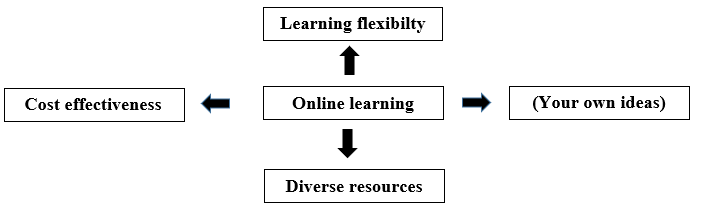
Follow-up questions:
1. Do you think online learning will completely replace traditional classrooms in the future?
2. What are the main challenges students face when studying online?
Topic: Online learning has become a popular trend in modern education. (Học trực tuyến đã trở thành một xu hướng phổ biến trong giáo dục hiện đại)
Sample answer:
In the digital age, online learning is gaining popularity for several reasons. First, it offers great learning flexibility, enabling students to tailor their study schedules around personal commitments.. Second, it is highly cost-effective as it saves money on commuting, electricity, and physical infrastructure. Another significant advantage is that learners can access diverse resources from all over the world, including international courses and digital libraries. Beyond these, I believe online platforms foster enhanced autonomy, requiring students to take full responsibility for their own progress, which is a crucial skill in the modern workforce.
Bản dịch:
Trong kỷ nguyên số, hình thức học trực tuyến đang ngày càng trở nên phổ biến vì nhiều lý do khác nhau. Trước hết, nó mang lại sự linh hoạt tối đa trong việc học tập, cho phép học sinh tự điều chỉnh lộ trình học phù hợp với các kế hoạch cá nhân. Thứ hai, phương thức này có tính kinh tế rất cao khi tiết kiệm được chi phí đi lại, điện năng và cơ sở vật chất học đường. Một ưu điểm đáng kể khác là người học có thể tiếp cận nguồn tài nguyên đa dạng từ khắp nơi trên thế giới, bao gồm các khóa học quốc tế và thư viện số. Ngoài những lợi ích nêu trên, tôi tin rằng các nền tảng trực tuyến còn thúc đẩy tính tự chủ, đòi hỏi học sinh phải chịu trách nhiệm hoàn toàn về tiến độ học tập của bản thân – đây vốn là một kỹ năng thiết yếu trong lực lượng lao động hiện đại.
Follow-up questions:
1. Do you think online learning will completely replace traditional classrooms in the future? (Bạn có nghĩ rằng học trực tuyến sẽ thay thế hoàn toàn lớp học truyền thống trong tương lai không?)
Sample answer: No, I do not think online learning will completely replace traditional classrooms. Face-to-face interaction is still very important for students’ communication skills, teamwork, and social development. I believe both forms of learning will exist together in the future.
Bản dịch: Không, tôi không nghĩ học trực tuyến sẽ thay thế hoàn toàn lớp học truyền thống. Sự tương tác trực tiếp vẫn rất quan trọng đối với kỹ năng giao tiếp, làm việc nhóm và sự phát triển xã hội của học sinh. Tôi tin rằng cả hai hình thức học tập này sẽ cùng tồn tại trong tương lai.
2. What are the main challenges students face when studying online? (Những thách thức chính mà học sinh đối mặt khi học trực tuyến là gì?)
Sample answer: One of the biggest challenges is staying focused during online lessons. Students may easily become distracted by social media or games. Another problem is poor Internet connection or lack of suitable devices, which can affect learning quality.
Bản dịch: Một trong những thách thức lớn nhất là việc duy trì sự tập trung trong các giờ học trực tuyến. Học sinh có thể dễ dàng bị xao nhãng bởi mạng xã hội hoặc trò chơi điện tử. Một vấn đề khác là kết nối Internet kém hoặc thiếu các thiết bị phù hợp, điều này có thể ảnh hưởng đến chất lượng học tập.