Đề ôn thi Đánh giá năng lực Đại học Sư phạm Hà Nội môn Tiếng Anh có đáp án - Đề số 4
33 câu hỏi
A. TÔ TRÊN PHIẾU TRẢ LỜI TRẮC NGHIỆM
PART I. USE OF ENGLISH (4.5 points)
Mark the letter A, B, C, or D on your answer sheet to indicate the best answer to each of the following questions.
under
on
beside
in
Đáp án đúng là: B
- Ta có comment on something/somebody: bình luận về cái gì / ai đó.
" Chọn B
Dịch: Nowadays, digital media enables users to not only distribute important news or any other content but also comment on others’ posts. (Ngày nay, phương tiện truyền thông kỹ thuật số cho phép người dùng không chỉ phân phối các tin tức quan trọng hoặc bất kỳ nội dung nào khác mà còn có thể bình luận về bài đăng của người khác)
you are admitted
do you admit
you admit
are you admitted
Đáp án đúng là: D
- Ta thấy câu bắt đầu bằng “Only by + V-ing/N”, nên mệnh đề chính phía sau phải thực hiện đảo ngữ (đưa trợ động từ lên trước chủ ngữ).
- Chủ ngữ "you" được nhà trường “nhận vào” (admitted), nên phải dùng bị động: be + V3 / V-ed.
" Chọn D
Dịch:
Only by achieving outstanding academic results and extracurricular certificates are you admitted to these top universities. (Chỉ bằng cách đạt được kết quả học tập xuất sắc và các chứng chỉ ngoại khóa thì bạn mới được nhận vào các trường đại học hàng đầu này)
are
had been
would be
were
Đáp án đúng là: D
- Thực tế AI không phải là con người, nên đây là một sự giả định trái thực tế.
- Khi “As if / As though” dùng để diễn tả một điều không có thật hoặc trái ngược với thực tế ở hiện tại, ta phải động từ lùi một thì về Quá khứ đơn.
- Với động từ “To be”, khi lùi xuống quá khứ, ta dùng “were” cho tất cả các ngôi.
" Chọn D
Dịch:
I often turn to AI chatbots like ChatGPT or Gemini for advice on making friends. They interact with me as if they were humans. (Tôi thường tìm đến các chatbot AI như ChatGPT hoặc Gemini để xin lời khuyên về việc kết bạn. Chúng tương tác với tôi như thể chúng là con người vậy)
renovate
restore
demolish
transform
Đáp án đúng là: B
A. renovate: cải tạo, nâng cấp (công trình, nhà cửa)
B. restore: phục hồi về tình trạng ban đầu
C. demolish: phá dỡ, đập bỏ hoàn toàn
D. transform: biến đổi (thay đổi hoàn toàn hình dạng hoặc chức năng)
- Xét nghĩa câu: Thay vì nâng cấp nhà hát ngoài trời, hội đồng thành phố đã quyết định ______ nó, vì tin rằng vẻ nguyên bản có thể thu hút nhiều du khách hơn.
" Chọn B, các phương án khác không thích hợp về nghĩa.
Dịch:
Rather than upgrade the amphitheater, the city council decided to restore it, believing that the originality could captivate more visitors. (Thay vì nâng cấp nhà hát ngoài trời, hội đồng thành phố đã quyết định phục hồi nó, vì tin rằng vẻ nguyên bản có thể thu hút nhiều du khách hơn)
classify
identify
verify
clarify
Đáp án đúng là: B
A. classify: phân loại
B. identify: nhận dạng, xác định
C. verify: xác minh
D. clarify: làm rõ ràng, minh bạch, dễ hiểu
- Xét nghĩa câu: Người dùng ngày nay có quyền đăng tải bất kỳ nội dung nào trên các nền tảng mạng xã hội, làm dấy lên những lo ngại về sự lan truyền của tin tức không đáng tin cậy. Do đó, việc mọi người ______ được tin giả giữa một lượng lớn thông tin trực tuyến là vô cùng thiết yếu.
" Chọn B, các phương án khác không thích hợp về nghĩa.
Dịch:
Users today have the right to upload any content on social platforms, raising concerns about the spread of untrustworthy news. Therefore, it is essential for people to identify fake news, among the vast amount of information online. (Người dùng ngày nay có quyền đăng tải bất kỳ nội dung nào trên các nền tảng mạng xã hội, làm dấy lên những lo ngại về sự lan truyền của tin tức không đáng tin cậy. Do đó, việc mọi người nhận dạng được tin giả giữa một lượng lớn thông tin trực tuyến là vô cùng thiết yếu)
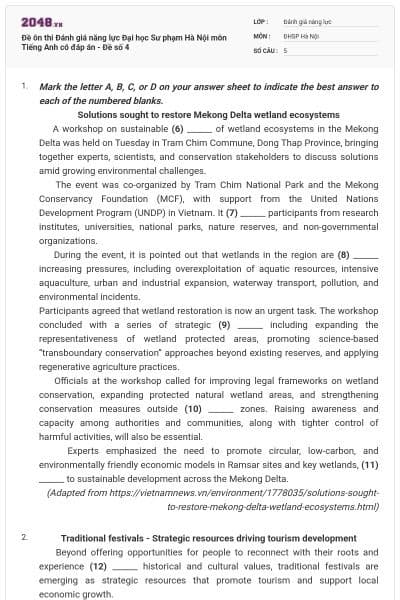
Mark the letter A, B, C, or D on your answer sheet to indicate the best answer to each of the numbered blanks.
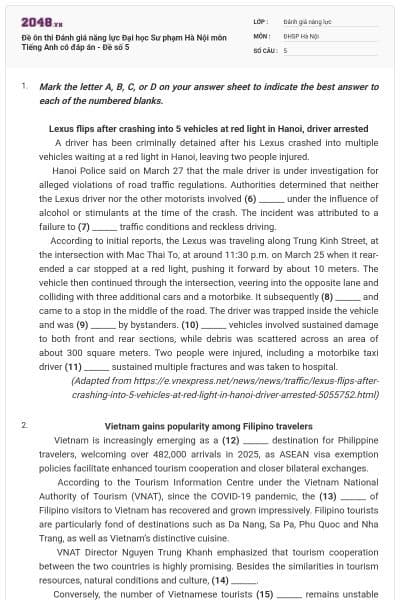
Solutions sought to restore Mekong Delta wetland ecosystems
A workshop on sustainable (6) ______ of wetland ecosystems in the Mekong Delta was held on Tuesday in Tram Chim Commune, Dong Thap Province, bringing together experts, scientists, and conservation stakeholders to discuss solutions amid growing environmental challenges.
The event was co-organized by Tram Chim National Park and the Mekong Conservancy Foundation (MCF), with support from the United Nations Development Program (UNDP) in Vietnam. It (7) ______ participants from research institutes, universities, national parks, nature reserves, and non-governmental organizations.
During the event, it is pointed out that wetlands in the region are (8) ______ increasing pressures, including overexploitation of aquatic resources, intensive aquaculture, urban and industrial expansion, waterway transport, pollution, and environmental incidents.
Participants agreed that wetland restoration is now an urgent task. The workshop concluded with a series of strategic (9) ______ including expanding the representativeness of wetland protected areas, promoting science-based “transboundary conservation” approaches beyond existing reserves, and applying regenerative agriculture practices.
Officials at the workshop called for improving legal frameworks on wetland conservation, expanding protected natural wetland areas, and strengthening conservation measures outside (10) ______ zones. Raising awareness and capacity among authorities and communities, along with tighter control of harmful activities, will also be essential.
Experts emphasized the need to promote circular, low-carbon, and environmentally friendly economic models in Ramsar sites and key wetlands, (11) ______ to sustainable development across the Mekong Delta.
(Adapted from https://vietnamnews.vn/environment/1778035/solutions-sought-to-restore-mekong-delta-wetland-ecosystems.html)
renovation
upgradation
restoration
rehabilitation
Đáp án đúng là: C
A. renovation: cải tạo, nâng cấp (công trình, nhà cửa)
B. upgradation: Sự nâng cấp (thường dùng cho máy móc, phần mềm, hệ thống)
C. restoration: sự phục hồi
Trong môi trường, từ này chỉ việc đưa một hệ sinh thái trở lại trạng thái tự nhiên ban đầu
D. rehabilitation: Sự cải tạo hoặc phục hồi chức năng
Trong môi trường, từ này thiên về việc làm cho vùng đất đó có thể sử dụng lại được, không nhất thiết phải giống nguyên bản.
- Ta thấy ngay từ tiêu đề bài đọc dùng động từ “restore”.
" Chọn C
Dịch:
A workshop on sustainable restoration of wetland ecosystems in the Mekong Delta was held on Tuesday in Tram Chim Commune, Dong Thap Province, bringing together experts, scientists, and conservation stakeholders to discuss solutions amid growing environmental challenges. (Một buổi hội thảo về phục hồi bền vững hệ sinh thái đất ngập nước tại Đồng bằng sông Cửu Long đã được tổ chức vào thứ Ba tại xã Tràm Chim, tỉnh Đồng Tháp, quy tụ các chuyên gia, nhà khoa học và các bên liên quan trong lĩnh vực bảo tồn để thảo luận về các giải pháp trong bối cảnh các thách thức môi trường ngày càng gia tăng)
It (7) ______ participants from research institutes, universities, national parks, nature reserves, and non-governmental organizations.
attracts
has attracted
attracted
was attracting
Đáp án đúng là: C
- Sự kiện này đã diễn ra (thời gian cụ thể là “on Tuesday” ở câu đầu tiên). Đây là một sự việc đã bắt đầu và kết thúc trong quá khứ, nên ta dùng thì Quá khứ đơn (Past Simple).
Dịch:
It attracted participants from research institutes, universities, national parks, nature reserves, and non-governmental organizations. (Nó đã thu hút sự tham gia từ các viện nghiên cứu, trường đại học, các vườn quốc gia, khu bảo tồn thiên nhiên và các tổ chức phi chính phủ)
During the event, it is pointed out that wetlands in the region are (8) ______ increasing pressures, including overexploitation of aquatic resources, intensive aquaculture, urban and industrial expansion, waterway transport, pollution, and environmental incidents.
surfacing
comforting
combatting
facing
Đáp án đúng là: D
A. surfacing: nổi lên bề mặt
B. comforting: an ủi, dỗ dành.
C. combatting: chiến đấu, chống lại
D. facing: đối mặt
- Xét nghĩa: Trong sự kiện này, các đại biểu đã chỉ ra rằng các vùng đất ngập nước trong khu vực đang phải ______ những áp lực ngày càng tăng, bao gồm việc khai thác quá mức nguồn lợi thủy sản, nuôi trồng thủy sản thâm canh, sự mở rộng của đô thị và công nghiệp, giao thông đường thủy, ô nhiễm và các sự cố môi trường.
" Chọn D
Dịch:
During the event, it is pointed out that wetlands in the region are facing increasing pressures, including overexploitation of aquatic resources, intensive aquaculture, urban and industrial expansion, waterway transport, pollution, and environmental incidents. (Trong sự kiện này, các đại biểu đã chỉ ra rằng các vùng đất ngập nước trong khu vực đang phải đối mặt với những áp lực ngày càng tăng, bao gồm việc khai thác quá mức nguồn lợi thủy sản, nuôi trồng thủy sản thâm canh, sự mở rộng của đô thị và công nghiệp, giao thông đường thủy, ô nhiễm và các sự cố môi trường)
proposals
propositions
proposers
proposes
Đáp án đúng là: A
A. proposals (n): các đề xuất, kiến nghị (thường bao gồm chi tiết, kế hoạch)
B. propositions (n): lời một đề nghị (mang tính chất trao đổi)
C. proposers (n): những người đưa ra đề xuất
D. proposes (v): đây là động từ chia ở hiện tại đơn
- Xét nghĩa: Các đại biểu tham dự đã đồng ý rằng việc phục hồi đất ngập nước hiện là một nhiệm vụ cấp bách. Hội thảo đã kết thúc với một loạt ______ chiến lược, bao gồm việc mở rộng tính đại diện của các khu bảo tồn đất ngập nước, thúc đẩy các phương pháp 'bảo tồn xuyên biên giới' dựa trên cơ sở khoa học vượt ra ngoài phạm vi các khu bảo tồn hiện có, và áp dụng các thực hành nông nghiệp tái sinh.
" Chọn A. Phương án D sai vị trí ngữ pháp, phương án C không phù hợp về nghĩa, và phương án B chưa phù hợp với ngữ cảnh trang trọng của hội thảo.
Dịch:
Participants agreed that wetland restoration is now an urgent task. The workshop concluded with a series of strategic proposals including expanding the representativeness of wetland protected areas, promoting science-based “transboundary conservation” approaches beyond existing reserves, and applying regenerative agriculture practices. (Các đại biểu tham dự đã đồng ý rằng việc phục hồi đất ngập nước hiện là một nhiệm vụ cấp bách. Hội thảo đã kết thúc với một loạt đề xuất chiến lược, bao gồm việc mở rộng tính đại diện của các khu bảo tồn đất ngập nước, thúc đẩy các phương pháp 'bảo tồn xuyên biên giới' dựa trên cơ sở khoa học vượt ra ngoài phạm vi các khu bảo tồn hiện có, và áp dụng các thực hành nông nghiệp tái sinh)
protected
protecting
protective
protection
Đáp án đúng là: A
A. protected (quá khứ phân từ): được bảo vệ (nghĩa bị động)
B. protecting (hiện tại phân từ): đang thực hiện hành động bảo vệ (nghĩa chủ động)
C. protective (adj): có tính chất bảo vệ (ví dụ: protective clothing - quần áo bảo hộ).
D. protection: Danh từ (Sự bảo vệ) -> Không đứng trước danh từ zones để bổ nghĩa theo cách này.
" Chọn A
Dịch:
Officials at the workshop called for improving legal frameworks on wetland conservation, expanding protected natural wetland areas, and strengthening conservation measures outside protected zones. (Các quan chức tại hội thảo đã kêu gọi cải thiện khung pháp lý về bảo tồn đất ngập nước, mở rộng các khu vực đất ngập nước tự nhiên được bảo vệ, và tăng cường các biện pháp bảo tồn bên ngoài các khu vực được bảo vệ)
Experts emphasized the need to promote circular, low-carbon, and environmentally friendly economic models in Ramsar sites and key wetlands, (11) ______ to sustainable development across the Mekong Delta.
which contributed
contributing
contributed
that contributes
Đáp án đúng là: B
- (11) ______ to sustainable development across the Mekong Delta là mệnh đề quan hệ bổ nghĩa cho “circular, low-carbon, and environmentally friendly economic models in Ramsar sites and key wetlands”.
A. which contributed " Sai về thì. Thông tin ở đây đang nói về một giải pháp và hệ quả mang tính bền vững, lâu dài, nên dùng thì Hiện tại đơn.
B. contributing " Đúng mệnh đề quan hệ rút gọn thể chủ động.
C. contributed " Sai vì đây là dạng rút gọn bị động. Vì các mô hình kinh tế này chủ động đóng góp vào sự phát triển bền vững, nên ta bắt buộc phải dùng dạng V-ing, không dùng V-ed / V3.
D. that contributes " Sai đại từ quan hệ. Đối với mệnh đề đứng sau dấu phẩy để bổ sung ý nghĩa cho cả vế trước, chúng ta không dùng “that”.
Dịch:
Experts emphasized the need to promote circular, low-carbon, and environmentally friendly economic models in Ramsar sites and key wetlands, contributing to sustainable development across the Mekong Delta. (Các chuyên gia nhấn mạnh cần thúc đẩy các mô hình kinh tế tuần hoàn, phát thải thấp và thân thiện với môi trường tại các khu Ramsar và các vùng đất ngập nước trọng điểm, góp phần vào sự phát triển bền vững trên toàn vùng Đồng bằng sông Cửu Long)
Bài đọc hoàn chỉnh | Dịch bài |
Solutions sought to restore Mekong Delta wetland ecosystems
A workshop on sustainable restoration of wetland ecosystems in the Mekong Delta was held on Tuesday in Tram Chim Commune, Dong Thap Province, bringing together experts, scientists, and conservation stakeholders to discuss solutions amid growing environmental challenges.
The event was co-organized by Tram Chim National Park and the Mekong Conservancy Foundation (MCF), with support from the United Nations Development Program (UNDP) in Vietnam. It attracted participants from research institutes, universities, national parks, nature reserves, and non-governmental organizations. During the event, it is pointed out that wetlands in the region are facing increasing pressures, including overexploitation of aquatic resources, intensive aquaculture, urban and industrial expansion, waterway transport, pollution, and environmental incidents. Participants agreed that wetland restoration is now an urgent task. The workshop concluded with a series of strategic proposals including expanding the representativeness of wetland protected areas, promoting science-based “transboundary conservation” approaches beyond existing reserves, and applying regenerative agriculture practices.
Officials at the workshop called for improving legal frameworks on wetland conservation, expanding protected natural wetland areas, and strengthening conservation measures outside protected zones. Raising awareness and capacity among authorities and communities, along with tighter control of harmful activities, will also be essential.
Experts emphasized the need to promote circular, low-carbon, and environmentally friendly economic models in Ramsar sites and key wetlands, contributing to sustainable development across the Mekong Delta.
| Tìm kiếm các giải pháp phục hồi hệ sinh thái đất ngập nước tại Đồng bằng sông Cửu Long Một buổi hội thảo về phục hồi bền vững hệ sinh thái đất ngập nước tại Đồng bằng sông Cửu Long đã được tổ chức vào thứ Ba tại xã Tràm Chim, tỉnh Đồng Tháp. Sự kiện quy tụ các chuyên gia, nhà khoa học và các bên liên quan trong lĩnh vực bảo tồn để thảo luận về các giải pháp trong bối cảnh các thách thức môi trường ngày càng gia tăng. Sự kiện được đồng tổ chức bởi Vườn quốc gia Tràm Chim và Quỹ Bảo tồn Mekong (MCF), với sự hỗ trợ từ Chương trình Phát triển Liên Hợp Quốc (UNDP) tại Việt Nam. Hội thảo đã thu hút sự tham gia từ các viện nghiên cứu, trường đại học, các vườn quốc gia, khu bảo tồn thiên nhiên và các tổ chức phi chính phủ.
Tại sự kiện, các đại biểu đã chỉ ra rằng các vùng đất ngập nước trong khu vực đang phải đối mặt với áp lực ngày càng lớn, bao gồm khai thác quá mức nguồn lợi thủy sản, nuôi trồng thủy sản thâm canh, sự mở rộng đô thị và công nghiệp, giao thông đường thủy, ô nhiễm và các sự cố môi trường. Các bên tham gia đều đồng ý rằng việc phục hồi đất ngập nước hiện là một nhiệm vụ cấp bách. Hội thảo kết thúc với một loạt các đề xuất chiến lược, bao gồm: mở rộng tính đại diện của các khu bảo tồn đất ngập nước; thúc đẩy các phương pháp "bảo tồn xuyên biên giới" dựa trên cơ sở khoa học vượt ra ngoài phạm vi các khu bảo tồn hiện có; và áp dụng các thực hành nông nghiệp tái sinh. Các quan chức tại hội thảo đã kêu gọi cải thiện khung pháp lý về bảo tồn đất ngập nước, mở rộng các khu vực đất ngập nước tự nhiên được bảo vệ và tăng cường các biện pháp bảo tồn bên ngoài các vùng bảo hộ. Việc nâng cao nhận thức và năng lực cho chính quyền cũng như cộng đồng, cùng với việc kiểm soát chặt chẽ hơn các hoạt động gây hại, cũng sẽ là những yếu tố thiết yếu. Các chuyên gia nhấn mạnh cần thúc đẩy các mô hình kinh tế tuần hoàn, phát thải thấp và thân thiện với môi trường tại các khu Ramsar và các vùng đất ngập nước trọng điểm, góp phần vào sự phát triển bền vững trên toàn vùng Đồng bằng sông Cửu Long. |
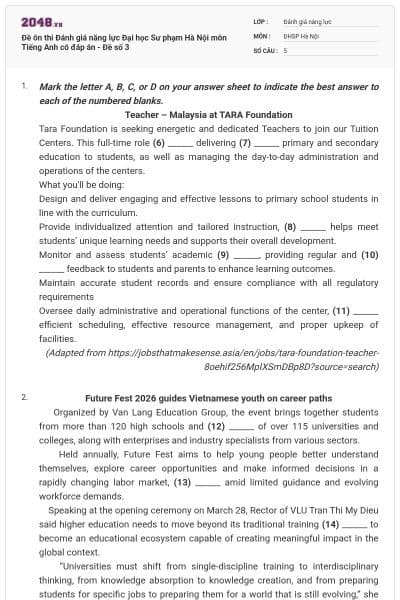
Traditional festivals - Strategic resources driving tourism development
Beyond offering opportunities for people to reconnect with their roots and experience (12) ______ historical and cultural values, traditional festivals are emerging as strategic resources that promote tourism and support local economic growth.
Running from February 18 to May 11, the Huong Pagoda Festival in Hanoi has drawn large crowds. On the opening day alone, tens of thousands of visitors arrived despite cold and rainy weather. Earlier, from the first to the fifth day of the Lunar New Year, the site welcomed nearly 136,000 visitors, (13) ______ up 138% year-on-year.
The Giong Festival at Soc Temple in Hanoi drew over 45,000 people during its three main days, while the Yen Tu Historical Complex in Quang Ninh welcomed more than 60,000 pilgrims in just three days after opening. Meanwhile, the Ba Chua Xu Festival at Nui Sam in An Giang province, now in its second year since being recognized by UNESCO as a Representative (14) ______ Cultural Heritage of Humanity, (15) ______.
These figures highlight the growing appeal of festivals and their contribution to increasing visitor numbers and tourism revenues. Alongside (16) ______, a shift in mindset among local cultural authorities - viewing festivals not only as spiritual practices but also as cultural tourism products - has significantly enhanced their (17) ______.
(Adapted from https://en.vietnamplus.vn/traditional-festivals-strategic-resources-driving-tourism-development-post339953.vnp)
distinctive
distinct
ordinary
resembling
Đáp án đúng là: A
A. distinctive: đặc trưng, đặc sắc, có nét riêng biệt (không lẫn với cái khác)
B. distinct: khác biệt, riêng rẽ (thiên về sự phân chia rõ ràng giữa 2 đối tượng)
C. ordinary: bình thường
D. resembling: giống với
- Xét nghĩa: Bên cạnh việc mang lại những cơ hội để mọi người tìm về cội nguồn và trải nghiệm các giá trị văn hóa, lịch sử ______, các lễ hội truyền thống đang dần trở thành nguồn lực chiến lược giúp thúc đẩy du lịch và hỗ trợ tăng trưởng kinh tế địa phương.
" Chọn A, các từ khác chưa thích hợp về nghĩa.
Dịch:
Beyond offering opportunities for people to reconnect with their roots and experience distinctive historical and cultural values, traditional festivals are emerging as strategic resources that promote tourism and support local economic growth. (Bên cạnh việc mang lại những cơ hội để mọi người tìm về cội nguồn và trải nghiệm các giá trị văn hóa, lịch sử đặc sắc, các lễ hội truyền thống đang dần trở thành nguồn lực chiến lược giúp thúc đẩy du lịch và hỗ trợ tăng trưởng kinh tế địa phương)
marked an increase
marking an increase
to mark an increase
having marked an increase
Đáp án đúng là: B
- (13) ______ up 138% year-on-year là mệnh đề quan hệ bổ nghĩa cho mệnh đề phía trước.
Như vậy, ta sẽ có hai trường hợp như sau:
+ Dùng mệnh đề quan hệ đầy đủ: đại từ quan hệ phải là “which”, chia động từ số ít.
+ Dùng mệnh đề quan hệ rút gọn: không dùng đại từ quan hệ, động từ chia Ving.
" Chọn B, các phương án khác không đúng cấu trúc mệnh đề quan hệ.
Dịch:
Earlier, from the first to the fifth day of the Lunar New Year, the site welcomed nearly 136,000 visitors, marking an increase up 138% year-on-year. (Trước đó, từ mùng 1 đến mùng 5 Tết Nguyên đán, địa điểm này đã chào đón gần 136.000 lượt khách, đánh dấu mức tăng trưởng 138% so với cùng kỳ năm ngoái)
Invisible
Untouchable
Spiritual
Intangible
Đáp án đúng là: D
- Ta có Cụm từ của UNESCO là “Intangible Cultural Heritage” (Di sản văn hóa phi vật thể).
" Chọn D
Dịch:
Meanwhile, the Ba Chua Xu Festival at Nui Sam in An Giang province, now in its second year since being recognized by UNESCO as a Representative Intangible Cultural Heritage of Humanity (Trong khi đó, Lễ hội Bà Chúa Xứ tại Núi Sam, tỉnh An Giang — hiện đang ở năm thứ hai kể từ khi được UNESCO công nhận là Di sản văn hóa phi vật thể đại diện của nhân loại)
expects to attract millions of visitors
which is expected to attract millions of visitors
is expected to attract millions of visitors
millions of visitors can be attracted
Đáp án đúng là: C
- Phân tích cấu trúc câu: Chủ ngữ chính là “The Ba Chua Xu Festival”, “now in its second year... of Humanity” chỉ là thông tin thêm về lễ hội này.
" Do đó, thông tin cần điền phải có động từ chính.
A. expects to attract millions of visitors " Sai vì dùng thể chủ động. Câu phải dùng thể bị động (vì lễ hội được kỳ vọng, chứ không tự đi kỳ vọng được)
B. which is expected to attract millions of visitors " Sai vì đây là mệnh đề quan hệ
C. is expected to attract millions of visitors " Đúng
D. millions of visitors can be attracted " Sai vì đây là mệnh đề độc lập
Dịch:
Meanwhile, the Ba Chua Xu Festival at Nui Sam in An Giang province, now in its second year since being recognized by UNESCO as a Representative Intangible Cultural Heritage of Humanity, is expected to attract millions of visitors. (Trong khi đó, Lễ hội Bà Chúa Xứ tại Núi Sam, tỉnh An Giang — hiện đang ở năm thứ hai kể từ khi được UNESCO công nhận là Di sản văn hóa phi vật thể đại diện của nhân loại, được kỳ vọng sẽ thu hút hàng triệu lượt khách tham quan)
more professional and orderly organization
more chaotic and spontaneous celebration
more systematic and detailed preparation
more restrictive and passive supervision
Đáp án đúng là: A
A. more professional and orderly organization (Công tác tổ chức chuyên nghiệp và trật tự hơn)
B. more chaotic and spontaneous celebration (Hoạt động lễ hội hỗn loạn và tự phát hơn)
C. more systematic and detailed preparation (Công tác chuẩn bị có hệ thống và chi tiết hơn)
D. more restrictive and passive supervision (Sự giám sát mang tính hạn chế và thụ động hơn)
- Đoạn cuối đang nói về những thay đổi tích cực đã giúp nâng cao giá trị lễ hội.
" Chọn A. Phương án B và D chỉ sự tiêu cực, phương án C chưa đủ bao quát như phương án A.
Dịch:
Alongsidemore professional and orderly organization, a shift in mindset among local cultural authorities - viewing festivals not only as spiritual practices but also as cultural tourism products - has significantly enhanced their (17) ______. (Cùng với việc tổ chức một cách chuyên nghiệp và trật tự hơn, sự thay đổi trong tư duy của các cơ quan quản lý văn hóa địa phương — khi coi lễ hội không chỉ là hoạt động tâm linh mà còn là sản phẩm du lịch văn hóa — đã làm gia tăng đáng kể ______)
attract
attraction
attractiveness
attractively
Đáp án đúng là: C
A. attract (v): thu hút, hấp dẫn
B. attraction (n): sự việc / sự kiện thu hút hoặc một địa điểm thu hút
C. attractiveness (n): (n): sức hấp dẫn, vẻ lôi cuốn (danh từ chỉ tính chất)
D. attractively (adv): một cách hấp dẫn
" Chọn C
Dịch:
Alongsidemore professional and orderly organization, a shift in mindset among local cultural authorities - viewing festivals not only as spiritual practices but also as cultural tourism products - has significantly enhanced their attractiveness. (Cùng với việc tổ chức một cách chuyên nghiệp và trật tự hơn, sự thay đổi trong tư duy của các cơ quan quản lý văn hóa địa phương — khi coi lễ hội không chỉ là hoạt động tâm linh mà còn là sản phẩm du lịch văn hóa — đã làm gia tăng đáng kể sức hấp dẫn của chúng)
Bài đọc hoàn chỉnh | Dịch bài đọc hoàn chỉnh |
Traditional festivals - Strategic resources driving tourism development | Lễ hội truyền thống - Nguồn lực chiến lược thúc đẩy phát triển du lịch |
Beyond offering opportunities for people to reconnect with their roots and experience distinctive historical and cultural values, traditional festivals are emerging as strategic resources that promote tourism and support local economic growth. Running from February 18 to May 11, the Huong Pagoda Festival in Hanoi has drawn large crowds. On the opening day alone, tens of thousands of visitors arrived despite cold and rainy weather. Earlier, from the first to the fifth day of the Lunar New Year, the site welcomed nearly 136,000 visitors, marking an increase up 138% year-on-year.
The Giong Festival at Soc Temple in Hanoi drew over 45,000 people during its three main days, while the Yen Tu Historical Complex in Quang Ninh welcomed more than 60,000 pilgrims in just three days after opening. Meanwhile, the Ba Chua Xu Festival at Nui Sam in An Giang province, now in its second year since being recognized by UNESCO as a Representative Intangible Cultural Heritage of Humanity, is expected to attract millions of visitors. These figures highlight the growing appeal of festivals and their contribution to increasing visitor numbers and tourism revenues. Alongsidemore professional and orderly organization, a shift in mindset among local cultural authorities - viewing festivals not only as spiritual practices but also as cultural tourism products - has significantly enhanced their attractiveness.
| Bên cạnh việc mang lại những cơ hội để mọi người tìm về cội nguồn và trải nghiệm các giá trị văn hóa, lịch sử đặc sắc, các lễ hội truyền thống đang dần trở thành nguồn lực chiến lược giúp thúc đẩy du lịch và hỗ trợ tăng trưởng kinh tế địa phương. Kéo dài từ ngày 18 tháng 2 đến ngày 11 tháng 5, Lễ hội Chùa Hương tại Hà Nội đã thu hút đám đông lớn du khách. Chỉ riêng trong ngày khai hội, hàng chục nghìn lượt khách đã đổ về bất chấp thời tiết mưa lạnh. Trước đó, từ ngày mùng 1 đến mùng 5 Tết Nguyên đán, địa điểm này đã chào đón gần 136.000 lượt khách, đánh dấu mức tăng trưởng 138% so với cùng kỳ năm ngoái. Lễ hội Gióng tại đền Sóc (Hà Nội) đã thu hút hơn 45.000 người trong ba ngày chính hội, trong khi Khu di tích Yên Tử tại Quảng Ninh đón hơn 60.000 khách hành hương chỉ trong ba ngày sau khi khai mạc. Trong khi đó, Lễ hội Bà Chúa Xứ tại Núi Sam, tỉnh An Giang — hiện đang ở năm thứ hai kể từ khi được UNESCO công nhận là Di sản văn hóa phi vật thể đại diện của nhân loại — được kỳ vọng sẽ thu hút hàng triệu lượt khách tham quan.
Những con số này làm nổi bật sức hút ngày càng lớn của các lễ hội cũng như đóng góp của chúng vào việc gia tăng lượng khách và doanh thu du lịch. Cùng với công tác tổ chức chuyên nghiệp và trật tự hơn, sự thay đổi trong tư duy của các nhà quản lý văn hóa địa phương — khi xem các lễ hội không chỉ là hoạt động tâm linh mà còn là các sản phẩm du lịch văn hóa — đã nâng cao đáng kể sức hấp dẫn của các lễ hội này. |
Mark the letter A, B, C or D on your answer sheet to indicate the best arrangement of utterances to make a meaningful exchange in the following question.
a. Linda: I believe so. For example, maintenance workers will be in great demand.
b. Mark: And jobs requiring emotional intelligence and creative thinking as well.
c. Linda: Then we have to strive for skills that machines cannot replicate.
d. Mark: I couldn’t agree more. But more jobs will be created, right?
e. Linda: I think in the future, repetitive manual jobs in factories will all be automated.
e – b – d – a – c
e – b – c – d – a
e – a – d – c – b
e – d – a – b – c
Đáp án đúng là: D
e. Linda: I think in the future, repetitive manual jobs in factories will all be automated. (Mình nghĩ trong tương lai, các công việc chân tay lặp đi lặp lại trong nhà máy đều sẽ bị tự động hóa) " Đưa ra nhận định / dự đoán về một xu hướng.
d. Mark: I couldn’t agree more. But more jobs will be created, right? (Mình hoàn toàn đồng ý. Nhưng sẽ có thêm nhiều công việc mới được tạo ra, đúng không?) " Tán thành và đặt câu hỏi.
a. Linda: I believe so. For example, maintenance workers will be in great demand. (Mình tin là vậy. Ví dụ, công nhân bảo trì sẽ có nhu cầu rất lớn) " Trả lời câu hỏi và đưa ra minh chứng cụ thể.
b. Mark: And jobs requiring emotional intelligence and creative thinking as well. (Và cả những công việc đòi hỏi trí tuệ cảm xúc và tư duy sáng tạo nữa) " Mở rộng nội dung câu trả lời bạn vừa nêu.
c. Linda: Then we have to strive for skills that machines cannot replicate. (Vậy thì chúng ta phải nỗ lực đạt được những kỹ năng mà máy móc không thể sao chép được) " Đưa ra giải pháp hoặc lời khuyên cuối cùng cho vấn đề.
PART II. READING (2.5 points)
PASSAGE 1
Read the following passage and mark the letter A, B, C or D on your answer sheet to indicate the best answer to each of the questions.
During the COVID-19 pandemic, many banks took drastic measures. For example, The Federal Reserve began quarantining money, while some regions of China took away and disinfected banknotes. Simultaneously, banks encouraged the public to shift towards electronic payments, which was met with a positive response. In the UK, contactless payments increased by 36% between 2020 and 2021.
Today, many people are embracing the cashless economy due to its numerous advantages. For a start, it’s safer, as cash is easily stolen. Credit and debit cards are too, but it’s possible to trace payments and cancel the cards. Mobile payments are even more secure. [I] As well as that, all your transactions are logged, making record-keeping far simpler. Banks, businesses and governments are also keen to pave the way for the transition. Cashless transactions make it easier for them to collect data, identify economic trends and detect fraud. [II]
However, society may not be ready to abandon cash entirely. Recent data shows that cash has made a comeback since the cost of living started to rise steeply. That’s not unusual since people tend to prefer having paper money at hand when times are hard. Using notes and coins helps people budget, whereas, with electronic payments, it’s harder to keep track of where your money is going. [III]
Even if cash payments don’t vanish entirely, economies are becoming far less reliant on them. While switching to electronic payments is simple and convenient for many people, it poses challenges for those relying on cash, such as the homeless, the undocumented or the elderly. [IV] As more stores refuse cash and the number of ATMs drops, these individuals may become increasingly marginalized.
Despite the popularity of electronic transactions, it’s clear that they won’t become the sole transaction method, at least in the near future. While companies continue to innovate, it remains crucial not to abandon those who still depend on traditional payment methods.
(Adapted from https://test-english.com/reading/b2/do-we-need-cash-anymore-b2-reading-test/)
What is the main idea of the reading passage?
Given enormous benefits electronic payments provide, many people are prioritizing it over traditional payment methods.
Despite considerable advantages of cashless payments, traditional payment methods are not likely to be abandoned.
The shift toward electronic payments has accelerated due to their convenience and security benefits.
Electronic payments are superior to traditional ones, explaining for cashless societies in the future.
Đáp án đúng là: B
What is the main idea of the reading passage? (Ý chính của đoạn văn là gì?)
A. Given enormous benefits electronic payments provide, many people are prioritizing it over traditional payment methods. (Với những lợi ích to lớn mà thanh toán điện tử mang lại, nhiều người đang ưu tiên nó hơn các phương thức thanh toán truyền thống)
B. Despite considerable advantages of cashless payments, traditional payment methods are not likely to be abandoned. (Bất chấp những lợi thế đáng kể của thanh toán không tiền mặt, các phương thức thanh toán truyền thống có khả năng sẽ không bị từ bỏ)
C. The shift toward electronic payments has accelerated due to their convenience and security benefits. (Sự chuyển dịch sang thanh toán điện tử đã tăng tốc nhờ vào lợi ích về sự tiện lợi và bảo mật)
D. Electronic payments are superior to traditional ones, explaining for cashless societies in the future. (Thanh toán điện tử ưu việt hơn thanh toán truyền thống, điều này giải thích cho các xã hội không tiền mặt trong tương lai)
" Chọn B. Loại các phương án A, C và D vì các phương án này quá thiên về ủng hộ thanh toán điện tử mà bỏ qua việc “tiền mặt vẫn cần thiết”.
cash payments
economies
electronic payments
notes and coins
Đáp án đúng là: A
What does the word “them” in paragraph 4 refer to? (Từ “them” trong đoạn 4 đề cập đến gì?)
A. cash payments: thanh toán bằng tiền mặt
B. economies: các nền kinh tế
C. electronic payments: thanh toán điện tử
D. notes and coins: tiền giấy và tiền xu
- Thông tin: Even if cash payments don’t vanish entirely, economies are becoming far less reliant on them(Ngay cả khi thanh toán bằng tiền mặt không biến mất hoàn toàn, các nền kinh tế cũng đang trở nên ít phụ thuộc vào chúng hơn nhiều).
" Chọn A
Which of the following is NOT mentioned as a reason why cash payments don’t vanish entirely?
The impacts on those depending on cash payment methods.
The assistance that notes and coins provide in managing personal budgets.
The difficulty of monitoring expenditures when using electronic methods.
The high fees that banks charge for processing digital transactions
Đáp án đúng là: D
Which of the following is NOT mentioned as a reason why cash payments don’t vanish entirely? (Điều nào sau đây KHÔNG được đề cập là lý do tại sao thanh toán tiền mặt không biến mất hoàn toàn?)
A. The impacts on those depending on cash payment methods. (Tác động đối với những người phụ thuộc vào phương thức thanh toán bằng tiền mặt)
" Thông tin này được nhắc đến ở While switching to electronic payments is simple and convenient for many people, it poses challenges for those relying on cash, such as the homeless, the undocumented or the elderly (Mặc dù việc chuyển sang thanh toán điện tử là đơn giản và tiện lợi đối với nhiều người, nhưng nó lại đặt ra những thách thức cho những người đang dựa vào tiền mặt, chẳng hạn như người vô gia cư, người không có giấy tờ tùy thân hoặc người cao tuổi).
B. The assistance that notes and coins provide in managing personal budgets. (Sự hỗ trợ mà tiền giấy và tiền xu mang lại trong việc quản lý ngân sách cá nhân)
" Thông tin này được nhắc đến ở Using notes and coins helps people budget (Sử dụng tiền giấy và tiền xu giúp mọi người lập kế hoạch chi tiêu tốt hơn).
C. The difficulty of monitoring expenditures when using electronic methods. (Sự khó khăn trong việc giám sát chi tiêu khi sử dụng các phương thức điện tử)
" Thông tin này được nhắc đến ở with electronic payments, it’s harder to keep track of where your money is going (với thanh toán điện tử, việc theo dõi xem tiền của bạn đang đi đâu sẽ khó khăn hơn).
D. The high fees that banks charge for processing digital transactions (Mức phí cao mà các ngân hàng thu để xử lý các giao dịch kỹ thuật số)
" Thông tin này không được nhắc đến trong bài.
The phrase “pave the way for” in paragraph 2 is closest in meaning to ______.
enhancing the necessity for
prevent the occurrence of
create the conditions for
hinder the development of
Đáp án đúng là: C
The phrase “pave the way for” in paragraph 2 is closest in meaning to ______. (Cụm từ “pave the way for” trong đoạn 2 có nghĩa gần nhất với ______.)
A. enhancing the necessity for (tăng cường sự cần thiết cho)
B. prevent the occurrence of (ngăn chặn sự xảy ra của)
C. create the conditions for (tạo điều kiện cho)
D. hinder the development of (cản trở sự phát triển của)
- Thông tin Banks, businesses and governments are also keen to pave the way for the transition. Cashless transactions make it easier for them to collect data, identify economic trends and detect fraud (Các ngân hàng, doanh nghiệp và chính phủ cũng rất mặn mà pave the way for quá trình chuyển đổi này. Các giao dịch không tiền mặt giúp họ dễ dàng thu thập dữ liệu, xác định các xu hướng kinh tế và phát hiện gian lận).
" Chọn C
Where in the passage does the following sentence best fit?
This increased security is a major draw for many.
[I]
[II]
[III]
[IV]
Đáp án đúng là: A
Where in the passage does the following sentence best fit? (Câu sau đây phù hợp nhất với vị trí nào trong đoạn văn?)
This increased security is a major draw for many. (Sự tăng cường bảo mật này là một điểm thu hút chính đối với nhiều người)
" Chọn A
- Câu trước vị trí [I] là “Mobile payments are even more secure” (Thanh toán di động thậm chí còn bảo mật hơn).
- Câu cần điền bắt đầu bằng “This increased security” (Sự bảo mật tăng thêm này) – đây là sự lặp lại từ khóa để giải thích cho câu trước đó.
- Vị trí [II], [III], [IV] nằm ở các đoạn văn nói về dữ liệu kinh tế hoặc khó khăn của tiền mặt, không liên quan đến ý “security”.
Dịch bài đọc:
Trong suốt đại dịch COVID-19, nhiều ngân hàng đã thực hiện các biện pháp quyết liệt. Ví dụ, Cục Dự trữ Liên bang Mỹ đã bắt đầu cách ly tiền mặt, trong khi một số khu vực ở Trung Quốc đã thu hồi và khử trùng các tờ tiền giấy. Đồng thời, các ngân hàng cũng khuyến khích công chúng chuyển sang thanh toán điện tử và đã nhận được những phản hồi tích cực. Tại Vương quốc Anh, thanh toán không tiếp xúc đã tăng 36% trong khoảng thời gian từ năm 2020 đến 2021.
Ngày nay, nhiều người đang đón nhận nền kinh tế không tiền mặt vì những lợi ích to lớn của nó. Trước hết, nó an toàn hơn, vì tiền mặt rất dễ bị mất trộm. Thẻ tín dụng và thẻ ghi nợ cũng có thể bị mất, nhưng chúng ta có thể truy vết các giao dịch và hủy thẻ. Thanh toán qua điện thoại di động thậm chí còn bảo mật hơn. Sự tăng cường bảo mật này là một điểm thu hút chính đối với nhiều người. Bên cạnh đó, tất cả các giao dịch của bạn đều được ghi lại, giúp việc quản lý chi tiêu trở nên đơn giản hơn nhiều. Các ngân hàng, doanh nghiệp và chính phủ cũng rất mặn mà trong việc mở đường cho quá trình chuyển đổi này. Các giao dịch không tiền mặt giúp họ dễ dàng thu thập dữ liệu, xác định các xu hướng kinh tế và phát hiện gian lận.
Tuy nhiên, xã hội có lẽ vẫn chưa sẵn sàng để từ bỏ hoàn toàn tiền mặt. Dữ liệu gần đây cho thấy tiền mặt đã quay trở lại kể từ khi chi phí sinh hoạt bắt đầu tăng mạnh. Điều đó không có gì lạ vì mọi người có xu hướng thích có sẵn tiền giấy trong tay khi thời kỳ khó khăn đến. Sử dụng tiền giấy và tiền xu giúp mọi người lập kế hoạch chi tiêu tốt hơn, trong khi với thanh toán điện tử, việc theo dõi xem tiền của bạn đang đi đâu sẽ khó khăn hơn.
Ngay cả khi thanh toán bằng tiền mặt không biến mất hoàn toàn, các nền kinh tế cũng đang trở nên ít phụ thuộc vào chúng hơn nhiều. Mặc dù việc chuyển sang thanh toán điện tử là đơn giản và tiện lợi đối với nhiều người, nhưng nó lại đặt ra những thách thức cho những người đang dựa vào tiền mặt, chẳng hạn như người vô gia cư, người không có giấy tờ tùy thân hoặc người cao tuổi. Khi ngày càng nhiều cửa hàng từ chối nhận tiền mặt và số lượng cây ATM sụt giảm, những cá nhân này có thể ngày càng bị đẩy ra bên lề xã hội.
Bất chấp sự phổ biến của các giao dịch điện tử, rõ ràng là chúng sẽ không trở thành phương thức giao dịch duy nhất, ít nhất là trong tương lai gần. Trong khi các công ty tiếp tục đổi mới, việc không bỏ rơi những người vẫn phụ thuộc vào các phương thức thanh toán truyền thống vẫn là điều quan trọng.
Read the following passage and mark the letter A, B, C or D on your answer sheet to indicate the best answer to each of the questions.
In recent years, gender equality policies have gained significant attention and advocacy, fueled by a growing recognition of the disparities that persist in the workplace. Over time, the dialogue surrounding these policies continues to evolve, influenced by social factors.
Several key trends are shaping gender equality initiatives across various sectors. One prominent trend is the shift towards transparency in pay scales. Businesses are now more frequently publishing salary ranges for job postings and conducting internal pay audits. These practices aim to address systemic pay disparities and hold organizations accountable for equitable compensation across genders. Another significant trend is the growing emphasis on flexible work arrangements. The COVID-19 pandemic fundamentally changed workplace dynamics, prompting many organizations to adopt remote work policies and flexible schedules. Companies that support work-life balance and offer fair parental leave are set apart as leaders in gender equality. These initiatives not only contribute to employee satisfaction but also attract a diverse talent pool.
Despite progressive trends, gender inequality hasn’t been eradicated. One major problem is societal stereotypes and biases that persist in many workplaces. These biases can affect hiring decisions, promotion opportunities, and interpersonal relationships among employees. For instance, women may face skepticism about their capabilities in leadership roles, leading to fewer women in senior positions despite similar qualifications. Another issue is the resistance from some employees. Some individuals may perceive policies advocating for gender equality as preferential treatment, leading to workplace divisions rather than unity.
In conclusion, achieving true gender equality requires more than just professional rules; it requires a shift in how we think and behave. By combining policies with open communication and cultural change, companies can overcome deep biases. Ultimately, a workplace that values everyone equally is likely to reach financial success in the long run.
What is the main idea of paragraph 3?
The ineffectiveness of transparent pay scales and flexible work arrangements.
Other policies in the workplace to mitigate gender inequality.
The critical role of policy implementation in tackling gender inequality.
Challenges and obstacles that hinder the effectiveness of gender equality policies.
Đáp án đúng là: D
What is the main idea of paragraph 3? (Ý chính của đoạn 3 là gì?)
- Dịch đoạn 3: Bất chấp những xu hướng tiến bộ, sự bất bình đẳng giới vẫn chưa được xóa bỏ hoàn toàn. Một vấn đề lớn là các định kiến xã hội và thành kiến vẫn tồn tại ở nhiều nơi làm việc. Những thành kiến này có thể ảnh hưởng đến quyết định tuyển dụng, cơ hội thăng tiến và các mối quan hệ giữa các nhân viên. Ví dụ, phụ nữ có thể đối mặt với sự hoài nghi về năng lực lãnh đạo, dẫn đến việc có ít phụ nữ giữ các vị trí cấp cao dù có trình độ tương đương. Một vấn đề khác là sự phản kháng từ một số nhân viên. Một số cá nhân có thể coi các chính sách ủng hộ bình đẳng giới là sự đối xử ưu tiên, dẫn đến sự chia rẽ thay vì đoàn kết nơi công sở.
A. The ineffectiveness of transparent pay scales and flexible work arrangements (Sự thiếu hiệu quả của thang lương minh bạch và thỏa thuận làm việc linh hoạt)
" Sai vì đoạn nói về các rào cản ngăn các biện pháp thành công.
B. Other policies in the workplace to mitigate gender inequality (Các chính sách khác tại nơi làm việc nhằm giảm thiểu bất bình đẳng giới)
" Sai vì đoạn văn không đề xuất thêm một chính sách nào.
C. The critical role of policy implementation in tackling gender inequality (Vai trò quan trọng của việc thực thi chính sách trong giải quyết bất bình đẳng giới)
" Sai vì đoạn văn không đề cập đến vai trò của việc thực thi chính xác chống bất bình đẳng giới.
D. Challenges and obstacles that hinder the effectiveness of gender equality policies. (Những thách thức và trở ngại cản trở hiệu quả của các chính sách bình đẳng giới)
" Đúng vì đoạn liệt kê hai rào cản lớn: societal stereotypes and biases (định kiến và thành kiến xã hội) và resistance from some employees (sự phản kháng từ một số nhân viên). Đây chính là các thử thách (challenges) và trở ngại (obstacles).
Which of the following is TRUE according to the passage?
The COVID-19 pandemic had a negative impact on the progress of gender equality in the workplace.
Gender equality initiatives are generally viewed as fair and unifying by all employees.
Companies conduct internal pay audits to promote transparency and fairness.
Flexible work arrangements were primarily introduced to combat the COVID-19 pandemic.
Đáp án đúng là: C
Which of the following is TRUE according to the passage? (Theo đoạn văn, điều nào sau đây là ĐÚNG?)
A. The COVID-19 pandemic had a negative impact on the progress of gender equality in the workplace. (Đại dịch COVID-19 đã có tác động tiêu cực đến tiến trình bình đẳng giới tại nơi làm việc)
" Sai. The COVID-19 pandemic fundamentally changed workplace dynamics, prompting many organizations to adopt remote work policies and flexible schedules (Đại dịch COVID-19 đã thay đổi căn bản động lực nơi làm việc, thúc đẩy nhiều tổ chức áp dụng các chính sách làm việc từ xa và lịch trình linh hoạt) hoàn toàn không nói đến ảnh hưởng tiêu cực của đại dịch đối với bất bình đẳng giới.
B. Gender equality initiatives are generally viewed as fair and unifying by all employees (Các sáng kiến bình đẳng giới thường được tất cả nhân viên coi là công bằng và mang tính đoàn kết)
" Sai, dựa trên thông tin Another issue is the resistance from some employees. Some individuals may perceive policies advocating for gender equality as preferential treatment, leading to workplace divisions rather than unity (Một vấn đề khác là sự phản kháng từ một số nhân viên. Một số cá nhân có thể coi các chính sách ủng hộ bình đẳng giới là sự đối xử ưu tiên, dẫn đến sự chia rẽ thay vì đoàn kết nơi công sở).
C. Companies conduct internal pay audits to promote transparency and fairness(Các công ty thực hiện kiểm toán tiền lương nội bộ để thúc đẩy tính minh bạch và công bằng)
" Đúng, dựa trên thông tin Businesses are now more frequently publishing salary ranges for job postings and conducting internal pay audits. These practices aim to address systemic pay disparities and hold organizations accountable for equitable compensation across genders(Các doanh nghiệp hiện nay thường xuyên công khai mức lương trong các thông tin tuyển dụng và thực hiện kiểm toán tiền lương nội bộ. Những thực hành này nhằm giải quyết sự chênh lệch lương có hệ thống và buộc các tổ chức phải chịu trách nhiệm về việc chi trả công bằng giữa các giới tính).
D. Flexible work arrangements were primarily introduced to combat the COVID-19 pandemic (Các thỏa thuận làm việc linh hoạt chủ yếu được đưa ra để chống lại đại dịch COVID-19)
" Sai. Dựa trên thông tin Another significant trend is the growing emphasis on flexible work arrangements. The COVID-19 pandemic fundamentally changed workplace dynamics, prompting many organizations to adopt remote work policies and flexible schedules (Một xu hướng quan trọng khác là sự chú trọng ngày càng tăng vào các thỏa thuận làm việc linh hoạt. Đại dịch COVID-19 đã thay đổi căn bản động lực nơi làm việc, thúc đẩy nhiều tổ chức áp dụng các chính sách làm việc từ xa và lịch trình linh hoạt), làm việc linh hoạt là một ảnh hưởng của đại dịch, không phải một biến pháp chống lại.
certainty
disinterest
suspicion
approval
Đáp án đúng là: C
The word “skepticism” in paragraph 3 is closest in meaning to ______. (Từ “skepticism” trong đoạn 3 gần nghĩa nhất với ______?)
A. certainty (n): sự chắc chắn
B. disinterest (n): sự thờ ơ
C. suspicion (n): sự nghi ngờ
D. approval (n): sự tán thành
- Thông tin One major problem is societal stereotypes and biases that persist in many workplaces. These biases can affect hiring decisions, promotion opportunities, and interpersonal relationships among employees. For instance, women may face skepticism about their capabilities in leadership roles, leading to fewer women in senior positions despite similar qualifications (Một vấn đề lớn là các định kiến xã hội và thành kiến vẫn tồn tại ở nhiều nơi làm việc. Những thành kiến này có thể ảnh hưởng đến quyết định tuyển dụng, cơ hội thăng tiến và các mối quan hệ giữa các nhân viên. Ví dụ, phụ nữ có thể đối mặt skepticism về năng lực lãnh đạo, dẫn đến việc có ít phụ nữ giữ các vị trí cấp cao dù có trình độ tương đương).
" Chọn C
Which of the following can be inferred from the passage?
Employee well-being gives organizations an advantage in hiring and retention.
Gender inequality has remained unchanged despite recent workplace policies.
Women often need to have higher qualifications than men to get promoted.
Implemented gender equality policies create more problems than they solve.
Đáp án đúng là: A
Which of the following can be inferred from the passage? (Điều nào sau đây có thể được suy luận từ đoạn văn?)
A. Employee well-being gives organizations an advantage in hiring and retention. (Sự hạnh phúc / phúc lợi của nhân viên mang lại cho tổ chức lợi thế trong việc tuyển dụng và giữ chân nhân sự)
" Đúng, dựa trên thông tin Companies that support work-life balance and offer fair parental leave are set apart as leaders in gender equality. These initiatives not only contribute to employee satisfaction but also attract a diverse talent pool(Những công ty ủng hộ sự cân bằng giữa công việc - cuộc sống và đưa ra các chế độ nghỉ phép công bằng cho cha mẹ đang trở thành những đơn vị dẫn đầu về bình đẳng giới. Những sáng kiến này không chỉ góp phần làm hài lòng nhân viên mà còn thu hút được nguồn nhân lực đa dạng).
Work-life balance và fair parental leave là yếu tố thuộc employee well-being.
B. Gender inequality has remained unchanged despite recent workplace policies. (Bất bình đẳng giới vẫn không thay đổi bất chấp các chính sách nơi làm việc gần đây)
" Sai, dựa trên thông tin Despite progressive trends, gender inequality hasn’t been eradicated (Bất chấp những xu hướng tiến bộ, sự bất bình đẳng giới vẫn chưa được xóa bỏ hoàn toàn).
C. Women often need to have higher qualifications than men to get promoted. (Phụ nữ thường cần có trình độ cao hơn nam giới để được thăng tiến)
" Sai. Dựa trên thông tin One major problem is societal stereotypes and biases that persist in many workplaces. These biases can affect hiring decisions, promotion opportunities, and interpersonal relationships among employees. For instance, women may face skepticism about their capabilities in leadership roles, leading to fewer women in senior positions despite similar qualifications (Một vấn đề lớn là các định kiến xã hội và thành kiến vẫn tồn tại ở nhiều nơi làm việc. Những thành kiến này có thể ảnh hưởng đến quyết định tuyển dụng, cơ hội thăng tiến và các mối quan hệ giữa các nhân viên. Ví dụ, phụ nữ có thể đối mặt với sự hoài nghi về năng lực lãnh đạo, dẫn đến việc có ít phụ nữ giữ các vị trí cấp cao dù có trình độ tương đương), vấn đề là ở định kiến xã hội, không phải ở năng lực.
D. Implemented gender equality policies create more problems than they solve. (Các chính sách bình đẳng giới được thực thi tạo ra nhiều vấn đề hơn là giải pháp)
" Sai vì không có yếu tố nào có thể suy luận được điều này trong bài.
Long-term success of a company depends on how it treats its employees.
Success facilitates companies to treat their employees in a fair way.
Fair treatment in the workplace guarantees a company's financial success.
Companies with fair treatment are more likely to succeed financially.
Đáp án đúng là: D
Which of the following best paraphrases the underlined sentence in paragraph 4? (Câu nào sau đây diễn đạt lại tốt nhất câu được gạch chân trong đoạn 4?)
Ultimately, a workplace that values everyone equally is likely to reach financial success in the long run.(Cuối cùng, một nơi làm việc coi trọng mọi người như nhau có khả năng sẽ đạt được thành công tài chính trong dài hạn)
A. Long-term success of a company depends on how it treats its employees (Thành công lâu dài của một công ty phụ thuộc vào cách công ty đó đối xử với nhân viên)
"Câu này nói về mối quan hệ phụ thuộc (A phụ thuộc B), trong khi câu gốc nói về sự tương quan (Có B thì dễ có A hơn). Ngoài ra, nó thiếu ý “đối xử công bằng” (fair / equal).
B. Success facilitates companies to treat their employees in a fair way (Thành công tạo điều kiện cho các công ty đối xử với nhân viên một cách công bằng)
" Sai vì ngược logic nghĩa với câu gốc.
C. Fair treatment in the workplace guarantees a company's financial success (Đối xử công bằng nơi công sở đảm bảo sự thành công về tài chính của một công ty)
" Sai vì từ “guarantees” mang nghĩa khẳng định tuyệt đối.
D. Companies with fair treatment are more likely to succeed financially (Các công ty có chế độ đối xử công bằng có nhiều khả năng thành công hơn về mặt tài chính)
" Chọn D
- Ta có:
+ values everyone equally (coi trọng mọi người như nhau) = fair treatment (đối xử công bằng).
+ is likely to reach financial success (có khả năng đạt được thành công tài chính) = more likely to succeed financially.
Dịch bài đọc:
Trong những năm gần đây, các chính sách về bình đẳng giới đã nhận được sự quan tâm và ủng hộ đáng kể, xuất phát từ nhận thức ngày càng rõ ràng về những bất bình đẳng vẫn tồn tại trong môi trường làm việc. Theo thời gian, các cuộc thảo luận xoay quanh những chính sách này không ngừng phát triển, chịu ảnh hưởng bởi nhiều yếu tố xã hội.
Một số xu hướng chính đang định hình các sáng kiến về bình đẳng giới trong nhiều lĩnh vực khác nhau. Một xu hướng nổi bật là sự chuyển dịch hướng tới tính minh bạch trong thang lương. Các doanh nghiệp hiện nay ngày càng thường xuyên công bố khoảng lương trong tin tuyển dụng và tiến hành kiểm toán lương nội bộ. Những biện pháp này nhằm giải quyết tình trạng chênh lệch thu nhập mang tính hệ thống và buộc các tổ chức phải chịu trách nhiệm trong việc đảm bảo trả lương công bằng giữa các giới. Một xu hướng quan trọng khác là sự chú trọng ngày càng tăng vào các hình thức làm việc linh hoạt. Đại dịch COVID-19 đã làm thay đổi căn bản cách thức làm việc, khiến nhiều tổ chức áp dụng chính sách làm việc từ xa và lịch làm việc linh hoạt. Những công ty hỗ trợ cân bằng giữa công việc và cuộc sống, đồng thời cung cấp chế độ nghỉ thai sản/care cho cha mẹ công bằng, được xem là những đơn vị tiên phong trong bình đẳng giới. Các sáng kiến này không chỉ nâng cao sự hài lòng của nhân viên mà còn thu hút nguồn nhân lực đa dạng.
Mặc dù có những tiến bộ tích cực, bất bình đẳng giới vẫn chưa được xóa bỏ hoàn toàn. Một vấn đề lớn là các định kiến và thiên kiến xã hội vẫn tồn tại trong nhiều nơi làm việc. Những định kiến này có thể ảnh hưởng đến quyết định tuyển dụng, cơ hội thăng tiến và các mối quan hệ giữa nhân viên. Ví dụ, phụ nữ có thể bị nghi ngờ về năng lực lãnh đạo, dẫn đến việc có ít phụ nữ giữ vị trí cấp cao dù họ có trình độ tương đương. Một vấn đề khác là sự phản đối từ một số nhân viên. Một số người có thể cho rằng các chính sách thúc đẩy bình đẳng giới là sự ưu ái, từ đó gây ra chia rẽ trong môi trường làm việc thay vì tạo sự đoàn kết.
Tóm lại, để đạt được bình đẳng giới thực sự cần nhiều hơn là các quy định mang tính chuyên môn; điều đó đòi hỏi sự thay đổi trong cách suy nghĩ và hành vi của con người. Bằng cách kết hợp các chính sách với giao tiếp cởi mở và sự thay đổi về văn hóa, các công ty có thể vượt qua những định kiến sâu sắc. Cuối cùng, một môi trường làm việc coi trọng tất cả mọi người như nhau có nhiều khả năng đạt được thành công về tài chính trong dài hạn.
B. VIẾT TRÊN TỜ GIẤY THI
PART III. WORD FORMATION (1 point)
Complete the text below with the correct form of the words in capitals.
Wind energy, (1) ______ one of the most promising renewable energy sources available today, has been harnessed and converted into electricity in many countries. However, wind energy also has its drawbacks that need to be carefully considered. One major disadvantage of wind energy is its intermittent nature. The (2) ______ of wind is not constant, as it depends on various factors such as time of day, season, and weather conditions, leading to fluctuations in energy production. Another concern associated with wind energy is its impact on wildlife and the environment. Wind turbines can pose a threat to birds and bats (3) ______ in migration routes or important habitats. In some cases, bird and bat (4) ______ due to collisions with wind turbines have been reported. Additionally, the construction and operation of wind farms can lead to habitat fragmentation and disturbance, affecting the natural ecosystems in the surrounding areas. (Adapted from https://therenewablesguy.com/what-are-the-disadvantages-of-wind-energy/) | 1. DOUBT
2. AVAILABLE
3. LOCATE 4. FATAL
|
UNDOUBTEDLY
- Từ cần điền là trạng từ để bổ nghĩa cho cả mệnh đề.
+ doubt (v): nghi ngờ
+ doubtfully (adv): một cách nghi ngờ
+ undoubtedly (adv): một cách chắc chắn, không thể nghi ngờ
- Xét nghĩa câu: Năng lượng gió, ______ là một trong những nguồn năng lượng tái tạo đầy hứa hẹn nhất hiện nay, đã được khai thác và chuyển hóa thành điện năng ở nhiều quốc gia. Tuy nhiên, năng lượng gió cũng có những nhược điểm cần được xem xét cẩn thận.
" Từ cần điền là UNDOUBTEDLY.
Dịch:
Wind energy, UNDOUBTEDLY one of the most promising renewable energy sources available today, has been harnessed and converted into electricity in many countries. However, wind energy also has its drawbacks that need to be carefully considered. (Năng lượng gió, chắc chắn là một trong những nguồn năng lượng tái tạo đầy hứa hẹn nhất hiện nay, đã được khai thác và chuyển hóa thành điện năng ở nhiều quốc gia. Tuy nhiên, năng lượng gió cũng có những nhược điểm cần được xem xét cẩn thận)
AVAILABILITY
- Từ cần điền đứng sau mạo từ “the” và giới từ “of”.
" Từ cần điền là một danh từ.
" Từ cần điền là AVAILABILITY (sự có sẵn)
Dịch:
The AVAILABILITY of wind is not constant, as it depends on various factors such as time of day, season, and weather conditions, leading to fluctuations in energy production. (Sự sẵn có của gió là không ổn định, vì nó phụ thuộc vào nhiều yếu tố như thời điểm trong ngày, mùa và điều kiện thời tiết, dẫn đến sự biến động trong việc sản xuất năng lượng)
LOCATED
- ____ in migration routes or important habitats là mệnh đề quan hệ rút gọn.
Câu gốc đầy đủ là "...birds and bats which are located in..." (những con chim và dơi cái mà sống ở...). Khi rút gọn mệnh đề bị động, ta bỏ "which are" và giữ lại quá khứ phân từ.
" Từ cần điền là LOCATED.
Dịch:
Wind turbines can pose a threat to birds and bats LOCATED in migration routes or important habitats. (Các tuabin gió có thể gây ra mối đe dọa cho chim và dơi sống trên các tuyến đường di cư hoặc các môi trường sống quan trọng)
FATALITIES
- Từ cần điền đứng sau và bổ nghĩa cho “bird and bat” và đứng trước cụm giới từ "due to".
" Từ cần điền là danh từ, đóng vai trò làm chủ ngữ cho động từ “have been reported”.
" Từ cần điền là FATALITIES (những ca tử vong / những cái chết).
Lưu ý danh từ này phải để dạng số nhiều, vì câu dùng cụm động từ “have been reported”.
Dịch:
In some cases, bird and bat FATALITIES due to collisions with wind turbines have been reported. (Trong một số trường hợp, các ca tử vong của chim và dơi do va chạm với tua-bin gió đã được báo cáo)
Bài đọc hoàn chỉnh | Dịch bài |
Wind energy, UNDOUBTEDLY one of the most promising renewable energy sources available today, has been harnessed and converted into electricity in many countries. However, wind energy also has its drawbacks that need to be carefully considered. One major disadvantage of wind energy is its intermittent nature. The AVAILABILITY of wind is not constant, as it depends on various factors such as time of day, season, and weather conditions, leading to fluctuations in energy production. Another concern associated with wind energy is its impact on wildlife and the environment. Wind turbines can pose a threat to birds and bats LOCATED in migration routes or important habitats. In some cases, bird and bat FATALITIES due to collisions with wind turbines have been reported. Additionally, the construction and operation of wind farms can lead to habitat fragmentation and disturbance, affecting the natural ecosystems in the surrounding areas. | Năng lượng gió, không thể nghi ngờ là một trong những nguồn năng lượng tái tạo đầy hứa hẹn nhất hiện nay, đã được khai thác và chuyển đổi thành điện ở nhiều quốc gia. Tuy nhiên, năng lượng gió cũng có những nhược điểm cần được xem xét cẩn thận. Một nhược điểm lớn của năng lượng gió là tính không ổn định của nó. Sự sẵn có của gió không cố định, vì nó phụ thuộc vào nhiều yếu tố như thời gian trong ngày, mùa và điều kiện thời tiết, dẫn đến biến động trong sản lượng điện. Một mối quan tâm khác liên quan đến năng lượng gió là tác động đến động vật hoang dã và môi trường. Các tua-bin gió có thể gây nguy hiểm cho chim và dơi sống trên các hành trình di cư hoặc các khu vực sinh sống quan trọng. Trong một số trường hợp, các ca tử vong của chim và dơi do va chạm với tua-bin gió đã được báo cáo. Ngoài ra, việc xây dựng và vận hành các trang trại gió có thể dẫn đến sự phân mảnh môi trường sống và sự xáo trộn sinh thái, ảnh hưởng đến hệ sinh thái tự nhiên xung quanh. |
PART IV. WRITING (2 points)
5. Write a paragraph (of approximately 150 words) to answer the following question:
Nowadays, most companies conduct their product advertising campaigns through social networking sites. How are consumers affected by this tendency? Give examples and details to support your answer.
Nowadays, most companies conduct their product advertising campaigns through social networking sites. How are consumers affected by this tendency? Give examples and details to support your answer. (Ngày nay, hầu hết các công ty thực hiện các chiến dịch quảng cáo sản phẩm thông qua các mạng xã hội. Người tiêu dùng bị ảnh hưởng như thế nào bởi xu hướng này? Hãy đưa ra ví dụ và chi tiết để làm rõ câu trả lời)
Suggested answer:
The prevailing trend of advertising on social networking sites has significantly impacted consumers in both positive and negative ways. One of the most prominent effects is personalized exposure. Social media algorithms analyze user data to display advertisements that align with individual interests. For example, a person frequently searching for fitness tips will encounter ads for sportswear and supplements, making it easier for them to discover relevant products. However, this tendency also encourages impulsive purchasing behavior. The seamless integration of "Buy Now" buttons and the persuasive power of influencers often bypass a consumer's rational decision-making process. Many people find themselves buying items they do not truly need simply because the ads appear so frequently and attractively on their feeds. In conclusion, while social media advertising offers a more customized and convenient shopping experience, it also requires consumers to be more disciplined to avoid overspending and falling into the trap of constant consumerism.
Bản dịch:
Xu hướng quảng cáo trên các mạng xã hội hiện nay đã tác động đáng kể đến người tiêu dùng theo cả hai chiều tích cực và tiêu cực. Một trong những ảnh hưởng nổi bật nhất là sự tiếp cận cá nhân hóa. Các thuật toán trên mạng xã hội phân tích dữ liệu người dùng để hiển thị quảng cáo phù hợp với sở thích cá nhân. Ví dụ, một người thường xuyên tìm kiếm các mẹo về thể hình sẽ thấy quảng cáo về quần áo thể thao và thực phẩm bổ sung, giúp họ dễ dàng khám phá những sản phẩm phù hợp. Tuy nhiên, xu hướng này cũng thúc đẩy hành vi mua sắm bốc đồng. Việc tích hợp liền mạch các nút “Mua ngay” cùng sức thuyết phục từ các influencer thường bỏ qua quá trình ra quyết định hợp lý của người tiêu dùng. Nhiều người thấy mình mua những món đồ thực sự không cần thiết chỉ vì quảng cáo xuất hiện quá thường xuyên và hấp dẫn trên bảng tin. Tóm lại, mặc dù quảng cáo trên mạng xã hội mang lại trải nghiệm mua sắm cá nhân hóa và tiện lợi hơn, người tiêu dùng cũng cần kỷ luật hơn để tránh chi tiêu quá mức và rơi vào vòng xoáy của chủ nghĩa tiêu dùng liên tục.