36 câu hỏi
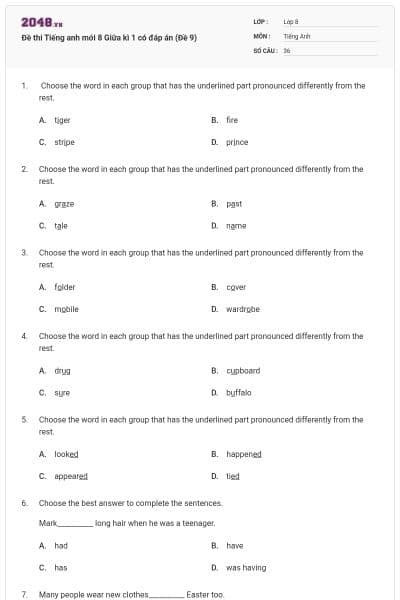
tiger
fire
stripe
prince
Đáp án D
Giải thích: Đáp án D phát âm là /i/, các đáp án còn lại phát âm là /ai/
graze
past
tale
name
Đáp án B
Giải thích: Đáp án B phát âm là /ɑː/, các đáp án còn lại phát âm là /ei/
folder
cover
mobile
wardrobe
Đáp án B
Giải thích: Đáp án B phát âm là /ʌ/, các đáp án còn lại phát âm là /əʊ/
drug
cupboard
sure
buffalo
Đáp án C
Giải thích: Đáp án C phát âm là /ɔː/, các đáp án còn lại phát âm là /ʌ/
looked
happened
appeared
tied
Đáp án A
Giải thích: Đáp án A phát âm là /t/, các đáp án còn lại phát âm là /d/
had
have
has
was having
Đáp án A
Giải thích: dùng thì quá khứ đơn vì diễn tả sự việc đã xảy ra và kết thúc trong quá khứ
Dịch: Mark để tóc dài khi còn là một thiếu niên.
in
at
on
when
Đáp án C
Giải thích: on Easter = vào lễ Phục sinh
Dịch: Nhiều người cũng mặc quần áo mới vào lễ Phục sinh.

Học thông minh hơn mỗi ngày
Xem toàn bộ 36 câu hỏi và nhiều hơn nữa với tài khoản miễn phí
use to enjoy
use to enjoying
used to enjoy
used to enjoying
Đáp án C
Giải thích: “used to Vinf” dùng để diễn tả thói quen trong quá khứ nhưng không còn trong hiện tại
Dịch: Tôi đã từng thích làm vườn, nhưng bây giờ tôi không có thời gian cho việc đó.
is winning
is going to win
will win
wins
Đáp án A
Giải thích: dùng thì hiện tại tiếp diễn để diễn tả hành động đang xảy ra tại thời điểm nói (dấu hiệu: Look!)
Dịch: Nhìn! Nam đang chơi rất tốt. Cậu ấy đang chiến thắng.
did
do
doing
does
Đáp án C
Giải thích: spend time + Ving = dành thời gian làm gì
Dịch: Anh dành phần lớn thời gian để làm từ thiện.
between
in
on
at
Đáp án C
Giải thích: on + ngày tháng
Dịch: Chúng tôi sẽ tổ chức một bữa tiệc vào ngày 27 tháng 5.
me
meself
myselves
myself
Đáp án D
Giải thích: đại từ phản thân của “I” là ‘myself’
Dịch: Tôi đã có khoảng thời gian tuyệt vời. Tôi thực sự rất thích bản thân mình.
to / of
on / in
in / in
in / of
Đáp án A
Giải thích: to the left of … = về phía trái của …
Dịch: Ở Anh, mọi người lái xe bên trái đường.
take
taking
took
takes
Đáp án B
Giải thích:
- “be used to Ving” = không quen
- take part in: tham gia vào
Dịch: Cô ấy không quen tham gia các hoạt động xã hội.
invention
inventor
inventing
invented
Đáp án D
Giải thích: dùng thì quá khứ đơn vì hành động đã xảy ra trong quá khứ
Dịch: Ai sáng chế ra điện thoại?
too
very
so
enough
Đáp án D
Giải thích: be + adj + enough + to V: đủ … để làm gì
Dịch: Con trai bạn không đủ cao để trở thành một cầu thủ bóng rổ giỏi.
hands
reach
place
fingers
Đáp án B
Giải thích: out of reach = ngoài tầm với
Dịch: Bạn phải đặt tất cả các đồ vật nguy hiểm ngoài tầm với của trẻ em.
to help
helped
help
helping
Đáp án C
Giải thích: must + Vinf = phải làm gì
Dịch: Nam phải giúp mẹ làm việc nhà.
to go
go
go to
going
Đáp án A
Giải thích: “Would like to + Vinf” (muốn làm gì)
Tạm dịch: Bạn có muốn đi đến nhà hát với tôi tối nay?
play
to play
plays
playing
Đáp án D
Giải thích: enjoy + Ving = thích làm gì
Dịch: Nam thích đá bóng sau giờ học.
at
comes
and
puts
Đáp án A
Giải thích: on Christmas Eve = vào đêm Giáng sinh
Dịch: Vào cuối đêm Giáng sinh, ông già Noel đi xuống ống khói và đặt những món quà dưới gốc cây.
uses to play
but
doesn’t
often
Đáp án A
Giải thích: “used to Vinf” dùng để diễn tả thói quen trong quá khứ nhưng không còn trong hiện tại
Dịch: Em gái tôi từng chơi quần vợt rất nhiều nhưng giờ cô ấy không chơi thường xuyên nữa.
could
so
with
did
Đáp án C
Giải thích: cruel to somebody = tàn nhẫn với …
Dịch: Sao bạn có thể tàn nhẫn với người chưa từng làm hại bạn như vậy?
start
composing
five
wrote
Đáp án: A
Giải thích:
Kiến thức: Thì của động từ
Xác định ngữ cảnh câu trong quá khứ, dùng thì quá khứ đơn.
Sửa: start → started
Dịch: Mozart bắt đầu sáng tác từ năm 5 tuổi và đã viết hơn 600 bản nhạc.
used to
on
when
am
Đáp án D
Giải thích: dùng thì quá khứ đơn vì hành động đã xảy ra trong quá khứ
Dịch: Tôi đã từng sống trong trang trại khi tôi còn là một cậu bé.
(26)
Đáp án: get
Giải thích: get up = thức dậy
Dịch: Tôi dậy lúc 6 giờ mỗi sáng và giúp bố tôi.
(27)
Đáp án: shop
Dịch: Anh ấy có một cửa hàng hoa nên anh ấy phải có mặt ở chợ hoa lúc bốn giờ.
(28)
Đáp án: flowers
Dịch: Sau đó, khi anh ấy đến, chúng tôi dỡ tất cả hoa vào cửa hàng.
(29)
Đáp án: help
Dịch: Vào cuối tuần, tôi làm việc ở cửa hàng vào thứ bảy và giúp mẹ tôi và sắp xếp hoa trong nhà thờ vào chủ nhật.
(30)
Đáp án: parents
Dịch: Sau đó vào Chủ nhật, tôi đi nhà thờ vào buổi sáng và buổi tối với cha mẹ tôi.
Because she likes red.
Because she always wears a red hood.
Because she is little.
no information
Đáp án B
Giải thích: Dựa vào câu: Once upon a time, there is a girl called Little Red Riding Hood, because of the red hood she always wears.
Dịch: Ngày xửa ngày xưa, có một cô bé tên là Cô bé quàng khăn đỏ, vì cô bé luôn đội chiếc mũ trùm đầu màu đỏ.
in the woods
immediately
when other people are there
soon
Đáp án C
Giải thích: in public (công khai) = when other people are there (khi những người khác ở đó)
the woodcutter
the wolf
the girl’s grandfather
no information
Đáp án B
Giải thích: Dựa vào các câu: A wolf wants to eat the girl but is afraid to do so in public(sometimes there are woodcutters watching). So, he suggests the girl to pick some flowers, which she does. After that, he goes to the grandmother’s house. He eats the grandmother, and waits for the girl, disguised as the grandmother.
Dịch: Một con sói muốn ăn thịt cô gái nhưng sợ làm như vậy ở nơi công cộng (đôi khi có tiều phu theo dõi). Vì vậy, anh ấy đề nghị cô gái hái một số bông hoa, và cô ấy sẽ làm. Sau đó, anh ta đến nhà bà ngoại. Anh ta ăn thịt bà ngoại, và chờ đợi cô gái, cải trang thành bà ngoại.
walks through the woods
wants to give her grandmother some food
picks some flowers
all are correct
Đáp án D
Giải thích: Dựa vào nội dung toàn bộ đoạn văn.
The wolf gives Little Red Riding Hood some flowers.
Sometimes, there are woodcutters in the wood.
A woodcutter saves the girl and her grandmother.
The girl and her grandmother are not dead.
Đáp án A
Giải thích: Dựa vào câu: So, he suggests the girl to pick some flowers, which she does.
Dịch: Vì vậy, anh ấy đề nghị cô gái hái một số bông hoa, và cô ấy sẽ làm.
Đáp án: We ought to study harder.
Dịch: Chúng ta phải học tập chăm chỉ hơn.
Đáp án: The weather is fine enough for them to have a picnic in the countryside.
Dịch: Thời tiết tốt, đủ để họ có một chuyến dã ngoại ở vùng nông thôn.
Đáp án: Mr Nam is in his office now.
Dịch: Mr Nam hiện đang ở văn phòng.
Đáp án: They are going to see a movie tonight.
Dịch: Họ sẽ đi xem một bộ phim tối nay.
Đáp án: Alexander Graham Bell introduced the telephone in 1876.
Dịch: Alexander Graham Bell giới thiệu chiếc điện thoại này vào năm 1876.
Bạn có thích hoạt động này không?
Ý kiến của bạn sẽ giúp chúng tôi đề xuất nội dung phù hợp hơn.
![[Năm 2022] Đề thi thử môn Vật lí THPT Quốc gia có lời giải - Đề số 21](/_next/image?url=https%3A%2F%2Fvideo.vietjack.com%2Fupload%2Fimages%2Fvj-image%2Fimage-3izficdefgfoel0s9j8s-1786772791.jpg&w=3840&q=75)
![[Năm 2022] Đề thi thử môn Vật lí THPT Quốc gia có lời giải - Đề số 20](/_next/image?url=https%3A%2F%2Fvideo.vietjack.com%2Fupload%2Fimages%2Fvj-image%2Fimage-emy0gtcksawvorajezvv-1786772460.jpg&w=3840&q=75)