40 câu hỏi
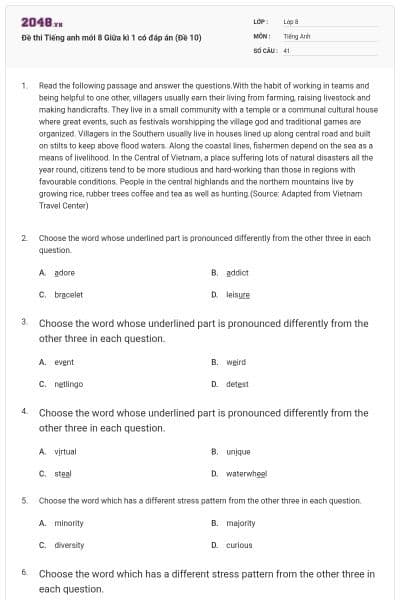
adore
addict
bracelet
leisure
Đáp án C
Giải thích: Đáp án C phát âm là /eɪ/, các đáp án còn lại phát âm là /ə/
event
weird
netlingo
detest
Đáp án B
Giải thích: Đáp án B phát âm là /ə/, các đáp án còn lại phát âm là /e/
virtual
unique
steal
waterwheel
Đáp án A
Giải thích: Đáp án A phát âm là /ɜː/, các đáp án còn lại phát âm là /i:/
minority
majority
diversity
curious
Đáp án D
Giải thích: Đáp án D trọng âm số 1, các đáp án còn lại trọng âm số 2
costume
recognise
significant
terraced
Đáp án C
Giải thích: Đáp án C trọng âm số 2, các đáp án còn lại trọng âm số 1
beehive
beenest
beehouse
beehome
Đáp án A
Giải thích: beehive (n) tổ ong
Dịch: Việc lấy mật từ tổ ong đòi hỏi rất nhiều kỹ năng.
convenient
convenience
inconvenient
inconvenience
Đáp án D
Giải thích: ô trống cần danh từ, dựa vào nghĩa chọn D
Dịch: Chúng tôi rất xin lỗi vì bất kỳ sự bất tiện nào do việc giao hàng trễ của chúng tôi.

Học thông minh hơn mỗi ngày
Xem toàn bộ 40 câu hỏi và nhiều hơn nữa với tài khoản miễn phí
electric appliances
electricity appliances
electrical appliances
electrician appliances
Đáp án C
Giải thích: electrical appliances = thiết bị điện
Dịch: Ở một số vùng nông thôn, rất khó tìm thấy các thiết bị điện trong một ngôi nhà.
agriculture
agricultural
agribusiness
agricultures
Đáp án B
Giải thích: ô trống cần tính từ
Dịch: Đối với người dân quê Việt Nam, cây lúa là cây nông nghiệp chính.
communal
communication
communicate
common
Đáp án A
Giải thích: communual house = nhà rông/ đình làng
Dịch: Các quyết định quan trọng của cả nhóm bộ lạc thường được thực hiện ở nhà rông/ đình làng.
private
international
national
boarding
Đáp án D
Giải thích: boarding school = trường nội trú
Dịch: Nhiều học sinh dân tộc thiểu số Việt Nam đang học tại các trường nội trú.
religion
religiousity
religious
religiously
Đáp án C
Giải thích: ô trống cần tính từ
Dịch: Trong dịp Tết, nhiều lễ hội tôn giáo được tổ chức giữa các dân tộc ở Việt Nam.
vast
tiny
small
inconsiderable
Đáp án A
Dịch: Một khu rừng rộng lớn - khoảng hơn 1000 ha - đã bị thiêu rụi trong đám cháy.
safe
unsafe
convenient
inconvenient
Đáp án B
Giải thích: risky (nguy hiểm) = unsafe (không an toàn)
Dịch: Đi qua núi vào ban đêm rất mạo hiểm.
to see
to look for
to learn
to watch
Đáp án B
Giải thích: to find out (tìm ra) = to look for (tìm kiếm)
Dịch: Nam muốn tìm hiểu thêm về phong tục tập quán của người Tày.
a half
all
minority
none
Đáp án C
Giải thích: majority (đa số) >< minority (thiểu số)
Dịch: Phần lớn người Việt sống dọc theo sông Hồng và đồng bằng sông Cửu Long.
>
rare
special
typical
common
Đáp án D
Giải thích: unique (độc nhất) >< common (phổ thông)
Dịch: Cồng chiêng được coi là một loại nhạc cụ độc đáo của người Tây Nguyên.
>
is
has been
was
be
Đáp án B
Giải thích: Dùng thì hiện tại hoàn thành vì có “since 2007”
Dịch: Lễ hội Đền Hùng là một ngày lễ lớn ở Việt Nam từ năm 2007.
to visit
visit
visiting
to visiting
Đáp án C
Giải thích: fancy + Ving = thích làm gì
Dịch: Hoa, bạn có thích đi thăm hiện đại ở triển lãm với tôi vào cuối tuần này không?
doing
to do
did
do
Đáp án A
Giải thích: mind Ving = phiền khi làm gì
Dịch: Cha tôi không ngại làm công việc giặt giũ trong gia đình tôi.
more well
better
more good
best
Đáp án B
Giải thích: so sánh hơn của ‘well’ là ‘better’
Dịch: Sunny hát bài hát hay hơn Jessie.
earlier
more earlily
more early
too earlier
Đáp án A
Giải thích: ‘early’ kết thúc với ‘y’ và trước là phụ âm nên đổi ‘y’ thành ‘i’ và thêm ‘er’
Dịch: Hôm nay Ly đến lớp sớm hơn hôm qua.
successful
more successful
most successful
the most successful
Đáp án C
Giải thích: cấu trúc so sánh hơn với tính từ dài: the most + adj
Dịch: Girls’ Generation được đánh giá là một trong những nhóm nhạc nữ châu Á thành công nhất thế kỷ 21.
What
Where
When
Why
Đáp án A
Giải thích: câu hỏi về sự vật ta dùng What
Dịch: Gia súc cung cấp gì cho những người du mục? - Các sản phẩm từ sữa, thịt và quần áo.
How
How often
When
Why
Đáp án B
Giải thích: câu hỏi về mức độ thường xuyên của hành động ta dùng How often
Dịch: Lễ hội này được tổ chức thường xuyên như thế nào giữa các dân tộc? - Mỗi tháng.
a
an
the
0
Đáp án C
Giải thích: phía trước số thứ tự cần ‘the’
Dịch: Dân tộc Tày là dân tộc lớn thứ hai ở Việt Nam.
Traditional
moutainous
live
nomadic
Đáp án A
Giải thích: Vị trí này cần một trạng từ (Traditionally)
Dịch: Theo truyền thống, người dân vùng núi này sống du canh du cư.
harvesting
load
drawn-buffalo
with
Đáp án C
Giải thích: Từ vựng bị viết sai vị trí (buffalo-drawn)
Dịch: Sau thời gian thu hoạch, người nông dân sẽ chất đầy đống cỏ khô lên xe trâu.
the
was
but
cancelled
Đáp án C
Giải thích: không dùng ‘but’ trong cấu trúc Although
Dịch: Dù thời tiết xấu nhưng trận đấu vẫn không bị hủy.
The
have
many
tradition
Đáp án D
Giải thích: Vị trí này cần một tính từ (traditional)
Dịch: Người Việt có nhiều phong tục và nghề thủ công truyền thống.
month
is
held
in
Đáp án A
Giải thích: ‘How many’ đi với danh từ đếm được số nhiều (months)
Dịch: Lễ hội chùa Hương được tổ chức vào tháng mấy?
Villagers across the country
Villagers around the world
Vietnamese life in the countryside
Vietnamese life in the city
Đáp án C
Giải thích: Dựa vào nội dung toàn đoạn văn, có thể xác định chủ đề là: Cuộc sống ở nông thôn Việt Nam.
farming
fishing
studying
hunting
Đáp án C
Giải thích: Dựa vào câu: With the habit of working in teams and being helpful to one other, villagers usually earn their living from farming, raising livestock and making handicrafts.
Dịch: Với thói quen làm việc theo nhóm và giúp đỡ lẫn nhau, dân làng thường kiếm sống bằng nghề trồng trọt, chăn nuôi và làm thủ công mỹ nghệ.
To protect the house from being attacked by wild animals
To protect the house from being flooded
To protect the house from earthquakes
To protect the house from evil things
Đáp án B
Giải thích: Dựa vào câu: Villagers in the Southern usually live in houses lined up along the central road and built on stilts to keep above flood waters.
Dịch: Dân làng Nam Bộ thường sống trong những ngôi nhà san sát dọc trục đường trung tâm và dựng theo kiểu nhà sàn để tránh lũ.
There are many natural disasters in the Central part of Vietnam.
Houses in the Southern part of Vietnam often situate along the coastal line.
People in the Northern Mountains earn their livings by hunting.
Villagers often work individually.
Đáp án D
Giải thích: Dựa vào câu: With the habit of working in teams and being helpful to one other, villagers usually earn their living from farming, raising livestock, and making handicrafts.
Dịch: Với thói quen làm việc theo nhóm và giúp đỡ lẫn nhau, dân làng thường kiếm sống bằng nghề trồng trọt, chăn nuôi và làm thủ công mỹ nghệ.
spending a lot of time studying
lacking of academic knowledge
being lazy in studying
being very intelligent
Đáp án A
Giải thích: studious (chăm học) = spending a lot of time studying (dành nhiều thời gian cho việc học)
Đáp án: Many natural disasters caused global warming.
Dịch: Hiện tượng nóng lên toàn cầu đã gây ra nhiều thảm họa thiên nhiên.
= Nhiều thảm họa thiên nhiên gây ra hiện tượng nóng lên toàn cầu.
Đáp án: I haven't seen such a luxurious house.
Dịch: Đây là ngôi nhà sang trọng nhất mà tôi từng thấy.
= Tôi chưa thấy một ngôi nhà sang trọng như vậy.
Đáp án: If he didn't speak so quickly, I could understand him.
Giải thích:
Kiến thức: Câu điều kiện
Câu gốc ở thì hiện tại đơn, vậy viết lại với câu điều kiện loại 2, diễn tả điều kiện và kết quả trái với hiện tại.
Cấu trúc câu điều kiện loại 2:
If + S + V-ed, S + would/could + V
Dịch: Tôi không hiểu anh ấy nói gì vì anh ấy nói quá nhanh.
→ Nếu anh ấy không nói quá nhanh thì tôi có thể hiểu được.
Đáp án: When did you begin to be an ethnologist?
Dịch: Bạn là một nhà dân tộc học bao lâu rồi?
= Bạn bắt đầu là nhà dân tộc học khi nào?
Bạn có thích hoạt động này không?
Ý kiến của bạn sẽ giúp chúng tôi đề xuất nội dung phù hợp hơn.
![[Năm 2022] Đề thi thử môn Vật lí THPT Quốc gia có lời giải - Đề số 21](/_next/image?url=https%3A%2F%2Fvideo.vietjack.com%2Fupload%2Fimages%2Fvj-image%2Fimage-3izficdefgfoel0s9j8s-1786772791.jpg&w=3840&q=75)
![[Năm 2022] Đề thi thử môn Vật lí THPT Quốc gia có lời giải - Đề số 20](/_next/image?url=https%3A%2F%2Fvideo.vietjack.com%2Fupload%2Fimages%2Fvj-image%2Fimage-emy0gtcksawvorajezvv-1786772460.jpg&w=3840&q=75)