Đề thi thử Tốt nghiệp THPT Tiếng Anh 2025-2026 Sở GD&ĐT Tuyên Quang có đáp án
40 câu hỏi
Read the following announcement and mark the letter A, B, C or D on your answer sheet to indicate the option that best fits each of the numbered blanks from 1 to 6.
Wildlife Photographer of the Year – People’s Choice 2026
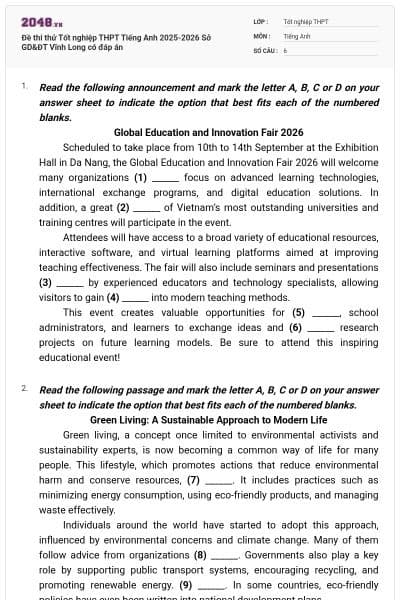
The Wildlife Photographer of the Year exhibition, (1) ____________will run from March to July 2026 at the Natural History Museum in London, is expected to attract thousands of visitors from around the world. This internationally acclaimed event brings together works from (2) ____________wildlife photographers across the globe, highlighting both artistic excellence and environmental awareness.
Visitors will gain exposure to a diverse (3) ____________of award-winning photographs, from dramatic landscapes to close-up portraits of endangered species. The exhibition also includes interactive displays (4) ____________by experienced curators and conservation experts. This event is a valuable opportunity for families, students, and photography lovers to learn about biodiversity and make a contribution to the (5) ____________of nature. Don’t forget to (6) ____________information on the website for early booking due to high public interest.
(Adapted from https://www.theguardian.com)
who
which
whose
that
A. who: đại từ quan hệ thay thế cho danh từ chỉ người (đóng vai trò làm chủ ngữ/tân ngữ).
B. which: đại từ quan hệ thay thế cho danh từ chỉ vật (đóng vai trò làm chủ ngữ/tân ngữ).
C. whose: đại từ quan hệ chỉ sự sở hữu (theo sau là một danh từ).
D. that: đại từ quan hệ thay thế cho cả người và vật (nhưng không dùng trong mệnh đề quan hệ có dấu phẩy).
Danh từ đứng trước “The Wildlife Photographer of the Year exhibition” (Buổi triển lãm Nhiếp ảnh gia Động vật hoang dã của năm) là danh từ chỉ sự vật. Ngay trước chỗ trống có dấu phẩy (,) nên đây là mệnh đề quan hệ không xác định, do đó không thể dùng “that”.
Chọn B. which
→ The Wildlife Photographer of the Year exhibition, which will run from March to July 2026 at the Natural History Museum in London...
Dịch nghĩa: Buổi triển lãm Nhiếp ảnh gia Động vật hoang dã của năm, sự kiện mà sẽ diễn ra từ tháng 3 đến tháng 7 năm 2026 tại Bảo tàng Lịch sử Tự nhiên ở London...
renowned
notorious
dominant
technical
A. renowned (adj): nổi tiếng, lừng danh (mang nghĩa tích cực).
B. notorious (adj): khét tiếng, có tiếng xấu (mang nghĩa tiêu cực).
C. dominant (adj): thống trị, có ưu thế hơn.
D. technical (adj): thuộc về kỹ thuật.
Sự kiện được quốc tế ca ngợi này quy tụ các tác phẩm từ những nhiếp ảnh gia động vật hoang dã “nổi tiếng/danh tiếng” trên toàn cầu.
Chọn A. renowned
→ This internationally acclaimed event brings together works from renowned wildlife photographers across the globe...
Dịch nghĩa: Sự kiện được quốc tế ca ngợi này quy tụ các tác phẩm từ những nhiếp ảnh gia động vật hoang dã danh tiếng trên toàn cầu...
technique
structure
process
selection
A. technique (n): kỹ thuật, phương pháp kỹ thuật.
B. structure (n): cấu trúc, kết cấu.
C. process (n): quá trình, quy trình.
D. selection (n): sự lựa chọn, bộ sưu tập/tập hợp được chọn lọc.
Ta có cụm kết hợp từ (collocation) thường gặp: a diverse selection of something (một tập hợp/bộ sưu tập đa dạng các...).
Chọn D. selection
→ Visitors will gain exposure to a diverse selection of award-winning photographs...
Dịch nghĩa: Khách tham quan sẽ có cơ hội chiêm ngưỡng một bộ sưu tập đa dạng các bức ảnh đoạt giải...
organizing
organized
organize
to organise
A. organizing: hiện tại phân từ (V-ing), dùng cho dạng chủ động.
B. organized: quá khứ phân từ (V-ed/V3), dùng cho dạng bị động.
C. organize: động từ nguyên mẫu.
D. to organise: động từ nguyên thể có “to”.
Rút gọn mệnh đề quan hệ mang nghĩa bị động. Chủ ngữ là “interactive displays” (các khu vực trưng bày tương tác) và hành động là “organize” (tổ chức). Các khu vực trưng bày không thể tự tổ chức mà “được tổ chức” bởi các chuyên gia (có “by experienced curators...”). Mệnh đề đầy đủ: which are organized. Khi rút gọn, ta bỏ đại từ quan hệ và động từ to be, chỉ giữ lại quá khứ phân từ (V3/ed).
Chọn B. organized
→ The exhibition also includes interactive displays organized by experienced curators and conservation experts.
Dịch nghĩa: Buổi triển lãm cũng bao gồm các khu vực trưng bày tương tác được tổ chức bởi các giám tuyển giàu kinh nghiệm và các chuyên gia bảo tồn.
conservation
conserve
conservative
conservationist
A. conservation (n): sự bảo tồn.
B. conserve (v): bảo tồn.
C. conservative (adj): bảo thủ, thận trọng.
D. conservationist (n): nhà bảo vệ môi trường, chuyên gia bảo tồn.
Phân tích từ loại: Phía trước khoảng trống là mạo từ “the”, phía sau là giới từ “of”, do đó vị trí này cần một danh từ. Về mặt ngữ nghĩa, đóng góp vào “sự bảo tồn thiên nhiên” thì dùng “conservation” là chính xác nhất.
Chọn A. conservation
→ This event is a valuable opportunity for families, students, and photography lovers to learn about biodiversity and make a contribution to the conservation of nature.
Dịch nghĩa: Sự kiện này là một cơ hội quý giá cho các gia đình, học sinh sinh viên và những người yêu nhiếp ảnh tìm hiểu về đa dạng sinh học và đóng góp vào sự bảo tồn thiên nhiên.
Don’t forget to (6) ____________information on the website for early booking due to high public interest.
look up
give up
take off
get in
A. look up (phr.v): tra cứu (thông tin, từ vựng...).
B. give up (phr.v): từ bỏ.
C. take off (phr.v): cất cánh (máy bay), cởi ra (quần áo), hoặc trở nên thành công nhanh chóng.
D. get in (phr.v): đi vào, lên (xe hơi/taxi), hoặc trúng cử.
Để đặt vé sớm (early booking) trên trang web (on the website), người ta cần phải “tra cứu” thông tin.
Chọn A. look up
→ Don’t forget to look up information on the website for early booking due to high public interest.
Dịch nghĩa: Đừng quên tra cứu thông tin trên trang web để đặt chỗ sớm do sự quan tâm lớn từ công chúng.
Bài đọc hoàn chỉnh | Dịch bài đọc |
Wildlife Photographer of the Year – People’s Choice 2026 The Wildlife Photographer of the Year exhibition, (1) which will run from March to July 2026 at the Natural History Museum in London, is expected to attract thousands of visitors from around the world. This internationally acclaimed event brings together works from (2) renowned wildlife photographers across the globe, highlighting both artistic excellence and environmental awareness. Visitors will gain exposure to a diverse (3) selection of award-winning photographs, from dramatic landscapes to close-up portraits of endangered species. The exhibition also includes interactive displays (4) organized by experienced curators and conservation experts. This event is a valuable opportunity for families, students, and photography lovers to learn about biodiversity and make a contribution to the (5) conservation of nature. Don’t forget to (6) look up information on the website for early booking due to high public interest. | Nhiếp ảnh gia Động vật hoang dã của năm – Lựa chọn của Công chúng 2026 Buổi triển lãm Nhiếp ảnh gia Động vật hoang dã của năm, (1) sự kiện mà sẽ diễn ra từ tháng 3 đến tháng 7 năm 2026 tại Bảo tàng Lịch sử Tự nhiên ở London, được kỳ vọng sẽ thu hút hàng ngàn du khách từ khắp nơi trên thế giới. Sự kiện được quốc tế ca ngợi này quy tụ các tác phẩm từ những nhiếp ảnh gia động vật hoang dã (2) danh tiếng trên toàn cầu, làm nổi bật cả sự xuất sắc về mặt nghệ thuật lẫn nhận thức về môi trường. Khách tham quan sẽ có cơ hội chiêm ngưỡng một (3) bộ sưu tập đa dạng các bức ảnh đoạt giải, từ những cảnh quan kỳ vĩ cho đến những bức chân dung cận cảnh của các loài có nguy cơ tuyệt chủng. Buổi triển lãm cũng bao gồm các khu vực trưng bày tương tác (4) được tổ chức bởi các giám tuyển giàu kinh nghiệm và các chuyên gia bảo tồn. Sự kiện này là một cơ hội quý giá cho các gia đình, học sinh sinh viên và những người yêu nhiếp ảnh tìm hiểu về đa dạng sinh học và đóng góp vào (5) sự bảo tồn thiên nhiên. Đừng quên (6) tra cứu thông tin trên trang web để đặt chỗ sớm do sự quan tâm lớn từ công chúng. |
Read the following leaflet and mark the letter A, B, C, or D on your answer sheet to indicate the option that best fits each of the numbered blanks from 7 to 12.
How to Protect Our Environment?
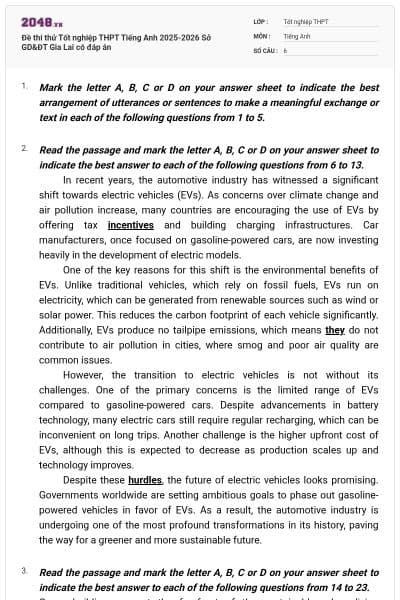
Protecting the environment is the responsibility of not only governments but also (7) ____________individual in the community. In today’s rapidly changing world, environmental problems are becoming more serious and visible. Small daily actions can make a big (8) ____________in protecting our planet for future generations. For example, you can reduce waste by using reusable bags and bottles instead of single-use plastic items.
Another important step is to support local businesses that promote (9) ____________and sustainable farming methods in your area. In addition, switching off electrical devices when they are not(10) ____________use helps cut down on energy consumption at home and in the workplace.
You should also encourage other people around you to take part in community clean-up (11) ____________and environmental workshops, (12) ____________these activities help raise awareness and build a greener, more sustainable future for everyone.
(Adapted from EcoTips – Tips for environmental protection - fws.gov)
many
every
all
another
A. many: nhiều (+ danh từ đếm được số nhiều).
B. every: mỗi, mọi (+ danh từ đếm được số ít).
C. all: tất cả (+ danh từ đếm được số nhiều hoặc không đếm được).
D. another: một ... khác (+ danh từ đếm được số ít).
Phân tích: Phía sau khoảng trống là danh từ đếm được ở dạng số ít “individual” (cá nhân), do đó loại A và C. Xét về nghĩa của câu, bảo vệ môi trường là trách nhiệm của “mỗi/mọi cá nhân” chứ không phải “một cá nhân khác”.
Chọn B. every
→ Protecting the environment is the responsibility of not only governments but also every individual in the community.
Dịch nghĩa: Bảo vệ môi trường là trách nhiệm không chỉ của chính phủ mà còn của mỗi cá nhân trong cộng đồng.
difference
effort
arrangement
choice
A. difference (n): sự khác biệt.
B. effort (n): sự nỗ lực.
C. arrangement (n): sự sắp xếp.
D. choice (n): sự lựa chọn.
Ta có cụm kết hợp từ cố định (collocation): make a difference (tạo ra sự khác biệt, mang lại tác động lớn/ý nghĩa quan trọng).
Chọn A. difference
→ Small daily actions can make a big difference in protecting our planet for future generations.
Dịch nghĩa: Những hành động nhỏ hàng ngày có thể tạo ra sự khác biệt lớn trong việc bảo vệ hành tinh của chúng ta cho các thế hệ tương lai.
environmentally friendly products
friendly environmentally products
products environmentally friendly
environmentally products friendly
Phân tích trật tự từ: Cấu trúc sắp xếp cụm danh từ ở đây tuân theo quy tắc: Trạng từ (Adv) + Tính từ (Adj) + Danh từ (Noun).
Trạng từ: “environmentally” (về mặt môi trường) bổ nghĩa cho tính từ phía sau.
Tính từ: “friendly” (thân thiện).
Danh từ: “products” (các sản phẩm).
Cụm từ đúng: environmentally friendly products” (các sản phẩm thân thiện với môi trường).
Chọn A. environmentally friendly products
→ Another important step is to support local businesses that promote environmentally friendly products and sustainable farming methods in your area.
Dịch nghĩa: Một bước quan trọng khác là ủng hộ các doanh nghiệp địa phương quảng bá các sản phẩm thân thiện với môi trường và các phương pháp canh tác bền vững trong khu vực của bạn.
at
in
on
of
A. at (prep): ở tại.
B. in (prep): trong.
C. on (prep): trên.
D. of (prep): của.
Phân tích: Ta có cụm giới từ cố định: in use (đang được sử dụng). Ngược lại là not in use (không dùng đến).
Chọn B. in
→ In addition, switching off electrical devices when they are not in use helps cut down on energy consumption...
Dịch nghĩa: Ngoài ra, việc tắt các thiết bị điện khi chúng không được sử dụng giúp cắt giảm mức tiêu thụ năng lượng...
campaigns
operations
missions
drives
A. campaigns (n): các chiến dịch.
B. operations (n): các ca phẫu thuật, các hoạt động (thường mang tính chất quân sự, cứu hộ).
C. missions (n): các sứ mệnh.
D. drives (n): các cuộc vận động.
Ta có cụm từ ghép rất phổ biến khi nói về hoạt động môi trường: clean-up campaigns (các chiến dịch dọn dẹp).
Chọn A. campaigns
→ You should also encourage other people around you to take part in community clean-up campaigns and environmental workshops...
Dịch nghĩa: Bạn cũng nên khuyến khích những người xung quanh tham gia vào các chiến dịch dọn dẹp cộng đồng và các hội thảo về môi trường...
(12) ____________these activities help raise awareness and build a greener, more sustainable future for everyone.
although
because
however
therefore
A. although (conj): mặc dù (+ mệnh đề).
B. because (conj): bởi vì (+ mệnh đề).
C. however (adv): tuy nhiên (thường đứng sau dấu chấm hoặc chấm phẩy, có dấu phẩy theo sau).
D. therefore (adv): do đó, vì vậy (thường đứng sau dấu chấm hoặc chấm phẩy, có dấu phẩy theo sau).
Phía sau khoảng trống là một mệnh đề (S + V) “these activities help...” giải thích lý do tại sao lại nên tham gia vào các hoạt động môi trường ở vế trước. Do đó, từ nối chỉ nguyên nhân “because” là chính xác nhất.
Chọn B. because
→ ...because these activities help raise awareness and build a greener, more sustainable future for everyone.
Dịch nghĩa: ...bởi vì những hoạt động này giúp nâng cao nhận thức và xây dựng một tương lai xanh hơn, bền vững hơn cho tất cả mọi người.
Bài đọc hoàn chỉnh | Dịch bài đọc |
How to Protect Our Environment? Protecting the environment is the responsibility of not only governments but also (7) every individual in the community. In today’s rapidly changing world, environmental problems are becoming more serious and visible. Small daily actions can make a big (8) difference in protecting our planet for future generations. For example, you can reduce waste by using reusable bags and bottles instead of single-use plastic items. Another important step is to support local businesses that promote (9) environmentally friendly products and sustainable farming methods in your area. In addition, switching off electrical devices when they are not (10) in use helps cut down on energy consumption at home and in the workplace. You should also encourage other people around you to take part in community clean-up (11) campaigns and environmental workshops, (12) because these activities help raise awareness and build a greener, more sustainable future for everyone. | Làm Thế Nào Để Bảo Vệ Môi Trường Của Chúng Ta? Bảo vệ môi trường là trách nhiệm không chỉ của chính phủ mà còn của (7) mỗi cá nhân trong cộng đồng. Trong thế giới đang thay đổi nhanh chóng ngày nay, các vấn đề môi trường đang trở nên nghiêm trọng và rõ ràng hơn. Những hành động nhỏ hàng ngày có thể tạo ra (8) sự khác biệt lớn trong việc bảo vệ hành tinh của chúng ta cho các thế hệ tương lai. Ví dụ, bạn có thể giảm thiểu rác thải bằng cách sử dụng túi và bình nước dùng lại được thay vì các món đồ nhựa dùng một lần. Một bước quan trọng khác là ủng hộ các doanh nghiệp địa phương quảng bá (9) các sản phẩm thân thiện với môi trường và các phương pháp canh tác bền vững trong khu vực của bạn. Ngoài ra, việc tắt các thiết bị điện khi chúng không (10) được sử dụng giúp cắt giảm mức tiêu thụ năng lượng ở nhà và nơi làm việc. Bạn cũng nên khuyến khích những người xung quanh tham gia vào các (11) chiến dịch dọn dẹp cộng đồng và các buổi hội thảo về môi trường, (12) bởi vì những hoạt động này giúp nâng cao nhận thức và xây dựng một tương lai xanh hơn, bền vững hơn cho tất cả mọi người. |
Mark the letter A, B, C or D on your answer sheet to indicate the best arrangement of utterances or sentences to make a cohesive and coherent exchange or text in each of the following questions from 13 to 17.
a.Patient: Thank you, doctor. I’ll follow your instructions.
b.Doctor: You have a mild flu. Take these tablets twice a day and drink plenty of water.
c.Patient: Good morning doctor, I’ve been having a headache and fever since yesterday.
c – b – a
c – a – b
b – c – a
a – b – c
Thứ tự sắp xếp đúng: A. c – b – a
c. Patient: Good morning doctor, I’ve been having a headache and fever since yesterday.
b. Doctor: You have a mild flu. Take these tablets twice a day and drink plenty of water.
a. Patient: Thank you, doctor. I’ll follow your instructions.
Dịch nghĩa:
c. Bệnh nhân: Chào buổi sáng bác sĩ, tôi bị đau đầu và sốt từ hôm qua.
b. Bác sĩ: Bạn bị cúm nhẹ. Uống những viên thuốc này hai lần một ngày và uống nhiều nước nhé.
a. Bệnh nhân: Cảm ơn bác sĩ. Tôi sẽ làm theo hướng dẫn của bác sĩ.
Chọn A.
a.Alice: I’m planning a trip to Da Nang to see the Golden Bridge. How about you?
b.Alice: That sounds relaxing! I heard the weather there is perfect this time of year.
c.Bob: I’m going to Da Lat. I want to enjoy the cool air and visit the flower gardens.
d.Bob: Hi Alice. Have you decided on your destination for the summer holiday yet?
e.Bob: Yes, it is. It’s the best place to escape the summer heat.
d – c – a – b – e
d – a – c – b – e
a – c – b – e – d
a – d – c – b – e
Thứ tự sắp xếp đúng: B. d – a – c – b – e
d. Bob: Hi Alice. Have you decided on your destination for the summer holiday yet?
a. Alice: I’m planning a trip to Da Nang to see the Golden Bridge. How about you?
c. Bob: I’m going to Da Lat. I want to enjoy the cool air and visit the flower gardens.
b. Alice: That sounds relaxing! I heard the weather there is perfect this time of year.
e. Bob: Yes, it is. It’s the best place to escape the summer heat.
Dịch nghĩa:
d. Bob: Chào Alice. Cậu đã quyết định điểm đến cho kỳ nghỉ hè chưa?
a. Alice: Tớ đang lên kế hoạch cho một chuyến đi đến Đà Nẵng để xem Cầu Vàng. Còn cậu thì sao?
c. Bob: Tớ sẽ đi Đà Lạt. Tớ muốn tận hưởng không khí mát mẻ và tham quan các vườn hoa.
b. Alice: Nghe có vẻ thư giãn đấy! Tớ nghe nói thời tiết ở đó rất hoàn hảo vào thời điểm này trong năm.
e. Bob: Đúng vậy. Đó là nơi tốt nhất để trốn cái nóng mùa hè.
Chọn B.
Dear Sir/Madam,
a.Additionally, through active community participation, we aim to foster environmental responsibility for future generations.
b.To achieve these objectives, the project will include organising educational workshops and implementing a waste management plan.
c.I am writing to propose launching a green initiative in our community to address growing environmental concerns.
d.We look forward to your favourable consideration and support for this initiative.
e.The primary aim of this initiative is to raise environmental awareness and reduce carbon emissions. Yours faithfully,
Nguyen Van An - Project Manager
c – e – a – b – d
c – b – e – a – d
e – c – b – a – d
e – a – c – b – d
Thứ tự sắp xếp đúng: A. c – e – a – b – d
c. I am writing to propose launching a green initiative in our community to address growing environmental concerns.
e. The primary aim of this initiative is to raise environmental awareness and reduce carbon emissions.
a. Additionally, through active community participation, we aim to foster environmental responsibility for future generations.
b. To achieve these objectives, the project will include organising educational workshops and implementing a waste management plan.
d. We look forward to your favourable consideration and support for this initiative.
Dịch nghĩa:
Kính gửi Ông/Bà,
c. Tôi viết thư này để đề xuất việc khởi động một sáng kiến xanh trong cộng đồng chúng ta nhằm giải quyết các mối quan ngại về môi trường ngày càng tăng.
e. Mục tiêu chính của sáng kiến này là nâng cao nhận thức về môi trường và giảm lượng khí thải carbon.
a. Thêm vào đó, thông qua sự tham gia tích cực của cộng đồng, chúng tôi mong muốn nuôi dưỡng trách nhiệm với môi trường cho các thế hệ tương lai.
b. Để đạt được những mục tiêu này, dự án sẽ bao gồm việc tổ chức các hội thảo giáo dục và thực hiện kế hoạch quản lý rác thải.
d. Chúng tôi mong nhận được sự xem xét thuận lợi và hỗ trợ của quý vị cho sáng kiến này.
Trân trọng,
Nguyễn Văn An - Quản lý Dự án
Chọn A.
a.Additionally, smart appliances simplify household tasks, allowing more time for family and leisure.
b.Smart homes integrate technology to improve comfort, efficiency, and security in residential living.
c.Overall, smart homes represent a transformative advancement in how we experience and interact with our living spaces.
d.Smart thermostats and lighting systems contribute to energy savings, while smart locks and cameras enhance security.
e.Utilising devices connected to the Internet of Things (IoT), homeowners can control various aspects of their homes remotely.
c – b – a – e – d
b – e – d – a – c
b – d – e – c – a
c – b – a – d – e
Thứ tự sắp xếp đúng: B. b – e – d – a – c
b. Smart homes integrate technology to improve comfort, efficiency, and security in residential living.
e. Utilising devices connected to the Internet of Things (IoT), homeowners can control various aspects of their homes remotely.
d. Smart thermostats and lighting systems contribute to energy savings, while smart locks and cameras enhance security.
a. Additionally, smart appliances simplify household tasks, allowing more time for family and leisure.
c. Overall, smart homes represent a transformative advancement in how we experience and interact with our living spaces.
Dịch nghĩa:
b. Nhà thông minh tích hợp công nghệ để cải thiện sự thoải mái, hiệu suất và an ninh trong không gian sống của cư dân.
e. Bằng cách sử dụng các thiết bị kết nối Internet Vạn vật (IoT), chủ nhà có thể điều khiển nhiều khía cạnh khác nhau trong ngôi nhà của họ từ xa.
d. Bộ điều nhiệt và hệ thống chiếu sáng thông minh góp phần tiết kiệm năng lượng, trong khi khóa và camera thông minh giúp tăng cường an ninh.
a. Ngoài ra, các thiết bị gia dụng thông minh giúp đơn giản hóa các công việc nhà, cho phép có nhiều thời gian hơn cho gia đình và giải trí.
c. Nhìn chung, nhà thông minh đại diện cho một bước tiến mang tính bước ngoặt trong cách chúng ta trải nghiệm và tương tác với không gian sống của mình.
Chọn B.
a.These limitations have led many educators to question whether examinations alone can accurately reflect a learner's true abilities.
b.Examinations remain one of the most widely used methods of assessment worldwide, verifying whether students are ready to progress to the next stage of education.
c.In response to these concerns, some institutions have introduced alternative forms of evaluation, such as coursework and project-based assessment, to provide a more balanced measure of achievement.
d.Despite their practicality and perceived fairness, exams may encourage superficial learning, as some candidates focus mainly on tested content rather than deep understanding.
e.For this reason, while exams continue to play an important role, they should be carefully designed and supplemented with other assessment methods to ensure greater validity.
b – d – a – c – e
b – a – d – c – e
d – b – a – c – e
d – b – c – a – e
Thứ tự sắp xếp đúng: A. b – d – a – c – e
b. Examinations remain one of the most widely used methods of assessment worldwide, verifying whether students are ready to progress to the next stage of education.
d. Despite their practicality and perceived fairness, exams may encourage superficial learning, as some candidates focus mainly on tested content rather than deep understanding.
a. These limitations have led many educators to question whether examinations alone can accurately reflect a learner's true abilities.
c. In response to these concerns, some institutions have introduced alternative forms of evaluation, such as coursework and project-based assessment, to provide a more balanced measure of achievement.
e. For this reason, while exams continue to play an important role, they should be carefully designed and supplemented with other assessment methods to ensure greater validity.
Dịch nghĩa:
b. Thi cử vẫn là một trong những phương pháp đánh giá được sử dụng rộng rãi nhất trên toàn thế giới, nhằm xác minh xem học sinh đã sẵn sàng để chuyển sang giai đoạn giáo dục tiếp theo hay chưa.
d. Mặc dù có tính thực tiễn và được coi là công bằng, nhưng các kỳ thi có thể khuyến khích việc học hời hợt, vì một số thí sinh chủ yếu tập trung vào các nội dung kiểm tra thay vì sự hiểu biết sâu sắc.
a. Những hạn chế này đã khiến nhiều nhà giáo dục đặt câu hỏi liệu chỉ riêng các kỳ thi có thể phản ánh chính xác khả năng thực sự của người học hay không.
c. Để đối phó với những lo ngại này, một số tổ chức đã giới thiệu các hình thức đánh giá thay thế, chẳng hạn như làm bài tập khóa học và đánh giá dựa trên dự án, để cung cấp một thước đo thành tích cân bằng hơn.
e. Vì lý do này, trong khi các kỳ thi tiếp tục đóng vai trò quan trọng, chúng nên được thiết kế cẩn thận và bổ sung bằng các phương pháp đánh giá khác để đảm bảo tính hợp lệ (độ chuẩn xác) cao hơn.
Chọn A.
Read the following passage and mark the letter A, B, C or D on your answer sheet to indicate the option that best fits each of the numbered blanks from 18 to 22.
Cultural Diversity in the Workplace
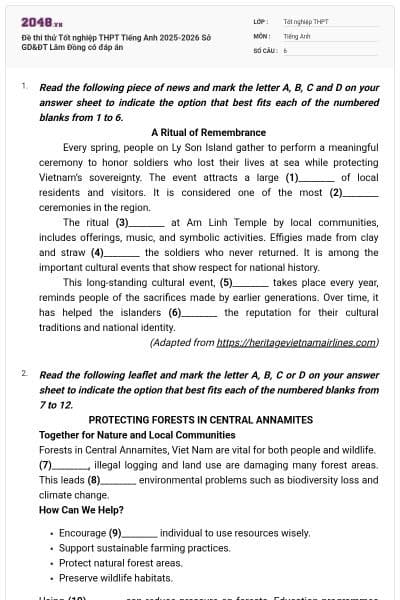
Cultural diversity in the workplace is becoming more important as businesses expand globally. People from different cultural backgrounds bring unique perspectives, ideas, and experiences, (18) ____________. A diverse team offers a range of skills, which allows companies to solve problems more creatively. (19) ____________, they can learn from each other's experiences, bringing about more open-minded and adaptable individuals. This can create a more dynamic and productive work environment, improving overall team performance.
However, cultural diversity also brings challenges. (20) ____________. Employees may struggle to work together effectively if they do not understand each other's cultural backgrounds. To address thesechallenges, companies need to foster a supportive environment that encourages respect and inclusion. Training programs that teach cultural awareness can help employees better understand their colleagues' perspectives and working methods. In addition, promoting open communication and organizing team-building activities (21) ____________.
In conclusion, cultural diversity in the office provides many benefits, but it requires effort from both employers and employees to make it work effectively. By embracing cultural differences and fostering an inclusive workplace, companies can create an environment where all employees feel valued and respected.(22) ____________. A diverse and inclusive office culture helps build a positive work environment and enhances overall performance, leading to long-term growth and success.
(Adapted from THINK)
leading to innovative solutions and better decision-making
that can result in better decision-making and innovative solutions
to which causes better solutions and innovative decision-making
led to better decision-making and innovative solutions
Phía trước chỗ trống là một mệnh đề hoàn chỉnh: “People from different cultural backgrounds bring unique perspectives, ideas, and experiences” (Những người từ các nền văn hóa khác nhau mang đến những góc nhìn, ý tưởng và kinh nghiệm độc đáo). Vị trí (18) cần một cấu trúc chỉ kết quả của hành động đó. Cấu trúc V-ing (hiện tại phân từ) thường được dùng sau dấu phẩy để rút gọn mệnh đề chỉ kết quả.
Dịch nghĩa:
A. dẫn đến các giải pháp đổi mới và việc ra quyết định tốt hơn (Sử dụng V-ing rút gọn hợp lý).
B. cái mà có thể dẫn đến việc ra quyết định tốt hơn và các giải pháp đổi mới (Sai ngữ pháp vì đại từ quan hệ “that” không đứng sau dấu phẩy trong mệnh đề quan hệ không xác định).
C. tới cái mà gây ra các giải pháp tốt hơn... (Sai cấu trúc ngữ pháp).
D. đã dẫn đến việc ra quyết định tốt hơn... (Sai thì, đoạn văn đang miêu tả một sự thật/chân lý ở hiện tại, không dùng quá khứ đơn “led”).
Phân tích:
Đáp án A đúng hoàn toàn về mặt ngữ pháp (rút gọn mệnh đề kết quả: ...which leads to... → ...leading to...) và phù hợp với logic của bài.
Chọn A.
→ People from different cultural backgrounds bring unique perspectives, ideas, and experiences, leading to innovative solutions and better decision-making.
Dịch nghĩa: Những người từ các nền văn hóa khác nhau mang đến những góc nhìn, ý tưởng và kinh nghiệm độc đáo, dẫn đến các giải pháp đổi mới và việc ra quyết định tốt hơn.
In order to collaborate employees from various cultural backgrounds
Although employees from various cultural backgrounds collaborate
When employees from various cultural backgrounds collaborate
So long as employers from various cultural backgrounds collaborate
Câu (19) đóng vai trò là một mệnh đề trạng ngữ đứng trước dấu phẩy, bổ nghĩa cho mệnh đề chính “they can learn from each other's experiences...” (họ có thể học hỏi từ kinh nghiệm của nhau...).
Dịch nghĩa:
A. Để hợp tác các nhân viên từ các nền văn hóa khác nhau (Động từ “collaborate” ở đây là nội động từ, không đi trực tiếp với tân ngữ “employees” theo cách này).
B. Mặc dù các nhân viên từ các nền văn hóa khác nhau hợp tác (Sai logic vì “mặc dù” thể hiện sự nhượng bộ, không hợp với ý “học hỏi lẫn nhau” mang tính hệ quả).
C. Khi các nhân viên từ các nền văn hóa khác nhau hợp tác.
D. Miễn là các nhà tuyển dụng từ các nền văn hóa khác nhau hợp tác (Sai đối tượng, bài đang nói về nhân viên “employees”, không phải nhà tuyển dụng “employers”).
Phân tích:
Đáp án C cung cấp một mệnh đề chỉ thời gian hoàn chỉnh, tạo mối quan hệ nhân quả logic: Khi họ làm việc chung, họ học hỏi được từ nhau.
Chọn C.
→ When employees from various cultural backgrounds collaborate, they can learn from each other's experiences, bringing about more open-minded and adaptable individuals.
Dịch nghĩa: Khi các nhân viên từ các nền văn hóa khác nhau hợp tác, họ có thể học hỏi từ kinh nghiệm của nhau, tạo ra những cá nhân cởi mở và dễ thích nghi hơn.
Differences in communication styles, work ethics, and values can result in conflicts or misunderstandings
Differences in communication styles, and values which can cause misunderstandings or conflicts
Communication styles, work ethics, and value misunderstandings or conflicts can generate differences
Work ethic values, communication styles, and misunderstandings can give rise to different conflicts
Câu trước nêu ý “cultural diversity also brings challenges” (sự đa dạng văn hóa cũng mang lại những thách thức). Câu (20) cần đóng vai trò là câu giải thích/minh chứng cho những thách thức đó, và phải là một câu hoàn chỉnh có đủ Chủ ngữ - Vị ngữ.
Dịch nghĩa:
A. Sự khác biệt về phong cách giao tiếp, đạo đức nghề nghiệp và các giá trị có thể dẫn đến xung đột hoặc hiểu lầm. (Câu độc lập, đầy đủ cấu trúc).
B. Sự khác biệt về phong cách giao tiếp, và các giá trị cái mà có thể gây ra những hiểu lầm hoặc xung đột. (Câu bị thiếu động từ chính vì có chứa đại từ quan hệ “which”).
C. Phong cách giao tiếp, đạo đức nghề nghiệp, và những hiểu lầm về giá trị hoặc xung đột có thể tạo ra những sự khác biệt. (Sai logic: chính sự khác biệt mới tạo ra xung đột, chứ không phải xung đột tạo ra sự khác biệt).
D. Giá trị đạo đức nghề nghiệp, phong cách giao tiếp, và những hiểu lầm có thể làm nảy sinh các xung đột khác nhau. (Cấu trúc lủng củng và logic không chặt chẽ bằng A).
Phân tích:
Đáp án A vừa đúng cấu trúc ngữ pháp vừa liền mạch về mặt ý nghĩa, liệt kê trực tiếp nguyên nhân gây ra thách thức.
Chọn A.
→ However, cultural diversity also brings challenges. Differences in communication styles, work ethics, and values can result in conflicts or misunderstandings.
Dịch nghĩa: Tuy nhiên, sự đa dạng văn hóa cũng mang lại những thách thức. Sự khác biệt về phong cách giao tiếp, đạo đức nghề nghiệp và các giá trị có thể dẫn đến xung đột hoặc hiểu lầm.
strengthened relationships to reduce the chances of conflict
the strengthened relationships help reduce the chances of conflict
strengthening relationships to reduce the chances of conflict
can strengthen relationships and reduce the chances of conflict
Chủ ngữ của câu là một cụm danh động từ kép: “promoting open communication and organizing team-building activities” (việc thúc đẩy giao tiếp cởi mở và tổ chức các hoạt động xây dựng đội nhóm). Vị trí (21) bắt buộc phải là một Cụm động từ chính (Main verb) để hoàn thiện câu.
Dịch nghĩa/Phân tích cấu trúc:
A. strengthened (V-ed ở thì quá khứ không phù hợp bối cảnh hiện tại của bài viết).
B. the strengthened relationships... (Thừa cụm danh từ làm chủ ngữ, khiến câu bị lặp chủ ngữ).
C. strengthening... (Danh động từ V-ing khiến câu không có động từ chính để tạo thành một câu hoàn chỉnh).
D. can strengthen relationships and reduce the chances of conflict (Động từ khuyết thiếu “can” kết hợp động từ nguyên thể “strengthen” và “reduce”, đóng vai trò làm vị ngữ cho câu).
Phân tích:
Đáp án D là lựa chọn duy nhất cung cấp cấu trúc Động từ chính hợp lý và đúng thì hiện tại.
Chọn D.
→ In addition, promoting open communication and organizing team-building activities can strengthen relationships and reduce the chances of conflict.
Dịch nghĩa: Ngoài ra, việc thúc đẩy giao tiếp cởi mở và tổ chức các hoạt động xây dựng đội nhóm có thể củng cố các mối quan hệ và giảm thiểu khả năng xảy ra xung đột.
Improving teamwork contributes to the company's success and productivity
This not only improves teamwork but also contributes to the company's success
These improve teamwork so that they contribute to the company's success
What improves teamwork can contribute to the company's success and productivity
Câu trước đề cập đến việc: “...companies can create an environment where all employees feel valued and respected.” (...các công ty có thể tạo ra một môi trường nơi tất cả nhân viên cảm thấy được coi trọng và tôn trọng). Câu (22) cần là một cầu nối giữa ý tưởng này với câu kết luận phía sau về “sự phát triển và thành công lâu dài”.
Cấu trúc “Not only... but also...” (Không những... mà còn...) là lý tưởng để nối tiếp các lợi ích.
Dịch nghĩa:
A. Việc cải thiện tinh thần đồng đội đóng góp vào thành công và năng suất của công ty (Câu đứng độc lập, thiếu sự liên kết chặt chẽ với câu trước đó).
B. Điều này không chỉ cải thiện tinh thần đồng đội mà còn đóng góp vào thành công của công ty (“This/Điều này” thay thế hoàn hảo cho toàn bộ ý “tạo ra môi trường được tôn trọng” ở câu trước).
C. Những điều này cải thiện tinh thần đồng đội để mà chúng đóng góp vào thành công của công ty (Đại từ “These” số nhiều không phù hợp để thay thế cho danh từ số ít “an environment”).
D. Điều cải thiện tinh thần đồng đội có thể đóng góp vào thành công và năng suất của công ty (Câu diễn đạt kém tự nhiên).
Phân tích:
Đáp án B liên kết tốt với câu trước nhờ đại từ ‘This’ và phát triển thêm hai lớp ý nghĩa song song tích cực.
Chọn B.
→ By embracing cultural differences and fostering an inclusive workplace, companies can create an environment where all employees feel valued and respected. This not only improves teamwork but also contributes to the company's success.
Dịch nghĩa: Bằng cách trân trọng những khác biệt văn hóa và nuôi dưỡng một nơi làm việc hòa nhập, các công ty có thể tạo ra một môi trường nơi tất cả nhân viên cảm thấy được coi trọng và tôn trọng. Điều này không chỉ cải thiện tinh thần đồng đội mà còn đóng góp vào sự thành công của công ty.
Bài đọc hoàn chỉnh | Dịch bài đọc |
Cultural Diversity in the Workplace Cultural diversity in the workplace is becoming more important as businesses expand globally. People from different cultural backgrounds bring unique perspectives, ideas, and experiences, leading to innovative solutions and better decision-making. A diverse team offers a range of skills, which allows companies to solve problems more creatively. When employees from various cultural backgrounds collaborate, they can learn from each other's experiences, bringing about more open-minded and adaptable individuals. This can create a more dynamic and productive work environment, improving overall team performance. However, cultural diversity also brings challenges. Differences in communication styles, work ethics, and values can result in conflicts or misunderstandings. Employees may struggle to work together effectively if they do not understand each other's cultural backgrounds. To address these challenges, companies need to foster a supportive environment that encourages respect and inclusion. Training programs that teach cultural awareness can help employees better understand their colleagues' perspectives and working methods. In addition, promoting open communication and organizing team-building activities can strengthen relationships and reduce the chances of conflict. In conclusion, cultural diversity in the office provides many benefits, but it requires effort from both employers and employees to make it work effectively. By embracing cultural differences and fostering an inclusive workplace, companies can create an environment where all employees feel valued and respected. This not only improves teamwork but also contributes to the company's success. A diverse and inclusive office culture helps build a positive work environment and enhances overall performance, leading to long-term growth and success. | Sự đa dạng văn hóa tại nơi làm việc Sự đa dạng văn hóa tại nơi làm việc đang trở nên quan trọng hơn khi các doanh nghiệp mở rộng quy mô toàn cầu. Những người từ các nền văn hóa khác nhau mang đến những góc nhìn, ý tưởng và kinh nghiệm độc đáo, dẫn đến các giải pháp đổi mới và việc ra quyết định tốt hơn. Một đội ngũ đa dạng mang lại nhiều kỹ năng khác nhau, cho phép các công ty giải quyết vấn đề một cách sáng tạo hơn. Khi các nhân viên từ các nền văn hóa khác nhau hợp tác, họ có thể học hỏi từ kinh nghiệm của nhau, tạo ra những cá nhân cởi mở và dễ thích nghi hơn. Điều này có thể tạo ra một môi trường làm việc năng động và năng suất hơn, cải thiện hiệu suất chung của toàn đội. Tuy nhiên, sự đa dạng văn hóa cũng mang lại những thách thức. Sự khác biệt về phong cách giao tiếp, đạo đức nghề nghiệp và các giá trị có thể dẫn đến xung đột hoặc hiểu lầm. Nhân viên có thể gặp khó khăn trong việc làm việc cùng nhau một cách hiệu quả nếu họ không hiểu bối cảnh văn hóa của nhau. Để giải quyết những thách thức này, các công ty cần nuôi dưỡng một môi trường hỗ trợ khuyến khích sự tôn trọng và hòa nhập. Các chương trình đào tạo dạy về nhận thức văn hóa có thể giúp nhân viên hiểu rõ hơn về quan điểm và phương pháp làm việc của đồng nghiệp. Ngoài ra, việc thúc đẩy giao tiếp cởi mở và tổ chức các hoạt động xây dựng đội nhóm có thể củng cố các mối quan hệ và giảm thiểu khả năng xảy ra xung đột. Tóm lại, sự đa dạng văn hóa trong văn phòng mang lại nhiều lợi ích, nhưng nó đòi hỏi nỗ lực từ cả người sử dụng lao động và người lao động để làm cho nó hoạt động hiệu quả. Bằng cách trân trọng những khác biệt văn hóa và nuôi dưỡng một nơi làm việc hòa nhập, các công ty có thể tạo ra một môi trường nơi tất cả nhân viên cảm thấy được coi trọng và tôn trọng. Điều này không chỉ cải thiện tinh thần đồng đội mà còn đóng góp vào sự thành công của công ty. Một văn hóa văn phòng đa dạng và hòa nhập giúp xây dựng một môi trường làm việc tích cực và nâng cao hiệu suất tổng thể, dẫn đến sự phát triển và thành công lâu dài. |
Read the following passage and mark the letter A, B, C, or D on your answer sheet to indicate the best answer to each of the following questions from 23 to 30.
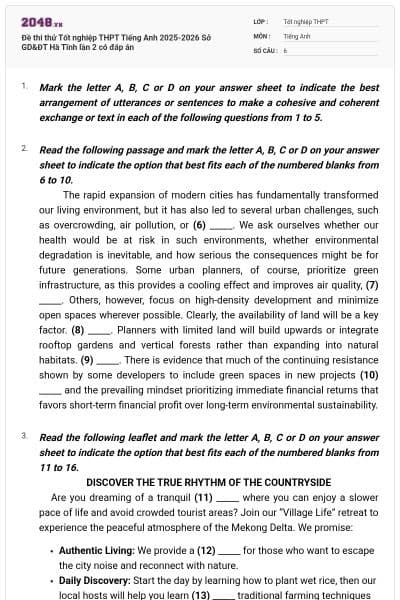
Every drop of water in the ocean, even in the deepest parts, responds to the forces that create the tides. No other force that affects the sea is so strong. Compared with the tides, the waves created by the wind are surface movements felt no more than a hundred fathoms below the surface. The currents also seldom involve more than the upper several hundred fathoms despite their impressive sweep.
The tides are a response of the waters of the ocean to the pull of the Moon and the more distant Sun. In theory, there is a gravitational attraction between the water and even the outermost star of the universe. In reality, however, the pull of remote stars is so slight as to be obliterated by the control of the Moon and, to a lesser extent, the Sun.
Just as the Moon rises later each day by fifty minutes, on the average, so, in most places, the time of high tide is correspondingly later each day. And as the Moon waxes and wanes in its monthly cycle, so the height of the tide varies.
The tidal movements are strongest when the Moon is a sliver in the sky, and when it is full. These are the highest flood tides and the lowest ebb tides of the lunar month and are called the spring tides. At these times the Sun, Moon, and Earth are nearly in line and the pull of the two heavenly bodies is added together to bring the water high on the beaches, to send its surf upward against the sea cliffs, and to draw a high tide into the harbors. Twice each month, at the quarters of the moon, when the Sun, Moon and Earth lie at the apexes of a triangular configuration and the pull of the Sun and Moon are opposed, the moderate tidal movements called neap tides occur. Then the difference between high and low water is less than at any other time during the month.
(Adapted from TOEFL reading)
Which of the following best paraphrases the underlined sentence in paragraph 1?
Unlike tides, wind waves extend to depths exceeding 100 fathoms below the sea surface.
Unlike tides, wind waves are surface movements felt at depths of no more than 100 fathoms.
Unlike tides, wind waves remain surface movements extending to depths of 100 fathoms.
Compared with tides, wind waves are felt at depths of 100 fathoms below the sea surface.
Câu nào sau đây diễn giải tốt nhất câu được gạch chân trong đoạn 1?
Compared with the tides, the waves created by the wind are surface movements felt no more than a hundred fathoms below the surface.
(So với thủy triều, các sóng do gió tạo ra là những chuyển động bề mặt được cảm nhận ở độ sâu không quá một trăm sải dưới mặt nước.)
Dịch nghĩa:
A. Khác với thủy triều, sóng gió kéo dài đến độ sâu vượt quá 100 sải dưới mặt biển. (Sai ở từ “exceeding” - vượt quá).
B. Khác với thủy triều, sóng gió là những chuyển động bề mặt được cảm nhận ở độ sâu không quá 100 sải. (Đúng và đầy đủ nghĩa nhất).
C. Khác với thủy triều, sóng gió vẫn là những chuyển động bề mặt kéo dài đến độ sâu 100 sải. (Thiếu yếu tố “không quá”).
D. So với thủy triều, sóng gió được cảm nhận ở độ sâu 100 sải dưới mặt biển. (Thiếu yếu tố “không quá”).
Chọn B.
tides
waves
fathoms
currents
Từ “their” ở đoạn 1 chỉ ____________.
A. tides: thủy triều
B. waves: những con sóng
C. fathoms: đơn vị đo sải (nước)
D. currents: các dòng hải lưu
Thông tin: The currents also seldom involve more than the upper several hundred fathoms despite their impressive sweep.
(Các dòng hải lưu cũng hiếm khi ảnh hưởng vượt quá vài trăm sải tầng trên mặc dù sức càn quét của chúng rất ấn tượng.)
→ their = currents.
Chọn D.
The pull of the Moon
The pull of the Sun
The attraction of distant stars
The movement of ocean currents
Điều nào sau đây KHÔNG được đề cập trong đoạn 2 như một yếu tố ảnh hưởng đến thủy triều đại dương?
A. The pull of the Moon: Lực hút của Mặt trăng (Có nhắc đến)
B. The pull of the Sun: Lực hút của Mặt trời (Có nhắc đến)
C. The attraction of distant stars: Lực hấp dẫn của các ngôi sao xa xôi (Có nhắc đến)
D. The movement of ocean currents: Sự chuyển động của các dòng hải lưu (Không nhắc đến trong đoạn 2)
Thông tin (Đoạn 2): The tides are a response of the waters of the ocean to the pull of the Moon and the more distant Sun. In theory, there is a gravitational attraction between the water and even the outermost star of the universe.
(Thủy triều là phản ứng của nước đại dương đối với lực hút của Mặt trăng và Mặt trời ở xa hơn. Về mặt lý thuyết, có một lực hấp dẫn giữa nước và ngay cả ngôi sao xa nhất của vũ trụ.)
Chọn D.
strengthened
cancelled
delayed
revealed
Từ “obliterated” trong đoạn 2 có nghĩa gần nhất với ____________.
obliterated (v-ed): bị xóa sạch, triệt tiêu, làm lu mờ.
A. strengthened (v-ed): được củng cố, làm mạnh thêm
B. cancelled (v-ed): bị triệt tiêu, xóa bỏ (đồng nghĩa)
C. delayed (v-ed): bị trì hoãn
D. revealed (v-ed): được tiết lộ
→ obliterated = cancelled
Thông tin: In reality, however, the pull of remote stars is so slight as to be obliterated by the control of the Moon...
(Tuy nhiên, trên thực tế, lực hút của các ngôi sao xa xôi lại quá yếu đến mức bị triệt tiêu bởi sự kiểm soát của Mặt trăng...)
Chọn B.
independently
accordingly
similarly
proportionally
Từ “correspondingly” ở đoạn 3 TRÁI NGHĨA với ____________.
correspondingly (adv): một cách tương ứng, do đó.
A. independently (adv): một cách độc lập, không liên quan
B. accordingly (adv): một cách tương ứng (đồng nghĩa)
C. similarly (adv): tương tự (gần nghĩa)
D. proportionally (adv): theo tỷ lệ thuận (gần nghĩa)
→ correspondingly >< independently
Thông tin: Just as the Moon rises later each day by fifty minutes, on the average, so, in most places, the time of high tide is correspondingly later each day.
(Giống như việc Mặt trăng mọc muộn hơn mỗi ngày trung bình khoảng 50 phút, do đó, ở hầu hết các nơi, thời gian thủy triều lên cũng muộn hơn một cách tương ứng mỗi ngày.)
Chọn A.
Which of the following is TRUE according to the passage?
Tidal forces are weaker than those created by wind.
Ocean currents usually affect the deepest parts of the sea.
Spring tides occur when the Sun, Moon, and Earth are nearly aligned.
Neap tides produce the greatest difference between high and low water.
Theo bài đọc, câu nào sau đây là ĐÚNG?
A. Lực thủy triều yếu hơn lực do gió tạo ra.
(Sai, đoạn 1 nói: “No other force that affects the sea is so strong.” - Không có lực nào mạnh đến thế).
B. Các dòng hải lưu thường ảnh hưởng đến những phần sâu nhất của biển.
(Sai, đoạn 1 nói: “currents also seldom involve more than the upper several hundred fathoms” - hiếm khi vượt quá vài trăm sải phía trên).
C. Triều cường xảy ra khi Mặt trời, Mặt trăng và Trái đất gần như thẳng hàng.
(Đúng).
D. Triều kém tạo ra sự khác biệt lớn nhất giữa mực nước cao và nước thấp.
(Sai, đoạn cuối nói triều kém thì sự khác biệt là ít nhất - “difference... is less than at any other time”).
Thông tin: These are the highest flood tides... called the spring tides. At these times the Sun, Moon, and Earth are nearly in line...
(Đây là những đợt triều cường... Vào những thời điểm này, Mặt trời, Mặt trăng và Trái đất gần như thẳng hàng...)
Chọn C.
Paragraph 1
Paragraph 2
Paragraph 3
Paragraph 4
Tác giả đề cập đến sự thay đổi hàng ngày về thời gian của đỉnh thủy triều ở đoạn nào?
A. Đoạn 1
B. Đoạn 2
C. Đoạn 3
D. Đoạn 4
Thông tin (Đoạn 3): Just as the Moon rises later each day by fifty minutes, on the average, so, in most places, the time of high tide is correspondingly later each day.
(Giống như việc Mặt trăng mọc muộn hơn mỗi ngày trung bình khoảng năm mươi phút, do đó, ở hầu hết các nơi, thời gian thủy triều lên cũng muộn hơn một cách tương ứng mỗi ngày.)
Chọn C.
Paragraph 1
Paragraph 2
Paragraph 3
Paragraph 4
Tác giả đề cập đến sự khác biệt giữa triều cường (spring tides) và triều kém (neap tides) ở đoạn nào?
A. Đoạn 1
B. Đoạn 2
C. Đoạn 3
D. Đoạn 4
Thông tin (Đoạn 4): ...are called the spring tides. At these times the Sun, Moon, and Earth are nearly in line... the moderate tidal movements called neap tides occur.
(...được gọi là triều cường. Vào những thời điểm này Mặt trời, Mặt trăng, và Trái đất gần như thẳng hàng... các chuyển động thủy triều vừa phải được gọi là triều kém sẽ xảy ra.)
Chọn D.
Dịch bài đọc:
Mọi giọt nước trong đại dương, ngay cả ở những nơi sâu nhất, đều phản ứng với các lực tạo ra thủy triều. Không có lực nào khác tác động lên biển lại mạnh đến vậy. So với thủy triều, các sóng do gió tạo ra chỉ là những chuyển động trên bề mặt có thể cảm nhận được ở độ sâu không quá một trăm sải dưới mặt nước. Các dòng hải lưu cũng hiếm khi vượt quá vài trăm sải phía trên mặc dù sức càn quét của chúng rất ấn tượng.
Thủy triều là phản ứng của nước đại dương đối với lực hút của Mặt trăng và Mặt trời ở xa hơn. Về mặt lý thuyết, có một lực hấp dẫn giữa nước và ngay cả ngôi sao xa nhất của vũ trụ. Tuy nhiên, trên thực tế, lực hút của các ngôi sao xa xôi rất yếu đến mức bị triệt tiêu bởi sự kiểm soát của Mặt trăng và, ở mức độ thấp hơn, là Mặt trời.
Giống như việc Mặt trăng mọc muộn hơn mỗi ngày trung bình khoảng năm mươi phút, do đó, ở hầu hết các nơi, thời gian thủy triều lên cũng muộn hơn một cách tương ứng mỗi ngày. Và khi Mặt trăng tròn rồi khuyết trong chu kỳ hàng tháng của nó, thì chiều cao của thủy triều cũng thay đổi theo.
Các chuyển động của thủy triều mạnh nhất khi Mặt trăng chỉ là một mảnh mai trên bầu trời (trăng non), và khi nó tròn (trăng rằm). Đây là những đợt triều dâng cao nhất và triều ròng thấp nhất trong tháng âm lịch và được gọi là triều cường. Vào những thời điểm này, Mặt trời, Mặt trăng và Trái đất gần như nằm trên một đường thẳng và lực hút của hai thiên thể này cộng gộp lại để kéo nước lên cao trên các bãi biển, đẩy sóng vỗ lên các vách đá ven biển và kéo thủy triều cao vào các bến cảng. Hai lần mỗi tháng, vào các kỳ trăng bán nguyệt, khi Mặt trời, Mặt trăng và Trái đất nằm ở các đỉnh của một cấu hình tam giác và lực hút của Mặt trời và Mặt trăng đối nghịch nhau, các chuyển động thủy triều vừa phải được gọi là triều kém sẽ xảy ra. Khi đó, sự chênh lệch giữa mực nước cao và nước thấp là ít nhất so với bất kỳ thời điểm nào khác trong tháng.
Read the passage and mark the letter A, B, C or D on your answer sheet to indicate the best answer to each of the following questions from 31 to 40.
Fast fashion's appeal rests on speed and novelty, but the costs are dispersed across oceans and atmospheres. [I] Polyester-heavy garments leach microfibers during washing; dye effluents overwhelm rivers near manufacturing hubs; and overproduction ensures that surplus inventory becomes landfill fodder or is incinerated. Brands tout capsule “conscious” lines, yet throughput targets remain unaltered, meaning marginal efficiency gains are swamped by absolute volume, perpetuating systemic environmental degradation and deepening long-term ecological inequities worldwide. Such dynamics reveal a production model structurally predicated on acceleration and disposability, wherein ecological costs are externalized, regulatory asymmetries persist across borders, and vulnerable populations remain disproportionately exposed to the cumulative burdens of extraction, pollution, and climate volatility.
Supply chains, optimized for immediacy, rely on subcontracting lattices that outstrip public oversight.[II] When price points race downward, environmental externalities and labor protections are the first to be shaved off. Claims of circularity, absent durable design and infrastructure for large-scale recirculation, are marketing gloss rather than material transformation. Meanwhile, the logistics of reverse supply – collection, sorting, fiber-to-fiber recycling – struggle to keep pace with the torrent of low-grade blends that resist reprocessing, thereby perpetuating systemic waste, obscuring accountability, and delaying substantive structural reform across the industry. This persistent lag between extraction and recovery underscores how efficiency rhetoric masks structural imbalances, allowing production to expand unchecked while remediation systems remain chronically underfunded, technologically constrained, and institutionally fragmented across jurisdictions.
Consumer behavior complicates any remedy. [III] Social-media cycles fetishize perpetual newness, converting wardrobes into content pipelines; discount platforms train shoppers to treat clothes as near-disposable. Policy can counteract these incentives – extended producer responsibility, eco-modulated fees, and right-to-repair rules – but enforcement gaps and jurisdictional patchworks dilute impact. Retailers experiment with rental and resale, only to discover that additional channels often cannibalize quality while leaving aggregate volume largely intact, suggesting that without recalibrating demand itself, incremental reforms risk being absorbed by the very growth dynamics they seek to restrain and ultimately failing to curb the sector’s escalating material footprint.
What endures, then, beyond seasonal campaigns, is a structural arithmetic. [IV] Without binding caps on production and credible emissions accounting, sustainability talk risks net-greenwashing: relative improvements advertised as planetary salvation. The sector’s outsized water draw, chemical intensity, and fossil-fuel dependency cannot be reconciled with breakneck turnover unless growth becomes materially decoupled from throughput – a prospect that, so far, appears aspirational rather than achieved, and one that demands coordinated regulatory resolve, transparent metrics, and a fundamental reorientation of value away from volume-driven expansion toward genuine long-term ecological stability.
(Adapted from Earth.org, “Fast Fashion and Its Environmental Impact in 2025”)
unchanged
modified
preserved
maintained
Từ “unaltered” trong đoạn 1 TRÁI NGHĨA với ____________.
unaltered (adj): không thay đổi, được giữ nguyên
A. unchanged (adj): không thay đổi
B. modified (adj): bị thay đổi, được điều chỉnh
C. preserved (adj): được bảo tồn, giữ gìn
D. maintained (adj): được duy trì
Giải thích: “Unaltered” đồng nghĩa với “unchanged”, “preserved”, “maintained”. Vì đề bài yêu cầu tìm từ trái nghĩa (OPPOSITE), nên “modified” (bị thay đổi) là đáp án chính xác.
Thông tin: “Brands tout capsule “conscious” lines, yet throughput targets remain unaltered...” (Các thương hiệu quảng cáo rầm rộ các dòng sản phẩm “có ý thức” nhỏ gọn, nhưng mục tiêu sản lượng vẫn không thay đổi...)
Chọn B.
a relatively small amount
a rapid and overwhelming flow
a generally stable condition
a short and brief interruption
Từ “torrent” trong đoạn 2 gần nghĩa nhất với ____________.
torrent (n): dòng chảy xiết, khối lượng khổng lồ/ồ ạt
A. một lượng tương đối nhỏ
B. một dòng chảy nhanh và áp đảo (khối lượng lớn ồ ạt)
C. một tình trạng nhìn chung ổn định
D. một sự gián đoạn ngắn và chớp nhoáng
Giải thích: Trong ngữ cảnh bài đọc, “torrent of low-grade blends” chỉ một lượng khổng lồ các loại vải pha trộn chất lượng thấp đổ dồn về các hệ thống tái chế khiến họ không theo kịp.
Thông tin: “...struggle to keep pace with the torrent of low-grade blends that resist reprocessing...” (...chật vật để theo kịp khối lượng ồ ạt của các loại vải pha trộn chất lượng thấp khó tái chế...)
Chọn B.
The word “these” in paragraph 3 refers to____________.
enforcement gaps and jurisdictional patchworks
rental and resale experiments in global markets
social media trends and discount-driven consumer habits
sustainability campaigns and environmental initiatives
Từ “these” trong đoạn 3 chỉ ____________.
A. những khoảng trống trong thực thi và sự chắp vá về thẩm quyền
B. các thử nghiệm cho thuê và bán lại ở thị trường toàn cầu
C. các xu hướng mạng xã hội và thói quen tiêu dùng bị thúc đẩy bởi giảm giá
D. các chiến dịch bền vững và các sáng kiến môi trường
Giải thích: Phía trước đại từ “these incentives” (những sự thúc đẩy/khuyến khích này), tác giả đang liệt kê hệ quả từ mạng xã hội (biến tủ quần áo thành nội dung) và các nền tảng giảm giá (khiến người mua coi quần áo như đồ dùng một lần). Do đó, “these” ám chỉ chính những thói quen tiêu dùng và xu hướng này.
Thông tin: “Social-media cycles fetishize perpetual newness, converting wardrobes into content pipelines; discount platforms train shoppers to treat clothes as near-disposable. Policy can counteract these incentives...” (Chu kỳ mạng xã hội tôn sùng sự mới mẻ liên tục, biến tủ quần áo thành những kênh tạo nội dung; các nền tảng giảm giá huấn luyện người mua sắm coi quần áo như đồ dùng một lần. Chính sách có thể chống lại những động lực này...)
Chọn C.
Microfiber pollution from washing polyester
River contamination from dye effluents
Noise pollution from textile factories
Incineration of surplus inventory
Điều nào sau đây KHÔNG được đề cập trong bài đọc?
A. Ô nhiễm vi nhựa từ việc giặt chất liệu polyester (Có: “Polyester-heavy garments leach microfibers during washing”)
B. Ô nhiễm sông ngòi từ nước thải thuốc nhuộm (Có: “dye effluents overwhelm rivers”)
C. Ô nhiễm tiếng ồn từ các nhà máy dệt (Không có thông tin)
D. Đốt bỏ hàng tồn kho dư thừa (Có: “surplus inventory becomes landfill fodder or is incinerated”)
Chọn C.
Where in the passage would the following sentence best fit?
This inflation of claims risks widening the gap between corporate messaging and biophysical limits, inviting regulatory and consumer backlash.
[I]
[II]
[III]
[IV]
Câu sau đây phù hợp nhất với vị trí nào trong bài đọc?
This inflation of claims risks widening the gap between corporate messaging and biophysical limits, inviting regulatory and consumer backlash. (Sự phóng đại các tuyên bố này có nguy cơ làm nới rộng khoảng cách giữa thông điệp của doanh nghiệp và giới hạn sinh học, dẫn đến sự phản ứng gay gắt từ giới quản lý và người tiêu dùng.)
Giải thích: Nội dung câu này nói về “inflation of claims” (sự phóng đại tuyên bố/quảng cáo) và “corporate messaging” (thông điệp doanh nghiệp). Xuyên suốt bài, đoạn 4 là nơi tập trung bàn về các thông điệp truyền thông giả tạo của doanh nghiệp: “sustainability talk” (những lời bàn luận về tính bền vững), “net-greenwashing” (tẩy xanh/làm màu vì môi trường), và việc quảng cáo “advertised as planetary salvation”. Vị trí [IV] nằm ngay vùng ngữ cảnh nói về các chiến dịch quảng cáo (“seasonal campaigns”) và những tuyên bố xanh giả tạo này.
Chọn D.
Which of the following best summarises paragraph 2?
Fast fashion supply chains are transparent and straightforward to regulate globally.
Complex supply chains and weak recycling infrastructure undermine sustainability claims.
Recycling systems effectively manage all forms of textile waste in the globe.
Marketing strategies have completely transformed the fashion industry globally.
Câu nào sau đây tóm tắt đúng nhất đoạn 2?
A. Chuỗi cung ứng thời trang nhanh rất minh bạch và dễ quản lý trên toàn cầu. (Sai, bài nói nó vượt khỏi sự giám sát của công chúng - “outstrip public oversight”).
B. Chuỗi cung ứng phức tạp và cơ sở hạ tầng tái chế yếu kém làm suy yếu các tuyên bố về tính bền vững. (Đúng, bao quát ý về mạng lưới nhà thầu phụ và sự tụt hậu của hệ thống tái chế).
C. Các hệ thống tái chế quản lý hiệu quả tất cả các dạng rác thải dệt may trên toàn cầu. (Sai, hệ thống chật vật không theo kịp - “struggle to keep pace”).
D. Các chiến lược tiếp thị đã hoàn toàn biến đổi ngành công nghiệp thời trang trên toàn cầu. (Sai trọng tâm).
Chọn B.
Which of the following statements is TRUE according to the passage?
Lower prices often lead to weaker environmental and labor standards.
Rental and resale always reduce overall clothing production worldwide.
Sustainability campaigns have ended overproduction on a large scale.
Recycling infrastructure keeps pace with textile waste in many fashion companies.
Khẳng định nào sau đây là ĐÚNG theo bài đọc?
A. Giá cả thấp hơn thường dẫn đến các tiêu chuẩn về môi trường và lao động yếu kém hơn.
B. Việc cho thuê và bán lại luôn làm giảm tổng thể lượng quần áo sản xuất trên toàn thế giới. (Sai, bài nói khối lượng tổng thể vẫn giữ nguyên - “leaving aggregate volume largely intact”).
C. Các chiến dịch bền vững đã chấm dứt việc sản xuất thừa trên quy mô lớn. (Sai).
D. Cơ sở hạ tầng tái chế theo kịp tốc độ của rác thải dệt may ở nhiều công ty thời trang. (Sai, chật vật để theo kịp).
Thông tin: “When price points race downward, environmental externalities and labor protections are the first to be shaved off.” (Khi mức giá lao dốc, các hệ lụy môi trường và bảo vệ lao động là những thứ đầu tiên bị cắt xén.)
Chọn A.
Which of the following best paraphrases the underlined sentence in paragraph 4?
Sustainability discussions are unnecessary within the fashion industry today in the current context.
Strict production limits and transparent emissions reporting prevent misleading environmental claims.
Production caps alone are enough to guarantee long-term sustainability without requiring additional measures.
Emissions accounting has minimal impact on meaningful environmental protection in the long run.
Câu nào sau đây diễn giải đúng nhất câu được gạch chân ở đoạn 4?
Without binding caps on production and credible emissions accounting, sustainability talk risks net-greenwashing: relative improvements advertised as planetary salvation.
(Nếu không có các giới hạn ràng buộc về sản xuất và việc hạch toán khí thải đáng tin cậy, những cuộc nói chuyện về tính bền vững có nguy cơ trở thành sự tẩy xanh (làm màu): những cải thiện tương đối bị quảng cáo thổi phồng như sự cứu rỗi hành tinh.)
A. Các cuộc thảo luận về tính bền vững là không cần thiết trong ngành công nghiệp thời trang hiện nay.
B. Giới hạn sản xuất nghiêm ngặt và báo cáo lượng khí thải minh bạch giúp ngăn chặn các tuyên bố gây hiểu lầm về môi trường. (Đúng, đây là cách nói lật ngược mệnh đề điều kiện của câu gốc).
C. Chỉ riêng giới hạn sản xuất là đủ để đảm bảo tính bền vững lâu dài. (Sai, cần cả hạch toán khí thải).
D. Việc hạch toán lượng khí thải có tác động tối thiểu đến việc bảo vệ môi trường có ý nghĩa về lâu dài. (Sai).
Chọn B.
Which of the following can be inferred from the passage?
Minor efficiency improvements are insufficient to address the environmental damage of fast fashion.
Consumers are fully informed about supply chain conditions and aware of environmental problems.
Government policies are strictly enforced worldwide and effectively protect public interests.
Growth in fashion production has already been separated from environmental impact.
Điều nào sau đây có thể được suy luận từ bài đọc?
A. Những cải tiến nhỏ về hiệu suất là không đủ để giải quyết thiệt hại môi trường của thời trang nhanh.
B. Người tiêu dùng được thông báo đầy đủ về các điều kiện của chuỗi cung ứng. (Sai).
C. Các chính sách của chính phủ được thực thi nghiêm ngặt trên toàn thế giới. (Sai, có những khoảng trống thực thi - “enforcement gaps”).
D. Sự tăng trưởng trong sản xuất thời trang đã được tách biệt khỏi tác động môi trường. (Sai, bài nói điều này chỉ mang tính khát vọng chứ chưa đạt được - “aspirational rather than achieved”).
Giải thích: Bài đọc liên tục nhấn mạnh rằng những nỗ lực nhỏ nhặt (như dòng sản phẩm thân thiện quy mô nhỏ, bán lại quần áo) đều bị “nuốt chửng” bởi tổng khối lượng sản xuất khổng lồ.
Thông tin: “...meaning marginal efficiency gains are swamped by absolute volume...” (...có nghĩa là những lợi ích hiệu suất cận biên bị nhấn chìm bởi khối lượng tuyệt đối...) và “...incremental reforms risk being absorbed by the very growth dynamics...” (...những cải cách gia tăng có nguy cơ bị hấp thụ bởi chính động lực tăng trưởng...)
Chọn A.
Fast fashion can become sustainable through improved marketing strategies alone without major structural reforms.
Structural overproduction, weak regulation, and consumer habits make sustainability largely superficial.
Recycling innovations will eliminate textile waste in the foreseeable future across the global fashion industry.
Consumer behavior alone ultimately determines overall environmental outcomes in both rich and poor countries.
Câu nào sau đây tóm tắt đúng nhất toàn bộ bài đọc?
A. Thời trang nhanh có thể trở nên bền vững chỉ thông qua các chiến lược tiếp thị cải tiến mà không cần cải cách cấu trúc lớn.
B. Sản xuất thừa mang tính cấu trúc, quản lý lỏng lẻo và thói quen của người tiêu dùng làm cho tính bền vững phần lớn chỉ mang tính bề ngoài. (Đúng, bao quát trọn vẹn 3 yếu tố: sản xuất dư thừa ở đoạn 1, hệ thống/tái chế yếu kém ở đoạn 2, người tiêu dùng ở đoạn 3 và kết luận về sự “tẩy xanh” ở đoạn 4).
C. Những đổi mới trong tái chế sẽ loại bỏ chất thải dệt may trong tương lai gần trên toàn ngành công nghiệp thời trang toàn cầu.
D. Hành vi của người tiêu dùng cuối cùng sẽ quyết định kết quả môi trường tổng thể ở cả các nước giàu và nghèo. (Từ “alone” khiến câu này bị sai).
Chọn B.
Dịch bài đọc:
Sức hấp dẫn của thời trang nhanh dựa trên tốc độ và sự mới lạ, nhưng cái giá phải trả bị phân tán khắp các đại dương và bầu khí quyển. [I] Những sản phẩm may mặc chứa nhiều polyester thải ra vi nhựa trong quá trình giặt; nước thải thuốc nhuộm làm quá tải các con sông gần các trung tâm sản xuất; và việc sản xuất thừa đảm bảo rằng hàng tồn kho dư thừa sẽ trở thành thứ bồi đắp cho các bãi rác hoặc bị đem đi đốt. Các thương hiệu quảng cáo rầm rộ các dòng sản phẩm “có ý thức” nhỏ gọn, nhưng mục tiêu về sản lượng vẫn không thay đổi, có nghĩa là những lợi ích hiệu suất nhỏ nhặt bị nhấn chìm bởi khối lượng tuyệt đối, duy trì sự suy thoái môi trường mang tính hệ thống và làm khoét sâu thêm sự bất bình đẳng sinh thái dài hạn trên toàn thế giới. Những động lực như vậy bóc trần một mô hình sản xuất mà cấu trúc của nó dựa trên sự tăng tốc và tính dùng một lần, trong đó các chi phí sinh thái bị đẩy ra ngoài, sự bất cân xứng về quy định tồn tại xuyên biên giới, và các nhóm dân cư dễ bị tổn thương vẫn phải chịu mức độ tiếp xúc không cân xứng với những gánh nặng tích tụ từ việc khai thác, ô nhiễm và biến động khí hậu.
Các chuỗi cung ứng, được tối ưu hóa cho sự tức thời, dựa vào mạng lưới nhà thầu phụ vượt ra khỏi sự giám sát của công chúng. [II] Khi mức giá lao dốc, các hệ lụy môi trường và bảo vệ lao động là những thứ đầu tiên bị cắt xén. Những tuyên bố về tính tuần hoàn, nếu thiếu đi thiết kế bền bỉ và cơ sở hạ tầng cho việc tái luân chuyển quy mô lớn, chỉ là lớp vỏ bọc tiếp thị hào nhoáng chứ không phải sự chuyển đổi vật chất. Trong khi đó, bộ phận hậu cần của chuỗi cung ứng ngược – thu gom, phân loại, tái chế từ xơ sang xơ – phải chật vật để theo kịp khối lượng ồ ạt của các loại vải pha trộn chất lượng thấp khó tái chế, do đó kéo dài tình trạng lãng phí mang tính hệ thống, che mờ trách nhiệm giải trình và trì hoãn cải cách cấu trúc thực chất trên toàn ngành. Sự tụt hậu dai dẳng giữa khai thác và phục hồi này nhấn mạnh việc những lời sáo rỗng về hiệu suất đã che đậy sự mất cân bằng cấu trúc như thế nào, cho phép sản xuất mở rộng không kiểm soát trong khi các hệ thống khắc phục vẫn luôn thiếu vốn mãn tính, bị hạn chế về mặt công nghệ và bị phân mảnh về mặt thể chế trên các khu vực tài phán khác nhau.
Hành vi của người tiêu dùng làm phức tạp thêm bất kỳ giải pháp khắc phục nào. [III] Các chu kỳ trên mạng xã hội tôn sùng sự mới mẻ liên tục, biến tủ quần áo thành những đường ống sản xuất nội dung; các nền tảng giảm giá rèn luyện cho người mua hàng cách đối xử với quần áo như đồ dùng gần như xài một lần. Chính sách có thể chống lại những động lực này – trách nhiệm mở rộng của nhà sản xuất, phí sinh thái được điều chỉnh và các quy định về quyền được sửa chữa – nhưng những khoảng trống trong việc thực thi và sự chắp vá về mặt thẩm quyền làm pha loãng tác động của chúng. Các nhà bán lẻ thử nghiệm với hình thức cho thuê và bán lại, chỉ để phát hiện ra rằng các kênh bổ sung này thường “ăn thịt” chất lượng sản phẩm trong khi vẫn giữ nguyên khối lượng tổng thể, điều này cho thấy rằng nếu không điều chỉnh lại chính nhu cầu, những cải cách gia tăng có nguy cơ bị hấp thụ bởi chính động lực tăng trưởng mà chúng tìm cách kìm hãm, và cuối cùng thất bại trong việc hạn chế dấu chân vật liệu ngày càng leo thang của ngành.
Vậy thì, điều còn đọng lại sau các chiến dịch theo mùa là một bài toán số học về mặt cấu trúc. [IV] Nếu không có các giới hạn ràng buộc về sản xuất và việc hạch toán khí thải đáng tin cậy, những cuộc nói chuyện về tính bền vững có nguy cơ trở thành sự tẩy xanh (net-greenwashing): những cải thiện tương đối bị quảng cáo thổi phồng như sự cứu rỗi hành tinh. Tình trạng tiêu thụ nước quá mức, cường độ hóa chất và sự phụ thuộc vào nhiên liệu hóa thạch của ngành này không thể dung hòa được với tốc độ quay vòng chóng mặt trừ phi sự tăng trưởng thực sự được tách rời khỏi sản lượng – một viễn cảnh mà cho đến nay, có vẻ như chỉ mang tính khát vọng chứ chưa đạt được, và là điều đòi hỏi một quyết tâm phối hợp chặt chẽ về mặt pháp lý, các thước đo minh bạch, và sự định hướng lại giá trị cốt lõi: rời xa sự bành trướng dựa trên khối lượng để hướng tới sự ổn định sinh thái thực sự trong dài hạn.