Đề thi thử Tốt nghiệp THPT Tiếng Anh 2025-2026 Sở GD&ĐT Quảng Ninh có đáp án
40 câu hỏi
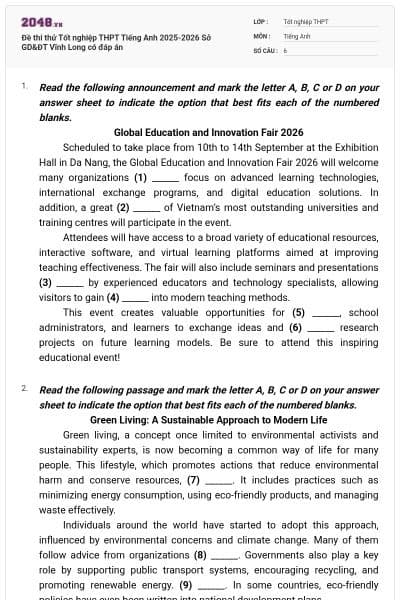
Read the following piece of news and mark the letter A, B, C or D on your answer sheet to indicate the option that best fits each of the numbered blanks from 1 to 6.
Vietnam Jewellery Queen 2026 pageant
The Vietnam Jewellery Queen 2026 pageant, (1) ____________ is organized by the Vietnam Gemstone Jewellery Art Craft Association (VGJA), the Vietnam Association of Artisans and Brands and the Hue Monuments Conservation Center, will take place in Hue city, with the participation of professionals, artisans and media representatives.
The pageant aims to honour the beauty of Vietnamese women and highlight the (2) ____________ and craftsmanship of jewellery artisans. The competition (3) ____________ every two years since 2003 has gone through 11 editions and has established its position among beauty contests in Vietnam, while contributing to the promotion of the country’s goldsmithing and gemstone craft sector.
The event is expected to help promote the image of Vietnamese culture and people, contribute to tourism, services and the local economy, and introduce jewellery craftsmanship to international partners. The contest officially (4) ____________ on March 16th, and the final round will take place from October 13th to 18th. (5) ____________ participants are Vietnamese women aged between 18 and 33, living, studying or working in Vietnam or abroad. The pageant is expected to add to a wide (6) ____________ of activities of Hue Festival 2026 and help promote Vietnamese culture internationally.
(Adapted from https://english.vov.vn)
who
which
whom
that
A. who: đại từ quan hệ thay thế cho danh từ chỉ người.
B. which: đại từ quan hệ thay thế cho danh từ chỉ vật/sự việc (làm chủ ngữ/tân ngữ).
C. whom: đại từ quan hệ thay thế cho danh từ chỉ người (làm tân ngữ).
D. that: đại từ quan hệ thay thế cho cả người và vật (nhưng không được đứng sau dấu phẩy).
Danh từ đứng trước khoảng trống là "The Vietnam Jewellery Queen 2026 pageant" (Cuộc thi Nữ hoàng Trang sức Việt Nam 2026) - danh từ chỉ sự việc. Phía trước khoảng trống có dấu phẩy (,) tạo thành mệnh đề quan hệ không xác định, nên không thể dùng "that".
Chọn B. which
→ The Vietnam Jewellery Queen 2026 pageant, which is organized by...
Dịch nghĩa: Cuộc thi Nữ hoàng Trang sức Việt Nam 2026, sự kiện được tổ chức bởi...
creative
creation
creativity
creatively
A. creative (adj): sáng tạo.
B. creation (n): sự tạo ra, tác phẩm.
C. creativity (n): sự sáng tạo, óc sáng tạo.
D. creatively (adv): một cách sáng tạo.
Phía trước khoảng trống là mạo từ "the" và phía sau có liên từ "and" nối với một danh từ khác là "craftsmanship" (sự khéo léo/tài hoa). Do tính chất song song của "and", ta cần một danh từ chỉ phẩm chất của các nghệ nhân.
Chọn C. creativity
→ ...and highlight the creativity and craftsmanship of jewellery artisans.
Dịch nghĩa: ...và làm nổi bật sự sáng tạo cũng như sự tài hoa của các nghệ nhân kim hoàn.
held
hold
to hold
holding
A. held: quá khứ phân từ (V-ed/V3, mang nghĩa bị động).
B. hold: động từ nguyên mẫu.
C. to hold: động từ nguyên thể có "to".
D. holding: hiện tại phân từ (V-ing, mang nghĩa chủ động).
Đây là hiện tượng rút gọn mệnh đề quan hệ mang nghĩa bị động. Cuộc thi (competition) không tự tổ chức mà nó "được tổ chức" hai năm một lần. Mệnh đề đầy đủ là: which is held every two years. Khi rút gọn, ta bỏ đại từ quan hệ và to be, chỉ giữ lại quá khứ phân từ. (3 cột của động từ: hold - held - held).
Chọn A. held
→ The competition held every two years since 2003 has gone through 11 editions...
Dịch nghĩa: Cuộc thi được tổ chức hai năm một lần kể từ năm 2003 đã trải qua 11 mùa giải...
set off
got off
made off
kicked off
A. set off (phr.v): khởi hành, làm nổ (bom).
B. got off (phr.v): xuống (xe, tàu, máy bay).
C. made off (phr.v): vội vã bỏ trốn.
D. kicked off (phr.v): bắt đầu, khởi động (một sự kiện, trận đấu, chiến dịch).
Ngữ cảnh đang nói về thời điểm bắt đầu của cuộc thi. Cụm từ "kick off" được sử dụng rất phổ biến trong báo chí để chỉ sự bắt đầu của một sự kiện.
Chọn D. kicked off
→ The contest officially kicked off on March 16th...
Dịch nghĩa: Cuộc thi chính thức khởi động vào ngày 16 tháng 3...
Negligible
Illegible
Eligible
Editable
A. Negligible (adj): không đáng kể.
B. Illegible (adj): không thể đọc được (chữ viết mờ/xấu).
C. Eligible (adj): đủ tư cách, hội đủ điều kiện (thường đi với giới từ for hoặc bổ nghĩa cho danh từ chỉ người).
D. Editable (adj): có thể chỉnh sửa được.
Đứng trước danh từ "participants" (những người tham gia), ta cần một tính từ phù hợp về nghĩa. Đoạn văn đang liệt kê các tiêu chuẩn (phụ nữ Việt Nam, tuổi từ 18-33...), nên đây là những người tham gia "đủ điều kiện".
Chọn C. Eligible
→ Eligible participants are Vietnamese women aged between 18 and 33...
Dịch nghĩa: Những thí sinh đủ điều kiện tham gia là nữ công dân Việt Nam trong độ tuổi từ 18 đến 33...
range
amount
deal
number
A. range (n): phạm vi, một loạt.
B. amount (n): lượng (+ danh từ không đếm được).
C. deal (n): lượng (thường dùng: a great deal of + danh từ không đếm được).
D. number (n): số lượng (+ danh từ đếm được số nhiều, thường đi với "a large/great number of", rất hiếm khi đi với tính từ "wide").
Ta có cụm kết hợp từ cố định (collocation): a wide range of + N (số nhiều) (một loạt các / vô vàn các...). Phía sau là danh từ số nhiều "activities" (các hoạt động).
Chọn A. range
→ The pageant is expected to add to a wide range of activities of Hue Festival 2026...
Dịch nghĩa: Cuộc thi dự kiến sẽ góp phần vào chuỗi các hoạt động đa dạng của Festival Huế 2026...
Bài đọc hoàn chỉnh | Dịch bài đọc |
Vietnam Jewellery Queen 2026 pageant The Vietnam Jewellery Queen 2026 pageant, (1) which is organized by the Vietnam Gemstone Jewellery Art Craft Association (VGJA), the Vietnam Association of Artisans and Brands and the Hue Monuments Conservation Center, will take place in Hue city, with the participation of professionals, artisans and media representatives. The pageant aims to honour the beauty of Vietnamese women and highlight the (2) creativity and craftsmanship of jewellery artisans. The competition (3) held every two years since 2003 has gone through 11 editions and has established its position among beauty contests in Vietnam, while contributing to the promotion of the country’s goldsmithing and gemstone craft sector. The event is expected to help promote the image of Vietnamese culture and people, contribute to tourism, services and the local economy, and introduce jewellery craftsmanship to international partners. The contest officially (4) kicked off on March 16th, and the final round will take place from October 13th to 18th. (5) Eligible participants are Vietnamese women aged between 18 and 33, living, studying or working in Vietnam or abroad. The pageant is expected to add to a wide (6) range of activities of Hue Festival 2026 and help promote Vietnamese culture internationally. | Cuộc thi Nữ hoàng Trang sức Việt Nam 2026 Cuộc thi Nữ hoàng Trang sức Việt Nam 2026, (1) sự kiện được tổ chức bởi Hội Nghệ nhân Kim hoàn Đá quý Việt Nam (VGJA), Hội Nghệ nhân và Thương hiệu Việt Nam cùng Trung tâm Bảo tồn Di tích Cố đô Huế, sẽ diễn ra tại thành phố Huế, với sự tham gia của các chuyên gia, nghệ nhân và đại diện giới truyền thông. Cuộc thi nhằm tôn vinh vẻ đẹp của phụ nữ Việt Nam và làm nổi bật (2) sự sáng tạo cũng như sự tài hoa của các nghệ nhân kim hoàn. Cuộc thi (3) được tổ chức hai năm một lần kể từ năm 2003 này đã trải qua 11 mùa giải và khẳng định được vị thế của mình trong số các cuộc thi sắc đẹp tại Việt Nam, đồng thời góp phần thúc đẩy ngành nghề thủ công kim hoàn và đá quý của đất nước. Sự kiện được kỳ vọng sẽ giúp quảng bá hình ảnh văn hóa và con người Việt Nam, đóng góp cho du lịch, dịch vụ và nền kinh tế địa phương, đồng thời giới thiệu nghệ thuật chế tác trang sức đến các đối tác quốc tế. Cuộc thi chính thức (4) khởi động vào ngày 16 tháng 3, và vòng chung kết sẽ diễn ra từ ngày 13 đến ngày 18 tháng 10. Những thí sinh (5) đủ điều kiện tham gia là nữ công dân Việt Nam trong độ tuổi từ 18 đến 33, đang sinh sống, học tập hoặc làm việc tại Việt Nam hoặc ở nước ngoài. Cuộc thi dự kiến sẽ góp phần vào (6) chuỗi các hoạt động đa dạng của Festival Huế 2026 và giúp quảng bá văn hóa Việt Nam ra trường quốc tế.
|
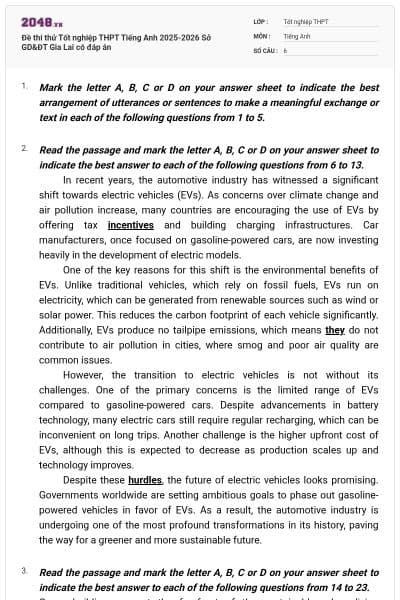
Read the passage and mark the letter A, B, C or D on your answer sheet to indicate the best answer to each of the following questions from 7 to 14.
The global trade in plastic waste has become a significant environmental and ethical concern. UK plastic waste exports have soared this year, rising by 84% in the first half of 2025 compared with 2024, according to UN Comtrade analysis compiled by The Last Beach Cleanup. The surge has been concentrated in Malaysia and Indonesia, with shipments jumping to 28,667 tonnes and 24,006 tonnes respectively. While aggregate volumes remained above 317,000 tonnes, the portion routed directly to non-OECD destinations climbed from 11% to 20%.
Historically, developed nations have exported vast quantities of plastic scrap to developing countries, often under the guise of recycling. However, this practice frequently leads to environmental degradation and social injustice in the recipient nations, which may lack the infrastructure or regulatory capacity to manage the influx. This pattern has been labeled "waste imperialism," as it effectively externalizes the costs and burdens of waste management on nations with weaker environmental enforcement.
In response to these growing concerns, some major economic blocs, such as the European Union, have implemented stringent regulations, including prohibiting the export of plastic waste to non-OECD countries. The rationale behind such bans is to encourage domestic recycling and ensure that the responsibility for waste management remains with the originating countries. However, other nations continue to export substantial volumes, often resulting in a complex and mercurial global trade network. When one destination tightens import rules, waste is frequently re-routed to others, creating a "shadow geography" of disposal.
These shifting trade flows highlight a critical issue: the economic incentive often makes exporting plastic waste cheaper than processing it domestically. This financial disparity can obscure accountability along the transboundary chain, making it difficult to track and manage the environmental impact effectively. Critics argue that nations producing plastic packaging should internalize the true costs of its disposal and invest more heavily in domestic recycling infrastructure. Ultimately, addressing this global challenge requires international cooperation, stricter regulations, and a fundamental shift towards a circular economy where waste is minimized and resources are reused.
(Adapted from https://www.theguardian.com/)
dwindled
rocketed
stabilized
decreased
Từ “soared” ở đoạn 1 có thể được thay thế tốt nhất bởi ____________.
soared (v-ed): tăng vọt, bay vút lên.
A. dwindled (v-ed): suy giảm, teo tóp lại
B. rocketed (v-ed): tăng vọt (đồng nghĩa)
C. stabilized (v-ed): ổn định
D. decreased (v-ed): giảm bớt
→ soared = rocketed
Thông tin: UK plastic waste exports have soared this year, rising by 84% in the first half of 2025...
(Xuất khẩu rác thải nhựa của Vương quốc Anh đã tăng vọt trong năm nay, tăng 84% trong nửa đầu năm 2025...)
Chọn B.
Which of the following is NOT mentioned in paragraph 2 as a reality of exporting plastic scrap to developing countries?
It frequently harms the environment of the recipient countries.
It rapidly promotes the domestic recycling infrastructure.
It brings about social inequality in the recipient nations.
It pushes the burden of waste management on nations with weak laws.
Điều nào sau đây KHÔNG được đề cập trong đoạn 2 như một thực tế của việc xuất khẩu phế liệu nhựa sang các nước đang phát triển?
A. Nó thường gây tổn hại đến môi trường của các quốc gia tiếp nhận.
(Có nhắc đến: "environmental degradation" - suy thoái môi trường)
B. Nó thúc đẩy nhanh chóng cơ sở hạ tầng tái chế trong nước. (Không được nhắc đến, thực tế bài đọc nói các nước này "may lack the infrastructure" - có thể thiếu cơ sở hạ tầng).
C. Nó mang lại sự bất công xã hội ở các quốc gia tiếp nhận. (Có nhắc đến: "social injustice")
D. Nó đẩy gánh nặng quản lý chất thải lên các quốc gia có luật pháp yếu kém. (Có nhắc đến: "externalizes the costs and burdens... on nations with weaker environmental enforcement")
Chọn B.
lenient
strict
rigorous
demanding
Từ “stringent” ở đoạn 3 TRÁI NGHĨA với ____________.
stringent (adj): nghiêm ngặt, khắt khe.
A. lenient (adj): khoan dung, nới lỏng (trái nghĩa)
B. strict (adj): nghiêm ngặt (đồng nghĩa)
C. rigorous (adj): nghiêm khắc, gắt gao (đồng nghĩa)
D. demanding (adj): đòi hỏi khắt khe (đồng nghĩa)
→ stringent >< lenient
Thông tin: ...some major economic blocs, such as the European Union, have implemented stringent regulations...
(...một số khối kinh tế lớn, chẳng hạn như Liên minh Châu Âu, đã thực thi các quy định nghiêm ngặt...)
Chọn A.
transboundary chain
economic incentive
plastic waste
environmental impact
Từ “it” ở đoạn 4 chỉ ______.
A. transboundary chain: chuỗi xuyên biên giới
B. economic incentive: động cơ kinh tế
C. plastic waste: rác thải nhựa
D. environmental impact: tác động môi trường
Thông tin: ...the economic incentive often makes exporting plastic waste cheaper than processing it domestically.
(...động cơ kinh tế thường khiến việc xuất khẩu rác thải nhựa trở nên rẻ hơn so với việc xử lý nó ở trong nước.)
→ it = plastic waste.
Chọn C.
Which of the following best paraphrases the underlined sentence in paragraph 4?
Opponents suggest that countries manufacturing plastic packaging must bear the actual expenses of treating it and fund their own recycling systems.
Critics believe that nations creating plastic packaging should lower the disposal costs by heavily relying on international recycling infrastructure.
It is argued that countries importing plastic packaging ought to pay the true costs of throwing it away and improve domestic recycling.
People claim that countries producing plastic packaging should internalize the disposal costs so that they can export more waste to other nations.
Câu nào sau đây diễn giải tốt nhất câu được gạch chân ở đoạn 4?
Critics argue that nations producing plastic packaging should internalize the true costs of its disposal and invest more heavily in domestic recycling infrastructure.
(Các nhà phê bình lập luận rằng các quốc gia sản xuất bao bì nhựa nên tự gánh chịu chi phí thực sự cho việc xử lý nó và đầu tư mạnh tay hơn vào cơ sở hạ tầng tái chế trong nước.)
Dịch nghĩa:
A. Những người phản đối cho rằng các quốc gia sản xuất bao bì nhựa phải chịu các chi phí thực tế cho việc xử lý nó và tài trợ cho hệ thống tái chế của riêng họ. (Đúng và sát nghĩa nhất: Critics = Opponents, internalize the true costs = bear the actual expenses, invest more heavily = fund).
B. Các nhà phê bình tin rằng các quốc gia tạo ra bao bì nhựa nên giảm chi phí xử lý bằng cách dựa nhiều vào cơ sở hạ tầng tái chế quốc tế. (Sai nghĩa vế sau).
C. Người ta cho rằng các quốc gia nhập khẩu bao bì nhựa phải trả chi phí thực sự cho việc vứt bỏ nó và cải thiện tái chế trong nước. (Sai chủ thể, câu gốc nói là quốc gia "sản xuất" - producing, không phải "nhập khẩu" - importing).
D. Mọi người khẳng định các quốc gia sản xuất bao bì nhựa nên nội bộ hóa chi phí xử lý để họ có thể xuất khẩu nhiều rác thải hơn sang các quốc gia khác. (Sai hoàn toàn về mặt ý nghĩa).
Chọn A.
Which of the following is TRUE according to the passage?
The global trade in plastic waste has decreased significantly in recent years.
The economic incentive primarily encourages domestic processing of plastic waste.
The European Union has forbidden the export of plastic waste to non-OECD countries.
Developed nations always have sufficient infrastructure to manage imported plastic waste.
Theo bài đọc, câu nào sau đây là ĐÚNG?
A. Thương mại rác thải nhựa toàn cầu đã giảm đáng kể trong những năm gần đây.
(Sai, đoạn 1 nói nó "tăng vọt" - soared).
B. Động cơ kinh tế chủ yếu khuyến khích việc xử lý rác thải nhựa trong nước.
(Sai, đoạn 4 nói động cơ kinh tế làm cho việc xuất khẩu rẻ hơn).
C. Liên minh Châu Âu đã cấm xuất khẩu rác thải nhựa sang các nước không thuộc OECD. (Đúng).
D. Các nước phát triển luôn có đủ cơ sở hạ tầng để quản lý rác thải nhựa nhập khẩu.
(Sai, bài đọc không đưa ra khẳng định này).
Thông tin (Đoạn 3): ...the European Union, have implemented stringent regulations, including prohibiting the export of plastic waste to non-OECD countries.
(...Liên minh Châu Âu, đã thực thi các quy định nghiêm ngặt, bao gồm cả việc cấm xuất khẩu rác thải nhựa sang các quốc gia không thuộc OECD.)
Chọn C.
Paragraph 1
Paragraph 2
Paragraph 3
Paragraph 4
Đoạn nào đề cập đến hành vi ngụy trang việc xuất khẩu rác thải thành tái chế?
A. Đoạn 1
B. Đoạn 2
C. Đoạn 3
D. Đoạn 4
Thông tin (Đoạn 2): Historically, developed nations have exported vast quantities of plastic scrap to developing countries, often under the guise of recycling.
(Về mặt lịch sử, các quốc gia phát triển đã xuất khẩu một lượng lớn phế liệu nhựa sang các nước đang phát triển, thường là dưới chiêu bài/sự ngụy trang của việc tái chế.)
Chọn B.
Paragraph 1
Paragraph 2
Paragraph 3
Paragraph 4
Đoạn nào cung cấp thông tin về ba yếu tố then chốt để giải quyết thách thức toàn cầu của thương mại rác thải nhựa?
A. Đoạn 1
B. Đoạn 2
C. Đoạn 3
D. Đoạn 4
Thông tin (Đoạn 4): Ultimately, addressing this global challenge requires [1] international cooperation, [2] stricter regulations, and [3] a fundamental shift towards a circular economy...
(Cuối cùng, việc giải quyết thách thức toàn cầu này đòi hỏi [1] sự hợp tác quốc tế, [2] các quy định nghiêm ngặt hơn và [3] một sự chuyển dịch căn bản hướng tới nền kinh tế tuần hoàn...)
Chọn D.
Dịch bài đọc:
Thương mại rác thải nhựa toàn cầu đã trở thành một mối quan ngại lớn về môi trường và đạo đức. Xuất khẩu rác thải nhựa của Vương quốc Anh đã tăng vọt trong năm nay, tăng 84% trong nửa đầu năm 2025 so với năm 2024, theo phân tích của UN Comtrade do tổ chức The Last Beach Cleanup tổng hợp. Sự gia tăng này tập trung ở Malaysia và Indonesia, với các lô hàng tăng mạnh lần lượt lên 28.667 tấn và 24.006 tấn. Mặc dù tổng khối lượng vẫn trên 317.000 tấn, tỷ lệ được chuyển thẳng đến các điểm đến không thuộc khối OECD đã tăng từ 11% lên 20%.
Về mặt lịch sử, các quốc gia phát triển đã xuất khẩu một lượng lớn phế liệu nhựa sang các nước đang phát triển, thường là dưới chiêu bài tái chế. Tuy nhiên, hành vi này thường dẫn đến suy thoái môi trường và bất công xã hội ở các quốc gia tiếp nhận, những nơi có thể thiếu cơ sở hạ tầng hoặc năng lực quản lý để xử lý dòng chảy này. Mô hình này đã bị dán nhãn là "chủ nghĩa đế quốc rác thải," vì nó thực sự đã đẩy chi phí và gánh nặng của việc quản lý chất thải sang các quốc gia có cơ chế thực thi môi trường yếu kém hơn.
Để đối phó với những lo ngại ngày càng tăng này, một số khối kinh tế lớn, chẳng hạn như Liên minh Châu Âu, đã thực thi các quy định nghiêm ngặt, bao gồm cả việc cấm xuất khẩu rác thải nhựa sang các quốc gia không thuộc OECD. Lý do đằng sau những lệnh cấm như vậy là để khuyến khích tái chế trong nước và đảm bảo rằng trách nhiệm quản lý chất thải vẫn thuộc về các quốc gia khởi nguồn. Tuy nhiên, các quốc gia khác vẫn tiếp tục xuất khẩu khối lượng lớn, thường dẫn đến một mạng lưới thương mại toàn cầu phức tạp và dễ thay đổi. Khi một điểm đến thắt chặt các quy định nhập khẩu, rác thải thường được chuyển hướng sang các điểm đến khác, tạo ra một "bức tranh địa lý ngầm" của việc vứt bỏ rác.
Những dòng chảy thương mại đang dịch chuyển này làm nổi bật một vấn đề quan trọng: động cơ kinh tế thường khiến việc xuất khẩu rác thải nhựa trở nên rẻ hơn so với việc xử lý nó ở trong nước. Sự chênh lệch tài chính này có thể làm lu mờ trách nhiệm giải trình dọc theo chuỗi xuyên biên giới, khiến việc theo dõi và quản lý hiệu quả tác động môi trường trở nên khó khăn. Các nhà phê bình lập luận rằng các quốc gia sản xuất bao bì nhựa nên tự gánh chịu chi phí thực sự cho việc xử lý nó và đầu tư mạnh tay hơn vào cơ sở hạ tầng tái chế trong nước. Cuối cùng, việc giải quyết thách thức toàn cầu này đòi hỏi sự hợp tác quốc tế, các quy định nghiêm ngặt hơn và một sự chuyển dịch căn bản hướng tới nền kinh tế tuần hoàn, nơi rác thải được giảm thiểu và các nguồn tài nguyên được tái sử dụng.
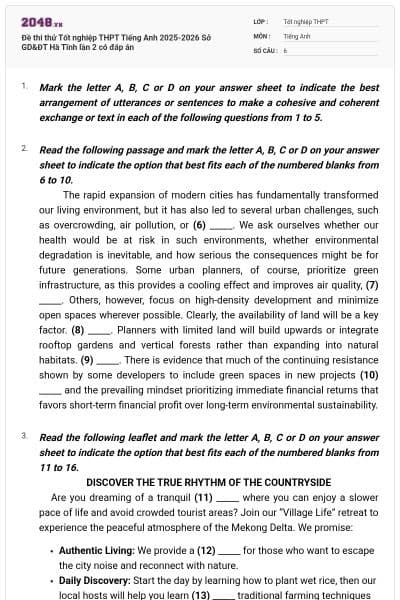
Mark the letter A, B, C or D on your answer sheet to indicate the best arrangement of utterances or sentences to make a cohesive and coherent exchange or text in each of the following questions from 15 to 19.
a. This enclosed environment creates stable conditions that help plants grow consistently, even in regions facing harsh climates or poor soil quality.
b. Container farming is an innovative method of growing crops inside repurposed shipping containers, allowing farmers to control light, temperature, and nutrients with remarkable precision.
c. The compact design also enables year-round cultivation, giving small businesses a reliable supply of produce regardless of seasonal changes.
d. As a result, many urban growers view it as a practical way to produce fresh vegetables closer to consumers, reducing transportation costs and environmental impact.
e. With these advantages, container farming is steadily becoming a promising solution for communities seeking sustainable and efficient food production.
b – a – e – c – d
b – a – c– d – e
b – c – d – e – a
b – a – d – c – e
Thứ tự sắp xếp đúng: B. b – a – c – d – e
b. Container farming is an innovative method of growing crops inside repurposed shipping containers, allowing farmers to control light, temperature, and nutrients with remarkable precision.
a. This enclosed environment creates stable conditions that help plants grow consistently, even in regions facing harsh climates or poor soil quality.
c. The compact design also enables year-round cultivation, giving small businesses a reliable supply of produce regardless of seasonal changes.
d. As a result, many urban growers view it as a practical way to produce fresh vegetables closer to consumers, reducing transportation costs and environmental impact.
e. With these advantages, container farming is steadily becoming a promising solution for communities seeking sustainable and efficient food production.
Dịch nghĩa:
b. Canh tác trong container là một phương pháp trồng trọt sáng tạo bên trong các thùng container chở hàng được tái sử dụng, cho phép nông dân kiểm soát ánh sáng, nhiệt độ và chất dinh dưỡng với độ chính xác đáng kinh ngạc.
a. Môi trường khép kín này tạo ra các điều kiện ổn định giúp cây trồng phát triển đồng đều, ngay cả ở những khu vực phải đối mặt với khí hậu khắc nghiệt hoặc chất lượng đất kém.
c. Thiết kế nhỏ gọn cũng cho phép canh tác quanh năm, mang lại cho các doanh nghiệp nhỏ nguồn cung cấp nông sản đáng tin cậy bất kể sự thay đổi của các mùa.
d. Kết quả là, nhiều nông dân thành thị coi đây là một cách thiết thực để sản xuất rau tươi gần hơn với người tiêu dùng, giúp giảm chi phí vận chuyển và tác động đến môi trường.
e. Với những lợi thế này, canh tác trong container đang dần trở thành một giải pháp đầy hứa hẹn cho các cộng đồng đang tìm kiếm quy trình sản xuất thực phẩm bền vững và hiệu quả.
Chọn B.
a.Mia: That'd be awesome. We could get some professional advice and figure out our strengths.
b.Mia: Yeah, I've been considering a few options, especially marketing. It's a lot more competitive than I thought!
c.Mark: Perfect! Let's meet outside the counseling office after our afternoon classes.
d.Mark: Hey, have you made up your mind about which university major to apply for?
e.Mark: Tell me about it! I'm in two minds about economics and IT. Want to see the career counselor together this Friday?
d – b – e – a – c
b – e – a – d – c
d – a – e – b – c
e – b – a – d – c
Thứ tự sắp xếp đúng: A. d – b – e – a – c
d. Mark: Hey, have you made up your mind about which university major to apply for?
b. Mia: Yeah, I've been considering a few options, especially marketing. It's a lot more competitive than I thought!
e. Mark: Tell me about it! I'm in two minds about economics and IT. Want to see the career counselor together this Friday?
a. Mia: That'd be awesome. We could get some professional advice and figure out our strengths.
c. Mark: Perfect! Let's meet outside the counseling office after our afternoon classes.
Dịch nghĩa:
d. Mark: Này, cậu đã quyết định xong việc sẽ nộp đơn vào chuyên ngành đại học nào chưa?
b. Mia: Rồi, tớ đang cân nhắc một vài lựa chọn, đặc biệt là ngành tiếp thị. Nó cạnh tranh hơn tớ tưởng rất nhiều!
e. Mark: Tớ hiểu mà! Tớ đang phân vân giữa kinh tế và CNTT. Cậu có muốn cùng đi gặp cố vấn nghề nghiệp vào thứ Sáu này không?
a. Mia: Thế thì tuyệt quá. Chúng ta có thể nhận được một số lời khuyên chuyên môn và tìm ra điểm mạnh của mình.
c. Mark: Hoàn hảo! Gặp nhau bên ngoài văn phòng tư vấn sau giờ học buổi chiều nhé.
Chọn A.
a. Tom: Yeah, small changes like that can make a real difference.
b. Tom: I started recycling old items from my room, and it feels good to give things a new purpose.
c. Sarah: Nice! I’ve been turning old jars into mini plant pots, and it’s actually fun.
a – c – b
a – b – c
b – a – c
b – c – a
Thứ tự sắp xếp đúng: D. b – c – a
b. Tom: I started recycling old items from my room, and it feels good to give things a new purpose.
c. Sarah: Nice! I’ve been turning old jars into mini plant pots, and it’s actually fun.
a. Tom: Yeah, small changes like that can make a real difference.
Dịch nghĩa:
b. Tom: Tớ đã bắt đầu tái chế những món đồ cũ trong phòng của mình, và cảm giác thật tuyệt khi mang đến cho đồ vật một mục đích sử dụng mới.
c. Sarah: Tuyệt đấy! Tớ thì đang biến những chiếc lọ cũ thành những chậu cây mini, và nó thực sự rất thú vị.
a. Tom: Ừ, những thay đổi nhỏ như vậy có thể tạo ra sự khác biệt thực sự đấy.
Chọn D.
Dear Sir or Madam,
a. I am writing to apply for the position of part-time shop assistant advertised on your company’s website.
b. I am confident that my strong communication skills and ability to work under pressure make me a suitable candidate for this role.
c. As a school leaver seeking to enter the workforce, I am highly adaptable and eager to gain practical work experience.
d. I would welcome the opportunity to attend an interview if I am shortlisted for this position.
e. I have attached my CV outlining my relevant qualifications, and I look forward to hearing from you soon.
Yours faithfully,
a – b – c – e – d
c – a – b – d – e
a – c – b – d – e
a – c – b – e – d
Thứ tự sắp xếp đúng: C. a – c – b – d – e
a. I am writing to apply for the position of part-time shop assistant advertised on your company’s website.
c. As a school leaver seeking to enter the workforce, I am highly adaptable and eager to gain practical work experience.
b. I am confident that my strong communication skills and ability to work under pressure make me a suitable candidate for this role.
d. I would welcome the opportunity to attend an interview if I am shortlisted for this position.
e. I have attached my CV outlining my relevant qualifications, and I look forward to hearing from you soon.
Dịch nghĩa:
Kính gửi Ông/Bà,
a. Tôi viết thư này để ứng tuyển vào vị trí trợ lý bán hàng bán thời gian được quảng cáo trên trang web của công ty.
c. Là một học sinh vừa mới ra trường đang tìm cách bước vào lực lượng lao động, tôi có khả năng thích nghi cao và rất mong muốn đạt được kinh nghiệm làm việc thực tế.
b. Tôi tự tin rằng kỹ năng giao tiếp tốt và khả năng làm việc dưới áp lực sẽ khiến tôi trở thành một ứng cử viên phù hợp cho vai trò này.
d. Tôi rất mong có cơ hội được tham dự một buổi phỏng vấn nếu tôi lọt vào danh sách ứng viên cho vị trí này.
e. Tôi đã đính kèm sơ yếu lý lịch nêu rõ các bằng cấp liên quan của mình, và tôi mong sớm nhận được phản hồi từ Ông/Bà.
Trân trọng,
Chọn C.
a. Following this, the percentage of urban residents climbed steadily to 45% in 2020, and it is expected to surpass the rural figure, reaching 60% by the end of the period.
b. The line graph illustrates the demographic shift between urban and rural populations in a developing country over a period of 50 years, starting from 2000.
c. On the other hand, the urban population started at exactly 30% in 2000, representing a minority of the country's total population at that time.
d. Overall, there is a clear upward trend in the proportion of city dwellers, whereas the percentage of people living in the countryside shows a steady decline.
e. In 2000, the rural population was dominant, standing at 70%, but this figure gradually fell to 55% in 2020 and is projected to drop further to 40% by 2050.
b – a – d – c – e
b – e – d – a – c
b – d – e – c – a
b – c – d – a – e
Thứ tự sắp xếp đúng: C. b – d – e – c – a
b. The line graph illustrates the demographic shift between urban and rural populations in a developing country over a period of 50 years, starting from 2000.
d. Overall, there is a clear upward trend in the proportion of city dwellers, whereas the percentage of people living in the countryside shows a steady decline.
e. In 2000, the rural population was dominant, standing at 70%, but this figure gradually fell to 55% in 2020 and is projected to drop further to 40% by 2050.
c. On the other hand, the urban population started at exactly 30% in 2000, representing a minority of the country's total population at that time.
a. Following this, the percentage of urban residents climbed steadily to 45% in 2020, and it is expected to surpass the rural figure, reaching 60% by the end of the period.
Dịch nghĩa:
b. Biểu đồ đường minh họa sự thay đổi nhân khẩu học giữa dân số thành thị và nông thôn ở một quốc gia đang phát triển trong khoảng thời gian 50 năm, bắt đầu từ năm 2000.
d. Nhìn chung, có một xu hướng tăng rõ rệt về tỷ lệ cư dân thành phố, trong khi tỷ lệ người sống ở nông thôn cho thấy sự suy giảm đều đặn.
e. Năm 2000, dân số nông thôn chiếm ưu thế, ở mức 70%, nhưng con số này đã giảm dần xuống còn 55% vào năm 2020 và dự kiến sẽ giảm sâu hơn nữa xuống còn 40% vào năm 2050.
c. Mặt khác, dân số thành thị bắt đầu ở mức chính xác là 30% vào năm 2000, chiếm thiểu số trong tổng dân số cả nước vào thời điểm đó.
a. Tiếp theo đó, tỷ lệ cư dân đô thị đã tăng đều đặn lên 45% vào năm 2020, và dự kiến sẽ vượt qua con số ở nông thôn, đạt 60% vào cuối giai đoạn này.
Chọn C.
Read the passage and mark the letter A, B, C or D on your answer sheet to indicate the best answer to each of the following questions from 20 to 29.
Digital media have dramatically changed how we consume information, largely due to the effects of social media. These digital sites provide users with highly personalized news feeds, carefully curated to align with their past interactions such as what they have liked, followed, commented on, etc. This algorithmic tailoring often leads to the formation of “echo chambers”, situations where individuals are mainly exposed to information that reinforces their existing beliefs. Such selective exposure not only limits intellectual growth but also cultivates a fragmented understanding of complex issues, where diverse perspectives are systematically sidelined. Because of this lack of variety, a shared reality can become elusive, replaced by separate, one-sided versions.
[I] The root cause of these echo chambers lies in confirmation bias, a human cognitive tendency. It drives individuals to seek out, interpret, and favor information that supports their pre-existing beliefs, while simultaneously downplaying or rejecting information that contradicts those views. Every social media platform, in pursuit of maximizing user engagement and, consequently, advertising revenue, unintentionally amplifies this natural tendency. By prioritizing content that resonates with a user's current belief system, its algorithms create a feedback loop, making it less likely for individuals to encounter challenging or differing viewpoints. This continuous validation, while psychologically comforting, significantly impedes the development of critical thinking skills and open-mindedness. [II]
The impact of echo chambers on society is also concerning. Social media sites that restrict users' access to opposing viewpoints and reinforce their existing viewpoints could potentially exacerbate societal division. For instance, on the issue of climate change, one user might only see posts downplaying environmental risks, while another is exposed exclusively to catastrophic warnings. Since each group relies on completely disparate bodies of fact, there is little basis for them to share any kind of mutual understanding. [III]
Breaking free from these echo chambers requires a conscious effort. Doing so involves cultivating digital literacy, actively seeking out diverse and credible sources of information, and critically evaluating content rather than passively consuming what algorithms present to us. Only through such proactive measures can individuals cultivate a more comprehensive understanding of the world, thereby fostering a more inclusive exchange of ideas across the increasingly fractured digital landscape. [IV]
(Adapted from https://www.wired.com)
According to paragraph 1, what is a primary characteristic of news feeds on social media platforms?
They are carefully tailored to individuals based on their previous online behavior.
They are carefully curated to systematically sideline the user's past interactions.
They aim to create a shared reality by reinforcing existing beliefs through diverse perspectives.
They are designed to challenge users' existing beliefs and broaden their perspectives.
Theo đoạn 1, đâu là đặc điểm chính của bảng tin (news feeds) trên các nền tảng mạng xã hội?
A. Chúng được tinh chỉnh cẩn thận cho từng cá nhân dựa trên hành vi trực tuyến trước đó của họ. (Đúng)
B. Chúng được tuyển chọn cẩn thận để gạt bỏ một cách có hệ thống những tương tác trong quá khứ của người dùng. (Sai, chúng dùng chứ không phải gạt bỏ).
C. Chúng nhằm mục đích tạo ra một thực tại được chia sẻ chung bằng cách củng cố niềm tin hiện có thông qua các quan điểm đa dạng. (Sai, chúng làm mất đi thực tại chung).
D. Chúng được thiết kế để thách thức niềm tin hiện tại của người dùng và mở rộng quan điểm của họ. (Sai, chúng chỉ cho xem những gì người dùng đã tin tưởng).
Bảng tin mạng xã hội được "cá nhân hóa cao độ" (highly personalized) và "tuyển chọn cẩn thận để phù hợp với những tương tác trong quá khứ của họ" (carefully curated to align with their past interactions).
Chọn A.
Social media algorithms are designed to challenge users' existing beliefs and foster intellectual growth.
Social media platforms try to reduce confirmation bias in order to maximize their advertising revenue.
Social media algorithms exploit confirmation bias, creating feedback loops that hinder intellectual growth.
The feedback loop created by algorithms provides psychological comfort, which helps users improve their critical thinking.
Câu nào sau đây tóm tắt đúng nhất đoạn 2?
A. Các thuật toán mạng xã hội được thiết kế để thách thức niềm tin hiện có của người dùng và thúc đẩy sự phát triển trí tuệ. (Sai).
B. Các nền tảng mạng xã hội cố gắng giảm thiểu thiên kiến xác nhận để tối đa hóa doanh thu quảng cáo. (Sai, chúng khuếch đại chứ không giảm).
C. Thuật toán mạng xã hội khai thác thiên kiến xác nhận, tạo ra các vòng lặp phản hồi cản trở sự phát triển trí tuệ. (Đúng, bao quát trọn vẹn cả đoạn: Nguyên nhân gốc rễ (thiên kiến xác nhận) → Cách nền tảng sử dụng nó (vòng lặp phản hồi) → Hậu quả (cản trở tư duy phản biện/trí tuệ)).
D. Vòng phản hồi do thuật toán tạo ra mang lại sự thoải mái về mặt tâm lý, giúp người dùng cải thiện khả năng tư duy phản biện. (Sai, nó cản trở tư duy phản biện).
Chọn C.
Which of the following is NOT mentioned as an impact of echo chambers?
They exacerbate societal division among different groups.
They encourage the development of critical thinking skills.
They contribute to a fragmented understanding of complex issues.
They make a shared reality become elusive.
Điều nào sau đây KHÔNG được đề cập như một tác động của "buồng vang" (echo chambers)?
A. Chúng làm trầm trọng thêm sự chia rẽ xã hội giữa các nhóm khác nhau.
(Đoạn 3 có nhắc: "exacerbate societal division").
B. Chúng khuyến khích sự phát triển của các kỹ năng tư duy phản biện.
(Sai, đoạn 2 nói nó cản trở - "impedes the development of critical thinking").
C. Chúng góp phần tạo nên một sự hiểu biết bị phân mảnh về các vấn đề phức tạp.
(Đoạn 1 có nhắc: "cultivates a fragmented understanding").
D. Chúng làm cho một thực tại được chia sẻ chung trở nên khó nắm bắt/khó đạt được.
(Đoạn 1 có nhắc: "shared reality can become elusive").
Đề bài yêu cầu tìm ý KHÔNG ĐÚNG. "Echo chambers" làm giảm tư duy phản biện chứ không phải khuyến khích nó.
Chọn B.
current belief system’s
this natural tendency’s
social media platform’s
confirmation bias’s
Từ "its" ở đoạn 2 chỉ ____________.
A. current belief system’s (của hệ thống niềm tin hiện tại)
B. this natural tendency’s (của xu hướng tự nhiên này)
C. social media platform’s (của nền tảng mạng xã hội)
D. confirmation bias’s (của thiên kiến xác nhận)
Câu trước nói: "Mọi nền tảng mạng xã hội (Every social media platform)... khuếch đại xu hướng tự nhiên này". Sang câu sau: "Bằng cách ưu tiên nội dung... thuật toán CỦA NÓ (its algorithms)...". "Của nó" ở đây chính là của nền tảng mạng xã hội.
Thông tin: "Every social media platform... unintentionally amplifies this natural tendency. By prioritizing content... its algorithms create a feedback loop..."
Chọn C.
Which of the following best paraphrases the underlined sentence in paragraph 2?
Psychological comfort derived from constant validation is proportional to the development of critical thinking and open-mindedness.
Although constant validation provides a sense of psychological ease, it substantially hampers the growth of critical thinking and open-mindedness.
The development of critical thinking and open-mindedness is only possible when psychological comfort is continuously challenged.
While continuous validation is psychologically beneficial, it unintentionally supports the development of critical thinking and open-mindedness.
Câu nào sau đây diễn giải đúng nhất câu được gạch chân ở đoạn 2?
This continuous validation, while psychologically comforting, significantly impedes the development of critical thinking skills and open-mindedness. (Sự xác nhận liên tục này, mặc dù mang lại sự thoải mái về mặt tâm lý, nhưng lại cản trở đáng kể sự phát triển của các kỹ năng tư duy phản biện và sự cởi mở.)
A. Sự thoải mái về mặt tâm lý có được từ việc liên tục được khẳng định giá trị tỷ lệ thuận với sự phát triển tư duy phản biện và tính cởi mở. (Sai nghĩa).
B. Mặc dù sự xác nhận liên tục cung cấp một cảm giác dễ chịu về tâm lý, nó cản trở đáng kể sự phát triển của tư duy phản biện và sự cởi mở. (Đúng, "comforting" = "psychological ease", "impedes" = "hampers").
C. Sự phát triển của tư duy phản biện và tính cởi mở chỉ có thể xảy ra khi sự thoải mái về mặt tâm lý liên tục bị thử thách.. (Sai ý so với câu gốc).
D. Mặc dù việc liên tục được khẳng định giá trị có lợi về mặt tâm lý, nhưng nó lại vô tình hỗ trợ sự phát triển của tư duy phản biện và tính cởi mở. (Sai nghĩa, nó cản trở chứ không hỗ trợ).
Chọn B.
The example of climate change in paragraph 3 serves primarily to ____________.
highlight the universal agreement needed for cooperation on global problems.
illustrate how shared reality can become elusive due to differing factual bases.
emphasize the global consensus on environmental risks and catastrophic warnings.
demonstrate the effectiveness of algorithms in presenting balanced information.
Ví dụ về biến đổi khí hậu ở đoạn 3 chủ yếu nhằm mục đích ____________.
A. làm nổi bật sự thỏa thuận toàn cầu cần thiết cho sự hợp tác...
B. minh họa cách thức một thực tại chung có thể trở nên khó nắm bắt do các cơ sở dữ kiện (sự thật) khác nhau. (Đúng).
C. nhấn mạnh sự đồng thuận toàn cầu về các rủi ro môi trường...
D. chứng minh tính hiệu quả của thuật toán trong việc trình bày thông tin cân bằng. (Sai, thuật toán trình bày phiến diện).
Ví dụ chỉ ra hai nhóm người nhìn thấy hai nguồn thông tin hoàn toàn trái ngược nhau về cùng một vấn đề biến đổi khí hậu. Cuối đoạn kết luận rằng vì họ dựa trên "completely disparate bodies of fact" (những tập hợp sự thật hoàn toàn khác biệt), nên họ không có cơ sở nào để hiểu nhau (share mutual understanding). Điều này trực tiếp minh họa cho việc "thực tại chung trở nên khó nắm bắt".
Chọn B.
What can be inferred about the algorithms used by social media platforms from the passage?
They prioritize content that maintains user comfort and engagement, even at the expense of intellectual diversity.
They are mainly designed to offer users a wide variety of challenging and different viewpoints from many sources.
Their ability to personalize content becomes much less effective as people learn more about how to use technology.
They are designed to intentionally create societal division by keeping people inside their own small and narrow groups.
Có thể suy luận gì về các thuật toán được nền tảng mạng xã hội sử dụng từ bài đọc?
A. Chúng ưu tiên nội dung duy trì sự thoải mái và mức độ tương tác của người dùng, ngay cả khi phải trả giá bằng sự đa dạng về mặt trí tuệ. (Đúng).
B. Chúng chủ yếu được thiết kế để cung cấp cho người dùng nhiều quan điểm khác nhau và đầy thách thức từ nhiều nguồn khác nhau. (Sai, chúng tạo buồng vang).
C. Khả năng cá nhân hóa nội dung của chúng trở nên kém hiệu quả hơn khi mọi người hiểu rõ hơn về cách sử dụng công nghệ. (Không có cơ sở).
D. Chúng được thiết kế để CỐ Ý (intentionally) tạo ra sự chia rẽ xã hội bằng cách giữ mọi người trong các nhóm nhỏ và hẹp hòi của riêng họ. (Sai, bài đọc nói ở đoạn 2 là chúng làm việc này "unintentionally" - vô tình, mục tiêu chính chỉ là kiếm tiền quảng cáo).
Bài đọc chỉ ra rằng các thuật toán hoạt động để tối đa hóa tương tác (maximizing user engagement) bằng cách cho người dùng xem những gì mang lại "sự thoải mái về tâm lý" (psychologically comforting), dẫn đến hệ quả tiêu cực là "cản trở sự phát triển của tư duy phản biện và sự cởi mở" (expense of intellectual diversity).
Chọn A.
Where in the passage does the following sentence best fit?
Ultimately, this lack of shared understanding can contribute to impeding cooperation needed to resolve shared global problems.
[I]
[II]
[III]
[IV]
Câu sau đây phù hợp nhất với vị trí nào trong bài đọc?
Ultimately, this lack of shared understanding can contribute to impeding cooperation needed to resolve shared global problems. (Cuối cùng, sự thiếu hiểu biết chung này có thể góp phần cản trở sự hợp tác cần thiết để giải quyết các vấn đề toàn cầu chung.)
Cụm từ "this lack of shared understanding" (sự thiếu hiểu biết chung này) đòi hỏi câu trước đó phải nhắc đến việc mất đi sự thấu hiểu/hiểu biết chung. Ngay trước vị trí [III] là câu: "...there is little basis for them to share any kind of mutual understanding." (...có rất ít cơ sở để họ chia sẻ bất kỳ loại hiểu biết chung nào). Đặt câu gạch chân vào [III] để làm câu chốt (hệ quả cuối cùng) cho đoạn 3 là hoàn toàn liền mạch và logic.
Chọn C.
Which of the following best summarizes the passage?
While echo chambers pose some challenges to individual intellectual growth, their overall impact on global problem-solving remains negligible.
The digital age has highlighted the inherent human tendency of confirmation bias, an issue that social media platforms are actively working to mitigate.
Personalized digital feeds create echo chambers, reinforcing existing beliefs and causing societal division, but individuals can overcome this through active digital literacy.
Social media algorithms primarily aim to foster intellectual growth among users by exposing them to a wide range of digital content.
Câu nào sau đây tóm tắt đúng nhất bài đọc?
A. Mặc dù các "buồng vọng" đặt ra một số thách thức đối với sự phát triển trí tuệ cá nhân, nhưng tác động tổng thể của chúng đối với việc giải quyết các vấn đề toàn cầu vẫn không đáng kể. (Sai, nó gây ra chia rẽ và cản trở hợp tác).
B. Thời đại kỹ thuật số đã làm nổi bật xu hướng thiên vị xác nhận vốn có của con người, một vấn đề mà các nền tảng truyền thông xã hội đang tích cực nỗ lực giảm thiểu. (Sai, mạng xã hội đang khuếch đại nó chứ không giảm thiểu).
C. Bảng tin kỹ thuật số cá nhân hóa tạo ra các buồng vang, củng cố niềm tin hiện có và gây ra sự chia rẽ xã hội, nhưng các cá nhân có thể vượt qua điều này thông qua kỹ năng hiểu biết kỹ thuật số chủ động. (Tóm tắt tốt: Nguyên nhân (cá nhân hóa) → Hiện tượng (buồng vang) → Hậu quả (chia rẽ xã hội) → Giải pháp (chủ động hiểu biết kỹ thuật số ở đoạn cuối)).
D. Các thuật toán truyền thông xã hội chủ yếu nhằm mục đích thúc đẩy sự phát triển trí tuệ của người dùng bằng cách cho họ tiếp xúc với nhiều loại nội dung kỹ thuật số. (Sai hoàn toàn).
Chọn C.
Dịch bài đọc:
Truyền thông kỹ thuật số đã làm thay đổi đáng kể cách chúng ta tiêu thụ thông tin, phần lớn là do tác động của mạng xã hội. Các trang web kỹ thuật số này cung cấp cho người dùng những bảng tin được cá nhân hóa cao độ, được tuyển chọn cẩn thận để phù hợp với những tương tác trong quá khứ của họ, chẳng hạn như những gì họ đã thích, theo dõi, bình luận, v.v. Việc tinh chỉnh thuật toán này thường dẫn đến sự hình thành của các “buồng vang” (echo chambers) - những tình huống mà ở đó các cá nhân chủ yếu được tiếp xúc với những thông tin củng cố niềm tin hiện có của họ. Sự tiếp xúc có chọn lọc như vậy không chỉ hạn chế sự phát triển trí tuệ mà còn gieo mầm cho một sự hiểu biết bị phân mảnh về các vấn đề phức tạp, nơi những quan điểm đa dạng bị gạt ra ngoài lề một cách có hệ thống. Vì sự thiếu đa dạng này, một thực tại chung có thể trở nên khó nắm bắt, bị thay thế bởi các phiên bản riêng biệt, phiến diện. [I]
Nguyên nhân gốc rễ của những buồng vang này nằm ở thiên kiến xác nhận, một xu hướng nhận thức của con người. Nó thúc đẩy các cá nhân tìm kiếm, diễn giải và thiên vị những thông tin ủng hộ niềm tin có sẵn của họ, đồng thời hạ thấp hoặc bác bỏ những thông tin mâu thuẫn với những quan điểm đó. Mọi nền tảng mạng xã hội, trong nỗ lực theo đuổi việc tối đa hóa sự tương tác của người dùng và hệ quả là doanh thu quảng cáo, đã vô tình khuếch đại xu hướng tự nhiên này. Bằng cách ưu tiên những nội dung cộng hưởng với hệ thống niềm tin hiện tại của người dùng, thuật toán của nó tạo ra một vòng lặp phản hồi, khiến các cá nhân ít có khả năng bắt gặp những quan điểm mang tính thách thức hoặc khác biệt. Sự xác nhận liên tục này, mặc dù mang lại sự thoải mái về mặt tâm lý, nhưng lại cản trở đáng kể sự phát triển của các kỹ năng tư duy phản biện và sự cởi mở. [II]
Tác động của các buồng vang đối với xã hội cũng rất đáng lo ngại. Các trang mạng xã hội hạn chế quyền truy cập của người dùng vào các quan điểm đối lập và củng cố quan điểm hiện có của họ có thể làm trầm trọng thêm sự chia rẽ xã hội. Ví dụ, về vấn đề biến đổi khí hậu, một người dùng có thể chỉ nhìn thấy các bài đăng coi nhẹ rủi ro môi trường, trong khi một người khác lại chỉ tiếp xúc với những cảnh báo thảm khốc. Vì mỗi nhóm dựa trên những tập hợp sự thật hoàn toàn khác biệt, nên có rất ít cơ sở để họ chia sẻ bất kỳ loại hiểu biết chung nào. [III] (Cuối cùng, sự thiếu hiểu biết chung này có thể góp phần cản trở sự hợp tác cần thiết để giải quyết các vấn đề toàn cầu chung.)
Để thoát khỏi những buồng vang này đòi hỏi một nỗ lực có ý thức. Việc này bao gồm việc trau dồi kỹ năng hiểu biết kỹ thuật số, chủ động tìm kiếm các nguồn thông tin đa dạng và đáng tin cậy, đồng thời đánh giá nội dung một cách có tư duy phản biện thay vì tiêu thụ một cách thụ động những gì thuật toán bày ra cho chúng ta. Chỉ thông qua những biện pháp chủ động như vậy, các cá nhân mới có thể trau dồi một sự hiểu biết toàn diện hơn về thế giới, qua đó thúc đẩy một sự trao đổi ý tưởng bao trùm hơn trên bối cảnh kỹ thuật số ngày càng rạn nứt. [IV]
simple to reach
clear to everyone
commonly known
difficult to achieve
Từ "elusive" ở đoạn 1 hầu như có nghĩa là ____________.
elusive (adj): khó nắm bắt, khó đạt được, khó tìm thấy
A. simple to reach (đơn giản để đạt được)
B. clear to everyone (rõ ràng với mọi người)
C. commonly known (được biết đến phổ biến)
D. difficult to achieve (khó đạt được/khó nắm bắt)
→ elusive = difficult to achieve
Thông tin: "Because of this lack of variety, a shared reality can become elusive, replaced by separate, one-sided versions." (Vì sự thiếu đa dạng này, một thực tại chung có thể trở nên khó nắm bắt/khó đạt được, bị thay thế bởi các phiên bản riêng biệt, phiến diện.)
Chọn D.
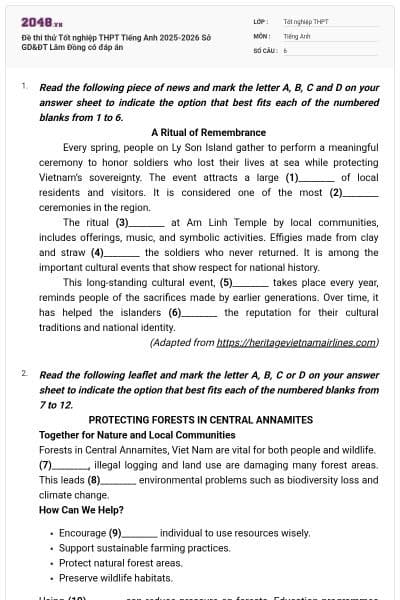
Read the following passage and mark the letter A, B, C or D on your answer sheet to indicate the option that best fits each of the numbered blanks from 30 to 34.
The Cambridge Dictionary has recently named "parasocial" as its word of the year, defining it as a one-sided connection that people feel with individuals they do not know, or even with artificial intelligence. This phenomenon, (30) ____________, involves a sense of intimacy that is not reciprocated by the other party. A common example is the emotional attachment fans develop towards celebrities like Taylor Swift, despite never having met them.
Generally, most parasocial relationships are healthy, serving as a normal way to explore thoughts and emotions about others. They allow individuals (31) ____________, and to find inspiration from accomplishments, even from long-dead writers. (32) ____________, these connections are a fundamentally healthy expression of emotional and social desires, provided they do not interfere with mutual relationships in the physical world.
However, these relationships become problematic if they dominate a person's thoughts or impede independent decision-making. This concern is particularly relevant with AI chatbots (33) ____________. Such highly customized interactions, often designed to flatter or agree, pose a real risk. (34) ____________. This dependency can hinder the development of crucial social and empathetic skills necessary for genuine human connection.
(Adapted from: https://www.bbc.com)
a one-sided bond typically formed subconsciously
defining as a one-sided bond formed subconsciously
which a one-sided bond is typically formed subconsciously
is a one-sided bond typically formed subconsciously
Phía trước và phía sau chỗ trống là hai dấu phẩy, bao quanh một cụm từ dùng để bổ nghĩa cho chủ ngữ "This phenomenon" (Hiện tượng này). Vị trí (30) cần một cụm danh từ đóng vai trò đồng vị ngữ (appositive) hoặc một mệnh đề quan hệ chuẩn xác để giải thích thêm cho "Hiện tượng này". Động từ chính của câu là "involves" nằm ở ngay phía sau.
Dịch nghĩa/Ngữ pháp:
A. một mối liên kết một chiều thường được hình thành trong tiềm thức (Cụm danh từ hoàn chỉnh, đóng vai trò đồng vị ngữ bổ sung ý nghĩa rất tốt).
B. định nghĩa như một mối liên kết... (Sai ngữ pháp: Nếu dùng phân từ rút gọn mang nghĩa bị động thì phải là "defined as" chứ không phải "defining as").
C. cái mà một mối liên kết một chiều thường được hình thành... (Sai ngữ pháp: Dùng "which" nhưng cấu trúc câu bên trong lại lủng củng, thừa thành phần).
D. là một mối liên kết một chiều thường được hình thành... (Sai ngữ pháp: Xuất hiện động từ to-be "is" sẽ làm câu có hai động từ chính "is" và "involves").
Chỉ có đáp án A cung cấp một cụm danh từ đúng chuẩn ngữ pháp, đóng vai trò đồng vị ngữ để giải thích khái niệm của hiện tượng "parasocial".
Chọn A.
→ This phenomenon, a one-sided bond typically formed subconsciously, involves a sense of intimacy that is not reciprocated by the other party.
Dịch nghĩa: Hiện tượng này, một mối liên kết một chiều thường được hình thành trong tiềm thức, bao gồm một cảm giác gần gũi nhưng không được đền đáp bởi phía bên kia.
to evaluate their interpersonal skills in competitive environments
to align their personal values with expectations of their social circle
to bypass the need for any real-world social interaction
to understand their own place within the broader social landscape
Cấu trúc câu là "allow individuals to V... and to V..." (cho phép các cá nhân làm gì... và làm gì...). Phía sau là "...to find inspiration" (tìm thấy nguồn cảm hứng). Chỗ trống (31) cần một hành động mang tính tích cực, lành mạnh vì đầu đoạn văn đã khẳng định những mối quan hệ này "are healthy" (là lành mạnh) và là "a normal way to explore thoughts" (một cách bình thường để khám phá những suy nghĩ).
Dịch nghĩa:
A. để đánh giá các kỹ năng giao tiếp cá nhân của họ trong những môi trường cạnh tranh (Không liên quan đến bối cảnh).
B. để điều chỉnh các giá trị cá nhân của họ theo kỳ vọng của vòng tròn xã hội (Lạc đề).
C. để bỏ qua nhu cầu về bất kỳ sự tương tác xã hội trong thế giới thực nào (Sai logic: bài viết nhấn mạnh nó lành mạnh "miễn là không cản trở các mối quan hệ thực tế", nên việc bỏ qua đời thực là tiêu cực).
D. để hiểu được vị trí của chính họ trong một bức tranh xã hội rộng lớn hơn (Hành động khám phá bản thân này hoàn toàn khớp với cụm "explore thoughts and emotions" ở câu trước).
Đáp án D cung cấp một lợi ích tâm lý tích cực, phù hợp với sự phát triển bình thường của cảm xúc con người trong việc thấu hiểu bản thân và xã hội.
Chọn D.
→ They allow individuals to understand their own place within the broader social landscape, and to find inspiration from accomplishments, even from long-dead writers.
Dịch nghĩa: Chúng cho phép các cá nhân hiểu được vị trí của chính mình trong một bức tranh xã hội rộng lớn hơn, và tìm thấy nguồn cảm hứng từ những thành tựu, thậm chí từ những nhà văn đã qua đời từ lâu.
Despite the potential for social withdrawal in extremely isolated individuals
Given these beneficial psychological and emotional outlets they provide
Rather than the replacement of the necessary social bonds in our daily lives
Regardless of the involvement of either living or deceased figures
Câu chứa chỗ trống đóng vai trò kết luận cho đoạn văn thứ hai: "...these connections are a fundamentally healthy expression..." (...những kết nối này về cơ bản là một sự thể hiện lành mạnh...). Vị trí (32) cần một cụm từ chỉ nguyên nhân hoặc căn cứ dựa trên những lợi ích (hiểu bản thân, tìm cảm hứng) đã liệt kê ở câu trước.
Dịch nghĩa:
A. Bất chấp nguy cơ thu mình khỏi xã hội ở những cá nhân bị cô lập cực độ (Sai logic: đang kết luận tích cực lại dùng "bất chấp nguy cơ tiêu cực").
B. Xét đến những lối thoát tâm lý và cảm xúc có lợi mà chúng cung cấp (Cụm "Given + Noun phrase" mang nghĩa "Căn cứ vào / Xét đến", tóm gọn xuất sắc các lợi ích đã phân tích ở trên).
C. Thay vì sự thay thế cho những mối quan hệ xã hội cần thiết trong cuộc sống hàng ngày của chúng ta (Sai ngữ pháp và logic).
D. Bất kể sự liên quan của các nhân vật còn sống hay đã qua đời (Không mang tính chất kết luận cho đoạn).
Đáp án B đóng vai trò là một trạng ngữ nguyên nhân/căn cứ, tóm gọn lại toàn bộ ý tốt đẹp ở đoạn trên để đưa ra lời chốt hạ.
Chọn B.
→ Given these beneficial psychological and emotional outlets they provide, these connections are a fundamentally healthy expression of emotional and social desires, provided they do not interfere with mutual relationships in the physical world.
Dịch nghĩa: Xét đến những lối thoát tâm lý và cảm xúc có lợi mà chúng cung cấp, những kết nối này về cơ bản là một sự thể hiện lành mạnh của những mong muốn về cảm xúc và xã hội, miễn là chúng không cản trở các mối quan hệ có lại có lại trong thế giới thực.
whose algorithms meticulously tailor every response to align with a user’s specific personality and moods
the primary function of which is to optimize digital engagement through advanced natural language processing
as they are perceived as being capable of mirroring a user’s unique emotional state and preferences
which excel at mimicking subtle aspects of human empathy while remaining entirely devoid of any genuine emotional depth
Đoạn ba chuyển sang mặt trái (problematic) khi sự phụ thuộc trở nên quá lớn, đặc biệt là với "AI chatbots" (robot trò chuyện AI). Câu tiếp theo nhắc đến: "Such highly customized interactions..." (Những tương tác được tùy chỉnh cao như vậy...). Do đó, vị trí (33) phải là một mệnh đề quan hệ mô tả năng lực "tùy chỉnh" của AI chatbot này.
Dịch nghĩa/Ngữ pháp:
A. những thứ có các thuật toán điều chỉnh tỉ mỉ từng câu trả lời để phù hợp với tính cách và tâm trạng cụ thể của người dùng (Từ "tailor" - điều chỉnh/may đo - liên kết trực tiếp với từ "customized interactions" ở câu sau).
B. chức năng chính của chúng là tối ưu hóa sự tương tác kỹ thuật số... (Mang tính kỹ thuật khô khan, không giải thích được khía cạnh cảm xúc).
C. vì chúng được nhận thức là có khả năng phản chiếu... (Cấu trúc "as they..." hơi thừa thãi so với mệnh đề quan hệ trực tiếp, và không làm nổi bật tính "tùy chỉnh chủ động" bằng A).
D. cái mà xuất sắc trong việc bắt chước các khía cạnh tinh tế của sự đồng cảm ở con người... (Đúng nhưng không tạo được sự kết nối từ khóa chặt chẽ như A).
Đáp án A cung cấp mệnh đề quan hệ (whose algorithms...) kết nối hoàn hảo với cụm từ "customized interactions" và "designed to flatter" ở ngay câu tiếp theo.
Chọn A.
→ This concern is particularly relevant with AI chatbots whose algorithms meticulously tailor every response to align with a user’s specific personality and moods.
Dịch nghĩa: Mối lo ngại này đặc biệt có liên quan đến các robot trò chuyện AI, những thứ có các thuật toán điều chỉnh tỉ mỉ từng câu trả lời để phù hợp với tính cách và tâm trạng cụ thể của người dùng.
This signifies a fundamental shift in how individuals seek and maintain emotional support
The potential for misuse of personal data in such advanced AI systems is also significant
People might use chatbots for emotional soothing instead of developing necessary social skills
It is important to acknowledge that these digital interactions can be misleading
Vị trí (34) nằm giữa câu phân tích rủi ro ("pose a real risk") và câu hậu quả sự phụ thuộc ("This dependency can hinder..."). Chỗ trống cần một câu diễn giải thực tế rủi ro đó là gì, và nó phải tạo ra khái niệm "sự phụ thuộc" (dependency) để câu sau có thể nối tiếp bằng đại từ chỉ định "This".
Dịch nghĩa:
A. Điều này biểu thị một sự thay đổi cơ bản trong cách các cá nhân tìm kiếm và duy trì sự hỗ trợ cảm xúc (Chung chung, không làm nổi bật yếu tố "phụ thuộc" và "cản trở kỹ năng").
B. Nguy cơ lạm dụng dữ liệu cá nhân trong các hệ thống AI tiên tiến như vậy cũng rất đáng kể (Lạc đề sang vấn đề bảo mật dữ liệu).
C. Mọi người có thể sử dụng chatbot để xoa dịu cảm xúc thay vì phát triển các kỹ năng xã hội cần thiết (Chính việc dùng chatbot thay cho người thật tạo ra "sự phụ thuộc" - dependency ở câu sau, và làm mai một kỹ năng).
D. Điều quan trọng cần thừa nhận là những tương tác kỹ thuật số này có thể gây hiểu lầm (Không khớp với logic của câu nối tiếp).
Đáp án C giải thích rõ ràng cơ chế hình thành rủi ro: người ta dùng AI xoa dịu thay vì học kỹ năng đời thực. Thói quen này sinh ra "This dependency" (Sự phụ thuộc này) trong câu tiếp theo.
Chọn C.
→ People might use chatbots for emotional soothing instead of developing necessary social skills. This dependency can hinder the development of crucial social and empathetic skills necessary for genuine human connection.
Dịch nghĩa: Mọi người có thể sử dụng chatbot để xoa dịu cảm xúc thay vì phát triển các kỹ năng xã hội cần thiết. Sự phụ thuộc này có thể cản trở sự phát triển của các kỹ năng xã hội và sự đồng cảm quan trọng, vốn cần thiết cho sự kết nối thực sự giữa con người với nhau.
Bài đọc hoàn chỉnh | Dịch bài đọc |
The Cambridge Dictionary has recently named "parasocial" as its word of the year, defining it as a one-sided connection that people feel with individuals they do not know, or even with artificial intelligence. This phenomenon, a one-sided bond typically formed subconsciously, involves a sense of intimacy that is not reciprocated by the other party. A common example is the emotional attachment fans develop towards celebrities like Taylor Swift, despite never having met them. Generally, most parasocial relationships are healthy, serving as a normal way to explore thoughts and emotions about others. They allow individuals to understand their own place within the broader social landscape, and to find inspiration from accomplishments, even from long-dead writers. Given these beneficial psychological and emotional outlets they provide, these connections are a fundamentally healthy expression of emotional and social desires, provided they do not interfere with mutual relationships in the physical world. However, these relationships become problematic if they dominate a person's thoughts or impede independent decision-making. This concern is particularly relevant with AI chatbots whose algorithms meticulously tailor every response to align with a user’s specific personality and moods. Such highly customized interactions, often designed to flatter or agree, pose a real risk. People might use chatbots for emotional soothing instead of developing necessary social skills. This dependency can hinder the development of crucial social and empathetic skills necessary for genuine human connection. | Từ điển Cambridge gần đây đã chọn "parasocial" (cận xã hội) là từ của năm, định nghĩa nó là một sự kết nối một chiều mà mọi người cảm thấy với những cá nhân họ không quen biết, hoặc thậm chí với trí tuệ nhân tạo. Hiện tượng này, một mối liên kết một chiều thường được hình thành trong tiềm thức, bao gồm một cảm giác gần gũi nhưng không được đền đáp bởi phía bên kia. Một ví dụ phổ biến là sự gắn bó về mặt cảm xúc mà người hâm mộ dành cho những người nổi tiếng như Taylor Swift, mặc dù chưa bao giờ gặp họ. Nhìn chung, hầu hết các mối quan hệ cận xã hội là lành mạnh, đóng vai trò như một cách bình thường để khám phá những suy nghĩ và cảm xúc về người khác. Chúng cho phép các cá nhân hiểu được vị trí của chính mình trong một bức tranh xã hội rộng lớn hơn, và tìm thấy nguồn cảm hứng từ những thành tựu, thậm chí từ những nhà văn đã qua đời từ lâu. Xét đến những lối thoát tâm lý và cảm xúc có lợi mà chúng cung cấp, những kết nối này về cơ bản là một sự thể hiện lành mạnh của những mong muốn về cảm xúc và xã hội, miễn là chúng không cản trở các mối quan hệ có lại có lại trong thế giới thực. Tuy nhiên, những mối quan hệ này trở nên có vấn đề nếu chúng chi phối suy nghĩ của một người hoặc cản trở việc ra quyết định độc lập. Mối lo ngại này đặc biệt có liên quan đến các robot trò chuyện AI, những thứ có các thuật toán điều chỉnh tỉ mỉ từng câu trả lời để phù hợp với tính cách và tâm trạng cụ thể của người dùng. Những tương tác được tùy chỉnh cao như vậy, thường được thiết kế để tâng bốc hoặc đồng tình, đặt ra một rủi ro thực sự. Mọi người có thể sử dụng chatbot để xoa dịu cảm xúc thay vì phát triển các kỹ năng xã hội cần thiết. Sự phụ thuộc này có thể cản trở sự phát triển của các kỹ năng xã hội và sự đồng cảm quan trọng, vốn cần thiết cho sự kết nối thực sự giữa con người với nhau. |
Read the following leaflet and mark the letter A, B, C or D on your answer sheet to indicate the option that best fits each of the numbered blanks from 35 to 40.
FUTURE-PROOF YOUR CAREER PATH IN THE AI ERA
When choosing your future career, you may find the rapid growth of AI to be a major concern. However, by cultivating unique human-centric skills, you can turn this challenge into a great opportunity. To stay competitive, you should:
Commit yourself (35) ____________ honing your creative thinking and emotional intelligence.
Choose a major that requires human depth, (36) ____________ these fields are the least likely to be fully automated by machines.
During your university years, strive to gain (37) ____________ through internships or exchange programs.
Don't study in isolation; try to collaborate with (38) ____________ ambitious peers to learn how to use technology effectively.
Instead of viewing AI as a threat, try (39) ____________ its potential to assist your research and learning process.
Ultimately, your early dedication to self-improvement and adaptability will (40) ____________ throughout your professional life.
in
to
with
for
A. in (prep): trong.
B. to (prep): đến, với.
C. with (prep): với.
D. for (prep): cho.
Ta có cấu trúc cố định: commit oneself to doing something (cam kết/tận tâm/cống hiến hết mình cho việc gì). Từ "to" ở đây đóng vai trò là giới từ nên theo sau nó là một danh động từ (V-ing: honing).
Chọn B. to
→ Commit yourself to honing your creative thinking and emotional intelligence.
Dịch nghĩa: Hãy tận tâm với việc mài giũa tư duy sáng tạo và trí tuệ cảm xúc của bạn.
and
but
for
so
A. and (conj): và.
B. but (conj): nhưng.
C. for (conj): vì, bởi vì.
D. so (conj): vì vậy, cho nên.
Mệnh đề phía sau giải thích lý do cho lời khuyên ở mệnh đề phía trước (Hãy chọn một chuyên ngành đòi hỏi chiều sâu nhân bản, bởi vì những lĩnh vực này ít có khả năng bị tự động hóa...). Liên từ đẳng lập "for" khi đứng giữa câu (sau dấu phẩy) mang ý nghĩa giải thích nguyên nhân, tương đương với "because/since".
Chọn C. for
→ Choose a major that requires human depth, for these fields are the least likely to be fully automated by machines.
Dịch nghĩa: Hãy chọn một chuyên ngành đòi hỏi chiều sâu nhân bản, bởi vì những lĩnh vực này ít có khả năng bị máy móc tự động hóa hoàn toàn nhất.
industry practical insights
insights practical industry
practical insights industry
practical industry insights
Phân tích trật tự từ: Cụm danh từ này có danh từ chính là "insights" (sự hiểu biết sâu sắc) nên bắt buộc phải đứng ở vị trí cuối cùng. Phía trước là danh từ phụ "industry" (ngành nghề) đóng vai trò bổ nghĩa để làm rõ đây là hiểu biết về cái gì (industry insights). Tính từ "practical" (thực tế) đứng đầu tiên để bổ nghĩa cho toàn bộ cụm danh từ phía sau. Trật tự đúng là: Tính từ + Danh từ phụ + Danh từ chính.
Chọn D. practical industry insights
→ During your university years, strive to gain practical industry insights through internships or exchange programs.
Dịch nghĩa: Trong những năm tháng đại học, hãy nỗ lực để đạt được những hiểu biết thực tế về ngành nghề thông qua các kỳ thực tập hoặc các chương trình trao đổi.
other
the other
others
the others
A. other: (những người/vật) khác (tính từ, đi kèm danh từ đếm được số nhiều / không đếm được).
B. the other: cái/người còn lại (đã xác định cụ thể trong một nhóm).
C. others: những (người/vật) khác (đại từ, đứng độc lập không đi kèm danh từ).
D. the others: những (người/vật) còn lại (đại từ, đứng độc lập).
Phía sau khoảng trống là cụm danh từ đếm được số nhiều "ambitious peers" (những người bạn đồng trang lứa đầy tham vọng). Do đó, ta phải dùng tính từ "other" để bổ nghĩa.
Chọn A. other
→ Don't study in isolation; try to collaborate with other ambitious peers...
Dịch nghĩa: Đừng học tập một cách cô lập; hãy thử hợp tác với những người bạn đồng trang lứa đầy tham vọng khác...
ignoring
embracing
imitating
measuring
A. ignoring (v-ing): phớt lờ, bỏ qua.
B. embracing (v-ing): đón nhận (một cách nồng nhiệt), nắm lấy (cơ hội, ý tưởng).
C. imitating (v-ing): bắt chước.
D. measuring (v-ing): đo lường.
Ngữ cảnh: Cấu trúc "Instead of..." (Thay vì...) chỉ sự tương phản. Thay vì coi AI là một mối đe dọa (a threat - tiêu cực), bạn hãy thử "đón nhận" (tích cực) tiềm năng của nó.
Chọn B. embracing
→ Instead of viewing AI as a threat, try embracing its potential to assist your research and learning process.
Dịch nghĩa: Thay vì coi AI là một mối đe dọa, hãy thử đón nhận tiềm năng của nó để hỗ trợ cho quá trình nghiên cứu và học tập của bạn.
mark time
pay dividends
take root
gain ground
A. mark time (idiom): dậm chân tại chỗ, chờ đợi thời cơ.
B. pay dividends (idiom): sinh lời, mang lại lợi ích/thành quả lớn (trong tương lai).
C. take root (idiom): cắm rễ, bắt đầu bám rễ/phát triển bền vững.
D. gain ground (idiom): trở nên phổ biến hơn, chiếm được ưu thế.
"Sự tận tâm cống hiến từ sớm" (early dedication) cho việc cải thiện bản thân sẽ mang lại "thành quả vô cùng xứng đáng" sau này. Cụm từ "pay dividends" cực kỳ phù hợp khi nói về việc đầu tư thời gian, công sức hiện tại để thu lại lợi ích to lớn trong tương lai.
Chọn B. pay dividends
→ Ultimately, your early dedication to self-improvement and adaptability will pay dividends throughout your professional life.
Dịch nghĩa: Cuối cùng, sự tận tâm từ sớm của bạn đối với việc tự hoàn thiện bản thân và khả năng thích ứng sẽ mang lại những thành quả xứng đáng trong suốt cuộc đời sự nghiệp của bạn.
Bài đọc hoàn chỉnh | Dịch bài đọc |
FUTURE-PROOF YOUR CAREER PATH IN THE AI ERA When choosing your future career, you may find the rapid growth of AI to be a major concern. However, by cultivating unique human-centric skills, you can turn this challenge into a great opportunity. To stay competitive, you should: • Commit yourself (35) to honing your creative thinking and emotional intelligence. • Choose a major that requires human depth, (36) for these fields are the least likely to be fully automated by machines. • During your university years, strive to gain (37) practical industry insights through internships or exchange programs. • Don't study in isolation; try to collaborate with (38) other ambitious peers to learn how to use technology effectively. • Instead of viewing AI as a threat, try (39) embracing its potential to assist your research and learning process. Ultimately, your early dedication to self-improvement and adaptability will (40) pay dividends throughout your professional life. | ĐẢM BẢO TƯƠNG LAI CHO CON ĐƯỜNG SỰ NGHIỆP CỦA BẠN TRONG KỶ NGUYÊN AI Khi lựa chọn sự nghiệp tương lai của mình, bạn có thể thấy sự phát triển nhanh chóng của AI là một mối bận tâm lớn. Tuy nhiên, bằng cách trau dồi các kỹ năng lấy con người làm trung tâm mang tính độc bản, bạn có thể biến thách thức này thành một cơ hội tuyệt vời. Để duy trì sức cạnh tranh, bạn nên: • Tận tâm (35) với việc mài giũa tư duy sáng tạo và trí tuệ cảm xúc của bạn. • Chọn một chuyên ngành đòi hỏi chiều sâu nhân bản, (36) bởi vì những lĩnh vực này ít có khả năng bị máy móc tự động hóa hoàn toàn nhất. • Trong những năm tháng đại học, hãy nỗ lực để đạt được (37) những hiểu biết thực tế về ngành nghề thông qua các kỳ thực tập hoặc các chương trình trao đổi. • Đừng học tập một cách cô lập; hãy thử hợp tác với (38) những người bạn đồng trang lứa đầy tham vọng khác để học cách sử dụng công nghệ một cách hiệu quả. • Thay vì coi AI là một mối đe dọa, hãy thử (39) đón nhận tiềm năng của nó để hỗ trợ cho quá trình nghiên cứu và học tập của bạn. Cuối cùng, sự tận tâm từ sớm của bạn đối với việc tự hoàn thiện bản thân và khả năng thích ứng sẽ (40) mang lại những thành quả xứng đáng trong suốt cuộc đời sự nghiệp của bạn. |