Đề thi thử Tốt nghiệp THPT Tiếng Anh 2025-2026 Sở GD&ĐT Hải Phòng lần 2 có đáp án
40 câu hỏi
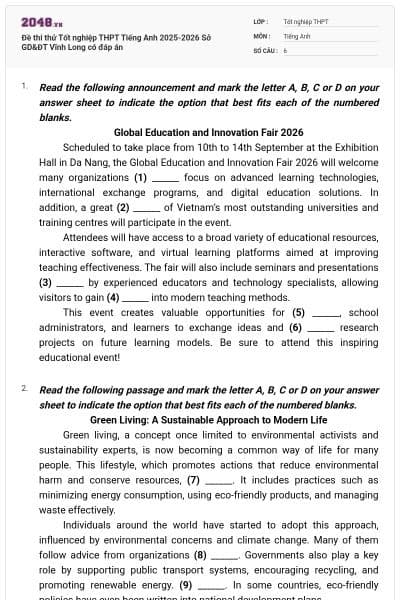
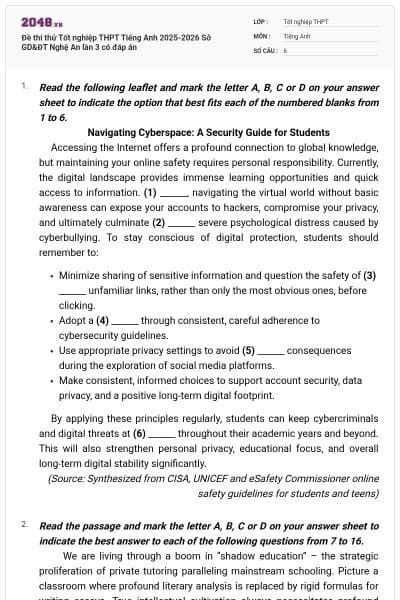
Read the following passage and mark the letter A, B, C or D on your answer sheet to indicate the option that best fits each of the numbered blanks from 1 to 5.
Girls are once again falling behind in mathematics, widening a gender gap that had previously been declining. This trend is evident across many education systems, where boys increasingly outperform girls, especially by the end of primary school. (1) ________, they are more likely to be among lower performers and less likely to reach top achievement levels in mathematics.
The resulting disparity, stemming from gender stereotypes and insufficient support, (2) ________. Such influences, shaped by teacher expectations and learning experiences rather than innate ability, often lead girls to show lower confidence in mathematics compared to their male peers.
As a result, rather than moving forward with confidence, (3) ________. The reduced self-belief directly affects their engagement in mathematical activities. Consequently, they often shy away from challenging tasks (4) ________. Over time, the loss of confidence weakens both technical skills and future ambitions, with achievement gaps becoming increasingly apparent.
Since mathematics is essential for learning and key to accessing STEM careers where women make up only 36% of graduates, the existing divide has serious long-term implications. (5) ________. Specifically, education systems must prioritize gender-transformative pedagogy in teacher training to address emerging underachievement from the earliest years. By tracking progress through disaggregated data and tackling community stereotypes, we can create a lasting environment where girls truly thrive.
(Adapted from https://www.unesco.org/en/articles)
When educational opportunities for girls have expanded significantly compared with earlier periods
Although the proportion of girls attending school has risen significantly compared to earlier periods
Because the rate of girls gaining access to education has gone up significantly over the last decades
For the number of girls attending school to increase significantly compared with previous generations
Câu phía trước nêu một thực trạng tiêu cực: “...boys increasingly outperform girls...” (các nam sinh ngày càng vượt trội hơn các nữ sinh...). Câu chứa khoảng trống (1) tiếp tục nhấn mạnh: “...they are more likely to be among lower performers...” (...họ có nhiều khả năng nằm trong nhóm có thành tích kém hơn...). Vị trí (1) cần một mệnh đề phụ chỉ sự nhượng bộ để tạo ra sự tương phản: Mặc dù việc tiếp cận giáo dục nhìn chung đã tốt lên, nhưng thành tích môn toán của nữ sinh lại đi xuống.
Dịch nghĩa/Ngữ pháp:
A. Khi cơ hội giáo dục cho trẻ em gái đã mở rộng đáng kể...
(Dùng “When” không tạo ra được nét nghĩa tương phản sắc sảo như “Although”).
B. Mặc dù tỷ lệ trẻ em gái đến trường đã tăng lên đáng kể so với các giai đoạn trước (Liên từ “Although” tạo ra sự nhượng bộ phù hợp: Mặc dù đi học nhiều hơn, nhưng thành tích lại kém đi. Đại từ “they” ở vế sau thay thế hợp lý cho “girls”).
C. Bởi vì tỷ lệ trẻ em gái được tiếp cận giáo dục đã tăng lên đáng kể...
(Sai logic nhân - quả: Không thể vì “được đi học nhiều” mà dẫn đến “thành tích kém”).
D. Để số lượng trẻ em gái đến trường tăng lên đáng kể...
(Sai ngữ pháp vì không phù hợp với cấu trúc mệnh đề chính phía sau).
Đáp án B cung cấp một mệnh đề nhượng bộ logic, làm nổi bật nghịch lý giữa việc gia tăng tỷ lệ đến trường và sự sụt giảm thành tích trong môn toán.
Chọn B.
→ Although the proportion of girls attending school has risen significantly compared to earlier periods, they are more likely to be among lower performers and less likely to reach top achievement levels in mathematics.
Dịch nghĩa: Mặc dù tỷ lệ trẻ em gái đến trường đã tăng lên đáng kể so với các giai đoạn trước, họ có nhiều khả năng nằm trong nhóm có thành tích kém hơn và ít có khả năng đạt được mức thành tích cao nhất trong môn toán.
clearly indicates that achieving success primarily depends on gaining access to classrooms
serves as a reminder that merely providing access to classrooms does not guarantee success
will demonstrate that educational achievement can eventually result from wider access to schooling
highlights the fact that giving students access to education can automatically ensure achievement
Chủ ngữ của câu là “The resulting disparity” (Sự chênh lệch phát sinh). Cụm từ nằm giữa hai dấu phẩy “, stemming from gender stereotypes and insufficient support,” chỉ là thành phần rút gọn bổ nghĩa. Khoảng trống (2) đang thiếu một động từ chính (Main verb) và tân ngữ để hoàn thiện câu. Hơn nữa, logic của câu này phải đúc kết lại nghịch lý vừa nêu ở đoạn 1 (đi học nhiều nhưng thành tích vẫn kém).
Dịch nghĩa:
A. chỉ ra rõ ràng rằng việc đạt được thành công chủ yếu phụ thuộc vào việc được tiếp cận lớp học
(Sai logic: Đoạn 1 vừa chứng minh đi học nhiều chưa chắc đã học giỏi toán).
B. đóng vai trò như một lời nhắc nhở rằng chỉ đơn thuần cung cấp quyền tiếp cận lớp học không đảm bảo cho sự thành công. (Cung cấp động từ chính “serves”, và nội dung đúc kết chính xác nghịch lý của đoạn 1: Quyền tiếp cận (access) không đồng nghĩa với Thành công (success)).
C. sẽ chứng minh rằng thành tích giáo dục cuối cùng có thể bắt nguồn từ...
(Sai logic, đi ngược lại tinh thần của bài).
D. nêu bật thực tế rằng việc cho học sinh tiếp cận giáo dục có thể tự động đảm bảo thành tích
(Sai logic hoàn toàn).
Đáp án B là sự lựa chọn duy nhất vừa đúng ngữ pháp (cung cấp động từ chính S + V), vừa nối tiếp hoàn hảo mạch logic “tiếp cận giáo dục ≠ thành tích cao” từ đoạn trước.
Chọn B.
→ The resulting disparity, stemming from gender stereotypes and insufficient support, serves as a reminder that merely providing access to classrooms does not guarantee success.
Dịch nghĩa: Sự chênh lệch phát sinh, bắt nguồn từ những định kiến giới và sự hỗ trợ không đầy đủ, đóng vai trò như một lời nhắc nhở rằng chỉ đơn thuần cung cấp quyền tiếp cận lớp học không đảm bảo cho sự thành công.
a steady discouragement develops through repeated setbacks
unfavorable learning experiences weaken girls' sense of confidence
girls gradually lose interest due to repeated negative experiences
girls experience an increase in motivation after facing ongoing difficulties
Cụm từ “rather than moving forward with confidence” (thay vì tiến bước với sự tự tin) là một cụm phân từ đóng vai trò trạng ngữ. Theo quy tắc ngữ pháp (Dangling modifier - Lỗi bổ ngữ lơ lửng), chủ ngữ của mệnh đề chính bắt buộc phải là người thực hiện hành động “tiến bước”. Ở đây, chủ ngữ đó phải là “trẻ em gái” (girls).
Dịch nghĩa/Ngữ pháp:
A. a steady discouragement develops...
(Chủ ngữ là “sự chán nản” → Sai ngữ pháp vì “sự chán nản” không thể “tiến bước”).
B. unfavorable learning experiences weaken...
(Chủ ngữ là “trải nghiệm học tập” → Sai ngữ pháp tương tự A).
C. các em gái dần mất đi sự hứng thú do những trải nghiệm tiêu cực lặp đi lặp lại (Chủ ngữ là “girls” - hoàn toàn đúng ngữ pháp. Ý nghĩa tiêu cực “mất hứng thú” đối lập trực tiếp với “sự tự tin tiến bước”, khớp với “reduced self-belief” (sự tự tin suy giảm) ở câu sau).
D. các em gái trải qua sự gia tăng động lực...
(Đúng ngữ pháp nhưng sai logic: Nếu gặp khó khăn/định kiến thì không thể “tăng động lực”).
Chỉ có đáp án C tuân thủ quy tắc ngữ pháp về sự hòa hợp chủ ngữ với cụm phân từ đầu câu, đồng thời mang lại ý nghĩa logic nhất.
Chọn C.
→ As a result, rather than moving forward with confidence, girls gradually lose interest due to repeated negative experiences.
Dịch nghĩa: Kết quả là, thay vì tiến bước với sự tự tin, các em gái dần mất đi sự hứng thú do những trải nghiệm tiêu cực lặp đi lặp lại.
whose neglect results in a noticeable decline in classroom participation
where classroom participation becomes a less significant educational concern
in which we see a noticeable decline in classroom participation over time
which in turn leads to a noticeable drop in classroom participation
Câu phía trước khẳng định: “...they often shy away from challenging tasks” (...họ thường né tránh các nhiệm vụ đầy thử thách). Khoảng trống (4) cần một mệnh đề quan hệ để mô tả hậu quả của hành động “né tránh” này đối với việc học tập trên lớp.
Dịch nghĩa/Ngữ pháp:
A. sự bỏ bê của ai/cái gì dẫn đến sự sụt giảm đáng chú ý trong sự tham gia trên lớp (Đại từ “whose” không có danh từ phù hợp để thay thế trong ngữ cảnh này → Lủng củng và sai cấu trúc).
B. nơi mà sự tham gia trên lớp trở thành một mối quan tâm giáo dục ít quan trọng hơn
(Sai logic và nghĩa không tự nhiên).
C. trong đó chúng ta thấy sự sụt giảm đáng chú ý... (Giới từ “in which” thay cho “tasks” → né tránh các nhiệm vụ mà trong đó chúng ta thấy sự sụt giảm... → Cấu trúc ngữ nghĩa bị rối).
D. điều này sau đó dẫn đến một sự sụt giảm đáng chú ý trong việc tham gia trên lớp. (Đại từ quan hệ “which” thay thế cho toàn bộ mệnh đề phía trước (việc né tránh nhiệm vụ khó). Cấu trúc “which leads to...” diễn tả quan hệ nguyên nhân - kết quả cực kỳ chuẩn xác).
Đáp án D cung cấp một mệnh đề quan hệ kết quả mạch lạc, chỉ ra ảnh hưởng trực tiếp của sự tự ti đối với biểu hiện trên lớp học.
Chọn D.
→ Consequently, they often shy away from challenging tasks which in turn leads to a noticeable drop in classroom participation.
Dịch nghĩa: Hậu quả là, họ thường né tránh các nhiệm vụ đầy thử thách, điều này sau đó dẫn đến một sự sụt giảm đáng chú ý trong việc tham gia trên lớp.
Closing it requires more targeted action to strengthen girls' confidence and support in mathematics
Greater female participation in STEM-related professions may gradually contribute to wider gender equality
Wider access to education remains the best solution to gender disparities in mathematics achievement
Addressing the issue calls for improving overall academic performance among all students nationwide
Khoảng trống (5) nằm sau câu chỉ ra hậu quả dài hạn (“serious long-term implications”) của sự chênh lệch (the existing divide). Ngay sau chỗ trống là câu: “Specifically, education systems must prioritize gender-transformative pedagogy...” (Cụ thể, các hệ thống giáo dục phải ưu tiên phương pháp sư phạm chuyển đổi giới...).
Do đó, câu (5) phải là một câu đề xuất giải pháp mang tính khái quát, để câu sau đó (“Specifically...”) có thể lấy làm ví dụ minh họa chi tiết.
Dịch nghĩa:
A. Việc thu hẹp nó đòi hỏi những hành động có mục tiêu cụ thể hơn để củng cố sự tự tin và sự hỗ trợ cho các em gái trong môn toán. (Đại từ “it” thay thế cho “the existing divide” ở câu trước. Cụm từ “targeted action” (hành động có mục tiêu) là tiền đề hoàn hảo để câu sau giải thích “Cụ thể là” làm gì. Hoàn toàn logic).
B. Sự tham gia nhiều hơn của nữ giới vào các ngành nghề STEM có thể dần đóng góp vào... (Nêu lên lợi ích chứ không đưa ra giải pháp giải quyết vấn đề).
C. Việc tiếp cận giáo dục rộng rãi hơn vẫn là giải pháp tốt nhất... (Sai logic: Đoạn 1 và 2 đã khẳng định chỉ “tiếp cận” - access - là không đủ).
D. Việc giải quyết vấn đề đòi hỏi phải cải thiện thành tích học tập tổng thể ở tất cả các học sinh trên toàn quốc (Sai trọng tâm: Bài viết tập trung vào “bình đẳng giới/nữ giới”, không phải “tất cả học sinh”).
Đáp án A tạo ra một cầu nối tuyệt vời: Đặt ra nhu cầu cần “hành động có mục tiêu” (câu 5), sau đó đưa ra hành động thực tế là “thay đổi phương pháp sư phạm” (câu tiếp theo).
Chọn A.
→ Since mathematics is essential for learning and key to accessing STEM careers where women make up only 36% of graduates, the existing divide has serious long-term implications. Closing it requires more targeted action to strengthen girls' confidence and support in mathematics.
Dịch nghĩa: Vì toán học là môn học thiết yếu cho việc học và là chìa khóa để tiếp cận các nghề nghiệp STEM, nơi phụ nữ chỉ chiếm 36% số sinh viên tốt nghiệp, nên sự phân chia hiện tại mang những hệ lụy dài hạn nghiêm trọng. Việc thu hẹp nó đòi hỏi những hành động có mục tiêu cụ thể hơn để củng cố sự tự tin và sự hỗ trợ cho các em gái trong môn toán.
Bài đọc hoàn chỉnh | Dịch bài đọc |
Girls are once again falling behind in mathematics, widening a gender gap that had previously been declining. This trend is evident across many education systems, where boys increasingly outperform girls, especially by the end of primary school. Although the proportion of girls attending school has risen significantly compared to earlier periods, they are more likely to be among lower performers and less likely to reach top achievement levels in mathematics. The resulting disparity, stemming from gender stereotypes and insufficient support, serves as a reminder that merely providing access to classrooms does not guarantee success. Such influences, shaped by teacher expectations and learning experiences rather than innate ability, often lead girls to show lower confidence in mathematics compared to their male peers. As a result, rather than moving forward with confidence, girls gradually lose interest due to repeated negative experiences. The reduced self-belief directly affects their engagement in mathematical activities. Consequently, they often shy away from challenging tasks which in turn leads to a noticeable drop in classroom participation. Over time, the loss of confidence weakens both technical skills and future ambitions, with achievement gaps becoming increasingly apparent. Since mathematics is essential for learning and key to accessing STEM careers where women make up only 36% of graduates, the existing divide has serious long-term implications. Closing it requires more targeted action to strengthen girls' confidence and support in mathematics. Specifically, education systems must prioritize gender-transformative pedagogy in teacher training to address emerging underachievement from the earliest years. By tracking progress through disaggregated data and tackling community stereotypes, we can create a lasting environment where girls truly thrive. | Trẻ em gái đang một lần nữa tụt hậu trong môn toán, làm nới rộng khoảng cách giới tính vốn đã từng có xu hướng giảm trước đây. Xu hướng này thể hiện rõ trên nhiều hệ thống giáo dục, nơi các nam sinh ngày càng vượt trội hơn các nữ sinh, đặc biệt là vào cuối bậc tiểu học. Mặc dù tỷ lệ trẻ em gái đến trường đã tăng lên đáng kể so với các giai đoạn trước, họ có nhiều khả năng nằm trong nhóm có thành tích kém hơn và ít có khả năng đạt được mức thành tích cao nhất trong môn toán. Sự chênh lệch phát sinh, bắt nguồn từ những định kiến giới và sự hỗ trợ không đầy đủ, đóng vai trò như một lời nhắc nhở rằng chỉ đơn thuần cung cấp quyền tiếp cận lớp học không đảm bảo cho sự thành công. Những ảnh hưởng như vậy, được định hình bởi kỳ vọng của giáo viên và các trải nghiệm học tập thay vì khả năng bẩm sinh, thường khiến các em gái thể hiện sự tự tin thấp hơn trong môn toán so với các bạn nam đồng trang lứa. Kết quả là, thay vì tiến bước với sự tự tin, các em gái dần mất đi sự hứng thú do những trải nghiệm tiêu cực lặp đi lặp lại. Niềm tin vào bản thân suy giảm trực tiếp ảnh hưởng đến sự tham gia của các em vào các hoạt động toán học. Hậu quả là, các em thường né tránh các nhiệm vụ đầy thử thách, điều này sau đó dẫn đến một sự sụt giảm đáng chú ý trong việc tham gia trên lớp. Theo thời gian, sự mất tự tin làm suy yếu cả các kỹ năng chuyên môn lẫn tham vọng tương lai, khiến các khoảng cách về thành tích ngày càng trở nên rõ rệt. Vì toán học là môn học thiết yếu cho việc học và là chìa khóa để tiếp cận các nghề nghiệp STEM, nơi phụ nữ chỉ chiếm 36% số sinh viên tốt nghiệp, nên sự phân chia hiện tại mang những hệ lụy dài hạn nghiêm trọng. Việc thu hẹp nó đòi hỏi những hành động có mục tiêu cụ thể hơn để củng cố sự tự tin và sự hỗ trợ cho các em gái trong môn toán. Cụ thể, các hệ thống giáo dục phải ưu tiên phương pháp sư phạm chuyển đổi giới trong việc đào tạo giáo viên để giải quyết tình trạng kém thành tích mới nổi ngay từ những năm đầu đời. Bằng cách theo dõi tiến trình thông qua các dữ liệu được phân tách và giải quyết các định kiến cộng đồng, chúng ta có thể tạo ra một môi trường bền vững nơi các em gái thực sự tỏa sáng. |
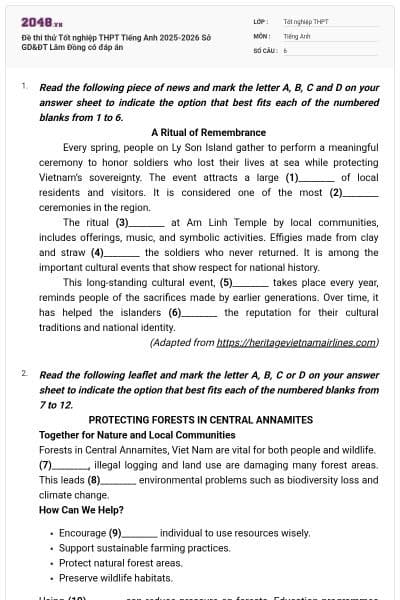
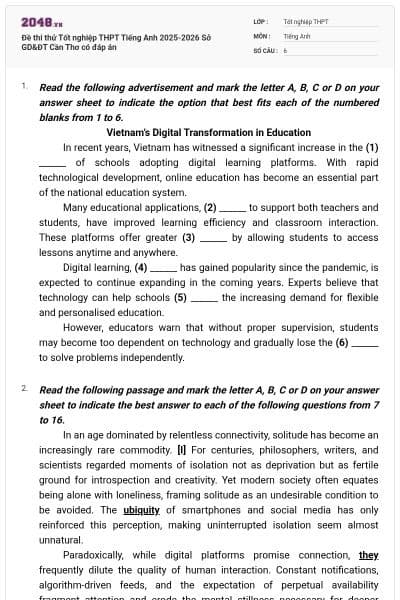
Read the following advertisement and mark the letter A, B, C, or D on your answer sheet to indicate the option that best fits each of the numbered blanks from 6 to 11.
FABRIC SHAVER - LINT REMOVER RECHARGEABLE
Tired of pills (6) ________ your sweaters, blankets, and more? Discover the Portable Fabric Shaver - compact and portable, perfect to keep your garments looking pristine.
- Innovative Blades
Compared to the 4-blade cutter head, this razor with upgraded blades offers (7) ________. It moves smoothly across the fabric surface, causing no unnecessary (8) ________ to your clothes.
- Battery & Speed Monitoring
You can easily set speed and monitor battery level. Long-lasting battery gives you 5 hours of (9) ________ use.
- Multi-protection & Easy Clean
If the grid becomes loose, the safety switch will promptly (10) ________ the device to protect your hand. The lint collection container is easy to (11) ________ and keep clean. Get yours today – and say goodbye to pilling forever!
(Adapted from https://www.amazon.com)
ruined
that ruins
ruining
to ruin
A. ruined (v-ed/v3): quá khứ phân từ (mang nghĩa bị động).
B. that ruins: đại từ quan hệ + động từ chia số ít (Sai ngữ pháp vì “pills” là số nhiều, nếu dùng mệnh đề quan hệ đầy đủ phải là that ruin).
C. ruining (v-ing): hiện tại phân từ (mang nghĩa chủ động).
D. to ruin (to-v): động từ nguyên thể có “to”.
Đây là hiện tượng rút gọn mệnh đề quan hệ mang nghĩa chủ động bổ nghĩa cho danh từ “pills” (những cục xơ vải/lông vón). Những cục xơ vải này chủ động “làm hỏng” quần áo. Mệnh đề đầy đủ là: pills which/that ruin your sweaters... Khi rút gọn, ta lược bỏ đại từ quan hệ và chuyển động từ chính sang dạng V-ing.
Chọn C. ruining
→ Tired of pills ruining your sweaters, blankets, and more?
Dịch nghĩa: Bạn mệt mỏi vì những cục xơ vải làm hỏng áo len, chăn và nhiều đồ dùng khác của mình?
superior efficiency cleaning
superior cleaning efficiency
cleaning superior efficiency
cleaning efficiency superior
Phân tích trật tự từ: Cụm danh từ này có danh từ chính là “efficiency” (hiệu quả) nên bắt buộc phải đứng cuối cùng. Phía trước nó là danh từ phụ “cleaning” (việc làm sạch) đóng vai trò phân loại, tạo thành cụm “cleaning efficiency” (hiệu quả làm sạch). Tính từ “superior” (vượt trội) bổ nghĩa cho toàn bộ tính chất của cụm danh từ đó nên phải đứng ở vị trí đầu tiên. Trật tự đúng là: Tính từ + Danh từ phụ + Danh từ chính.
Chọn B. superior cleaning efficiency
→ ...this razor with upgraded blades offers superior cleaning efficiency.
Dịch nghĩa: ...chiếc máy cạo này với các lưỡi dao được nâng cấp mang lại hiệu quả làm sạch vượt trội.
damage
fracture
decline
defect
A. damage (n): sự hư hại, tổn hại.
B. fracture (n): vết nứt, sự gãy (thường dùng cho xương hoặc vật liệu cứng).
C. decline (n): sự sụt giảm.
D. defect (n): khuyết điểm, lỗi (sản phẩm).
Ta có cấu trúc / cụm kết hợp từ cố định (collocation): cause damage to something (gây hư hại / gây tổn hại cho cái gì).
Chọn A. damage
→ It moves smoothly across the fabric surface, causing no unnecessary damage to your clothes.
Dịch nghĩa: Nó di chuyển trơn tru trên bề mặt vải, không gây ra bất kỳ sự hư hại không đáng có nào cho quần áo của bạn.
continue
continuity
continuously
continuous
A. continue (v): tiếp tục.
B. continuity (n): sự liên tục.
C. continuously (adv): một cách liên tục.
D. continuous (adj): liên tục, không dứt.
Phía sau khoảng trống là danh từ “use” (sự sử dụng / việc sử dụng). Theo quy tắc ngữ pháp, ta cần một tính từ đứng trước để bổ nghĩa cho danh từ đó.
Chọn D. continuous
→ Long-lasting battery gives you 5 hours of continuous use.
Dịch nghĩa: Pin có thời lượng lâu dài cung cấp cho bạn 5 giờ sử dụng liên tục.
deactivate
destabilize
uninstall
interrupt
A. deactivate (v): vô hiệu hóa, làm ngừng hoạt động (máy móc, thiết bị).
B. destabilize (v): làm mất ổn định.
C. uninstall (v): gỡ cài đặt (phần mềm).
D. interrupt (v): ngắt lời, làm gián đoạn.
Phía sau là tân ngữ “the device” (thiết bị). Để bảo vệ tay của người dùng khi phần lưới bảo vệ bị lỏng, công tắc an toàn sẽ tự động “vô hiệu hóa / tắt” thiết bị.
Chọn A. deactivate
→ ...the safety switch will promptly deactivate the device to protect your hand.
Dịch nghĩa: ...công tắc an toàn sẽ ngay lập tức vô hiệu hóa thiết bị để bảo vệ tay của bạn.
turn out
break down
take apart
give away
A. turn out (phr.v): hóa ra, tham gia (sự kiện).
B. break down (phr.v): hỏng hóc (máy móc), suy sụp (tinh thần).
C. take apart (phr.v): tháo rời (các bộ phận của một đồ vật).
D. give away (phr.v): cho đi, tặng, tiết lộ (bí mật).
Phía trước khoảng trống là “The lint collection container” (Hộp chứa xơ vải). Để có thể làm sạch hộp chứa này, người dùng cần phải “tháo rời” nó ra khỏi máy.
Chọn C. take apart
→ The lint collection container is easy to take apart and keep clean.
Dịch nghĩa: Hộp chứa xơ vải rất dễ dàng để tháo rời và giữ sạch sẽ.
Bài đọc hoàn chỉnh | Dịch bài đọc |
FABRIC SHAVER - LINT REMOVER RECHARGEABLE Tired of pills (6) ruining your sweaters, blankets, and more? Discover the Portable Fabric Shaver - compact and portable, perfect to keep your garments looking pristine. Innovative Blades Compared to the 4-blade cutter head, this razor with upgraded blades offers (7) superior cleaning efficiency. It moves smoothly across the fabric surface, causing no unnecessary (8) damage to your clothes. Battery & Speed Monitoring You can easily set speed and monitor battery level. Long-lasting battery gives you 5 hours of (9) continuous use. Multi-protection & Easy Clean If the grid becomes loose, the safety switch will promptly (10) deactivate the device to protect your hand. The lint collection container is easy to (11) take apart and keep clean. Get yours today – and say goodbye to pilling forever! | MÁY CẮT XƠ VẢI - THIẾT BỊ LOẠI BỎ LÔNG VÓN CÓ THỂ SẠC LẠI Bạn mệt mỏi vì những cục xơ vải (6) làm hỏng áo len, chăn và nhiều đồ dùng khác của mình? Hãy khám phá Máy cắt xơ vải cầm tay - nhỏ gọn và dễ mang theo, hoàn hảo để giữ cho quần áo của bạn luôn trông như mới. Lưỡi Dao Đổi Mới So với đầu cắt 4 lưỡi, chiếc máy cạo này với các lưỡi dao được nâng cấp mang lại (7) hiệu quả làm sạch vượt trội. Nó di chuyển trơn tru trên bề mặt vải, không gây ra bất kỳ (8) sự hư hại không đáng có nào cho quần áo của bạn. Theo Dõi Tốc Độ & Pin Bạn có thể dễ dàng cài đặt tốc độ và theo dõi mức pin. Pin có thời lượng lâu dài cung cấp cho bạn 5 giờ sử dụng (9) liên tục. Bảo Vệ Đa Lớp & Dễ Dàng Vệ Sinh Nếu phần lưới bảo vệ bị lỏng, công tắc an toàn sẽ ngay lập tức (10) vô hiệu hóa thiết bị để bảo vệ tay của bạn. Hộp chứa xơ vải rất dễ dàng để (11) tháo rời và giữ sạch sẽ. Hãy sở hữu ngay một chiếc hôm nay – và nói lời tạm biệt vĩnh viễn với tình trạng vón cục xơ vải! |
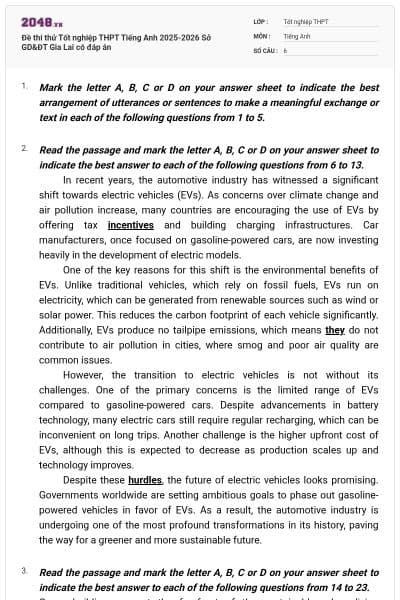
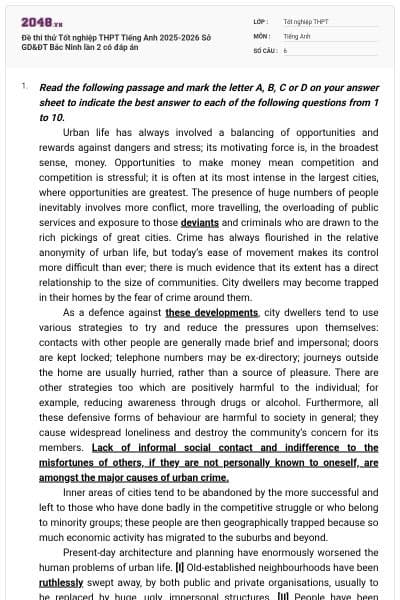
Read the following passage and mark the letter A, B, C or D on your answer sheet to indicate the best answer to each of the following questions from 12 to 19.
How Modern Parenting Created a Generation of Picky Eaters
In 1915, when a Maine mother asked the U.S. Children's Bureau why her son rejected certain foods, officials dismissed the idea of “preference”, suggesting a medical cause instead. At the time, voluntary food rejection was virtually unheard of; children were expected to eat whatever was served with enthusiasm. Picky eating, as a recognized behavioral trait, simply did not exist in the American cultural landscape.
Today, however, American children are often labeled the “pickiest in history”. In her recent research, historian Helen Zoe Veit argues that a century of shifting adult attitudes has fundamentally reshaped childhood. She contends that modern parenting has inadvertently normalized selective eating. Before the 20th century, there was no “children's food”; youngsters shared adult meals and developed robust appetites, partly because snacking was nonexistent.
The mid-20th century brought pivotal changes in child psychology and autonomy. Influential parenting guides, such as those by Dr. Benjamin Spock, began encouraging parents to grant children more control over their diets. This was bolstered by studies suggesting that, left to their own devices, children could naturally regulate their nutritional needs. Meanwhile, the rise of Freudian theory warned that pressuring children to eat could cause lasting psychological trauma, further softening parental authority at the dinner table.
Simultaneously, the explosion of processed foods and aggressive marketing transformed family dynamics. By the 1960s, supermarkets offered unprecedented variety, and advertisers began targeting impressionable children directly, granting them immense influence over household purchases. Veit criticizes this modern exceptionalism, noting that while parents enforce hygiene and safety, they often treat nutrition as negotiable. She advocates for consistent family meals and repeated exposure to new foods, viewing picky eating as a misguided outcome of otherwise good intentions.
(Adapted from https://www.economist.com/culture)
Which of the following is NOT mentioned in the passage as a reason for the rise of picky eating?
processed foods
genetic factors
advertising influences
parental attitudes
Điều nào sau đây KHÔNG được đề cập trong bài đọc như một lý do dẫn đến sự gia tăng của chứng kén ăn?
A. processed foods: thực phẩm chế biến sẵn (Có nhắc đến ở đoạn 4: “explosion of processed foods”)
B. genetic factors: yếu tố di truyền (Không được nhắc đến)
C. advertising influences: những ảnh hưởng của quảng cáo (Có nhắc đến ở đoạn 4: “advertisers began targeting impressionable children”)
D. parental attitudes: thái độ của cha mẹ (Có nhắc đến ở đoạn 2: “a century of shifting adult attitudes”)
Chọn B.
The word “trait” in paragraph 1 could be best replaced by ________.
characteristic
disorder
reaction
symptom
Từ “trait” ở đoạn 1 có thể được thay thế tốt nhất bởi ________.
trait (n): đặc điểm, nét tiêu biểu.
A. characteristic (n): đặc điểm, tính cách (đồng nghĩa)
B. disorder (n): sự rối loạn (bệnh lý)
C. reaction (n): phản ứng
D. symptom (n): triệu chứng
→ trait = characteristic
Thông tin (Đoạn 1): Picky eating, as a recognized behavioral trait, simply did not exist...
(Chứng kén ăn, như một đặc điểm hành vi được công nhận, đơn giản là đã không tồn tại...)
Chọn A.
Which of the following best paraphrases the underlined sentence in paragraph 2?
Young people tended to prefer adult-style meals but gradually lost their appetites because they were in the habit of snacking between meals.
Young people ate with adults and maintained strong appetites when snacks were a regular part of their daily diets and meal routines.
Young people ate meals similar to those of adults and kept relatively strong appetites despite occasionally having snacks during the day.
Young people consumed the same meals as adults and developed stronger appetites to some extent due to the absence of snacking.
Câu nào sau đây diễn giải tốt nhất câu được gạch chân ở đoạn 2?
“...youngsters shared adult meals and developed robust appetites, partly because snacking was nonexistent.”
(...những người trẻ tuổi đã chia sẻ chung các bữa ăn của người lớn và phát triển sự thèm ăn mạnh mẽ, một phần vì việc ăn vặt là không tồn tại.)
Dịch nghĩa:
A. Những người trẻ tuổi có xu hướng thích các bữa ăn theo kiểu người lớn nhưng dần mất cảm giác ngon miệng vì họ có thói quen ăn vặt giữa các bữa ăn. (Sai nghĩa).
B. Những người trẻ tuổi dùng bữa với người lớn và duy trì sự thèm ăn mạnh mẽ khi đồ ăn vặt là một phần thường xuyên trong chế độ ăn và thói quen ăn uống hàng ngày của họ.
(Sai nghĩa vì câu gốc nói ăn vặt “không tồn tại”).
C. Những người trẻ tuổi ăn những bữa ăn giống người lớn và giữ được sự thèm ăn tương đối mạnh mẽ mặc dù thỉnh thoảng có ăn vặt trong ngày. (Sai nghĩa tương tự B).
D. Những người trẻ tuổi tiêu thụ những bữa ăn giống như người lớn và phát triển sự thèm ăn mạnh mẽ hơn ở một mức độ nào đó do không có việc ăn vặt. (Đúng và sát nghĩa nhất: shared adult meals = consumed the same meals as adults; robust appetites = stronger appetites; partly = to some extent; snacking was nonexistent = absence of snacking).
Chọn D.
The word “bolstered” in paragraph 3 is OPPOSITE in meaning to ________.
reinforced
undermined
abandoned
overlooked
Từ “bolstered” ở đoạn 3 TRÁI NGHĨA với ________.
bolstered (v-ed/P2): được củng cố, được hỗ trợ, được thúc đẩy.
A. reinforced (v-ed/P2): được củng cố, tăng cường
B. undermined (v-ed/P2): bị làm suy yếu, bị phá hoại (trái nghĩa)
C. abandoned (v-ed/P2): bị từ bỏ
D. overlooked (v-ed/P2): bị bỏ qua
→ bolstered >< undermined
Thông tin: This was bolstered by studies suggesting that, left to their own devices, children could naturally regulate their nutritional needs.
(Điều này được củng cố bởi các nghiên cứu cho thấy rằng, nếu được để tự do tự lo cho bản thân, trẻ em có thể điều chỉnh nhu cầu dinh dưỡng của mình một cách tự nhiên.)
Chọn B.
The word “them” in paragraph 4 refers to ________.
processed foods
impressionable children
advertisers
supermarkets
Từ “them” ở đoạn 4 chỉ ________.
A. processed foods: thực phẩm chế biến sẵn
B. impressionable children: những đứa trẻ dễ bị ảnh hưởng
C. advertisers: các nhà quảng cáo
D. supermarkets: các siêu thị
Thông tin: ...advertisers began targeting impressionable children directly, granting them immense influence over household purchases.
(...các nhà quảng cáo bắt đầu nhắm trực tiếp vào những đứa trẻ dễ bị ảnh hưởng, trao cho chúng (những đứa trẻ) ảnh hưởng to lớn đối với việc mua sắm của hộ gia đình.)
→ them = impressionable children.
Chọn B.
Which of the following is TRUE according to the passage?
U.S. officials in 1915 believed that children rejected certain foods due to personal preference.
Modern advertisers mainly influence parents when promoting food products to households today.
Veit emphasizes the importance of regular family meals and repeated exposure to unfamiliar foods.
Dr. Benjamin Spock advised parents to maintain strict control over children's eating habits.
Theo bài đọc, nhận định nào sau đây là ĐÚNG?
A. Các quan chức Hoa Kỳ vào năm 1915 tin rằng trẻ em từ chối một số loại thức ăn là do sở thích cá nhân. (Sai, đoạn 1 nói họ “bác bỏ ý tưởng về sở thích” - dismissed the idea of “preference”).
B. Các nhà quảng cáo hiện đại chủ yếu ảnh hưởng đến cha mẹ khi quảng bá các sản phẩm thực phẩm cho các hộ gia đình ngày nay. (Sai, đoạn 4 nói họ “nhắm trực tiếp vào trẻ em” - targeting impressionable children directly).
C. Veit nhấn mạnh tầm quan trọng của các bữa ăn gia đình đều đặn và việc tiếp xúc nhiều lần với các món ăn lạ. (Đúng).
D. Tiến sĩ Benjamin Spock khuyên các bậc cha mẹ nên duy trì sự kiểm soát nghiêm ngặt đối với thói quen ăn uống của trẻ. (Sai, đoạn 3 nói ông khuyến khích cha mẹ “trao cho trẻ nhiều quyền kiểm soát hơn” - grant children more control).
Thông tin (Đoạn 4): She advocates for consistent family meals and repeated exposure to new foods...
(Cô ấy ủng hộ những bữa ăn gia đình nhất quán/đều đặn và việc tiếp xúc lặp đi lặp lại với các loại thực phẩm mới...)
Chọn C.
In which paragraph does the writer discuss the role of psychology in shaping parenting practices?
Paragraph 3
Paragraph 4
Paragraph 2
Paragraph 1
Tác giả thảo luận về vai trò của tâm lý học trong việc hình thành các phương pháp nuôi dạy con cái ở đoạn nào?
A. Đoạn 3
B. Đoạn 4
C. Đoạn 2
D. Đoạn 1
Thông tin (Đoạn 3): The mid-20th century brought pivotal changes in child psychology and autonomy... Meanwhile, the rise of Freudian theory warned that pressuring children...
(Giữa thế kỷ 20 mang đến những thay đổi mang tính bước ngoặt trong tâm lý học và sự tự chủ của trẻ em... Trong khi đó, sự trỗi dậy của lý thuyết Freud cảnh báo rằng việc gây áp lực cho trẻ em...)
Chọn A.
In which paragraph does the writer discuss how the growth of the food industry and marketing strategies changed family food preferences?
Paragraph 2
Paragraph 1
Paragraph 3
Paragraph 4
Tác giả thảo luận về việc sự phát triển của ngành công nghiệp thực phẩm và các chiến lược tiếp thị đã thay đổi sở thích ăn uống của gia đình như thế nào ở đoạn nào?
A. Đoạn 2
B. Đoạn 1
C. Đoạn 3
D. Đoạn 4
Thông tin (Đoạn 4): Simultaneously, the explosion of processed foods and aggressive marketing transformed family dynamics. By the 1960s, supermarkets offered unprecedented variety, and advertisers began targeting impressionable children directly...
(Đồng thời, sự bùng nổ của thực phẩm chế biến sẵn và hoạt động tiếp thị mạnh mẽ đã làm thay đổi tính năng động của gia đình. Vào những năm 1960, các siêu thị cung cấp sự đa dạng chưa từng có, và các nhà quảng cáo bắt đầu nhắm trực tiếp vào những đứa trẻ...)
Chọn D.
Dịch bài đọc:
Cách các phương pháp nuôi dạy con hiện đại tạo ra một thế hệ kén ăn
Năm 1915, khi một người mẹ ở Maine hỏi Cục Nhi đồng Hoa Kỳ tại sao con trai bà lại từ chối một số loại thức ăn, các quan chức đã bác bỏ ý tưởng về “sở thích” (sự kén chọn), thay vào đó đưa ra gợi ý về một nguyên nhân y tế. Vào thời điểm đó, việc tự nguyện từ chối thức ăn gần như là điều chưa từng nghe thấy; trẻ em được kỳ vọng sẽ ăn bất cứ thứ gì được phục vụ một cách nhiệt tình. Chứng kén ăn, như một đặc điểm hành vi được công nhận, đơn giản là đã không tồn tại trong bối cảnh văn hóa Mỹ.
Tuy nhiên, ngày nay, trẻ em Mỹ thường bị gắn mác là “kén ăn nhất trong lịch sử”. Trong nghiên cứu gần đây của mình, nhà sử học Helen Zoe Veit lập luận rằng một thế kỷ thay đổi thái độ của người lớn đã định hình lại căn bản thời thơ ấu. Cô khẳng định rằng các phương pháp nuôi dạy con hiện đại đã vô tình bình thường hóa việc ăn uống kén chọn. Trước thế kỷ 20, không có “thức ăn dành cho trẻ em”; những người trẻ tuổi đã chia sẻ chung các bữa ăn của người lớn và phát triển sự thèm ăn mạnh mẽ, một phần vì việc ăn vặt là không tồn tại.
Giữa thế kỷ 20 mang đến những thay đổi mang tính bước ngoặt trong tâm lý học và sự tự chủ của trẻ em. Những cuốn cẩm nang nuôi dạy con cái có ảnh hưởng lớn, chẳng hạn như của Tiến sĩ Benjamin Spock, bắt đầu khuyến khích các bậc cha mẹ trao cho trẻ nhiều quyền kiểm soát hơn đối với chế độ ăn uống của chúng. Điều này được củng cố bởi các nghiên cứu cho thấy rằng, nếu được để tự do tự lo cho bản thân, trẻ em có thể điều chỉnh nhu cầu dinh dưỡng của mình một cách tự nhiên. Trong khi đó, sự trỗi dậy của lý thuyết Freud cảnh báo rằng việc gây áp lực buộc trẻ em phải ăn có thể gây ra những chấn thương tâm lý lâu dài, làm mềm yếu thêm uy quyền của cha mẹ tại bàn ăn.
Đồng thời, sự bùng nổ của thực phẩm chế biến sẵn và hoạt động tiếp thị mạnh mẽ đã làm thay đổi tính năng động của gia đình. Vào những năm 1960, các siêu thị cung cấp sự đa dạng chưa từng có, và các nhà quảng cáo bắt đầu nhắm trực tiếp vào những đứa trẻ dễ bị ảnh hưởng, trao cho chúng ảnh hưởng to lớn đối với việc mua sắm của hộ gia đình. Veit chỉ trích chủ nghĩa ngoại lệ hiện đại này, lưu ý rằng mặc dù cha mẹ thực thi vệ sinh và an toàn, họ thường coi dinh dưỡng là thứ có thể thương lượng. Cô ấy ủng hộ những bữa ăn gia đình nhất quán và việc tiếp xúc lặp đi lặp lại với các loại thực phẩm mới, xem chứng kén ăn như một kết quả sai lầm của những ý định vốn dĩ tốt đẹp.
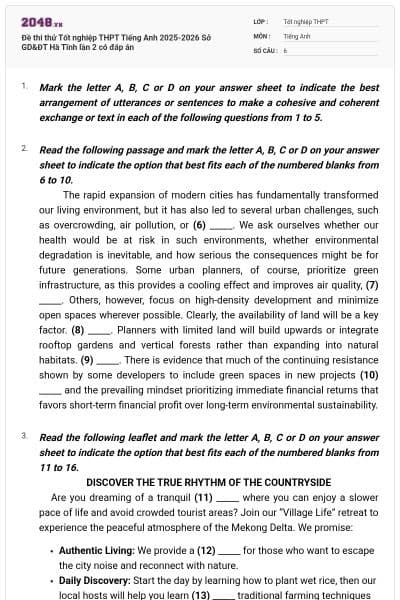
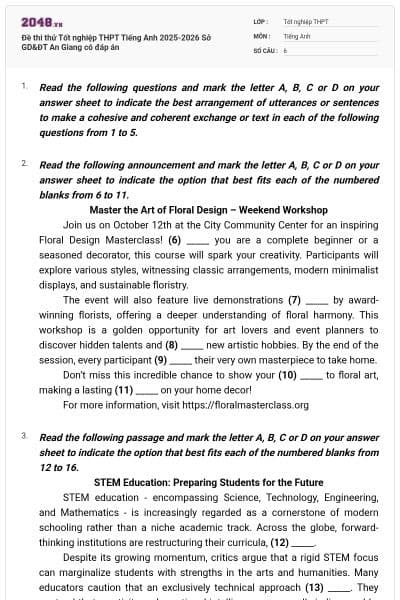
Read the following announcement and mark the letter A, B, C or D on your answer sheet to indicate the option that best fits each of the numbered blanks from 20 to 25.
ANNOUNCEMENT: VOICE SCAM CALLS ARE GETTING SMARTER
Issued by Staffordshire Consumer Protection Agency
Local consumer agencies report a sharp rise in voice scam calls. These calls may sound professional and (20) ________, yet their goal is simple: to make you act before you think.
(21) ________ traditional scams that rely on obvious threats, these calls use polite scripts, often containing a request to “confirm” personal details. Messages posing as official updates among (22) ________ tricks may lead you to fake websites. When the caller pressures you to decide immediately, remember to buy some (23) ________ instead of rushing. You should also avoid sharing codes, even (24) ________ someone claiming to be helping you.
If something feels wrong, hang up immediately, then file (25) ________ report with your network provider, who will help investigate the scam. Don't easily fall for such calls! Stay safe and stay alert!
(Adapted from https://www.staffordshire.gov.uk)
compromising
trusting
convincing
aspiring
A. compromising (adj): có tính thỏa hiệp, làm tổn hại (uy tín).
B. trusting (adj): hay tin người, cả tin.
C. convincing (adj): có sức thuyết phục, đáng tin.
D. aspiring (adj): đầy khát vọng, có chí hướng.
Phía trước có từ “professional” (chuyên nghiệp) và liên từ “and”, do đó từ cần điền phải là một tính từ mang nghĩa miêu tả vỏ bọc tinh vi của các cuộc gọi lừa đảo. “Convincing” là lựa chọn chính xác nhất.
Chọn C. convincing
→ These calls may sound professional and convincing...
Dịch nghĩa: Những cuộc gọi này nghe có vẻ chuyên nghiệp và đáng tin (có sức thuyết phục)...
In light of
In contrast to
In addition to
In spite of
A. In light of (prep): bởi vì, xét đến.
B. In contrast to (prep): trái ngược với.
C. In addition to (prep): ngoài ra, thêm vào.
D. In spite of (prep): mặc dù.
Câu này so sánh hai hình thức lừa đảo: hình thức truyền thống (“rely on obvious threats” - dựa vào những lời đe dọa lộ liễu) và hình thức mới (“use polite scripts” - sử dụng các kịch bản lịch sự). Sự đối lập này yêu cầu cụm từ “In contrast to”.
Chọn B. In contrast to
→ In contrast to traditional scams that rely on obvious threats, these calls use polite scripts...
Dịch nghĩa: Trái ngược với những vụ lừa đảo truyền thống dựa vào những lời đe dọa lộ liễu, những cuộc gọi này sử dụng các kịch bản lịch sự...
others
another
the other
other
A. others: những người/vật khác (đại từ, đứng độc lập không đi kèm danh từ).
B. another: một (người/vật) khác (+ danh từ đếm được số ít).
C. the other: (người/vật) còn lại (đã xác định cụ thể trong một nhóm).
D. other: những (người/vật) khác (+ danh từ đếm được số nhiều hoặc không đếm được).
Phía sau khoảng trống là danh từ đếm được ở dạng số nhiều “tricks” (những thủ đoạn/mẹo). Do đó, ta bắt buộc phải dùng tính từ “other” để bổ nghĩa.
Chọn D. other
→ Messages posing as official updates among other tricks may lead you to fake websites.
Dịch nghĩa: Những tin nhắn giả mạo các bản cập nhật chính thức cùng với những thủ đoạn khác có thể dẫn bạn đến các trang web giả mạo.
time
thought
calm
rest
A. time (n): thời gian.
B. thought (n): suy nghĩ.
C. calm (n): sự bình tĩnh.
D. rest (n): sự nghỉ ngơi.
Ta có thành ngữ (idiom): buy time (câu giờ, kéo dài thời gian để trì hoãn một việc gì đó hoặc để suy nghĩ thêm).
Chọn A. time
→ ...remember to buy some time instead of rushing.
Dịch nghĩa: ...hãy nhớ câu giờ (kéo dài thêm thời gian) thay vì vội vàng.
at
on
with
to
A. at (prep): tại, ở.
B. on (prep): trên.
C. with (prep): với.
D. to (prep): đến.
Ta có cấu trúc kết hợp từ cố định: share something with somebody (chia sẻ cái gì đó với ai). Ở đây là chia sẻ mã xác nhận (codes) với người khác.
Chọn C. with
→ You should also avoid sharing codes, even with someone claiming to be helping you.
Dịch nghĩa: Bạn cũng nên tránh việc chia sẻ các mã xác nhận, ngay cả với người tự xưng là đang giúp đỡ bạn.
a
the
an
(no article)
A. a: mạo từ không xác định (đứng trước danh từ số ít bắt đầu bằng phụ âm).
B. the: mạo từ xác định.
C. an: mạo từ không xác định (đứng trước danh từ số ít bắt đầu bằng nguyên âm).
D. (no article): không dùng mạo từ.
Ta có cụm từ file a report (nộp đơn trình báo). Danh từ “report” ở đây là danh từ đếm được số ít, được nhắc đến lần đầu tiên và chưa xác định cụ thể, nên ta dùng mạo từ “a”.
Chọn A. a
→ ...hang up immediately, then file a report with your network provider...
Dịch nghĩa: ...hãy cúp máy ngay lập tức, sau đó nộp một bản trình báo cho nhà cung cấp mạng của bạn...
Bài đọc hoàn chỉnh | Dịch bài đọc |
ANNOUNCEMENT: VOICE SCAM CALLS ARE GETTING SMARTER Issued by Staffordshire Consumer Protection Agency Local consumer agencies report a sharp rise in voice scam calls. These calls may sound professional and (20) convincing, yet their goal is simple: to make you act before you think. (21) In contrast to traditional scams that rely on obvious threats, these calls use polite scripts, often containing a request to “confirm” personal details. Messages posing as official updates among (22) other tricks may lead you to fake websites. When the caller pressures you to decide immediately, remember to buy some (23) time instead of rushing. You should also avoid sharing codes, even (24) with someone claiming to be helping you. If something feels wrong, hang up immediately, then file (25) a report with your network provider, who will help investigate the scam. Don't easily fall for such calls! Stay safe and stay alert! | THÔNG BÁO: CÁC CUỘC GỌI LỪA ĐẢO BẰNG GIỌNG NÓI ĐANG NGÀY CÀNG TINH VI HƠN Phát hành bởi Cơ quan Bảo vệ Người tiêu dùng Staffordshire Các cơ quan bảo vệ người tiêu dùng địa phương báo cáo về sự gia tăng mạnh mẽ của các cuộc gọi lừa đảo bằng giọng nói. Những cuộc gọi này nghe có vẻ chuyên nghiệp và (20) đáng tin, thế nhưng mục tiêu của chúng rất đơn giản: khiến bạn hành động trước khi kịp suy nghĩ. (21) Trái ngược với những vụ lừa đảo truyền thống dựa vào những lời đe dọa lộ liễu, những cuộc gọi này sử dụng các kịch bản lịch sự, thường chứa đựng yêu cầu “xác nhận” các chi tiết cá nhân. Những tin nhắn giả mạo các bản cập nhật chính thức cùng với (22) những thủ đoạn khác có thể dẫn bạn đến các trang web giả mạo. Khi người gọi gây áp lực buộc bạn phải quyết định ngay lập tức, hãy nhớ (23) câu giờ thay vì hành động vội vàng. Bạn cũng nên tránh việc chia sẻ các mã xác nhận, ngay cả (24) với người tự xưng là đang giúp đỡ bạn. Nếu cảm thấy có điều gì đó không ổn, hãy cúp máy ngay lập tức, sau đó nộp (25) một bản trình báo cho nhà cung cấp mạng của bạn, người sẽ giúp điều tra vụ lừa đảo. Đừng dễ dàng mắc bẫy những cuộc gọi như vậy! Hãy giữ an toàn và luôn cảnh giác! |
Read the following passage and mark the letter A, B, C or D on your answer sheet to indicate the best answer to each of the following questions from 26 to 35.
New research suggests that the most effective way to fight climate change and protect wildlife is by using the “human footprint” to identify priority areas for nature restoration. Rather than spreading resources too thin, the method prioritises restoration zones with the highest environmental return relative to cost. (I) According to the World Economic Forum (WEF), human activity has already altered more than half of the Earth's land. By leveraging this data-driven approach, governments and organizations can use their limited budgets more efficiently and achieve better long-term outcomes.
The potential impact of such targeted action is enormous. A study published in the journal Nature reveals that restoring just 15% of land converted by humans could prevent 60% of expected species extinctions. It could also capture 299 gigatonnes of carbon dioxide, equal to about 30% of the total increase since the Industrial Revolution. (II) Expanding restoration to 30% of degraded land would further protect over 70% of threatened mammals, birds, and amphibians while increasing carbon absorption. Many of these high-priority areas are found in tropical regions and developing countries across Southeast Asia, South Asia, Latin America, and Africa.
To identify these locations, scientists analysed 2.87 billion hectares of farmland, balancing three key objectives: preserving habitats, storing carbon, and maintaining agricultural productivity. Their findings show that different ecosystems offer distinct advantages. Restoring forests and wetlands provides the greatest combined gains for both climate protection and biodiversity, whereas restoring grasslands and arid regions is generally more cost-effective. (III) The researchers also stress that coordinating restoration across multiple ecosystem types, rather than focusing on just one, will produce the greatest overall impact.
Despite these promising findings, several challenges remain. Restoration efforts should not come at the expense of food production, especially as the global population continues to grow. In addition, international cooperation is essential to share costs and implement effective programmes. Financial incentives for landowners, such as “payment for ecosystem services”, can encourage participation, but they depend on clear and consistent policies. (IV) Experts also emphasise that ecosystems must be treated as complex, real-world environments, meaning that successful restoration relies not only on scientific planning but also on local knowledge and practical conditions.
(Adapted from https://www.scidev.net/global/news)
The word “leveraging” in paragraph 1 is closest in meaning to ________.
utilising
allocating
prioritising
concentrating
Từ "leveraging" trong đoạn 1 có nghĩa gần nhất với ________.
leverage (v): tận dụng, sử dụng cái gì đó để đạt được lợi thế tối đa
A. utilising (sử dụng, tận dụng)
B. allocating (phân bổ)
C. prioritising (ưu tiên)
D. concentrating (tập trung)
Thông tin: "By leveraging this data-driven approach..." (Bằng cách tận dụng/sử dụng phương pháp tiếp cận dựa trên dữ liệu này...),
→ leveraging = utilising
Chọn A.
Which of the following is NOT STATED in paragraph 1?
The “human footprint” method helps pinpoint specific areas where restoration is most cost-effective.
The World Economic Forum was the first organization to propose the “human footprint” method.
This targeted method enables governments to make better use of their limited resources.
More than 50% of the Earth's land has been modified by human actions, according to WEF.
Điều nào sau đây KHÔNG ĐƯỢC NÊU trong đoạn 1?
A. Phương pháp "dấu chân con người" giúp xác định chính xác các khu vực cụ thể nơi việc phục hồi mang lại hiệu quả chi phí cao nhất.
(Có nêu: "prioritises restoration zones with the highest environmental return relative to cost").
B. Diễn đàn Kinh tế Thế giới (WEF) là tổ chức đầu tiên đề xuất phương pháp "dấu chân con người". (Không được nêu).
C. Phương pháp có mục tiêu này cho phép các chính phủ sử dụng tốt hơn các nguồn lực hạn chế của họ. (Có nêu: "governments... can use their limited budgets more efficiently").
D. Hơn 50% diện tích đất liền của Trái Đất đã bị thay đổi bởi hành động của con người, theo WEF.
(Có nêu: "altered more than half of the Earth's land").
Thông tin: New research suggests that the most effective way to fight climate change and protect wildlife is by using the “human footprint” to identify priority areas for nature restoration. Rather than spreading resources too thin, the method prioritises restoration zones with the highest environmental return relative to cost. (I) According to the World Economic Forum (WEF), human activity has already altered more than half of the Earth's land. By leveraging this data-driven approach, governments and organizations canuse their limited budgets more efficiently and achieve better long-term outcomes. (Nghiên cứu mới cho thấy cách hiệu quả nhất để chống biến đổi khí hậu và bảo vệ động vật hoang dã là sử dụng “dấu chân con người” để xác định các khu vực ưu tiên phục hồi thiên nhiên. Thay vì phân bổ nguồn lực quá dàn trải, phương pháp này ưu tiên các khu vực phục hồi có lợi ích môi trường cao nhất so với chi phí. (I) Theo Diễn đàn Kinh tế Thế giới (WEF), hoạt động của con người đã làm thay đổi hơn một nửa diện tích đất liền của Trái đất. Bằng cách tận dụng phương pháp dựa trên dữ liệu này, các chính phủ và tổ chức có thể sử dụng ngân sách hạn chế của mình hiệu quả hơn và đạt được kết quả dài hạn tốt hơn.)
→ Bài đọc chỉ trích dẫn số liệu của WEF về tỷ lệ đất bị biến đổi, chứ không hề nói rằng WEF là tổ chức đầu tiên đề xuất ra phương pháp nghiên cứu này.
Chọn B.
Which of the following is TRUE according to paragraph 2?
The 30% restoration target is intended to protect mammals rather than other animal groups.
A targeted recovery of a small percentage of land can significantly mitigate biodiversity loss.
Most regions identified as high priority for restoration are situated in the world's wealthier nations.
Restoring 15% of human-altered land could offset most carbon increases since the industrial era.
Điều nào sau đây là ĐÚNG theo đoạn 2?
A. Mục tiêu phục hồi 30% nhằm bảo vệ động vật có vú hơn là các nhóm động vật khác.
(Sai, nó bảo vệ cả chim và động vật lưỡng cư).
B. Việc phục hồi có mục tiêu một tỷ lệ nhỏ đất đai có thể làm giảm đáng kể sự mất đa dạng sinh học. (Đúng, phục hồi chỉ 15% nhưng ngăn chặn tới 60% sự tuyệt chủng).
C. Hầu hết các khu vực được xác định là ưu tiên cao cho việc phục hồi nằm ở các quốc gia giàu có hơn trên thế giới. (Sai, nằm ở "developing countries" - các nước đang phát triển).
D. Phục hồi 15% diện tích đất bị con người thay đổi có thể bù đắp hầu hết (most) sự gia tăng lượng carbon kể từ thời kỳ công nghiệp. (Sai, chỉ bù đắp 30% - không phải hầu hết).
Chọn B.
Which of the following best summarises the main idea of paragraph 3?
Grasslands and arid regions are emphasised as the most cost-effective areas, making them the primary focus of restoration strategies.
Restoring forests and wetlands delivers the greatest combined benefits for climate and biodiversity compared with other ecosystem types overall.
Coordinating restoration across different ecosystem types can maximise overall effectiveness because they provide distinct restoration advantages.
Analysis of 2.87 billion hectares of farmland highlights how ecosystem advantages depend mainly on agricultural productivity considerations.
Câu nào sau đây tóm tắt đúng nhất ý chính của đoạn 3?
A. Đồng cỏ và vùng khô hạn được nhấn mạnh là những khu vực hiệu quả về chi phí nhất, do đó chúng trở thành trọng tâm chính của các chiến lược phục hồi.
(Chi tiết quá cụ thể, bỏ qua lợi ích của các hệ sinh thái khác).
B. Phục hồi rừng và vùng đất ngập nước mang lại lợi ích tổng hợp lớn nhất cho khí hậu và đa dạng sinh học so với các loại hệ sinh thái khác nói chung. (Quá cụ thể).
C. Việc phối hợp phục hồi trên các loại hệ sinh thái khác nhau có thể tối đa hóa hiệu quả tổng thể vì chúng mang lại những lợi thế phục hồi riêng biệt.
(Đúng, bao quát trọn vẹn cả đoạn: phân tích lợi thế riêng của từng loại và kết luận cần phối hợp).
D. Phân tích 2,87 tỷ ha đất nông nghiệp nhấn mạnh cách lợi thế hệ sinh thái phụ thuộc chủ yếu vào sự cân nhắc năng suất nông nghiệp. (Sai trọng tâm).
Chọn C.
The word “one” in paragraph 3 refers to ________.
an arid region
a forest benefit
a key objective
an ecosystem type
Từ "one" trong đoạn 3 chỉ ________.
A. một khu vực khô hạn
B. một lợi ích của rừng
C. một mục tiêu chính
D. một loại hệ sinh thái
Thông tin: "...coordinating restoration across multiple ecosystem types, rather than focusing on just one..." (việc phối hợp phục hồi trên nhiều loại hệ sinh thái, thay vì chỉ tập trung vào một...).
→ Từ "one" ở đây đóng vai trò thay thế cho "ecosystem type".
Chọn D.
Which of the following best paraphrases the underlined sentence in paragraph 4?
While ecological recovery is important, it should not compromise food production, particularly as population pressures increase.
As global population growth continues to increase pressure on food systems, restoration efforts may need to be more carefully prioritised.
Continued population growth and food demand could make it difficult to pursue large-scale restoration programmes effectively.
Expanding environmental restoration depends on improving coordination between agricultural policies and population planning.
Câu nào sau đây diễn giải đúng nhất câu được gạch chân ở đoạn 4?
Restoration efforts should not come at the expense of food production, especially as the global population continues to grow. (Những nỗ lực phục hồi không nên diễn ra với cái giá phải trả là sản xuất lương thực, đặc biệt là khi dân số toàn cầu tiếp tục tăng.)
A. Mặc dù phục hồi sinh thái là quan trọng, nhưng nó không nên làm tổn hại đến sản xuất lương thực, đặc biệt là khi áp lực dân số gia tăng. (Đúng: "come at the expense of" = "compromise", "population continues to grow" = "population pressures increase").
B. Khi tăng trưởng dân số toàn cầu tiếp tục gia tăng áp lực lên hệ thống lương thực, các nỗ lực phục hồi có thể cần được ưu tiên cẩn thận hơn.
(Đổi ý, không nhấn mạnh vào sản xuất lương thực).
C. Tăng trưởng dân số và nhu cầu lương thực liên tục có thể gây khó khăn cho việc thực hiện các chương trình phục hồi quy mô lớn một cách hiệu quả. (Lệch ý gốc).
D. Mở rộng phục hồi môi trường phụ thuộc vào việc cải thiện sự phối hợp giữa các chính sách nông nghiệp và kế hoạch dân số. (Sai hoàn toàn ý gốc).
Chọn A.
According to paragraph 4, what is a necessary condition for “payment for ecosystem services” to work?
Policies must be sufficiently clear and consistently applied to support effective implementation.
Ecosystem restoration programmes are most effective when limited to a single ecosystem type.
Landowners are generally willing to participate in restoration programmes without legal enforcement.
International cooperation must fully eliminate financial inequalities between participating countries.
Theo đoạn 4, điều kiện cần thiết để "chi trả cho dịch vụ hệ sinh thái" hoạt động hiệu quả là gì?
A. Các chính sách phải đủ rõ ràng và được áp dụng nhất quán để hỗ trợ thực hiện hiệu quả. (Đúng)
B. Các chương trình phục hồi hệ sinh thái hiệu quả nhất khi được giới hạn trong một loại hệ sinh thái duy nhất. (Sai kiến thức ở đoạn 3).
C. Chủ đất thường sẵn sàng tham gia các chương trình phục hồi mà không cần sự cưỡng chế pháp lý. (Sai, không có thông tin).
D. Hợp tác quốc tế phải loại bỏ hoàn toàn sự bất bình đẳng về tài chính giữa các quốc gia tham gia. (Không có thông tin).
→ Bài đọc chỉ rõ rằng các ưu đãi tài chính như "chi trả cho dịch vụ hệ sinh thái" có thể khuyến khích sự tham gia, "but they depend on clear and consistent policies" (nhưng chúng phụ thuộc vào các chính sách rõ ràng và nhất quán).
Chọn A.
It can be inferred from the passage that a successful restoration strategy ________.
integrates scientific planning with practical understanding of local conditions
ensures food production is not affected when farmland is restored to natural ecosystems
involves choosing between protecting threatened species and increasing carbon absorption
yields the best outcomes when efforts target the most cost-effective ecosystems
Có thể suy luận từ bài đọc rằng một chiến lược phục hồi thành công ________.
A. tích hợp lập kế hoạch khoa học với hiểu biết thực tế về điều kiện địa phương. (Đúng)
B. đảm bảo sản xuất lương thực không bị ảnh hưởng khi đất nông nghiệp được khôi phục về hệ sinh thái tự nhiên (Chưa chắc đảm bảo được 100%, đây chỉ là nguyên tắc "không nên").
C. bao gồm việc lựa chọn giữa bảo vệ các loài bị đe dọa và tăng khả năng hấp thụ carbon. (Sai, phục hồi giúp đạt được CẢ HAI).
D. mang lại kết quả tốt nhất khi các nỗ lực nhắm mục tiêu vào các hệ sinh thái có hiệu quả chi phí cao nhất. (Sai, kết quả tốt nhất là khi "phối hợp trên nhiều loại hệ sinh thái" - đoạn 3).
→ Ý A được rút ra trực tiếp từ câu cuối cùng của bài: "...successful restoration relies not only on scientific planning but also on local knowledge and practical conditions." (sự phục hồi thành công không chỉ dựa vào lập kế hoạch khoa học mà còn dựa vào kiến thức địa phương và các điều kiện thực tế).
Chọn A.
Where in the passage does the following sentence best fit?
This finding highlights how relatively small, well-targeted efforts can produce disproportionately large environmental gains.
(II)
(III)
(IV)
(I)
Câu sau đây phù hợp nhất với vị trí nào trong bài đọc?
"This finding highlights how relatively small, well-targeted efforts can produce disproportionately large environmental gains." (Phát hiện này làm nổi bật việc những nỗ lực tương đối nhỏ nhưng được nhắm mục tiêu tốt có thể tạo ra những lợi ích môi trường lớn một cách không tương xứng [lớn vượt bậc] như thế nào.)
→ Ở đoạn 2, ngay trước vị trí (II), tác giả trích dẫn một nghiên cứu cho thấy: phục hồi chỉ 15% diện tích đất (nỗ lực tương đối nhỏ) có thể ngăn chặn tới 60% sự tuyệt chủng và thu giữ lượng carbon bằng 30% kể từ Cách mạng Công nghiệp (những lợi ích môi trường lớn vượt bậc). Việc chèn câu đã cho ngay sau những số liệu này (II) là một lời bình luận, đúc kết phù hợp cho sự chênh lệch tích cực ("small effort → large gains") vừa được đưa ra.
Chọn A.
Which of the following best summarises the text?
International organisations are encouraging governments to invest more heavily in restoration programmes to address the growing threats of species extinction and global climate change.
The targeted ecosystem restoration approach uses human-impact data to optimise environmental benefits while balancing practical concerns such as agriculture and implementation factors.
The primary objective of ecosystem restoration involves significantly increasing carbon storage through the strategic expansion of recovery projects across a diverse range of ecological habitats.
Scientists have specifically identified tropical and developing regions as the primary targets for large-scale restoration projects due to their immense ecological significance in global ecosystems.
Câu nào sau đây tóm tắt đúng nhất bài đọc?
A. Các tổ chức quốc tế đang khuyến khích các chính phủ đầu tư mạnh hơn vào các chương trình phục hồi để giải quyết các mối đe dọa ngày càng tăng về sự tuyệt chủng của các loài và biến đổi khí hậu toàn cầu. (Quá hẹp, không đề cập đến nội dung cốt lõi của nghiên cứu và thực tiễn).
B. Cách tiếp cận phục hồi hệ sinh thái có mục tiêu sử dụng dữ liệu về tác động của con người để tối ưu hóa lợi ích môi trường trong khi cân bằng các mối quan tâm thực tế như nông nghiệp và các yếu tố thực thi. (Đúng, bao quát trọn vẹn 4 đoạn: Đoạn 1, 2 nói về việc dùng dữ liệu dấu chân con người để tối ưu hóa lợi ích. Đoạn 3, 4 nói về việc cân bằng nông nghiệp, kinh phí và hiểu biết thực tiễn).
C. Mục tiêu chính của việc phục hồi hệ sinh thái bao gồm việc tăng đáng kể lượng carbon lưu trữ thông qua việc mở rộng chiến lược các dự án phục hồi trên nhiều môi trường sinh thái đa dạng. (Quá hẹp, bỏ qua việc bảo vệ đa dạng sinh học và các rào cản).
D. Các nhà khoa học đã xác định cụ thể các vùng nhiệt đới và các vùng đang phát triển là mục tiêu chính cho các dự án phục hồi quy mô lớn do tầm quan trọng sinh thái to lớn của chúng trong hệ sinh thái toàn cầu. (Đây chỉ là một chi tiết nhỏ ở cuối đoạn 2).
Chọn B.
Dịch bài đọc:
Nghiên cứu mới cho thấy cách hiệu quả nhất để chống lại biến đổi khí hậu và bảo vệ động vật hoang dã là sử dụng "dấu chân con người" để xác định các khu vực ưu tiên cho việc phục hồi thiên nhiên. Thay vì dàn trải các nguồn lực quá mỏng, phương pháp này ưu tiên các khu vực phục hồi có lợi ích môi trường cao nhất so với chi phí. Theo Diễn đàn Kinh tế Thế giới (WEF), hoạt động của con người đã làm thay đổi hơn một nửa diện tích đất đai trên Trái Đất. Bằng cách tận dụng cách tiếp cận dựa trên dữ liệu này, các chính phủ và tổ chức có thể sử dụng ngân sách hạn hẹp của họ một cách hiệu quả hơn và đạt được kết quả lâu dài tốt hơn.
Tác động tiềm năng của một hành động có mục tiêu như vậy là vô cùng lớn. Một nghiên cứu công bố trên tạp chí Nature tiết lộ rằng việc phục hồi chỉ 15% diện tích đất bị con người biến đổi có thể ngăn chặn 60% các vụ tuyệt chủng dự kiến của các loài. Nó cũng có thể thu giữ 299 gigaton carbon dioxide, tương đương khoảng 30% tổng mức tăng kể từ thời kỳ Cách mạng Công nghiệp. (II) (Phát hiện này làm nổi bật việc những nỗ lực tương đối nhỏ nhưng được nhắm mục tiêu tốt có thể tạo ra những lợi ích môi trường lớn vượt bậc như thế nào.) Mở rộng việc phục hồi lên 30% diện tích đất bị suy thoái sẽ tiếp tục bảo vệ hơn 70% các loài động vật có vú, chim và động vật lưỡng cư bị đe dọa, đồng thời làm tăng khả năng hấp thụ carbon. Nhiều khu vực ưu tiên cao này được tìm thấy ở các vùng nhiệt đới và các nước đang phát triển trên khắp Đông Nam Á, Nam Á, Châu Mỹ Latinh và Châu Phi.
Để xác định những địa điểm này, các nhà khoa học đã phân tích 2,87 tỷ ha đất nông nghiệp, cân bằng ba mục tiêu chính: bảo tồn sinh cảnh, lưu trữ carbon và duy trì năng suất nông nghiệp. Những phát hiện của họ cho thấy các hệ sinh thái khác nhau mang lại những lợi thế riêng biệt. Phục hồi rừng và đất ngập nước mang lại những lợi ích kết hợp lớn nhất cho cả việc bảo vệ khí hậu và đa dạng sinh học, trong khi phục hồi đồng cỏ và các khu vực khô hạn nói chung lại mang tính hiệu quả chi phí cao hơn. Các nhà nghiên cứu cũng nhấn mạnh rằng việc phối hợp phục hồi trên nhiều loại hệ sinh thái, thay vì chỉ tập trung vào một loại duy nhất, sẽ mang lại tác động tổng thể lớn nhất.
Bất chấp những phát hiện đầy hứa hẹn này, một số thách thức vẫn còn đó. Các nỗ lực phục hồi không nên diễn ra với cái giá phải trả là sản xuất lương thực, đặc biệt là khi dân số toàn cầu tiếp tục tăng lên. Ngoài ra, hợp tác quốc tế là điều cần thiết để chia sẻ chi phí và thực hiện các chương trình hiệu quả. Các ưu đãi tài chính cho chủ sở hữu đất, chẳng hạn như "chi trả cho các dịch vụ hệ sinh thái", có thể khuyến khích sự tham gia, nhưng chúng phụ thuộc vào các chính sách rõ ràng và nhất quán. Các chuyên gia cũng nhấn mạnh rằng các hệ sinh thái phải được coi là các môi trường phức tạp trong thế giới thực, có nghĩa là sự phục hồi thành công không chỉ dựa vào lập kế hoạch khoa học mà còn dựa vào kiến thức địa phương và các điều kiện thực tế.
Mark the letter A, B, C or D on your answer sheet to indicate the best arrangement of utterances or sentences to make a cohesive and coherent exchange or text in each of the following questions from 36 to 40.
a. While AI has improved organizational efficiency and streamlined many routine processes, it also raises concerns about job displacement, especially among low-skilled workers in vulnerable sectors.
b. To adapt to these changes, workers must develop new competencies such as critical thinking, digital literacy, and the ability to work with emerging technologies.
c. In addition, governments and organizations need policies that support innovation while also protecting workers and ensuring long-term employment stability.
d. At the same time, AI has also created new opportunities by increasing demand for advanced technical skills and contributing to the emergence of entirely new professions.
e. Rapid advances in Artificial Intelligence (AI) are reshaping employment patterns across industries worldwide, affecting both the nature and distribution of jobs.
e - d - a - c - b
e - a - d - b - c
e - c - a - b - d
e - b - c - d - a
Thứ tự sắp xếp đúng: B. e - a - d - b - c
e. Rapid advances in Artificial Intelligence (AI) are reshaping employment patterns across industries worldwide, affecting both the nature and distribution of jobs.
a. While AI has improved organizational efficiency and streamlined many routine processes, it also raises concerns about job displacement, especially among low-skilled workers in vulnerable sectors.
d. At the same time, AI has also created new opportunities by increasing demand for advanced technical skills and contributing to the emergence of entirely new professions.
b. To adapt to these changes, workers must develop new competencies such as critical thinking, digital literacy, and the ability to work with emerging technologies.
c. In addition, governments and organizations need policies that support innovation while also protecting workers and ensuring long-term employment stability.
Dịch nghĩa:
e. Những tiến bộ nhanh chóng của Trí tuệ Nhân tạo (AI) đang định hình lại các mô hình việc làm trong các ngành công nghiệp trên toàn thế giới, ảnh hưởng đến cả bản chất và sự phân bổ công việc.
a. Mặc dù AI đã cải thiện hiệu quả của tổ chức và hợp lý hóa nhiều quy trình thường nhật, nó cũng làm dấy lên những lo ngại về việc mất việc làm, đặc biệt là ở những lao động tay nghề thấp trong các lĩnh vực dễ bị tổn thương.
d. Đồng thời, AI cũng đã tạo ra những cơ hội mới bằng cách tăng nhu cầu về các kỹ năng kỹ thuật tiên tiến và góp phần vào sự xuất hiện của những nghề nghiệp hoàn toàn mới.
b. Để thích ứng với những thay đổi này, người lao động phải phát triển các năng lực mới như tư duy phản biện, trình độ kỹ thuật số và khả năng làm việc với các công nghệ mới nổi.
c. Ngoài ra, các chính phủ và tổ chức cần có những chính sách hỗ trợ sự đổi mới trong khi vẫn bảo vệ người lao động và đảm bảo sự ổn định việc làm lâu dài.
Chọn B.
a. Man: That sounds perfect. I'll take this one along with a spare memory card.
b. Man: Excuse me, I'm looking for a professional camera for landscape photography.
c. Man: It looks great, but does it have a long-life battery for outdoor trips?
d. Sales assistant: Yes, it's designed for durability and will easily last a full day of shooting.
e. Sales assistant: Certainly! I recommend this mirrorless model; it's very lightweight and has excellent resolution.
a - d - b - e - c
a - e - b - d - c
b - e - c - d - a
b - d - c - e - a
Thứ tự sắp xếp đúng: C. b - e - c - d - a
b. Man: Excuse me, I'm looking for a professional camera for landscape photography.
e. Sales assistant: Certainly! I recommend this mirrorless model; it's very lightweight and has excellent resolution.
c. Man: It looks great, but does it have a long-life battery for outdoor trips?
d. Sales assistant: Yes, it's designed for durability and will easily last a full day of shooting.
a. Man: That sounds perfect. I'll take this one along with a spare memory card.
Dịch nghĩa:
b. Người đàn ông: Xin lỗi, tôi đang tìm kiếm một chiếc máy ảnh chuyên nghiệp để chụp ảnh phong cảnh.
e. Trợ lý bán hàng: Chắc chắn rồi ạ! Tôi khuyên anh nên dùng mẫu máy ảnh không gương lật này; nó rất nhẹ và có độ phân giải tuyệt vời.
c. Người đàn ông: Trông rất tuyệt, nhưng nó có pin dung lượng cao cho các chuyến đi ngoài trời không?
d. Trợ lý bán hàng: Có ạ, nó được thiết kế để có độ bền cao và sẽ dễ dàng kéo dài trọn một ngày chụp hình.
a. Người đàn ông: Nghe hoàn hảo đấy. Tôi sẽ lấy chiếc này cùng với một thẻ nhớ dự phòng.
Chọn C.
a. This phenomenon involves the use of online tools to ridicule and intimidate others, often resulting in significant emotional distress.
b. Ultimately, such collective efforts could help reduce cyberbullying and create a safer digital environment for all users.
c. It is essential for educational institutions and families to raise awareness of appropriate online conduct as well as the importance of empathy in communication.
d. The prevalence of cyberbullying has increased alongside the expansion of social networking platforms and digital communication channels.
e. Those affected frequently experience a sense of isolation and psychological pressure, which may in turn impact both their well-being and learning outcomes.
c - d - e - a - b
d - a - e - c - b
d - e - c - a - b
b - e - d - c - a
Thứ tự sắp xếp đúng: B. d - a - e - c - b
d. The prevalence of cyberbullying has increased alongside the expansion of social networking platforms and digital communication channels.
a. This phenomenon involves the use of online tools to ridicule and intimidate others, often resulting in significant emotional distress.
e. Those affected frequently experience a sense of isolation and psychological pressure, which may in turn impact both their well-being and learning outcomes.
c. It is essential for educational institutions and families to raise awareness of appropriate online conduct as well as the importance of empathy in communication.
b. Ultimately, such collective efforts could help reduce cyberbullying and create a safer digital environment for all users.
Dịch nghĩa:
d. Sự phổ biến của bắt nạt trên mạng đã gia tăng cùng với sự bành trướng của các nền tảng mạng xã hội và các kênh giao tiếp kỹ thuật số.
a. Hiện tượng này liên quan đến việc sử dụng các công cụ trực tuyến để chế nhạo và đe dọa người khác, thường dẫn đến những tổn thương tinh thần đáng kể.
e. Những người bị ảnh hưởng thường xuyên trải qua cảm giác bị cô lập và áp lực tâm lý, điều này có thể tác động đến cả sức khỏe và kết quả học tập của họ.
c. Điều cần thiết là các tổ chức giáo dục và gia đình phải nâng cao nhận thức về hành vi trực tuyến chuẩn mực cũng như tầm quan trọng của sự đồng cảm trong giao tiếp.
b. Cuối cùng, những nỗ lực chung như vậy có thể giúp giảm thiểu tình trạng bắt nạt trên mạng và tạo ra một môi trường kỹ thuật số an toàn hơn cho tất cả người dùng.
Chọn B.
a. Laura: Yes, I will, but I might be a little late after school.
b. Ann: Hi, are you coming to the study group at the library this afternoon?
c. Ann: Great, I will save you a seat near the window so you can see clearly. See you there.
c - b - a
b - c - a
a - b - c
b - a - c
Thứ tự sắp xếp đúng: D. b - a - c
b. Ann: Hi, are you coming to the study group at the library this afternoon?
a. Laura: Yes, I will, but I might be a little late after school.
c. Ann: Great, I will save you a seat near the window so you can see clearly. See you there.
Dịch nghĩa:
b. Ann: Chào cậu, chiều nay cậu có đến nhóm học tập ở thư viện không?
a. Laura: Có, tớ sẽ đến, nhưng tớ có thể đến muộn một chút sau giờ học.
c. Ann: Tuyệt vời, tớ sẽ giữ cho cậu một chỗ ngồi gần cửa sổ để cậu có thể nhìn rõ. Hẹn gặp cậu ở đó nhé.
Chọn D.
Dear Mr Adam Smith,
a. I would be grateful if you could outline the programme's duration, tuition fees, admission criteria for overseas applicants, and required enrolment documents.
b. Could you please clarify whether the programme leads to a recognised qualification, includes practical placements, or provides career support upon completion?
c. I am writing to enquire about your vocational training programme in hospitality management advertised on LinkedIn last week.
d. I would also appreciate further details on the timetable, venue, and remote learning options.
e. Thank you in advance for your assistance. I look forward to your reply.
Yours sincerely,
Tony Blair
c - e - d - b - a
c - d - b - a - e
c - a - d - b - e
c - d - e - a - b
Thứ tự sắp xếp đúng: C. c - a - d - b - e
c. I am writing to enquire about your vocational training programme in hospitality management advertised on LinkedIn last week.
a. I would be grateful if you could outline the programme's duration, tuition fees, admission criteria for overseas applicants, and required enrolment documents.
d. I would also appreciate further details on the timetable, venue, and remote learning options.
b. Could you please clarify whether the programme leads to a recognised qualification, includes practical placements, or provides career support upon completion?
e. Thank you in advance for your assistance. I look forward to your reply.
Dịch nghĩa:
Kính gửi ông Adam Smith,
c. Tôi viết thư này để hỏi thông tin về chương trình đào tạo nghề quản trị khách sạn của quý vị được quảng cáo trên LinkedIn vào tuần trước.
a. Tôi sẽ rất biết ơn nếu ông có thể phác thảo về thời lượng của chương trình, học phí, tiêu chí tuyển sinh đối với ứng viên nước ngoài, và các hồ sơ nhập học cần thiết.
d. Tôi cũng sẽ rất cảm kích nếu có thêm thông tin chi tiết về thời khóa biểu, địa điểm, và các lựa chọn học từ xa.
b. Xin ông vui lòng làm rõ liệu chương trình có cấp bằng cấp được công nhận, có bao gồm các đợt thực tập thực tế, hoặc cung cấp hỗ trợ nghề nghiệp sau khi hoàn thành hay không?
e. Xin cảm ơn trước vì sự giúp đỡ của ông. Tôi rất mong nhận được phản hồi.
Trân trọng,
Tony Blair
Chọn C.