Đề thi thử Tốt nghiệp THPT Tiếng Anh 2025-2026 Sở GD&ĐT Đồng Nai lần 2 có đáp án
40 câu hỏi
Read the following passage and mark the letter A, B, C or D on your answer sheet to indicate the best answer to each of the following questions from 1 to 8.
Many extinct species – from passenger pigeons to woolly mammoths – may now be reclassified as “bodily, but not genetically, extinct”, since their DNA can still be recovered from fossil specimens up to 200,000 years old. Developments in genetic technology may one day help bring such animals back to life. Only species whose DNA is too old to recover, such as dinosaurs, should be regarded as truly extinct.
The attempt to bring vanished creatures back to life will be expensive, technically difficult, and time-consuming, with no guarantee of success, so what makes it worthwhile? That something as final as extinction might be reversed, so that mammoths and passenger pigeons could be seen alive again, evokes the awe and wonder that drive all conservation at its deepest level.
Furthermore, the same logic underlying initiatives to protect endangered species applies to de-extinction plans: to restore and preserve biodiversity, advance scientific knowledge, and undo previous destruction. In this sense, resurrected species could become beacons of hope. While close examination of extinct species’ genomes can speak volumes about what made them vulnerable in the first place, living specimens would reveal even more. De-extinction techniques would also be directly applicable to critically endangered species, helping restore their genetic diversity. Lastly, as some extinct species once played vital roles in their ecosystems, bringing them back could also revive ecological richness and inspire wider conservation.
If de-extinction succeeds, today’s young people will have a chance to experience the return of some remarkable creatures in their lifetime – an experience that may define their generation’s attitude to the natural world and conservation. Given the number of species that have died out over the last 10,000 years due to manmade destruction, some resurrection and a measure of redemption are in order.
(Adapted from www.nationalgeographic.com)
The phrase “such animals” in paragraph 1 refers to ______.
bodily, but not genetically, extinct species
all extinct species
genetically, but not bodily, extinct species
truly extinct species
Cụm từ “such animals” ở đoạn 1 chỉ ______.
A. bodily, but not genetically, extinct species: các loài đã tuyệt chủng về thể xác nhưng không tuyệt chủng về di truyền (Đúng)
B. all extinct species: tất cả các loài đã tuyệt chủng
C. genetically, but not bodily, extinct species: các loài đã tuyệt chủng về di truyền nhưng không tuyệt chủng về thể xác
D. truly extinct species: các loài đã tuyệt chủng thực sự
Thông tin (Đoạn 1): Many extinct species... may now be reclassified as “bodily, but not genetically, extinct”... Developments in genetic technology may one day help bring such animals back to life.
(Nhiều loài đã tuyệt chủng... giờ đây có thể được phân loại lại là “tuyệt chủng về mặt thể xác, nhưng không tuyệt chủng về mặt di truyền”... Những tiến bộ trong công nghệ di truyền một ngày nào đó có thể giúp đưa những loài động vật như vậy sống lại.)
→ “such animals” thay thế cho những loài được phân loại là tuyệt chủng về thể xác nhưng không tuyệt chủng về di truyền.
Chọn A.
Which of the following is NOT mentioned in paragraph 2 as a difficulty facing de-extinction efforts?
the high costs
the emotional commitment
the uncertainty of success
the lengthy research process
Điều nào sau đây KHÔNG được đề cập trong đoạn 2 như một khó khăn mà các nỗ lực đảo ngược tuyệt chủng phải đối mặt?
A. the high costs: chi phí cao (Có nhắc đến: “expensive” - tốn kém)
B. the emotional commitment: sự cam kết về mặt cảm xúc (Không được nhắc đến như một “khó khăn”)
C. the uncertainty of success: sự không chắc chắn về thành công
(Có nhắc đến: “no guarantee of success” - không có gì đảm bảo thành công)
D. the lengthy research process: quá trình nghiên cứu kéo dài
(Có nhắc đến: “time-consuming” - tốn thời gian)
Thông tin (Đoạn 2): The attempt to bring vanished creatures back to life will be expensive, technically difficult, and time-consuming, with no guarantee of success...
(Nỗ lực đưa các sinh vật đã biến mất sống lại sẽ tốn kém, khó khăn về mặt kỹ thuật và mất nhiều thời gian, với không có gì đảm bảo sẽ thành công...)
Chọn B.
Which of the following best paraphrases the underlined sentence in paragraph 2?
The prospect of reviving extinct species is motivated by conservationists’ feelings of amazement and admiration.
The idea that extinct species could be revived and observed again comes from awe-inspiring conservation.
The thought of undoing extinction stirs up a profound emotional response that lies at the heart of conservation.
The likelihood of bringing vanished species back to life is a powerfully emotional one for many conservationists.
Câu nào sau đây diễn giải tốt nhất câu được gạch chân ở đoạn 2?
That something as final as extinction might be reversed, so that mammoths and passenger pigeons could be seen alive again, evokes the awe and wonder that drive all conservation at its deepest level.
(Việc một điều gì đó mang tính kết thúc như sự tuyệt chủng có thể bị đảo ngược, để voi ma mút và bồ câu viễn khách có thể được nhìn thấy sống lại một lần nữa, gợi lên sự kinh ngạc và kỳ diệu, thứ thúc đẩy mọi nỗ lực bảo tồn ở mức độ sâu sắc nhất.)
Dịch nghĩa:
A. Viễn cảnh hồi sinh các loài đã tuyệt chủng được thúc đẩy bởi cảm giác kinh ngạc và ngưỡng mộ của các nhà bảo tồn. (Sai quan hệ nhân quả - viễn cảnh này gợi lên cảm xúc chứ không phải được thúc đẩy bởi cảm xúc).
B. Ý tưởng rằng các loài đã tuyệt chủng có thể được hồi sinh và quan sát lại bắt nguồn từ nỗ lực bảo tồn đầy cảm hứng. (Sai nghĩa).
C. Suy nghĩ về việc đảo ngược sự tuyệt chủng khuấy động một phản ứng cảm xúc sâu sắc nằm ở cốt lõi của công tác bảo tồn. (Đúng và sát nghĩa nhất: undoing extinction = extinction might be reversed; stirs up = evokes; a profound emotional response = awe and wonder; lies at the heart of conservation = drive all conservation at its deepest level).
D. Khả năng đưa các loài đã biến mất trở lại cuộc sống là một khả năng mang nhiều cảm xúc mạnh mẽ đối với nhiều nhà bảo tồn. (Thiếu ý quan trọng về việc cảm xúc này là cốt lõi của “mọi nỗ lực bảo tồn”).
Chọn C.
The phrase “speak volumes” in paragraph 3 is OPPOSITE in meaning to ______.
conceal
indicate
demonstrate
show
Cụm từ “speak volumes” ở đoạn 3 TRÁI NGHĨA với ______.
speak volumes (idiom): nói lên nhiều điều, tiết lộ rất nhiều thông tin.
A. conceal (v): che giấu (trái nghĩa)
B. indicate (v): chỉ ra
C. demonstrate (v): chứng minh, thể hiện
D. show (v): cho thấy
→ speak volumes >< conceal
Thông tin: While close examination of extinct species’ genomes can speak volumes about what made them vulnerable...
(Trong khi việc kiểm tra kỹ lưỡng hệ gen của các loài đã tuyệt chủng có thể nói lên nhiều điều về những gì khiến chúng dễ bị tổn thương...)
Chọn A.
The usefulness of de-extinction technology remains limited to critically endangered species.
Revived extinct specimens could provide fewer genetic insights than could their fossil specimens.
The aims of wildlife conservationists and of those seeking to revive extinct species are similar.
Reviving ecologically important extinct species would have little impact on regional conservation.
Theo đoạn 3, nhận định nào sau đây là ĐÚNG?
A. Tính hữu dụng của công nghệ đảo ngược tuyệt chủng vẫn chỉ giới hạn ở các loài cực kỳ nguy cấp. (Sai, bài đọc nói nó “cũng sẽ có thể áp dụng trực tiếp” chứ không phải bị giới hạn).
B. Các mẫu vật tuyệt chủng được hồi sinh có thể cung cấp ít hiểu biết về di truyền hơn so với các mẫu hóa thạch của chúng. (Sai, bài đọc nói “mẫu vật sống sẽ còn tiết lộ nhiều hơn thế” - living specimens would reveal even more).
C. Mục tiêu của các nhà bảo tồn động vật hoang dã và của những người tìm cách hồi sinh các loài đã tuyệt chủng là tương tự nhau. (Đúng).
D. Việc hồi sinh các loài đã tuyệt chủng có tầm quan trọng về sinh thái sẽ ít có tác động đến việc bảo tồn khu vực. (Sai, bài đọc nói nó “truyền cảm hứng cho việc bảo tồn rộng lớn hơn” - inspire wider conservation).
Thông tin (Đoạn 3): Furthermore, the same logic underlying initiatives to protect endangered species applies to de-extinction plans: to restore and preserve biodiversity, advance scientific knowledge, and undo previous destruction.
(Hơn nữa, cùng một logic làm cơ sở cho các sáng kiến bảo vệ các loài có nguy cơ tuyệt chủng cũng được áp dụng cho các kế hoạch đảo ngược tuyệt chủng: để phục hồi và bảo tồn đa dạng sinh học, thúc đẩy kiến thức khoa học và khắc phục những sự tàn phá trước đây.)
Chọn C.
The phrase “in order” in paragraph 4 is closest in meaning to ______.
hopeful
fitting
typical
corrective
Cụm từ “in order” ở đoạn 4 có nghĩa gần nhất với ______.
in order (idiom): thích hợp, phù hợp, đích đáng, cần thiết.
A. hopeful (adj): đầy hy vọng
B. fitting (adj): phù hợp, thích đáng (đồng nghĩa)
C. typical (adj): điển hình
D. corrective (adj): có tính sửa chữa
→ in order = fitting
Thông tin: ...some resurrection and a measure of redemption are in order.
(...một sự hồi sinh và một chừng mực chuộc lỗi nào đó là điều hoàn toàn đích đáng/phù hợp.)
Chọn B.
Which paragraph explains the basis for redefining certain extinct species?
Paragraph 1
Paragraph 3
Paragraph 2
Paragraph 4
Đoạn nào giải thích cơ sở cho việc định nghĩa/phân loại lại một số loài đã tuyệt chủng?
A. Đoạn 1
B. Đoạn 3
C. Đoạn 2
D. Đoạn 4
Thông tin (Đoạn 1): Many extinct species... may now be reclassified as “bodily, but not genetically, extinct”, since their DNA can still be recovered from fossil specimens up to 200,000 years old.
(Nhiều loài đã tuyệt chủng... giờ đây có thể được phân loại lại là “tuyệt chủng về mặt thể xác, nhưng không tuyệt chủng về mặt di truyền”, vì DNA của chúng vẫn có thể được phục hồi từ các mẫu hóa thạch có tuổi đời lên đến 200.000 năm.)
Chọn A.
Paragraph 3
Paragraph 2
Paragraph 1
Paragraph 4
Đoạn nào liên kết nhiều sự tuyệt chủng trong quá khứ với hoạt động của con người?
A. Đoạn 3
B. Đoạn 2
C. Đoạn 1
D. Đoạn 4
Thông tin (Đoạn 4): Given the number of species that have died out over the last 10,000 years due to manmade destruction...
(Xét đến số lượng các loài đã chết trong 10.000 năm qua do sự tàn phá của con người...)
Chọn D.
Dịch bài đọc:
Nhiều loài đã tuyệt chủng – từ bồ câu viễn khách đến voi ma mút lông cừu – giờ đây có thể được phân loại lại là “tuyệt chủng về mặt thể xác, nhưng không tuyệt chủng về mặt di truyền”, vì DNA của chúng vẫn có thể được phục hồi từ các mẫu hóa thạch có tuổi đời lên đến 200.000 năm. Những tiến bộ trong công nghệ di truyền một ngày nào đó có thể giúp đưa những loài động vật như vậy sống lại. Chỉ những loài có DNA quá cũ để có thể phục hồi, chẳng hạn như khủng long, mới nên được coi là đã tuyệt chủng thực sự.
Nỗ lực đưa các sinh vật đã biến mất sống lại sẽ tốn kém, khó khăn về mặt kỹ thuật và mất nhiều thời gian, với không có gì đảm bảo sẽ thành công, vậy điều gì làm cho nó trở nên đáng giá? Việc một điều gì đó mang tính kết thúc như sự tuyệt chủng có thể bị đảo ngược, để voi ma mút và bồ câu viễn khách có thể được nhìn thấy sống lại một lần nữa, gợi lên sự kinh ngạc và kỳ diệu, thứ thúc đẩy mọi nỗ lực bảo tồn ở mức độ sâu sắc nhất.
Hơn nữa, cùng một logic làm cơ sở cho các sáng kiến bảo vệ các loài có nguy cơ tuyệt chủng cũng được áp dụng cho các kế hoạch đảo ngược tuyệt chủng: để phục hồi và bảo tồn đa dạng sinh học, thúc đẩy kiến thức khoa học và khắc phục những sự tàn phá trước đây. Theo nghĩa này, các loài được hồi sinh có thể trở thành những ngọn hải đăng của hy vọng. Trong khi việc kiểm tra kỹ lưỡng hệ gen của các loài đã tuyệt chủng có thể nói lên nhiều điều về những gì khiến chúng dễ bị tổn thương ngay từ đầu, các mẫu vật sống sẽ còn tiết lộ nhiều hơn thế. Các kỹ thuật đảo ngược tuyệt chủng cũng sẽ có thể áp dụng trực tiếp cho các loài cực kỳ nguy cấp, giúp khôi phục sự đa dạng di truyền của chúng. Cuối cùng, vì một số loài đã tuyệt chủng từng đóng vai trò quan trọng trong hệ sinh thái của chúng, việc đưa chúng trở lại cũng có thể hồi sinh sự phong phú về sinh thái và truyền cảm hứng cho việc bảo tồn rộng lớn hơn.
Nếu việc đảo ngược tuyệt chủng thành công, những người trẻ tuổi ngày nay sẽ có cơ hội chứng kiến sự trở lại của một số sinh vật đáng kinh ngạc trong suốt cuộc đời của họ – một trải nghiệm có thể định hình thái độ của thế hệ họ đối với thế giới tự nhiên và công tác bảo tồn. Xét đến số lượng các loài đã chết trong 10.000 năm qua do sự tàn phá của con người, một sự hồi sinh và một chừng mực chuộc lỗi nào đó là điều hoàn toàn đích đáng.
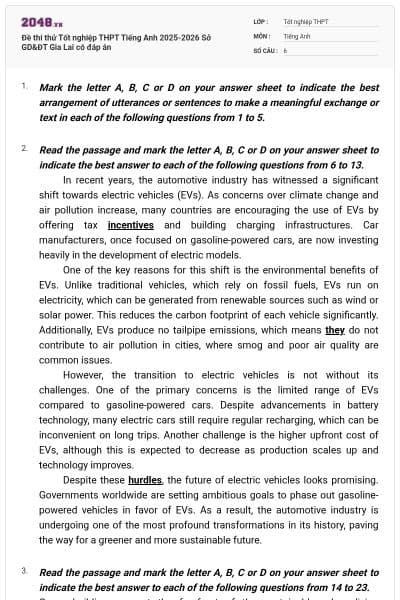
Read the following advertisement and mark the letter A, B, C or D on your answer sheet to indicate the option that best fits each of the numbered blanks from 9 to 14.
Love English? Become a Tutor and Help Students Succeed!
The College of Education is looking for enthusiastic and capable tutors to support our students in (9) ______ their English to the next level. This is a wonderful opportunity for individuals who are passionate about teaching and eager to work in a (10) ______.
Job responsibilities include leading small-group or one-to-one tutoring sessions; helping students improve their reading, writing, speaking, and listening skills; and providing feedback (11) ______ assignments and language use.
Applicants (12) ______ have a strong grasp of English, good communication skills, and at least a bachelor’s degree in English, Education, Linguistics, or (13) ______ related fields. Tutors may work up to 18 hours per week. Entry-level salary is $20 per hour, depending on qualifications and experience. (14) ______ is given to those with prior tutoring or teaching experience.
Apply now: thecollegeofedtutoringservice@uao.edu
(Adapted from www.ohlone.edu/tutoring/beastutor)
holding
taking
turning
changing
A. holding (v-ing): giữ, cầm nắm.
B. taking (v-ing): đưa, lấy, mang đi.
C. turning (v-ing): xoay, chuyển hướng.
D. changing (v-ing): thay đổi.
Ta có thành ngữ / cụm từ cố định (collocation): take something to the next level (đưa cái gì đó lên một tầm cao mới / bước phát triển mới).
Chọn B. taking
→ ...support our students in taking their English to the next level.
Dịch nghĩa: ...hỗ trợ sinh viên của chúng tôi trong việc đưa tiếng Anh của họ lên một tầm cao mới.
college dynamic environment
dynamic environment college
environment dynamic college
dynamic college environment
Phân tích trật tự từ: Cụm danh từ này có danh từ chính là “environment” (môi trường) nên bắt buộc phải đứng cuối cùng. Phía trước nó là danh từ phụ “college” (trường đại học) đóng vai trò phân loại, tạo thành cụm “college environment” (môi trường đại học). Tính từ “dynamic” (năng động) bổ nghĩa cho tính chất của toàn bộ môi trường đó nên phải đứng ở vị trí đầu tiên. Trật tự đúng là: Tính từ (Quality) + Danh từ phụ (Type) + Danh từ chính.
Chọn D. dynamic college environment
→ ...eager to work in a dynamic college environment.
Dịch nghĩa: ...háo hức được làm việc trong một môi trường đại học năng động.
with
at
in
on
A. with (prep): với.
B. at (prep): tại, ở.
C. in (prep): trong.
D. on (prep): trên, về.
Ta có cấu trúc đi kèm giới từ cố định: provide/give feedback on something (cung cấp phản hồi / nhận xét về vấn đề gì).
Chọn D. on
→ ...providing feedback on assignments and language use.
Dịch nghĩa: ...cung cấp những phản hồi về các bài tập và việc sử dụng ngôn ngữ.
can
might
should
may
A. can (modal v): có thể (chỉ khả năng hiện tại).
B. might (modal v): có thể (chỉ khả năng xảy ra với xác suất thấp).
C. should (modal v): nên, cần (chỉ sự mong đợi, lời khuyên hoặc yêu cầu hợp lý).
D. may (modal v): có thể (chỉ sự xin phép hoặc khả năng).
Trong một bản tin tuyển dụng, để đưa ra những yêu cầu tiêu chuẩn hoặc sự kỳ vọng đối với ứng viên, người ta thường dùng động từ khuyết thiếu “should” (nên/cần phải có) hoặc “must” (bắt buộc phải có). Trong 4 đáp án, “should” là lựa chọn chính xác nhất để diễn đạt yêu cầu năng lực.
Chọn C. should
→ Applicants should have a strong grasp of English...
Dịch nghĩa: Các ứng viên cần (nên) có sự nắm vững về tiếng Anh...
another
every
others
other
A. another: một (lĩnh vực) khác (+ danh từ đếm được số ít).
B. every: mọi, mỗi (+ danh từ đếm được số ít).
C. others: những (người/vật) khác (đại từ, đứng độc lập không đi kèm danh từ).
D. other: những (người/vật) khác (tính từ, đi kèm danh từ đếm được số nhiều hoặc không đếm được).
Phía sau khoảng trống là danh từ đếm được ở dạng số nhiều “fields” (các lĩnh vực). Do đó, ta bắt buộc phải dùng tính từ “other” để bổ nghĩa.
Chọn D. other
→ ...Linguistics, or other related fields.
Dịch nghĩa: ...Ngôn ngữ học, hoặc các lĩnh vực liên quan khác.
Preference
Preferably
Prefer
Preferable
A. Preference (n): sự ưu tiên, sự thiên vị.
B. Preferably (adv): tốt nhất là.
C. Prefer (v): thích hơn, ưu tiên hơn.
D. Preferable (adj): được thích hơn, đáng giá hơn.
Khoảng trống nằm ở đầu câu và đứng trước động từ to be “is given”. Do đó, ta cần một Danh từ đóng vai trò làm chủ ngữ. Ta có cấu trúc bị động xuất phát từ cụm give preference to somebody (dành sự ưu tiên cho ai đó) → Preference is given to somebody (Sự ưu tiên được dành cho ai đó).
Chọn A. Preference
→ Preference is given to those with prior tutoring or teaching experience.
Dịch nghĩa: Sự ưu tiên được dành cho những người đã có kinh nghiệm gia sư hoặc giảng dạy từ trước.
Bài đọc hoàn chỉnh | Dịch bài đọc |
Love English? Become a Tutor and Help Students Succeed! The College of Education is looking for enthusiastic and capable tutors to support our students in (9) taking their English to the next level. This is a wonderful opportunity for individuals who are passionate about teaching and eager to work in a (10) dynamic college environment. Job responsibilities include leading small-group or one-to-one tutoring sessions; helping students improve their reading, writing, speaking, and listening skills; and providing feedback (11) on assignments and language use. Applicants (12) should have a strong grasp of English, good communication skills, and at least a bachelor’s degree in English, Education, Linguistics, or (13) other related fields. Tutors may work up to 18 hours per week. Entry-level salary is $20 per hour, depending on qualifications and experience. (14) Preference is given to those with prior tutoring or teaching experience. Apply now: thecollegeofedtutoringservice@uao.edu | Yêu Thích Tiếng Anh? Hãy Trở Thành Gia Sư Và Giúp Các Sinh Viên Thành Công! Trường Cao đẳng (Đại học) Giáo dục đang tìm kiếm những gia sư nhiệt huyết và có năng lực để hỗ trợ sinh viên của chúng tôi trong việc (9) đưa tiếng Anh của họ lên một tầm cao mới. Đây là một cơ hội tuyệt vời dành cho những cá nhân đam mê giảng dạy và háo hức được làm việc trong một (10) môi trường đại học năng động. Các trách nhiệm công việc bao gồm dẫn dắt các buổi học gia sư theo nhóm nhỏ hoặc một kèm một; giúp sinh viên cải thiện các kỹ năng đọc, viết, nói và nghe; đồng thời cung cấp những phản hồi (11) về các bài tập và việc sử dụng ngôn ngữ. Các ứng viên (12) cần có sự nắm vững về tiếng Anh, kỹ năng giao tiếp tốt và có ít nhất bằng cử nhân về tiếng Anh, Giáo dục, Ngôn ngữ học, hoặc (13) các lĩnh vực liên quan khác. Gia sư có thể làm việc tối đa 18 giờ mỗi tuần. Mức lương khởi điểm là 20 đô la mỗi giờ, tùy thuộc vào bằng cấp và kinh nghiệm. (14) Sự ưu tiên được dành cho những người đã có kinh nghiệm gia sư hoặc giảng dạy từ trước. Ứng tuyển ngay tại: thecollegeofedtutoringservice@uao.edu |
Mark the letter A, B, C or D on your answer sheet to indicate the best arrangement of utterances or sentences to make a meaningful exchange or text in each of the following questions from 15 to 19.
a. Student: Thanks! Do I need to bring any ID to collect it?
b. Staff: If it’s been found, it’ll be at the Lost Property desk beside the main office.
c. Student: Excuse me, where should I check if I’ve lost my student card?
b – c – a
a – c – b
c – a – b
c – b – a
Thứ tự sắp xếp đúng: D. c – b – a
c. Student: Excuse me, where should I check if I’ve lost my student card?
b. Staff: If it’s been found, it’ll be at the Lost Property desk beside the main office.
a. Student: Thanks! Do I need to bring any ID to collect it?
Dịch nghĩa:
c. Học sinh: Xin lỗi, em nên kiểm tra ở đâu nếu em làm mất thẻ học sinh ạ?
b. Nhân viên: Nếu nó đã được tìm thấy, nó sẽ nằm ở quầy Đồ thất lạc bên cạnh văn phòng chính.
a. Học sinh: Cảm ơn ạ! Em có cần mang theo giấy tờ tùy thân nào để nhận lại không ạ?
Chọn D.
a. Mai: Okay – I’ll do that now, and I’ll follow up by phone in the morning if I don’t hear back.
b. Hickson: Don’t panic. Did it close completely, or is there a “late submission” option?
c. Mai: Oh no! I think I missed the club application deadline – the portal won’t accept my file.
d. Hickson: Then email the club coordinator tonight, attach the draft and the screenshot, and ask if she’ll accept it with a time-stamp.
e. Mai: The portal says the deadline passed at midnight, but I have the form ready and a screenshot of the error.
c – d – e – b – a
e – d – c – b – a
e – b – c – d – a
c – b – e – d – a
Thứ tự sắp xếp đúng: D. c – b – e – d – a
c. Mai: Oh no! I think I missed the club application deadline – the portal won’t accept my file.
b. Hickson: Don’t panic. Did it close completely, or is there a “late submission” option?
e. Mai: The portal says the deadline passed at midnight, but I have the form ready and a screenshot of the error.
d. Hickson: Then email the club coordinator tonight, attach the draft and the screenshot, and ask if she’ll accept it with a time-stamp.
a. Mai: Okay – I’ll do that now, and I’ll follow up by phone in the morning if I don’t hear back.
Dịch nghĩa:
c. Mai: Ôi không! Tớ nghĩ tớ đã bỏ lỡ hạn chót nộp đơn vào câu lạc bộ rồi – cổng thông tin không nhận tệp của tớ.
b. Hickson: Đừng hoảng sợ. Nó đã đóng hoàn toàn chưa, hay có tùy chọn “nộp muộn”?
e. Mai: Cổng thông tin báo rằng hạn chót đã trôi qua vào nửa đêm, nhưng tớ đã chuẩn bị sẵn biểu mẫu và có ảnh chụp màn hình báo lỗi.
d. Hickson: Vậy hãy gửi email cho điều phối viên câu lạc bộ tối nay, đính kèm bản nháp và ảnh chụp màn hình, và hỏi xem cô ấy có chấp nhận nó với mốc thời gian đó không.
a. Mai: Được rồi – tớ sẽ làm việc đó ngay bây giờ, và tớ sẽ gọi điện thoại vào buổi sáng nếu không nhận được phản hồi.
Chọn D.
Dear Reservations Team,
a. Because my flight was rescheduled, I now need to check in on 19 February after 23:00 while keeping the same room type and breakfast included, if possible.
b. I’m writing about booking #HCM92144 under Linh Tran for 18-20 February, a double room with breakfast, for me and my mother.
c. Once you confirm, I’ll update my travel plans, share my arrival time with the front desk, and pay any difference immediately.
d. Could you confirm the revised total price, any change fee, and whether late check-in can be arranged?
e. If the dates cannot be adjusted, please tell me the best cancellation option under your policy so I can decide today.
Yours sincerely,
Linh Tran
b – a – c – d – e
a – b – d – c – e
b – a – d – e – c
a – e – d – b – c
Thứ tự sắp xếp đúng: C. b – a – d – e – c
b. I’m writing about booking #HCM92144 under Linh Tran for 18-20 February, a double room with breakfast, for me and my mother.
a. Because my flight was rescheduled, I now need to check in on 19 February after 23:00 while keeping the same room type and breakfast included, if possible.
d. Could you confirm the revised total price, any change fee, and whether late check-in can be arranged?
e. If the dates cannot be adjusted, please tell me the best cancellation option under your policy so I can decide today.
c. Once you confirm, I’ll update my travel plans, share my arrival time with the front desk, and pay any difference immediately.
Dịch nghĩa:
Kính gửi Đội ngũ Đặt phòng,
b. Tôi viết thư này về mã đặt phòng #HCM92144 dưới tên Linh Trần từ ngày 18-20 tháng 2, một phòng đôi đã bao gồm bữa sáng, cho tôi và mẹ tôi.
a. Do chuyến bay của tôi bị đổi lịch, bây giờ tôi cần nhận phòng vào ngày 19 tháng 2 sau 23:00 trong khi vẫn giữ nguyên loại phòng và bữa sáng, nếu có thể.
d. Bạn có thể xác nhận tổng giá đã điều chỉnh, bất kỳ khoản phí thay đổi nào và liệu có thể sắp xếp nhận phòng muộn được không?
e. Nếu không thể điều chỉnh ngày, vui lòng cho tôi biết phương án hủy phòng tốt nhất theo chính sách của khách sạn để tôi có thể quyết định trong hôm nay.
c. Ngay sau khi bạn xác nhận, tôi sẽ cập nhật kế hoạch du lịch của mình, chia sẻ thời gian đến với quầy lễ tân và thanh toán bất kỳ khoản chênh lệch nào ngay lập tức.
Trân trọng,
Linh Trần
Chọn C.
a. Fortunately, a stranger spotted my wallet on the pavement near the crossing and then ran after me, calling out to get my attention.
b. At the bus stop, my stomach dropped: my wallet was gone, along with my ID and the week’s cash.
c. Now I keep an emergency card tucked in my case, and I’m far quicker to return a lost item instead of walking past.
d. That frantic dash from the office 15 minutes ago suddenly made sense, as I’d been juggling my phone, a tote bag and my keys, barely watching where I stepped.
e. I tried to press a small tip into his hand, but he smilingly refused and told me to do the same for someone else one day.
b – d – c – a – e
b – d – a – e – c
b – a – c – d – e
b – a – e – d – c
Thứ tự sắp xếp đúng: B. b – d – a – e – c
b. At the bus stop, my stomach dropped: my wallet was gone, along with my ID and the week’s cash.
d. That frantic dash from the office 15 minutes ago suddenly made sense, as I’d been juggling my phone, a tote bag and my keys, barely watching where I stepped.
a. Fortunately, a stranger spotted my wallet on the pavement near the crossing and then ran after me, calling out to get my attention.
e. I tried to press a small tip into his hand, but he smilingly refused and told me to do the same for someone else one day.
c. Now I keep an emergency card tucked in my case, and I’m far quicker to return a lost item instead of walking past.
Dịch nghĩa:
b. Tại trạm xe buýt, bụng tôi thắt lại: ví của tôi đã biến mất, cùng với chứng minh thư và tiền mặt của cả tuần.
d. Cuộc chạy bộ hối hả từ văn phòng 15 phút trước bỗng trở nên có lý do, vì tôi đã phải loay hoay với chiếc điện thoại, túi vải và chìa khóa, hầu như không thèm nhìn xem mình đang bước đi đâu.
a. May mắn thay, một người lạ mặt đã phát hiện ra chiếc ví của tôi trên vỉa hè gần ngã tư và sau đó chạy theo tôi, gọi với theo để thu hút sự chú ý của tôi.
e. Tôi đã cố gắng dúi một khoản tiền boa nhỏ vào tay anh ấy, nhưng anh ấy mỉm cười từ chối và bảo tôi hãy làm điều tương tự cho người khác vào một ngày nào đó.
c. Bây giờ tôi luôn giữ một thẻ khẩn cấp nhét trong ốp điện thoại, và tôi nhanh nhẹn hơn nhiều trong việc trả lại một món đồ bị đánh rơi thay vì bước ngang qua.
Chọn B.
a. But that is not the hard part, for while his challengers will play the games as normal, Gareyev himself will be blindfolded.
b. In the hope of understanding how Gareyev and others like him can perform such extraordinary mental tasks, researchers have called him in for tests and are now analyzing the results.
c. Next month, a chess player named Timur Gareyev will take on nearly 50 opponents at once.
d. Gareyev’s impressive ability, however, has drawn interest from beyond the chess-playing community.
e. Even by world record standards, it sets a high bar for human performance, and the skill has become Gareyev’s brand: he calls himself the Blindfold King.
c – e – a – d – b
c – a – e – d – b
c – a – d – b – e
a – c – e – d – b
Thứ tự sắp xếp đúng: B. c – a – e – d – b
c. Next month, a chess player named Timur Gareyev will take on nearly 50 opponents at once.
a. But that is not the hard part, for while his challengers will play the games as normal, Gareyev himself will be blindfolded.
e. Even by world record standards, it sets a high bar for human performance, and the skill has become Gareyev’s brand: he calls himself the Blindfold King.
d. Gareyev’s impressive ability, however, has drawn interest from beyond the chess-playing community.
b. In the hope of understanding how Gareyev and others like him can perform such extraordinary mental tasks, researchers have called him in for tests and are now analyzing the results.
Dịch nghĩa:
c. Tháng tới, một người chơi cờ vua tên là Timur Gareyev sẽ đối đầu với gần 50 đối thủ cùng một lúc.
a. Nhưng đó không phải là phần khó nhất, vì trong khi những người thách đấu của anh ấy sẽ chơi các ván cờ như bình thường, bản thân Gareyev sẽ bị bịt mắt.
e. Ngay cả theo tiêu chuẩn kỷ lục thế giới, điều này đặt ra một tiêu chuẩn cao cho màn trình diễn của con người, và kỹ năng này đã trở thành thương hiệu của Gareyev: anh tự gọi mình là Vua Bịt Mắt.
d. Tuy nhiên, khả năng ấn tượng của Gareyev đã thu hút sự quan tâm từ bên ngoài cộng đồng chơi cờ vua.
b. Với hy vọng hiểu được cách Gareyev và những người giống như anh ấy có thể thực hiện những nhiệm vụ trí óc phi thường như vậy, các nhà nghiên cứu đã mời anh đến để kiểm tra và hiện đang phân tích kết quả.
Chọn B.
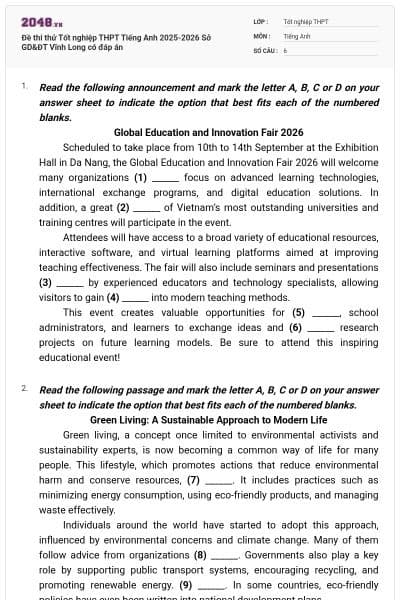
Read the following blog post and mark the letter A, B, C or D on your answer sheet to indicate the option that best fits each of the numbered blanks from 20 to 25.
Tales by Chapter: A memorable new restaurant opening
Plant-based eating in Vietnam has long been connected to thuần chay – food rooted in religious (20) ______, eaten on specific days, and prepared and presented simply. Tales by Chapter is the first restaurant in Ho Chi Minh City to challenge that idea directly – not by rejecting tradition, (21) ______ by reimagining it entirely.
Before sitting down at your table, you can already see the restaurant’s creative (22) ______ in the entry hall, where food projects are displayed like artworks. Ingredients often (23) ______ away, such as beet skins, tomato pulp, and vegetable offcuts, reappear transformed into edible leathers. At the heart of the restaurant is Chef Quoc Hung, (24) ______ mission is to handle vegetables with such skill that their (25) ______ flavors shine through.
For more information about Tales by Chapter’s tasting menu and bookings, call 036815012588 or visit talessgn.com.
(Adapted from lovelechan.com)
action
task
practice
exercise
A. action (n): hành động.
B. task (n): nhiệm vụ.
C. practice (n): thực hành, thói quen, thông lệ, tín ngưỡng.
D. exercise (n): bài tập, sự rèn luyện.
Ta có cụm từ kết hợp (collocation) cố định: religious practice (sự thực hành tôn giáo, thông lệ tôn giáo, tín ngưỡng).
Chọn C. practice
→ Plant-based eating in Vietnam has long been connected to thuần chay – food rooted in religious practice...
Dịch nghĩa: Việc ăn uống dựa trên thực vật ở Việt Nam từ lâu đã gắn liền với khái niệm thuần chay – loại thức ăn bắt nguồn từ những thông lệ tôn giáo...
nor
but
and
so
A. nor (conj): cũng không.
B. but (conj): nhưng, mà là.
C. and (conj): và.
D. so (conj): vì vậy.
Ta có cấu trúc song song thể hiện sự tương phản: not [A]... but [B]... (không phải bằng cách A... mà là bằng cách B...).
Chọn B. but
→ ...not by rejecting tradition, but by reimagining it entirely.
Dịch nghĩa: ...không phải bằng cách chối bỏ truyền thống, mà là bằng cách tái hiện nó lại hoàn toàn.
vision
scenario
situation
look
A. vision (n): tầm nhìn.
B. scenario (n): kịch bản, viễn cảnh.
C. situation (n): tình huống.
D. look (n): vẻ bề ngoài, cái nhìn.
Trong lĩnh vực nghệ thuật, ẩm thực hoặc sáng tạo, người ta thường dùng cụm từ creative vision (tầm nhìn sáng tạo) để chỉ cách một người định hình và thể hiện ý tưởng độc đáo của mình. Việc trưng bày các dự án ẩm thực như những tác phẩm nghệ thuật chính là minh chứng cho tầm nhìn này.
Chọn A. vision
→ ...you can already see the restaurant’s creative vision in the entry hall...
Dịch nghĩa: ...bạn đã có thể nhìn thấy tầm nhìn sáng tạo của nhà hàng ngay tại sảnh vào...
threw
throw
thrown
throwing
A. threw (v-ed): quá khứ đơn.
B. throw (v): động từ nguyên mẫu.
C. thrown (v3/v-ed): quá khứ phân từ (mang nghĩa bị động).
D. throwing (v-ing): hiện tại phân từ (mang nghĩa chủ động).
Đây là dạng rút gọn mệnh đề quan hệ mang nghĩa bị động, bổ nghĩa cho danh từ “Ingredients” (Các nguyên liệu). Các nguyên liệu này không tự vứt đi mà “bị/được vứt đi”. Mệnh đề đầy đủ là: Ingredients which are often thrown away... Khi rút gọn, ta bỏ đại từ quan hệ và to be, chỉ giữ lại quá khứ phân từ.
Chọn C. thrown
→ Ingredients often thrown away, such as beet skins... reappear transformed into edible leathers.
Dịch nghĩa: Các nguyên liệu thường bị vứt đi, chẳng hạn như vỏ củ dền... nay xuất hiện trở lại và được biến tấu thành những lớp màng ăn được.
whose
which
whom
who
A. whose: đại từ quan hệ chỉ sự sở hữu.
B. which: đại từ quan hệ thay thế cho vật.
C. whom: đại từ quan hệ thay thế cho người (làm tân ngữ).
D. who: đại từ quan hệ thay thế cho người (làm chủ ngữ).
Phía trước khoảng trống là danh từ chỉ người “Chef Quoc Hung” (Đầu bếp Quốc Hùng). Phía sau khoảng trống là danh từ “mission” (sứ mệnh). Mối quan hệ ở đây là quan hệ sở hữu (sứ mệnh của Đầu bếp Quốc Hùng), do đó ta phải dùng “whose”.
Chọn A. whose
→ At the heart of the restaurant is Chef Quoc Hung, whose mission is to handle vegetables...
Dịch nghĩa: Trái tim của nhà hàng chính là Đầu bếp Quốc Hùng, người mà (có) sứ mệnh là xử lý các loại rau củ...
accurate
correct
right
true
A. accurate (adj): chính xác (thường dùng cho số liệu, máy móc, thông tin).
B. correct (adj): đúng đắn (không sai sót).
C. right (adj): đúng, phải.
D. true (adj): thật, chân thật (phản ánh đúng bản chất).
Trong ẩm thực, khi muốn nói đến hương vị nguyên bản, tự nhiên và tinh túy nhất của nguyên liệu, ta dùng cụm từ true flavor (hương vị chân thật / bản sắc thực sự).
Chọn D. true
→ ...handle vegetables with such skill that their true flavors shine through.
Dịch nghĩa: ...xử lý các loại rau củ với kỹ năng điêu luyện đến mức những hương vị chân thật của chúng được tỏa sáng.
Bài đọc hoàn chỉnh | Dịch bài đọc |
Tales by Chapter: A memorable new restaurant opening Plant-based eating in Vietnam has long been connected to thuần chay – food rooted in religious (20) practice, eaten on specific days, and prepared and presented simply. Tales by Chapter is the first restaurant in Ho Chi Minh City to challenge that idea directly – not by rejecting tradition, (21) but by reimagining it entirely. Before sitting down at your table, you can already see the restaurant’s creative (22) vision in the entry hall, where food projects are displayed like artworks. Ingredients often (23) thrown away, such as beet skins, tomato pulp, and vegetable offcuts, reappear transformed into edible leathers. At the heart of the restaurant is Chef Quoc Hung, (24) whose mission is to handle vegetables with such skill that their (25) true flavors shine through. For more information about Tales by Chapter’s tasting menu and bookings, call 036815012588 or visit talessgn.com. | Tales by Chapter: Khai trương một nhà hàng mới đầy đáng nhớ Việc ăn uống dựa trên thực vật ở Việt Nam từ lâu đã gắn liền với khái niệm thuần chay – loại thức ăn bắt nguồn từ (20) những thông lệ tôn giáo, được ăn vào những ngày cụ thể, và được chuẩn bị cũng như trình bày một cách đơn giản. Tales by Chapter là nhà hàng đầu tiên tại Thành phố Hồ Chí Minh trực tiếp thách thức quan niệm đó – không phải bằng cách chối bỏ truyền thống, (21) mà là bằng cách tái hiện nó lại hoàn toàn. Trước khi ngồi xuống bàn, bạn đã có thể nhìn thấy (22) tầm nhìn sáng tạo của nhà hàng ngay tại sảnh vào, nơi các dự án ẩm thực được trưng bày như những tác phẩm nghệ thuật. Các nguyên liệu thường (23) bị vứt đi, chẳng hạn như vỏ củ dền, phần ruột cà chua và các phần thừa của rau củ, nay xuất hiện trở lại và được biến tấu thành những lớp màng có thể ăn được. Trái tim của nhà hàng chính là Đầu bếp Quốc Hùng, (24) người có sứ mệnh xử lý các loại rau củ với kỹ năng điêu luyện đến mức những hương vị (25) chân thật nhất của chúng được tỏa sáng. Để biết thêm thông tin về thực đơn nếm thử của Tales by Chapter và cách đặt bàn, hãy gọi tới số 036815012588 hoặc truy cập talessgn.com. |
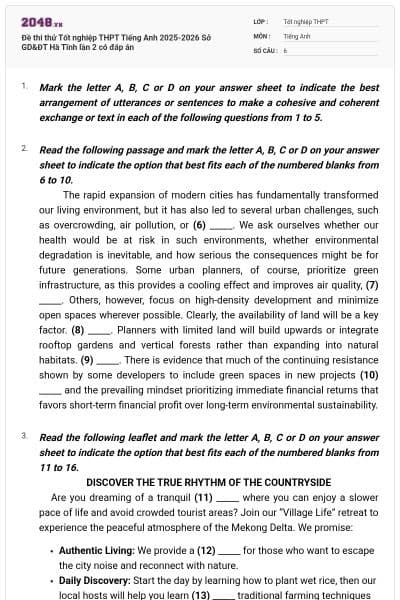
Read the following passage and mark the letter A, B, C or D on your answer sheet to indicate the best answer to each of the following questions from 26 to 35.
The secret of economic success is innovation. What, then, is the secret of innovation? A look at the red-hot market for grey cells is revealing. Success seems increasingly dependent not on firms but on the brilliance, creativity, and drive of a small cadre of exceptional individuals – for whom companies and institutions worldwide must compete if they want to lead in such fields as technology, finance, and science.
Across sectors, the rewards for the new superstars are growing, too. Many programmers and recording artists in their 20s now command seven-, eight- or even nine-figure salaries. Similarly, in the legal profession, earnings that were once distributed more evenly among lawyers now increasingly flow to the top ones at elite firms, who massively outperform their counterparts at second-tier firms. The rising premium on talent is due chiefly to recent technologies: vast computing resources help investors transform their skills into greater profits, while ultra-cheap digital distribution expands markets for individual creators. [I] And from a corporate perspective, the potential rewards for winning the race are so enormous that they turn even the most extravagant individual salary into a rounding error.
That technology, especially artificial intelligence (AI), will further extend the dominance of top performers, enabling them to do even better, is a boon to them. But it is also good news for everyone else, because ageing societies will struggle to grow economically unless productivity and innovation remain strong. [II] However, the real irony is that, even as many countries are pouring money into economy-boosting schemes, much of the brainpower essential for national prosperity remains untapped. Despite the world’s vast reservoir of talent, too few people are achieving their potential, owing perhaps to financial hardships, limited access to higher education, and the absence of support networks needed to turn promise into performance. When this is the case, the result is a tragic waste of human gifts in both developed and developing countries. [III]
Fortunately, the remedy is well within sight. To attract talent from abroad, countries need to remove the immigration barriers that keep bright students, researchers, and skilled workers out. Domestically, policymakers should be more systematic about supporting talent-spotting programmes and giving those who show early promise the education, funding, and support they need to flourish. [IV]
(Adapted from The Economist)
The phrase “red-hot market for grey cells” in paragraph 1 serves to ______.
emphasize the increasing competitiveness of the intellectual world
explain the secretive nature of successful economic innovation
stress the high demand and value placed on human brainpower
highlight the extent of talented people’s influence on the world economy
Cụm từ “red-hot market for grey cells” trong đoạn 1 có tác dụng ______.
A. nhấn mạnh sự cạnh tranh ngày càng tăng của thế giới tri thức
B. giải thích bản chất bí mật của sự đổi mới kinh tế thành công
C. nhấn mạnh nhu cầu cao và giá trị được đặt vào trí tuệ con người
D. làm nổi bật mức độ ảnh hưởng của những người tài năng đối với nền kinh tế thế giới
→ Trong tiếng Anh, “grey cells” (tế bào xám) là một cách nói ẩn dụ để chỉ trí óc, trí tuệ con người (human brainpower). “Red-hot market” (thị trường nóng bỏng/sôi động) ám chỉ một thị trường có nhu cầu cực kỳ cao và giá trị lớn. Do đó, cụm từ này nhằm nhấn mạnh rằng trí tuệ và tài năng con người đang được săn đón vô cùng mãnh liệt.
Chọn C.
A select few highly gifted individuals appear to be increasingly central to innovation and to the commercial and economic success of firms worldwide.
As economic survival becomes increasingly challenging across many fields, exceptional talent has become highly sought after by organizations globally.
Increasingly, companies have to compete to attract exceptionally gifted individuals, who are the secret ingredient for simultaneously succeeding in multiple fields.
Organizations across the globe have increasingly recognized the potential of a limited number of remarkably talented people for successful innovation.
Câu nào sau đây tóm tắt đúng nhất đoạn 1?
A. Một số ít những cá nhân xuất chúng dường như ngày càng trở thành trung tâm của sự đổi mới và sự thành công về thương mại, kinh tế của các công ty trên toàn thế giới.
(Đúng, bao quát ý: thành công phụ thuộc vào một nhóm nhỏ các cá nhân xuất sắc).
B. Khi sự tồn tại về kinh tế ngày càng trở nên khó khăn trong nhiều lĩnh vực, tài năng xuất chúng ngày càng được các tổ chức trên toàn cầu săn đón. (Không nhắc đến sự sống còn).
C. Ngày càng nhiều công ty phải cạnh tranh để thu hút những cá nhân tài năng xuất chúng, những người là yếu tố bí mật để đồng thời thành công trong nhiều lĩnh vực. (Sai chữ “đồng thời trong nhiều lĩnh vực”).
D. Các tổ chức trên toàn cầu ngày càng nhận ra tiềm năng của một số lượng hạn chế những người tài năng xuất chúng đối với sự đổi mới thành công. (Hơi chệch trọng tâm so với A).
→ Đoạn 1 khẳng định sự thành công ngày nay “không phụ thuộc vào các công ty mà phụ thuộc vào sự rực rỡ, tính sáng tạo và động lực của một nhóm nhỏ những cá nhân xuất chúng” (dependent not on firms but on the brilliance... of a small cadre of exceptional individuals). Đáp án A diễn đạt lại chính xác ý tưởng này.
Chọn A.
The word “ones” in paragraph 2 refers to ______.
elite firms
earnings
second-tier firms
lawyers
Từ “ones” trong đoạn 2 chỉ ______.
A. elite firms (các công ty ưu tú)
B. earnings (thu nhập)
C. second-tier firms (các công ty hạng hai)
D. lawyers (các luật sư)
Thông tin: Similarly, in the legal profession, earnings that were once distributed more evenly among lawyers now increasingly flow to the top ones at elite firms, who massively outperform their counterparts at second-tier firms. (Tương tự, trong ngành luật, thu nhập trước đây được phân bổ đồng đều hơn giữa các luật sư nay ngày càng tập trung vào những luật sư hàng đầu tại các công ty luật danh tiếng, những người có thu nhập vượt trội hơn hẳn so với các luật sư tại các công ty luật hạng hai.)
→ ones = lawyers
Chọn D.
Which of the following best paraphrases the underlined sentence in paragraph 2?
For firms, the substantial gains from coming out on top make even the highest salary paid to star performers seem negligible.
From a business perspective, the huge rewards of winning the competition outweigh the largest pay package given some individuals.
Companies can offset the lavish individual pay of talented workers by beating the competition and securing massive rewards.
The vast financial benefits that corporations gain from outpacing rivals justify mistakenly offering talented employees extremely high salaries.
Câu nào sau đây diễn giải đúng nhất câu được gạch chân ở đoạn 2?
And from a corporate perspective, the potential rewards for winning the race are so enormous that they turn even the most extravagant individual salary into a rounding error. (Và từ góc độ doanh nghiệp, những phần thưởng tiềm năng cho việc giành chiến thắng trong cuộc đua lớn đến mức chúng biến ngay cả mức lương cá nhân xa hoa nhất cũng chỉ như một sai số làm tròn/một khoản không đáng kể.)
A. Đối với các công ty, những khoản lợi nhuận khổng lồ từ việc vươn lên dẫn đầu khiến ngay cả mức lương cao nhất trả cho những ngôi sao biểu diễn cũng có vẻ không đáng kể. (Đúng: “substantial gains” = “enormous rewards”, “make... seem negligible” = “turn... into a rounding error”).
B. Từ góc độ kinh doanh, phần thưởng khổng lồ từ việc chiến thắng cuộc cạnh tranh lớn hơn nhiều so với gói lương cao nhất dành cho một số cá nhân. (Đáp án A dùng từ “negligible” sát nghĩa với cụm từ bóng bẩy “rounding error” hơn).
C. Các công ty có thể bù đắp mức lương cá nhân xa hoa của những người lao động tài năng bằng cách đánh bại đối thủ cạnh tranh và giành được những phần thưởng khổng lồ. (Làm mất sắc thái nhấn mạnh sự chênh lệch của câu gốc).
D. Lợi ích tài chính to lớn mà các tập đoàn thu được từ việc vượt trội so với các đối thủ cạnh tranh biện minh cho việc trả lương cực kỳ cao cho những nhân viên tài năng một cách sai lầm (mistakenly). (Sai từ “mistakenly”).
Chọn A.
The word “reservoir” in paragraph 3 can be best replaced by ______.
block
store
composition
mixture
Từ “reservoir” trong đoạn 3 có thể được thay thế tốt nhất bởi ______.
reservoir (n): hồ chứa, bể chứa, nguồn dự trữ dồi dào
A. block (n): khối, tảng
B. store (n): kho lưu trữ, nguồn dự trữ
C. composition (n): cấu tạo, thành phần
D. mixture (n): hỗn hợp
Thông tin: Despite the world’s vast reservoir of talent, too few people are achieving their potential, owing perhaps to financial hardships, limited access to higher education, and the absence of support networks needed to turn promise into performance. (Mặc dù thế giới sở hữu nguồn nhân tài dồi dào, nhưng rất ít người đạt được tiềm năng của mình, có lẽ do khó khăn về tài chính, hạn chế tiếp cận giáo dục đại học và thiếu các mạng lưới hỗ trợ cần thiết để biến tiềm năng thành hiện thực.)
→ reservoir = store
Chọn B.
Which of the following is mentioned in paragraph 4 as a way to attract or nurture talent?
facilitate the entry of talented foreigners
reform existing educational policies
launch projects to identify talent promptly
offer financial rewards to talented youths
Điều nào sau đây được đề cập trong đoạn 4 như một cách để thu hút hoặc nuôi dưỡng tài năng?
A. tạo điều kiện thuận lợi cho sự nhập cảnh của những người nước ngoài tài năng (Đúng).
B. cải cách các chính sách giáo dục hiện hành (Sai, không có từ nào nói về “cải cách” - reform).
C. khởi động các dự án để xác định tài năng ngay lập tức (Không sát bằng A).
D. đưa ra phần thưởng tài chính cho thanh niên tài năng (Sai, bài nói cung cấp ngân sách/funding để hỗ trợ, không phải thưởng tài chính - rewards).
Thông tin: “To attract talent from abroad, countries need to remove the immigration barriers that keep bright students, researchers, and skilled workers out.” (Để thu hút nhân tài từ nước ngoài, các quốc gia cần loại bỏ các rào cản nhập cư đang ngăn cản những sinh viên giỏi, nhà nghiên cứu và người lao động có tay nghề cao đến nước mình.)
→ Loại bỏ rào cản nhập cư chính là “tạo điều kiện thuận lợi cho sự nhập cảnh” (facilitate the entry).
Chọn A.
According to the passage, all of the following may directly hinder talented people from fulfilling their potential EXCEPT ______.
money problems
the overwhelming influence of top performers
the lack of institutional backing
difficulty pursuing advanced education
Theo bài đọc, tất cả những điều sau đây có thể trực tiếp cản trở những người tài năng phát huy hết tiềm năng của họ NGOẠI TRỪ ______.
A. các vấn đề về tiền bạc (= financial hardships - Có).
B. sự ảnh hưởng áp đảo của những người có hiệu suất cao nhất.
(Không được nhắc đến như một trở ngại cho những người khác).
C. sự thiếu vắng sự hậu thuẫn từ các tổ chức (= absence of support networks - Có).
D. khó khăn trong việc theo đuổi giáo dục bậc cao (= limited access to higher education - Có).
→ Đoạn 3 liệt kê rõ 3 nguyên nhân khiến nhiều người không đạt được tiềm năng của họ: “do những khó khăn về tài chính (A), khả năng tiếp cận giáo dục đại học bị hạn chế (D), và sự thiếu vắng các mạng lưới hỗ trợ (C)”. Không hề có chi tiết nào nói rằng những người giỏi nhất (top performers) chèn ép hay tạo ra ảnh hưởng cản trở những người này.
Chọn B.
Where in the passage does the following sentence best fit?
Talent, thus, will become even more vital as the engine of progress.
[III]
[IV]
[II]
[I]
Câu sau đây phù hợp nhất với vị trí nào trong bài đọc?
“Talent, thus, will become even more vital as the engine of progress.” (Do đó, tài năng sẽ trở nên quan trọng hơn nữa như là động cơ của sự tiến bộ.)
→ Ngay trước vị trí [II], tác giả phân tích: “...các xã hội già hóa sẽ phải chật vật để tăng trưởng kinh tế trừ khi năng suất và sự đổi mới (innovation) vẫn duy trì mạnh mẽ.” Ở đoạn 1, chúng ta đã biết cốt lõi của sự đổi mới chính là tài năng con người. Việc chèn câu đã cho vào [II] là một kết luận logic (được báo hiệu bằng từ “thus” - do đó): Vì cần duy trì sự đổi mới để phát triển kinh tế → Do đó, tài năng sẽ càng trở nên quan trọng hơn như là động cơ của sự tiến bộ.
Chọn C.
The possibility of underusing talent or failing to harness it for national advancement is not limited to poor countries alone.
The widening income gap in skilled professions results from a disproportionate reward system that intensifies competition and disadvantages certain workers.
High rates of productivity and technological inventiveness are essential to the economic well-being of countries where the number of workers stops rising.
Technological advances have amplified the reach of talent and are largely responsible for the current massive payoff that some successful gifted individuals receive.
Điều nào sau đây KHÔNG THỂ được suy luận từ bài đọc?
A. Khả năng không tận dụng hết tài năng hoặc không khai thác được tài năng đó để thúc đẩy sự phát triển quốc gia không chỉ giới hạn ở các nước nghèo. (Được suy ra từ câu: “tragic waste of human gifts in both developed and developing countries”).
B. Khoảng cách thu nhập ngày càng gia tăng trong các ngành nghề có tay nghề cao là kết quả của một hệ thống khen thưởng không cân xứng, làm gia tăng cạnh tranh và gây bất lợi cho một số người lao động. (Đúng là không thể suy luận).
C. Tỷ lệ năng suất cao và khả năng sáng tạo công nghệ là yếu tố thiết yếu đối với sự thịnh vượng kinh tế của các quốc gia nơi số lượng lao động không còn tăng. (Được suy ra từ “ageing societies will struggle to grow economically unless productivity and innovation remain strong”).
D. Tiến bộ công nghệ đã khuếch đại tầm ảnh hưởng của tài năng và chịu trách nhiệm chính cho khoản tiền khổng lồ mà một số người nhận được. (Được suy ra ở đoạn 2).
→ Ở đoạn 2, tác giả lý giải mức chênh lệch thu nhập cực lớn là do CÔNG NGHỆ (máy tính tính toán mạnh hơn, phân phối kỹ thuật số siêu rẻ) giúp những người tài năng nhân rộng sức mạnh của họ ra thị trường toàn cầu. Bài đọc không hề cho rằng khoảng cách thu nhập là do một “hệ thống khen thưởng thiếu cân xứng... gây bất lợi cho người khác” (disproportionate reward system that... disadvantages certain workers). Đây là quy luật thị trường được công nghệ chắp cánh, không phải một hệ thống cố tình gây bất lợi.
Chọn B.
Which of the following best summarizes the passage?
Talented individuals, who are technologically adept and handsomely paid across many fields of human endeavor, are an integral yet underused component of successful innovation and global economic development.
Given the centrality of talent in the global economy, many talented individuals across sectors utilize technology to generate more income, but these individuals should receive more recognition and support from policymakers.
In spite of the growing importance of talent as a driver of the global economy, many talented individuals remain undiscovered, unsupported, and inadequately compensated, problems which governments must address.
As talent assumes an increasingly instrumental role in the global economy, as evidenced by the financial rewards accorded to those who possess it, it is in many countries’ best interests not to leave talent unexploited.
Câu nào sau đây tóm tắt đúng nhất bài đọc?
A. Những cá nhân tài năng, giỏi công nghệ và được trả lương hậu hĩnh trong nhiều lĩnh vực hoạt động của con người, là một thành phần không thể thiếu nhưng chưa được tận dụng hết tiềm năng trong sự đổi mới thành công và phát triển kinh tế toàn cầu.
(Nhấn mạnh việc “không được sử dụng đúng mức” nhưng thiếu phần đưa ra giải pháp khắc phục).
B. Với tầm quan trọng của tài năng trong nền kinh tế toàn cầu, nhiều cá nhân tài năng trong các lĩnh vực khác nhau đang sử dụng công nghệ để tạo ra thu nhập cao hơn, nhưng những cá nhân này cần được các nhà hoạch định chính sách công nhận và hỗ trợ nhiều hơn.
(Nói rằng những người tài năng “sử dụng công nghệ để tạo ra nhiều thu nhập hơn” là quá hẹp so với tổng thể bức tranh kinh tế vĩ mô của bài).
C. Mặc dù tầm quan trọng của tài năng như một động lực thúc đẩy nền kinh tế toàn cầu ngày càng tăng, nhiều cá nhân tài năng vẫn chưa được phát hiện, chưa được hỗ trợ và chưa được trả lương thỏa đáng, những vấn đề mà chính phủ cần phải giải quyết.
(Bảo rằng những người tài năng “chưa được đền bù xứng đáng” - inadequately compensated - là sai, vì đoạn 2 nói họ nhận mức lương 7, 8, 9 con số vô cùng khổng lồ).
D. Vì tài năng đóng một vai trò ngày càng quan trọng trong nền kinh tế toàn cầu, được chứng minh bằng những phần thưởng tài chính dành cho những người sở hữu nó, nhiều quốc gia có lợi ích to lớn trong việc không để cho tài năng bị bỏ phí. (Tóm tắt hợp lí và trọn vẹn: Đoạn 1, 2 nói về vai trò và phần thưởng khổng lồ cho tài năng; Đoạn 3, 4 nói về việc không được để tài năng bị lãng phí và cần phải thu hút/nuôi dưỡng nó).
Chọn D.
Dịch bài đọc:
Bí mật của thành công kinh tế là sự đổi mới. Vậy thì, bí mật của sự đổi mới là gì? Một cái nhìn vào thị trường “tế bào xám” (trí tuệ) đang nóng bỏng sẽ tiết lộ câu trả lời. Thành công dường như ngày càng phụ thuộc không phải vào các công ty mà vào sự xuất chúng, tính sáng tạo và động lực của một nhóm nhỏ những cá nhân kiệt xuất – những người mà các công ty và tổ chức trên toàn thế giới phải cạnh tranh để có được nếu họ muốn dẫn đầu trong các lĩnh vực như công nghệ, tài chính và khoa học.
Trên khắp các lĩnh vực, phần thưởng dành cho những siêu sao mới cũng đang tăng lên. Nhiều lập trình viên và nghệ sĩ thu âm ở độ tuổi 20 hiện đang yêu cầu mức lương bảy, tám hoặc thậm chí chín con số. Tương tự, trong ngành luật, thu nhập từng được phân bổ đồng đều hơn giữa các luật sư thì nay ngày càng chảy vào túi những người đứng đầu ở các công ty ưu tú, những người có hiệu suất vượt trội hơn hẳn so với các đồng nghiệp ở các công ty hạng hai. Giá trị ngày càng tăng của nhân tài chủ yếu là do các công nghệ gần đây: các nguồn tài nguyên máy tính khổng lồ giúp các nhà đầu tư biến kỹ năng của họ thành lợi nhuận lớn hơn, trong khi việc phân phối kỹ thuật số siêu rẻ mở rộng thị trường cho các nhà sáng tạo cá nhân. [I] Và từ góc độ doanh nghiệp, những phần thưởng tiềm năng cho việc giành chiến thắng trong cuộc đua lớn đến mức chúng biến ngay cả mức lương cá nhân xa hoa nhất cũng chỉ như một khoản không đáng kể (sai số làm tròn).
Việc công nghệ, đặc biệt là trí tuệ nhân tạo (AI), sẽ tiếp tục mở rộng sự thống trị của những người có hiệu suất cao nhất, cho phép họ làm tốt hơn nữa, là một món quà lớn đối với họ. Nhưng đó cũng là tin tốt cho tất cả những người khác, bởi vì các xã hội già hóa sẽ phải chật vật để tăng trưởng kinh tế trừ khi năng suất và sự đổi mới vẫn duy trì mạnh mẽ. [II] (Do đó, tài năng sẽ trở nên quan trọng hơn nữa như là động cơ của sự tiến bộ.) Tuy nhiên, sự trớ trêu thực sự là, ngay cả khi nhiều quốc gia đang đổ tiền vào các kế hoạch thúc đẩy kinh tế, phần lớn sức mạnh trí tuệ cần thiết cho sự thịnh vượng quốc gia vẫn chưa được khai thác. Bất chấp nguồn dự trữ tài năng khổng lồ của thế giới, có quá ít người đạt được tiềm năng của mình, có lẽ là do những khó khăn về tài chính, khả năng tiếp cận giáo dục đại học bị hạn chế và sự thiếu vắng các mạng lưới hỗ trợ cần thiết để biến triển vọng thành thành tựu. Khi điều này xảy ra, kết quả là một sự lãng phí bi thảm những thiên phú của con người ở cả các nước phát triển và đang phát triển. [III]
May mắn thay, biện pháp khắc phục đã nằm ngay trong tầm mắt. Để thu hút nhân tài từ nước ngoài, các quốc gia cần loại bỏ các rào cản nhập cư đang ngăn chặn những sinh viên sáng giá, các nhà nghiên cứu và lao động lành nghề. Ở trong nước, các nhà hoạch định chính sách nên có hệ thống hơn trong việc hỗ trợ các chương trình phát hiện tài năng và cung cấp cho những người bộc lộ triển vọng từ sớm nền giáo dục, nguồn tài trợ và sự hỗ trợ mà họ cần để phát triển rực rỡ. [IV]
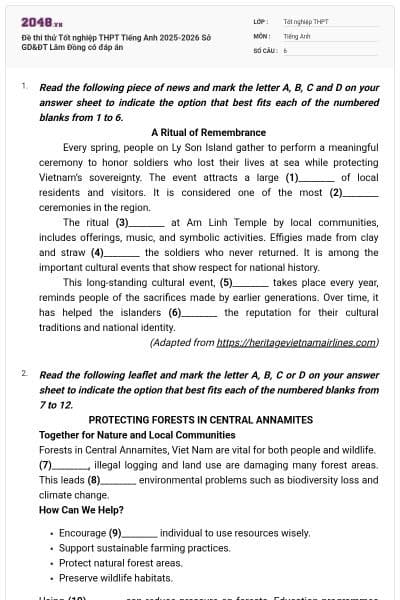
Read the following passage and mark the letter A, B, C or D on your answer sheet to indicate the option that best fits each of the numbered blanks from 36 to 40.
With smokers flicking an estimated 4.5 trillion cigarette butts – or discarded cigarette ends – into the environment each year, it is time to take a firmer stand against this toxin-laden form of litter. These butts are essentially small toxic waste sites containing harmful chemicals and heavy metals, according to researchers. Especially problematic are the plastic filters found on many cigarettes, (36) ______. In fact, the filters accumulate toxins and can release chemicals for a decade. As millions of tons of butts end up on sidewalks, roadsides, and beaches, tobacco waste carries a high potential for contamination: (37) ______ during coastal cleanups, accounting for 19 percent to 38 percent of the global total.
(38) ______. This is because discarded cigarette ends are not usually classified in the same way as other forms of toxic waste. Thus, reducing the threat will require new environmental measures and closer cooperation between anti-smoking and environmental groups. Gentler approaches could include (39) ______ their cigarette butts into waste bins. At the same time, more far-reaching regulation should also be considered. Governments could ban filtered cigarettes, for instance, or require tobacco companies to take back their waste and pay the cost of cleanups. (40) ______.
(Adapted from Conservation Magazine)
which manufacturers have long falsely claimed make smoking safer
which manufacturers have long falsely claimed making smoking safer
these have long been falsely claimed by manufacturers making smoking safer
manufacturers have long falsely claimed them to make smoking safer
Khoảng trống (36) nằm sau dấu phẩy, đi liền sau cụm danh từ “the plastic filters” (những bộ lọc bằng nhựa). Ta cần một mệnh đề quan hệ để bổ sung thông tin cho danh từ này.
Cấu trúc nâng cao ở đây là Mệnh đề quan hệ có chứa mệnh đề chêm (Inserted clause): which + [S + V chêm] + V chính.
Trong đó, “which” thay thế cho “filters” và làm chủ ngữ cho động từ “make”. Cụm “manufacturers have long falsely claimed” chỉ là thành phần chêm vào để trích dẫn nguồn gốc lời nói.
Dịch nghĩa/Ngữ pháp:
A. cái mà các nhà sản xuất từ lâu đã tuyên bố sai lệch rằng làm cho việc hút thuốc an toàn hơn (“which” làm chủ ngữ, “make” là động từ chính chia số nhiều theo “filters”. Hoàn toàn chính xác).
B. which... making... (Sai ngữ pháp vì “which” làm chủ ngữ thì động từ phía sau không thể ở dạng V-ing “making”).
C. these have long been... (Lỗi “comma splice” - nối hai mệnh đề độc lập bằng dấu phẩy mà không có liên từ).
D. manufacturers have long... (Tương tự C, sai ngữ pháp do lỗi nối câu).
Đáp án A tuân thủ đúng cấu trúc mệnh đề quan hệ nâng cao, đảm bảo động từ “make” hòa hợp với chủ ngữ số nhiều “filters”.
Chọn A.
→ Especially problematic are the plastic filters found on many cigarettes, which manufacturers have long falsely claimed make smoking safer.
Dịch nghĩa: Đặc biệt có vấn đề là các bộ lọc bằng nhựa được tìm thấy trên nhiều loại thuốc lá, thứ mà các nhà sản xuất từ lâu đã tuyên bố sai lệch rằng chúng làm cho việc hút thuốc an toàn hơn.
Otherwise, cigarette litter is the largest single category of trash to be collected
In other words, the single largest category of trash to collect is cigarette litter
In contrast, the largest single collected category of trash is cigarette litter
Indeed, cigarette litter is the single largest category of trash collected
Câu phía trước khẳng định: “...tobacco waste carries a high potential for contamination” (...rác thải thuốc lá mang nguy cơ ô nhiễm cao). Dấu hai chấm (:) được dùng để đưa ra bằng chứng, số liệu giải thích hoặc nhấn mạnh cho nhận định vừa rồi.
Dịch nghĩa:
A. Trái lại, rác thải thuốc lá là danh mục rác thải đơn lẻ lớn nhất được thu gom (Sai logic: dùng “Otherwise” không phù hợp để đưa ra bằng chứng thuận chiều).
B. Nói cách khác, loại rác lớn nhất cần thu gom là rác thải thuốc lá (Cụm “to collect” - để thu gom - không tự nhiên bằng dạng bị động chỉ sự việc đã xảy ra).
C. Ngược lại, loại rác được thu gom lớn nhất là rác thải thuốc lá (Sai logic vì dùng “In contrast”).
D. Thực vậy, rác thải thuốc lá là danh mục rác thải đơn lẻ lớn nhất được thu gom (Trạng từ “Indeed” dùng để nhấn mạnh/khẳng định lại sự thật rất chuẩn xác. “collected” là mệnh đề quan hệ rút gọn bị động = “that is collected”).
Đáp án D cung cấp trạng từ chỉ sự nhấn mạnh (Indeed) hoàn toàn phù hợp với chức năng của dấu hai chấm, đồng thời cấu trúc ngữ pháp cũng tự nhiên nhất.
Chọn D.
→ ...tobacco waste carries a high potential for contamination: Indeed, cigarette litter is the single largest category of trash collected during coastal cleanups...
Dịch nghĩa: ...rác thải thuốc lá mang nguy cơ ô nhiễm cao: Thực vậy, rác thải thuốc lá là danh mục rác đơn lẻ lớn nhất được thu gom trong các đợt dọn dẹp bờ biển...
Despite being worrying, the issue has always not been treated as an environmental priority
Worrying though the issue is, it has not always been treated as an environmental priority
While worrying, not always has the issue been prioritized for environmental treatment
Although the issue is worrying, it has always not been prioritized for environmental treatment
Khoảng trống (38) đứng đầu đoạn 2. Câu tiếp ngay sau nó giải thích nguyên nhân: “This is because discarded cigarette ends are not usually classified in the same way as other forms of toxic waste.” (Điều này là do tàn thuốc bỏ đi thường không được phân loại giống như các dạng chất thải độc hại khác). Việc “không được phân loại như chất thải độc hại” giải thích cho việc vấn đề này bị xem nhẹ. Do đó, vị trí (38) cần một câu mang cấu trúc nhượng bộ: Dù nghiêm trọng, nhưng không được ưu tiên.
Dịch nghĩa/Ngữ pháp:
A. Mặc dù đáng lo ngại, vấn đề này luôn luôn không được coi là... (Sai lỗi diễn đạt: trong tiếng Anh người ta dùng “not always” (không phải lúc nào cũng) chứ hiếm khi dùng “always not”).
B. Mặc dù vấn đề này đáng lo ngại, nó không phải lúc nào cũng được coi là một ưu tiên môi trường. (Sử dụng cấu trúc đảo ngữ nhượng bộ: Adj + though + S + V = Although S + V + Adj. Ngữ pháp chuẩn xác, cụm “not always” hợp lý).
C. Trong khi đáng lo ngại, không phải lúc nào vấn đề cũng được... (Cấu trúc đảo ngữ “not always has the issue been” lủng củng và không tự nhiên trong ngữ cảnh này).
D. Mặc dù vấn đề đáng lo ngại, nó luôn luôn không được ưu tiên... (Lỗi “always not” giống đáp án A).
Đáp án B sử dụng cấu trúc nhượng bộ nâng cao (Worrying though the issue is) và trật tự từ chuẩn xác, tạo sự liên kết logic nguyên nhân - kết quả với câu sau.
Chọn B.
→ Worrying though the issue is, it has not always been treated as an environmental priority.This is because discarded cigarette ends are not usually classified...
Dịch nghĩa: Mặc dù vấn đề này đáng lo ngại, nhưng không phải lúc nào nó cũng được coi là một ưu tiên về môi trường. Điều này là do tàn thuốc bỏ đi thường không được phân loại...
using both advertisements to educate smokers about the risks and persuading them into putting
both using advertisements to educate smokers about the risks and to persuade them to put
using advertisements both to educate smokers about the risks and to persuade them into putting
using advertisements to both educate smokers about the risks and to persuade them to put
Cấu trúc đi sau động từ “include” cần một Danh động từ (V-ing). Trong câu này, tác giả muốn sử dụng cấu trúc song song với liên từ “both... and...” (cả cái này... và cái kia). Theo quy tắc, các thành phần đứng ngay sau “both” và “and” phải hoàn toàn giống nhau về mặt từ loại và cấu trúc (Parallelism).
Dịch nghĩa/Ngữ pháp:
A. using both [advertisements...] and [persuading...] (Không song song: sau “both” là danh từ, sau “and” là V-ing).
B. both [using...] and [to persuade...] (Không song song: sau “both” là V-ing, sau “and” là to-V).
C. using advertisements both [to educate...] and [to persuade them into putting] (Tuyệt đối song song: sau “both” là “to-V”, sau “and” cũng là “to-V”. Cấu trúc “persuade somebody into V-ing” là một thành ngữ hoàn toàn chính xác).
D. using advertisements to both [educate...] and [to persuade...] (Không song song: sau “both” là động từ nguyên thể “educate”, nhưng sau “and” lại có thêm chữ “to” → “to persuade”).
Đáp án C tuân thủ nghiêm ngặt quy tắc cấu trúc song song của “both... and...”, giúp câu văn trở nên cân xứng và mạch lạc.
Chọn C.
→ Gentler approaches could include using advertisements both to educate smokers about the risks and to persuade them into putting their cigarette butts into waste bins.
Dịch nghĩa: Các phương pháp tiếp cận nhẹ nhàng hơn có thể bao gồm việc sử dụng các quảng cáo để vừa giáo dục người hút thuốc về những rủi ro, vừa thuyết phục họ bỏ tàn thuốc vào thùng rác.
Even environmental groups sue for ecological damages
Even ecological damages will be sued by environmental groups
Environmental groups could even sue for ecological damages
Environmental groups even might sue for ecological damages
Câu ngay trước đó đưa ra các đề xuất về mặt chính sách: “Governments could ban... or require...” (Các chính phủ có thể cấm... hoặc yêu cầu...). Vị trí (40) nằm ở cuối đoạn, tiếp tục đưa ra một hành động quyết liệt khác từ một chủ thể khác (Các nhóm môi trường) để giải quyết vấn đề.
Dịch nghĩa/Ngữ pháp:
A. Thậm chí các nhóm môi trường kiện vì thiệt hại sinh thái (Thì hiện tại đơn không khớp với bối cảnh giả định/đề xuất dùng “could” ở câu trước).
B. Thậm chí thiệt hại sinh thái sẽ bị kiện bởi... (Sai logic: người ta kiện CÔNG TY gây ra thiệt hại, chứ không thể “kiện cái thiệt hại”).
C. Các nhóm môi trường thậm chí có thể kiện vì những thiệt hại sinh thái (Sử dụng động từ khuyết thiếu “could” tương đồng với câu trước “Governments could ban”, tạo ra tính nhất quán trong việc đưa ra các giải pháp tiềm năng).
D. Các nhóm môi trường thậm chí có thể kiện... (Trật tự từ “even might sue” không tự nhiên bằng “could even sue” hoặc “might even sue”).
Phân tích:
Đáp án C tiếp nối mạch liệt kê các biện pháp có thể thực hiện (could + V) một cách chuẩn xác, khép lại bài văn bằng một biện pháp mạnh tay nhất.
Chọn C.
→ Governments could ban filtered cigarettes, for instance, or require tobacco companies to take back their waste and pay the cost of cleanups. Environmental groups could even sue for ecological damages.
Dịch nghĩa: Ví dụ, các chính phủ có thể cấm thuốc lá có đầu lọc, hoặc yêu cầu các công ty thuốc lá thu hồi rác thải của họ và trả chi phí dọn dẹp. Các nhóm môi trường thậm chí có thể kiện vì những thiệt hại sinh thái.
Bài đọc hoàn chỉnh | Dịch bài đọc |
With smokers flicking an estimated 4.5 trillion cigarette butts – or discarded cigarette ends – into the environment each year, it is time to take a firmer stand against this toxin-laden form of litter. These butts are essentially small toxic waste sites containing harmful chemicals and heavy metals, according to researchers. Especially problematic are the plastic filters found on many cigarettes, which manufacturers have long falsely claimed make smoking safer. In fact, the filters accumulate toxins and can release chemicals for a decade. As millions of tons of butts end up on sidewalks, roadsides, and beaches, tobacco waste carries a high potential for contamination: Indeed, cigarette litter is the single largest category of trash collected during coastal cleanups, accounting for 19 percent to 38 percent of the global total. Worrying though the issue is, it has not always been treated as an environmental priority. This is because discarded cigarette ends are not usually classified in the same way as other forms of toxic waste. Thus, reducing the threat will require new environmental measures and closer cooperation between anti-smoking and environmental groups. Gentler approaches could include using advertisements both to educate smokers about the risks and to persuade them into putting their cigarette butts into waste bins. At the same time, more far-reaching regulation should also be considered. Governments could ban filtered cigarettes, for instance, or require tobacco companies to take back their waste and pay the cost of cleanups. Environmental groups could even sue for ecological damages. | Với việc những người hút thuốc búng đi ước tính khoảng 4,5 nghìn tỷ mẩu tàn thuốc – hay đầu lọc thuốc lá bị vứt bỏ – ra môi trường mỗi năm, đã đến lúc phải có lập trường cứng rắn hơn chống lại loại rác thải chứa đầy độc tố này. Theo các nhà nghiên cứu, những mẩu tàn thuốc này về cơ bản là những bãi rác thải độc hại nhỏ chứa các hóa chất có hại và kim loại nặng. Đặc biệt có vấn đề là các bộ lọc bằng nhựa được tìm thấy trên nhiều loại thuốc lá, thứ mà các nhà sản xuất từ lâu đã tuyên bố sai lệch rằng chúng làm cho việc hút thuốc an toàn hơn. Trên thực tế, các bộ lọc này tích tụ độc tố và có thể giải phóng hóa chất trong cả một thập kỷ. Khi hàng triệu tấn tàn thuốc kết thúc trên vỉa hè, lề đường và bãi biển, rác thải thuốc lá mang nguy cơ ô nhiễm cao: Thực vậy, rác thải thuốc lá là danh mục rác đơn lẻ lớn nhất được thu gom trong các đợt dọn dẹp bờ biển, chiếm từ 19% đến 38% tổng lượng toàn cầu. Mặc dù vấn đề này đáng lo ngại, nhưng không phải lúc nào nó cũng được coi là một ưu tiên về môi trường. Điều này là do tàn thuốc bỏ đi thường không được phân loại theo cùng một cách với các dạng chất thải độc hại khác. Do đó, việc giảm thiểu mối đe dọa này sẽ đòi hỏi các biện pháp môi trường mới và sự hợp tác chặt chẽ hơn giữa các nhóm chống hút thuốc và các nhóm bảo vệ môi trường. Các phương pháp tiếp cận nhẹ nhàng hơn có thể bao gồm việc sử dụng các quảng cáo để vừa giáo dục người hút thuốc về những rủi ro, vừa thuyết phục họ bỏ tàn thuốc vào thùng rác. Đồng thời, những quy định có tác động sâu rộng hơn cũng nên được xem xét. Ví dụ, các chính phủ có thể cấm thuốc lá có đầu lọc, hoặc yêu cầu các công ty thuốc lá thu hồi rác thải của họ và trả chi phí dọn dẹp. Các nhóm môi trường thậm chí có thể kiện vì những thiệt hại sinh thái. |