Đề thi thử Tốt nghiệp THPT Tiếng Anh 2025-2026 Cụm trường THPT Chuyên Hà Tĩnh - Chuyên Phan Bội Châu (Nghệ An) có đáp án
40 câu hỏi
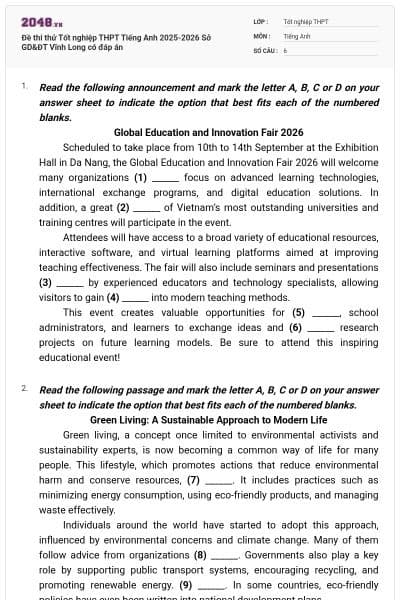
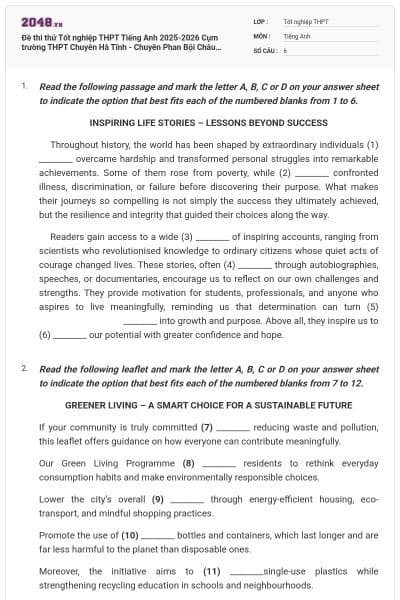
Read the following passage and mark the letter A, B, C or D on your answer sheet to indicate the option that best fits each of the numbered blanks from 1 to 6.
INSPIRING LIFE STORIES – LESSONS BEYOND SUCCESS
Throughout history, the world has been shaped by extraordinary individuals (1) ________ overcame hardship and transformed personal struggles into remarkable achievements. Some of them rose from poverty, while (2) ________ confronted illness, discrimination, or failure before discovering their purpose. What makes their journeys so compelling is not simply the success they ultimately achieved, but the resilience and integrity that guided their choices along the way.
Readers gain access to a wide (3) ________ of inspiring accounts, ranging from scientists who revolutionised knowledge to ordinary citizens whose quiet acts of courage changed lives. These stories, often (4) ________ through autobiographies, speeches, or documentaries, encourage us to reflect on our own challenges and strengths. They provide motivation for students, professionals, and anyone who aspires to live meaningfully, reminding us that determination can turn (5) ________ into growth and purpose. Above all, they inspire us to (6) ________ our potential with greater confidence and hope.
who
whose
whom
which
A. who: dùng làm chủ ngữ/tân ngữ thay cho người.
B. whose: chỉ sự sở hữu (sau đó phải là danh từ).
C. whom: dùng làm tân ngữ cho người (sau đó thường là một mệnh đề S+V).
D. which: cùng cho vật.
Danh từ đứng trước: “extraordinary individuals” (những cá nhân phi thường) là danh từ chỉ người.
Thành phần đứng sau: “overcame” là một động từ.
→ Cần dùng: Một đại từ quan hệ đóng vai trò làm chủ ngữ thay thế cho người.
Chọn A. who
→ Throughout history, the world has been shaped by extraordinary individuals who overcame hardship and transformed personal struggles into remarkable achievements.
Dịch nghĩa:
Xuyên suốt lịch sử, thế giới đã được định hình bởi những cá nhân phi thường, những người đã vượt qua khó khăn và biến những đấu tranh cá nhân thành thành tựu đáng kinh ngạc.
another
others
the others
other
A. another: một cái/người khác (số ít).
B. others: những người khác (số nhiều, đại từ).
C. the others: những người còn lại (xác định, dùng khi đã biết rõ tổng số lượng).
D. other: khác (tính từ, phải có danh từ số nhiều theo sau).
Cấu trúc đối chiếu: Some... while others... (Một số người... trong khi những người khác...).
“others” ở đây đóng vai trò là đại từ, thay thế cho “other individuals” (những người khác nói chung, không xác định cụ thể trong một nhóm cố định).
Chọn B. others
→ Some of them rose from poverty, while others confronted illness, discrimination, or failure before discovering their purpose.
Dịch nghĩa: Một số người vươn lên từ nghèo khó, trong khi những người khác phải đối mặt với bệnh tật, sự phân biệt đối xử hoặc thất bại trước khi tìm ra mục đích sống của mình.
range
amount
load
volume
A. range: phạm vi, loại.
B. amount: lượng (thường dùng với danh từ không đếm được).
C. load: gánh nặng, vật nặng.
D. volume: thể tích, âm lượng.
Cụm cố định: a wide range of + N-số nhiều: một loạt các/đa dạng các...
Chọn A. range
→ Readers gain access to a wide range of inspiring accounts, ranging from scientists who revolutionised knowledge to ordinary citizens whose quiet acts of courage changed lives.
Dịch nghĩa: Độc giả có cơ hội tiếp cận với nhiều câu chuyện truyền cảm hứng đa dạng, từ các nhà khoa học làm thay đổi tri thức đến những công dân bình thường với những hành động dũng cảm thầm lặng đã làm thay đổi cuộc sống của người khác.
conveyed
to convey
convey
conveying
Chủ ngữ là “These stories” (những câu chuyện này).
Hành động “convey” (truyền tải). Những câu chuyện không thể tự truyền tải mà chúng được truyền tải.
→ cần dạng bị động rút gọn.
Mệnh đề đầy đủ: These stories, which are often conveyed through autobiographies…
Rút gọn mệnh đề quan hệ bị động: which are conveyed → conveyed
Chọn A. conveyed
→ These stories, often conveyed through autobiographies, speeches, or documentaries, encourage us to reflect on our own challenges and strengths.
Dịch nghĩa: Những câu chuyện này, thường được truyền tải qua tự truyện, bài phát biểu hoặc phim tài liệu, khuyến khích chúng ta suy ngẫm về những thử thách và điểm mạnh của chính mình.
adverse
adversely
adverseness
adversity
A. adverse (adj): Bất lợi, hại.
B. adversely (adv): Một cách bất lợi.
C. adverseness (n): Tình trạng bất lợi.
D. adversity (n): Nghịch cảnh, những khó khăn chồng chất. (Đúng và hợp ngữ cảnh nhất).
Cấu trúc: turn something into something
Cấu trúc: turn + N + into...: biến cái gì đó thành...
Chọn D. adversity
→ They provide motivation for students, professionals, and anyone who aspires to live meaningfully, reminding us that determination can turn adversity into growth and purpose.
Dịch nghĩa: Chúng mang lại động lực cho học sinh, người đi làm và bất kỳ ai khao khát sống có ý nghĩa, nhắc nhở chúng ta rằng sự quyết tâm có thể biến nghịch cảnh thành sự trưởng thành và mục đích sống.
Above all, they inspire us to (6) ________ our potential with greater confidence and hope.
build up
take up
carry on
bring out
A. build up: xây dựng, tích lũy (thường dùng cho sức khỏe, sự tự tin).
B. take up: bắt đầu một sở thích, chiếm không gian/thời gian.
C. carry on: tiếp tục.
D. bring out: làm nảy nở, phát huy (tiềm năng).
Cụm tự nhiên nhất: bring out our potential: phát huy tiềm năng
Chọn D. bring out
→ Above all, they inspire us to bring out our potential with greater confidence and hope.
Dịch nghĩa: Trên hết, chúng truyền cảm hứng để chúng ta phát huy tiềm năng của mình với sự tự tin và hy vọng lớn hơn.
Bài đọc hoàn chỉnh | Dịch bài đọc |
INSPIRING LIFE STORIES – LESSONS BEYOND SUCCESS Throughout history, the world has been shaped by extraordinary individuals (1) who overcame hardship and transformed personal struggles into remarkable achievements. Some of them rose from poverty, while (2) others confronted illness, discrimination, or failure before discovering their purpose. What makes their journeys so compelling is not simply the success they ultimately achieved, but the resilience and integrity that guided their choices along the way. Readers gain access to a wide (3) range of inspiring accounts, ranging from scientists who revolutionised knowledge to ordinary citizens whose quiet acts of courage changed lives. These stories, often (4) conveyed through autobiographies, speeches, or documentaries, encourage us to reflect on our own challenges and strengths. They provide motivation for students, professionals, and anyone who aspires to live meaningfully, reminding us that determination can turn (5) adversity into growth and purpose. Above all, they inspire us to (6) bring out our potential with greater confidence and hope. | NHỮNG CÂU CHUYỆN CUỘC ĐỜI TRUYỀN CẢM HỨNG – BÀI HỌC VƯỢT XA THÀNH CÔNG Suốt chiều dài lịch sử, thế giới đã được định hình bởi những cá nhân phi thường mà đã vượt qua gian khổ và biến những khó khăn cá nhân thành những thành tựu đáng kinh ngạc. Một số người trong số họ vươn lên từ cảnh nghèo khó, trong khi những người khác phải đối mặt với bệnh tật, sự phân biệt đối xử, hoặc thất bại trước khi tìm ra mục đích sống của mình. Điều khiến hành trình của họ trở nên cuốn hút không chỉ đơn thuần là thành công mà cuối cùng họ đạt được, mà chính là sự kiên cường và chính trực đã dẫn dắt những lựa chọn của họ trên suốt chặng đường. Người đọc có cơ hội tiếp cận một loạt rộng lớn các câu chuyện truyền cảm hứng, từ các nhà khoa học đã cách mạng hóa tri thức đến những công dân bình thường mà hành động dũng cảm thầm lặng đã thay đổi cuộc đời người khác. Những câu chuyện này, thường được truyền tải qua tự truyện, bài phát biểu, hoặc phim tài liệu, khuyến khích chúng ta suy ngẫm về những thử thách và điểm mạnh của chính bản thân mình. Chúng mang lại động lực cho học sinh, người làm việc chuyên nghiệp, và bất kỳ ai khao khát sống một cuộc đời ý nghĩa, nhắc nhở chúng ta rằng sự quyết tâm có thể biến nghịch cảnh thành sự trưởng thành và mục đích sống. Trên hết, chúng truyền cảm hứng để chúng ta khai phá tiềm năng của mình với sự tự tin và hy vọng lớn lao hơn. |
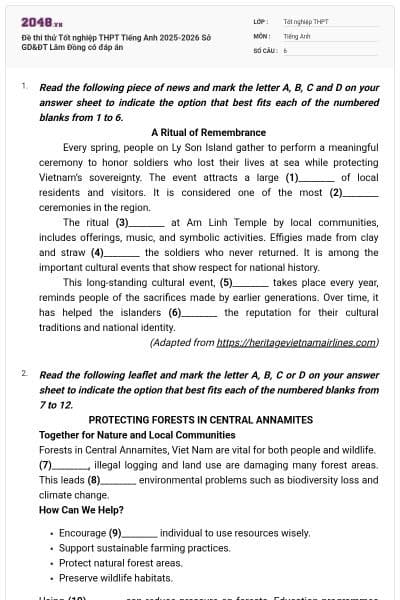
Read the following leaflet and mark the letter A, B, C or D on your answer sheet to indicate the option that best fits each of the numbered blanks from 7 to 12.
GREENER LIVING – A SMART CHOICE FOR A SUSTAINABLE FUTURE
If your community is truly committed (7) ________ reducing waste and pollution, this leaflet offers guidance on how everyone can contribute meaningfully.
Our Green Living Programme (8) ________ residents to rethink everyday consumption habits and make environmentally responsible choices.
Lower the city’s overall (9) ________ through energy-efficient housing, eco-transport, and mindful shopping practices.
Promote the use of (10) ________ bottles and containers, which last longer and are far less harmful to the planet than disposable ones.
Moreover, the initiative aims to (11) ________single-use plastics while strengthening recycling education in schools and neighbourhoods.
If widely adopted, these actions will (12) ________ to the quality of life for both current citizens and future generations.
If your community is truly committed (7) ________ reducing waste and pollution, this leaflet offers guidance on how everyone can contribute meaningfully.
of
for
with
to
Cấu trúc cố định: be committed to + V-ing: cam kết làm gì
Chọn D. to
→ If your community is truly committed to reducing waste and pollution, this leaflet offers guidance on how everyone can contribute meaningfully.
Dịch nghĩa:
Nếu cộng đồng của bạn thực sự cam kết giảm rác thải và ô nhiễm, tờ rơi này sẽ cung cấp hướng dẫn về cách mọi người có thể đóng góp một cách thiết thực.
Our Green Living Programme (8) ________ residents to rethink everyday consumption habits and make environmentally responsible choices.
encourages
distracts
tempts
forces
A. encourages: khuyến khích
B. distracts: làm xao nhãng
C. tempts: xúi giục, cám dỗ
D. forces: bắt buộc, cưỡng ép
Ngữ cảnh tích cực, mang tính định hướng → dùng “encourages”.
Cấu trúc: encourage someone to do something: khuyến khích ai đó làm gì
Chọn A. encourages
→ Our Green Living Programme encourages residents to rethink everyday consumption habits and make environmentally responsible choices.
Dịch nghĩa: Chương trình Sống Xanh của chúng tôi khuyến khích cư dân suy nghĩ lại về thói quen tiêu dùng hằng ngày và đưa ra những lựa chọn có trách nhiệm với môi trường.
Lower the city’s overall (9) ________ through energy-efficient housing, eco-transport, and mindful shopping practices.
footprint
footsteps
blueprint
landmark
A. footprint: dấu chân (tác động lên môi trường).
B. footsteps: bước chân (theo nghĩa đen).
C. blueprint: bản thiết kế/kế hoạch chi tiết.
D. landmark: cột mốc, địa danh.
Ta có cụm phổ biến: environmental footprint / carbon footprint: dấu chân carbon/tác động môi trường
Chọn A. footprint
→ Lower the city’s overall footprint through energy-efficient housing, eco-transport, and mindful shopping practices.
Dịch nghĩa: Giảm tổng dấu chân sinh thái của thành phố thông qua nhà ở tiết kiệm năng lượng, phương tiện giao thông thân thiện môi trường và thói quen mua sắm có ý thức.
Promote the use of (10) ________ bottles and containers, which last longer and are far less harmful to the planet than disposable ones.
refillable stainless-steel lightweight
stainless-steel lightweight refillable
lightweight stainless-steel refillable
refillable lightweight stainless-steel
Trật tự tính từ theo OSASCOMP:
(opinion → size → age → shape → color → origin → material → purpose)
lightweight (size): nhẹ
stainless-steel (material): vật liệu
refillable (purpose): có thể nạp lại
Thứ tự đúng: quality/size → material → purpose
Chọn C. lightweight stainless-steel refillable
→ Promote the use of lightweight stainless-steel refillable bottles and containers, which last longer and are far less harmful to the planet than disposable ones.
Dịch nghĩa: Khuyến khích sử dụng các chai và hộp đựng bằng thép không gỉ nhẹ, có thể tái sử dụng, vì chúng bền hơn và ít gây hại cho hành tinh hơn so với đồ dùng một lần.
Moreover, the initiative aims to (11) ________single-use plastics while strengthening recycling education in schools and neighbourhoods.
run into
phase out
gloss over
bring up
A. run into: tình cờ gặp.
B. phase out: loại bỏ dần dần (thường dùng cho các chính sách, sản phẩm độc hại).
C. gloss over: giải thích qua loa, che đậy lỗi lầm.
D. bring up: nuôi dưỡng, đề cập một vấn đề.
Ngữ cảnh nói về giảm nhựa dùng một lần → loại bỏ dần
Chọn B. phase out
→ Moreover, the initiative aims to phase out single-use plastics while strengthening recycling education in schools and neighbourhoods.
Dịch nghĩa: Hơn nữa, sáng kiến này nhằm loại bỏ dần nhựa dùng một lần đồng thời tăng cường giáo dục tái chế trong trường học và khu dân cư.
If widely adopted, these actions will (12) ________ to the quality of life for both current citizens and future generations.
make all the difference
deal a heavy blow
take a back seat
cut no ice
A. make all the difference: tạo ra sự khác biệt lớn (cải thiện tình hình rõ rệt). (Đúng)
B. deal a heavy blow: giáng một đòn nặng nề (mang nghĩa tiêu cực).
C. take a back seat: giữ vai trò thứ yếu, không quan trọng.
D. cut no ice: không có tác dụng, không ảnh hưởng đến ai.
Ngữ cảnh tích cực: tạo ra ảnh hưởng tốt đến chất lượng cuộc sống.
Chọn A. make all the difference
→ If widely adopted, these actions will make all the difference to the quality of life for both current citizens and future generations.
Dịch nghĩa: Nếu được áp dụng rộng rãi, những hành động này sẽ tạo nên sự khác biệt lớn đối với chất lượng cuộc sống của cả công dân hiện tại và các thế hệ tương lai.
Bài đọc hoàn chỉnh | Dịch bài đọc |
GREENER LIVING – A SMART CHOICE FOR A SUSTAINABLE FUTURE If your community is truly committed (7) to reducing waste and pollution, this leaflet offers guidance on how everyone can contribute meaningfully. Our Green Living Programme (8) encourages residents to rethink everyday consumption habits and make environmentally responsible choices. Lower the city’s overall (9) footprint through energy-efficient housing, eco-transport, and mindful shopping practices. Promote the use of (10) lightweight stainless-steel refillable bottles and containers, which last longer and are far less harmful to the planet than disposable ones. Moreover, the initiative aims to (11) phase out single-use plastics while strengthening recycling education in schools and neighbourhoods. If widely adopted, these actions will (12) make all the difference to the quality of life for both current citizens and future generations. | SỐNG XANH HƠN – LỰA CHỌN THÔNG MINH CHO MỘT TƯƠNG LAI BỀN VỮNG Nếu cộng đồng của bạn thực sự cam kết giảm thiểu rác thải và ô nhiễm, tờ rơi này sẽ hướng dẫn cách mỗi người có thể đóng góp một cách ý nghĩa. Chương trình Sống Xanh của chúng tôi khuyến khích cư dân suy nghĩ lại về thói quen tiêu dùng hàng ngày và đưa ra những lựa chọn có trách nhiệm với môi trường. Giảm dấu chân sinh thái tổng thể của thành phố thông qua nhà ở tiết kiệm năng lượng, phương tiện giao thông thân thiện với môi trường và thói quen mua sắm có ý thức. Khuyến khích sử dụng chai và hộp đựng nhẹ, thép không gỉ, có thể nạp lại, những thứ bền hơn và ít gây hại cho hành tinh hơn rất nhiều so với đồ dùng một lần. Hơn nữa, sáng kiến này hướng tới việc dần dần loại bỏ nhựa dùng một lần đồng thời tăng cường giáo dục tái chế tại trường học và khu dân cư. Nếu được áp dụng rộng rãi, những hành động này sẽ tạo nên sự khác biệt lớn đối với chất lượng cuộc sống của cả thế hệ hiện tại lẫn thế hệ tương lai. |
Mark the letter A, B, C or D on your answer sheet to indicate the best arrangement of utterances or sentences to make a cohesive and coherent exchange or text in each of the following questions from 13 to 17.
a. Linh: Hi, David! Long time no see. You look so confident!
b. Linh: Yes, I have. I’ve been improving my communication skills and learning more about business strategies.
c. David: Hi, Linh! Thanks. You look really professional, too. Have you been working on any new projects lately?
c – b – a
a – c – b
c – a – b
b – c – a
Thứ tự sắp xếp đúng: B. a – c – b
a. Linh: Hi, David! Long time no see. You look so confident!
c. David: Hi, Linh! Thanks. You look really professional, too. Have you been working on any new projects lately?
b. Linh: Yes, I have. I’ve been improving my communication skills and learning more about business strategies.
Dịch nghĩa:
a. Linh: Chào David! Lâu rồi không gặp. Trông bạn tự tin quá!
c. David: Chào Linh! Cảm ơn nhé. Bạn cũng trông rất chuyên nghiệp. Gần đây bạn có làm dự án mới nào không?
b. Linh: Có chứ. Mình đang cải thiện kỹ năng giao tiếp và học thêm về các chiến lược kinh doanh.
Chọn B.
a. Mia: Hey, have you started revising for the graduation exam yet?
b. Sam: That’d be awesome. We could quiz each other and sort out the tricky topics.
c. Mia: Perfect! Let’s meet at my place on Saturday and power through those practice tests.
d. Sam: Yeah, I’ve been hitting the books hard, especially for math. It’s tougher than I thought!
e. Mia: Tell me about it! I’m freaking out over chemistry. Want to study together this weekend?
e – d – a – b – c
a – d – c – b – e
e – b – a – d – c
a – d – e – b – c
Thứ tự sắp xếp đúng: D. a – d – e – b – c
a. Mia: Hey, have you started revising for the graduation exam yet?
d. Sam: Yeah, I’ve been hitting the books hard, especially for math. It’s tougher than I thought!
e. Mia: Tell me about it! I’m freaking out over chemistry. Want to study together this weekend?
b. Sam: That’d be awesome. We could quiz each other and sort out the tricky topics.
c. Mia: Perfect! Let’s meet at my place on Saturday and power through those practice tests.
Dịch nghĩa:
a. Mia: Này, bạn đã bắt đầu ôn thi tốt nghiệp chưa?
d. Sam: Rồi, mình học rất chăm, đặc biệt là môn Toán. Khó hơn mình tưởng!
e. Mia: Mình hiểu mà! Mình đang lo lắng về môn Hóa. Cuối tuần học cùng nhau không?
b. Sam: Tuyệt quá. Chúng ta có thể hỏi bài lẫn nhau và giải quyết những phần khó.
c. Mia: Hoàn hảo! Gặp nhau ở nhà mình vào thứ Bảy và cùng làm đề luyện nhé.
Chọn D.
a. For teachers, technology offers tools to design more flexible lessons, track progress efficiently, and provide timely feedback that supports individual growth.
b. At the same time, meaningful learning still depends on how these tools are used, as passive consumption can limit critical thinking and deep understanding.
c. Technology plays an increasingly central role in education by expanding access to information and learning opportunities beyond the traditional classroom.
d. When integrated thoughtfully, technology enhances education not by replacing teachers, but by strengthening the connection between instruction, practice, and real-world application.
e. Digital platforms allow students to learn at their own pace, revisit complex ideas, and engage with content through interactive formats that suit different learning styles.
c – d – b – a – e
e – b – d – a – c
c – e – a – b – d
e – a – c – d – b
Thứ tự sắp xếp đúng: C. c – e – a – b – d
c. Technology plays an increasingly central role in education by expanding access to information and learning opportunities beyond the traditional classroom.
e. Digital platforms allow students to learn at their own pace, revisit complex ideas, and engage with content through interactive formats that suit different learning styles.
a. For teachers, technology offers tools to design more flexible lessons, track progress efficiently, and provide timely feedback that supports individual growth.
b. At the same time, meaningful learning still depends on how these tools are used, as passive consumption can limit critical thinking and deep understanding.
d. When integrated thoughtfully, technology enhances education not by replacing teachers, but by strengthening the connection between instruction, practice, and real-world application.
Dịch nghĩa:
c. Công nghệ ngày càng đóng vai trò trung tâm trong giáo dục bằng cách mở rộng khả năng tiếp cận thông tin và cơ hội học tập ngoài lớp học truyền thống.
e. Các nền tảng số cho phép học sinh học theo tốc độ riêng, xem lại kiến thức phức tạp và tương tác với nội dung theo nhiều hình thức phù hợp với phong cách học khác nhau.
a. Đối với giáo viên, công nghệ cung cấp công cụ để thiết kế bài học linh hoạt hơn, theo dõi tiến độ hiệu quả và đưa ra phản hồi kịp thời nhằm hỗ trợ sự phát triển cá nhân.
b. Đồng thời, việc học có ý nghĩa vẫn phụ thuộc vào cách sử dụng các công cụ này, vì việc tiếp nhận thụ động có thể hạn chế tư duy phản biện và sự hiểu biết sâu sắc.
d. Khi được tích hợp một cách hợp lý, công nghệ nâng cao giáo dục không phải bằng cách thay thế giáo viên mà bằng cách tăng cường sự kết nối giữa giảng dạy, thực hành và ứng dụng vào thực tế.
Chọn C.
Dear Mayor Ramsbottom,
a. Can the council promise that these projects won’t harm the delicate balance of our ecosystem? I hope you will seize this opportunity to show your commitment to preserving our environment for future generations.
b. In our local area in recent years, urbanisation is happening rapidly and I’m sure many species will face the situation of having to adapt or die. It’s clear to see that the recently announced plans for new houses are going to lead to natural habitat loss in our area.
c. I wish to point out that, according to your campaign promises, this wasn’t supposed to happen. You had said urban development was going to be kept at a minimum to maintain the rural charm of our town, but this pledge was ignored.
d. As we lose more of our rural areas to urbanisation, animal species are likely to continue to suffer and some are sure to disappear completely in the future.
e. If these developments continue and no action is taken, the damage to our animals’ habitats will havebecome irreversible by the time they are completed.
Yours sincerely,
Felicity Barker-Hateson
e – c – d – b – a
b – d – c – e – a
b – e – d – c – a
b – d – e – c – a
Thứ tự sắp xếp đúng: B. b – d – c – e – a
b. In our local area in recent years, urbanisation is happening rapidly and I’m sure many species will face the situation of having to adapt or die. It’s clear to see that the recently announced plans for new houses are going to lead to natural habitat loss in our area.
d. As we lose more of our rural areas to urbanisation, animal species are likely to continue to suffer and some are sure to disappear completely in the future.
c. I wish to point out that, according to your campaign promises, this wasn’t supposed to happen. You had said urban development was going to be kept at a minimum to maintain the rural charm of our town, but this pledge was ignored.
e. If these developments continue and no action is taken, the damage to our animals’ habitats will have become irreversible by the time they are completed.
a. Can the council promise that these projects won’t harm the delicate balance of our ecosystem? I hope you will seize this opportunity to show your commitment to preserving our environment for future generations.
Yours sincerely,
Felicity Barker-Hateson
Dịch nghĩa:
b. Trong những năm gần đây tại khu vực địa phương của chúng ta, quá trình đô thị hóa đang diễn ra nhanh chóng và tôi tin rằng nhiều loài sẽ phải đối mặt với tình trạng thích nghi hoặc chết. Rõ ràng các kế hoạch xây nhà mới được công bố gần đây sẽ dẫn đến mất môi trường sống tự nhiên trong khu vực.
d. Khi chúng ta mất dần các vùng nông thôn do đô thị hóa, các loài động vật có khả năng tiếp tục chịu ảnh hưởng và một số chắc chắn sẽ biến mất hoàn toàn trong tương lai.
c. Tôi muốn chỉ ra rằng theo những lời hứa trong chiến dịch của ông, điều này lẽ ra không nên xảy ra. Ông đã nói rằng việc phát triển đô thị sẽ được giữ ở mức tối thiểu để duy trì nét nông thôn của thị trấn chúng ta, nhưng lời hứa này đã bị bỏ qua.
e. Nếu các dự án này tiếp tục và không có hành động nào được thực hiện, thiệt hại đối với môi trường sống của động vật sẽ trở nên không thể khắc phục vào thời điểm chúng hoàn thành.
a. Hội đồng có thể đảm bảo rằng các dự án này sẽ không làm tổn hại đến sự cân bằng mong manh của hệ sinh thái của chúng ta không? Tôi hy vọng ông sẽ nắm lấy cơ hội này để thể hiện cam kết bảo vệ môi trường cho các thế hệ tương lai.
Trân trọng,
Felicity Barker-Hateson
Chọn B.
a. For example, a multinational corporation that prioritises cultural diversity in its workforce is better equipped to navigate international markets and build strong relationships with clients from different cultures.
b. This is the ability to effectively communicate and interact with people from various cultural backgrounds.
c. Cultural competence is crucial in today’s globalised world, where businesses often operate acrossborders.
d. Understanding and appreciating cultural diversity helps individuals and organisations develop cultural competence.
e. By embracing and celebrating the myriad of cultures that exist within our societies, we can enhance cultural competence and build resilience.
d – b – c – a – e
b – a – e – d – c
b – e – a – d – c
d – a – e – b – c
Thứ tự sắp xếp đúng: A. d – b – c – a – e
d. Understanding and appreciating cultural diversity helps individuals and organisations develop cultural competence.
b. This is the ability to effectively communicate and interact with people from various cultural backgrounds.
c. Cultural competence is crucial in today’s globalised world, where businesses often operate across borders.
a. For example, a multinational corporation that prioritises cultural diversity in its workforce is better equipped to navigate international markets and build strong relationships with clients from different cultures.
e. By embracing and celebrating the myriad of cultures that exist within our societies, we can enhance cultural competence and build resilience.
Dịch nghĩa:
d. Việc hiểu và trân trọng sự đa dạng văn hóa giúp cá nhân và tổ chức phát triển năng lực văn hóa.
b. Đây là khả năng giao tiếp và tương tác hiệu quả với những người đến từ các nền văn hóa khác nhau.
c. Năng lực văn hóa rất quan trọng trong thế giới toàn cầu hóa ngày nay, nơi các doanh nghiệp thường hoạt động xuyên biên giới.
a. Ví dụ, một tập đoàn đa quốc gia ưu tiên sự đa dạng văn hóa trong lực lượng lao động sẽ có khả năng thâm nhập thị trường quốc tế tốt hơn và xây dựng mối quan hệ bền vững với khách hàng từ các nền văn hóa khác nhau.
e. Bằng cách đón nhận và tôn vinh sự đa dạng văn hóa tồn tại trong xã hội, chúng ta có thể nâng cao năng lực văn hóa và xây dựng khả năng thích ứng.
Chọn A.
Read the following passage and mark the letter A, B, C, or D on your answer sheet to indicate the option that best fits each of numbered blanks from 18 to 22.
Wildlife conservation is a crucial endeavor that aims to protect animal species and their habitats.(18) ________. Human activities such as deforestation, pollution, and climate change are some of the primary threats to wildlife. Conservation initiatives strive to mitigate these impacts through various strategies.
One significant aspect of wildlife conservation is the establishment of protected areas. National parks, wildlife reserves, and marine protected areas are created to provide safe havens for endangered species. These areas (19) ________.
Another important approach is (20) ________. This method has been successful in bringing several species back from the brink of extinction. Conservationists carefully monitor and support these reintroduced populations to ensure their survival.
Education and awareness campaigns play a pivotal role in wildlife conservation as well. (21)________, these campaigns foster a sense of responsibility and encourage community involvement in conservation efforts.
Aiding conservation efforts (22) ________have now been greatly supported by technological advancements. Innovations such as satellite tracking, DNA analysis, and drone surveillance help researchers gather critical data and monitor wildlife populations more effectively. These tools enable more informed decision-making and efficient conservation strategies.
This is essential for biodiversity maintaining which ensures the health of our ecosystems
It is essential for the maintenance of biodiversity and insurance the health of our ecosystems
This is essential for the biodiversity maintenance and ensures the health of our ecosystems
This is essential for maintaining biodiversity and ensuring the health of our ecosystems
Câu trước nói về mục đích của bảo tồn. Câu 18 cần bổ sung ý nghĩa/tầm quan trọng của việc này.
Cấu trúc song song: maintaining (V-ing) và ensuring (V-ing) – hai động từ song song sau “for”.
Maintaining biodiversity: duy trì đa dạng sinh học (đúng danh động từ).
Chọn D.
Các đáp án sai:
A. “biodiversity maintaining” sai thứ tự (phải là maintaining biodiversity); “which ensures” sai vì “which” không hợp ngữ cảnh.
B. “insurance” sai từ (phải là ensuring); “maintenance of biodiversity” không song song.
C. “the biodiversity maintenance” sai (không dùng “the” + danh từ trừu tượng kiểu này); thiếu “and”.
→ D là duy nhất đúng ngữ pháp và ngữ nghĩa.
→ Wildlife conservation is a crucial endeavor that aims to protect animal species and their habitats. This is essential for maintaining biodiversity and ensuring the health of our ecosystems.
Dịch nghĩa: Bảo tồn động vật hoang dã là một nỗ lực quan trọng nhằm bảo vệ các loài động vật và môi trường sống của chúng. Điều này rất cần thiết để duy trì đa dạng sinh học và đảm bảo sức khỏe của hệ sinh thái chúng ta.
not only protecting wildlife but also offering opportunities for scientific research and eco-tourism, which can benefit local economies
not only protect wildlife but also offer opportunities for scientific research and eco-tourism, which can benefit local economies
which not only protect wildlife but also offer opportunities for scientific research and eco-tourism, which can benefit local economies
protect not only wildlife but also offer opportunities for scientific research and eco-tourism, which can benefit local economies
Chủ ngữ là “These areas” (số nhiều) → Cần một động từ chính chia theo số nhiều.
Cấu trúc “Not only... but also...” nối hai động từ đồng dạng: protect (v) và offer (v).
Chọn B.
Các đáp án sai:
A. dùng V-ing thiếu động từ chính.
C. dùng “which” tạo thành mệnh đề phụ, khiến câu thiếu động từ chính.
D. sai cấu trúc “not only”.
→ These areas not only protect wildlife but also offer opportunities for scientific research and eco-tourism, which can benefit local economies.
Dịch nghĩa: Những khu vực này không chỉ bảo vệ động vật hoang dã mà còn mang lại cơ hội cho nghiên cứu khoa học và du lịch sinh thái, điều này có thể mang lại lợi ích cho kinh tế địa phương.
the reintroduction of species into their natural habitats
its natural habitats’ species reintroduction
its natural habitats’ reintroduction of species
the reintroduction into habitats of their natural species
Sau “is” cần một cụm danh từ đóng vai trò tân ngữ/bổ ngữ chỉ phương pháp.
Cụm từ đúng: the reintroduction of species into their natural habitats (việc đưa các loài trở lại môi trường sống tự nhiên của chúng).
Chọn A.
Các đáp án sai:
B, C. “its natural habitats’ species reintroduction” sai cấu trúc sở hữu ('s) và không rõ nghĩa.
D. “the reintroduction into habitats of their natural species” lủng củng, đảo ngược ý (hiểu nhầm là tái giới thiệu vào môi trường của loài tự nhiên).
→ Another important approach is the reintroduction of species into their natural habitats.
Dịch nghĩa: Một phương pháp quan trọng khác là việc tái thả các loài trở lại môi trường sống tự nhiên của chúng.
To have educated the public about the importance of biodiversity and the threats facing wildlife
Educated the public about the importance of biodiversity and the threats facing wildlife
Since educating the public about the importance of biodiversity and the threats facing wildlife
By educating the public about the importance of biodiversity and the threats facing wildlife
Cấu trúc: By + V-ing = bằng cách (chỉ phương tiện/cách thức).
Câu sau: “these campaigns foster...” → phần đầu cần chỉ cách thức campaigns hoạt động → By educating (bằng cách giáo dục công chúng).
“The threats facing wildlife” = các mối đe dọa mà động vật hoang dã đang đối mặt
Chọn D.
Các đáp án sai:
A. “To have educated” sai (to V hoàn thành không hợp).
B. “Educated” thiếu “by” hoặc liên từ.
C. “Since educating” sai (since = vì, không hợp ngữ cảnh phương tiện).
→ By educating the public about the importance of biodiversity and the threats facing wildlife, these campaigns foster a sense of responsibility and encourage community involvement in conservation efforts.
Dịch nghĩa: Bằng cách giáo dục công chúng về tầm quan trọng của đa dạng sinh học và những mối đe dọa mà động vật hoang dã đang phải đối mặt, các chiến dịch này thúc đẩy tinh thần trách nhiệm và khuyến khích cộng đồng tham gia vào các nỗ lực bảo tồn.
which are done by governments, scientists, environmental groups as well as influential individuals
having brought into by governments, scientists, environmental groups as well as influential individuals
when taken by governments, scientists, environmental groups as well as influential individuals
made by governments, scientists, environmental groups as well as influential individuals
Ta cần cụm phân từ rút gọn bổ nghĩa cho “conservation efforts”
Gốc là: “...efforts which are made by governments...”
Khi rút gọn dạng bị động, ta giữ lại Quá khứ phân từ (V3/ed). Do đó, “made” là lựa chọn chính xác nhất.
Chọn D.
Các đáp án sai:
A. “which are done by” sai vì “which” làm mệnh đề đầy đủ nhưng không hợp (câu cần rút gọn).
B. “having brought into by” sai hoàn toàn
C. “when taken by” sai (when = khi, không hợp ý “được thực hiện bởi”).
→ Aiding conservation efforts made by governments, scientists, environmental groups as well as influential individuals have now been greatly supported by technological advancements.
Dịch nghĩa: Những nỗ lực bảo tồn do chính phủ, các nhà khoa học, các tổ chức môi trường cũng như những cá nhân có ảnh hưởng thực hiện hiện nay đã được hỗ trợ mạnh mẽ nhờ các tiến bộ công nghệ.
Bài đọc hoàn chỉnh | Dịch bài đọc |
Wildlife conservation is a crucial endeavor that aims to protect animal species and their habitats. This is essential for maintaining biodiversity and ensuring the health of our ecosystems. Human activities such as deforestation, pollution, and climate change are some of the primary threats to wildlife. Conservation initiatives strive to mitigate these impacts through various strategies. One significant aspect of wildlife conservation is the establishment of protected areas. National parks, wildlife reserves, and marine protected areas are created to provide safe havens for endangered species. These areas not only protect wildlife but also offer opportunities for scientific research and eco-tourism, which can benefit local economies. Another important approach is the reintroduction of species into their natural habitats. This method has been successful in bringing several species back from the brink of extinction. Conservationists carefully monitor and support these reintroduced populations to ensure their survival. Education and awareness campaigns play a pivotal role in wildlife conservation as well. By educating the public about the importance of biodiversity and the threats facing wildlife, these campaigns foster a sense of responsibility and encourage community involvement in conservation efforts. Aiding conservation efforts made by governments, scientists, environmental groups as well as influential individuals have now been greatly supported by technological advancements. Innovations such as satellite tracking, DNA analysis, and drone surveillance help researchers gather critical data and monitor wildlife populations more effectively. These tools enable more informed decision-making and efficient conservation strategies. | Bảo tồn động vật hoang dã là một nỗ lực quan trọng nhằm bảo vệ các loài động vật và môi trường sống của chúng. Điều này rất cần thiết để duy trì đa dạng sinh học và đảm bảo sức khỏe của các hệ sinh thái. Các hoạt động của con người như phá rừng, ô nhiễm và biến đổi khí hậu là những mối đe dọa chính đối với động vật hoang dã. Các sáng kiến bảo tồn cố gắng giảm thiểu những tác động này thông qua nhiều chiến lược khác nhau. Một khía cạnh quan trọng của bảo tồn động vật hoang dã là việc thành lập các khu bảo tồn. Các vườn quốc gia, khu dự trữ động vật và khu bảo tồn biển được tạo ra nhằm cung cấp nơi trú ẩn an toàn cho các loài đang bị đe dọa. Những khu vực này không chỉ bảo vệ động vật hoang dã mà còn tạo cơ hội cho nghiên cứu khoa học và du lịch sinh thái, điều có thể mang lại lợi ích cho nền kinh tế địa phương. Một phương pháp quan trọng khác là việc tái thả các loài trở lại môi trường sống tự nhiên của chúng. Phương pháp này đã thành công trong việc đưa nhiều loài thoát khỏi bờ vực tuyệt chủng. Các nhà bảo tồn theo dõi và hỗ trợ cẩn thận các quần thể được tái thả để đảm bảo sự sống còn của chúng. Các chiến dịch giáo dục và nâng cao nhận thức cũng đóng vai trò then chốt trong bảo tồn động vật hoang dã. Bằng cách giáo dục công chúng về tầm quan trọng của đa dạng sinh học và những mối đe dọa mà động vật hoang dã đang phải đối mặt, các chiến dịch này thúc đẩy tinh thần trách nhiệm và khuyến khích cộng đồng tham gia vào các nỗ lực bảo tồn. Những nỗ lực bảo tồn do chính phủ, các nhà khoa học, các tổ chức môi trường cũng như những cá nhân có ảnh hưởng thực hiện hiện nay đã được hỗ trợ mạnh mẽ nhờ các tiến bộ công nghệ. Những đổi mới như theo dõi vệ tinh, phân tích ADN và giám sát bằng máy bay không người lái giúp các nhà nghiên cứu thu thập dữ liệu quan trọng và theo dõi quần thể động vật hiệu quả hơn. Những công cụ này cho phép đưa ra các quyết định chính xác hơn và xây dựng chiến lược bảo tồn hiệu quả hơn. |
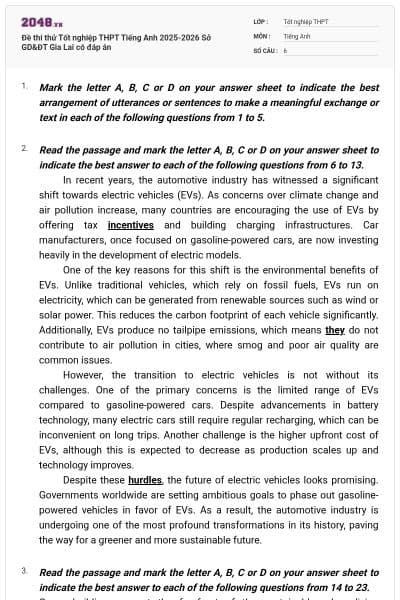
Read the passage and mark the letter A, B, C or D on your answer sheet to indicate the best answer to each of the following questions from 23 to 30.
Nomophobia, or the fear of being without a mobile phone, is becoming more prevalent in our technology-driven world. This anxiety is partially related to the rise of AI technology, which could make it extremely difficult to live without smartphones. As our reliance on mobile devices grows, so does the fear of being disconnected from the digital world. Consequently, the causes and effects of nomophobia should be properly understood in order to find appropriate solutions.
AI-powered apps and services like virtual assistants have made our lives more convenient. These tools help us deal with daily tasks, provide information and even offer entertainment. However, this convenience comes at a cost. As we rely more on these AI-driven services, our dependence on smartphones grows, making the idea of living without them more stressful.
One of the reasons why users find it so hard to put down their smartphones is the personalised content created by AI algorithms. They tailor social media feeds, news, and entertainment to our preferences, making our phones more engaging. While this personalisation enhances user experience, it also increases the likelihood of nomophobia as users become more attached to their devices.
However, AI is not always the villain in the world of technology. It can also play a role in identifying and managing nomophobia. By analysing usage patterns, AI can detect signs of excessive phone use and suggest interventions. For example, some AI-powered apps can monitor how often you use your phone and provide reminders to take breaks. This can help users become more aware of their unhealthy habits and reduce their dependence on their devices. Finally, AI can help researchers understand nomophobia better. By analysing large datasets, AI can identify trends and factors contributing to this anxiety as well as users’ behaviour in various circumstances. As a result, scientists can come up with more strategies for managing and reducing nomophobia.
In spite of contributing to nomophobia, AI technology can offer many benefits in controlling the issue. By understanding this relationship, we can find ways to balance our use of smartphones and maintain our well-being.
Which of the following best paraphrases the underlined sentence in paragraph 5?
In spite of contributing to nomophobia, AI technology can offer many benefits in controlling the issue.
While AI technology contributes to nomophobia, it can also provide solutions to it.
Contributing to AI achievements, nomophobia offers practical solutions.
Without AI technology, nomophobia can be controlled with many benefits.
Because AI technology contributes to nomophobia, it can help control the issue.
Câu nào diễn giải đúng nhất câu gạch chân ở đoạn 5?
In spite of contributing to nomophobia, AI technology can offer many benefits in controlling the issue.(Mặc dù góp phần gây ra hội chứng nomophobia, công nghệ AI có thể mang lại nhiều lợi ích trong việc kiểm soát vấn đề này.)
A. Trong khi công nghệ AI góp phần gây ra nomophobia, nó cũng có thể cung cấp các giải pháp cho hội chứng này.
B. Góp phần vào những thành tựu của AI, nomophobia mang lại những giải pháp thực tế.
→ Sai nghĩa
C. Không có công nghệ AI, nomophobia có thể được kiểm soát với nhiều lợi ích.
→ Sai nghĩa
D. Bởi vì công nghệ AI góp phần gây ra nomophobia, nó có thể giúp kiểm soát vấn đề.
→ Dùng từ nối “Because” không phản ánh đúng quan hệ đối lập của “In spite of”
→ A giữ đúng cấu trúc đối lập: “While” = “In spite of”; “provide solutions” = “offer benefits in controlling”.
Chọn A.
results in negative outcomes
offers unquestionable benefits
leads to financial loss
brings unexpected danger
Cụm từ “comes at a cost” ở đoạn 2 TRÁI NGHĨA với _______.
comes at a cost: phải trả giá, có mặt trái/hệ lụy.
A. results in negative outcomes: dẫn đến những kết quả tiêu cực (Gần nghĩa)
B. offers unquestionable benefits: mang lại những lợi ích không thể bàn cãi
C. leads to financial loss: dẫn đến tổn thất tài chính (Nghĩa hẹp)
D. brings unexpected danger: mang đến nguy hiểm bất ngờ
→ comes at a cost (có hại/trả giá) >< offers benefits (có lợi).
Thông tin: However, this convenience comes at a cost. As we rely more on these AI-driven services, our dependence on smartphones grows...
(Tuy nhiên, sự tiện lợi này phải trả giá. Khi chúng ta dựa dẫm nhiều hơn vào các dịch vụ AI, sự phụ thuộc vào điện thoại ngày càng tăng...)
Chọn B.
The phrase “the villain” in paragraph 4 could best be replaced by ________.
a technological benefit for phone users
a potential cause of issues
a consequence of misused technology
a phone user with harmful intention
Cụm từ “the villain” ở đoạn 4 có thể được thay thế tốt nhất bởi _______.
the villain (n): kẻ phản diện, nhân vật phản diện (ở đây ám chỉ tác nhân gây hại).
A. a technological benefit for phone users: một lợi ích công nghệ cho người dùng điện thoại
B. a potential cause of issues: một nguyên nhân tiềm tàng gây ra các vấn đề
C. a consequence of misused technology: một hậu quả của công nghệ bị lạm dụng
D. a phone user with harmful intention: một người dùng điện thoại với ý định độc hại
Thông tin: However, AI is not always the villain in the world of technology. It can also play a role in identifying and managing nomophobia.
(Tuy nhiên, AI không phải lúc nào cũng là kẻ phản diện trong thế giới công nghệ. Nó cũng có thể đóng vai trò nhận diện và quản lý nomophobia.)
→ Trong ngữ cảnh này, AI không phải lúc nào cũng là “kẻ xấu” gây ra vấn đề.
Chọn B.
Paragraph 1
Paragraph 2
Paragraph 3
Paragraph 4
Đoạn văn nào đề cập đến khả năng cung cấp lời nhắc của AI để giảm việc sử dụng điện thoại?
A. Đoạn 1
B. Đoạn 2
C. Đoạn 3
D. Đoạn 4
Thông tin (Đoạn 4): For example, some AI-powered apps can monitor how often you use your phone and provide reminders to take breaks.
(Ví dụ, một số ứng dụng hỗ trợ AI có thể theo dõi tần suất bạn dùng điện thoại và đưa ra lời nhắc nghỉ ngơi.)
Chọn D.
It results from fear of disconnection
It is completely harmless
It is linked to dependence on technology
It is increasingly widespread
Điều nào sau đây KHÔNG được nhắc đến trong đoạn 1 như một đặc điểm của nomophobia?
A. It results from fear of disconnection (Nó là kết quả của nỗi sợ bị mất kết nối.)
B. It is completely harmless (Nó hoàn toàn vô hại.)
C. It is linked to dependence on technology (Nó liên quan đến sự phụ thuộc vào công nghệ.)
D. It is increasingly widespread (Nó ngày càng lan rộng.)
Thông tin (Đoạn 1): Nomophobia, or the fear of being without a mobile phone, is becoming more prevalent in our technology-driven world. This anxiety is partially related to the rise of AI technology, which could make it extremely difficult to live without smartphones. As our reliance on mobile devices grows, so does the fear of being disconnected from the digital world.
(Chứng sợ xa điện thoại di động (nomophobia) đang ngày càng phổ biến trong thế giới công nghệ hiện đại. Nỗi lo lắng này một phần liên quan đến sự phát triển của công nghệ trí tuệ nhân tạo (AI), điều có thể khiến cuộc sống trở nên vô cùng khó khăn nếu thiếu điện thoại thông minh. Khi sự phụ thuộc của chúng ta vào các thiết bị di động ngày càng tăng, nỗi sợ bị ngắt kết nối khỏi thế giới kỹ thuật số cũng tăng theo.)
→ Không có thông tin nói nó vô hại, ngược lại bài viết tìm giải pháp để kiểm soát nó.
Chọn B.
Which of the following is TRUE according to the passage?
AI algorithms, while personalising content, decrease user engagement.
Some AI apps can track people’s screen time and turn off their phones when necessary.
Virtual devices have made things so convenient that people can get less dependent on AI.
By understanding people’s online behaviour, scientists can find out how to regulate their anxiety.
Theo bài đọc, điều nào sau đây là ĐÚNG?
A. Các thuật toán AI, trong khi cá nhân hóa nội dung, làm giảm sự tương tác của người dùng.
→ Sai. Thông tin (Đoạn 2): They tailor social media feeds, news, and entertainment to our preferences, making our phones more engaging. (Họ điều chỉnh nội dung mạng xã hội, tin tức và giải trí theo sở thích của chúng ta, giúp điện thoại trở nên hấp dẫn hơn.)
B. Một số ứng dụng AI có thể theo dõi thời gian sử dụng và tắt điện thoại khi cần thiết.
→ Sai, chỉ đưa lời nhắc. Thông tin: For example, some AI-powered apps can monitor how often you use your phone and provide reminders to take breaks. (Ví dụ, một số ứng dụng hỗ trợ trí tuệ nhân tạo có thể theo dõi tần suất bạn sử dụng điện thoại và nhắc nhở bạn nghỉ ngơi.)
C. Các thiết bị ảo đã khiến mọi thứ thuận tiện đến mức con người ít phụ thuộc vào AI hơn. → Sai. Thông tin (Đoạn 2): As we rely more on these AI-driven services, our dependence on smartphones grows(Khi chúng ta ngày càng phụ thuộc nhiều hơn vào các dịch vụ dựa trên trí tuệ nhân tạo, sự phụ thuộc của chúng ta vào điện thoại thông minh cũng tăng lên.)
D. Bằng cách hiểu hành vi trực tuyến của con người, các nhà khoa học có thể tìm ra cách điều chỉnh sự lo âu của họ.
→ Đúng. Thông tin (Đoạn 4): By analysing large datasets, AI can identify trends... as well as users’ behaviour... As a result, scientists can come up with more strategies for managing and reducing nomophobia.
(Bằng cách phân tích các tập dữ liệu lớn, AI có thể xác định các xu hướng... cũng như hành vi người dùng... Nhờ đó, các nhà khoa học có thể đưa ra nhiều chiến lược quản lý và giảm bớt nomophobia.)
Chọn D.
AI algorithms
The reasons
Users’ smartphones
Users
Từ “They” ở đoạn 3 chỉ _______.
A. AI algorithms: các thuật toán AI
B. The reasons: các lý do
C. Users’ smartphones: điện thoại của người dùng
D. Users: người dùng
Thông tin: One of the reasons why users find it so hard to put down their smartphones is the personalised content created by AI algorithms. Theytailor social media feeds, news, and entertainment to our preferences, making our phones more engaging.
(Một trong những lý do khiến người dùng khó lòng rời xa điện thoại thông minh là nội dung được cá nhân hóa do thuật toán trí tuệ nhân tạo tạo ra. Chúng điều chỉnh các bài đăng trên mạng xã hội, tin tức và giải trí theo sở thích của chúng ta, khiến điện thoại trở nên hấp dẫn hơn.)
→ They = AI algorithms.
Chọn A.
Which paragraph reflects the author’s view of AI-driven services as both beneficial and potentially problematic due to growing reliance on smartphones?
Paragraph 3
Paragraph 4
Paragraph 2
Paragraph 1
Đoạn văn nào phản ánh quan điểm của tác giả về các dịch vụ điều khiển bởi AI vừa có lợi vừa tiềm ẩn vấn đề do sự phụ thuộc ngày càng tăng vào điện thoại?
A. Đoạn 3
B. Đoạn 4
C. Đoạn 2
D. Đoạn 1
Thông tin (Đoạn 2): AI-powered apps... have made our lives more convenient. (Lợi) However, this convenience comes at a cost. As we rely more on these AI-driven services, our dependence on smartphones grows, making the idea of living without them more stressful. (Vấn đề)
Chọn C.
Dịch bài đọc:
Nomophobia, hay nỗi sợ khi không có điện thoại di động, đang trở nên phổ biến hơn trong thế giới bị chi phối bởi công nghệ của chúng ta. Sự lo âu này liên quan một phần đến sự trỗi dậy của công nghệ trí tuệ nhân tạo (AI), điều có thể khiến việc sống thiếu điện thoại thông minh trở nên cực kỳ khó khăn. Khi sự lệ thuộc của chúng ta vào các thiết bị di động tăng lên, nỗi sợ bị mất kết nối với thế giới số cũng tăng theo. Do đó, các nguyên nhân và tác động của nomophobia cần được hiểu rõ để tìm ra các giải pháp phù hợp.
Các ứng dụng và dịch vụ hỗ trợ bởi AI như trợ lý ảo đã làm cho cuộc sống của chúng ta thuận tiện hơn. Những công cụ này giúp chúng ta xử lý các công việc hàng ngày, cung cấp thông tin và thậm chí là giải trí. Tuy nhiên, sự tiện lợi này cũng có cái giá của nó. Khi chúng ta dựa dẫm nhiều hơn vào các dịch vụ do AI điều khiển, sự phụ thuộc vào điện thoại thông minh ngày càng tăng, khiến ý tưởng sống thiếu chúng trở nên căng thẳng hơn.
Một trong những lý do khiến người dùng thấy khó đặt điện thoại xuống là nội dung được cá nhân hóa do các thuật toán AI tạo ra. Chúng điều chỉnh các bảng tin mạng xã hội, tin tức và giải trí theo sở thích của chúng ta, làm cho điện thoại trở nên hấp dẫn hơn. Mặc dù sự cá nhân hóa này nâng cao trải nghiệm người dùng, nó cũng làm tăng khả năng mắc hội chứng nomophobia khi người dùng ngày càng gắn bó chặt chẽ với thiết bị của mình.
Tuy nhiên, AI không phải lúc nào cũng là “kẻ phản diện” trong thế giới công nghệ. Nó cũng có thể đóng vai trò trong việc nhận diện và quản lý nomophobia. Bằng cách phân tích các thói quen sử dụng, AI có thể phát hiện các dấu hiệu dùng điện thoại quá mức và gợi ý các biện pháp can thiệp. Ví dụ, một số ứng dụng hỗ trợ AI có thể theo dõi tần suất bạn dùng điện thoại và đưa ra lời nhắc nghỉ ngơi. Điều này có thể giúp người dùng nhận thức rõ hơn về các thói quen không lành mạnh và giảm bớt sự phụ thuộc vào thiết bị. Cuối cùng, AI có thể giúp các nhà nghiên cứu hiểu rõ hơn về nomophobia. Bằng cách phân tích các tập dữ liệu lớn, AI có thể xác định các xu hướng và yếu tố góp phần gây ra sự lo âu này cũng như hành vi của người dùng trong các tình huống khác nhau. Nhờ đó, các nhà khoa học có thể đưa ra nhiều chiến lược hơn để quản lý và giảm bớt nomophobia.
Mặc dù góp phần gây ra nomophobia, công nghệ AI có thể mang lại nhiều lợi ích trong việc kiểm soát vấn đề này. Bằng cách hiểu rõ mối quan hệ này, chúng ta có thể tìm cách cân bằng việc sử dụng điện thoại thông minh và duy trì sức khỏe tinh thần của mình.
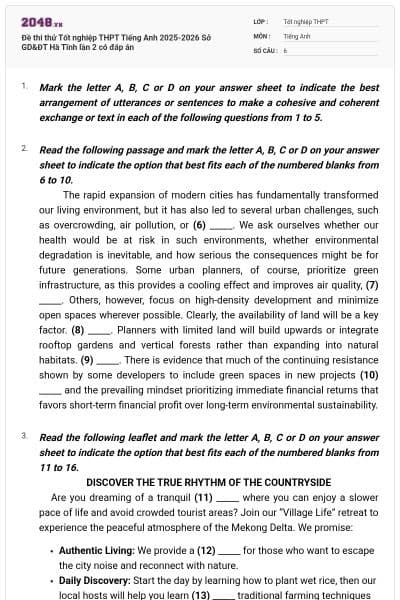
Read the passage and mark the letter A, B, C or D on your answer sheet to indicate the best answer to each of the following questions from 31 to 40.
It seems that scarcely a week passes without a new health scare dominating headlines. If we were to take every warning at face value, we might feel terrified to eat anything at all. For the average person, deciding which claims deserve attention and which should be taken with a pinch of salt is extremely challenging. All these reports appear persuasive when we read them, yet most of us lack the scientific expertise to distinguish reliable information from misleading alarmism.
Should the public be shielded from such scares until they are fully verified? Or is the media – so often blamed for everything – simply doing its job? Not long ago, many of these issues would have been hidden from us entirely. Today, however, we live in the era of mass communication, where news travels instantly and widely. [I] The question is whether the media’s duty to inform outweighs the potential anxiety such reports generate.
The communication revolution has flooded us with information that must somehow be processed and understood. This alone is time-consuming, yet matters are further complicated by the fact that health guidance is constantly changing. [II] Nowhere is this more obvious than in the area of food. Just when we believe we have grasped what is safe to consume and what is not, new research appears to overturn previous advice.
For a time, we were told to avoid red meat because it could harm the heart. Then came the warnings about chicken and food poisoning. Fruit and vegetables were declared unquestionably healthy – until recent concerns emerged about pesticide contamination. [III] It increasingly seems that whatever we put into our mouths could, at least according to somebody, be harmful.
So how should we respond? Living in a permanent state of fear is clearly neither realistic nor healthy. Perhaps the best we can do is remain sensible, informed, and aware that scientific knowledge evolves. [IV] Ironically, excessive worry about our health may be as damaging as the supposed dangers we are warned about.
ignore frightening health warnings
access scientific research
believe that health scares are convincing
judge which health scares are trustworthy
According to paragraph 1, ordinary people find it difficult to ________.
(Theo đoạn 1, người bình thường thấy khó khăn trong việc _______.)
A. ignore frightening health warnings: phớt lờ các cảnh báo sức khỏe đáng sợ
B. access scientific research: tiếp cận các nghiên cứu khoa học
C. believe that health scares are convincing: tin rằng các tin tức cảnh báo sức khỏe là thuyết phục
D. judge which health scares are trustworthy: đánh giá xem tin tức cảnh báo sức khỏe nào là đáng tin cậy
Thông tin: For the average person, deciding which claims deserve attention and which should be taken with a pinch of salt is extremely challenging.
(Đối với người bình thường, việc quyết định khẳng định nào đáng chú ý và khẳng định nào nên hoài nghi là vô cùng khó khăn.)
→ “deciding which claims deserve attention” = “judge which... are trustworthy”.
Chọn D.
seriously investigated
treated with doubt
completely rejected
read thoroughly
Cụm từ “taken with a pinch of salt” ở đoạn 1 gần nghĩa nhất với _______.
take something with a pinch of salt (idiom): nghe/tiếp nhận điều gì đó với sự hoài nghi (vì không chắc nó hoàn toàn đúng).
A. seriously investigated: được điều tra nghiêm túc
B. treated with doubt: được xem xét với sự nghi ngờ/hoài nghi
C. completely rejected: bị bác bỏ hoàn toàn
D. read thoroughly: được đọc kỹ lưỡng
→ taken with a pinch of salt ~ treated with doubt
Thông tin: For the average person, deciding which claims deserve attention and which should be taken with a pinch of saltis extremely challenging. (Đối với người bình thường, việc quyết định những tuyên bố nào đáng được chú ý và những tuyên bố nào nên được xem xét một cách thận trọng là vô cùng khó khăn.)
Chọn B.
Which of the following best paraphrases the underlined sentence in paragraph 3?
yet matters are further complicated by the fact that health guidance is constantly changing.
Once guidance is established, it normally remains stable.
People rarely believe any of the health warnings they hear.
Health advice constantly shifts, making certainty impossible.
Food is the only area in which warnings frequently change.
Câu nào diễn giải đúng nhất câu gạch chân ở đoạn 3?
yet matters are further complicated by the fact that health guidance is constantly changing.
(tuy nhiên mọi chuyện còn phức tạp hơn bởi thực tế là các hướng dẫn về sức khỏe liên tục thay đổi.)
A. Một khi hướng dẫn đã được thiết lập, nó thường ổn định.
→ Sai nghĩa: ngược hoàn toàn, bài nói guidance thay đổi, không ổn định
B. Mọi người hiếm khi tin bất kỳ cảnh báo sức khỏe nào họ nghe được.
→ Sai, không đề cập “rarely believe”
C. Lời khuyên sức khỏe liên tục thay đổi, khiến cho sự chắc chắn là không thể.
→ Đúng, “constantly changing” = “constantly shifts”.
D. Thực phẩm là lĩnh vực duy nhất mà các cảnh báo thường xuyên thay đổi.
→ Sai vì có từ “only”
Chọn C.
According to the passage, the modern media ________.
reveals information that used to be hidden from the public
deliberately exaggerates fears to attract attention
should be held fully responsible for creating panic
has successfully reduced anxiety around health issues
Theo bài đọc, truyền thông hiện đại _______.
A. tiết lộ thông tin từng bị giấu kín khỏi công chúng
B. cố ý thổi phồng nỗi sợ hãi để thu hút sự chú ý (Bài không khẳng định là “deliberately”)
C. nên chịu trách nhiệm hoàn toàn về việc gây ra hoảng loạn (Bài đặt câu hỏi chứ không đổ lỗi hoàn toàn cho media).
D. đã giảm thiểu thành công sự lo lắng xung quanh các vấn đề sức khỏe (Ngược lại – media làm tăng anxiety).
Thông tin (Đoạn 2): Not long ago, many of these issues would have been hidden from us entirely. Today, however, we live in the era of mass communication, where news travels instantly and widely.
(Cách đây không lâu, nhiều vấn đề trong số này đã bị giấu kín hoàn toàn khỏi chúng ta. Tuy nhiên, ngày nay, chúng ta sống trong thời đại thông tin đại chúng, nơi tin tức truyền đi ngay lập tức và rộng rãi.)
Chọn A.
Which of the following can be inferred from the passage?
Governments should ban unverified health information.
Total certainty in health matters is impossible.
People would be healthier if health scares did not exist.
Avoiding media reports entirely is the safest option.
Điều nào có thể được suy ra từ bài đọc?
A. Chính phủ nên cấm thông tin y tế chưa được kiểm chứng.
B. Sự chắc chắn hoàn toàn trong các vấn đề sức khỏe là không thể.
C. Mọi người sẽ khỏe mạnh hơn nếu các tin tức cảnh báo sức khỏe không tồn tại.
D. Tránh hoàn toàn các báo cáo truyền thông là lựa chọn an toàn nhất.
→ Vì hướng dẫn sức khỏe “constantly changing” và kiến thức khoa học “evolves”, chúng ta không bao giờ có sự chắc chắn tuyệt đối.
Thông tin (Đoạn 5): Perhaps the best we can do is remain sensible, informed, and aware that scientific knowledge evolves. (Có lẽ điều tốt nhất chúng ta có thể làm là giữ thái độ tỉnh táo, nắm bắt thông tin và nhận thức rằng kiến thức khoa học luôn phát triển.)
Chọn B.
The word “This” in paragraph 3 refers to ________.
the need to process enormous amounts of information
the media’s responsibility to inform
the changing nature of health advice
the revolution in communication
Từ “This” ở đoạn 3 chỉ _______.
A. the need to process enormous amounts of information: nhu cầu xử lý một lượng thông tin khổng lồ
B. the media’s responsibility to inform: trách nhiệm thông tin của truyền thông
C. the changing nature of health advice: bản chất thay đổi của lời khuyên sức khỏe
D. the revolution in communication: cuộc cách mạng trong giao tiếp
Thông tin: The communication revolution has flooded us with information that must somehow be processed and understood. This alone is time-consuming...
(Cuộc cách mạng truyền thông đã làm chúng ta ngập trong thông tin mà bằng cách nào đó phải được xử lý và thấu hiểu. Việc này (xử lý thông tin) vốn đã tốn thời gian...)
→ This = the need to process enormous amounts of information
Chọn A.
Which of the following best summarises the passage?
Health scares are mostly false and should be ignored.
Constant health warnings can confuse and frighten people, but worrying excessively may be worse than the dangers themselves.
Scientists deliberately create contradictory advice to attract attention.
Media coverage of health scares has improved public understanding of science.
Câu nào tóm tắt đúng nhất bài đọc?
A. Các tin tức cảnh báo sức khỏe hầu hết là sai và nên bị phớt lờ.
B. Các cảnh báo sức khỏe liên tục có thể làm mọi người bối rối và hoảng sợ, nhưng việc lo lắng quá mức có thể còn tệ hơn chính những nguy hiểm đó.
C. Các nhà khoa học cố tình tạo ra lời khuyên mâu thuẫn để thu hút sự chú ý.
D. Việc truyền thông đưa tin về các cảnh báo sức khỏe đã cải thiện sự hiểu biết của công chúng về khoa học.
Toàn bài: health scares làm mọi người hoang mang (confuse & frighten) + kết luận “excessive worry about our health may be as damaging as the supposed dangers”.
Phân tích:
A: Sai (bài không nói hầu hết scares là giả).
B: Đúng (tóm tắt cân bằng và sát nhất).
C: Sai (không đổ lỗi cho nhà khoa học cố tình).
D: Sai (ngược lại – media làm mọi người khó hiểu hơn).
Chọn B.
Where in the passage does the sentence below best fit?
“Yet such transparency may come at the cost of public peace of mind.”
[II]
[I]
[III]
[IV]
Câu dưới đây phù hợp nhất với vị trí nào trong bài đọc?
“Yet such transparency may come at the cost of public peace of mind.”
(Tuy nhiên, sự minh bạch như vậy có thể phải trả giá bằng sự bình yên trong tâm trí của công chúng.)
→ “Transparency” (Sự minh bạch) ở đây liên quan đến việc thông tin không còn bị giấu kín (“hidden from us entirely”) ở đoạn 2. Vị trí [I] đứng trước câu hỏi về sự đánh đổi giữa “duty to inform” (nghĩa vụ thông tin) và “anxiety” (sự lo lắng), khớp với ý của câu cần điền.
Thông tin: Should the public be shielded from such scares until they are fully verified? Or is the media – so often blamed for everything – simply doing its job? Not long ago, many of these issues would have been hidden from us entirely. Today, however, we live in the era of mass communication, where news travels instantly and widely. [I] Yet such transparency may come at the cost of public peace of mind. The question is whether the media’s duty to inform outweighs the potential anxiety such reports generate.
(Liệu công chúng có nên được bảo vệ khỏi những thông tin gây hoang mang như vậy cho đến khi chúng được xác minh đầy đủ? Hay giới truyền thông – thường bị đổ lỗi cho mọi thứ – chỉ đơn giản là đang làm nhiệm vụ của mình? Cách đây không lâu, nhiều vấn đề này sẽ hoàn toàn bị che giấu khỏi chúng ta. Tuy nhiên, ngày nay, chúng ta sống trong thời đại truyền thông đại chúng, nơi tin tức lan truyền tức thì và rộng rãi. [I] Tuy nhiên, sự minh bạch như vậy có thể phải trả giá bằng sự an tâm của công chúng. Câu hỏi đặt ra là liệu nghĩa vụ thông tin của giới truyền thông có quan trọng hơn sự lo lắng tiềm tàng mà những báo cáo như vậy tạo ra hay không.)
Chọn B.
Which of the following best summarises paragraph 1?
Frequent health scares leave people unsure what to believe.
The public lacks confidence in media health reports.
Constant health warnings make people distrust science.
Health scares are often exaggerated by non-experts.
Câu nào tóm tắt tốt nhất đoạn 1?
A. Những tin tức cảnh báo sức khỏe thường xuyên khiến mọi người không chắc nên tin vào điều gì.
B. Công chúng thiếu tin tưởng vào các báo cáo sức khỏe trên truyền thông.
C. Cảnh báo sức khỏe liên tục khiến mọi người mất lòng tin vào khoa học.
D. Các cảnh báo sức khỏe thường bị thổi phồng bởi những người không phải chuyên gia.
Đoạn 1 tập trung vào việc các tiêu đề báo chí xuất hiện hàng tuần làm người dân khó phân biệt thông tin đáng tin và thông tin báo động giả.
Chọn A.
What does the writer imply about food advice in paragraph 4?
It has become contradictory and confusing.
It proves scientists cannot agree on anything.
It often replaces previous warnings with clearer guidance.
It has made people more confident about eating safely.
Tác giả ngụ ý điều gì về những lời khuyên thực phẩm ở đoạn 4?
A. Nó đã trở nên mâu thuẫn và gây bối rối.
B. Nó chứng minh rằng các nhà khoa học không thể đồng ý về bất cứ điều gì.
C. Nó thường thay thế các cảnh báo trước đó bằng các hướng dẫn rõ ràng hơn.
D. Nó khiến mọi người tự tin hơn về việc ăn uống an toàn.
Đoạn 4 lần lượt liệt kê: tránh thịt đỏ → cảnh báo thịt gà → rau quả có thuốc trừ sâu. Tác giả kết luận: “whatever we put into our mouths could... be harmful.” (Bất cứ thứ gì chúng ta bỏ vào miệng cũng có thể... gây hại.) → Cho thấy sự mâu thuẫn giữa các lời khuyên qua từng thời điểm.
Chọn A.
Dịch bài đọc:
Có vẻ như hiếm có tuần nào trôi qua mà không có một mối lo ngại mới về sức khỏe thống trị các tiêu đề báo chí. Nếu chúng ta tin vào mọi lời cảnh báo một cách mù quáng, chúng ta có thể cảm thấy sợ hãi đến mức chẳng dám ăn bất cứ thứ gì. Đối với một người bình thường, việc quyết định xem khẳng định nào đáng được chú ý và khẳng định nào nên xem xét với sự hoài nghi là một thử thách cực kỳ lớn. Tất cả những báo cáo này trông có vẻ rất thuyết phục khi chúng ta đọc chúng, nhưng hầu hết chúng ta đều thiếu chuyên môn khoa học để phân biệt giữa thông tin đáng tin cậy và sự báo động gây hiểu lầm.
Liệu công chúng có nên được bảo vệ khỏi những mối lo sợ như vậy cho đến khi chúng được xác minh đầy đủ? Hay truyền thông – đối tượng vốn thường bị đổ lỗi cho mọi thứ – chỉ đơn giản là đang thực hiện công việc của mình? Cách đây không lâu, nhiều vấn đề trong số này đã bị giấu kín hoàn toàn khỏi chúng ta. Tuy nhiên, ngày nay, chúng ta đang sống trong kỷ nguyên truyền thông đại chúng, nơi tin tức lan truyền tức thời và rộng rãi. Câu hỏi đặt ra là liệu nghĩa vụ cung cấp thông tin của truyền thông có quan trọng hơn sự lo lắng tiềm tàng mà những báo cáo như vậy gây ra hay không.
Cuộc cách mạng truyền thông đã làm chúng ta ngập trong lượng thông tin khổng lồ cần phải được xử lý và thấu hiểu. Riêng việc này đã tiêu tốn nhiều thời gian, nhưng mọi chuyện còn phức tạp hơn bởi thực tế là các hướng dẫn về sức khỏe liên tục thay đổi. Không nơi nào điều này rõ ràng hơn trong lĩnh vực thực phẩm. Ngay khi chúng ta tin rằng mình đã nắm vững cái gì an toàn để tiêu thụ và cái gì không, nghiên cứu mới lại xuất hiện và lật ngược những lời khuyên trước đó.
Có một thời gian, chúng ta được khuyên nên tránh thịt đỏ vì nó có thể gây hại cho tim. Sau đó là những cảnh báo về thịt gà và ngộ độc thực phẩm. Trái cây và rau củ từng được tuyên bố là tốt cho sức khỏe một cách không thể bàn cãi – cho đến khi những lo ngại gần đây xuất hiện về ô nhiễm thuốc trừ sâu. Cảm giác ngày càng rõ ràng rằng bất cứ thứ gì chúng ta bỏ vào miệng đều có thể gây hại, ít nhất là theo nhận định của một ai đó.
Vậy chúng ta nên phản ứng thế nào? Sống trong trạng thái sợ hãi thường trực rõ ràng là không thực tế cũng không lành mạnh. Có lẽ điều tốt nhất chúng ta có thể làm là giữ tinh thần tỉnh táo, cập nhật thông tin và nhận thức được rằng kiến thức khoa học luôn tiến hóa. Trớ trêu thay, việc lo lắng quá mức về sức khỏe có thể gây hại tương đương với những mối nguy hiểm giả định mà chúng ta được cảnh báo.