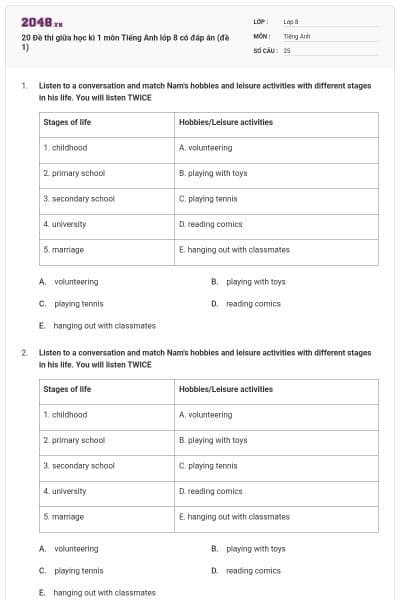
24 câu hỏi
volunteering
playing with toys
playing tennis
reading comics
hanging out with classmates
CHỌN ĐÁP ÁN LÀ B
volunteering
playing with toys
playing tennis
reading comics
hanging out with classmates
CHỌN ĐÁP ÁN LÀ D
volunteering
playing with toys
playing tennis
reading comics
hanging out with classmates
CHỌN ĐÁP ÁN LÀ E
volunteering
playing with toys
playing tennis
reading comics
hanging out with classmates
CHỌN ĐÁP ÁN LÀ A
volunteering
playing with toys
playing tennis
reading comics
hanging out with classmates
CHỌN ĐÁP ÁN LÀ C
1. Five-coloured sticky rice is important to northern mountainous region.
2. five- coloured sticky rice has five colours: red, yellow, green, purple and white.
3. It is made using natural roots and leaves.
4. Purple or black symbolises water
5. Five-coloured sticky rice is usually made and enjoyed at Tet
more harder
more hardly
hardlier
harder
Đáp án: D
Giải thích:
Kiến thức: So sánh hơn
Trong câu so sánh hơn (comparative form), tính từ ngắn như "hard" chỉ cần thêm "-er" để tạo dạng so sánh: "hard → harder".
Cấu trúc: A is + comparative adjective + than + B
Dịch: Việc thu hoạch lúa vất vả hơn nhiều so với việc phơi lúa.

Học thông minh hơn mỗi ngày
Xem toàn bộ 24 câu hỏi và nhiều hơn nữa với tài khoản miễn phí
picking
Playing
Driving
herding
CHỌN ĐÁP LÀ D
a
An
The
Ө
CHỌN ĐÁP ÁN LÀ C
Doing
reading
Playing
Going
CHỌN ĐÁP ÁN LÀ A
diverse
similar
unlike
the same
CHỌN ĐÁP ÁN LÀ A
It’s right up my street!
That’s awesome.
Exactly what I want.
How interesting!
Đáp án: D
Giải thích:
“Children in my village often fly their kites in dry rice fields.” (Trẻ em ở làng tôi thường thả diều trên những cánh đồng lúa khô.)
A. It’s right up my street! → Đúng sở trường của tôi! → Thường dùng khi nói về sở thích hoặc điều gì đó phù hợp với ai đó. Không phù hợp trong ngữ cảnh này.
B. That’s awesome. → Thật tuyệt vời! → Có thể dùng nhưng không phải phản hồi tự nhiên nhất.
C. Exactly what I want. → Chính xác là điều tôi muốn. → Không phù hợp vì câu trước không nói về mong muốn của ai đó.
D. How interesting! → Thật thú vị! → Phù hợp nhất vì thể hiện sự quan tâm đến thông tin được chia sẻ.
Chọn D. How interesting!
Dịch:
“Trẻ em ở làng tôi thường thả diều trên những cánh đồng lúa khô.”
“Thật thú vị!”
When
Which
How many
How often
CHỌN ĐÁP ÁN LÀ B
princess
president
present
broccoli
CHỌN ĐÁP ÁN LÀ D
participate
to participate
participating
participates
CHỌN ĐÁP ÁN LÀ C
fancy
don’t mind
dislike
hate
CHỌN ĐÁP ÁN LÀ A
send
to send
to sending
sends
CHỌN ĐÁP ÁN LÀ B
play
rely
meet
hang
CHỌN ĐÁP ÁN LÀ D
virtual
real
fake
new
CHỌN ĐÁP ÁN LÀ A
Đáp án:
1. It exists in the Central Highlands of Viet Nam.
2. It is held once a year / annually.
3. They give gong performances, highlighting the gong culture of their own province.
4. No, they aren’t.
5. No, it isn’t.
Giải thích:
1. Văn hóa Công tồn tại ở đâu?
Nó có ở Tây Nguyên Việt Nam.
Thông tin: “Gong culture in the Central Highlands of Viet Nam has been recognized by UNESCO as a Masterpiece of the Intangible Heritage of Humanity.”
(Văn hóa cồng chiêng Tây Nguyên Việt Nam đã được UNESCO công nhận là Kiệt tác di sản phi vật thể của nhân loại.)
2. Lễ hội Cồng chiêng được tổ chức bao lâu một lần?
Nó được tổ chức mỗi năm một lần / hàng năm.
Thông tin: “The Gong Festival is held annually in the Central Highlands.”
(Lễ hội Cồng chiêng được tổ chức hàng năm ở Tây Nguyên.)
3. Các nghệ sĩ làm gì trong Lễ hội Cồng chiêng?
Họ biểu diễn cồng chiêng, làm nổi bật văn hóa cồng chiêng của tỉnh mình.
Thông tin: “In the festival, artists from these provinces give gong performances, highlighting the gong culture of their own province.”
(Trong lễ hội, các nghệ sĩ từ các tỉnh này biểu diễn cồng chiêng, làm nổi bật văn hóa cồng chiêng của tỉnh mình.)
4. Cồng chiêng có phải là các tác phẩm âm nhạc dân gian không?
Không, không phải.
Thông tin: “gongs are musical instruments of special power”
(cồng chiêng là nhạc cụ có sức mạnh đặc biệt), không phải là pieces of music (các bản nhạc).
Vậy nên cồng chiêng là nhạc cụ chứ không phải tác phẩm âm nhạc dân gian.
5. Âm thanh cồng chiêng có phải là cách giao tiếp với tổ tiên không?
Không, không phải.
Thông tin: “The gong sound is a way to communicate with the gods.”
(Âm thanh cồng chiêng là một cách để giao tiếp với các vị thần.)
→ Như vậy, cồng chiêng dùng để giao tiếp với các vị thần, không phải với tổ tiên (ancestors).
Dịch bài đọc
Văn hóa cồng chiêng Tây Nguyên của Việt Nam đã được UNESCO công nhận là Kiệt tác di sản phi vật thể của nhân loại. Văn hóa cồng chiêng bao gồm năm tỉnh Tây Nguyên: Kon Tum, Gia Lai, Đắk Lắk, Đắk Nông và Lâm Đồng. Những bậc thầy của văn hóa cồng chiêng là các dân tộc Bahnar, Sedang, Mnông, Cơho… Lễ hội cồng chiêng được tổ chức hàng năm tại Tây Nguyên. Trong lễ hội, các nghệ nhân từ các tỉnh này biểu diễn cồng chiêng, làm nổi bật văn hóa cồng chiêng của chính tỉnh mình. Đối với các dân tộc Tây Nguyên, cồng chiêng là nhạc cụ có sức mạnh đặc biệt. Người ta tin rằng mỗi chiếc cồng chiêng là biểu tượng của một vị thần, càng già cỗi thì quyền năng càng tăng. Vì vậy, cồng chiêng gắn liền với những dịp đặc biệt trong cuộc sống của người dân, chẳng hạn như dựng nhà mới, tang lễ, lễ cầu mùa… Tiếng cồng chiêng là cách giao tiếp với các vị thần.
1. à Your house is bigger than my house.
2. à Jenny dislikes reading poetry.
1. When do ethnic people often hold festivals?
2. Where do they often gather together in special occasions?
1. S’ answer
2. S’ answerBạn có thích hoạt động này không?
Ý kiến của bạn sẽ giúp chúng tôi đề xuất nội dung phù hợp hơn.
![[Năm 2022] Đề thi thử môn Vật lí THPT Quốc gia có lời giải - Đề số 21](/_next/image?url=https%3A%2F%2Fvideo.vietjack.com%2Fupload%2Fimages%2Fvj-image%2Fimage-3izficdefgfoel0s9j8s-1786772791.jpg&w=3840&q=75)
![[Năm 2022] Đề thi thử môn Vật lí THPT Quốc gia có lời giải - Đề số 20](/_next/image?url=https%3A%2F%2Fvideo.vietjack.com%2Fupload%2Fimages%2Fvj-image%2Fimage-emy0gtcksawvorajezvv-1786772460.jpg&w=3840&q=75)