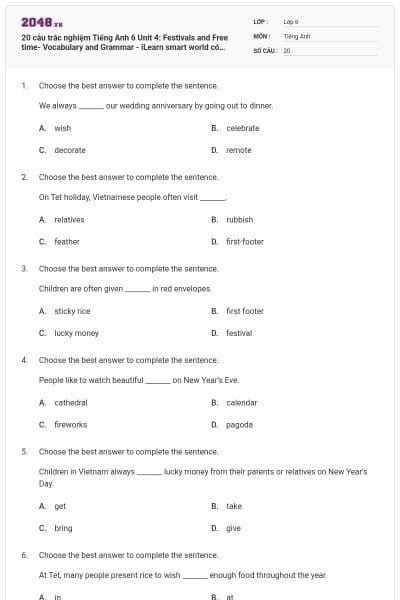
20 câu hỏi
wish
celebrate
decorate
remote
Đáp án đúng: B
wish (v): ước
celebrate (v): kỉ niệm
decorate (v): trang trí
remote (adj): xa xôi, hẻo lánh
→ We always celebrate our wedding anniversary by going out to dinner.
Dịch nghĩa: Chúng tôi luôn kỷ niệm ngày cưới bằng cách ra ngoài ăn tối.
relatives
rubbish
feather
first-footer
Đáp án đúng: A
relatives (n): họ hàng
rubbish (n): rác
feather (n): lông vũ
first-footer (n): người xông đất
→ On Tet holiday, Vietnamese people often visit relatives.
Dịch nghĩa: Vào dịp Tết, người Việt thường đến thăm họ hàng.
sticky rice
first footer
lucky money
festival
Đáp án đúng: C
sticky rice (n): xôi
first footer (n): người xông đất
lucky money (n): tiền mừng tuổi
festival (n): lễ hội
→ Children are often given lucky money in red envelopes.
Dịch nghĩa: Trẻ em thường được nhận tiền mừng tuổi trong phong bao đỏ.
cathedral
calendar
fireworks
pagoda
Đáp án đúng: C
cathedral (n): thánh đường
calendar (n): lịch
fireworks (n): pháo hoa
pagoda (n): chùa
→ People like to watch beautiful fireworks on New Year’s Eve.
Dịch nghĩa: Mọi người thích xem những màn bắn pháo hoa tuyệt đẹp vào đêm giao thừa năm mới.
get
take
bring
give
Đáp án đúng: A
get (v): nhận được
take (v): lấy đi, cầm đi
bring (v): mang theo
give (v): trao, gửi
→ Children in Vietnam always get lucky money from their parents or relatives on New Year’s Day.
Dịch nghĩa: Trẻ em ở Việt Nam luôn nhận được tiền mừng tuổi từ bố mẹ hoặc người thân của mình vào ngày Tết.
in
at
for
with
Đáp án đúng: C
Cụm từ: wish for something – cầu mong điều gì.
→ At Tet, many people present rice to wish for enough food throughout the year.
Dịch nghĩa: Vào dịp Tết, nhiều người cúng gạo để cầu mong có đủ lương thực trong suốt cả năm.
tradition
normal
ordinary
traditional
Đáp án đúng: D
tradition (n): truyền thống
normal (adj): bình thường, thông thường
ordinary (adj): bình thường
traditional (adj): có tính truyền thống
Chỗ cần điền là một tính từ bổ sung ý nghĩa cho danh từ “clothes” (quần áo), dựa vào ngữ nghĩa của câu ta chọn “traditional”.
→ When New Year comes, people in different countries always wear their traditional clothes.
Dịch nghĩa: Khi năm mới đến, người dân ở các quốc gia khác nhau luôn mặc trang phục truyền thống của mình.

Học thông minh hơn mỗi ngày
Xem toàn bộ 20 câu hỏi và nhiều hơn nữa với tài khoản miễn phí
visit grandparents
decorate house
clean house
go shopping
Đáp án đúng: D
visit grandparents: đến thăm ông bà
decorate house: trang trí nhà cửa
clean house: dọn dẹp nhà cửa
go shopping: đi mua sắm
→ I often go shopping with my mother before Tet. We buy a lot of food then.
Dịch nghĩa: Tôi thường hay đi mua sắm với mẹ trước ngày Tết. Khi đó chúng tôi mua rất nhiều đồ ăn.
cooking
working
paying
gathering
Đáp án đúng: D
cook (v): nấu ăn
work (v): làm việc
pay (v): trả tiền
gather (v): sum vầy, tụ họp
Cụm từ: family gathering – đoàn tụ gia đình.
→ Tet is a time for family gathering.
Dịch nghĩa: Tết là thời gian để gia đình sum vầy.
firecrackers
plants
food
presents
Đáp án đúng: D
firecrackers (n): pháo hoa
plants (n): cây
food (n): đồ ăn
presents (n): món quà
→ Before Tet, people often give presents to show their love and respect.
Dịch nghĩa: Trước ngày Tết, mọi người thường hay tặng quà để thể hiện tình cảm và sự tôn trọng lẫn nhau.
have
has
haven’t
having
Đáp án đúng: B
Tomorrow night (tối mai) là dấu hiệu của thì hiện tại đơn dùng cho tương lai gần khi nói về lịch trình, thời gian biểu cố định.
Cấu trúc thì hiện tại đơn ở thể khẳng định: S + V (s/es) + O.
Chủ ngữ “She” là ngôi thứ 3 số ít nên động từ “have” chia số ít là “has”.
→ She has a music performance tomorrow night.
Dịch nghĩa: Cô ấy sẽ có buổi biểu diễn âm nhạc vào tối mai.
Do/ start
Does/ starts
Is/ starting
Does/ start
Đáp án đúng: D
Đây là câu hỏi nói về lịch trình (buổi trình diễn thời trang), có thời gian rõ ràng (in ten minutes), nên ta dùng thì hiện tại đơn.
Cấu trúc thì hiện tại đơn ở thể nghi vấn: Do/Does + S + V-inf + O?
Chủ ngữ “the fashion show” là ngôi thứ 3 số ít nên đi với trợ động từ “Does”.
Sau trợ động từ “Does” dùng động từ nguyên thể không chia “start”.
→ Does the fashion show start in ten minutes?
Dịch nghĩa: Buổi trình diễn thời trang sẽ bắt đầu sau mười phút nữa phải không?
Where
What
What time
Which
Đáp án đúng: C
Where: ở đâu
What: cái gì
What time: mấy giờ
Which: cái nào/người nào
Dựa vào câu trả lời, ta cần điền một cụm từ để hỏi chỉ thời gian.
→ What time does the concert finish? - At ten o’clock.
Dịch nghĩa: Buổi hòa nhạc kết thúc vào lúc mấy giờ? - Lúc mười giờ.
don’t take place
take place
isn’t take place
doesn’t take place
Đáp án đúng: A
Next Friday (thứ Sáu tới) là dấu hiệu của thì hiện tại đơn khi nói về lịch trình hoặc sự kiện đã lên kế hoạch. Dựa vào ngữ cảnh, cần chọn cụm mang nghĩa phủ định.
Cấu trúc thì hiện tại đơn ở thể phủ định: S + don’t/doesn’t + V-inf + O.
Chủ ngữ “The puppet shows” là số nhiều nên đi với “don’t”.
→ The puppet shows don’t take place next Friday. They’re on Saturday.
Dịch nghĩa: Chương trình múa rối sẽ không diễn ra vào thứ Sáu tuần tới. Chúng sẽ diễn ra vào thứ Bảy.
are/ now
is/ now
are/ this weekend
is/ this weekend
Đáp án đúng: D
Chủ ngữ “The band’s live performance” là danh từ số ít nên động từ phải là “is”.
Trạng từ chỉ thời gian phù hợp là “this weekend” để thể hiện một sự kiện đã được lên lịch.
→ The band’s live performance is at the stadium this weekend.
Dịch nghĩa: Buổi biểu diễn trực tiếp của ban nhạc sẽ diễn ra tại sân vận động vào cuối tuần này.
Our
give often
a lot of
homework
Đáp án đúng: B
Trạng từ chỉ tần suất như “often” được đặt trước động từ chính và sau trợ động từ (nếu có).
Sửa: give often → often give
Dịch nghĩa: Giáo viên của chúng tôi không thường giao cho chúng tôi nhiều bài tập về nhà.
sometimes is
because
misses
family
Đáp án đúng: A
Động từ "is" là động từ “to be”, khi đi với trạng từ chỉ tần suất như “sometimes”, thì trạng từ phải đứng sau “to be”.
Sửa: sometimes is → is sometimes
Dịch nghĩa: David đôi khi buồn vì anh ấy nhớ gia đình.
write usually
essays
your
English
Đáp án đúng: A
Trong câu hỏi với “do/does”, trạng từ chỉ tần suất như “usually” đứng sau chủ ngữ nhưng trước động từ chính.
Sửa: write usually → usually write
Dịch nghĩa: Bạn có thường viết bài luận trong lớp tiếng Anh không?
never is
late
for
work
Đáp án đúng: A
Khi dùng với động từ “to be”, trạng từ chỉ tần suất như “never” phải đứng sau “is”.
Sửa: never is → is never
Dịch nghĩa: Cô ấy không bao giờ đi làm muộn.
The girls
buy always
new
at
Đáp án đúng: B
Trong câu khẳng định có động từ thường, trạng từ chỉ tần suất như “always” được đặt trước động từ chính.
Sửa: buy always → always buy
Dịch nghĩa: Con gái luôn mua quần áo mới vào dịp Giáng Sinh.
Bạn có thích hoạt động này không?
Ý kiến của bạn sẽ giúp chúng tôi đề xuất nội dung phù hợp hơn.
![[Năm 2022] Đề thi thử môn Vật lí THPT Quốc gia có lời giải - Đề số 21](/_next/image?url=https%3A%2F%2Fvideo.vietjack.com%2Fupload%2Fimages%2Fvj-image%2Fimage-3izficdefgfoel0s9j8s-1786772791.jpg&w=3840&q=75)
![[Năm 2022] Đề thi thử môn Vật lí THPT Quốc gia có lời giải - Đề số 20](/_next/image?url=https%3A%2F%2Fvideo.vietjack.com%2Fupload%2Fimages%2Fvj-image%2Fimage-emy0gtcksawvorajezvv-1786772460.jpg&w=3840&q=75)