Đề tuyển sinh vào lớp 10 Tiếng Anh năm 2026-2027 Sở Lai Châu (có đáp án)
40 câu hỏi
Choose the letter A, B, C, or D whose underlined part is pronounced differently from that of the others. (1.0 point)
arrived
decided
provided
devoted
Đáp án đúng: A
Đáp án A phát âm là /d/, các đáp án còn lại phát âm là /ɪd/
Choose the letter A, B, C, or D whose underlined part is pronounced differently from that of the others. (1.0 point)
walks
keys
sleeps
cups
Đáp án đúng: B
Đáp án B phát âm là /z/, các đáp án còn lại phát âm là /s/
Choose the letter A, B, C, or D whose underlined part is pronounced differently from that of the others. (1.0 point)
invite
climb
iron
sing
Đáp án đúng: D
Đáp án D phát âm là /ɪ/, các đáp án còn lại phát âm là /aɪ/
Choose the letter A, B, C, or D whose underlined part is pronounced differently from that of the others. (1.0 point)
chemistry
chores
church
chicken
Đáp án đúng: A
Đáp án A phát âm là /k/, các đáp án còn lại phát âm là /tʃ/
Choose the letter A, B, C, or D to complete each of the following questions. (4.5 points)
Your brothers submitted their graduation thesis last month, __________?
didn’t they
don’t they
did they
do they
Đáp án đúng: A
Câu hỏi đuôi: mệnh đề khẳng định thì quá khứ (submitted) → phần đuôi phủ định "didn't they".
Dịch nghĩa: Anh trai bạn đã nộp luận văn tốt nghiệp tháng trước, phải không?
where
who
whose
which
Đáp án đúng: D
which = đại từ quan hệ thay cho vật (a documentary).
Dịch nghĩa: Phong đang tìm một bộ phim tài liệu cung cấp thông tin chi tiết về các loài có nguy cơ tuyệt chủng ở Đông Nam Á.
My uncle has a small bookshop. The shop __________ a wide variety of English novels and comic books.
sell
sells
to sell
selling
Đáp án đúng: B
Chủ ngữ số ít "The shop" → động từ thêm "s": sells.
Dịch nghĩa: Chú tôi có một hiệu sách nhỏ. Hiệu sách bán nhiều loại tiểu thuyết và truyện tranh tiếng Anh.
I haven’t met any of my relatives since I ____ to Ho Chi Minh City two years ago.
moved
didn’t move
don’t move
haven’t moved
Đáp án đúng: A
Cấu trúc: have + V3 ... since + S + V (quá khứ đơn). "since I moved".
Dịch nghĩa: Tôi chưa gặp người thân nào kể từ khi chuyển vào Thành phố Hồ Chí Minh hai năm trước.
Several volunteers were injured while they ______ to rescue people from the collapsed building after the earthquake.
helped
were helping
have helped
helps
Đáp án đúng: B
Cấu trúc: Quá khứ tiến diễn (were helping) chỉ hành động đang diễn ra thì bị gián đoạn bởi "were injured".
Dịch nghĩa: Một số tình nguyện viên bị thương khi đang cứu người khỏi tòa nhà sập sau trận động đất.
I want to travel because I enjoy ______ people in new places.
meet
to meet
meeting
meets
Đáp án đúng: C
Cấu trúc: enjoy + V-ing = thích làm gì.
Dịch nghĩa: Tôi muốn đi du lịch vì tôi thích gặp gỡ mọi người ở những nơi mới.
My grandmother advises me ______ money for my future.
saves
save
saving
to save
Đáp án đúng: D
Cấu trúc: advise + O + to V = khuyên ai làm gì.
Dịch nghĩa: Bà tôi khuyên tôi nên tiết kiệm tiền cho tương lai.
Do you think life in the country is ______ than life in the city?
the most exciting
more exciting
as exciting
exciting
Đáp án đúng: B
So sánh hơn với tính từ dài: more exciting + than.
Dịch nghĩa: Bạn có nghĩ cuộc sống ở nông thôn thú vị hơn cuộc sống ở thành phố không?
Some candidates failed the oral examination because they didn’t have enough ______.
confide
confident
confidential
confidence
Đáp án đúng: D
Sau "enough" cần danh từ → confidence (sự tự tin).
Dịch nghĩa: Một số thí sinh trượt phần thi vấn đáp vì không đủ tự tin.
I wish I ______ how to fix my motorbike, so I won’t have to spend so much money at the repair shop.
know
would knew
knew
had known
Đáp án đúng: C
Cấu trúc: wish + S + V (quá khứ đơn) diễn tả mong ước ở hiện tại → knew.
Dịch nghĩa: Tôi ước mình biết cách sửa xe máy để không phải tốn quá nhiều tiền ở tiệm sửa.
To
In
At
On
Đáp án đúng: B
in the summer = vào mùa hè.
Dịch nghĩa: Vào mùa hè, chúng tôi thường về quê để bơi ở sông.
will discuss
would discuss
discussed
discuss
Đáp án đúng: A
Câu điều kiện loại 1: mệnh đề chính dùng "will + V".
Dịch nghĩa: Tôi sẽ thảo luận vấn đề đó với anh ấy nếu mai tôi gặp anh ấy.
although
because of
in spite of
because
Đáp án đúng: B
because of + N/ cụm danh từ (the foggy weather).
Dịch nghĩa: Chuyến bay từ Amsterdam đến London bị hoãn vì thời tiết nhiều sương mù.
- Mary: “In my opinion, we should keep the traditional craft villages long life.”
- John: “________________.”
I like it
That’s nice
That’s all
That’s a good idea
Đáp án đúng là: D. That’s a good idea.
would do
does
will do
did
Đáp án đúng: A
Câu tường thuật: lùi thì tương lai "will do" → "would do".
Dịch nghĩa: Cô Liên hỏi cậu ấy sẽ làm công việc tình nguyện ở đâu vào mùa hè năm sau.
Traffic light
Traffic jam
Traffic safety
Traffic flow
Đáp án đúng: B
Traffic jam = tắc đường (vấn đề phổ biến ở thành phố lớn).
Dịch nghĩa: Tắc đường là một vấn đề phổ biến ở các thành phố lớn.
hang out with
throw away
cut down on
take care of
Đáp án đúng: B
throw away = vứt bỏ.
Dịch nghĩa: Bạn không nên vứt bỏ quần áo cũ vẫn còn tốt. Bạn có thể quyên góp cho từ thiện.
greater
the greatest
greatest
the great
Đáp án đúng: B
So sánh nhất: the + adj-est → the greatest.
Dịch nghĩa: Bố tôi là người tuyệt vời nhất trong gia đình tôi.
Choose the letter A, B, C, or D that needs correction in each of the following questions. (0.75 point)
English are one of the most popular languages in the world.
are
the most
languages
in
Đáp án đúng: A
Sửa "are" → "is"
"English" (môn/ngôn ngữ) là danh từ không đếm được, dùng động từ số ít.
Dịch nghĩa: Tiếng Anh là một trong những ngôn ngữ phổ biến nhất trên thế giới.
The song who we listened to last night was very interesting.
The
who
listened to
was
Đáp án đúng: B
Sửa "who" → "which/that"
Mệnh đề quan hệ bổ nghĩa cho vật (The song) phải dùng "which/that".
Dịch nghĩa: Bài hát mà chúng tôi nghe tối qua rất hay.
My best friend likes travelling by air because it is fast, safe and comfortably.
likes
because
safe
comfortably
Đáp án đúng: D
Sửa "comfortably" → "comfortable"
Liệt kê song song cần các tính từ cùng dạng: fast, safe, comfortable.
Dịch nghĩa: Bạn thân của tôi thích đi máy bay vì nó nhanh, an toàn và thoải mái.
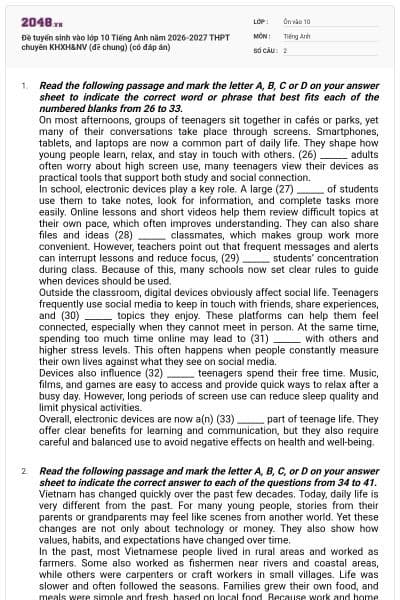
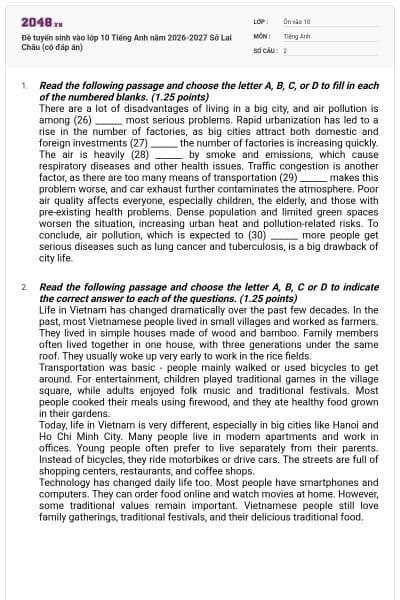
Read the following passage and choose the letter A, B, C, or D to fill in each of the numbered blanks. (1.25 points)
There are a lot of disadvantages of living in a big city, and air pollution is among (26) ______ most serious problems. Rapid urbanization has led to a rise in the number of factories, as big cities attract both domestic and foreign investments (27) ______ the number of factories is increasing quickly. The air is heavily (28) ______ by smoke and emissions, which cause respiratory diseases and other health issues. Traffic congestion is another factor, as there are too many means of transportation (29) ______ makes this problem worse, and car exhaust further contaminates the atmosphere. Poor air quality affects everyone, especially children, the elderly, and those with pre-existing health problems. Dense population and limited green spaces worsen the situation, increasing urban heat and pollution-related risks. To conclude, air pollution, which is expected to (30) ______ more people get serious diseases such as lung cancer and tuberculosis, is a big drawback of city life.
an
a
the
Ø (no article)
Đáp án đúng: C
"the" + so sánh nhất (the most serious problems).
Dịch nghĩa: Ô nhiễm không khí là một trong những vấn đề nghiêm trọng nhất.
so
however
in spite of
because
Đáp án đúng: A
so = nên → chỉ kết quả (thu hút đầu tư nên số nhà máy tăng).
Dịch nghĩa: Các thành phố lớn thu hút đầu tư nên số nhà máy tăng nhanh.
pollute
polluted
pollution
pollutants
Đáp án đúng: B
Câu bị động: be + V3 → "is polluted".
Dịch nghĩa: Không khí bị ô nhiễm nặng bởi khói và khí thải.
whose
how many
where
which
Đáp án đúng: D
which = đại từ quan hệ thay cho cả ý đứng trước.
Dịch nghĩa: Có quá nhiều phương tiện đi lại, điều này khiến vấn đề trầm trọng hơn.
To conclude, air pollution, which is expected to (30) ______ more people get serious diseases such as lung cancer and tuberculosis, is a big drawback of city life.
make
encourage
suggest
persuade
Đáp án đúng: A
Cấu trúc: make + O + V (nguyên thể) = khiến ai đó làm gì.
Dịch nghĩa: Ô nhiễm không khí được dự đoán sẽ khiến nhiều người mắc các bệnh nghiêm trọng.
Dịch bài đọc:
Ô NHIỄM KHÔNG KHÍ Ở THÀNH PHỐ LỚN
Có rất nhiều bất lợi khi sống ở thành phố lớn, và ô nhiễm không khí là một trong những vấn đề nghiêm trọng nhất. Quá trình đô thị hóa nhanh chóng đã làm tăng số lượng nhà máy, vì các thành phố lớn thu hút cả đầu tư trong nước lẫn nước ngoài nên số nhà máy tăng nhanh. Không khí bị ô nhiễm nặng bởi khói và khí thải, gây ra các bệnh hô hấp và những vấn đề sức khỏe khác. Tắc nghẽn giao thông là một yếu tố khác, vì có quá nhiều phương tiện đi lại khiến vấn đề này trầm trọng hơn, và khí thải xe cộ càng làm bẩn bầu khí quyển. Chất lượng không khí kém ảnh hưởng đến tất cả mọi người, đặc biệt là trẻ em, người già và những người vốn có bệnh nền. Dân số đông đúc và không gian xanh hạn chế làm tình hình tồi tệ hơn, làm tăng nhiệt độ đô thị và các nguy cơ liên quan đến ô nhiễm. Tóm lại, ô nhiễm không khí - thứ được dự đoán sẽ khiến nhiều người mắc các bệnh nghiêm trọng như ung thư phổi và lao - là một nhược điểm lớn của cuộc sống thành thị.
Read the following passage and choose the letter A, B, C or D to indicate the correct answer to each of the questions. (1.25 points)
Life in Vietnam has changed dramatically over the past few decades. In the past, most Vietnamese people lived in small villages and worked as farmers. They lived in simple houses made of wood and bamboo. Family members often lived together in one house, with three generations under the same roof. They usually woke up very early to work in the rice fields.
Transportation was basic - people mainly walked or used bicycles to get around. For entertainment, children played traditional games in the village square, while adults enjoyed folk music and traditional festivals. Most people cooked their meals using firewood, and they ate healthy food grown in their gardens.
Today, life in Vietnam is very different, especially in big cities like Hanoi and Ho Chi Minh City. Many people live in modern apartments and work in offices. Young people often prefer to live separately from their parents. Instead of bicycles, they ride motorbikes or drive cars. The streets are full of shopping centers, restaurants, and coffee shops.
Technology has changed daily life too. Most people have smartphones and computers. They can order food online and watch movies at home. However, some traditional values remain important. Vietnamese people still love family gatherings, traditional festivals, and their delicious traditional food.
What is the passage mainly about?
Changes in Vietnamese lifestyle over time
Vietnamese cooking methods
Vietnamese transportation systems
Traditional Vietnamese festivals
Đáp án đúng: A
Cả bài so sánh cuộc sống Việt Nam xưa và nay → ý chính là sự thay đổi trong lối sống theo thời gian.
What does the word “They” in paragraph 1 refer to?
Vietnamese villages
Vietnamese houses
Rice fields
Family members
Đáp án đúng: D
"Family members often lived together... They usually woke up very early" → "They" chỉ Family members.
According to the passage, how did people cook their food in the past?
Using gas stoves
Using firewood
Using microwaves
Using electric cookers
Đáp án đúng: B
Thông tin trong bài: "Most people cooked their meals using firewood" → nấu bằng củi.
expensive
complicated
simple
modern
Đáp án đúng: C
basic = simple (đơn giản, thô sơ)
Young people often prefer to live separately from their parents.
Today, many people live in modern apartments and work in offices.
Today, Vietnamese people do not like traditional food any more.
Vietnamese people still love family gatherings and traditional festivals.
Đáp án đúng: C
Bài nói người Việt vẫn yêu thích món ăn truyền thống, nên câu C ("không còn thích món ăn truyền thống nữa") là SAI.
Dịch bài đọc:
CUỘC SỐNG Ở VIỆT NAM XƯA VÀ NAY
Cuộc sống ở Việt Nam đã thay đổi đáng kể trong vài thập kỷ qua. Trước đây, hầu hết người Việt sống ở những ngôi làng nhỏ và làm nông dân. Họ sống trong những ngôi nhà đơn sơ làm bằng gỗ và tre. Các thành viên trong gia đình thường sống chung trong một nhà, với ba thế hệ dưới cùng một mái nhà. Họ thường dậy rất sớm để làm việc trên ruộng lúa.
Phương tiện đi lại còn thô sơ - người ta chủ yếu đi bộ hoặc dùng xe đạp. Để giải trí, trẻ em chơi các trò chơi dân gian ở sân làng, còn người lớn thưởng thức nhạc dân ca và các lễ hội truyền thống. Hầu hết mọi người nấu ăn bằng củi, và họ ăn thực phẩm lành mạnh trồng trong vườn nhà.
Ngày nay, cuộc sống ở Việt Nam rất khác, đặc biệt ở các thành phố lớn như Hà Nội và Thành phố Hồ Chí Minh. Nhiều người sống trong các căn hộ hiện đại và làm việc văn phòng. Người trẻ thường thích sống riêng với bố mẹ. Thay vì xe đạp, họ đi xe máy hoặc lái ô tô. Đường phố đầy những trung tâm mua sắm, nhà hàng và quán cà phê.
Công nghệ cũng làm thay đổi cuộc sống hằng ngày. Hầu hết mọi người có điện thoại thông minh và máy tính. Họ có thể đặt đồ ăn trực tuyến và xem phim tại nhà. Tuy nhiên, một số giá trị truyền thống vẫn quan trọng. Người Việt vẫn yêu thích những buổi sum họp gia đình, các lễ hội truyền thống và món ăn truyền thống ngon lành của mình.
Mark the letter A, B, C or D to indicate the sentence that best combines each pair of sentences in the following questions. (0.5 point)
I don't forget the man. He was at the canteen with his wife last week.
I don't forget the man whom was at the canteen with his wife last week.
I don't forget the man which was at the canteen with his wife last week.
I don't forget the man who was at the canteen with his wife last week.
I don't forget the man who he was at the canteen with his wife last week.
Đáp án đúng: C
who = đại từ quan hệ chỉ người làm chủ ngữ (the man). A sai (whom làm chủ ngữ); B sai (which chỉ vật); D thừa "he".
Dịch nghĩa: Tôi không quên người đàn ông đã ở căng tin cùng vợ tuần trước.
Bill took a taxi. He still arrived late for the concert.
Bill arrived late for the concert whether he took a taxi or not.
Bill arrived late for the concert because of the taxi.
In spite of taking a taxi, Bill arrived late for the concert.
Bill took a taxi to the concert, but he couldn’t catch it.
Đáp án đúng: C
In spite of + V-ing diễn tả sự nhượng bộ (dù đi taxi nhưng vẫn đến muộn).
Dịch nghĩa: Mặc dù đã đi taxi, Bill vẫn đến buổi hòa nhạc muộn.
Mark the letter A, B, C or D to indicate the sentence that is closest in meaning to each of the following questions. (0.75 point)
“I can come to your birthday party this Saturday,” Jeny said.
Jeny said to me she can come to my birthday party this Saturday.
Jeny said to me she can come to my birthday party that Saturday.
Jeny said to me she could come to my birthday party this Saturday.
Jeny said to me she could come to my birthday party that Saturday.
Đáp án đúng: D
Câu tường thuật: "can" → "could", "this Saturday" → "that Saturday".
Dịch nghĩa: Jeny nói với tôi rằng cô ấy có thể đến dự sinh nhật tôi vào thứ Bảy đó.
They didn't travel with each other for two years.
They traveled with each other for two years.
They haven't traveled with each other for two years.
They haven't traveled with each other since two years.
Đáp án đúng: C
"The last time ... was two years ago" = haven't + V3 + for two years. D sai vì "since two years".
Dịch nghĩa: Họ đã không đi du lịch cùng nhau suốt hai năm.
Finish your homework; otherwise, you can't go out with your friend.
Unless you finish your homework, you can't go out with your friend.
If you finish your homework, you can't go out with your friend.
Unless you finish your homework, you can go out with your friend.
If you don't finish your homework, you can go out with your friend.
Đáp án đúng: A
"otherwise" = nếu không → chuyển thành "Unless you finish..., you can't go out".
Dịch nghĩa: Nếu con không làm xong bài tập, con không được đi chơi với bạn.