Đề tuyển sinh vào lớp 10 Tiếng Anh năm 2026-2027 Sở Đồng Nai (có đáp án)
37 câu hỏi
MULTIPLE-CHOICE SECTION (7.5 points)
Choose the letter (A, B, C or D) to indicate the correct answer to each of the following questions.
Although
However
So
Because
Đáp án đúng: B
"However" = Tuy nhiên → liên từ/trạng từ chỉ sự tương phản, phù hợp ngữ cảnh
Dịch nghĩa: Gấu Bắc Cực cần băng để tìm kiếm thức ăn và sinh sống. Tuy nhiên, băng đang dần biến mất.
is cleaning
will clean
was cleaning
cleans
Đáp án đúng: C
Cấu trúc: Quá khứ tiến diễn (Past Continuous): was/were + V-ing.
Hành động đang diễn ra ("was cleaning out") tại thời điểm trong quá khứ khi sự việc khác xảy ra ("found").
Dịch nghĩa: Tessa tìm thấy những bức ảnh này trong khi cô ấy đang dọn dẹp tủ quần áo.
busy
crowded
strong
full
Đáp án đúng: D
Cụm từ cố định: "full of people" = đông nghịt người.
Dịch nghĩa: Nhà hàng địa phương thường chật cứng người vào cuối tuần.
going
goes
go
went
Đáp án đúng: A
Cấu trúc: suggest + V-ing = đề nghị làm gì → "going".
Dịch nghĩa: Stacey đề nghị đi dạo, nhưng không ai khác muốn.
reasonable
valuable
comfortable
enjoyable
Đáp án đúng: A
"reasonable" = hợp lý, phải chăng (về giá) → phù hợp nhất với ngữ cảnh
Dịch nghĩa: Mẹ tôi mua chiếc áo sơ mi này vì chất lượng tốt và giá cả hợp lý.
Alice: What did you leave the party early __________?
Zac: I didn’t feel very well.
like
away
for
as
Đáp án đúng: C
Cụm từ cố định: "What... for?" = Tại sao...? (hỏi lý do).
Dịch nghĩa: Alice: Tại sao bạn lại rời bữa tiệc sớm vậy? - Zac: Tôi cảm thấy không được khỏe.
Choose the letter (A, B, C or D) to indicate the word whose underlined part differs from the other three in pronunciation in the following question.
reduce
number
summer
product
Đáp án đúng: A
Đáp án A có phần gạch chân phát âm là /juː/, các đáp án còn lại phát âm là /ʌ/.
Choose the letter (A, B, C or D) to indicate the word that differs from the other three in the position of primary stress in the following question.
tablet
canteen
model
landscape
Đáp án đúng: B
Đáp án B có trọng âm số 2, các đáp án còn lại có trọng âm số 1.
Choose the letter (A, B, C or D) to indicate the underlined part that needs correction in each of the following questions.
The cakes which that bakery sells always looks delicious.
The
which
bakery
looks
Đáp án đúng: D
Chủ ngữ "The cakes" là danh từ số nhiều → động từ phải chia số nhiều
Dịch nghĩa: Những chiếc bánh mà tiệm bánh đó bán trông lúc nào cũng ngon.
could
on
traditionally
of
Đáp án đúng: C
Trước danh từ "festival" cần tính từ → "traditionally" (trạng từ) phải sửa thành "traditional" (tính từ).
Dịch nghĩa: Tôi ước mình có thể làm một dự án về một lễ hội truyền thống của người Khmer.
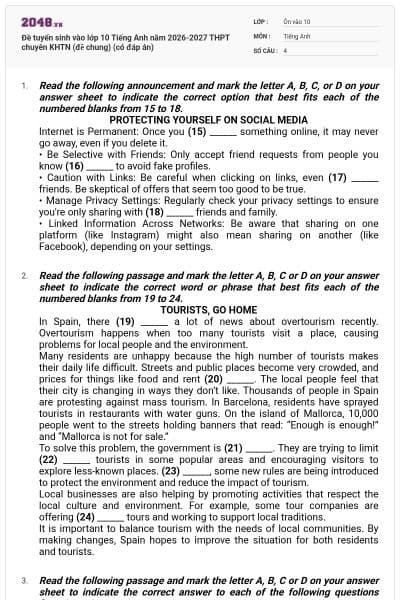
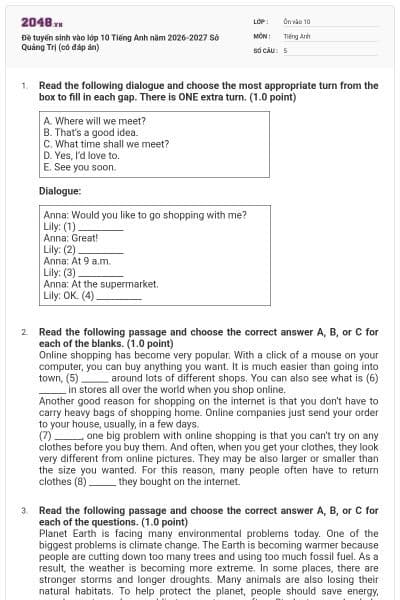
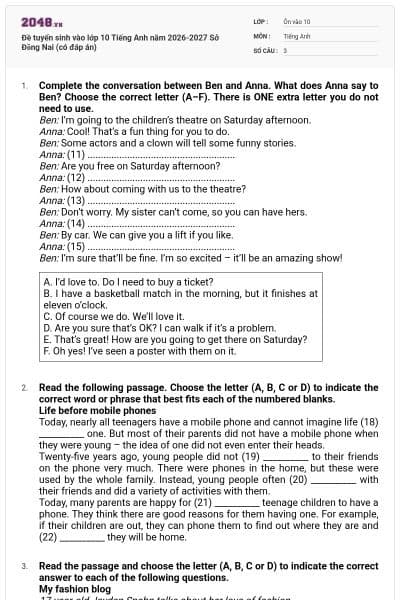
Complete the conversation between Ben and Anna. What does Anna say to Ben? Choose the correct letter (A–F). There is ONE extra letter you do not need to use.
Ben: I’m going to the children’s theatre on Saturday afternoon.
Anna: Cool! That’s a fun thing for you to do.
Ben: Some actors and a clown will tell some funny stories.
Anna: (11) ........................................................
Ben: Are you free on Saturday afternoon?
Anna: (12) ........................................................
Ben: How about coming with us to the theatre?
Anna: (13) ........................................................
Ben: Don’t worry. My sister can’t come, so you can have hers.
Anna: (14) ........................................................
Ben: By car. We can give you a lift if you like.
Anna: (15) ........................................................
Ben: I’m sure that’ll be fine. I’m so excited – it’ll be an amazing show!
A. I’d love to. Do I need to buy a ticket? B. I have a basketball match in the morning, but it finishes at eleven o’clock. C. Of course we do. We’ll love it. D. Are you sure that’s OK? I can walk if it’s a problem. E. That’s great! How are you going to get there on Saturday? F. Oh yes! I’ve seen a poster with them on it. |
Anna: (11) ........................................................
Đáp án đúng: F
Ben vừa nói về việc có diễn viên và chú hề kể chuyện cười → Anna phản ứng phù hợp là đã thấy poster về họ: "Oh yes! I've seen a poster with them on it."
Dịch nghĩa: Ồ đúng rồi! Tôi đã thấy một tờ áp phích có hình của họ.
Anna: (12) ........................................................
Đáp án đúng: B
Ben hỏi Anna có rảnh vào chiều thứ Bảy không → Anna trả lời có trận bóng rổ buổi sáng nhưng kết thúc lúc 11 giờ (ngầm ý buổi chiều rảnh): "I have a basketball match in the morning, but it finishes at eleven o'clock."
Dịch nghĩa: Tôi có trận bóng rổ vào buổi sáng, nhưng nó kết thúc lúc mười một giờ.
Anna: (13) ........................................................
Đáp án đúng: A
Ben mời Anna đi cùng đến nhà hát → Anna nhận lời nhưng hỏi về vé: "I'd love to. Do I need to buy a ticket?"
Dịch nghĩa: Tôi rất muốn đi. Tôi có cần mua vé không?
Anna: (14) ........................................................
Đáp án đúng: E
Ben nói chị gái không đến được nên Anna có thể dùng vé đó → Anna hỏi tiếp về phương tiện đi lại: "That's great! How are you going to get there on Saturday?"
Dịch nghĩa: Thật tuyệt! Bạn sẽ đến đó bằng cách nào vào thứ Bảy?
Anna: (15) ........................................................
Đáp án đúng: D
Ben nói sẽ đi bằng ô tô và có thể đưa Anna đi → Anna hỏi xác nhận lại xem có ổn không: "Are you sure that's OK? I can walk if it's a problem."
Dịch nghĩa: Bạn có chắc điều đó ổn không? Tôi có thể đi bộ nếu có vấn đề.
Choose the letter (A, B, C or D) to indicate the best arrangement of utterances or sentences to make a meaningful exchange or text in each of the following questions.
a. Tim: I practise speaking English with my friends online.
b. Susan: How do you improve your English speaking skill?
c. Susan: That sounds very helpful.
b-a-c
a-c-b
c-a-b
b-c-a
Đáp án đúng: A
Sắp xếp đoạn hội thoại theo logic: (b) Ssan hỏi Tim cải thiện kỹ năng nói tiếng Anh như thế nào → (a) Tim trả lời: luyện nói với bạn bè trực tuyến → (c) Ssan nhận xét: nghe có vẻ rất hữu ích.
→ Thứ tự đúng: b – a – c
Dịch nghĩa:
Susan: Bạn làm thế nào để cải thiện kỹ năng nói tiếng Anh của mình?
Tim: Tôi luyện nói tiếng Anh với bạn bè trực tuyến.
Susan: Nghe có vẻ rất hữu ích.
Hi Stephanie,
I’ve got some good news. We’ve just finished a fantastic science project.
a. Finally, we presented our project in front of the class.
b. First, we collected information from books and the Internet.
c. Write and tell me your news.
d. Then, we made a model together after school.
Love,
Marion
a-c-d-b
a-d-c-b
b-d-c-a
b-d-a-c
Đáp án đúng: D
Sắp xếp lá thư theo logic: (b) Đầu tiên: thu thập thông tin từ sách và Internet → (d) Tiếp theo: làm mô hình cùng nhau sau giờ học → (a) Cuối cùng: thuyết trình trước lớp → (c) Lời kết: viết thư cho tôi biết tin của bạn.
→ Thứ tự đúng: b – d – a – c
Dịch nghĩa:
Chào Stephanie,
Tớ có tin vui đây. Chúng tớ vừa hoàn thành một dự án khoa học tuyệt vời.
Cuối cùng, chúng tớ đã trình bày dự án trước lớp.
Đầu tiên, chúng tớ thu thập thông tin từ sách và Internet.
Sau đó, chúng tớ cùng nhau làm mô hình sau giờ học.
Cuối cùng, chúng tớ đã trình bày dự án trước lớp.
Hãy viết thư cho tớ nghe tin của cậu nhé.
Yêu thương, Marion
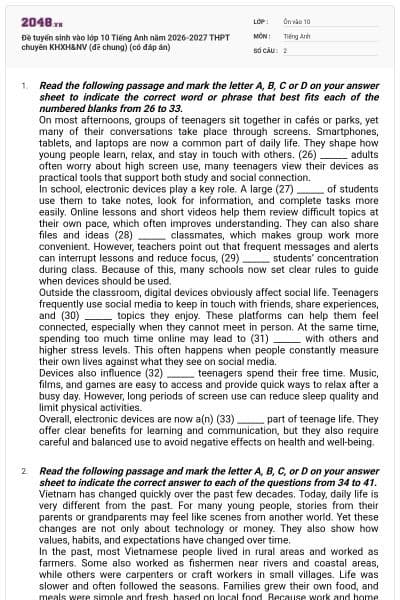
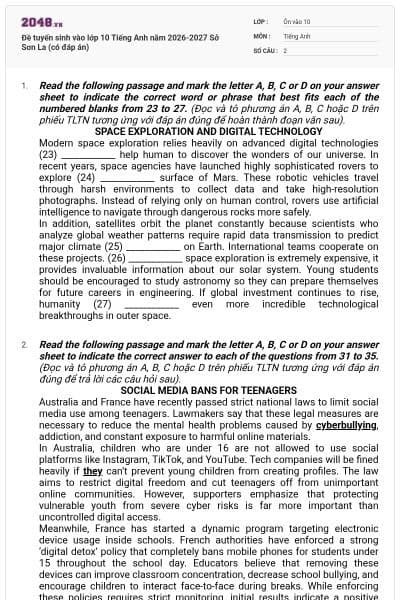
Read the following passage. Choose the letter (A, B, C or D) to indicate the correct word or phrase that best fits each of the numbered blanks.
Life before mobile phones
Today, nearly all teenagers have a mobile phone and cannot imagine life (18) __________ one. But most of their parents did not have a mobile phone when they were young – the idea of one did not even enter their heads.
Twenty-five years ago, young people did not (19) __________ to their friends on the phone very much. There were phones in the home, but these were used by the whole family. Instead, young people often (20) __________ with their friends and did a variety of activities with them.
Today, many parents are happy for (21) __________ teenage children to have a phone. They think there are good reasons for them having one. For example, if their children are out, they can phone them to find out where they are and (22) __________ they will be home.
with
on
at
without
Đáp án đúng: D
"without" = không có
Dịch nghĩa: Ngày nay, hầu hết thanh thiếu niên đều có điện thoại di động và không thể tưởng tượng cuộc sống không có nó.
say
speak
call
tell
Đáp án đúng: B
"speak to somebody on the phone" = nói chuyện điện thoại với ai
Dịch nghĩa: 25 năm trước, giới trẻ không thường xuyên nói chuyện với bạn bè qua điện thoại.
Instead, young people often (20) __________ with their friends and did a variety of activities with them.
hung out
cut down
looked up
went over
Đáp án đúng: A
"hung out" = đi chơi, la cà cùng nhau
Dịch nghĩa: Thay vào đó, giới trẻ thường đi chơi cùng bạn bè và thực hiện nhiều hoạt động với họ.
they
them
their
theirs
Đáp án đúng: C
Cấu trúc: "happy for their teenage children" → cần tính từ sở hữu "their" (của họ).
Dịch nghĩa: Ngày nay, nhiều bậc cha mẹ sẵn lòng để con tuổi teen của họ có điện thoại.
For example, if their children are out, they can phone them to find out where they are and (22) __________ they will be home.
how far
who
what
what time
Đáp án đúng: D
"what time" = mấy giờ
Dịch nghĩa: Ví dụ, nếu con họ đi ra ngoài, họ có thể gọi điện để biết chúng đang ở đâu và mấy giờ sẽ về nhà.
Dịch bài đọc:
CUỘC SỐNG TRƯỚC KHI CÓ ĐIỆN THOẠI DI ĐỘNG
Ngày nay, hầu hết thanh thiếu niên đều có điện thoại di động và không thể tưởng tượng cuộc sống không có nó. Nhưng hầu hết cha mẹ của họ đã không có điện thoại di động khi còn trẻ – thậm chí họ còn không nghĩ đến ý tưởng đó.
25 năm trước, giới trẻ không thường xuyên nói chuyện với bạn bè qua điện thoại. Có điện thoại trong nhà, nhưng chúng được cả gia đình sử dụng. Thay vào đó, giới trẻ thường đi chơi cùng bạn bè và thực hiện nhiều hoạt động khác nhau với họ.
Ngày nay, nhiều bậc cha mẹ sẵn lòng để con tuổi teen của họ có điện thoại. Họ cho rằng có những lý do chính đáng để con họ có một chiếc. Ví dụ, nếu con họ đi ra ngoài, họ có thể gọi điện để biết chúng đang ở đâu và mấy giờ sẽ về nhà.
Read the passage and choose the letter (A, B, C or D) to indicate the correct answer to each of the following questions.
My fashion blog
17-year-old Jayden Spahn talks about her love of fashion.
I’ve loved clothes since I was about five. Each morning, I spend time thinking about what to wear. My mum gets angry sometimes and tells me to hurry up, but I don’t think it’s something you can decide quickly. It’s far too important.
Last year, after reading a fashion blog by Rachel, a 19-year-old student, I decided to start one myself. Almost immediately, I posted my first blog. I was really pleased when friends said they loved it – they especially liked the video I made called A world of fashion.
I post something new each day. I keep a fashion diary, where I describe what I’m wearing, and every week I also post a photo of myself in my favourite clothes. Most people say they like the photos. But, for me, the best part is getting messages from fans.
My parents think it’s good for me to have a hobby, and I still do all my homework, so they’re happy for me to do the blog. The only thing they tell me is to be careful about what I read online. They tell me not to worry if people post things that I don’t agree with.
I’m not really interested in becoming a fashion model – I think I might get fed up with someone taking my photograph every day! Maybe, when I’m older, I’ll start my own clothes company, but before that I’m going to do a fashion course at college. I’m already trying to choose the best one!
What do we learn about Jayden in the first paragraph?
She often takes a long time to get up in the morning.
She chooses carefully which clothes to put on.
She has many clothes she likes wearing to school.
She gets her love of fashion from her mother.
Đáp án đúng: B
Thông tin trong bài: "Each morning, I spend time thinking about what to wear."
→ Jayden dành thời gian để lựa chọn cẩn thận trang phục mỗi buổi sáng.
Jayden began her fashion blog after she __________.
made a video called A world of fashion
read a blog written by another teenager
talked to her friends about starting one
watched a video of a fashion show
Đáp án đúng: B
Thông tin trong bài: "Last year, after reading a fashion blog by Rachel, a 19-year-old student, I decided to start one myself."
→ Jayden bắt đầu blog thời trang sau khi đọc blog của một bạn teen khác.
How do Jayden’s parents feel about her doing a fashion blog?
Glad she is sharing her ideas with other young people
Certain about the information she finds on the Internet
Worried she will spend less time doing college work
Pleased she is doing something she enjoys
Đáp án đúng: D
Thông tin trong bài: "My parents think it's good for me to have a hobby... so they're happy for me to do the blog."
→ Bố mẹ vui vì cô có việc gì đó để làm và thích thú với nó.
fascinated
interested
frightened
bored
Đáp án đúng: D
"fed up" = chán ngán, mệt mỏi = "bored" (chán).
Which of the following is NOT mentioned in the passage?
Jayden plans to study fashion in the future.
Jayden writes things in her fashion diary.
Jayden sells clothes online to teenagers.
Jayden enjoys receiving messages from her fans.
Đáp án đúng: C
Bài không đề cập việc Jayden bán quần áo trực tuyến cho thanh thiếu niên. Đáp án A đúng (cô dự định học khóa thời trang ở đại học), B đúng (cô viết nhật ký thời trang), D đúng (cô thích nhận tin nhắn từ người hâm mộ).
Dịch bài đọc:
BLOG THỜI TRANG CỦA TÔI
Jayden Spahn, 17 tuổi, chia sẻ về tình yêu thời trang của cô.
Tôi đã yêu thích quần áo từ khi khoảng 5 tuổi. Mỗi buổi sáng, tôi dành thời gian suy nghĩ về việc mặc gì. Mẹ tôi đôi khi tức giận và bảo tôi nhanh lên, nhưng tôi không nghĩ đó là thứ bạn có thể quyết định nhanh chóng. Nó quan trọng hơn nhiều.
Năm ngoái, sau khi đọc blog thời trang của Rachel, một sinh viên 19 tuổi, tôi quyết định tự tạo một blog cho mình. Gần như ngay lập tức, tôi đã đăng bài viết đầu tiên. Tôi thực sự vui khi bạn bè nói họ thích nó – họ đặc biệt thích video tôi làm có tên "A world of fashion".
Tôi đăng một thứ gì đó mới mỗi ngày. Tôi giữ một cuốn nhật ký thời trang, nơi tôi mô tả những gì mình đang mặc, và mỗi tuần tôi cũng đăng một bức ảnh của mình trong bộ quần áo yêu thích. Hầu hết mọi người đều nói họ thích những bức ảnh đó. Nhưng đối với tôi, phần hay nhất là nhận được tin nhắn từ người hâm mộ.
Bố mẹ tôi cho rằng việc có một sở thích là tốt cho tôi, và tôi vẫn hoàn thành tất cả bài tập về nhà, vì vậy họ vui khi tôi làm blog. Điều duy nhất họ nói với tôi là phải cẩn thận với những gì tôi đọc trực tuyến. Họ bảo tôi đừng lo lắng nếu mọi người đăng những thứ mà tôi không đồng ý.
Tôi không thực sự muốn trở thành người mẫu thời trang – tôi nghĩ mình có thể chán khi ai đó chụp ảnh mình mỗi ngày! Có lẽ, khi lớn hơn, tôi sẽ thành lập công ty quần áo riêng, nhưng trước đó tôi sẽ học một khóa thời trang ở trường cao đẳng. Tôi đang cố gắng chọn khóa học tốt nhất rồi!
Read the texts and choose the letter (A, B, C or D) to indicate the best answer to each of the following questions.
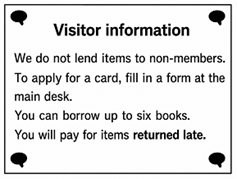
Visitor information
We do not lend items to non-members.
To apply for a card, fill in a form at the main desk.
You can borrow up to six books. You will pay for items returned late.
Where might people see this notice?
At a museum
At a store
At a library
At a bank
Đáp án đúng: C
Thông báo đề cập: không cho mượn đồ (không phải thành viên), điền đơn đăng ký thẻ, mượn tối đa 6 cuốn sách, trả trễ sẽ bị phạt → đây là thông báo của thư viện.
Dịch nghĩa: Người ta có thể thấy thông báo này ở đâu? → Tại thư viện.
What does the message say?
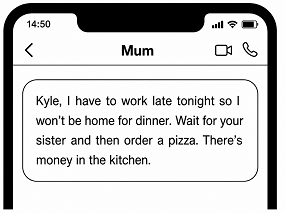
Kyle has to work late tonight.
Kyle has to buy something for his dinner.
Kyle should ask his sister what she’d like to eat.
Kyle will eat when his mum comes home.
Đáp án đúng: B
Thông điệp từ mẹ: "I have to work late tonight so I won't be home for dinner. Wait for your sister and then order a pizza. There's money in the kitchen." → Kyle phải mua/đặt đồ ăn cho bữa tối của mình.
Dịch nghĩa: Tin nhắn nói gì? → Kyle phải mua thứ gì đó cho bữa tối của mình.
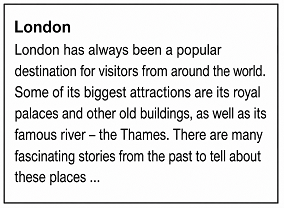
What do you think the text is going to do?
Provide information about the world’s longest river
Recommend places to visit in London
Explain why London has many tourists
Describe the history of some places in London
Đáp án đúng: D
Đoạn văn về London đề cập "royal palaces and other old buildings", "fascinating stories from the past" → đoạn văn sẽ mô tả lịch sử của một số địa điểm ở London.
Dịch nghĩa: Bạn nghĩ đoạn văn sẽ làm gì? → Mô tả lịch sử của một số địa điểm ở London.
WRITING SECTION (2.5 points)
Rewrite the second sentence so that it has a similar meaning to the original one, beginning with the given word(s).
We don’t look after our forests and seas, so we’re losing lots of wild animals and plants.
→ Because ......................................................................................................................
Đáp án đúng: Because we don't look after our forests and seas, we're losing lots of wild animals and plants.
Cấu trúc: "so" = vì vậy → chuyển thành "Because + nguyên nhân, kết quả".
Dịch nghĩa: Bởi vì chúng ta không bảo vệ rừng và biển, chúng ta đang mất đi nhiều động thực vật hoang dã.
Making a good career choice is not easy.
→ It is difficult ................................................................................................................Đáp án đúng: It is difficult to make a good career choice.
Cấu trúc: Chủ ngữ giả "It is + tính từ + to V"
Dịch nghĩa: Thật khó để đưa ra một lựa chọn nghề nghiệp tốt.
“We will visit Bu Gia Map National Park tomorrow,” said the students.
→ The students said that .................................................................................................Đáp án đúng: The students said that they would visit Bu Gia Map National Park the next day / the following day.
Câu tường thuật: "will" → "would", "tomorrow" → "the next day / the following day", "we" → "they".
Dịch nghĩa: Các học sinh nói rằng họ sẽ đến thăm Vườn Quốc gia Bù Gia Mập vào ngày hôm sau.
Dan loves to create new things in his free time.
→ Dan is fond ..................................................................................................................
Order the words to make complete sentences.
Đáp án đúng: Dan is fond of creating new things in his free time.
Cấu trúc: "love to V" → "be fond of + V-ing".
Dịch nghĩa: Dan thích tạo ra những thứ mới trong thời gian rảnh rỗi.
Order the words to make complete sentences.
phone / expensive / That / mine. / was / more / than
→ ....................................................................................................................................Đáp án đúng: That phone was more expensive than mine.
Cấu trúc: So sánh hơn: S + was + more expensive + than + O.
Dịch nghĩa: Chiếc điện thoại đó đắt hơn điện thoại của tôi.
don’t / environmental problems / people / take / If / more serious. / will / action, / immediate / become
→ ....................................................................................................................................
Đáp án đúng: If people don't take immediate action, environmental problems will become more serious.
Cấu trúc: Câu điều kiện loại 1: If + S + V (hiện tại đơn phủ định), S + will + V.
Dịch nghĩa: Nếu mọi người không hành động ngay lập tức, các vấn đề môi trường sẽ trở nên nghiêm trọng hơn.
In 100–120 words, write a paragraph about why students should do volunteer work.
You can use the following cues or your own ideas.
- help people in need;
- learn to share with others;
- develop teamwork skills;
- become more responsible;
- ...
Gợi ý:
There are many reasons why students should participate in volunteer work. First, volunteering helps students assist people in need. By helping others, they can make a real difference in the lives of those who are less fortunate. Second, volunteer work teaches students to share with others and to care about their community. This develops their empathy and kindness toward people around them. Third, students can develop important teamwork skills through volunteering. Working alongside others toward a common goal prepares them for future careers and challenges. Finally, doing volunteer work helps students become more responsible. They learn to manage their time wisely and understand the value of commitment. In conclusion, volunteer work brings many valuable benefits to students, shaping them into better individuals and citizens.
Dịch nghĩa:
Có rất nhiều lý do tại sao sinh viên nên tham gia công tác tình nguyện. Thứ nhất, hoạt động tình nguyện giúp sinh viên hỗ trợ những người cần giúp đỡ. Bằng cách giúp đỡ người khác, họ có thể tạo ra sự khác biệt thực sự trong cuộc sống của những người kém may mắn hơn. Thứ hai, công tác tình nguyện dạy sinh viên biết chia sẻ với người khác và quan tâm đến cộng đồng của mình. Điều này phát triển lòng trắc ẩn và sự tử tế của họ đối với những người xung quanh. Thứ ba, sinh viên có thể phát triển các kỹ năng làm việc nhóm quan trọng thông qua hoạt động tình nguyện. Làm việc cùng với những người khác hướng tới một mục tiêu chung sẽ chuẩn bị cho họ những nghề nghiệp và thách thức trong tương lai. Cuối cùng, làm công tác tình nguyện giúp sinh viên trở nên có trách nhiệm hơn. Họ học cách quản lý thời gian một cách khôn ngoan và hiểu được giá trị của sự cam kết. Tóm lại, công tác tình nguyện mang lại nhiều lợi ích quý giá cho sinh viên, giúp họ trở thành những cá nhân và công dân tốt hơn.