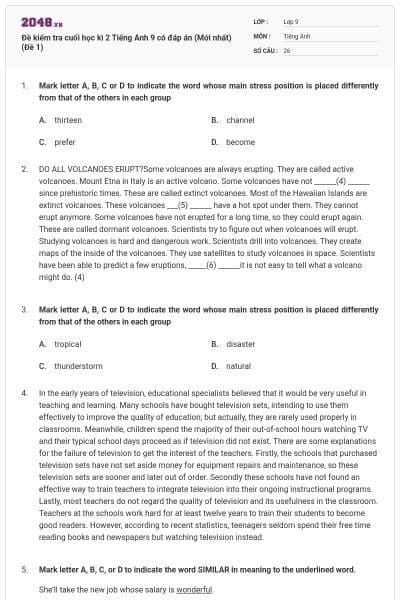
Đề kiểm tra cuối học kì 2 Tiếng Anh 9 có đáp án (Mới nhất) (Đề 1)
24 câu hỏi
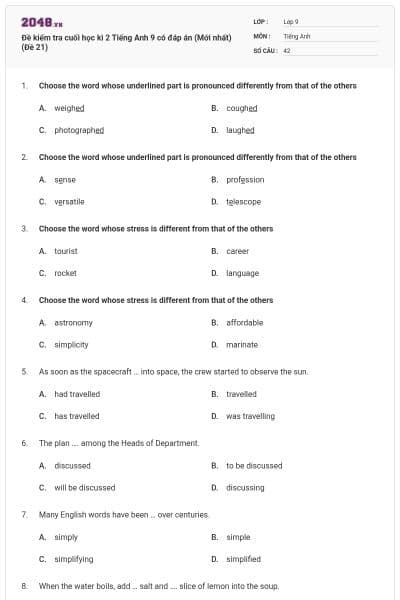
Mark letter A, B, C or D to indicate the word whose main stress position is placed differently from that of the others in each group
thirteen
channel
prefer
become
Chọn đáp án C
Giải thích: Đáp án C trọng âm số 2. Các đáp án còn lại trọng âm số 1
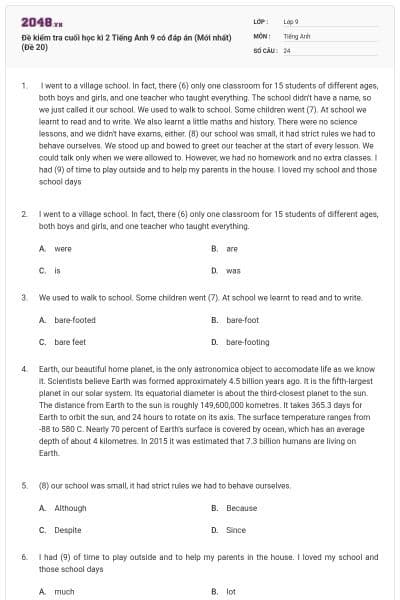
Mark letter A, B, C or D to indicate the word whose main stress position is placed differently from that of the others in each group
tropical
disaster
thunderstorm
natural
Chọn đáp án B
Giải thích: Đáp án B trọng âm số 2. Các đáp án còn lại trọng âm số 1
Mark letter A, B, C, or D to indicate the word SIMILAR in meaning to the underlined word.
She’ll take the new job whose salary is wonderful.
pretty high
fantastic
reasonable
low
Chọn đáp án A
Fantastic ~ Pretty high: khá cao (dựa vào văn cảnh của câu)
Tạm dịch: Cô ấy sẽ nhận một công việc mới với mức lương khá cao.
Some volcanoes have not ______(4) ______ since prehistoric times.
burnt
erupted
been erupted
been burnt
Chọn đáp án B
- erupt (v) phun trào
- cấu trúc thì hiện tại hoàn thành: have/ has + VpII
Dịch: Một số núi lửa đã không phun trào kể từ thời tiền sử.
These volcanoes ___(5) ______ have a hot spot under them. They cannot erupt anymore.
no longer
any longer
not more
any more
Chọn đáp án A
No longer = không còn
Dịch: Những ngọn núi lửa này không còn có một điểm nóng bên dưới chúng. Chúng không thể phun ra nữa.
Scientists have been able to predict a few eruptions, _____(6) ______it is not easy to tell what a volcano might do.
Therefore
And
During
But
Chọn đáp án D
Cấu trúc: , but + S + V (…, nhưng …)
Dịch: Các nhà khoa học đã có thể dự đoán một vài vụ phun trào, nhưng không dễ để biết núi lửa có thể làm gì.
My boss asked me if could I speak English.
My boss asked me if can I speak English.
My boss asked me if I could speak English.
My boss asked me if I can speak English.
Chọn đáp án C
Cấu trúc lời nói gián tiếp với câu hỏi Có/ Không: S + asked + O + if/ whether + S + V(lùi thì)
Dịch: "Bạn có thể nói tiếng Anh không?" sếp của tôi hỏi.
= Sếp của tôi hỏi tôi liệu tôi có thể nói tiếng Anh không.
If it rained, the match would be canceled.
If it rains, the match is canceled.
If it had rained, the match would have been canceled.
If it rains, the match will be canceled.
Chọn đáp án D
Câu điều kiện loại I diễn tả điều có thể xảy ra ở hiện tại hoặc tương lai
Cấu trúc: If + S + Vhtđ, S + will/ can/ may + Vinf.
Dịch: Chiều nay trời có thể mưA. Tôi hy vọng điều đó không xảy ra vì tôi không muốn trận đấu bị hủy.
= Nếu trời mưa, trận đấu sẽ bị hủy.
This is the prettiest flower display we’ve ever seen.
This flower display is prettier than some we’ve ever seen.
This is one of the prettiest flower displays we’ve ever seen.
This flower display isn’t as pretty as those we’ve seen.
Chọn đáp án A
Dịch: Chúng tôi chưa bao giờ thấy một màn trình diễn hoa nào đẹp hơn.
= Đây là màn trình diễn hoa đẹp nhất mà chúng tôi từng thấy.
In spite of taking a taxi, Bill arrived late for the concert.
Bill arrived late for the concert because of the taxi.
Bill arrived late for the concert whether he took a taxi or not.
Bill took a taxi to the concert, but he couldn’t catch it.
Chọn đáp án A
Although + S + V = In spite of + N (Mặc dù …)
Dịch: Mặc dù đã bắt taxi nhưng Bill vẫn đến trễ buổi biểu diễn.
= Mặc dù bắt taxi, Bill đã đến trễ buổi hòa nhạc.
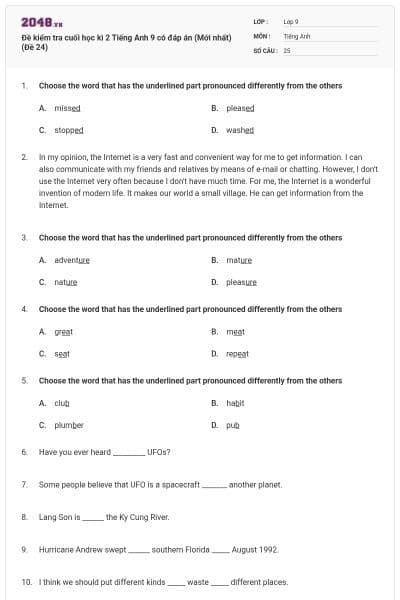
Mark letter A, B, C, or D to indicate the word whose underlined part is pronounced differently from that of the others in each group.
official
secondary
ethnic
currency
Chọn đáp án A
Giải thích: Đáp án A phát âm là /ʃ/. Các đáp án còn lại phát âm là /k/
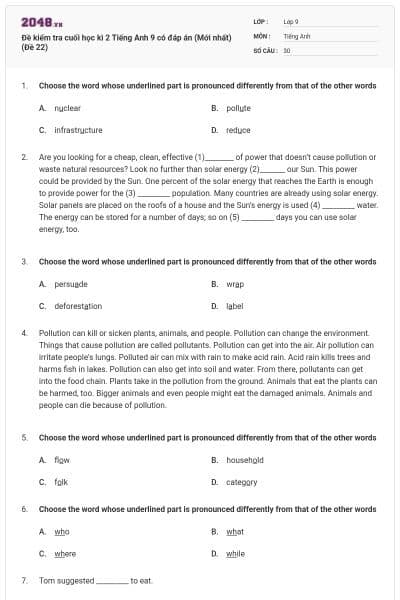
Mark letter A, B, C, or D to indicate the word whose underlined part is pronounced differently from that of the others in each group.
climate
federation
apartment
separate
Chọn đáp án B
Giải thích: Đáp án B phát âm là /eɪ/. Các đáp án còn lại phát âm là /ə/
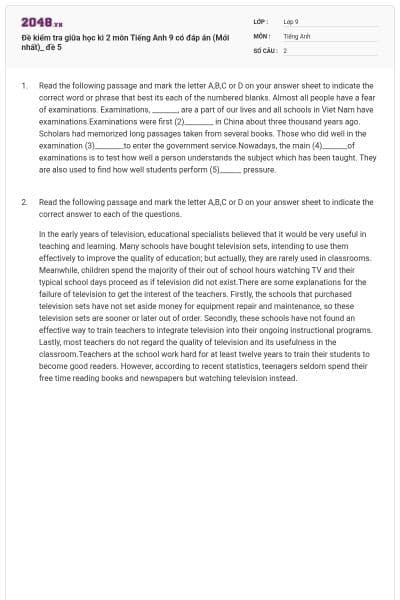
In the early years of television, educational specialists believed that it would be very useful in teaching and learning. Many schools have bought television sets, intending to use them effectively to improve the quality of education; but actually, they are rarely used properly in classrooms. Meanwhile, children spend the majority of their out-of-school hours watching TV and their typical school days proceed as if television did not exist. There are some explanations for the failure of television to get the interest of the teachers. Firstly, the schools that purchased television sets have not set aside money for equipment repairs and maintenance, so these television sets are sooner and later out of order. Secondly these schools have not found an effective way to train teachers to integrate television into their ongoing instructional programs. Lastly, most teachers do not regard the quality of television and its usefulness in the classroom. Teachers at the schools work hard for at least twelve years to train their students to become good readers. However, according to recent statistics, teenagers seldom spend their free time reading books and newspapers but watching television instead.
The text is about ______.
teaching and learning television
the use of television at schools
watching TV outside school
educational specialists
Chọn đáp án B
Bài viết nói về việc sử dụng tivi ở trường học.
The word "it" in the first sentence is closest in meaning with ______.
quality of education
educational specialist
television
early years
Chọn đáp án C
Dịch: Trong những năm đầu tiên của truyền hình, các chuyên gia giáo dục tin rằng nó sẽ rất hữu ích trong việc dạy và học.
When TV first appeared, educational specialists _______.
banned children from watching TV
believed it would be useful for schooling
did not appreciate it
somewhat appreciated it
Chọn đáp án B
Dựa vào câu: In the early years of television, educational specialists believed that it would be very useful in teaching and learning.
Dịch: Trong những năm đầu tiên của truyền hình, các chuyên gia giáo dục tin rằng nó sẽ rất hữu ích trong việc dạy và học.
Children spend their free time ______.
watching TV
reading books
reading newspapers
learning foreign languages
Chọn đáp án B
Dựa vào câu: However, according to recent statistics, teenagers seldom spend their free time reading books and newspapers but watching television instead.
Dịch: Tuy nhiên, theo một thống kê gần đây, thanh thiếu niên ít khi dành thời gian rảnh rỗi để đọc sách báo mà thay vào đó là xem tivi.
every Saturday
badminton
plays
Maria and me
Chọn đáp án C
Chủ ngữ số nhiều nên động từ giữ nguyên thể
Dịch: Peter và Jone chơi cầu lông vào thứ Bảy hàng tuần với Maria và tôi.
the
happily
whom
was
Chọn đáp án C
Cần dùng “who” để thay thế cho chủ ngữ chỉ người
Dịch: Cậu bé cười vui vẻ chính là anh trai của tôi.
between
for
at
with
Chọn đáp án D
Be popular with … = phổ biến với …
Dịch: Đó là loại hình âm nhạc khá phổ biến với các chàng trai và cô gái tuổi teen.
about
to
up
on
Chọn đáp án C
Give up (ph.v) = từ bỏ
Dịch: John bị ốm và phải từ bỏ thuốc lá.
left
leaves
would leave
was leaving
Chọn đáp án A
Since + quá khứ đơn (kể từ khi …)
Dịch: Họ đã không gặp Jill kể từ khi cô ấy rời trường.
succeed
success
successful
successfully
Chọn đáp án D
Ô trống cần trạng từ chỉ cách thức
Dịch: Cô ấy đã xuất sắc giành được học bổng du học.
Yes, I’d love to.
How about using the shower.
Yes, thanks.
Great! Let’s do that.
Chọn đáp án D
Dịch: “Tôi nghĩ chúng ta nên tắm vòi hoa sen thay vì tắm bồn để tiết kiệm năng lượng.” - "Tuyệt vời! Hãy làm điều đó"
has built
have been built
has been built
have built
Chọn đáp án B
Cấu trúc bị động thì hiện tại hoàn thành: S + have/ has + been + VpII.
Dịch: Hai cửa hàng bách hóa đã được xây dựng ở trung tâm thành phố trong năm nay.