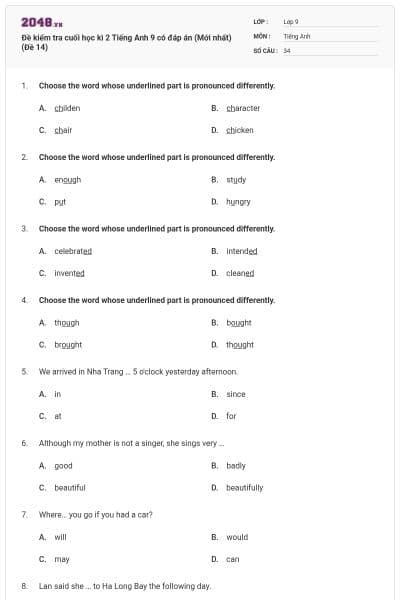
Đề kiểm tra cuối học kì 2 Tiếng Anh 9 có đáp án (Mới nhất) (Đề 14)
32 câu hỏi
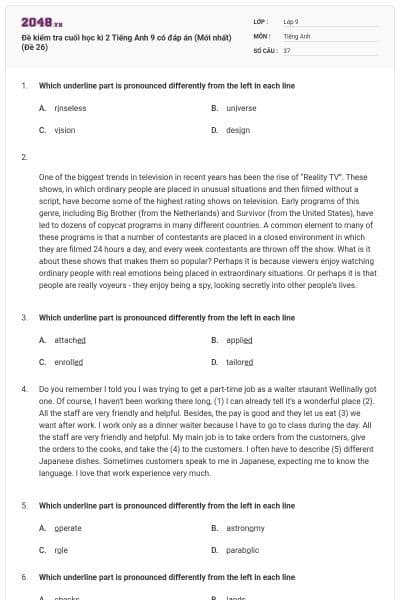
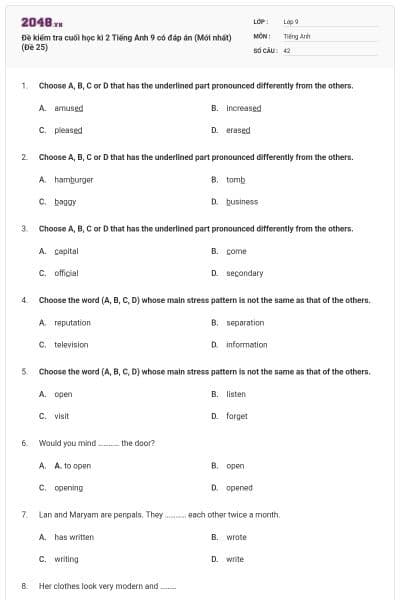
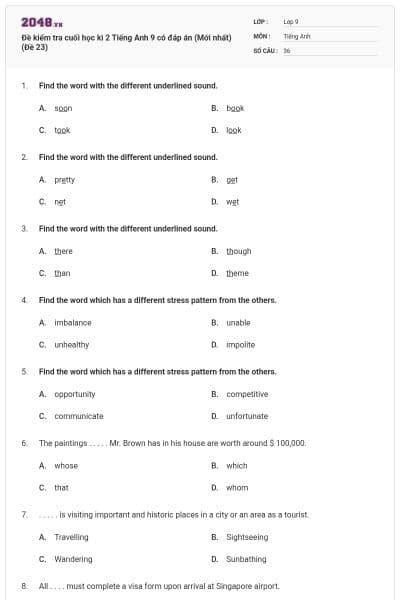
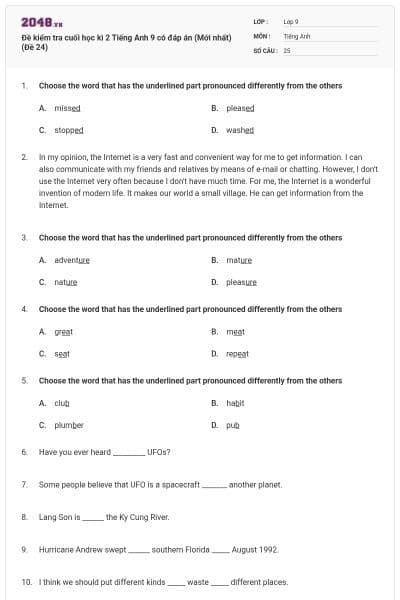
Choose the word whose underlined part is pronounced differently.
childen
character
chair
chicken
Chọn đáp án B
Đáp án B phát âm là /k/. Các đáp án còn lại phát âm là /tʃ/
enough
study
put
hungry
Chọn đáp án C
Đáp án C phát âm là /u/. Các đáp án còn lại phát âm là /ʌ/
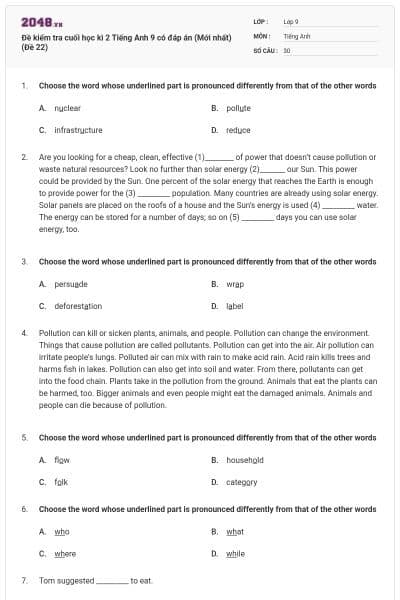
Choose the word whose underlined part is pronounced differently.
celebrated
intended
invented
cleaned
Chọn đáp án D
Đáp án D phát âm là /d/. Các đáp án còn lại phát âm là /id/
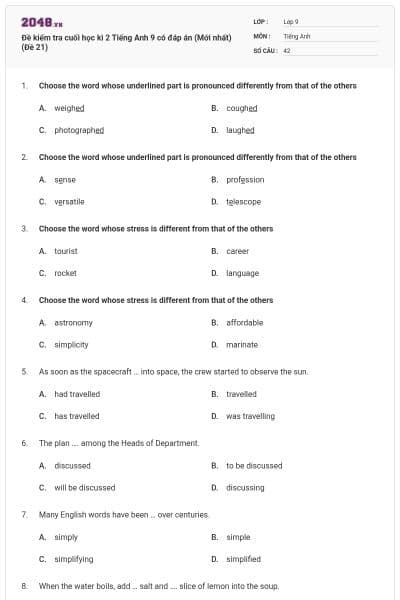
though
bought
brought
thought
Chọn đáp án A
Đáp án A phát âm là /əʊ/. Các đáp án còn lại phát âm là /ɔː/
in
since
at
for
Chọn đáp án C
At + giờ trong ngày
Dịch: Chúng tôi đến Nha Trang lúc 5 giờ chiều hôm qua.
good
badly
beautiful
beautifully
Chọn đáp án D
Ô trống cần một trạng từ
Dịch: Mẹ tôi tuy không phải là ca sĩ nhưng hát rất hay.
will
would
may
can
Chọn đáp án B
Cấu trúc điều kiện loại II: If + S + Ved, S + would/ could/ might + Vinf.
Dịch: Bạn sẽ đi đâu nếu bạn có một chiếc ô tô?
would go
will go
go
went
Chọn đáp án A
Khi chuyển từ câu trực tiếp sang câu gián tiếp thì cần lùi thì (will lùi về would)
Dịch: Lan cho biết cô sẽ đi Vịnh Hạ Long vào ngày hôm sau.
since
because
so
but
Chọn đáp án C
A. since = bởi vì
B. because = bởi vì
C. so = vì thế
D. but = nhưng
Dịch: Hôm qua anh ấy ốm nặng nên không đi học.
does
did
didn't
doesn't
Chọn đáp án A
Câu ở thì hiện tại đơn nên dùng trợ động từ Does với chủ ngữ ngôi 3 số ít
Vế trước mang nghĩa phủ định nên vế hỏi đuôi ở dạng khẳng định
Dịch: Bố bạn không bao giờ làm việc ở Hà Nội, phải không?
How long
How many
How much
When
Đáp án: A
Giải thích:
A. How long: bao lâu
B. How many: bao nhiêu
C. How much: bao nhiêu
D. When: Khi nào
Câu dùng thì hiện tại hoàn thành, do đó dùng A.
Dịch: Bạn đã học tiếng Anh bao lâu rồi?” - “Gần 4 năm rồi.”
whom
who
which
that
Chọn đáp án B
Đại từ quan hệ “who” thay thể chủ ngữ chỉ người
Dịch: Bạn tôi, John, làm việc trong ngân hàng thành phố, kiếm được nhiều tiền hơn tôi.
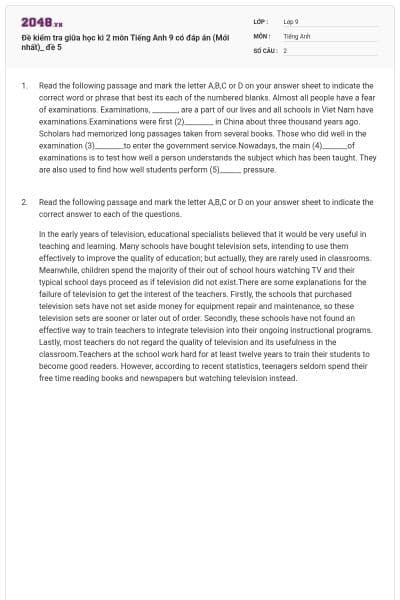
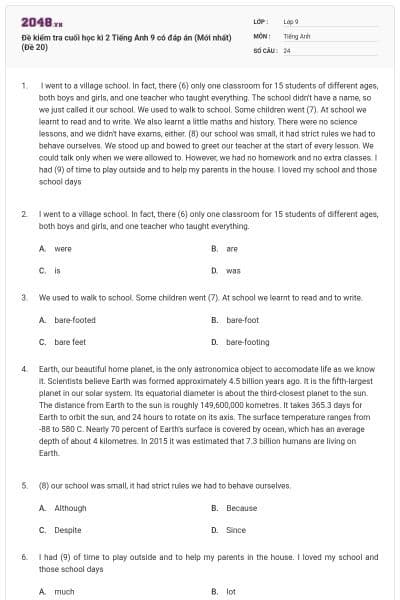
There is much more water than land (1) the surface of the earth.
in
on
from
over
Chọn đáp án B
On the surface = trên bề mặt
Dịch: Có nhiều nước hơn đất trên bề mặt trái đất.
covered
covering
cover
to cover
Chọn đáp án C
Diễn tả sự thật hiển nhiên ta dùng hiện tại đơn
Dịch: Biển và đại dương bao phủ gần 4/5 diện tích toàn thế giới và chỉ 1/5 diện tích đất liền.
them are
its
it is
it's
Chọn đáp án B
Đằng sau là danh từ nên ô trống dùng tính từ sở hữu
Dịch: Biển và đại dương bao phủ gần 4/5 diện tích toàn thế giới và chỉ 1/5 diện tích đất liền.in
for
to
by
Chọn đáp án A
Dịch: Nếu bạn đi qua trái đất theo các hướng khác nhau, …
moving
to move
move
moved
Chọn đáp án A
Spend time doing st = dành thời gian làm gì
Dịch: Nếu bạn di chuyển trên trái đất theo các hướng khác nhau, bạn sẽ phải dành nhiều thời gian để di chuyển trên mặt nước hơn so với đường bộ hoặc đường sắt.
on
in
within
for
Chọn đáp án D
Dịch: Đôi khi chúng ta quên rằng cứ một dặm đất thì có bốn dặm nước.
must
should
have
would
Chọn đáp án C
Have to V = phải làm gì
Dịch: Có rất nhiều nước trên bề mặt trái đất của chúng ta mà chúng ta phải dùng hai từ để mô tả.
We use the word seas those parts of water surface which (8) only a few hundreds of miles wide, the word oceans to describe the huge areas of water which are thousands of miles wide and very deep.
describing
describes
described
to describe
Chọn đáp án D
Use st to do st = dùng cái gì làm gì
Dịch: Chúng tôi sử dụng từ biển những phần của mặt nước chỉ rộng vài trăm dặm, từ đại dương để mô tả những vùng nước khổng lồ rộng hàng nghìn dặm và rất sâu.
About 4,000 years ago a youngboy called Elmesu wished his father good health and a long life by writing a Father's Day message on a card made of clay. No one knows what happened to Elmesu or his father, but the tradition of having a special day honoring fathers has continued through the years in countries across the world. Father's Day is celebrated on 3rd Sunday in June in many parts of the world. The idea for creating a day for children to honor their fathers began in Spokane, Washington. A woman named Sonora Smart Dodd thought of the idea for Father's Day while listening to a Mother's Day teaching given in a church in 1909. Having been raised by her father, Henry Jackson Smart after her mother died, Sonora wanted her father to know how special he was to her. It was her father that did everything for her and was, in the eyes of his daughter, a courageous, selfless, and loving man. Sonora's father was born in June, so she chose to hold the first Father's Day celebration in Spokane, Washington on the 19th June, 1910.
According to the writer, Father's Day was first celebrated …….
Đáp án đúng là: on the 19th June, 1910
Dựa vào câu: Sonora's father was born in June, so she chose to hold the first Father's Day celebration in Spokane, Washington on the 19th June, 1910.
Dịch: Cha của Sonora sinh vào tháng 6, vì vậy cô ấy đã chọn tổ chức lễ kỷ niệm Ngày của Cha đầu tiên ở Spokane, Washington vào ngày 19 tháng 6 năm 1910.
Elmesu wrote a message on a clay card to wish …….
Đáp án đúng là: his father good health and a long life
Dựa vào câu: About 4,000 years ago a youngboy called Elmesu wished his father good health and a long life by writing a Father's Day message on a card made of clay.
Dịch: Khoảng 4.000 năm trước, một cậu bé tên là Elmesu đã cầu chúc cha mình dồi dào sức khỏe và sống lâu bằng cách viết thông điệp Ngày của Cha trên một tấm thiệp làm bằng đất sét.
The idea of celebrating Father's Day came from …….
Đáp án đúng là: Spokane, Washington
Dựa vào câu: The idea for creating a day for children to honor their fathers began in Spokane, Washington.
Dịch: Ý tưởng tạo ra một ngày dành cho trẻ em để tôn vinh cha của chúng bắt đầu ở Spokane, Washington.
Father's Day celebrated in many countries in the world is on……. each year.
Đáp án đúng là: 3rd Sunday in June
Dựa vào câu: Father's Day is celebrated on 3rd Sunday in June in many parts of the world.
Dịch: Ngày của Cha được tổ chức vào Chủ nhật thứ 3 trong tháng 6 ở nhiều nơi trên thế giới.
Unless she lives far from school, she wouldn't go to school late.
Unless she lived far from school, she would go to school late.
If she lived far from school, she wouldn't go to school late.
If she didn't live far from school, she wouldn't go to school late.
Chọn đáp án D
Dịch: Nếu cô ấy không sống xa trường, cô ấy sẽ đi học muộn.
If I had Nga's address, I would meet her.
If I have Nga's address, I would meet her.
If I had Nga's address, I will meet her.
If I had Nga's address, I will meets her.
Chọn đáp án A
Dịch: Nếu tôi có địa chỉ của Nga, tôi sẽ gặp cô ấy.
If you did not water these plants, they will die
If you water these plants, they will die.
If you don't water these plants, they will die.
If you are watering these plants, they will die.
Chọn đáp án C
Dịch: Nếu bạn không tưới nước cho những cây này, chúng sẽ chết.
She may be working.
She can be working.
She must be working.
She will be working.
Chọn đáp án C
Dịch: Lan đâu rồi? - Có lẽ cô ấy đang làm việc.
He/ used/ play/ soccer/ he/ be/ small.
Đáp án đúng là: He used to play soccer when he was small.
Cấu trúc: used to Vinf = đã từng làm gì
Dịch: Anh ấy từng chơi đá bóng khi còn nhỏ.
Đáp án đúng là: We have learned/ learnt English for 4 years.
Cấu trúc hiện tại hoàn thành: S + have/ has + VpII.
For + khoảng thời gian
Dịch: Chúng tôi đã học tiếng Anh trong 4 năm.
Đáp án đúng là: I wish I were a millionaire.
Điều ước không có thật ở hiện tại thì dùng quá khứ đơn sau wish
Dịch: Tôi ước mình là một triệu phú.
Rice/ grow/ Vietnam.
Đáp án đúng là: Rice grows in Vietnam.
Câu diễn tả sự thật hiển nhiên thì dùng thì hiện tại đơn
Dịch: Cây lúa mọc ở Việt Nam.