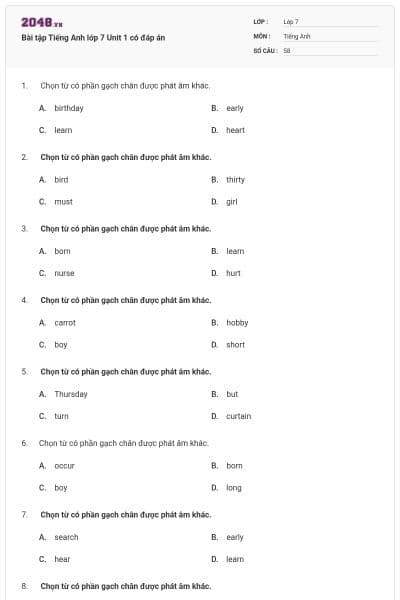
Bài tập Tiếng Anh lớp 7 Unit 1 có đáp án
58 câu hỏi
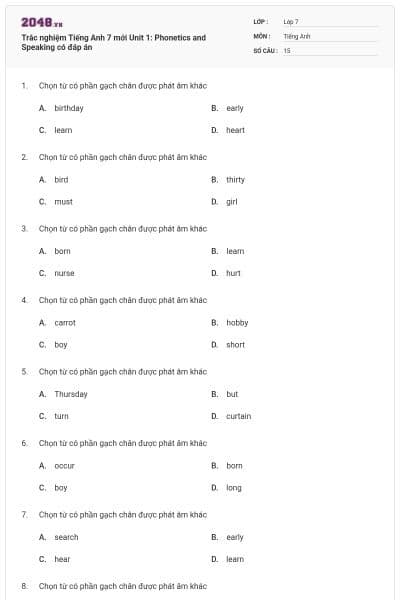
Chọn từ có phần gạch chân được phát âm khác.
birthday
early
learn
heart
Đáp án D
Giải thích: Đáp án A, B, C phát âm là /ɜː/. Đáp án D phát âm là /ɑː/
Chọn từ có phần gạch chân được phát âm khác.
bird
thirty
must
girl
Đáp án C
Giải thích: Đáp án A, B, D phát âm là /ɜː/. Đáp án C phát âm là /ə/
Chọn từ có phần gạch chân được phát âm khác.
born
learn
nurse
hurt
Đáp án A
Giải thích: Đáp án A phát âm là /ɔː/. Đáp án B, C, D phát âm là /ɜː/
Chọn từ có phần gạch chân được phát âm khác.
carrot
hobby
boy
short
Đáp án A
Giải thích: Đáp án A phát âm là /ə/. Đáp án B, C, D phát âm là /ɔ/
Chọn từ có phần gạch chân được phát âm khác.
Thursday
but
turn
curtain
Đáp án B
Giải thích: Đáp án A, C, D phát âm là /ɜː/. Đáp án B phát âm là /ə/
Chọn từ có phần gạch chân được phát âm khác.
occur
born
boy
long
Đáp án A
Giải thích: Đáp án A phát âm là /ɜː/. Đáp án B, C, D phát âm là /ɔ/
Chọn từ có phần gạch chân được phát âm khác.
search
early
hear
learn
Đáp án C
Giải thích: Đáp án A, B, D phát âm là /ɜː/. Đáp án C phát âm là /ɪə/
Chọn từ có phần gạch chân được phát âm khác.
burn
burglar
lunch
nurse
Đáp án C
Giải thích: Đáp án A, B, D phát âm là /ɜː/. Đáp án C phát âm là /ʌ/
Chọn từ có phần gạch chân được phát âm khác
work
hot
world
word
Đáp án B
Giải thích: Đáp án A, C, D phát âm là /ɜː/. Đáp án B phát âm là /ɔ/
Chọn từ có phần gạch chân được phát âm khác.
head
wet
were
best
Đáp án C
Giải thích: Đáp án A, B, D phát âm là /e/. Đáp án C phát âm là /ɜː/
Chọn từ có phần gạch chân được phát âm khác.
fur
burst
burden
lunch
Đáp án D
Giải thích: Đáp án A, B, C phát âm là /ɜː/. Đáp án D phát âm là /ʌ/
Chọn từ có phần gạch chân được phát âm khác.
certain
head
wet
met
Đáp án A
Giải thích: Đáp án B, C, D phát âm là /e/. Đáp án A phát âm là /ɜː/
Chọn từ có phần gạch chân được phát âm khác.
ship
bird
birthday
learn
Đáp án A
Giải thích: Đáp án B, C, D phát âm là /ɜː/. Đáp án A phát âm là /i/
Chọn từ có phần gạch chân được phát âm khác.
German
certain
search
shipper
Đáp án D
Giải thích: Đáp án A, B, C phát âm là /ɜː/. Đáp án D phát âm là /ə/
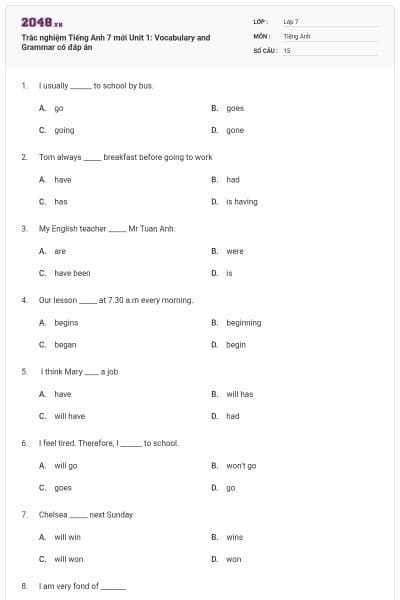
I usually ______ to school by bus.
go
goes
going
gone
Đáp án A
Giải thích: Thì hiện tại đơn (dấu hiệu: usually), chủ ngữ (I) là ngôi I.
Dịch: Tôi thường xuyên đi học bằng xe buýt.
Tom always _____ breakfast before going to work.
have
had
has
is having
Đáp án C
Giải thích: Thì hiện tại đơn (dấu hiệu: always), chủ ngữ (Tom) là ngôi III số ít nên cần chia thành “has”.
Dịch: Tom luôn luôn ăn sáng trước khi đi làm.
My English teacher _____ Mr Tuan Anh.
are
were
have been
is
Đáp án D
Giải thích: Thì hiện tại đơn diễn tả sự thật hiển nhiên, chủ ngữ là ngôi III số ít nên tobe là “is”.
Dịch: Giáo viên tiếng Anh của tôi là thầy Tuấn Anh.
Our lesson _____ at 7.30 a.m every morning.
begins
beginning
began
begin
Đáp án A
Giải thích: Thì hiện tại đơn (dấu hiệu: every morning), chủ ngữ là ngôi III số ít nên cần chia thành “begins”
Dịch: Tiết học của chúng tôi bắt đầu lúc 7h30 mỗi sáng.
I think Mary ____ a job.
have
will has
will have
had
Đáp án C
Giải thích: think + thì tương lai đơn (nghĩ điều gì sẽ xảy ra trong tương lai)
Dịch: Tôi nghĩ Mảy sẽ tìm được một công việc.
I feel tired. Therefore, I ______ to school.
will go
won’t go
goes
go
Đáp án B
Giải thích: Thì tương lai đơn
Dịch: Tôi cảm thấy mệt mỏi. Vì vậy, tôi sẽ không tới trường.
Chelsea _____ next Sunday.
will win
wins
will won
won
Đáp án A
Giải thích: thì tương lai đơn (dấu hiệu: next Sunday)
Dịch: Chelsea sẽ thắng vào chủ nhật tới.
I am very fond of _______.
cooking
cook
cooks
to cook
Đáp án A
Giải thích: fond of + N/Ving (thích gì/ thích làm gì)
Dịch: Tôi rất thích nấu nướng.
Do you like ________? – No, I don’t.
go camping
to go camping
go to camping
going camping
Đáp án D
Giải thích: like + Ving/N (thích làm gì/ thích gì); cụm từ “go camping: cắm trại”
Dịch: Bạn có thích cắm trại không? – Tôi không thích.
My sister’s hobby is ________ outdoor activities.
do
does
doing
done
Đáp án C
Giải thích: vị trí này cần sử dụng danh từ hoặc Ving.
Dịch: Sở thích của chị tôi là tham gia các hoạt động ngoài trời.
When I have free time, I usually ______.
listen to music
listening music
listen music
listening to music
Đáp án A
Giải thích: thì hiện tại đơn (dấu hiệu: usually)
Dịch: Khi tôi có thời gian rảnh, tôi thường nghe nhạc.
My dad likes _______ his bike to work.
riding
ride
rides
ridees
Đáp án A
Giải thích: like + Ving/N (thích làm gì/ thích gì)
Dịch: Bố tôi thích đạp xe đi làm.
They hate ______ noodles. They prefer rice.
eat
to eat
eating
eats
Đáp án C
Giải thích: hate + Ving (ghét làm gì)
Dịch: Họ ghét ăn mì. Họ thích cơm hơn
After breakfast, I and my friend ____ to the park every Sunday.
go
goes
went
is going
Đáp án A
Giải thích: thì hiện tại đơn (dấu hiệu: every Sunday); chủ ngữ (I and my friend) số nhiều nên động từ chính không cần chia.
Dịch: Sau bữa sáng, tôi và bạn tôi thường đến công viên mỗi Chủ nhật.
I hope everything _____ fine.
will
won’t
will be
won’t are
Đáp án C
Giải thích: hope + to V hoặc hope + mệnh đề (tương lai đơn). Đằng sau là tính từ fine nên ta cần “will be”
Dịch: Tôi hi vọng mọi thứ sẽ tốt đẹp.
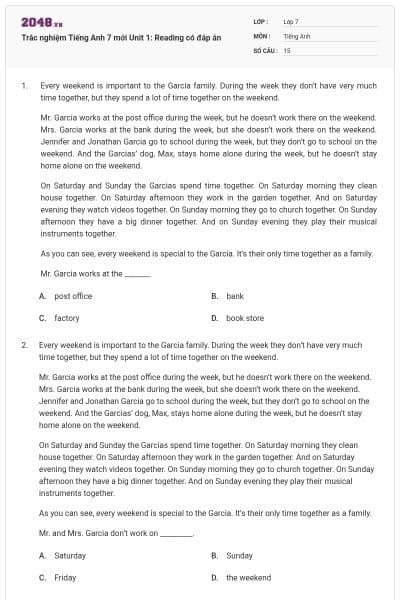
Every weekend is important to the Garcia family. During the week they don’t have very much time together, but they spend a lot of time together on the weekend.
Mr. Garcia works at the post office during the week, but he doesn’t work there on the weekend. Mrs. Garcia works at the bank during the week, but she doesn’t work there on the weekend. Jennifer and Jonathan Garcia go to school during the week, but they don’t go to school on the weekend. And the Garcias’ dog, Max, stays home alone during the week, but he doesn’t stay home alone on the weekend.
On Saturday and Sunday the Garcias spend time together. On Saturday morning they clean house together. On Saturday afternoon they work in the garden together. And on Saturday evening they watch videos together. On Sunday morning they go to church together. On Sunday afternoon they have a big dinner together. And on Sunday evening they play their musical instruments together.
As you can see, every weekend is special to the Garcia. It’s their only time together as a family.
Mr. Garcia works at the _______.
post office
bank
factory
book store
Đáp án A
Giải thích: Thì hiện tại đơn (dấu hiệu: usually), chủ ngữ (I) là ngôi I.
Dịch: Tôi thường xuyên đi học bằng xe buýt.
Every weekend is important to the Garcia family. During the week they don’t have very much time together, but they spend a lot of time together on the weekend.
Mr. Garcia works at the post office during the week, but he doesn’t work there on the weekend. Mrs. Garcia works at the bank during the week, but she doesn’t work there on the weekend. Jennifer and Jonathan Garcia go to school during the week, but they don’t go to school on the weekend. And the Garcias’ dog, Max, stays home alone during the week, but he doesn’t stay home alone on the weekend.
On Saturday and Sunday the Garcias spend time together. On Saturday morning they clean house together. On Saturday afternoon they work in the garden together. And on Saturday evening they watch videos together. On Sunday morning they go to church together. On Sunday afternoon they have a big dinner together. And on Sunday evening they play their musical instruments together.
As you can see, every weekend is special to the Garcia. It’s their only time together as a family.
Mr. and Mrs. Garcia don’t work on _________.
Saturday
Sunday
Friday
the weekend
Đáp án C
Giải thích: Thì hiện tại đơn (dấu hiệu: always), chủ ngữ (Tom) là ngôi III số ít nên cần chia thành “has”.
Dịch: Tom luôn luôn ăn sáng trước khi đi làm.
Every weekend is important to the Garcia family. During the week they don’t have very much time together, but they spend a lot of time together on the weekend.
Mr. Garcia works at the post office during the week, but he doesn’t work there on the weekend. Mrs. Garcia works at the bank during the week, but she doesn’t work there on the weekend. Jennifer and Jonathan Garcia go to school during the week, but they don’t go to school on the weekend. And the Garcias’ dog, Max, stays home alone during the week, but he doesn’t stay home alone on the weekend.
On Saturday and Sunday the Garcias spend time together. On Saturday morning they clean house together. On Saturday afternoon they work in the garden together. And on Saturday evening they watch videos together. On Sunday morning they go to church together. On Sunday afternoon they have a big dinner together. And on Sunday evening they play their musical instruments together.
As you can see, every weekend is special to the Garcia. It’s their only time together as a family.
During the week Jennifer _________.
goes to school.
plays card.
goes to the library
plays the piano.
Đáp án D
Giải thích: Thì hiện tại đơn diễn tả sự thật hiển nhiên, chủ ngữ là ngôi III số ít nên tobe là “is”.
Dịch: Giáo viên tiếng Anh của tôi là thầy Tuấn Anh.
Every weekend is important to the Garcia family. During the week they don’t have very much time together, but they spend a lot of time together on the weekend.
Mr. Garcia works at the post office during the week, but he doesn’t work there on the weekend. Mrs. Garcia works at the bank during the week, but she doesn’t work there on the weekend. Jennifer and Jonathan Garcia go to school during the week, but they don’t go to school on the weekend. And the Garcias’ dog, Max, stays home alone during the week, but he doesn’t stay home alone on the weekend.
On Saturday and Sunday the Garcias spend time together. On Saturday morning they clean house together. On Saturday afternoon they work in the garden together. And on Saturday evening they watch videos together. On Sunday morning they go to church together. On Sunday afternoon they have a big dinner together. And on Sunday evening they play their musical instruments together.
As you can see, every weekend is special to the Garcia. It’s their only time together as a family.
On Saturday morning they ________ together.
play football
go out
clean house
go shopping
Đáp án A
Giải thích: Thì hiện tại đơn (dấu hiệu: every morning), chủ ngữ là ngôi III số ít nên cần chia thành “begins”
Dịch: Tiết học của chúng tôi bắt đầu lúc 7h30 mỗi sáng.
Every weekend is important to the Garcia family. During the week they don’t have very much time together, but they spend a lot of time together on the weekend.
Mr. Garcia works at the post office during the week, but he doesn’t work there on the weekend. Mrs. Garcia works at the bank during the week, but she doesn’t work there on the weekend. Jennifer and Jonathan Garcia go to school during the week, but they don’t go to school on the weekend. And the Garcias’ dog, Max, stays home alone during the week, but he doesn’t stay home alone on the weekend.
On Saturday and Sunday the Garcias spend time together. On Saturday morning they clean house together. On Saturday afternoon they work in the garden together. And on Saturday evening they watch videos together. On Sunday morning they go to church together. On Sunday afternoon they have a big dinner together. And on Sunday evening they play their musical instruments together.
As you can see, every weekend is special to the Garcia. It’s their only time together as a family.
When do the Garcias work in the garden?
Saturday afternoon
Sunday morning
Saturday morning
Sunday afternoon
Đáp án B
Giải thích: Thì tương lai đơn
Dịch: Tôi cảm thấy mệt mỏi. Vì vậy, tôi sẽ không tới trường
Every weekend is important to the Garcia family. During the week they don’t have very much time together, but they spend a lot of time together on the weekend.
Mr. Garcia works at the post office during the week, but he doesn’t work there on the weekend. Mrs. Garcia works at the bank during the week, but she doesn’t work there on the weekend. Jennifer and Jonathan Garcia go to school during the week, but they don’t go to school on the weekend. And the Garcias’ dog, Max, stays home alone during the week, but he doesn’t stay home alone on the weekend.
On Saturday and Sunday the Garcias spend time together. On Saturday morning they clean house together. On Saturday afternoon they work in the garden together. And on Saturday evening they watch videos together. On Sunday morning they go to church together. On Sunday afternoon they have a big dinner together. And on Sunday evening they play their musical instruments together.
As you can see, every weekend is special to the Garcia. It’s their only time together as a family.
On Sunday evening they play ________ together.
card
tennis
musical instruments
piano
Đáp án A
Giải thích: thì tương lai đơn (dấu hiệu: next Sunday)
Dịch: Chelsea sẽ thắng vào chủ nhật tới.
Two students were asked about their hobbies and here is what they said.
Lien: Cooking is my favorite hobby. My grandmother taught me how to cook my first dish when I was 8. My family enjoyed it so much so that is when I started this hobby. Some people say cooking is a waste of time but I find this hobby very interesting and meaningful. I really love trying new food and cooking for my family. The feeling of making my family happy with my food is amazing. I often collect recipes from my mother and my grandmother. Sometimes I also get recipes from the internet. Then I write them in a notebook. I hope I will become a good chef and have my own cookery book in the future.
Cuong: I have an unusual hobby: carving eggshells. I started this hobby four years ago after getting a carved egg from my dad when he came back from Japan. It's amazing that something as fragile as an empty eggshell can be made into such a beautiful piece of art. I was so amazed that I learned how to carve them myself from the internet. I find carving eggshells a little difficult but so interesting and useful. The feeling of accomplishment when I finish a piece is absolutely awesome. This hobby also helps me be more patient and careful.
When did Lien start her hobby?
8 years ago
at the age of 8
in grade 8
one year ago
Đáp án B
Thông tin nằm ở đoạn đầu: My grandmother taught me how to cook my first dish when I was 8. My family enjoyed it so much so that is when I started this hobby.
Dịch: Bà tôi đã dạy tôi cách nấu nướng khi tôi lên tám tuổi. Gia đình tôi rất thích điều này và đó là khi tôi bắt đầu sở thích của mình.
Two students were asked about their hobbies and here is what they said.
Lien: Cooking is my favorite hobby. My grandmother taught me how to cook my first dish when I was 8. My family enjoyed it so much so that is when I started this hobby. Some people say cooking is a waste of time but I find this hobby very interesting and meaningful. I really love trying new food and cooking for my family. The feeling of making my family happy with my food is amazing. I often collect recipes from my mother and my grandmother. Sometimes I also get recipes from the internet. Then I write them in a notebook. I hope I will become a good chef and have my own cookery book in the future.
Cuong: I have an unusual hobby: carving eggshells. I started this hobby four years ago after getting a carved egg from my dad when he came back from Japan. It's amazing that something as fragile as an empty eggshell can be made into such a beautiful piece of art. I was so amazed that I learned how to carve them myself from the internet. I find carving eggshells a little difficult but so interesting and useful. The feeling of accomplishment when I finish a piece is absolutely awesome. This hobby also helps me be more patient and careful.
What does Lien think about cooking?
She thinks it's a waste of time.
She finds it interesting.
She finds it meaningful.
Both B and C are correct.
Đáp án D
Thông tin nằm ở đoạn 1: Some people say cooking is a waste of time but I find this hobby very interesting and meaningful.
Dịch: Nhiều người nói việc nấu nướng là tốn thời gian nhưng tôi thấy sở thích này rất thú vị và ý nghĩa.
Two students were asked about their hobbies and here is what they said.Lien: Cooking is my favorite hobby. My grandmother taught me how to cook my first dish when I was 8. My family enjoyed it so much so that is when I started this hobby. Some people say cooking is a waste of time but I find this hobby very interesting and meaningful. I really love trying new food and cooking for my family. The feeling of making my family happy with my food is amazing. I often collect recipes from my mother and my grandmother. Sometimes I also get recipes from the internet. Then I write them in a notebook. I hope I will become a good chef and have my own cookery book in the future.Cuong: I have an unusual hobby: carving eggshells. I started this hobby four years ago after getting a carved egg from my dad when he came back from Japan. It's amazing that something as fragile as an empty eggshell can be made into such a beautiful piece of art. I was so amazed that I learned how to carve them myself from the internet. I find carving eggshells a little difficult but so interesting and useful. The feeling of accomplishment when I finish a piece is absolutely awesome. This hobby also helps me be more patient and careful
What does the word "them" in paragraph 1 refer to?
Lien
Lien's mother and grandmother
recipes
Lien's dishes
Đáp án C
Thông tin ở đoạn 1: Sometimes I also get recipes from the internet. Then I write them in a notebook.
Dịch: Thỉnh thoảng tôi cũng tìm các công thức trên internet. Sau đó tôi viết chúng vào vở.
Two students were asked about their hobbies and here is what they said.
Lien: Cooking is my favorite hobby. My grandmother taught me how to cook my first dish when I was 8. My family enjoyed it so much so that is when I started this hobby. Some people say cooking is a waste of time but I find this hobby very interesting and meaningful. I really love trying new food and cooking for my family. The feeling of making my family happy with my food is amazing. I often collect recipes from my mother and my grandmother. Sometimes I also get recipes from the internet. Then I write them in a notebook. I hope I will become a good chef and have my own cookery book in the future.
Cuong: I have an unusual hobby: carving eggshells. I started this hobby four years ago after getting a carved egg from my dad when he came back from Japan. It's amazing that something as fragile as an empty eggshell can be made into such a beautiful piece of art. I was so amazed that I learned how to carve them myself from the internet. I find carving eggshells a little difficult but so interesting and useful. The feeling of accomplishment when I finish a piece is absolutely awesome. This hobby also helps me be more patient and careful.
Where does Lien get recipes from?
from her mother
from her grandmother
from the internet
All are correct.
Đáp án D
Thông tin ở đoạn 1: I often collect recipes from my mother and my grandmother. Sometimes I also get recipes from the internet.
Dịch: Tôi thường lấy công thức từ mẹ tôi và từ bà tôi. Thỉnh thoảng tôi cũng tìm các công thức trên internet.
Two students were asked about their hobbies and here is what they said.
Lien: Cooking is my favorite hobby. My grandmother taught me how to cook my first dish when I was 8. My family enjoyed it so much so that is when I started this hobby. Some people say cooking is a waste of time but I find this hobby very interesting and meaningful. I really love trying new food and cooking for my family. The feeling of making my family happy with my food is amazing. I often collect recipes from my mother and my grandmother. Sometimes I also get recipes from the internet. Then I write them in a notebook. I hope I will become a good chef and have my own cookery book in the future.
Cuong: I have an unusual hobby: carving eggshells. I started this hobby four years ago after getting a carved egg from my dad when he came back from Japan. It's amazing that something as fragile as an empty eggshell can be made into such a beautiful piece of art. I was so amazed that I learned how to carve them myself from the internet. I find carving eggshells a little difficult but so interesting and useful. The feeling of accomplishment when I finish a piece is absolutely awesome. This hobby also helps me be more patient and careful.
What does Lien do with the recipes she collected?
She keeps them in a notebook.
She shares them with her mother and grandmother.
She posts them on the internet.
All are correct.
Đáp án A
Thông tin ở cuối đoạn 1: Then I write them in a notebook.
Dịch: Sau đó tôi viết chúng vào vở.
Two students were asked about their hobbies and here is what they said.
Lien: Cooking is my favorite hobby. My grandmother taught me how to cook my first dish when I was 8. My family enjoyed it so much so that is when I started this hobby. Some people say cooking is a waste of time but I find this hobby very interesting and meaningful. I really love trying new food and cooking for my family. The feeling of making my family happy with my food is amazing. I often collect recipes from my mother and my grandmother. Sometimes I also get recipes from the internet. Then I write them in a notebook. I hope I will become a good chef and have my own cookery book in the future.
Cuong: I have an unusual hobby: carving eggshells. I started this hobby four years ago after getting a carved egg from my dad when he came back from Japan. It's amazing that something as fragile as an empty eggshell can be made into such a beautiful piece of art. I was so amazed that I learned how to carve them myself from the internet. I find carving eggshells a little difficult but so interesting and useful. The feeling of accomplishment when I finish a piece is absolutely awesome. This hobby also helps me be more patient and careful.
What is True about Cuong?
He started carving eggshells when he was 4.
His dad went to Japan 4 years ago.
He got a carved egg from his friend in Japan.
None are correct.
Đáp án D
Thông tin nằm ở đầu đoạn 2: I started this hobby four years ago after getting a carved egg from my dad when he came back from Japan.
Dịch: Tôi bắt đầu sở thích này 4 năm trước, sau khi nhận được một quả trứng khắc từ bố tối khi ông ấy về từ Nhật Bản.
Two students were asked about their hobbies and here is what they said.
Lien: Cooking is my favorite hobby. My grandmother taught me how to cook my first dish when I was 8. My family enjoyed it so much so that is when I started this hobby. Some people say cooking is a waste of time but I find this hobby very interesting and meaningful. I really love trying new food and cooking for my family. The feeling of making my family happy with my food is amazing. I often collect recipes from my mother and my grandmother. Sometimes I also get recipes from the internet. Then I write them in a notebook. I hope I will become a good chef and have my own cookery book in the future.
Cuong: I have an unusual hobby: carving eggshells. I started this hobby four years ago after getting a carved egg from my dad when he came back from Japan. It's amazing that something as fragile as an empty eggshell can be made into such a beautiful piece of art. I was so amazed that I learned how to carve them myself from the internet. I find carving eggshells a little difficult but so interesting and useful. The feeling of accomplishment when I finish a piece is absolutely awesome. This hobby also helps me be more patient and careful.
Where does Cuong learn to carve from?
from his father
from the internet
from a Japanes
None are correct.
Đáp án B
Thông tin ở dòng 4 đoạn 2: I learned how to carve them myself from the internet.
Dịch: Tôi đã tự học cách khắc chúng từ internet
Two students were asked about their hobbies and here is what they said.
Lien: Cooking is my favorite hobby. My grandmother taught me how to cook my first dish when I was 8. My family enjoyed it so much so that is when I started this hobby. Some people say cooking is a waste of time but I find this hobby very interesting and meaningful. I really love trying new food and cooking for my family. The feeling of making my family happy with my food is amazing. I often collect recipes from my mother and my grandmother. Sometimes I also get recipes from the internet. Then I write them in a notebook. I hope I will become a good chef and have my own cookery book in the future.
Cuong: I have an unusual hobby: carving eggshells. I started this hobby four years ago after getting a carved egg from my dad when he came back from Japan. It's amazing that something as fragile as an empty eggshell can be made into such a beautiful piece of art. I was so amazed that I learned how to carve them myself from the internet. I find carving eggshells a little difficult but so interesting and useful. The feeling of accomplishment when I finish a piece is absolutely awesome. This hobby also helps me be more patient and careful.
What does Cuong think about his hobby?
He finds it interesting.
He thinks it's difficult.
He finds it useful.
All are correct.
Đáp án D
Thông tin nằm ở giữa đoạn 2: I find carving eggshells a little difficult but so interesting and useful.
Dịch: Tôi thấy việc khắc trứng thì hơi khó nhưng nó rất thú vị và có ích.
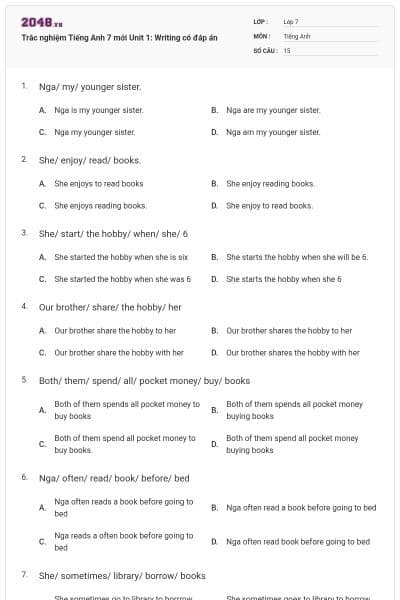
Dùng từ gợi ý để viết thành câu hoàn chỉnh. Chọn đáp án chính xác nhất.
Nga/ my/ younger sister.
Nga is my younger sister.
Nga are my younger sister.
Nga my younger sister.
Nga am my younger sister.
Đáp án A
Câu nói lên sự thật hiển nhiên. Đáp án B, C, D sai ngữ pháp (sai tobe).
Dịch: Nga là em gái của tôi.
She/ enjoy/ read/ books.
She enjoys to read books.
She enjoy reading books.
She enjoys reading books.
She enjoy to read books.
Đáp án C
Cấu trúc: enjoy + Ving/N ( thích làm gì/ thích gì). Câu này dùng hiện tại đơn vì diễn tả sự thật.
Dịch: Cô ấy thích đọc sách.
She/ start/ the hobby/ when/ she/ 6.
She started the hobby when she was 6.
She starts the hobby when she will be 6.
She started the hobby when she was 6.
She starts the hobby when she 6.
Đáp án C
Câu diễn tả điều đã xảy ra trong quá khứ nên dùng quá khứ đơn cho cả 2 vế.
Dịch: Cô ấy đã bắt đầu sở thích của mình khi cô ấy 6 tuổi.
Our brother/ share/ the hobby/ her.
Our brother share the hobby to her.
Our brother shares the hobby to her.
Our brother share the hobby with her.
Our brother shares the hobby with her.
Đáp án D
Cấu trúc: share st with sb (chia sẻ cái gì với ai)
Dịch: Anh trai của chúng tôi chia sẻ sở thích với cô ấy.
Both/ them/ spend/ all/ pocket money/ buy/ books.
Both of them spends all pocket money to buy books.
Both of them spends all pocket money buying books.
Both of them spend all pocket money to buy books.
Both of them spend all pocket money buying books.
Đáp án D
Cấu trúc: spend money/time + Ving (dành tiền/dành thời gian để làm gì)
Dịch: Tất cả họ đều dành tiền để mua sách.
Nga/ often/ read/ book/ before/ bed.
Nga often reads a book before going to bed.
Nga often read a book before going to bed.
Nga reads a often book before going to bed.
Nga often read book before going to bed.
Đáp án A
Vị trí của trạng từ chỉ tần suất: trước động từ thường, sau tobe.
Dịch: Nga thường đọc sách trước khi đi ngủ.
She/ sometimes/ library/ borrow/ books.
She sometimes go to library to borrrow books.
She sometimes goes to library to borrow books.
She is sometimes go to library to borrow books.
She goes to sometimes library to borrow books.
Đáp án B
Vị trí của trạng từ chỉ tần suất: trước động từ thường, sau tobe.
Dịch: Cô ấy thỉnh thoảng đến thư viện để mượn sách.
She/ think/ read books/ interesting/ useful.
She think reading books is interesting and useful.
She think read books is interesting and useful.
She thinks reading books is interesting and useful.
She think reads books is interesting and useful.
Đáp án C
Cấu trúc thì hiện tại đơn.
Dịch: Cô ấy nghĩ việc đọc sách thì thú vị và có ích.
It/ develop/ her imagination/ widen/ her knowledge.
It develops her imagination and widen her knowledge.
It develop her imagination and widen her knowledge.
It develops her imagination and widens her knowledge.
It develop her imagination and widens her knowledge.
Đáp án C
Cấu trúc thì hiện tại đơn. Chủ ngữ (it) là số ít nên động từ cần chia.
Dịch: Nó phát triển trí tưởng tượng và mở rộng hiểu biết của cô ấy.
She/ hope/ have/ her/ own/ book/ future.
She hopes she will has her own book in the future.
She hopes she will have her own book in the future.
She hope she will have her own book in the future.
She hopes she will has her own book in a future.
Đáp án B
Cấu trúc: hope + mệnh đề (tương lai đơn): hi vọng điều gì sẽ xảy ra.
Dịch: Cô ấy hi vọng rằng cô ấy sẽ có cuốn sách của riêng mình trong tương lai.
They/ often/ go/ park.
They often go to park.
They often goes to park.
They are often go to park.
They go to park oftenly.
Đáp án A
Thì hiện tại đơn (dấu hiệu: often).
Vị trí của trạng từ chỉ tần suất: trước động từ thường, sau tobe.
Dịch: Họ thường tới công viên.
How/ your father go/ work?
How do your father go to work?
How does your father goes to work?
How do your father goes to work?
How does your father go to work?
Đáp án D
Thì hiện tại đơn dạng nghi vấn, động từ chính giữ ở dạng nguyên thể.
Dịch: Bố của bạn đi làm bằng cách nào?
Viết lại câu sao cho nghĩa không đổi. Chọn đáp án chính xác nhất.
My parents usually watch TV in the evening.
My parents never watch TV.
In the evening, my dad and my mom usually watch TV.
In the evening, my mom and my dad clean our house.
My parents always watch TV in the evening.
Đáp án B
Dịch: Bố mẹ tôi thường xem TV vào buổi tối.
I enjoy going camping with my family.
I don’t like going camping with my family.
I usually go camping with my friends.
I am fond of going camping with my family.
I don’t want to go camping.
Đáp án C
Cấu trúc: tobe fond of Ving = enjoy Ving (thích làm gì)
Dịch: Tôi thích đi cắm trại cùng gia đình.
I hope I will live abroad in the future.
I wish I would live abroad in the future.
I don’t want to live abroad in the future.
I want living abroad in the future.
I lived abroad when I was small.
Đáp án A
Cấu trúc:
1. Hope + mệnh đề (tương lai đơn): hi vọng điều gì sẽ xảy ra
2. Wish + mệnh đề: ước điều gì sẽ xảy ra
3. Want + toV: muốn làm gì. Don’t want to V: không muốn làm gì
Dịch: Tôi hi vọng tôi sẽ sống ở nước ngoài trong tương lai.