Đề thi Tiếng anh mới 9 Giữa kì 1 có đáp án (Đề 17)
40 câu hỏi
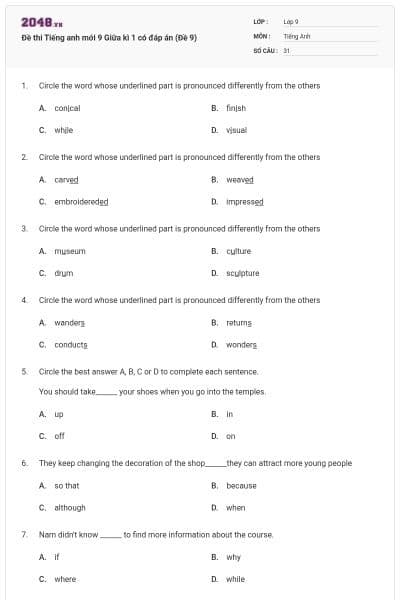
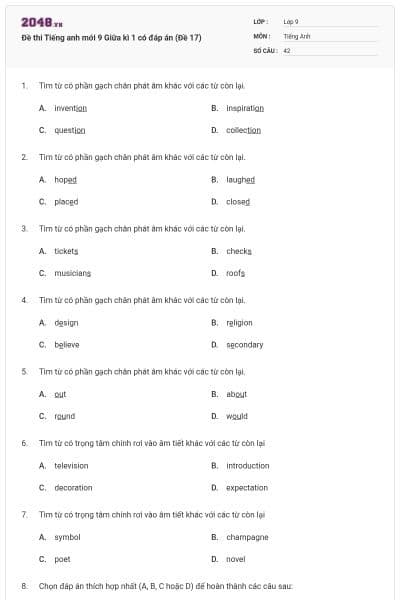
Tìm từ có phần gạch chân phát âm khác với các từ còn lại.
invention
inspiration
question
collection
Đáp án C
Giải thích: đáp án C phát âm là /tʃ/ còn lại là /ʃ/
Tìm từ có phần gạch chân phát âm khác với các từ còn lại.
hoped
laughed
placed
closed
Đáp án D
Giải thích: đáp án D phát âm là /d/ còn lại là /t/
Tìm từ có phần gạch chân phát âm khác với các từ còn lại.
tickets
checks
musicians
roofs
Đáp án C
Giải thích: đáp án C phát âm là /d/ còn lại là /s/
Tìm từ có phần gạch chân phát âm khác với các từ còn lại.
design
religion
believe
secondary
Đáp án D
Giải thích: đáp án D phát âm là /e/ còn lại là /ɪ/
Tìm từ có phần gạch chân phát âm khác với các từ còn lại.
out
about
round
would
Đáp án D
Giải thích: đáp án D phát âm là /ʊ/ còn lại là /aʊ/
Tìm từ có trọng tâm chính rơi vào âm tiết khác với các từ còn lại
television
introduction
decoration
expectation
Đáp án A
Giải thích: đáp án A nhấn âm thứ nhất còn lại nhấn âm 3
Tìm từ có trọng tâm chính rơi vào âm tiết khác với các từ còn lại
symbol
champagne
poet
novel
Đáp án B
Giải thích: đáp án B nhấn âm thứ hai còn lại nhấn âm thứ nhất
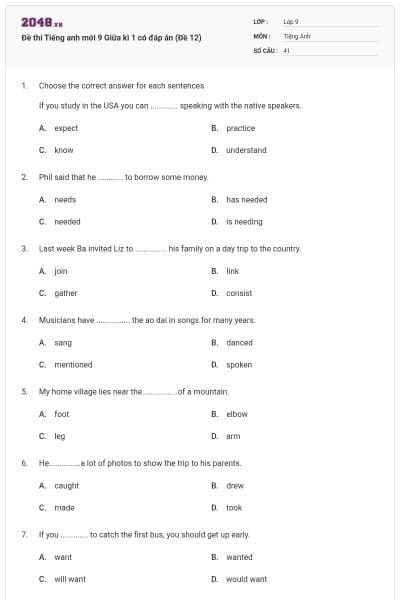
Chọn đáp án thích hợp nhất (A, B, C hoặc D) để hoàn thành các câu sau:
The material, called jean, was named...............sailors from Genoa
of
as
after
out
Đáp án C
Giải thích: be named after: đặt tên theo…
Dịch: Chất liệu jean được đặt tên theo những thủy thủ từ Genoa.
She has two children to look afte, so she's looking for a ............ job in her neighborhood
low-paid
full-time
skilled
part-time
Đáp án D
Giải thích:
- low-paid: lương thấp
- full-time: toàn thời gian
- part-time: bán thời gian
- skilled: lành nghề
Dịch: Cô ấy có 2 đứa con để chăm sóc vì vậy cô ấy đang tìm một công việc bán thời gian trong khu vực đang sống.
Jeans have never been…….fashion because a lot of people are still fond of wearing them.
on
of
out
out of
Đáp án D
Giải thích: out of fashion: lỗi thời, lỗi mốt
Dịch: Jeans chưa từng lỗi mốt vì rất nhiều người vẫn thích mặc chúng.
Mrs. White is very................... She goes to the Church everyday
regioner
religion
region
religious
Đáp án D
Giải thích: sau tobe very ở đây cần một tính từ
Dịch: Bà White là người sùng đạo. Bà ấy đến nhà thờ hàng ngày.
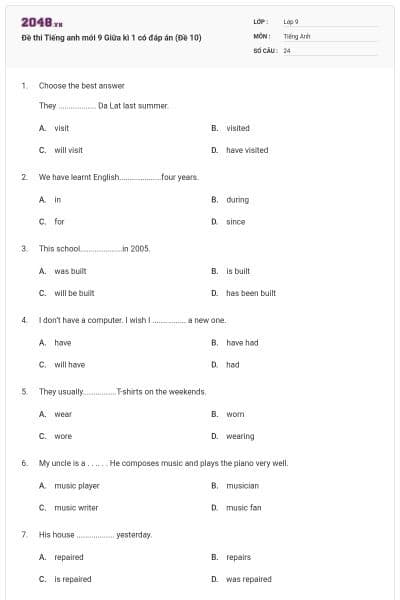
Millions of Christmas cards ..................last month.
sent
are sent
were sent
send
Đáp án C
Giải thích: câu bị động và chia thì quá khứ đơn vì có “last months”
Dịch: Hàng triệu tấm thiệp giáng sinh được gửi vào tháng trước.
I .................English here since I graduated from Qui Nhon University
teach
taught
have taught
am teaching
Đáp án C
Giải thích: mệnh đề trước since chia quá khứ đơn
Dịch: Tôi đã dạy tiếng Anh ở đây kể từ khi tôi tốt nghiệp trường đại học Quy Nhơn.
Do you ever wish you .................. on the moon?
lived
living
live
are living
Đáp án A
Giải thích: câu ước ở hiện tại lùi 1 thì về quá khứ
Dịch: Bạn có bao giờ từng ước được sống trên mặt trăng chưa?
Their friends wish the teacher .................them in the next trip.
accompanied
will company
would accompany
are accompanied
Đáp án C
Giải thích: câu ước =>lùi thì will ->would
Dịch: Bạn của họ ước giáo viên sẽ đồng hành ở chuyến đi tiếp theo.
I'm looking forward to............. back here again next summer.
came
come
coming
will come
Đáp án C
Giải thích: look forward to Ving: trông đợi điều gì
Dịch: Tôi đang trông đợi sẽ quay trở lại đây vào mùa hè năm sau.
Where is your home village?
The west of the city.
On the west of the city.
To the west of the city
Of the west of the city.
Đáp án C
Giải thích: to the west of the city: về phía tây thành phố
Dịch: Quê bạn ở đâu? – Về phía tây của thành phố.
They have just....... .................. a new style of jeans in Vietnam.
to introduce
introducing
introduce
introduced
Đáp án D
Giải thích: have just Vp2: vừa mới làm gì
Dịch: Họ vừa mới ra mắt một loại quần jean mới ở Việt Nam.
English, Tamil and Chinese are............spoken in Malaysia.
width
widen
widely
wide
Đáp án C
Giải thích: bổ ngữ cho động từ cần trạng từ
Dịch: Tiếng Anh, Tamin và Trung Quốc được nói rộng rãi ở Malaysia.
Maryam and Lan are pen pals. They.................with each other twice a week.
phone each other
correspond
write letter
meet
Đáp án C
Giải thích: pen pals: bạn qua thư tín =>write letter: viết thư
Dịch. Maryam và Lan là những người bạn qua thư tín. Họ viết thư cho nhau mỗi 2 lần một tuần.
When she lived in the country, she ................ in the river.
is used to swimming
used to swim
was swimming
has swum
Đáp án B
Giải thích: used to V: hành động thường xuyên xảy ra trong quá khứ và bây giờ không còn nữa
Dịch: Khi cô ấy sống ở nông thôn, cô ấy thường bơi ở sông.
My children are lucky ..................a chance tovisit the capital.
to have
have
having
had
Đáp án A
Giải thích: be adj to V
Dịch: Các con tôi thì may mắn khi có cơ hội tới thăm thủ đô.
Chọn từ hoặc cụm từ( A, B, C hoặc D) cần phải sửa trong các câu sau.
Tom used to going to school by bus. Now he goes by bike.
A B C D
Đáp án A
Giải thích: used to V: hành động thường xuyên xảy ra trong quá khứ và bây giờ không còn nữa =>going ->go
Dịch: Tom thường đi tới trường bằng xe buýt. Bây giờ anh ấy đi xe đạp.
The Chinese build the Great Wall over two thousand years ago.
A B C D
Đáp án B
Giải thích: ago =>chia quá khứ đơn =>build ->built
Dịch: Người Trung Quốc xây Vạn Lý Trường Thành hơn 2 nghìn năm trước.
Mr.John lives in England, so he's used to drive on the left.
A B C D
Đáp án D
Giải thích: be used to Ving: tập quen làm gì =>drive ->driving
Dịch: Ông John sống ở Anh, vì ấy ông ấy dần quen với việc lái xe bên trái.
We walked for half a hour to reach the picnic site.
A B C D
Đáp án C
Giải thích: “h” trong hour là âm câm nên tính từ âm thứ 2 là nguyên âm =>half a hour half an hour
Dịch: Chúng tôi đi bộ được nửa giờ để đến điểm cắm trại.
Millions of people have visit Disney World in Orlando, Florida, since it opened.
A B C D
Đáp án B
Giải thích: have Vp2 =>have visit ->have visited
Dịch: Hàng triệu người đến thăm Disney World ở Orlando, Florida kể từ khi nó mở.
I live in a small village (28)_____Helford.
0
called
of
is
Đáp án B
Giải thích: be called: được gọi là
Dịch: Tôi sống ở một ngôi làng nhỏ được gọi là Helford.
The village is always clean – people often look (29)_______ it with great care.
after
at
into
for
Đáp án A
Giải thích: look after: chăm sóc
Dịch: Ngôi làng thì luôn sạch – mọi người chăm sóc nó rất tốt.
People are much more friendly here than in a city because everyone knows the others, and (30) _____________ someone has a problem, there are always people who can help.
while
unless
whatever
if
Đáp án D
Giải thích:
- while: trong khi
- unless: nếu không thì
- whatever: bất kể cái gì
- if: nếu
Dịch: Mọi người thì thân thiện hơn nhiều so với ở thành phố vì mọi người quen biết nhau, nếu có vấn đề thì sẽ luôn có người giúp.
We don't have (31)______ cinemas or theaters.
any
по
some
a few
Đáp án A
Giải thích:
- any: một vài, thường ở câu phủ định và nghi vấn
- no: không
- some: một vài, thường ở câu khẳng định
- a few: một vài, đi với danh từ số nhiều đếm được
Dịch: Chúng tôi không có rạp phim hay rạp xiếc nào cả.
Đọc kỹ đoạn văn sâu và chọn phương án đúng (A hoặc B, C, D) cho mỗi câu hỏi.
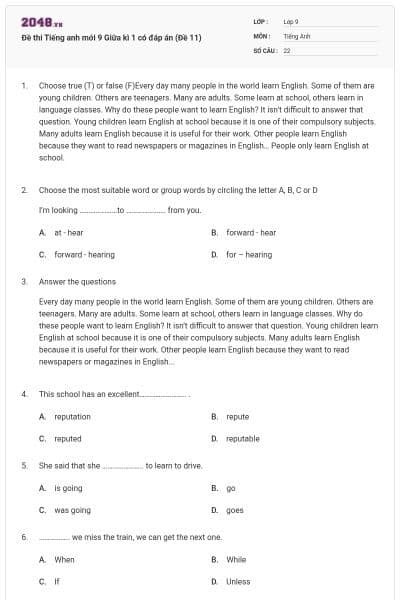
Clothes can tell a lot about a person. Some people like very colorful clothes because they want everyone to look at them, and they want to be the center of the universe. Other people like to wear nice clothes, but their clothes are not colorful or fancy. They don't like people to look at them. Clothes today are very different from the clothes of the 1800s. One difference is the way they look. For example, in the 1800s all women wore dresses. The dresses had long skirts. But today women don't always wear dresses with long skirts. Sometimes they wear short skirts. Sometimes they wear pants. Another difference between 1800s and today is the cloth. In the 1800s, cloths were made only from natural kinds of cloth. They were made from cotton, wool, silk or linen. But today, there are many kinds of materials made cloth. A lot of clothes are now made from nylon, rayon, or polyester.
Why do some people like very colorful clothes?
Because they like different colors.
Because they don't want everyone to look at them.
Because colorful clothes are always nice.
Because they want to be the center of the universe.
Đáp án D
Giải thích: dựa vào câu “Some people like very colorful clothes because they want everyone to look at them, and they want to be the center of the universe.”
Dịch: Một số người thích quần áo sặc sỡ vì họ muốn mọi người nhìn vào họ và họ muốn trở thành trung tâm của vũ trụ.
Dịch bài đọc
Quần áo có thể nói lên rất nhiều điều về một người. Một số người thích quần áo rất nhiều màu sắc vì họ muốn mọi người nhìn vào họ, và họ muốn trở thành trung tâm của vũ trụ. Những người khác thích mặc quần áo đẹp, nhưng quần áo của họ không nhiều màu sắc hoặc cầu kỳ. Họ không thích mọi người nhìn vào họ. Quần áo ngày nay rất khác so với quần áo của những năm 1800. Một điểm khác biệt là cách chúng trông như thế nào. Ví dụ, vào những năm 1800, tất cả phụ nữ đều mặc váy. Những chiếc váy có váy dài. Nhưng ngày nay, phụ nữ không phải lúc nào cũng mặc váy có váy dài. Đôi khi họ mặc váy ngắn. Đôi khi họ mặc quần. Một điểm khác biệt nữa giữa những năm 1800 và ngày nay là vải. Vào những năm 1800, vải chỉ được làm từ các loại vải tự nhiên. Chúng được làm từ cotton, len, lụa hoặc vải lanh. Nhưng ngày nay, có rất nhiều loại chất liệu làm vải. Rất nhiều quần áo hiện được làm từ nylon, rayon hoặc polyester.
What kind of clothes do other people like to wear ?
They like to wear colorful clothes.
They like to wear beautiful clothes.
They like to wear traditional clothes.
They like to wear modern clothes.
Đáp án B
Giải thích: dựa vào câu “Other people like to wear nice clothes, but their clothes are not colorful or fancy.”
Dịch: Những người khác thích mặc quần áo đẹp những quần áo của họ thì không sặc sỡ và bóng bẩy.
And what kind of clothes did all women wear in the 1800s?
In the 1800s, all women wore mordern clothing
In the 1800s, all women wore dark skirts.
In the 1800s, all women wore dresses.
In the 1800s, all women wore long-sleeved blouses.
Đáp án C
Giải thích: dựa vào câu “in the 1800s all women wore dresses.”
Dịch: Vào thập niên 1800 tất cả phụ nữ đều mặc váy.
Were the clothes of the 1800s the same as clothes today?
Yes, the clothes today are not different from the clothes of the 1800s
No, clothes today are very different from the clothes of the 1800s.
No, the clothes of the 1800s were the same as clothes today.
Yes, the clothes of the 1800s were the same as clothes today.
Đáp án B
Giải thích: dựa vào câu “Clothes today are very different from the clothes of the 1800s.”
Dịch: Quần áo ngày nay thì rất khác so với quần áo của những thập niên 1800.
Chọn câu viết lại thích hợp nhất cho mỗi câu sau.
My father has already repaired the car.
The car have already been repaired by my father.
The car is already repaired by my father.
The car has already been repaired by my father.
The car already has been repaired by my father.
Đáp án C
Giải thích: - A sai vì the car là số ít
- B sai vì thì câu gốc ở hiện tại hoàn thành
- D sai vì already phải đứng sau have/has
Dịch: Chiếc ô tô đã được sửa bởi bố tôi.
"Don't drive so fast" his mother said.
His mother told him not drive so fast.
His mother told him not to drive so fast.
His mother advises him not to drive so
His mother said him not to drive so fast. fast.
Đáp án: B
Giải thích:
Kiến thức: Câu gián tiếp
Câu gốc là một câu mệnh lệnh ở dạng phủ định. Khi chuyển sang câu gián tiếp, ta sử dụng cấu trúc:
tell + someone + (not) to do something → His mother told him not to drive so fast.
A. His mother told him not drive so fast. → Sai vì thiếu "to" trong "not to drive."
B. His mother told him not to drive so fast. → Đúng vì phù hợp với cấu trúc câu tường thuật.
C. His mother advises him not to drive so fast. → Sai vì động từ "advises" không đúng với câu gốc (đúng phải là "told").
D. His mother said him not to drive so fast. → Sai vì "said" không dùng với tân ngữ theo cách này, phải dùng "told."
Chọn B.
Dịch: Mẹ anh ấy bảo anh ấy đừng lái xe quá nhanh.
My father started to work here last year.
My father worked here since last year.
My father has start to work here last year
My father started to work here since last year.
My father has worked here since last year.
Đáp án D
Giải thích: started to V… = have Vp2…
Dịch: Bố tôi đã làm việc ở đây kể từ năm ngoái.
It's a pity that I can't sing well.
I wish I can sing well.
I wish I could sing well.
If only I can sing well
A & B are correct.
Đáp án B
Giải thích: câu ước ở hiện tại lùi 1 thì về quá khứ
Dịch: Tôi ước tôi có thể hát hay.
I don't want to go to the party tonight.
I feel like go to the party tonight.
I don't feel like going to the party tonight.
I feel like going to the party tonight.
I don't feel like to go to the party tonight.
Đáp án B
Giải thích: feel like Ving: muốn/thích làm gì
Dịch: Tôi không muốn tới bữa tiệc tối nay.
Bạn có thích hoạt động này không?