Đề thi Tiếng anh mới 9 Giữa kì 1 có đáp án (Đề 12)
40 câu hỏi
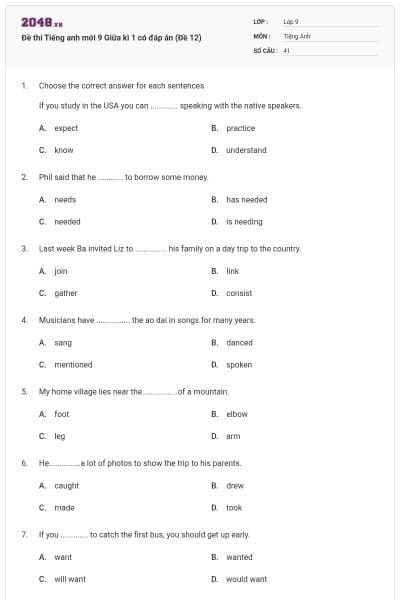
Choose the correct answer for each sentences
If you study in the USA you can ............. speaking with the native speakers.
expect
practice
know
understand
Đáp án: B
Giải thích:
A. expect (v): mong đợi
B. practice (v): luyện tập
C. know (v): biết
D. understand (v): hiểu
Dựa vào nghĩa, chọn B.
practice doing something: luyện tập làm gì
Dịch: Nếu bạn học tập ở Mỹ, bạn có thể luyện tập nói chuyện với người bản xứ.
Phil said that he ............ to borrow some money.
needs
has needed
needed
is needing
Đáp án C
Giải thích: câu bị động lùi 1 thì
Dịch: Phil nói rằng anh ấy cần mượn một chút tiền.
Last week Ba invited Liz to ............... his family on a day trip to the country.
join
link
gather
consist
Đáp án A
Giải thích: join st: tham gia vào cái gì
Dịch: Tuần trước Ba mời Liz tham gia với gia đình anh ấy chuyến đi 1 ngày tới nông thôn.
Musicians have ................ the ao dai in songs for many years.
sang
danced
mentioned
spoken
Đáp án C
Giải thích:
- sing: hát
- dance: nhảy
- mention: đề cập
- speak: nói
Dịch: Những nhạc sĩ đã đề cập áo dài trong những bài hát trong nhiều năm qua.
My home village lies near the.................of a mountain.
foot
elbow
leg
arm
Đáp án A
Giải thích: the foot of mountain: chân núi
Dịch: Làng tôi nằm ở gần chân núi.
He...............a lot of photos to show the trip to his parents.
caught
drew
made
took
Đáp án D
Giải thích: take photos: chụp ảnh
Dịch: Anh ấy đã chụp rất nhiều ảnh để cho bố mẹ anh ấy xem.
If you ............. to catch the first bus, you should get up early.
want
wanted
will want
would want
Đáp án AGiải thích: câu điều kiện loại 1: If+mệnh đề ở hiện tại, mệnh đề ở hiện tại hoặc tương lai đơn
Dịch: Nếu bạn muốn bắt chuyến xe buýt đầu tiên, bạn nên dậy sớm.
Mai wishes she..............her aunt in Ho Chi Minh City.
will visit
could visit
can visit
should visit
Đáp án B
Giải thích: câu ước ở hiện tại lùi 1 thì về quá khứ đơn
Dịch: Mai ước cô ấy có thể tới thăm dì ở thành phố Hồ Chí Minh.
The doctor..................me not to stay up too late at night.
advised
suggested
insisted
forced
Đáp án A
Giải thích: advise sb (not) to do st: khuyên ai (không) nên làm gì
Dịch: Bác sĩ khuyên tôi không nên đi ngủ muộn.
She was sick yesterday,...............she was absent from school.
since
so
because
but
Đáp án B
Giải thích:
- since: kể từ khi
- so: vì vậy
- because: bởi vì
- but: nhưng
Dịch: Cô ấy bị ốm vào hôm qua, vì vậy cô ấy đã nghỉ học.
Vietnamese people are very.................
friend
friendly
friendship
friendliness
Đáp án A
Giải thích: sau tobe very ở đây cần 1 tính từ
Dịch: Người Việt Nam rất lương thiện.
Let's..............about my problem.
talk
talking
to talk
talked
Đáp án A
Giải thích: Let’s Vinf: hãy…
Dịch: Hãy nói về vấn đề của tôi.
Vietnam is a ................ country. The weather is usually hot there.
tropical
cold
warm
heat
Đáp án A
Giải thích: tropical country: nước nhiệt đới
Dịch: Việt Nam là một nước nhiệt đới. Thời tiết ở đó thì thường nóng.
My friend is fond of .............TV in the evening.
watching
to watch
watch
watched
Đáp án A
Giải thích: fond of Ving: thích làm gì
Dịch: Bạn tôi thích xem TV vào buổi tối.
Some designers have taken..............from Vietnam's ethnic minorities.
inspiration
education
impression
tradition
Đáp án A
Giải thích: take inspiration from: lấy cảm hứng từ
Dịch: Một số nhà thiết kế lấy cảm hứng từ những dân tộc thiểu số Việt Nam
Jeans.................all over the world today.
is sold
was sold
will be sold
are sold
Đáp án D
Giải thích: Jeans không tự bán được =>bị động và jeans là chủ ngữ số nhiều
Dịch: Jeans được bán trên toàn thê giới ngày nay.
She asked me how..............to schools everyday.
I go
I went
do I go
did i go
Đáp án B
Giải thích:
- chuyển về câu gián tiếp không đảo trợ động từ lên trên =>loại C, D
- sang câu gián tiếp lùi 1 thì =>loại A
Dịch: Cô ấy hỏi tôi cách đi đến trường hàng ngày.
What...........of learning English do you find most difficult, Hoa?
dictionary
passage
aspect
subject
Đáp án C
Giải thích:
- dictionary: từ điển
- passage: đoạn văn
- aspect: khía cạnh, phần, mảng
- subject: môn nào
Dịch: Phần nào của việc học tiếng Anh bạn thấy khó nhất, Hoa?
Choose a word in each group that has different stress pattern:
inspiration
botanical
mausoleum
economic
Đáp án B
Giải thích: đáp án B nhấn âm 2, còn lại nhấn âm 3
Choose a word in each group that has different stress pattern:
occasion
department
introduce
official
Đáp án C
Giải thích: đáp án C nhấn âm 3 còn lại nhấn âm 2
Circle the word of which the underlined sound is pronounced differentlyfrom the others
enjoyed
invited
mended
lasted
Đáp án A
Giải thích: đáp án A phát âm là /d/ còn lại là /ɪd/
Circle the word of which the underlined sound is pronounced differentlyfrom the others
examiner
kind
miss
sick
Đáp án B
Giải thích: đáp án B phát âm là /ai/ còn lại là /ɪ/
Circle the word of which the underlined sound is pronounced differentlyfrom the others
divide
religion
primary
comprise
Đáp án B
Giải thích: đáp án B phát âm là /ɪ/ còn lại là /ai/
Circle the word of which the underlined sound is pronounced differentlyfrom the others
compulsory
industry
hamburger
funny
Đáp án C
Giải thích: đáp án C phát âm là /ɜ:/ còn lại là /ʌ/
Circle the word of which the underlined sound is pronounced differentlyfrom the others
federation
impress
whether
design
Đáp án D
Giải thích: đáp án D phát âm là /ɪ/ còn lại là /e/
There is a mistake in the four underlined parts of each sentences:
A new shop was opening on Main Street last week
A B C D
Đáp án B
Giải thích: was opening =>was opened (vì shop không thể tự mở =>bị động)
Dịch: Một cửa hàng mới được mở ở Phố Mai tuần trước.
Thanh said that he was going to visit his grandparents tomorrow
A B C D
Đáp án D
Giải thích: câu gián tiếp: tomorrow =>the day after/the following day
Dịch: Thanh nói anh ấy sẽ đi thăm ông bà vào ngày mai.
If you want attending the course, you must pass the written examination.
A B C D
Đáp án B
Giải thích: want to V: muốn làm gì =>attending ->to attend
Dịch: Nếu bạn muốn tham gia khóa học, bạn phải vượt qua kì thi viết
Minh and his family had a two- days trip to their hometown
A B C D
Đáp án C
Giải thích: tính từ ghép: số từ+danh từ số ít =>two-days ->two-day
Dịch: Minh và gia đình có chuyến đi hai ngày về quê.
Tom asked me do I want to go out for lunch with him
A B C D
Đáp án A
Giải thích: S+asked+O+if/whether+mệnh đề lùi 1 thì =>do I want ->If/whether I wanted
Dịch: Tom hỏi tôi liệu tôi có muốn ra ngoài ăn trưa với anh ấy hay không.
Firstly, wearing casual clothes makes student ......(31)......comfortables.
felt
feeling
to feel
feel
Đáp án D
Giải thích: make sb Vinf: làm ai/khiến ai làm gì/thế nào
Dịch: Thứ nhất mặc quần áo thông thường làm học sinh cảm thấy thoải mái.
Secondly, wearing casual clothes gives students....(32).....of choice (sizes, colors........)
free
freedom
freely
unfree
Đáp án B
Giải thích: give sb st =>chỗ trống cần 1 danh từ
Dịch: Thứ hai, mặc thường phục cho học sinh sự tự do lựa chọn (kích cỡ, màu sắc…).
Thirdly, wearing casual clothes makes students feel self- confident when they are...(33)...their favorite clothes.
in
at
of
on
Đáp án A
Giải thích: in their favorite clothes: trong những bộ quần áo yêu thích của họ
Dịch: Thứ ba, mặc thường phục giúp học sinh cảm thấy tự tin khi ở trong những bộ quần áo yêu thích của họ.
Finally, wearing casual clothes makes school more colorful and...(34).....
lively
clean
crowded
quiet
Đáp án A
Giải thích:
- lively: sống động
- clean: sạch
- crowded: đông
- quiet: trật tự
Dịch: Cuối cùng, mặc thường phục làm cho trường trở nên nhiều màu sắc và sống động.
Choose the sentences have the same meaning:
"Where do you live?" - Bob asked me
Bob asked me where I lived
Bob asked me where I live
Bob asked me where do I live
Bob asked me where did I lived
Đáp án AGiải thích: chuyển sang gián tiếp lùi 1 thì và không để trợ động từ
Dịch: Bob hỏi tôi sống ở đâu.
We couldn't sleep because the hotel was very noisy
The hotel was very noisy so that we couldn't sleep
The hotel was so that noisy that we couldn't sleep
The hotel was so noisy that we couldn't sleep
The hotel was very so noisy that we coudn't sleep
Đáp án C
Giải thích: so…that: quá đến nỗi mà
Dịch: Khách sạn thì ổn đến nỗi mà chúng tôi không thể ngủ.
taxi/ we/ late/ get/ want/ we/ to/ home/ so/ took/ didn't/ a/ .
We took a taxi, so we didn't get to want home late
We didn't took a taxi, so we want to get late home
We want to get late home, so we didn't took a taxi
We didn't want to get home late, so we took a taxi
Đáp án D
Giải thích: Dịch: Chúng tôi không muốn về nhà muộn, vì vậy chúng tôi đã bắt taxi
It is raining now but I don't like it
i wish it will not rain now
I wish it is not raining now
I wish it does not rain now
I wish it were not raining now
Đáp án D
Giải thích: điều ước ở hiện tại lùi thì về quá khứ
Dịch: Tôi ước bây giờ nó không mưa.
Ann asked me whether I was free that night
"Were you free that night?" Ann asked
"Were you free tonight?"
"Are you free tonight?" Ann asked Ann asked
"Are you free that night?" Ann asked
Đáp án C
Giải thích: chuyển về trực tiếp tiến 1 thì, that night =>tonight
Dịch: “Bạn có rảnh tối nay không?” Ann hỏi.
You should run or you'll miss the train
If you run, you'll miss the train
If you don't run, you won't miss the train
If you ran, you'll miss the train
If you don't run, you'll miss the train
Đáp án D
Giải thích: Dịch: Bạn nên chạy không thì bạn sẽ lỡ tàu = Nếu bạn không chạy bạn sẽ bị lỡ tàu.
 Trang | 4
Bạn có thích hoạt động này không?