150 câu trắc nghiệm Tìm lỗi sai cơ bản (P3)
20 câu hỏi
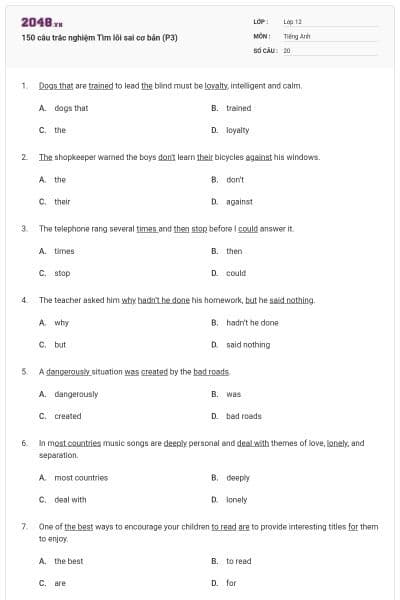
Dogs that are trained to lead the blind must be loyalty, intelligent and calm.
dogs that
trained
the
loyalty
Đáp án D thành “loyal”
Giải thích: Sau “must be” là tính từ hoặc Ving hoặc Ved. Hơn nữa đằng sau đáp án D là 2 tính từ khác (intelligent and calm) nên ta dùng loyal.
The shopkeeper warned the boys don't learn their bicycles against his windows.
the
don’t
their
against
Đáp án B thành “not to”
Giải thích: warn sb + not to V (cảnh báo ai đừng làm gì đó).
The telephone rang several times and then stop before I could answer it.
times
then
stop
could
Đáp án C thành “stoppped”
Giải thích: Câu này đơn giản ở vị trí của C ta chỉ cần dùng thì quá khứ đơn để phù hợp thì với vế trước.
The teacher asked him why hadn’t he done his homework, but he said nothing.
why
hadn’t he done
but
said nothing
Đáp án B thành “he hadn’t done”
Giải thích: Đây là câu tường thuật (gián tiếp) nên ta đảo vị trí S và auxi verb lại như câu khẳng định.
A dangerously situation was created by the bad roads.
dangerously
was
created
bad roads
Đáp án A thành “dangerous”
Giải thích: Chủ ngữ là cụm danh từ (adj + N).
In most countries music songs are deeply personal and deal with themes of love, lonely, and separation.
most countries
deeply
deal with
lonely
Đáp án D thành “loneliness”
Giả thích: Sau giới từ “of” dùng danh từ. Hơn nữa xung quanh đáp án D cũng là 2 danh từ khác là “love và separation” nên D cũng phải là danh từ để đảm bảo sự tương ứng.
One of the best ways to encourage your children to read are to provide interesting titles for them to enjoy.
the best
to read
are
for
Đáp án C thành “is”
Giải thích: Chủ ngữ trong câu là “one of the best ways” (ngôi 3 số ít) nên tobe là “is”.

Học thông minh hơn mỗi ngày
Xem toàn bộ 20 câu hỏi và nhiều hơn nữa với tài khoản miễn phí
Had I been interested in that subject, I would try to learn more about it.
in
try to learn
Had
about
Đáp án B thành “have tried to learn”
Giải thích: Dựa vào vế trái suy ra đây là câu điều kiện loại III đảo ngữ nên vế kết quả là tương lai hoàn thành.
The two children tried as hardly as they could to bring about a reconciliation between their parents.
children
hardly
between
to bring about
Đáp án B thành “hard”
Giải thích: Dựa vào mặt nghĩa, ta cần phân biệt hard (chăm chỉ) và hardly (hầu như không).
Education, whether it happens at school or anywhere else, is a important part in our life.
Education
whether
or
a important part
Đáp án D thành “an important part”
Giải thích: Dùng “an” khi ngay sau nó là từ bắt đầu bằng các nguyên âm (u,e,o,a,i).
I can’t go out tonight because I have too many work to do.
can’t
because
too many
to do
Đáp án C thành “too much”
Giải thích: “work” là danh từ không đếm được nên ta dùng “much”.
Foreign students who are doing a decision about which school to attend may not know exactly where the choices are located.
are doing
about which
to attend
the choices
Đáp án A thành “are making”
Giải thích: make a decision (v) đưa ra quyết định. Đây là cụm từ cố định.
Should you mind telling me the way to the nearest restaurant?
Should
telling me
to
nearest
Đáp án A thành “Would”
Giải thích: Cấu trúc “Would you mind + Ving?’ (Bạn có phiền làm gì đó không?)
English, together with Literature and Maths, are compulsory subjects in the national curriculum.
English
with Literature
are
national curriculum
Đáp án C thành “is”
Giải thích: Cấu trúc S1 + along with + S2 + V (chia theo S1). Trong câu hỏi này chủ ngữ là English (ngôi 3 số ít) nên động từ tobe là “is”.
Optimists believe that in future we will be living in a cleaner environment, breathing fresher air and eat healthier food.
Optimists believe
in future
living in a cleaner
eat healthier food
Đáp án D thành “eating healthier food”
Giải thích: Đây là dạng cấu trúc tương đương. Ta thấy đằng trước D là 2 Ving (living và breathing) nên D cũng phải là Ving.
The man for who the police are looking robbed the bank yesterday.
who
are
robbed
the bank
Đáp án A thành “whom”
Giải thích: Ở đây ta cần một trạng từ quan hệ thay thế cho tân ngữ (là “the man”).
He passed the exams with high scores, that made his parents happy.
passed
with
that
happy
Đáp án C thành “which”
Giải thích: “That” không được sử dụng trong mệnh đề có chứa dấu phẩy của mệnh đề quan hệ.
Because her sickness she didn’t take part in the English competition held in Sunday.
Because
she
take
held
Đáp án A thành “because of”
Giải thích: Because + mệnh đề và because of + N. Trong câu này sau because là “her sickness” (danh từ) nên ta thay A bằng because of hoặc một cách khác là “due to”.
The teacher together with his students have finished their project on time.
The
together
have
their
Đáp án C thành “has”
Giải thích: Cấu trúc S1 + together with + S2 + V (chia theo S1). Trong câu hỏi này chủ ngữ là “the teacher” (ngôi 3 số ít) nên trợ động từ dùng “has”.
Mr. Smith, along with her cousins from Canada, are planning to attend the firework display in Da Nang, Vietnam.
with
her cousins
are
to attend
Đáp án C thành “is”
Giải thích: Cấu trúc S1 + along with + S2 + V (chia theo S1). Trong câu hỏi này chủ ngữ là Mr. Smith (ngôi 3 số ít) nên động từ tobe là “is”.
Bạn có thích hoạt động này không?
Ý kiến của bạn sẽ giúp chúng tôi đề xuất nội dung phù hợp hơn.
Gợi ý cho bạn
![[Năm 2022] Đề thi thử môn Vật lí THPT Quốc gia có lời giải - Đề số 21](/_next/image?url=https%3A%2F%2Fvideo.vietjack.com%2Fupload%2Fimages%2Fvj-image%2Fimage-3izficdefgfoel0s9j8s-1786772791.jpg&w=3840&q=75)
![[Năm 2022] Đề thi thử môn Vật lí THPT Quốc gia có lời giải - Đề số 20](/_next/image?url=https%3A%2F%2Fvideo.vietjack.com%2Fupload%2Fimages%2Fvj-image%2Fimage-emy0gtcksawvorajezvv-1786772460.jpg&w=3840&q=75)
Tài liệu phổ biến Lớp 12
Tài liệu phổ biến Tiếng Anh