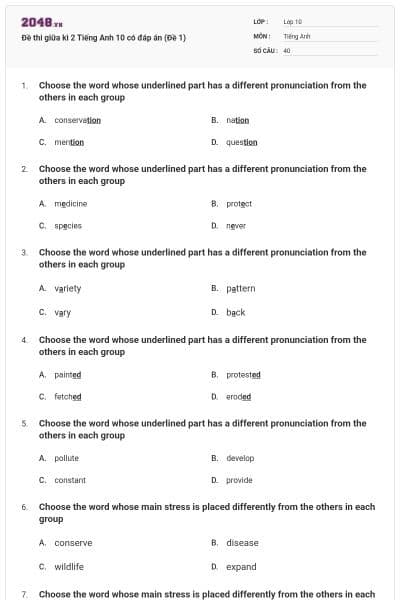
Đề thi giữa kì 2 Tiếng Anh 10 có đáp án (Đề 1)
40 câu hỏi
Choose the word whose underlined part has a different pronunciation from the others in each group
conservation
nation
mention
question
Đáp án: D
Choose the word whose underlined part has a different pronunciation from the others in each group
medicine
protect
species
never
Đáp án: C
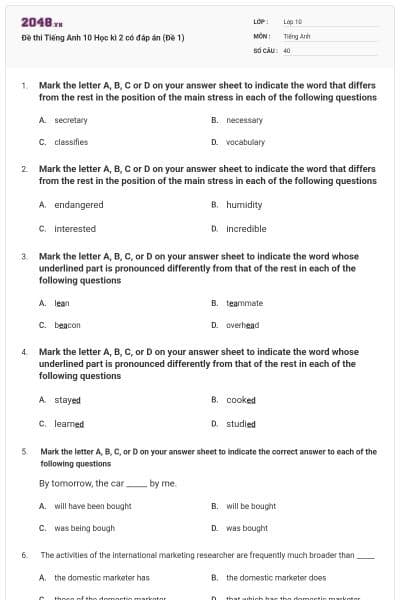
Choose the word whose underlined part has a different pronunciation from the others in each group
variety
pattern
vary
back
Đáp án: A
Choose the word whose underlined part has a different pronunciation from the others in each group
painted
protested
fetched
eroded
Đáp án: C
Choose the word whose underlined part has a different pronunciation from the others in each group
pollute
develop
constant
provide
Đáp án: C
Choose the word whose main stress is placed differently from the others in each group
conserve
disease
wildlife
expand
Đáp án: C
Choose the word whose main stress is placed differently from the others in each group
illness
slowly
spoken
police
Đáp án: D
Choose the word whose main stress is placed differently from the others in each group
correction
motorway
addition
erosion
Đáp án: B
Choose the word whose main stress is placed differently from the others in each group
damage
pollute
defense
erode
Đáp án: A
Choose the word whose main stress is placed differently from the others in each group
power
autumn
allow
order
Đáp án: C
Select the synonym of the following bold and underlined word in each sentence in the unit
To conserve electricity, we are cutting down on our central heating.
protec
hold
make
do
Đáp án: A
The loss of much forest is destroying Earth’s plant and animal variety.
consuming
demolishing
erasing
removing
Đáp án: B
The loss of much forest is destroying Earth’s plant and animal variety.
change
kind
type
collectio
Đáp án: D
Giải thích:
Kiến thức: Từ vựng – Đồng nghĩa
A. change (n): sự thay đổi → Không phù hợp.
B. kind (n): loại, hạng, thứ → Không đồng nghĩa hoàn toàn với "variety" trong ngữ cảnh này.
C. type (n): kiểu, loại → Không phù hợp bằng "collection".
D. collection (n): tập hợp, bộ sưu tập → Phù hợp nhất với nghĩa của "variety" trong câu này.
variety = collection
Dịch: Việc mất đi nhiều khu rừng đang phá hủy tập hợp các loài thực vật và động vật của Trái Đất.
This is especially worrying when there are about 3,000 plants with values as medicines against cancer, AIDS, heart disease and many other sicknesses.
well
suddenly
particularly
highly
Đáp án: C
This is especially worrying when there are about 3,000 plants with values as medicines against cancer, AIDS, heart disease and many other sicknesses.
annoying
hurting
caring
fearing
Đáp án: A
This is especially worrying when there are about 3,000 plants with values as medicines against cancer, AIDS, heart disease and many other sicknesses.
illness
disorder
derangement
derangement
Đáp án: A
Man and most animals need a constant supply of water to live.
uniform
changeless
true
steady
Đáp án: D
Giải thích:
Kiến thức: Từ vựng – Từ đồng nghĩa
constant (adj): liên tục, không đổi
Xét các đáp án:
A. uniform (adj): đồng nhất
B. changeless (adj): không thay đổi
C. true (adj): đúng, chính xác
D. steady (adj): ổn định, liên tục
→ constant = steady
Dịch: Con người và hầu hết động vật cần một nguồn cung cấp nước ổn định để sinh sống.Without plants, most water would run off as soon as it falls, taking away valuable soil.
costly
estimable
cherished
admirable
Đáp án: A
But we can stop adding the problem while scientists search for answers, and laws are passed in nature’s defense.
frisk
rifle
track
examine
Đáp án: D
Each year about fifty hundred species of plants and animals are already being eliminated.
dropped
removed
kicked
tossed
Đáp án: B
Choose the best answer A, B, C or D for each sentence
The bridge is a marvelous work of engineering and _______.
destroy
destruction
destructive
destructively
Đáp án: B
Work on the production line is monotonous and lacks _______.
variety
various
varied
variable
Đáp án: A
He owns a series of _______ across the US and beyond.
industries
industrials
industrious
industrialize
Đáp án: B
He says he'll tell the authorities but it's just an empty ______.
threat
threaten
threatening
threateningly
Đáp án: A
I'm sick of _______-heart liberal politicians.
blood
bloody
bleed
bleeding
Đáp án: D
In the movie, he plays a concerned and _______ father trying to bring up two teenage children on his own.
sense
sensitive
sensible
senseless
Đáp án: B
As a child I had an _______ friend called Polly.
image
imagine
imaginative
imaginary
Đáp án: D
Phone me if there are any new _______.
develop
developed
developing
developments
Đáp án: D
If you don't have anything _______ to say, I'd rather you kept quiet.
construct
constructors
constructive
construction
Đáp án: C
Giải thích:
Kiến thức: Từ vựng – Từ loại
A. construct (v): xây dựng
B. constructors (n): những người xây dựng
C. constructive (adj): mang tính xây dựng, góp ý
D. construction (n): xây dựng
Sau các đại từ bất định, ta dùng tính từ để bổ nghĩa, chọn C.
Dịch: Nếu bạn không có điều gì mang tính xây dựng để nói thì tôi khuyên bạn nên im lặng.
A healthy body will be able to fight off the illness _______ without the use of medicine
nature
natural
naturalize
naturally
Đáp án: D
Read the passage below carefully, and then choose the best answer
Conservation conflicts arise when natural-resource shortages develop in the face of steadily increasing demands from a growing human population. Controversy frequently surrounds how a resource should be used, or allocated, and for whom. For example, a river may supply water for agricultural irrigation, habitat for fish, and water-generated electricity for a factory. Farmers, fishers, and industry leaders vie for unrestricted access to this river, but such freedom could destroy the resource, and conservation methods are necessary to protect the river for future use.
Conflicts worsen when a natural resource crosses political boundaries. For example, the headwaters, or source, of a major river may be located in a different country than the country through which the river flows. There is no guarantee that the river source will be protected to accommodate resource needs downstream. In addition, the way in which one natural resource is managed has a direct effect upon other natural resources. Cutting down a forest near a river, for instance, increases erosion, the wearing away of topsoil, and can lead to flooding. Eroded soil and silt cloud the river and adversely affect many organisms such as fish and important aquatic plants that require clean, clear freshwater for survival.
Question: What does “supply” in line 4 mean?
cover
provide
make up for
compensate for
Đáp án: B
Read the passage below carefully, and then choose the best answer
Conservation conflicts arise when natural-resource shortages develop in the face of steadily increasing demands from a growing human population. Controversy frequently surrounds how a resource should be used, or allocated, and for whom. For example, a river may supply water for agricultural irrigation, habitat for fish, and water-generated electricity for a factory. Farmers, fishers, and industry leaders vie for unrestricted access to this river, but such freedom could destroy the resource, and conservation methods are necessary to protect the river for future use.
Conflicts worsen when a natural resource crosses political boundaries. For example, the headwaters, or source, of a major river may be located in a different country than the country through which the river flows. There is no guarantee that the river source will be protected to accommodate resource needs downstream. In addition, the way in which one natural resource is managed has a direct effect upon other natural resources. Cutting down a forest near a river, for instance, increases erosion, the wearing away of topsoil, and can lead to flooding. Eroded soil and silt cloud the river and adversely affect many organisms such as fish and important aquatic plants that require clean, clear freshwater for survival.
Question: What does “arise” in line 1 mean?
stand up
sit up
get up
spring up
Đáp án: D
Read the passage below carefully, and then choose the best answer
Conservation conflicts arise when natural-resource shortages develop in the face of steadily increasing demands from a growing human population. Controversy frequently surrounds how a resource should be used, or allocated, and for whom. For example, a river may supply water for agricultural irrigation, habitat for fish, and water-generated electricity for a factory. Farmers, fishers, and industry leaders vie for unrestricted access to this river, but such freedom could destroy the resource, and conservation methods are necessary to protect the river for future use.
Conflicts worsen when a natural resource crosses political boundaries. For example, the headwaters, or source, of a major river may be located in a different country than the country through which the river flows. There is no guarantee that the river source will be protected to accommodate resource needs downstream. In addition, the way in which one natural resource is managed has a direct effect upon other natural resources. Cutting down a forest near a river, for instance, increases erosion, the wearing away of topsoil, and can lead to flooding. Eroded soil and silt cloud the river and adversely affect many organisms such as fish and important aquatic plants that require clean, clear freshwater for survival.
Question: What does “methods” in line 7 mean?
plans
orders
ways
structures
Đáp án: C
Read the passage below carefully, and then choose the best answer
Conservation conflicts arise when natural-resource shortages develop in the face of steadily increasing demands from a growing human population. Controversy frequently surrounds how a resource should be used, or allocated, and for whom. For example, a river may supply water for agricultural irrigation, habitat for fish, and water-generated electricity for a factory. Farmers, fishers, and industry leaders vie for unrestricted access to this river, but such freedom could destroy the resource, and conservation methods are necessary to protect the river for future use.
Conflicts worsen when a natural resource crosses political boundaries. For example, the headwaters, or source, of a major river may be located in a different country than the country through which the river flows. There is no guarantee that the river source will be protected to accommodate resource needs downstream. In addition, the way in which one natural resource is managed has a direct effect upon other natural resources. Cutting down a forest near a river, for instance, increases erosion, the wearing away of topsoil, and can lead to flooding. Eroded soil and silt cloud the river and adversely affect many organisms such as fish and important aquatic plants that require clean, clear freshwater for survival.
Question: Which word in the reading means “a promise that something will be done or will happen, especially a written promise by a company to repair or change a product that develops a fault within a particular period of time”?
guarantee
shortage
population
habitat
Đáp án: A
Read the passage below carefully, and then choose the best answer
Conservation conflicts arise when natural-resource shortages develop in the face of steadily increasing demands from a growing human population. Controversy frequently surrounds how a resource should be used, or allocated, and for whom. For example, a river may supply water for agricultural irrigation, habitat for fish, and water-generated electricity for a factory. Farmers, fishers, and industry leaders vie for unrestricted access to this river, but such freedom could destroy the resource, and conservation methods are necessary to protect the river for future use.
Conflicts worsen when a natural resource crosses political boundaries. For example, the headwaters, or source, of a major river may be located in a different country than the country through which the river flows. There is no guarantee that the river source will be protected to accommodate resource needs downstream. In addition, the way in which one natural resource is managed has a direct effect upon other natural resources. Cutting down a forest near a river, for instance, increases erosion, the wearing away of topsoil, and can lead to flooding. Eroded soil and silt cloud the river and adversely affect many organisms such as fish and important aquatic plants that require clean, clear freshwater for survival.
Question: Which word in the reading means “living or growing in, happening in, or connected with water”?
necessar
major
fresh
aquatic
Đáp án: D
Read the passage below carefully, and then choose the best answer
Conservation conflicts arise when natural-resource shortages develop in the face of steadily increasing demands from a growing human population. Controversy frequently surrounds how a resource should be used, or allocated, and for whom. For example, a river may supply water for agricultural irrigation, habitat for fish, and water-generated electricity for a factory. Farmers, fishers, and industry leaders vie for unrestricted access to this river, but such freedom could destroy the resource, and conservation methods are necessary to protect the river for future use.
Conflicts worsen when a natural resource crosses political boundaries. For example, the headwaters, or source, of a major river may be located in a different country than the country through which the river flows. There is no guarantee that the river source will be protected to accommodate resource needs downstream. In addition, the way in which one natural resource is managed has a direct effect upon other natural resources. Cutting down a forest near a river, for instance, increases erosion, the wearing away of topsoil, and can lead to flooding. Eroded soil and silt cloud the river and adversely affect many organisms such as fish and important aquatic plants that require clean, clear freshwater for survival.
Question: Which sentence below is not correct?
Argument often surrounds how a source should be used, or allocated, and for whom.
A river may provide water for agricultural irrigation, habitat for fish, and water-generated electricity for a factory.
Conservation methods are incidental to care for the river for future use.
Farmers, fishers, and industry leaders vie for open access to this river.
Đáp án: C
Read the passage below carefully, and then choose the best answer
Conservation conflicts arise when natural-resource shortages develop in the face of steadily increasing demands from a growing human population. Controversy frequently surrounds how a resource should be used, or allocated, and for whom. For example, a river may supply water for agricultural irrigation, habitat for fish, and water-generated electricity for a factory. Farmers, fishers, and industry leaders vie for unrestricted access to this river, but such freedom could destroy the resource, and conservation methods are necessary to protect the river for future use.
Conflicts worsen when a natural resource crosses political boundaries. For example, the headwaters, or source, of a major river may be located in a different country than the country through which the river flows. There is no guarantee that the river source will be protected to accommodate resource needs downstream. In addition, the way in which one natural resource is managed has a direct effect upon other natural resources. Cutting down a forest near a river, for instance, increases erosion, the wearing away of topsoil, and can lead to flooding. Eroded soil and silt cloud the river and adversely affect many organisms such as fish and important aquatic plants that require clean, clear freshwater for survival.
Question: What may bring water to agricultural irrigation?
a river
topsoil
erosion
a forest
Đáp án: A
Read the passage below carefully, and then choose the best answer
Conservation conflicts arise when natural-resource shortages develop in the face of steadily increasing demands from a growing human population. Controversy frequently surrounds how a resource should be used, or allocated, and for whom. For example, a river may supply water for agricultural irrigation, habitat for fish, and water-generated electricity for a factory. Farmers, fishers, and industry leaders vie for unrestricted access to this river, but such freedom could destroy the resource, and conservation methods are necessary to protect the river for future use.
Conflicts worsen when a natural resource crosses political boundaries. For example, the headwaters, or source, of a major river may be located in a different country than the country through which the river flows. There is no guarantee that the river source will be protected to accommodate resource needs downstream. In addition, the way in which one natural resource is managed has a direct effect upon other natural resources. Cutting down a forest near a river, for instance, increases erosion, the wearing away of topsoil, and can lead to flooding. Eroded soil and silt cloud the river and adversely affect many organisms such as fish and important aquatic plants that require clean, clear freshwater for survival.
Question: When do conflicts decline?
when natural-resource shortages increase in the features of gradually increasing demands from a rising human population
when a natural resource crosses political borders
when freedom could destroy the resource
when eroded soil and silt cloud affect many organisms
Đáp án: B
Read the passage below carefully, and then choose the best answer
Conservation conflicts arise when natural-resource shortages develop in the face of steadily increasing demands from a growing human population. Controversy frequently surrounds how a resource should be used, or allocated, and for whom. For example, a river may supply water for agricultural irrigation, habitat for fish, and water-generated electricity for a factory. Farmers, fishers, and industry leaders vie for unrestricted access to this river, but such freedom could destroy the resource, and conservation methods are necessary to protect the river for future use.
Conflicts worsen when a natural resource crosses political boundaries. For example, the headwaters, or source, of a major river may be located in a different country than the country through which the river flows. There is no guarantee that the river source will be protected to accommodate resource needs downstream. In addition, the way in which one natural resource is managed has a direct effect upon other natural resources. Cutting down a forest near a river, for instance, increases erosion, the wearing away of topsoil, and can lead to flooding. Eroded soil and silt cloud the river and adversely affect many organisms such as fish and important aquatic plants that require clean, clear freshwater for survival.
Question: Which sentence below is true?
Conflicts improve when a natural resource crosses political borders.
The source of a main river may be located in the country through which the river flows than a different country.
There is assurance that the river source will be confined to provide accommodation for resource needs downstream.
The way where one ordinary source is managed has a direct effect upon other ordinary sources.
Đáp án: D
Read the passage below carefully, and then choose the best answer
Conservation conflicts arise when natural-resource shortages develop in the face of steadily increasing demands from a growing human population. Controversy frequently surrounds how a resource should be used, or allocated, and for whom. For example, a river may supply water for agricultural irrigation, habitat for fish, and water-generated electricity for a factory. Farmers, fishers, and industry leaders vie for unrestricted access to this river, but such freedom could destroy the resource, and conservation methods are necessary to protect the river for future use.
Conflicts worsen when a natural resource crosses political boundaries. For example, the headwaters, or source, of a major river may be located in a different country than the country through which the river flows. There is no guarantee that the river source will be protected to accommodate resource needs downstream. In addition, the way in which one natural resource is managed has a direct effect upon other natural resources. Cutting down a forest near a river, for instance, increases erosion, the wearing away of topsoil, and can lead to flooding. Eroded soil and silt cloud the river and adversely affect many organisms such as fish and important aquatic plants that require clean, clear freshwater for survival.
Question: What is the passage above mainly about?
Natural-resource shortages
Agricultural irrigation
The headwaters of a major river
Conservation conflict
Đáp án: D