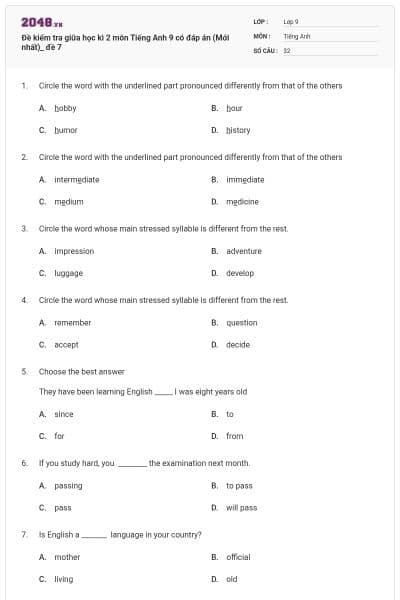
Đề kiểm tra giữa học kì 2 môn Tiếng Anh 9 có đáp án (Mới nhất)_ đề 7
30 câu hỏi
Circle the word with the underlined part pronounced differently from that of the others
hobby
hour
humor
history
Đáp án đúng là: B
Giải thích: Đáp án B là âm câm, còn các từ lại phát âm là /h/
intermediate
immediate
medium
medicine
Đáp án đúng là: D
Giải thích: Đáp án D phát âm là /e/, còn các từ còn lại phát âm là /i/
Circle the word whose main stressed syllable is different from the rest.
impression
adventure
luggage
develop
Đáp án đúng là: C
Giải thích: Đáp án C trọng âm rơi vào 1, các từ còn lại trọng âm rơi vàoremember
question
accept
decide
Đáp án đúng là: B
Giải thích: Đáp án B trọng âm rơi vào 1, các từ còn lại trọng âm rơi vào 2.
Choose the best answer
They have been learning English _____ I was eight years oldsince
to
for
from
Đáp án đúng là: A
Giải thích: since + mốc thời gian, for + khoảng thời gian
Dịch: Họ đã học tiếng anh từ khi tôi 8 tuổi.
If you study hard, you ________ the examination next month.
passing
to pass
pass
will pass
Đáp án đúng là: D
Giải thích: Câu điều kiện loại 1: If S+ hiện tại đơn, S + will + V
Dịch: Nếu tôi học chăm chỉ, tôi sẽ qua bài kiểm tra vào tháng sau.
Is English a _______ language in your country?
mother
official
living
old
Đáp án đúng là: A
Giải thích: mother language: ngôn ngữ mẹ đẻ
Dịch: Tiếng Anh có phải ngôn ngữ mẹ đẻ của nước bạn không?
They don't like learning English, ________?
do they
doesn't they
are they
don't they
Đáp án đúng là: A
Giải thích: vế trước phủ định They don’t => vế sau khẳng định do they.
Dịch: Họ không thích học tiếng anh đúng không?
The book _______ I liked was the detective story.
who
which
whom
where
Đáp án đúng là: B
Giải thích: kiến thức mệnh đề quan hệ. Which thay thế cho vật
Dịch: Quyển sách mà tôi đã thích là câu chuyện trinh thám.
All _____ must complete a visa form upon arrival at Singapore airport.
tourists
departures
customers
passengers
Đáp án đúng là: D
Giải thích:
tourist: du khách
departures: khởi hành
customers : khách hàng
passengers : hành khách
Dịch: Tất cả hành khách phải hoàn thành mẫu visa khi đến sân bay Singapo.
-"What does your father do?" -"He's ____teacher.
an
the
a
x
Đáp án đúng là: C
Giải thích: danh từ không xác định => điền mạo từ a
Dịch: Bố bạn làm nghề gì? – Ông ấy là một giáo viên.
Manh _______ up some Spanish when he was living in Mexico
took
picked
looked
learnt
Đáp án đúng là: A
Giải thích: take up: bắt đầu học
Dịch: Mạnh bắt đầu học một ít tiếng Tây Ban Nha khi anh ấy đang sống ở Mexico.
If Mr. Cuong had an IELTS certificate, he _____ a good job.
will get
getting
would get
got
Đáp án đúng là: C
Giải thích: Câu điều kiện loại 2: If + S+ quá khứ đơn, S+ would/could + V
Dịch: Nếu ông Cường có chứng chỉ IELTS, thì ông sẽ công việc tốt.
He is the man ________ helped me yesterday.
who
B which
whom
whose
Đáp án đúng là: A
Giải thích: Who thay thế cho người
Dịch: Anh ấy là người mà đã giúp tôi ngày hôm qua.
Choose the sentence that is closest in meaning to each of the sentences given.
I usually visited Thung Nham in Ninh Binh when I had a holiday last year but now I don't
I used to visiting Thung Nham in Ninh Binh when I had a holiday last year.
I used to visit Thung Nham in Ninh Binh when I had a holiday last year
I didn't use to visit Thung Nham in Ninh Binh when I had a holiday last year
I didn't use to visiting Thung Nham in Ninh Binh when I had a holiday last year
Đáp án đúng là: B
Giải thích: used to + V: đã từng làm gì
Dịch: Tôi đã từng thăm Thung Nham ở Ninh Binh khi tôi có kì nghỉ vào năm ngoái.
"1 am working now," said she.
She said that she will be working then.
She said that she was working then.
She said that she will have worked now.
She said that she is working now.
Đáp án đúng là: B
Giải thích: Câu gián tiếp => lùi thì => am -> was; now-> then
Dịch: Cô ấy nói rằng cô ấy đang làm việc.
She typed this report yesterday morning.
This report was typed yesterday morning.
This report was being typed yesterday morning.
This report typed yesterday morning.
This report is typed yesterday morning.
Đáp án đúng là: A
Giải thích: Câu bị động ở thì quá khứ : was/were + PII
Dịch: Bài báo cáo này được gõ vào ngày hôm qua.
Choose the sentence that best combines cach ghen pair of sentences
That is my English teacher. She is very funny
That is my English teacher who she is very funny
That is my English teacher very funny.
That is my English teacher whom is very funny.
That is my English teacher, who is very funny
Đáp án đúng là: D
Giải thích: Kiến thức mệnh đề quan hệ, who thay thế cho người.
Dịch: Đó là giáo viên Tiếng Anh của tôi, người mà rất vui tính.
Cars cause pollution. People still want them.
Cars cause pollution, so people still want them.
Because cars cause pollution, people still want them
However, cars cause pollution, people still want them.
Although cars cause pollution, people still want them.
Đáp án đúng là: D
Giải thích: Hai câu có nghĩa trái ngược nhau => dùng Although
Although + mệnh đề: mặc dù
Dịch: Mặc dù ô tô gây ra ô nhiễm nhưng mọi người vẫn muốn có nó.
I am very glad. You are working hard for your next exam.
I am very glad that you are working hard for your next exam.
I am very glad to working hard for your next exam.
I am very glad working hard for your next exam.
I am very glad that I am working hard for your next exam.
Đáp án đúng là: A
Giải thích: glad that S+ V: vui khi ….
Dịch: Tôi rất vui khi bạn học chăm chỉ cho kì thi sắp tới.
In Britain there is a holiday now (21) _____ people call Mother's Day.
which
where
why
when
Đáp án đúng là: A
Giải thích: Kiến thức về mệnh đề quan hệ. Which thay cho vật, sự vật
Dịch: Ở nước Anh, có một ngày lễ mà bây giờ người ta gọi mà ngày của mẹ.
They had to do all the (22) ____ and their working day was usually very long. They often worked on Sundays, too.
household
homework
housework
housing
Đáp án đúng là: C
Giải thích: dịch thì thấy cần điền từ “việc nhà” => housework
Dịch: Họ phải làm tất cả công việc nhà và ngày làm việc của học thường rất dài.
something
presents
a presents
a gifts
Đáp án đúng là: B
Giải thích: presents: những món quà
Dịch: Họ về nhà vào ngày đó và mua những món quà cho mẹ của họ và cho các thành viên khác trong gia đình.
They could stay at home only (24) _______ day, and then went back to their work.
one
an
a few
Đáp án đúng là: A
Giải thích: có từ only => điền one
Dịch: Họ ở nhà duy nhất 1 ngày, […]
but
or
however
and
Đáp án đúng là: D
Giải thích: dùng liên từ and để nối workers, girls
Dịch: Sau đó những công nhân làm việc ở nhà máy và những phụ nữa người mà […]
Read the passage and choose the best answer for each question.
SONGKRAN is the Thai traditional New Year. It starts on April 13 every year and last 3 days. Another name for Songkran is the "Water Festival’’ because people believe that water can wash away bad luck. On Songkran day, family members gather and pour scented water onto the hands of their parents and grandparents to show their respect for the elders. In return, the elders wish the youngers good luck and wealth.
What is this passage about?
Thai traditional days
Thai family traditions
Thai traditional New Year
Thai water festival
Đáp án đúng là: C
Giải thích: Dựa vào câu: SONGKRAN is the Thai traditional New Year.
Dịch: SONGKRAN là lễ đón năm mới truyền thống của Thái Lan.
What kind of activities are NOT mentioned?
family gathering
pouring water on hands of family elders
eating traditional food
giving wishes of luck and wealth
Đáp án đúng là: C
Giải thích: Dựa vào câu: On Songkran day, family members gather and pour scented water onto the hands of their parents and grandparents to show their respect for the elders. In return, the elders wish the youngers good luck and wealth.
Dịch: Vào ngày Songkran, các thành viên trong gia đình quây quần và đổ nước thơm lên tay ông bà cha mẹ để thể hiện sự kính trọng của họ đối với những người lớn tuổi. Đáp lại, những người lớn tuổi chúc những người trẻ tuổi may mắn và giàu có.
Thai traditional New Year is called the "Water Festival” because water is believed to ________.
bring about bad luck
prevent bad luck
show respect
bring about good luck
Đáp án đúng là: B
Giải thích: Dựa vào câu : Another name for Songkran is the "Water Festival’’ because people believe that water can wash away bad luck.
Dịch: Một tên gọi khác của Songkran là “Lễ hội nước” vì mọi người tin rằng nước có thể rửa sạch những điều xui xẻo.
parents
family members
grandparents
parents and grandparents
Đáp án đúng là: D
Giải thích: Vì câu trước đó có nhắc đến ông bà và bố mẹ
[…] pour scented water onto the hands of their parents and grandparents to show their respect for the elders.
Dịch:đổ nước thơm lên tay ông bà cha mẹ để thể hiện sự kính trọng của họ đối với những người lớn tuổi.
The word "wealth" in line 5 is closest in meaning to _____.
wishes
riches
riches
chances
Đáp án đúng là: B
Giải thích: wealth = riches: sự giàu có
Dựa vào câu: In return, the elders wish the youngers good luck and wealth.
Dịch: Đáp lại, những người lớn tuổi chúc những người trẻ tuổi may mắn và giàu có.