Bộ 5 đề thi Giữa kì 2 Tiếng Anh 7 Global Success có đáp án - Đề 1
40 câu hỏi
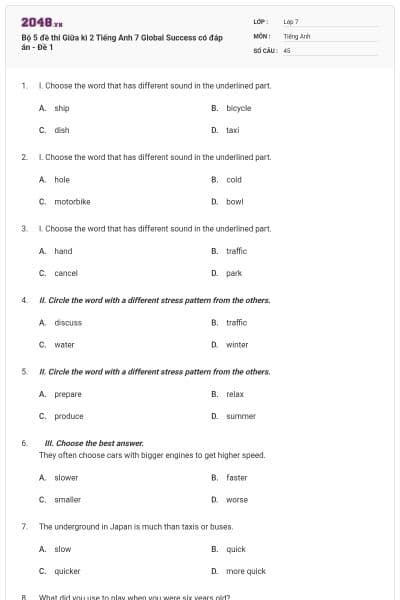
I. Choose the word that has different sound in the underlined part.
ship
bicycle
dish
taxi
1. B
Kiến thức: Phát âm “i”
Giải thích:
A. ship /ʃɪp/
B. bicycle/ˈbaɪ.sɪ.kəl/
C. dish /dɪʃ/
D. taxi /ˈtæk.si/
Phần được gạch chân ở phương án B được phát âm /ai/, các phương án còn lại phát âm /i/ Chọn B
I. Choose the word that has different sound in the underlined part.
hole
cold
motorbike
bowl
1. C
Kiến thức: Phát âm “o”
Giải thích:
A. hole/həʊl/
B. cold/kəʊld/
C. motorbike/ˈməʊ.tə.baɪk/
D. bowl/bəʊl/
Phần được gạch chân ở phương án C được phát âm /ə/, các phương án còn lại phát âm /əʊ/ Chọn C
I. Choose the word that has different sound in the underlined part.
hand
traffic
cancel
park
1. D
Kiến thức: Phát âm “a”
Giải thích:
A. hand/hænd/
B. traffic/ˈtræf.ɪk/
C. cancel/ˈkæn.səl/
D. park/pɑːk/
Phần được gạch chân ở phương án D được phát âm /ɑː/, các phương án còn lại phát âm /æ/ Chọn D
discuss
traffic
water
winter
1. A
Kiến thức: Trọng âm
Giải thích:
A. discuss /dɪˈskʌs/
B. traffic/ˈtræf.ɪk/
C. water/ˈwɔː.tər/
D. winter/ˈwɪn.tər/
Phương án A có trọng âm 2, các phương án còn lại có trọng âm 1. Chọn A
prepare
relax
produce
summer
1. D
Kiến thức: Trọng âm
Giải thích:
A. prepare/prɪˈpeər/
B. relax/rɪˈlæks/
C. produce/prəˈdʒuːs/
D. summer/ˈsʌm.ər/
Phương án D có trọng âm 1, các phương án còn lại có trọng âm 2. Chọn D
III. Choose the best answer.
slower
faster
smaller
worse
1. B
Kiến thức: Từ vựng
Giải thích:
A. slower (a): chậmhơn
B. faster (a): nhanhhơn
C. smaller (a): nhỏhơn
D. worse (a): tệhơn
They often choose faster cars with bigger engines to get higher speed.
(Họ thường chọn những chiếc xe nhanh hơn với động cơ lớn hơn để có được tốc độ cao hơn.)
Chọn B
slow
quick
quicker
more quick
1. C
Kiến thức: So sánh hơn
Giải thích:
Dấu hiệu nhận biết cấu trúc so sánh hơn “than” (hơn) => công thức so sánh hơn với tính từ ngắn: S1 + tobe
+ Adj + “ER” + than + S2. quick (a): nhanh
slow (a): chậm
The underground in Japan is much quicker than taxis or buses.
(Tàu điện ngầm ở Nhật Bản nhanh hơn nhiều so với taxi hoặc xe buýt.)
Chọn C
toy
card
ball
game
1. A
Kiến thức: Từ vựng
Giải thích:
A. toy (n): món đồchơi
B. card (n):thẻ
C. ball (n): quảbóng
D. game (n): tròchơi
What toy did you use to play when you were six years old?
(Bạn đã chơi đồ chơi gì khi bạn sáu tuổi?)
Chọn A
speed
time
engine
cost
1. B
Kiến thức: Từ vựng
Giải thích:
A. speed (n): tốcđộ
B. time (n): thờigian
C. engine (n): độngcơ
D. cost (n): phí
There should be a time limit in the playground to prevent accidents. (Nên có giới hạn thời gian trong sân chơi để ngăn ngừa tai nạn.) Chọn B
do
use
spend
take
1. D
Kiến thức: Từ vựng
Giải thích:
A. do (v):làm
B. use (v): sửdụng
C. spend (v): dànhra
D. take(v): lấy
cụm động từ: take a look: nhìn vào
Let’s take a look at the film section of the paper.
(Chúng ta hãy xem phần phim của bài báo.)
Chọn D
has
makes
falls
interests
1. C
Kiến thức: Từ vựng
Giải thích:
A. has (v):có
B. makes (v): khiến cho
C. falls (v):rơi
D. interests (v): hứng thú
cụm động từ: fall in love with sb: phải lòng ai đó
The main character falls in love with a poor man in the countryside. (Nhân vật chính đem lòng yêu một chàng trai nghèo ở nông thôn.) Chọn C
holds
reports
tells
watches
1. C
Kiến thức: Từ vựng
Giải thích:
A. holds (v): tổchức
B. reports (v): báo cáo
C. tells (v):kể
D. watches (v):xem
The film tells an exciting story about murder or crime.
(Bộ phim kể một câu chuyện thú vị về giết người hoặc tội phạm.)
Chọn C
taken
held
made
done
1. B
Kiến thức: Từ vựng
Giải thích:
A. taken (v):lấy
B. held (v): tổchức
C. made (v):làm
D. done (v): thựchiện
The festival is held every year at the end of October. (Lễ hội được tổ chức hàng năm vào cuối tháng 10.) Chọn B
religion
culture
nation
religious
1. D
Kiến thức: Từ vựng
Giải thích
A. religion (n): tôn giáo
B. culture (n): văn hóa
C. nation (n): quốc gia
D. religious (a): thuộc về tôn giáo
Trước danh từ “festival” (lễ hội) cần một tính từ. Festival of lights is a religious festival in India. (Lễ hội ánh sáng là một lễ hội tôn giáo ở Ấn Độ.) Chọn D
celebrate
have
organize
complete
1. A
Kiến thức: Từ vựng
Giải thích:
A. celebrate (v): ănmừng
B. have (v):có
C. organize (v): tổchức.
D. complete (v): hoànthành
People celebrate the festival by throwing water to wish everyone happiness. (Mọi người tổ chức lễ hội bằng cách ném nước để chúc mọi người hạnh phúc.) Chọn A
III. Write the correct form of the wordgiven.
A man in a silver sports car ________ into a lady in a big blue truck in the middle of the intersection yesterday. (CRASH)
1. crashed
Kiến thức: Thì quá khứ đơn
Giải thích:
Dấu hiệu nhận biết “yesterday” (hôm qua) => cấu trúc thì quá khứ đơn ở dạng khẳng định của động từ thường: S + V2/ed.
crash – crashed – crashed (v): va chạm.
A man in a silver sports car crashed into a lady in a big blue truck in the middle of the intersection yesterday.
(Một người đàn ông đi chiếc xe thể thao màu bạc đã đâm vào một phụ nữ trên chiếc xe tải lớn màu xanh lam ở giữa ngã tư ngày hôm qua.)
Đáp án: crashed.
Traffic accidents can be__________if people obey the rules. (PREVENT)
1. prevented
Kiến thức: Thể bị động
Giải thích:
Cấu trúc câu bị động có chủ ngữ là vật với động từ khiếm khuyết “can” (có thể): S + can + be + V3/ed. prevent – prevented – prevented (v): ngăn chặn.
Traffic accidents can be prevented if people obey the rules.
(Tai nạn giao thông có thể được ngăn chặn nếu mọi người tuân thủ các quy tắc.)
Đáp án: prevented.
when I saw him at 11 o’clock yesterday evening. (WAKE)
1. awake
Kiến thức: Từ vựng – Từ loại
Giải thích:
Sau động từ tobe “was” cần một tính từ. wake (v): thứcgiấc
=> awake (a):thức
He was still awake when I saw him at 11 o’clock yesterday evening. (Anh ấy vẫn còn thức khi tôi gặp anh ấy lúc 11 giờ tối hôm qua.) Đáp án: awake
dog help him to find his parents. (FRIEND)
1. friendly
Kiến thức: Từ vựng – Từ loại
Giải thích:
Trước danh từ “dog” (con chó) cần một tính từ friend (n): bạn bè
=> friendly (a): thân thiện
A crazy cat and a friendly dog help him to find his parents.
(Một con mèo điên và một con chó thân thiện giúp anh ta tìm thấy cha mẹ của mình.)
Đáp án: friendly
are there in the program tonight? (PERFORM)
1. performances
Kiến thức: Từ vựng – Từ loại
Giải thích:
Sau lượng từ “many” (nhiều) cần một danh từ đếm được số nhiều perform (v): trình diễn.
=> performance (n): màn trình diễn
How many performances are there in the program tonight?
(Có bao nhiêu tiết mục trong chương trình tối nay?)
Đáp án: performances
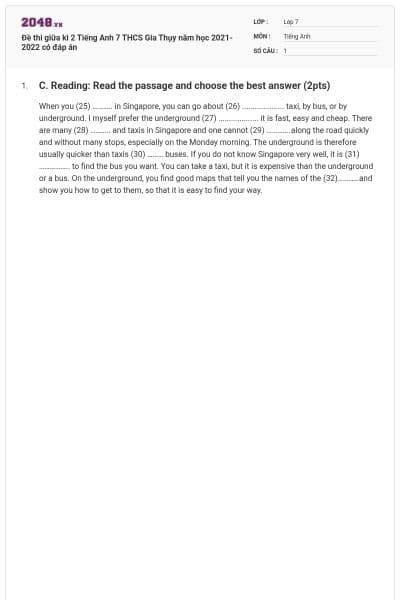
IV. Read the passage and choose the best answer to complete eachblank.
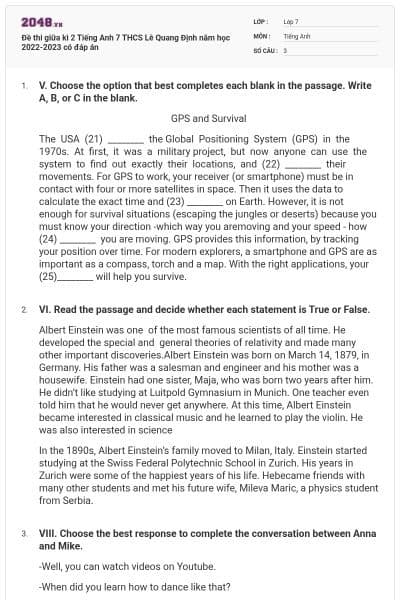
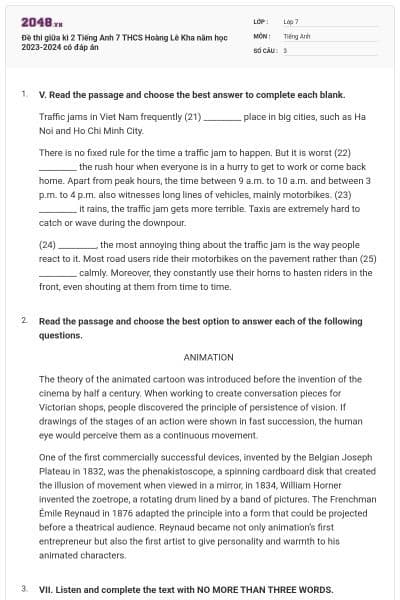
Traffic jams in Viet Nam frequently(21) place in big cities, such as Ha Noi and Ho Chi Minh City.
There is no fixed rule for the time a traffic jam to happen. But it isworst(22) the rush hour when everyone is in a hurry to get to work or come back home. Apart from peak hours, the time between 9 a.m. to 10a.m.andbetween3p.m.to4p.m.alsowitnesseslonglinesofvehicles,mainlymotorbikes.(23) it rains, the traffic jam gets more terrible. Taxis are extremely hard to catch or wave during thedownpour.
(24) , the most annoying thing about the traffic jam is the way people react to it. Most road users ridetheirmotorbikesonthepavementratherthan(25) calmly. Moreover, they constantly usetheir horns to hasten riders in the front, even shouting at them from time totime.
take
takes
took
are taking
1. A
Kiến thức: Thì hiện tại đơn
Giải thích:
Dấu hiệu nhận biết: “frequently” (thường xuyên) => thì hiện tại đơn diễn tả mọt sự thật hiển nhiên => Công thức thì hiện tại đơn ở dạng khẳng định với dộng từ thường chủ ngữ số nhiều “traffic jams” (kẹt xe): S + V(nguyên thể) .
Traffic jams in Viet Nam frequently take place in big cities,
(Ùn tắc giao thông ở Việt Nam thường xuyên diễn ra ở các thành phố lớn,)
Chọn A
at
on
during
within
1. C
Kiến thức: Giới từ
Giải thích:
A. at: tại
B. on:trên
C. during: trong suốt
D. within: trongvòng
But it is worst during the rush hour when everyone is in a hurry to get to work or come back home. (Nhưng điều tồi tệ nhất là vào giờ cao điểm khi mọi người đều vội vã đi làm hoặc trở về nhà.) Chọn C
That
When
After
Before
1. B
Kiến thức: Từ vựng
Giải thích:
A. That: đó
B. When:khi
C. After: saukhi
D. Before: trướckhi
When it rains, the traffic jam gets more terrible. (Khi trời mưa, kẹt xe càng khủng khiếp hơn.) Chọn B
Therefore
But
Though
However
1. D
Kiến thức: Liên từ
Giải thích:
A. Therefore: dođó
B. But: nhưng
C. Though: mặcdù
D. However: tuynhiên
However, the most annoying thing about the traffic jam is the way people react to it.
(Tuy nhiên, điều khó chịu nhất về kẹt xe là cách mọi người phản ứng với nó.)
Chọn D
wait
to wait
waiting
waited
1. C
Kiến thức: Dạng dộng từ
Giải thích:
Sau “rather than” (hơn là) cần một động từ ở dạng V-ing.
Most road users ride their motorbikes on the pavement rather than waiting calmly.
(Hầu hết người đi đường đều đi xe máy trên vỉa hè chứ không bình tĩnh chờ đợi.)
Chọn C
Bài đọc hoàn chỉnh:
Traffic jams in Viet Nam frequently (21) take place in big cities, such as Ha Noi and Ho Chi Minh City. There is no fixed rule for the time a traffic jam to happen. But it is worst (22) during the rush hour when everyone is in a hurry to get to work or come back home. Apart from peak hours, the time between 9 a.m. to 10 a.m. and between 3 p.m. to 4 p.m. also witnesses long lines of vehicles, mainly motorbikes. (23) When it rains, the traffic jam gets more terrible. Taxis are extremely hard to catch or wave during the downpour.
(24) However, the most annoying thing about the traffic jam is the way people react to it. Most road users ride their motorbikes on the pavement rather than (25) waiting calmly. Moreover, they constantly use their horns to hasten riders in the front, even shouting at them from time to time.
Tạm dịch:
Ùn tắc giao thông ở Việt Nam thường xuyên (21) diễn ra ở các thành phố lớn, chẳng hạn như Hà Nội và Thành phố Hồ Chí Minh.
Không có quy tắc cố định về thời gian xảy ra kẹt xe. Nhưng điều tồi tệ nhất là (22) trong suốt giờ cao điểm khi mọi người đều vội vã đi làm hoặc trở về nhà. Ngoài giờ cao điểm là khoảng thời gian từ 9h đến 10h và 15h. đến 4 giờ chiều cũng chứng kiến hàng dài phương tiện, chủ yếu là xe máy. (23) Khi trời mưa, kẹt xe càng khủng khiếp hơn. Taxi cực kỳ khó bắt hoặc vẫy tay trong trận mưa như trút nước.
(24) Tuy nhiên, điều khó chịu nhất về kẹt xe là cách mọi người phản ứng với nó. Hầu hết người tham gia giao thông đi xe máy của họ trên vỉa hè hơn là (25) chờ đợi một cách bình tĩnh. Hơn nữa, họ liên tục dùng còi để thúc ép những người chạy phía trước, thậm chí có lúc còn hét vào mặt họ.
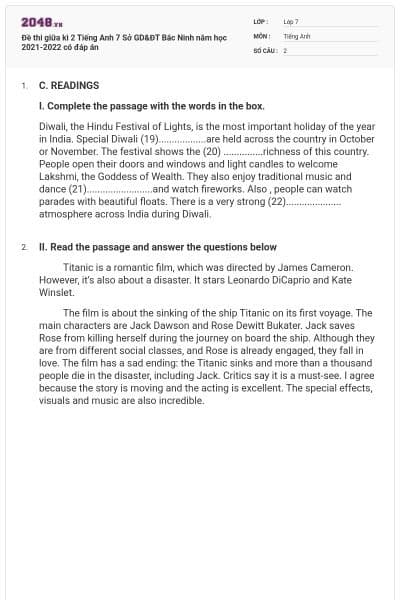
V. Read the passage and choose the best option to answer each of the followingquestions.
ANIMATION
Thetheoryoftheanimatedcartoonwasintroducedbeforetheinventionofthecinemabyhalfacentury.When working to create conversation pieces for Victorian shops, people discovered the principle of persistence of vision. If drawings of the stages of an action were shown in fast succession, the human eye would perceive them as a continuousmovement.
One of the first commercially successful devices, invented by the Belgian Joseph Plateau in 1832, was the phenakistoscope,aspinningcardboarddiskthatcreatedtheillusionofmovementwhenviewedinamirror,in 1834, William Horner invented the zoetrope, a rotating drum lined by a band of pictures. The Frenchman ÉmileReynaudin1876adaptedtheprincipleintoaform thatcouldbeprojectedbeforeatheatrical audience. Reynaudbecamenotonlyanimation’sfirstentrepreneurbutalsothefirstartisttogivepersonalityandwarmth to his animatedcharacters.
(Animation by Dave Kehr- extracted from Encyclopaedia Britannica)
Early history of animation
The reason why animation is popular
The invention of Joseph Plateau
The first animation’s entrepreneur
1. A
Kiến thức: Đọc hiểu
Giải thích:
Ý chính của bài là gì?
A. Lịch sử ban đầu của phim hoạthình.
B. Lý do phim hoạt hình được yêuthích.
C. Phát minh của JosephPlateau.
D. Doanh nhân của phim hoạt hình đầutiên.
Thông tin: Dựa vào thông tin tổng quát toàn bộ bài đọc Chọn A
after the introduction of the cinema
in 1832
about 50 years before the invention of the cinema
in 1876
1. C
Kiến thức: Đọc hiểu
Giải thích:
Lý thuyết của phim hoạt hình được phát triển khi nào?
A. sau khi giới thiệu rạp chiếuphim
B. năm 1832
C. khoảng 50 năm trước khi phát minh ra rạp chiếuphim
D. vào năm1876
Thông tin: “The theory of the animated cartoon was introduced before the invention of the cinema by half a century.”
(Lý thuyết về phim hoạt hình đã được giới thiệu trước khi phát minh ra rạp chiếu phim nửa thế kỷ.)
Chọn C
They will find the pictures more vivid.
They cannot see the pictures.
They will perceive the pictures as normal.
They will see the pictures as a continuous movement.
1. D
Kiến thức: Đọc hiểu
Giải thích:
Điều gì xảy ra với mắt người khi hình ảnh về các giai đoạn của một hành động được hiển thị liên tiếp nhanh chóng?
A. Họ sẽ thấy những bức tranh sống độnghơn.
B. Họ không thể nhìn thấy hìnhảnh.
C. Họ sẽ nhìn thấy những hình ảnh như bìnhthường.
D. Họ sẽ thấy những hình ảnh như một chuyển động liêntục.
Thông tin: “If drawings of the stages of an action were shown in fast succession, the human eye would perceive them as a continuous movement.”
(Nếu các bức vẽ về các giai đoạn của một hành động được thể hiện liên tiếp nhanh chóng, mắt người sẽ cảm nhận chúng như một chuyển động liên tục.”)
Chọn D
a popular form of entertainment
a spinning cardboard disk
a rotating drum lined by a band of pictures
a collection of Victorian drawings
1. B
Kiến thức: Đọc hiểu
Giải thích:
phenakistoscope là gì?
A. một hình thức giải trí phổbiến
B. một đĩa các - tôngquay
C. một cái trống quay được xếp bởi một dảitranh
D. một bộ sưu tập các bức vẽ thờiVictoria
Thông tin: “One of the first commercially successful devices, invented by the Belgian Joseph Plateau in 1832, was the phenakistoscope, a spinning cardboard disk that created the illusion of movement when viewed in a mirror.”
(Một trong những thiết bị thành công về mặt thương mại đầu tiên, do Joseph Plateau người Bỉ phát minh vào năm 1832, là phenakistoscope, một đĩa các-tông quay tạo ra ảo giác chuyển động khi nhìn vào gương.) Chọn B
Victoria
William Horner
Émile Reynaud
Joseph Plateau
1. A
Kiến thức: Đọc hiểu
Giải thích:
Ai KHÔNG ĐƯỢC NHẮC ĐẾN với tư cách là người phát minh ra thiết bị tạo hoạt hình?
A. Victoria
B. WilliamHorner
C. ÉmileReynaud
D. JosephPlateau
Thông tin: “When working to create conversation pieces for Victorian shops, people discovered the principle of persistence of vision.”
(Khi làm việc để tạo ra các đoạn hội thoại cho các cửa hàng thời Victoria, mọi người đã phát hiện ra nguyên tắc kiên định của tầm nhìn.)
Victoria chỉ được đề cập liên quan đế một giai đoạn thời gian. Chọn A
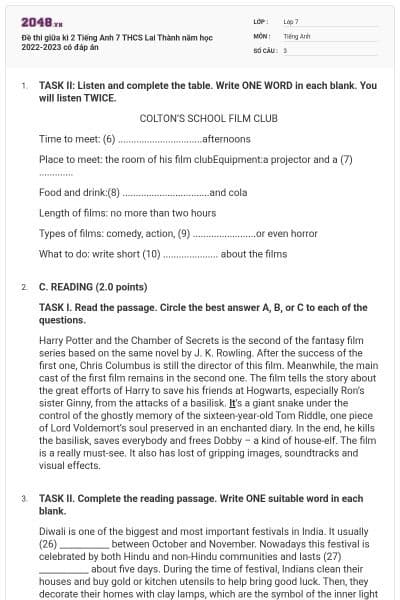
VI. Listen and complete the text with NO MORE THAN THREEWORDS.
HISTORY OF HALLOWEEN
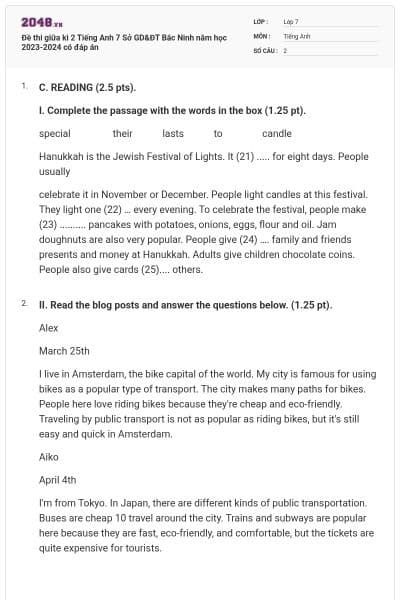
AgreatnumberofpeopleconsiderHalloweentobean(31) holiday.Inreality,itoriginatesfromthe CeltsofIreland.Thesedays,peopledonotdowhattheoldCeltsdidinthepast.Theydonothavea(32)
beforethewinterstartsanddonotleavetheirhousescold,withoutlightingduringthenight,hoping tostopspiritswantingtolivethere.Itwasbelievedthatthesoulsof(33) could come back if they find a person to stay in. Therefore, wearing scary masks and costumes to make the spirits go away, is an old Celtictradition.
Today, people andespecially(34) enjoy Halloween costume parties. They dress up as witches, vampires and ghosts. Children in masks go from house to house and when the door opens, they say: “Trick or Treat”! If they do not get sweets, they do something bad like throwing eggs at thehouse.
Theclassic(35) of Halloween are horror characters: black cats, spiders, witches, and ghosts and bigorangepumpkins.GreatBritainandtheUSAcelebrateHalloweeneveryyearonthelastdayofOctober.
1. American
Kiến thức: Nghe hiểu
Giải thích:
Trước danh từ “holiday” (kì nghỉ) cần một tính từ American (a): thuộc về Mỹ
A great number of people consider Halloween to be an (31) American holiday.
(Rất nhiều người xem Halloween là một ngày lễ của Mỹ.)
Đáp án:American
Theydonothavea(32) beforethewinterstartsanddonotleavetheirhousescold,withoutlightingduringthenight,hoping tostopspiritswantingtolivethere.
1. bigmeal
Kiến thức: Nghe hiểu
Giải thích:
Sau mạo từ “a” cần một cụm danh từ
Cụm từ: “a big meal”: một bữa ăn thịnh soạn
They do not have a (32) big meal before the winter starts.
(Họ không có một bữa ăn thịnh soạn trước khi mùa đông bắt đầu.)
Đáp án: big meal
1. deadpeople
Kiến thức: Nghe hiểu
Giải thích:
Sau giới từ “of” cần một cụm danh từ
Cụm từ: “souls of dead people”: linh hồn của những người chết
It was believed that the souls of (33) dead people could come back if they find a person to stay in.
(Người ta tin rằng linh hồn của người chết có thể quay trở lại nếu họ tìm thấy một người ở lại.)
Đáp án: dead people
1. children
Kiến thức: Nghe hiểu
Giải thích:
Trước động từ “enjoy” (thích) cần một danh từ chỉ người số nhiều. children (n): những đứa trẻ
Today, people and especially (34) children enjoy Halloween costume parties.
(Ngày nay, mọi người và đặc biệt là trẻ em thích những bữa tiệc hóa trang Halloween.)
Đáp án: children
1. symbols
Kiến thức: Nghe hiểu
Giải thích:
Sau tính từ “classic” (cổ điển) cần một danh từ.
Động từ tobe phía sau là “are” nên phải là danh từ đếm được số nhiều. symbol (n): biểu tượng
The classic (35) symbols of Halloween are horror characters: (Biểu tượng cổ điển của Halloween là những nhân vật kinh dị) Đáp án: symbols
Bài nghe hoàn chỉnh:
HISTORY OF HALLOWEEN
A great number of people consider Halloween to be an (31) American holiday. In reality, it originates from the Celts of Ireland. These days, people do not do what the old Celts did in the past. They do not have a (32) bigmealbeforethewinterstartsanddonotleavetheirhousescold,withoutlightingduringthenight,hoping to stop spirits wanting to live there. It was believed that the souls of (33) dead people could come back if theyfindapersontostayin.Therefore,wearingscarymasksandcostumestomakethespiritsgoaway,isan old Celtictradition.
Today, people and especially (34) children enjoy Halloween costume parties. They dress up as witches, vampires and ghosts. Children in masks go from house to house and when the door opens, they say: “Trick or Treat”! If they do not get sweets, they do something bad like throwing eggs at the house.
Theclassic(35)symbolsofHalloweenarehorrorcharacters:blackcats,spiders,witches,andghostsandbig orange pumpkins. Great Britain and the USA celebrate Halloween every year on the last day ofOctober.
Tạm dịch:
Mộtsốlượnglớnngười coiHalloweenlàmộtngàylễ(31)củaMỹ.Trênthựctế,nóbắtnguồntừngườiCelt ở Ireland. Ngày nay, mọi người không làm những gì người Celts cũ đã làm trong quá khứ. Họ không cómột
(32) bữa ăn thịnh soạn trước khi mùa đông bắt đầu và không để nhà của họ lạnh lẽo, không thắp đèn trong đêm,vớihyvọngngăncảnnhữnglinhhồnmuốnsốngởđó.Ngườitatinrằnglinhhồncủa(33)nhữngngười
đã chết có thể quay trở lại nếu họ tìm thấy một người ở lại. Vì vậy, đeo những chiếc mặt nạ và trang phục đáng sợ để xua đuổi linh hồn là một truyền thống lâu đời của người Celtic.
Ngày nay, mọi người và đặc biệt là (34) trẻ em thích những bữa tiệc hóa trang Halloween. Họ hóa trang thành phù thủy, ma cà rồng và ma. Trẻ em đeo mặt nạ đi từ nhà này sang nhà khác và khi cửa mở ra, chúng nói: “Cho kẹo hay bị ghẹo”! Nếu không được kẹo, chúng sẽ làm điều gì đó xấu xa như ném trứng vào nhà.
(35)CácbiểutượngcổđiểncủaHalloweenlànhữngnhânvậtkinhdị:mèođen,nhện,phùthủy,mavànhững quả bí ngô lớn màu cam. Vương quốc Anh và Hoa Kỳ tổ chức lễ Halloween hàng năm vào ngày cuối cùng của thángMười.
VII. Complete each of the following sentences using the cuesgiven.
have/ trip/ hometown/ brother/ two daysago.
=>
Kiến thức: Viết câu với thì quá khứ đơn
Giải thích:
- Dấu hiệu nhận biết thì quá khứ đơn “ago” (cách đây) => công thức ở dạng khẳng định của thì quá khứ đơn với động từ thường: S +V2/ed.
- have a trip to somewhere with sb: có một chuyến đi tới đâu với aiđó.
- have – had – had (v): có
Đáp án: I had a trip to my hometown with my brother two days ago.
(Tôi đã có một chuyến đi về quê của tôi cùng với anh trai vào hai ngày trước.)
15 kilometres/ my place/ myhometown.
=>
Kiến thức: Viết câu về khoảng cách
Giải thích:
Cấu trúc chỉ khoảng cách địa lý từ vị trí này đến vị trí kia: It is + khoảng cách + from…to… Đáp án: It's 15 kilometers from my place to my hometown.
(Từ nơi tôi đến quê hương của tôi khoảng 15km.)
go/ there/ train/ and/ it/comfortable.
=>
Kiến thức: Viết câu thì quá khứ đơn
Giải thích:
- Kể lại một chuyến đi về quê đã xảy ra trong quá khứ nên dùng thì quá khứ đơn: S + V2/ed go – went (v):đi.
- go by: đi bằng (phương tiện)
- Cấu trúc mô tả đặc điểm, tính chất của đối tượng với chủ ngữ số ít ở thì quá khứ đơn ở dạng khẳng định:S
+ was + adj
Đáp án: I went there by train and it was comfortable.
(Tôi đã đến đó bằng tàu hỏa và nó thật thoải mái)
there/ a lot of/ vehicles/road.
=> _____________________________Kiến thức: Viết câu thì quá khứ đơn
Giải thích:
- Kể lại một chuyến đi về quê đã xảy ra trong quá khứ nên dùng thì quá khứ đơn: S +V2/ed
- Cấu trúc mô tả số lượng với “there” đầu câu với động từ tobe ở thì quá khứ đơn ở dạng khẳng định: There were + danh từ đếm được sốnhiều.
vehicles (n): phương tiện => danh từ đếm được số nhiều.
- on the road: trênđường
Đáp án: There were a lot of vehicles on the road.
(Có rất nhiều phương tiện trên đường.)
trip/ exciting/meaningful.
=>
Kiến thức: Viết câu thì quá khứ đơn
Giải thích:
- Kể lại một chuyến đi về quê đã xảy ra trong quá khứ nên dùng thì quá khứđơn.
- Cấu trúc mô tả đặc điểm, tính chất của đối tượng với chủ ngữ số ít ở thì quá khứ đơn ở dạng khẳng định:S
+ was + adj + and + adj. exciting (a): thú vị meaningful (a): ý nghĩa
Đáp án: The trip was exciting and meaningful.
(Chuyến đi thật thú vị và ý nghĩa.)