40 câu hỏi
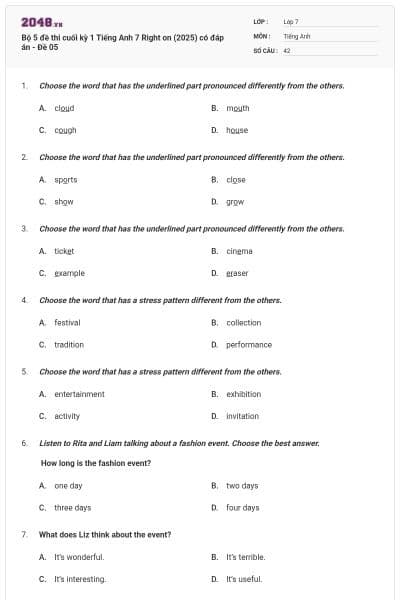
cloud
mouth
cough
house
Hướng dẫn giải:
Đáp án đúng: C
A. cloud /klaʊd/
B. mouth /maʊθ/
C. cough /kɒf/
D. house /haʊs/
Phần được gạch chân ở phương C được phát âm /ɒ/, các phương án còn lại phát âm /aʊ/.
sports
close
show
grow
Hướng dẫn giải:
Đáp án đúng: A
A. sports: /spɔːt/
B. close /kləʊz/
C. show /ʃəʊ/
D. grow /ɡrəʊ/
Phần được gạch chân ở phương A được phát âm /ɔː/, các phương án còn lại phát âm /əʊ/.
ticket
cinema
example
eraser
Hướng dẫn giải:
Đáp án đúng: B
A. ticket /ˈtɪkɪt/
B. cinema /ˈsɪnəmə/
C. example /ɪɡˈzɑːmpl/
D. eraser /ɪˈreɪz/
Phần được gạch chân ở phương A được phát âm /ə/, các phương án còn lại phát âm /ɪ/.
festival
collection
tradition
performance
Hướng dẫn giải:
Đáp án đúng: A
A. festival /ˈfestɪvl/
B. collection /kəˈlekʃn/
C. tradition /trəˈdɪʃn/
D. performance /pəˈfːməns/
Phương án có trọng âm 1, các phương án còn lại có trọng âm 2.
entertainment
exhibition
activity
invitation
Hướng dẫn giải:
Đáp án đúng: C
A. entertainment/ˌentəˈteɪnmənt/
B. exhibition/ˌeksɪˈbɪʃn/
C. activity/ækˈtɪvəti/
D. invitation/ˌɪnvɪˈteɪʃn/
Phương án có trọng âm 1, các phương án còn lại có trọng âm 2.
one day
two days
three days
four days
Hướng dẫn giải:
Đáp án đúng: C
Sự kiện thời trang kéo dài bao lâu?
A. một ngày
B. hai ngày
C. ba ngày
D. bốn ngày
Thông tin: It will last 3 days so we can learn lots of new things
Dịch nghĩa: Nó sẽ kéo dài 3 ngày để chúng ta có thể học được rất nhiều điều mới.
It’s wonderful.
It’s terrible.
It’s interesting.
It’s useful.
Hướng dẫn giải:
Đáp án đúng: D
Liz nghĩ gì về sự kiện này?
A. Thật tuyệt vời.
B. Thật kinh khủng.
C. Thật thú vị.
D. Nó rất hữu ích.
Thông tin: Liz’s interested in fashion so she thinks the event is useful.
Dịch nghĩa: Liz thích thời trang nên cô ấy nghĩ rằng sự kiện này rất hữu ích.

Học thông minh hơn mỗi ngày
Xem toàn bộ 40 câu hỏi và nhiều hơn nữa với tài khoản miễn phí
sportswear
footwear
winter costumes
summer costumes
Hướng dẫn giải:
Đáp án đúng: A
Một trong những chương trình vào ngày cuối cùng là gì?
A. quần áo thể thao
B. giày dép
C. trang phục mùa đông
D. trang phục mùa hè
Thông tin: We’re going to attend the two shows on the last day to the things our kids’ fashion and sportswear.
Dịch nghĩa: Chúng tôi sẽ tham dự hai buổi trình diễn vào ngày cuối cùng về thời trang trẻ em và trang phục thể thao.
Rita
Kyle
Liam
Liz
Hướng dẫn giải:
Đáp án đúng: B
Ai thích trình diễn trang phục thể thao?
A. Rita
B. Kyle
C. Lâm
D. Liz
Thông tin: I don't like the sports fashion ones but my best friend Kyle love to see it because he is fond of sports.
Dịch nghĩa: Tôi không thích thời trang thể thao nhưng Kyle, bạn thân nhất của tôi, thích xem nó vì cậu ấy thích thể thao.
September
October
November
December
Hướng dẫn giải:
Đáp án đúng: D
Khi nào sẽ có một cuộc triển lãm khác?
A. Tháng 9
B. Tháng 10
C. tháng 11
D. Tháng 12
Thông tin: There will be another exhibition in December
Dịch nghĩa: Sẽ có một buổi triển lãm khác vào tháng 12.
Bài nghe:
Rita: Hi Liam, the fashion event is going to take place next week, isn't it?
Liam: Hi Rita, it is. It will last 3 days so we can learn lots of new things. Who’s you going with?
Rita: I'm going with some friends of mine. We are going there on Friday, the first day of the event. How about you? Will you come with Liz?
Liam: Oh yes, I am going with her on Saturday and I have to pick her up early in the morning. I hope there won't be traffic jams. Liz’s interested in fashion so she thinks the event is useful.
Rita: We’re going to attend the two shows on the last day to the things our kids fashion and sportswear.
Liam: Really? I'll be too busy with my homework then I can't go to these two shows. I can only see the winter costume show on Saturday.
Rita: What’s a pity? I think the kids fashion show will be interesting but I don't like the sports fashion ones but my best friend Kyle love to see it because he is fond of sports.
Liam: There will be another exhibition in December. Hope that we can see more new things.
Rita: I hope so.
Dịch nghĩa:
Rita: Chào Liam, sự kiện thời trang sẽ diễn ra vào tuần tới phải không?
Liam: Chào Rita, đúng rồi. Nó sẽ kéo dài 3 ngày để chúng ta có thể học được rất nhiều điều mới. Bạn đang đi với ai?
Rita: Tôi sẽ đi với một số người bạn của tôi. Chúng tôi sẽ đến đó vào thứ Sáu, ngày đầu tiên của sự kiện. Còn bạn thì sao? Bạn sẽ đi với Liz chứ?
Liam: Ồ vâng, tôi sẽ đi với cô ấy vào thứ bảy và tôi phải đón cô ấy vào sáng sớm. Tôi hy vọng sẽ không bị kẹt xe. Liz quan tâm đến thời trang nên cô ấy nghĩ rằng sự kiện này rất hữu ích.
Rita: Chúng tôi sẽ tham dự hai buổi trình diễn vào ngày cuối cùng về thời trang trẻ em và trang phục thể thao.
Lâm: Thật sao? Tôi sẽ quá bận rộn với bài tập về nhà của mình và tôi không thể đến hai buổi biểu diễn này. Tôi chỉ có thể xem buổi trình diễn trang phục mùa đông vào thứ bảy.
Rita: Có gì đáng tiếc? Tôi nghĩ buổi biểu diễn thời trang dành cho trẻ em sẽ rất thú vị nhưng tôi không thích thời trang thể thao nhưng Kyle, bạn thân nhất của tôi, thích xem nó vì cậu ấy thích thể thao.
Liam: Sẽ có một buổi triển lãm khác vào tháng 12. Hy vọng rằng chúng ta có thể nhìn thấy nhiều điều mới mẻ hơn.
Rita: Tôi hy vọng như vậy.
‘m going to
won’t
-
’ll
Hướng dẫn giải:
Đáp án đúng: D
Thì tương lai đơn để diễn tả một quyết định ngay tại thời điểm nói => cấu trúc dạng khẳng định : S + will + V (nguyên thể)
A: “Mum! My guitar is broken.” – B: “I’ll ask Uncle John to fix it.”
Dịch nghĩa: A:“Mẹ ơi, đàn ghi ta của con bị hỏng rồi ạ!”- B: “Mẹ sẽ nhờ chú John sửa nó.”
will go
won’t go
am going
am not going
Hướng dẫn giải:
Đáp án đúng: C
Dấu hiệu nhận biết “this week” (tuần này) và “We have got the tickets.” (Chúng tôi có vé rồi đây.)
=> Thì tương lai gần ở dạng khẳng định: I am + going to + V(nguyên thể)
I am going to an art festival with my dad this week. We have got the tickets.
Dịch nghĩa: Tôi sẽ đi dự lễ hội mỹ thuật cùng với bố vào tuần này. Chúng tôi đã mua vé.
dance / of
dancer / of
dance / at
dancer / in
Hướng dẫn giải:
Đáp án đúng: B
fond of (adj): hứng thú
dance show (n): tiết mục nhảy/ múa
Ella’s going to watch a dance show on Sunday night because she’s fond of dancing.
Dịch nghĩa: Ella sẽ xem một chương trình khiêu vũ vào tối Chủ nhật vì cô ấy thích khiêu vũ.
famous / matches
popular / matches
famous / clubs
popular / clubs
Hướng dẫn giải:
Đáp án đúng: B
famous for (adj): nổi tiếng
popular with (adj): phổ biến
matches (n): trận đấu
clubs (n): câu lạc bộ
Football is very popular with the locals. They watch football matches on TV every weekend.
Dịch nghĩa: Bóng đá rất phổ biến với người dân địa phương. Họ xem các trận bóng đá trên TV mỗi cuối tuần.
has / will attend
will have / attend
have / will attend
has / attends
Hướng dẫn giải:
Đáp án đúng: A
Câu điều kiện loại 1 diễn tả điều giả định có thể xảy ra trong tương lai. Cấu trúc: If + S + V(s/es), S + will/can/shall + V(nguyên mẫu)
If Robert has time, he will attend a boat race.
Dịch nghĩa: Nếu Robert có thời gian, anh ấy sẽ tham gia đua thuyền.
How much is it?
But, it’s sold out.
How would you like to pay?
Are you ready to order?
Hướng dẫn giải:
Đáp án đúng: C
A. How much is it?: Nó bao nhiêu tiền?
B. But, it’s sold out.: Nhưng nó đã hết hàng.
C. How would you like to pay?: Bạn thanh toán theo hình thức nào
D. Are you ready to order?: Bạn đã sẵn sàng để gọi món?
A: “It’s £26. How would you like to pay?” – B: “Credit card, please.”
Dịch nghĩa: A: “Tổng cộng £26. Bạn muốn thanh toán thế nào?" – B: “Thẻ tín dụng, làm ơn.”
the / a
a / an
- / an
the / an
Hướng dẫn giải:
Đáp án đúng: D
- “the” được dùng trước những danh từ riêng chỉ biển, sông, quần đảo, dãy núi, tên gọi số nhiều của các nước, sa mạc, miền. => the Eiffel Tower (tháp Eiffel)
- “a/an” dùng trước danh từ số ít, chưa xác định, dùng trong câu miêu tả => an amazing landmark (một điểm đến tuyệt vời)
My class is going to visit the Eiffel Tower. It’s an amazing landmark in Paris.
Dịch nghĩa: Lớp tôi sắp đi thăm tháp Eiffel. Đó là một địa danh tuyệt vời ở Paris.
Unless / will
If / will
Unless / won’t
If / don’t
Hướng dẫn giải:
Đáp án đúng: A
Cấu trúc câu điều kiện loại 1 với Unless:
Unless + S + V (hiện tại đơn), S + will + V(nguyên thể) = If + don’t/ doesn’t + V(nguyên thể), S + will + V (nguyên thể): Nếu…không…thì…
Unless you want to visit the museum, we will watch a sports match.
Dịch nghĩa: Nếu bạn không muốn tham quan bảo tàng, chúng tôi sẽ đi xem trận đấu thể thao.
amazed
sad
interesting
stressful
Hướng dẫn giải:
Đáp án đúng: B
happy (adj): vui vẻ
A. amazed (adj): ngạc nhiên
B. sad (adj): buồn
C. interesting (adj): thú vị
D. stressful (adj): căng thẳng
=> happy >< sad
Your uncle will be happy if he sees you again.
Dịch nghĩa: Chú của bạn sẽ rất vui nếu gặp lại bạn.
slow
interesting
boring
exciting
Hướng dẫn giải:
Đáp án đúng: A
fast (adj): nhanh
A. slow (adj): chậm
B. interesting (adj): thú vị
C. boring (adj): nhàm chán
D. exciting (adj): hào hứng
=> fast >< slow
Phil doesn’t like rap music. It’s too fast.
Dịch nghĩa: Phil không thích nhạc rap. Nó quá nhanh.
going to
travel
stay
hotel
Hướng dẫn giải:
Đáp án đúng: C
Thì hiện tại đơn dạng khẳng định: S (số ít) + V-s/es
Sửa: stay => stays
Thanh’s family is going to travel to Cần Thơ and stays in hotel near the Hậu River.
Dịch nghĩa: Gia đình của Thanh sẽ đi du lịch Cần Thơ và ở trong khách sạn gần sông Hậu.
will save
booked
the
before
Hướng dẫn giải:
Đáp án đúng: B
Câu điều kiện loại diễn tả điều giả định có thể xảy ra trong tương lai: If + S + V (hiện tại đơn), S + will + V(nguyên thể)
Sửa: booked => book
Customers will save 20% if they book the theatre tickets online before 18th August.
Dịch nghĩa: Khách hàng sẽ tiết kiệm 20% nếu đặt vé xem kịch trực tuyến trước ngày 18/8.
Hướng dẫn giải:
Đáp án đúng: boring
Cấu trúc: it’s + adj => cần một tính từ chủ động để mô tả tính chất của sự vật.
bore (v): gây nhàm chán
boring (adj): nhàm chán
Huy doesn’t like jazz. He thinks it’s boring.
Dịch nghĩa: Huy không thích nhạc jazz. Anh ấy nghĩ nó rất nhàm chán.
Hướng dẫn giải:
Đáp án đúng: relaxing
Cấu trúc: S + be + adj => cần một tính từ chủ động để mô tả tính chất của sự vật.
relax (v): thư giãn
relaxing (adj): thoải mái
Listening to classical music is relaxing.
Dịch nghĩa: Nghe nhạc cổ điển rất là thư giãn.
gallery
exhibition
festival
performance
Hướng dẫn giải:
Đáp án đúng: C
A. gallery (n): thư viện
B. exhibition (n): triển lãm
C. festival (n): lễ hội
D. performance (n): buổi biểu diễn
Diwali is an Indian (25) festival.
Dịch nghĩa: Diwali là một lễ hội của Ấn Độ.
start
starts
starting
started
Hướng dẫn giải:
Đáp án đúng: D
Dấu hiệu nhận biết: “2,500 years ago” (cách đây 2500 năm) => thì quá khứ đơn dạng khẳng định: S + Ved/V2 => started
Diwali (26) started about 2,500 years ago in India.
Dịch nghĩa: Diwali bắt đầu khoảng 2.500 năm trước ở Ấn Độ.
do
doing
to do
for doing
Hướng dẫn giải:
Đáp án đúng: B
Cấu trúc: spend (time) + V-ing (dành thời gian làm việc gì)
To prepare for Diwali, the Indians spend lots of time (27) doing the housework like tidying up their houses, putting up lights and preparing oil lamps.
Dịch nghĩa: Để chuẩn bị cho lễ Diwali, người Ấn Độ dành nhiều thời gian cho công việc nhà như dọn dẹp nhà cửa, thắp đèn và chuẩn bị đèn dầu.
fireworks
dance
tradition
music
Hướng dẫn giải:
Đáp án đúng: A
A. fireworks (n): pháo hoa => fireworks display: trình diễn pháo hoa
B. dance (n): nhảy
C. tradition (n): truyền thống
D. music (n): âm nhạc
They give each other presents, eat delicious food, watch (28) fireworks displays, and wear new traditional clothes.
Dịch nghĩa: Họ tặng quà cho nhau, ăn những món ăn ngon, xem bắn pháo hoa và mặc những bộ quần áo truyền thống mới.
sing
listen
play
watch
Hướng dẫn giải:
Đáp án đúng: D
A. sing (v): hát
B. listen (v): nghe
C. play (v): chơi
D. watch (v): xem
In Leicester, England, thousands of British Indians and the English go out into the streets to enjoy light shows, (29) watch live bands, and dance together.
Dịch nghĩa: Ở Leicester, Anh, hàng nghìn người Anh gốc Ấn và người Anh đổ ra đường để thưởng thức các màn trình diễn ánh sáng, xem các ban nhạc biểu diễn trực tiếp và khiêu vũ cùng nhau.
Dịch bài đọc:
Diwali là một lễ hội của Ấn Độ. Người Ấn Độ ăn mừng nó trong năm ngày vào tháng 10 hoặc tháng 11 hàng năm. Từ Diwali trong tiếng Phạn, một ngôn ngữ cổ của Ấn Độ, có nghĩa là 'hàng đèn'. Diwali bắt đầu khoảng 2.500 năm trước ở Ấn Độ. Để chuẩn bị cho lễ Diwali, người Ấn Độ dành nhiều thời gian cho công việc nhà như dọn dẹp nhà cửa, thắp đèn và chuẩn bị đèn dầu. Trong Diwali, họ dành thời gian cho bạn bè và gia đình. Họ tặng quà cho nhau, ăn những món ăn ngon, xem bắn pháo hoa và mặc những bộ quần áo truyền thống mới. Nhiều người ở Vương quốc Anh cũng tổ chức lễ Diwali. Ở Leicester, Anh, hàng nghìn người Anh gốc Ấn và người Anh đổ ra đường để thưởng thức các màn trình diễn ánh sáng, xem các ban nhạc biểu diễn trực tiếp và khiêu vũ cùng nhau. Diwali là một dịp đặc biệt cho tất cả mọi người.
carries her camera
goes to the countryside
cycles far into the forest
travels to other countries
Hướng dẫn giải:
Đáp án đúng: C
Chelsea thường làm gì khi cô ấy muốn chụp ảnh các loài chim?
A. mang theo máy ảnh của cô ấy
B. về quê
C. đạp xe vào rừng sâu
D. đi du lịch đến các nước khác
Thông tin: When she wants to take photos of birds, she often cycles far into the forest to look for them.
Dịch nghĩa: Khi muốn chụp ảnh các loài chim, cô thường đạp xe xa vào rừng để tìm chúng.
the saxophone
the drum
the piano
the guitar
Hướng dẫn giải:
Đáp án đúng: C
Bố của Stephanie chơi nhạc cụ gì?
A. kèn saxophone
B. cái trống
C. đàn piano
D. đàn ghi-ta
Thông tin: Her uncle used to play the saxophone, and her dad used to play the piano.
Dịch nghĩa: Chú của cô ấy từng chơi sắc-xô-phôn, và bố của cô ấy thì chơi pi-a-nô.
45 minutes
60 minutes
75 minutes
90 minutes
Hướng dẫn giải:
Đáp án đúng: B
Stephanie chơi guitar mỗi ngày bao lâu?
A. 45 phút
B. 60 phút
C. 75 phút
D. 90 phút
Thông tin: She spends one hour playing the guitar every day with her mum.
Dịch nghĩa: Cô ấy dành 1 tiếng đồng hồ chơi ghi ta với mẹ của cô ấy.
every month
one time a month
two times a month
three times a month
Hướng dẫn giải:
Đáp án đúng: C
Bao lâu thì Duncan về nông thôn một lần?
A. mỗi tháng
B. mỗi tháng 1 lần
C. hai lần một tháng
D. ba lần một tháng
Thông tin: He goes trekking and camping with his parents in the countryside twice a month.
Dịch nghĩa: Anh ấy đi leo núi và cắm trại với bố mẹ ở quê hai lần một tháng.
Chelsea
Stephanie
Stephanie’s uncle
Duncan
Hướng dẫn giải:
Đáp án đúng: A
Ai đã giành được một giải thưởng trong một cuộc thi quốc gia?
A. Chelsea
B. Stephanie
C. Chú của Stephanie
D. Duncan
Thông tin: Last year, she won the second prize in a national photography competition.
Dịch nghĩa: Năm ngoái, cô ấy giành giải nhì cuộc thi nhiếp ảnh quốc gia.
Dịch bài đọc:
Sở thích của ba thiếu niên
Chelsea:
Chelsea mang theo máy ảnh của mình mọi lúc mọi nơi. Một trong những địa điểm yêu thích của cô ấy là khu rừng gần nhà. Cô ấy thích chụp ảnh thiên nhiên. Khi muốn chụp ảnh các loài chim, cô thường đạp xe xa vào rừng để tìm chúng. Năm ngoái, cô đoạt giải nhì cuộc thi nhiếp ảnh quốc gia. Cô ấy muốn đi du lịch nước ngoài để có những bức ảnh đẹp hơn, nhưng cô ấy rất sợ đi máy bay.
Stephanie:
Stephanie xuất thân từ một gia đình âm nhạc. Chú của cô ấy từng chơi saxophone và bố cô ấy từng chơi piano. Cô ấy dành một giờ để chơi guitar mỗi ngày với mẹ của mình. Năm ngoái, cô ấy đã tham dự một vài buổi hòa nhạc với chú của mình ở quê. Stephanie chưa đủ tuổi lái xe nên cô ấy thường di chuyển bằng tàu hỏa.
Duncan:
Duncan thích ở ngoài trời hơn. Khi thời tiết đẹp, anh ấy sẽ bắt xe buýt về vùng nông thôn. Anh ấy đi leo núi và cắm trại với bố mẹ ở quê hai lần một tháng. Anh ấy có thể đi bộ trong hai ngày.
Anh ấy thỉnh thoảng chơi kèn harmonica ngoài trời, đặc biệt là trong rừng.
Hướng dẫn giải:
Đáp án đúng: Will you and your friends watch the fashion show the next weekend?
Dấu hiệu nhận biết: next week (tuần tới) => Cấu trúc thì tương lai đơn dạng câu hỏi Yes/ No: Will + S + V(nguyên thể)
Dịch nghĩa: Bạn và bạn bè của bạn sẽ xem buổi trình diễn thời trang vào cuối tuần tới chứ?
Hướng dẫn giải:
Đáp án đúng: I think we won’t go to the stadium tomorrow afternoon.
Dấu hiệu nhận biết: tomorrow afternoon (chiều mai) => Cấu trúc thì tương lai đơn dạng phủ định: I think + S + won’t + V(nguyên thể)
Dịch nghĩa: Tôi nghĩ chúng ta sẽ không đi sân vận động vào chiều mai.
Hướng dẫn giải:
Đáp án đúng: How long does the festival take place?
Cấu trúc thì hiện tại đơn dạng câu hỏi: How long + does + S (số ít) + V(nguyên thể)?
Dịch nghĩa: Lễ hội diễn ra trong bao lâu?
Hướng dẫn giải:
Đáp án đúng: What is Mike going to do tomorrow morning?
Câu hỏi ai làm gì => dùng “what… do”. Cấu trúc câu hỏi thì hiện tại tiếp diễn: What + is + S (số ít) + V-ing?
Dịch nghĩa: Mike sẽ làm gì vào sáng mai?
Hướng dẫn giải:
Đáp án đúng: When will she move to the UK?
Để hỏi về thời gian khi nào ta dùng “when”. Câu hỏi với thì tương lai đơn: When + will + S + V(nguyên thể)?
Dịch nghĩa: Khi nào thì cô ấy sẽ chuyển tới Anh?
Hướng dẫn giải:
Đáp án đúng: What time does your father get up?
Để hỏi về thời gian (giờ) ta dùng “what time”. Câu hỏi thì hiện tại đơn: What time + does + S (số ít) + V(nguyên thể)?
Hướng dẫn giải:
Đáp án đúng: Bố bạn thường dậy lúc mấy giờ?
Bạn có thích hoạt động này không?
Ý kiến của bạn sẽ giúp chúng tôi đề xuất nội dung phù hợp hơn.
![[Năm 2022] Đề thi thử môn Vật lí THPT Quốc gia có lời giải - Đề số 21](/_next/image?url=https%3A%2F%2Fvideo.vietjack.com%2Fupload%2Fimages%2Fvj-image%2Fimage-3izficdefgfoel0s9j8s-1786772791.jpg&w=3840&q=75)
![[Năm 2022] Đề thi thử môn Vật lí THPT Quốc gia có lời giải - Đề số 20](/_next/image?url=https%3A%2F%2Fvideo.vietjack.com%2Fupload%2Fimages%2Fvj-image%2Fimage-emy0gtcksawvorajezvv-1786772460.jpg&w=3840&q=75)