40 câu hỏi
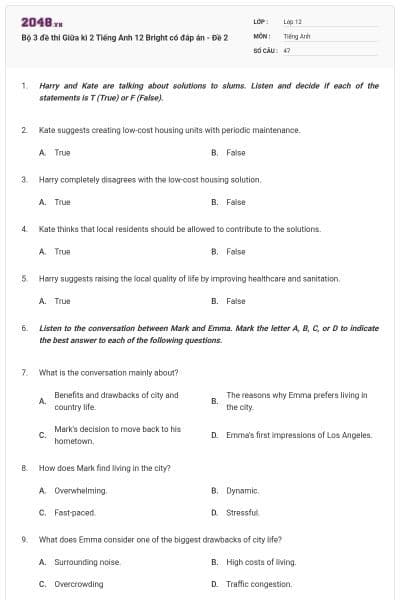
True
False
Hướng dẫn giải:
Đáp án đúng: A
Thông tin: The construction of low-cost housing units and regular maintenance should be ensured.
Hướng dẫn dịch: Việc xây dựng các đơn vị nhà ở giá rẻ và bảo trì thường xuyên cần được đảm bảo.
True
False
Hướng dẫn giải:
Đáp án đúng: B
Thông tin: Affordable housing is crucial, but it's not enough. We also need to address the root causes of slums such as poverty and lack of education.
Hướng dẫn dịch: Nhà ở giá rẻ là rất quan trọng nhưng chưa đủ. Chúng ta cũng cần giải quyết những nguyên nhân sâu xa của các khu ổ chuột như nghèo đói và thiếu giáo dục.
True
False
Hướng dẫn giải:
Đáp án đúng: A
Thông tin: We should also involve the community in decision making. Local residents often have valuable insights, so they should be part of the solution.
Hướng dẫn dịch: Chúng ta cũng nên mời cộng đồng vào việc ra quyết định. Người dân địa phương thường có những hiểu biết sâu sắc có giá trị nên họ nên là một phần của giải pháp.
True
False
Hướng dẫn giải:
Đáp án đúng: A
Thông tin: Another critical aspect is improving basic infrastructure and services like sanitation and healthcare in those areas. It can raise the local quality of life.
Hướng dẫn dịch: Một khía cạnh quan trọng khác là cải thiện cơ sở hạ tầng và dịch vụ cơ bản như vệ sinh và chăm sóc sức khỏe ở những khu vực đó. Nó có thể nâng cao chất lượng cuộc sống của địa phương.
Nội dung bài nghe:
Harry: Kate, what can we do to deal with the issue of slums in our city? It's extremely sad to see so many people living in such poor conditions.
Kate: Absolutely, Harry. Different approaches are needed. An effective solution is to provide affordable housing. The construction of low-cost housing units and regular maintenance should be ensured.
Harry: Affordable housing is crucial, but it's not enough. We also need to address the root causes of slums such as poverty and lack of education. The initiatives that provide job training and educational opportunities in these areas could help solve the issue.
Kate: That's a great point. Education and employment opportunities can allow people to improve their living conditions. We should also involve the community in decision making. Local residents often have valuable insights, so they should be part of the solution.
Harry: Community involvement is vital. Another critical aspect is improving basic infrastructure and services like sanitation and healthcare in those areas. It can raise the local quality of life.
Kate: But to have those basic services, first, the local government should carry out urban planning effectively to ensure everything is designed and operates efficiently.
Harry: NGOs can provide support to the local government. They can provide resources and different efficient ways to build those basic services.
Kate: I'm glad we're on the same page, Harry. Hopefully we can help build a better future for our city.
Nội dung bài nghe:
Harry: Kate, chúng ta có thể làm gì để giải quyết vấn đề khu ổ chuột trong thành phố của chúng ta? Thật vô cùng đau buồn khi thấy rất nhiều người phải sống trong điều kiện tồi tệ như vậy.
Kate: Chắc chắn rồi, Harry. Cần có những cách tiếp cận khác nhau. Một giải pháp hiệu quả là cung cấp nhà ở giá rẻ. Việc xây dựng các đơn vị nhà ở giá rẻ và bảo trì thường xuyên cần được đảm bảo.
Harry: Nhà ở giá rẻ là rất quan trọng, nhưng chưa đủ. Chúng ta cũng cần giải quyết những nguyên nhân sâu xa của các khu ổ chuột như nghèo đói và thiếu giáo dục. Các sáng kiến cung cấp cơ hội đào tạo nghề và giáo dục trong các lĩnh vực này có thể giúp giải quyết vấn đề.
Kate: Đó là một điểm tuyệt vời. Cơ hội giáo dục và việc làm có thể cho phép mọi người cải thiện điều kiện sống của họ. Chúng ta cũng nên mời cộng đồng vào việc ra quyết định. Người dân địa phương thường có những hiểu biết sâu sắc có giá trị nên họ nên là một phần của giải pháp.
Harry: Sự tham gia của cộng đồng là rất quan trọng. Một khía cạnh quan trọng khác là cải thiện cơ sở hạ tầng và dịch vụ cơ bản như vệ sinh và chăm sóc sức khỏe ở những khu vực đó. Nó có thể nâng cao chất lượng cuộc sống của địa phương.
Kate: Nhưng để có được những dịch vụ cơ bản đó, trước tiên chính quyền địa phương phải thực hiện quy hoạch đô thị một cách hiệu quả để đảm bảo mọi thứ được thiết kế và vận hành hiệu quả.
Harry: Các tổ chức phi chính phủ có thể hỗ trợ chính quyền địa phương. Họ có thể cung cấp các nguồn lực và những cách hiệu quả khác nhau để xây dựng những dịch vụ cơ bản đó.
Kate: Tôi rất vui vì chúng ta cùng quan điểm, Harry. Hy vọng chúng ta có thể giúp xây dựng một tương lai tốt đẹp hơn cho thành phố của chúng ta.
Benefits and drawbacks of city and country life.
The reasons why Emma prefers living in the city.
Mark's decision to move back to his hometown.
Emma's first impressions of Los Angeles.
Hướng dẫn giải:
Đáp án đúng: A
Thông tin: I guess both places have their pros and cons. - True, it's all about finding a balance and making the most of where you are.
Hướng dẫn dịch: Tôi đoán cả hai nơi đều có ưu và nhược điểm. - Đúng vậy, tất cả chỉ là tìm kiếm sự cân bằng và tận dụng tối đa vị trí của bạn.
Overwhelming.
Dynamic.
Fast-paced.
Stressful.
Hướng dẫn giải:
Đáp án đúng: C
Thông tin: I just moved from a small town and living in the city feels so fast-paced compared to the countryside.
Hướng dẫn dịch: Tôi mới chuyển đến từ một thị trấn nhỏ và cuộc sống ở thành phố có nhịp độ rất nhanh so với nông thôn.
Surrounding noise.
High costs of living.
Overcrowding
Traffic congestion.
Hướng dẫn giải:
Đáp án đúng: A
Thông tin: It's so noisy here with all the traffic and people. - That's one of the biggest drawbacks for sure.
Hướng dẫn dịch: Ở đây rất ồn ào với xe cộ và người dân. - Đó chắc chắn là một trong những nhược điểm lớn nhất.

Học thông minh hơn mỗi ngày
Xem toàn bộ 40 câu hỏi và nhiều hơn nữa với tài khoản miễn phí
Public transport.
The job opportunities.
Community events.
The infrastructure.
Hướng dẫn giải:
Đáp án đúng: B
Thông tin: But I do appreciate having more job opportunities here.
Hướng dẫn dịch: Nhưng tôi đánh giá cao việc có nhiều cơ hội việc làm hơn ở đây.
Nội dung bài nghe:
Emma: Hey, Mark, how are you adjusting to the city?
Mark: It's been a big change. Honestly, I just moved from a small town and living in the city feels so fast-paced compared to the countryside.
Emma: Yeah, I've lived in Los Angeles for more than a decade now, and I remember how overwhelming it felt at first. What do you think about urban life so far?
Mark: Well, I like convenience. There's so much to do and everything is nearby, but at the same time I miss the quiet of the country. It's so noisy here with all the traffic and people.
Emma: That's one of the biggest drawbacks for sure. In L.A, traffic can be crazy, and the noise never really stops. But you get used to it after a while. The energy of the city can be exciting though.
Mark: Yeah, I can see that. In the country, things are slower, and I felt more connected to nature. But I do appreciate having more job opportunities here. There weren't many options back home.
Emma: That's definitely one of the benefits of city life. There are more jobs, entertainment and cultural events, but I do miss the space and fresh air of the countryside sometimes.
Mark: Exactly. I'm still adjusting, but I guess both places have their pros and cons.
Emma: True, it's all about finding a balance and making the most of where you are.
Dịch bài nghe:
Emma: Này, Mark, bạn thích nghi với thành phố thế nào rồi?
Mark: Đó là một sự thay đổi lớn. Thành thật mà nói, tôi mới chuyển đến từ một thị trấn nhỏ và cuộc sống ở thành phố có cảm giác rất nhanh so với nông thôn.
Emma: Vâng, tôi đã sống ở Los Angeles hơn một thập kỷ và tôi nhớ lúc đầu cảm giác choáng ngợp như thế nào. Bạn nghĩ gì về cuộc sống đô thị cho đến nay?
Mark: À, tôi thích sự tiện lợi. Có quá nhiều việc phải làm và mọi thứ đều ở gần, nhưng đồng thời tôi cũng nhớ sự yên tĩnh của đất nước. Ở đây thật ồn ào với tất cả giao thông và con người.
Emma: Đó chắc chắn là một trong những hạn chế lớn nhất. Ở L.A, giao thông có thể rất hỗn loạn và tiếng ồn không bao giờ thực sự dừng lại. Nhưng sau một thời gian bạn sẽ quen với nó. Tuy nhiên, năng lượng của thành phố có thể rất thú vị.
Mark: Vâng, tôi có thể thấy điều đó. Ở nông thôn, mọi thứ diễn ra chậm rãi hơn và tôi cảm thấy gắn kết hơn với thiên nhiên. Nhưng tôi đánh giá cao việc có nhiều cơ hội việc làm hơn ở đây. Ở quê nhà không có nhiều lựa chọn.
Emma: Đó chắc chắn là một trong những lợi ích của cuộc sống thành phố. Có nhiều công việc, giải trí, văn hóa hơn nhưng đôi khi tôi lại nhớ không gian, không khí trong lành của miền quê.
Mark: Chính xác. Tôi vẫn đang điều chỉnh, nhưng tôi đoán cả hai nơi đều có ưu và nhược điểm.
Emma: Đúng vậy, tất cả chỉ là việc tìm kiếm sự cân bằng và tận dụng tối đa vị trí của bạn.
urbanised
modernised
realised
revised
Hướng dẫn giải:
Đáp án đúng: A
urbanised (V-ed): đô thị hóa
modernised (V-ed): hiện đại hóa
realised (V-ed): nhận ra
revised (V-ed): sửa lại
Hướng dẫn dịch: Năm 2018, Liên Hợp Quốc tuyên bố Singapore đã hoàn toàn được đô thị hóa khi 100% dân số được xác định là thành thị.
for
to
with
along
Hướng dẫn giải:
Đáp án đúng: B
Cụm từ “bring sth TO”: mang lại cái gì cho
Hướng dẫn dịch: Đô thị hóa đã mang lại cả thuận lợi và bất lợi cho các thành phố-nhà nước nhỏ.
changed
caught
attracted
denied
Hướng dẫn giải:
Đáp án đúng: C
changed (Ved): thay đổi
caught (V2 – V3): bắt
attracted (Ved): thu hút
denied (Ved): phủ nhận
Hướng dẫn dịch: Một mặt, Singapore đã thu hút được rất nhiều lao động có tay nghề từ nhiều quốc gia khác để đảm bảo nền kinh tế tiếp tục tăng trưởng.
Therefore
Moreover
As a result
On the other hand
Hướng dẫn giải:
Đáp án đúng: D
Therefore: do đó
Moreover: hơn thế nữa
As a result: kết quả là
On the other hand: mặt khác
Hướng dẫn dịch: Mặt khác, đô thị hóa đã gây ra một số vấn đề nghiêm trọng như nạn phá rừng, dân số quá đông và quản lý chất thải.
grown
cleared
bought
taken
Hướng dẫn giải:
Đáp án đúng: B
grown (V3): trồng
cleared (Ved): chặt phá
bought (V2 – V3): mang
taken (V3): lấy
Hướng dẫn dịch: Singapore được chính thức thành lập, hơn 95% thảm thực vật của nó đã bị chặt phá.
another
other
the other
others
Đáp án đúng: A
another: một cái khác => theo sau là danh từ đếm được số ít.
other: khác => theo sau là danh từ đếm được số nhiều => loại
the other: cái còn lại => đã xác định cụ thể => không phù hợp về nghĩa => loại
others: những cái khác => làm chủ ngữ hoặc tân ngữ, không đứng trước danh từ => loại
Hướng dẫn dịch: Xử lý chất thải từng là một vấn đề khác ở Singapore.
Dịch bài đọc:
Đô thị hóa singapore
Năm 2018, Liên Hợp Quốc tuyên bố rằng Singapore đã (9) đô thị hóa hoàn toàn khi 100% dân số được xác định là thành thị. Đô thị hóa đã mang lại cả thuận lợi và bất lợi (10) cho các thành phố-nhà nước nhỏ. Một mặt, Singapore đã (11) thu hút rất nhiều lao động có tay nghề từ nhiều nước khác để đảm bảo nền kinh tế tiếp tục phát triển. Người di cư cũng đã giúp tạo ra một xã hội đa dạng về văn hóa hơn ở Singapore. (12) Mặt khác, quá trình đô thị hóa đã gây ra một số vấn đề nghiêm trọng như nạn phá rừng, dân số quá đông và quản lý chất thải. Kể từ khi nó lần đầu tiên được người Anh xâm chiếm vào năm 1819 và Singapore chính thức được thành lập, hơn 95% thảm thực vật của nó đã bị (13) chặt phá. Xét về mật độ dân số, nhiều nơi ở Singapore có trên 20.000 người sống trên mỗi km2. Xử lý chất thải từng là (14) một vấn đề khác ở Singapore. Tuy nhiên, nhờ sự phát triển của công nghệ, vấn đề này đã được giải quyết. Singapore thậm chí còn trở thành quốc gia đi đầu trong quản lý rác thải đô thị.
part
place
over
on
Hướng dẫn giải:
Đáp án đúng: B
take part => không tồn tại cụm động từ này (take part in: tham gia)
take place (phr.v): diễn ra
take over (phr.v): tiếp quản
take on (phr.v): tuyển dụng
Hướng dẫn dịch: Sự kiện diễn ra hàng năm trên khắp thế giới.
personal
local
wide
worldwide
Hướng dẫn giải:
Đáp án đúng: D
personal (adj): cá nhân
local (adj): địa phương
wide (adj): rộng
worldwide (adj): toàn cầu
Hướng dẫn dịch: Sáng kiến này được đề xuất vào năm 2004 tại Úc, nhưng ý tưởng về một phong trào toàn cầu đã được phát triển vào năm 2006 dưới tên gọi The Big Flick.
Up
Over
Out
In
Hướng dẫn giải:
Đáp án đúng: C
Cụm từ “light out”: tắt đèn
Hướng dẫn dịch: Cuối tháng 10 năm 2007, một sự kiện tương tự mang tên 'Tắt đèn' đã được tổ chức tại San Francisco.
Due to
Besides
Despite
In addition to
Hướng dẫn giải:
Đáp án đúng: A
Due to: bởi vì
Besides: bên cạnh đó
Despite: bất chấp
In addition to: thêm vào
Hướng dẫn dịch: Bởi vì sự thành công của những sự kiện này, ban tổ chức đã quyết định tổ chức Giờ Trái đất hàng năm trên toàn thế giới kể từ đó.
reused
reduced
recycled
increased
Hướng dẫn giải:
Đáp án đúng: B
reused (v): tái sử dụng
reduced (v): cắt giảm
recycled (v): tái chế
increased (v): tăng
Hướng dẫn dịch: Một nghiên cứu vào năm 2014 cho rằng sự kiện này đã làm giảm lượng điện tiêu thụ trung bình 4%.
belief
thoughts
actions
awareness
Hướng dẫn giải:
Đáp án đúng: D
belief (n): niềm tin
thoughts (n): suy nghĩ
actions (n): hành động
awareness (n): nhận thức
Hướng dẫn dịch: Quan trọng hơn, nó đã giúp nâng cao nhận thức về biến đổi khí hậu và trở thành biểu tượng cho cam kết bảo vệ hành tinh của chúng ta.
Dịch bài đọc:
Giờ Trái Đất
Giờ Trái Đất là phong trào do Quỹ Động vật hoang dã Thế giới (WWF) tổ chức. Sự kiện này (15) diễn ra hàng năm trên toàn thế giới. Nó khuyến khích mọi người tắt đèn điện không cần thiết trong một giờ, từ 8:30 đến 9:30 tối. vào thứ Bảy cuối cùng của tháng Ba. Sáng kiến này đã được đề xuất vào năm 2004 tại Úc, nhưng ý tưởng về một phong trào (16) trên toàn thế giới đã được phát triển vào năm 2006 dưới tên The Big Flick. Năm 2007, Giờ Trái Đất đầu tiên được tổ chức vào ngày 31 tháng 3 tại Sydney, Úc lúc 7:30 tối, giờ địa phương. Sau đó vào tháng 10 năm 2007, một sự kiện tương tự mang tên '(17) Tắt đèn' đã được tổ chức tại San Francisco.
(18) Do sự thành công của những sự kiện này, ban tổ chức quyết định tổ chức Giờ Trái đất hàng năm trên toàn thế giới kể từ đó. Một nghiên cứu vào năm 2014 cho rằng sự kiện (19) đã làm giảm mức tiêu thụ điện trung bình 4%. Quan trọng hơn, nó đã giúp nâng cao (20) nhận thức về biến đổi khí hậu và đã trở thành biểu tượng cho cam kết bảo vệ hành tinh của chúng ta. Dù một giờ không thể thay đổi thế giới, nó khuyến khích các chính phủ và người dân thiết lập các hoạt động lâu dài vì sự phát triển bền vững trên toàn thế giới.
However, green living can be expensive.
Green living is a complex and challenging concept.
By adopting sustainable practices, individuals can help protect the environment.
Green living is a trend that is becoming increasingly popular.
Hướng dẫn giải:
Đáp án đúng: C
A. Tuy nhiên, sống xanh có thể tốn kém.
B. Sống xanh là một khái niệm phức tạp và đầy thách thức.
C. Bằng cách áp dụng các biện pháp bền vững, các cá nhân có thể giúp bảo vệ môi trường.
D. Sống xanh là xu hướng ngày càng trở nên phổ biến.
Hướng dẫn dịch: Sống xanh là sự lựa chọn lối sống tập trung vào việc giảm thiểu tác động đến môi trường của một người. Bằng cách áp dụng các thực hành bền vững, các cá nhân có thể giúp bảo vệ môi trường. Bằng cách đưa ra những lựa chọn có ý thức trong cuộc sống hàng ngày, các cá nhân có thể đóng góp cho một tương lai bền vững hơn.
It isn’t important to use renewable energy sources.
By conserving energy, individuals spend a lot of money.
Energy efficiency is a key aspect of green living.
Electricity bills will be reduced dramatically.
Hướng dẫn giải:
Đáp án đúng: C
A. Việc sử dụng các nguồn năng lượng tái tạo không quan trọng.
B. Bằng cách bảo tồn năng lượng, các cá nhân tiêu rất nhiều tiền.
C. Sử dụng năng lượng hiệu quả là khía cạnh quan trọng của cuộc sống xanh.
D. Hóa đơn tiền điện sẽ giảm đáng kể.
Hướng dẫn dịch: Một trong những cách hiệu quả nhất để thực hành lối sống xanh là giảm tiêu thụ năng lượng. Sử dụng năng lượng hiệu quả là một khía cạnh quan trọng của cuộc sống xanh.
Water conservation is essential for sustainable living.
It is important to increase water usage in the home.
Water pollution isn’t a major environmental problem.
You can use as much as water you want.
Hướng dẫn giải:
Đáp án đúng: A
A. Bảo tồn nước là điều cần thiết cho cuộc sống bền vững.
B. Điều quan trọng là tăng cường sử dụng nước trong nhà.
C. Ô nhiễm nước không phải là vấn đề môi trường lớn.
D. Bạn có thể sử dụng bao nhiêu nước tùy thích.
Hướng dẫn dịch: Một khía cạnh thiết yếu khác của cuộc sống xanh là bảo tồn nguồn nước. Bảo tồn nước là điều cần thiết cho cuộc sống bền vững.
Recycling is the most important aspect of green living.
Reducing waste can help to protect the environment.
It is important to avoid using plastic products.
People in cities produce more waste than ones in countries.
Hướng dẫn giải:
Đáp án đúng: B
A. Tái chế là khía cạnh quan trọng nhất của cuộc sống xanh.
B. Giảm chất thải có thể giúp bảo vệ môi trường.
C. Điều quan trọng là tránh sử dụng các sản phẩm bằng nhựa.
D. Người dân ở thành phố thải ra nhiều rác thải hơn người dân ở nông thôn.
Hướng dẫn dịch: Ngoài ra, giảm thiểu rác thải là một phần quan trọng của cuộc sống xanh. Giảm chất thải có thể giúp bảo vệ môi trường.
By driving less, individuals can reduce their carbon footprint.
Public transportation can increase air pollution.
Walking and biking are bad forms of exercise.
Transportation choices can greatly impact environmental sustainability.
Hướng dẫn giải:
Đáp án đúng: A
A. Bằng cách lái xe ít hơn, các cá nhân có thể giảm lượng khí thải carbon của mình.
B. Giao thông công cộng có thể làm tăng ô nhiễm không khí.
C. Đi bộ và đi xe đạp là những hình thức tập thể dục không tốt.
D. Lựa chọn phương tiện di chuyển có thể tác động lớn đến tính bền vững của môi trường.
Hướng dẫn dịch: Cuối cùng, cuộc sống xanh liên quan đến việc đưa ra những lựa chọn có ý thức về phương tiện đi lại. Bằng cách lái xe ít hơn, các cá nhân có thể giảm lượng khí thải carbon của họ.
Dịch bài đọc:
Sống xanh là sự lựa chọn lối sống tập trung vào việc giảm thiểu tác động đến môi trường của một người. (21) Bằng cách áp dụng các biện pháp bền vững, các cá nhân có thể giúp bảo vệ môi trường. Bằng cách đưa ra những lựa chọn có ý thức trong cuộc sống hàng ngày, các cá nhân có thể đóng góp cho một tương lai bền vững hơn.
Một trong những cách hiệu quả nhất để thực hành lối sống xanh là giảm tiêu thụ năng lượng. (22) Sử dụng năng lượng hiệu quả là một khía cạnh quan trọng của cuộc sống xanh. Bằng cách tắt đèn, rút phích cắm các thiết bị điện tử và sử dụng các thiết bị tiết kiệm năng lượng, các cá nhân có thể giảm đáng kể lượng khí thải carbon của mình.
Một khía cạnh thiết yếu khác của cuộc sống xanh là bảo tồn nước. (23) Bảo tồn nước là điều cần thiết cho cuộc sống bền vững. Bằng cách sửa chữa rò rỉ, tắm ngắn hơn và tưới cây hiệu quả, các cá nhân có thể giúp bảo tồn tài nguyên nước.
Ngoài ra, giảm chất thải là một thành phần quan trọng của cuộc sống xanh. (24) Giảm chất thải có thể giúp bảo vệ môi trường. Bằng cách giảm thiểu, tái sử dụng và tái chế, các cá nhân có thể giảm thiểu sự đóng góp của mình vào các bãi chôn lấp.
Cuối cùng, cuộc sống xanh liên quan đến việc đưa ra những lựa chọn có ý thức về phương tiện đi lại. (25) Bằng cách lái xe ít hơn, các cá nhân có thể giảm lượng khí thải carbon của mình. Bằng cách lựa chọn phương tiện giao thông công cộng, đi xe đạp hoặc đi bộ, các cá nhân có thể giảm sự phụ thuộc vào ô tô và giảm ô nhiễm không khí.
[I]
[II]
[III]
[IV]
Hướng dẫn giải:
Đáp án đúng: B
Giải thích: Câu sau đề cập đến các yếu tố thúc đẩy đô thị hóa, bao gồm cơ hội kinh tế, điều kiện sống tốt hơn và tiện ích xã hội. => câu mới nói về dịch vụ xã hội đa dạng ở đô thị bổ sung thông tin hợp lý cho ý này.
Hướng dẫn dịch: Đô thị hóa đề cập đến sự dịch chuyển dân số ngày càng tăng từ nông thôn sang thành thị, dẫn đến sự tăng trưởng của các thành phố và khu vực đô thị (Hall, 2014). Khu vực thành thị cung cấp một loạt các dịch vụ xã hội thường không có được ở khu vực nông thôn. Hiện tượng này được thúc đẩy bởi nhiều yếu tố khác nhau, bao gồm cơ hội kinh tế, mức sống được cải thiện và tiện nghi xã hội sẵn có ở các trung tâm đô thị.
limited job options
abundant job opportunities
scarcity of jobs
specific job roles
Hướng dẫn giải:
Đáp án đúng: B
plethora of job opportunities = abundant job opportunities: cơ hội việc làm dồi dào
Hướng dẫn dịch: Các thành phố thường cung cấp rất nhiều cơ hội việc làm, thu hút những cá nhân đang tìm kiếm việc làm tốt hơn và thu nhập cao hơn.
urban areas
public services
people
basic services
Hướng dẫn giải:
Đáp án đúng: C
Hướng dẫn dịch: Theo Liên Hợp Quốc (2018), gần một tỷ người sống trong các khu ổ chuột, không được tiếp cận các dịch vụ cơ bản. Họ cũng phải đối mặt với điều kiện sống bất lợi.
Economic growth
Job opportunities
Increased social inequality
Technological advancements
Hướng dẫn giải:
Đáp án đúng: C
Thông tin đáp án A One of the primary advantages of urbanization is the economic growth it fosters.
Thông tin đáp án B: Cities often provide a plethora of job opportunities,
Thông tin đáp án D: Moreover, urbanization encourages innovation and technological advancements,
Urbanization creates a range of challenges, including overcrowding and insufficient public services.
Urban areas have ample housing options for all residents.
Rapid urbanization has no impact on crime rates or health issues.
The growth of cities automatically improves living conditions for all.
Hướng dẫn giải:
Đáp án đúng: A
A. Đô thị hóa tạo ra nhiều thách thức, bao gồm tình trạng quá tải và thiếu hụt dịch vụ công.
B. Các khu đô thị có nhiều lựa chọn nhà ở cho mọi người dân.
C. Đô thị hóa nhanh chóng không có tác động đến tỷ lệ tội phạm hoặc các vấn đề sức khỏe.
D. Sự phát triển của các thành phố tự động cải thiện điều kiện sống cho tất cả mọi người.
reduction
increase
stabilization
disappearance
Hướng dẫn giải:
Đáp án đúng: B
proliferation = increase: tăng
Hướng dẫn dịch: Nhiều khu đô thị gặp khó khăn trong việc cung cấp đủ nhà ở, dẫn đến sự gia tăng các khu định cư không chính thức và khu ổ chuột.
Urbanization exclusively benefits individuals with higher incomes.
All urban areas can easily provide adequate housing for their residents.
Sustainable urban planning is crucial to addressing the issues arising from urbanization.
Rapid urbanization has no effect on public services or living conditions.
Hướng dẫn giải:
Đáp án đúng: C
Thông tin đáp án A: urbanization significantly impacts both individuals and communities, => không có thông tin đề cập => sai
Thông tin đáp án B: Many urban areas struggle to provide adequate housing, => sai
Thông tin đáp án C: To address the challenges of urbanization, sustainable urban planning is essential.
Thông tin đáp án D: Rapid population growth in cities can lead to overcrowding, straining public services such as transportation, healthcare, and education. => sai
Creating well-designed urban areas requires collaboration between governments and city planners.
It is essential for governments to implement urban planning strategies to enhance city life.
The planning of urban areas must not focus on environmental sustainability.
Urban planning should prioritize attracting businesses rather than improving living standards.
Hướng dẫn giải:
Đáp án đúng: B
A. Tạo ra các khu đô thị được thiết kế tốt đòi hỏi sự hợp tác giữa chính phủ và các nhà quy hoạch thành phố.
B. Chính phủ cần thực hiện các chiến lược quy hoạch đô thị để nâng cao đời sống thành phố.
C. Quy hoạch đô thị không được chú trọng đến tính bền vững về môi trường.
D. Quy hoạch đô thị nên ưu tiên thu hút doanh nghiệp hơn là nâng cao mức sống.
Thông tin: Governments and urban planners must prioritize creating inclusive, well-connected cities that provide access to essential services for all residents.
Hướng dẫn dịch: Chính phủ và các nhà quy hoạch đô thị phải ưu tiên tạo ra các thành phố hòa nhập, kết nối tốt, cung cấp khả năng tiếp cận các dịch vụ thiết yếu cho mọi người dân.
Urbanization is a recent phenomenon that has minimal global impact.
Slums are a direct result of effective urban planning.
Sustainable urban planning can help mitigate some of the negative effects of urbanization.
Economic opportunities in urban areas lead to an equal distribution of wealth.
Hướng dẫn giải:
Đáp án đúng: C
Thông tin đáp án A: As a result, urbanization significantly impacts both individuals and communities, leading to a range of benefits and challenges. => sai
Thông tin đáp án B: Many urban areas struggle to provide adequate housing, resulting in the proliferation of informal settlements and slums. => sai
Thông tin đáp án C: To address the challenges of urbanization, sustainable urban planning is essential…Strategies such as developing affordable housing, enhancing public transport systems, and promoting green spaces can help improve the quality of life in urban areas while mitigating the negative impacts of urbanization. => đúng
Đáp án D không có thông tin đề cập
Urbanization leads to job creation and economic growth, but also results in challenges such as overcrowding and social inequality that require sustainable urban planning to address.
The shift from rural to urban living has little effect on economic productivity or community growth.
Urban areas are perfect solutions for all rural problems, including housing and public services.
Cities provide the best quality of life without the need for any planning or development.
Hướng dẫn giải:
Đáp án đúng: A
A. Đô thị hóa dẫn đến tạo việc làm và tăng trưởng kinh tế nhưng cũng dẫn đến những thách thức như tình trạng quá đông đúc và bất bình đẳng xã hội đòi hỏi phải giải quyết quy hoạch đô thị bền vững.
B. Sự chuyển đổi từ cuộc sống nông thôn sang thành thị ít ảnh hưởng đến năng suất kinh tế hoặc tăng trưởng cộng đồng.
C. Đô thị là giải pháp hoàn hảo cho mọi vấn đề ở nông thôn, bao gồm nhà ở và dịch vụ công cộng.
D. Các thành phố mang lại chất lượng cuộc sống tốt nhất mà không cần bất kỳ quy hoạch hay phát triển nào.
Dịch bài đọc:
Đô thị hóa
[I] Đô thị hóa đề cập đến sự gia tăng dân số chuyển từ khu vực nông thôn sang khu vực thành thị, dẫn đến sự phát triển của các thành phố và vùng đô thị (Hall, 2014). [II] Hiện tượng này được thúc đẩy bởi nhiều yếu tố, bao gồm cơ hội kinh tế, điều kiện sống được cải thiện và các tiện ích xã hội có sẵn tại các trung tâm đô thị. [III] Kết quả là, đô thị hóa tác động đáng kể đến cả cá nhân và cộng đồng, mang lại cả lợi ích lẫn thách thức (Davis, 2016). [IV]
Một trong những lợi ích chính của đô thị hóa là thúc đẩy tăng trưởng kinh tế. Các thành phố thường cung cấp nhiều cơ hội việc làm, thu hút những người tìm kiếm công việc tốt hơn và mức thu nhập cao hơn. Trong khu vực đô thị, doanh nghiệp phát triển mạnh nhờ nhu cầu ngày càng tăng đối với hàng hóa và dịch vụ, từ đó nâng cao năng suất kinh tế. Hơn nữa, đô thị hóa khuyến khích đổi mới và tiến bộ công nghệ, vì sự tập trung đông đúc của con người thường thúc đẩy sự sáng tạo và hợp tác (Florida, 2017).
Tuy nhiên, đô thị hóa cũng đặt ra những thách thức đáng kể. Sự gia tăng dân số nhanh chóng trong các thành phố có thể dẫn đến tình trạng quá tải, gây áp lực lên các dịch vụ công như giao thông, y tế và giáo dục. Nhiều khu vực đô thị gặp khó khăn trong việc cung cấp nhà ở đầy đủ, dẫn đến sự gia tăng của các khu định cư không chính thức và khu ổ chuột. Theo Liên Hợp Quốc (2018), gần một tỷ người đang sống trong các khu ổ chuột mà không có điều kiện tiếp cận các dịch vụ cơ bản và phải đối mặt với điều kiện sống tồi tệ. Tình trạng này làm trầm trọng thêm sự bất bình đẳng xã hội và có thể dẫn đến gia tăng tội phạm cũng như các vấn đề sức khỏe.
Để giải quyết những thách thức của đô thị hóa, quy hoạch đô thị bền vững là điều cần thiết. Chính phủ và các nhà quy hoạch đô thị cần ưu tiên xây dựng những thành phố toàn diện, có sự kết nối tốt và đảm bảo quyền tiếp cận các dịch vụ thiết yếu cho tất cả cư dân. Các chiến lược như phát triển nhà ở giá rẻ, nâng cao hệ thống giao thông công cộng và thúc đẩy không gian xanh có thể giúp cải thiện chất lượng cuộc sống tại khu vực đô thị, đồng thời giảm thiểu những tác động tiêu cực của đô thị hóa (World Bank, 2019).
c – b – a – d
a – c – b – d
c – a – b – d
d – b – a – c
Hướng dẫn giải:
Đáp án đúng: C
Hướng dẫn dịch:
(c) Này, bạn đã tìm hiểu về năng lượng mặt trời chưa?
(a) Vâng, tôi đã học nghiên cứu về nó. Thật ngạc nhiên là nó có thể giảm hóa đơn tiền điện đến mức nào.
(b) Chắc chắn rồi. Bên cạnh việc thân thiện với môi trường, nó còn có giá cả phải chăng!
(d) Đúng! Tôi đang cân nhắc việc lắp đặt các tấm pin trên mái nhà vào năm tới.
a – b – c – d
d – c – b – a
b – a – d – c
d – a – c – d
Hướng dẫn giải:
Đáp án đúng: B
Hướng dẫn dịch:
(d) Tôi nghĩ việc sử dụng nhiên liệu hóa thạch có thể giảm đáng kể trong vài thập kỷ tới.
(c) Điều đó đúng. Về lâu dài, các nguồn năng lượng tái tạo có thể sẽ chiếm ưu thế.
(b) Chính xác! Hiện nay nhiều nước đang đầu tư vào năng lượng mặt trời và năng lượng gió.
(a) Đúng vậy, và điều đó có thể dẫn đến một môi trường sạch hơn cho các thế hệ tương lai.
a – b – c – d – e – f
c – e – f – b – a – d
a – d – c – e – b – f
c – b – e – f – d – a
Hướng dẫn giải:
Đáp án đúng: B
Hướng dẫn dịch:
Dưới đây là hai mẹo không rác thải dễ dàng để giúp ích cho hành tinh của chúng ta.
(c) Đầu tiên, hãy chọn những đồ dùng có thể tái sử dụng như chai nước thay vì đồ dùng một lần. (e) Lựa chọn này giúp tránh rác thải nhựa thường được đưa vào các bãi chôn lấp và đại dương. (f) Một chai nước tái sử dụng có thể tiết kiệm hàng trăm chai nhựa mỗi năm! (b) Thứ hai, hãy thử ủ phân từ thức ăn thừa và rác trong vườn. (a) Quá trình ủ phân biến chất thải hữu cơ thành đất giàu dinh dưỡng. (d) Quá trình này mang lại lợi ích cho khu vườn của bạn và giảm thiểu chất thải tổng thể.
Bằng cách làm theo những lời khuyên đơn giản này, bạn có thể góp phần tạo nên một Trái đất sạch hơn và khỏe mạnh hơn!
b – d – a – e – c
b – c – a – d – e
d – c – a – e – b
d – a – b – e – c
Hướng dẫn giải:
Đáp án đúng: A
Hướng dẫn dịch: (b) Một số người dân nông thôn chọn ở lại cộng đồng của mình thay vì di cư đến thành phố. (d) Điều này thường là do sự gắn bó sâu sắc với đất đai và lối sống truyền thống của họ. (a) Họ có thể sợ mất đi bản sắc văn hóa của mình trước tốc độ phát triển nhanh chóng của môi trường đô thị. (e) Ngoài ra, cuộc sống nông thôn có thể mang lại cảm giác cộng đồng và sự kết nối khó tìm thấy ở các thành phố lớn. (c) Hơn nữa, họ lo ngại về chi phí sinh hoạt cao hơn và thiếu cơ hội việc làm ở các thành phố.
a – e – c – d – b
a – e -b – c – d
a – c – d – b – e
a – d – c - b – e
Hướng dẫn giải:
Đáp án đúng: D
Hướng dẫn dịch:
Thưa ông Brown,
(a) Tôi viết thư này để bày tỏ mối lo ngại của mình về tình trạng rò rỉ nước thải dai dẳng từ căn hộ phía trên tầng 4 của tôi, có thể là do đường ống bị hư hỏng do sử dụng quá nhiều hóa chất nặng. (d) Vấn đề này dẫn đến mùi hôi khó chịu và nước bị ô nhiễm trong căn hộ của tôi, ảnh hưởng đến môi trường sống của tôi. (c) Mặc dù tôi đã nêu lên mối quan ngại này trước đây nhưng vẫn chưa có hành động nào được thực hiện để giải quyết vấn đề đó. (b) Tôi yêu cầu kiểm tra ngay và sửa chữa cần thiết để giải quyết vấn đề này. (e) Sự quan tâm kịp thời ông bạn đối với vấn đề này là rất quan trọng đối với hạnh phúc của tất cả cư dân và cộng đồng thân thiện với môi trường của chúng ta.
Trân trọng,
Will Smith
Bạn có thích hoạt động này không?
Ý kiến của bạn sẽ giúp chúng tôi đề xuất nội dung phù hợp hơn.
![[Năm 2022] Đề thi thử môn Vật lí THPT Quốc gia có lời giải - Đề số 21](/_next/image?url=https%3A%2F%2Fvideo.vietjack.com%2Fupload%2Fimages%2Fvj-image%2Fimage-3izficdefgfoel0s9j8s-1786772791.jpg&w=3840&q=75)
![[Năm 2022] Đề thi thử môn Vật lí THPT Quốc gia có lời giải - Đề số 20](/_next/image?url=https%3A%2F%2Fvideo.vietjack.com%2Fupload%2Fimages%2Fvj-image%2Fimage-emy0gtcksawvorajezvv-1786772460.jpg&w=3840&q=75)