KỲ THI THỬ THPT QUỐC GIA NĂM 2019 MÔN TIẾNG ANH(P6)
64 câu hỏi
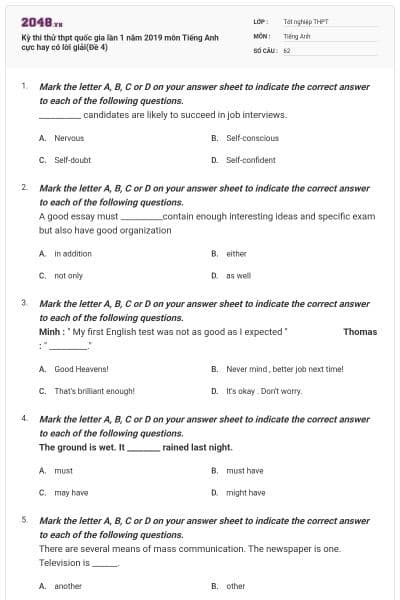
attracted
attended
confided
promised
Đáp án : D
Promise kết thúc là âm /s/. Đuôi “ed” sau âm /s/ phát âm là /t/, sau âm /t/,/d/ phát âm là /id/
communication
culture
ceremony
compliment
Đáp án : C
“c” trong “ceremony” phát âm là /s/, trong các từ còn lại phát âm là /k/
attract
decide
precede
culture
Đáp án : D
Trọng âm của từ này rơi vào âm tiết thứ 1, các từ còn lại rơi vào âm tiết thứ 2
determine
tradition
sacrifice
terrific
Đáp án : C
Trọng âm của từ này rơi vào âm tiết thứ 1, các từ còn lại rơi vào âm tiết thứ 2
informality
socialise
mischievous
confidence
Đáp án : A
Trọng âm của từ này rơi vào âm tiết thứ 3, các từ còn lại rơi vào âm tiết thứ 1
to
with
from
on
Đáp án: D
Giải thích:
Kiến thức: Giới từ
compliment (somebody) on something/Ving = (lời) chúc mừng ai vì đã làm được gì
Dịch: Cảm ơn lời khen của bạn về thành tích của tôi.
out of sight
out of the question
out of control
out of date
Đáp án : B
Out of question = không thể xảy ra, không đáng bàn đến. Out of sight = ngoài tầm nhìn. Out of control = ngoài tầm kiểm soát. Out of date = hết hạn
can
would
ought
must
Đáp án : D
Must have + past participle = dự đoán chắc chắn một việc đã xảy ra trong quá khứ, dựa trên cơ sở rõ ràng
will return – will be given
will be returned – are given
are returning – are giving
are returned – will be given
Đáp án : D
Sau khi bài kiểm tra được trả vào ngày mai, các sinh viên sẽ được giao bài tập tiếp theo -> việc được trả,và việc được giao bài là bị động; dùng: be + past participle. Mệnh đề sau after chỉ hành động sẽ xảy ra cũng chỉ được chia ở hiện tại đơn

Học thông minh hơn mỗi ngày
Xem toàn bộ 64 câu hỏi và nhiều hơn nữa với tài khoản miễn phí
whom
which
who
when
Đáp án : B
Đại từ quan hệ bổ nghĩa cho vật (book) chỉ dùng “that” hoặc “which” -> chọn B
would have
would have been
would be
will be
Đáp án : B
Câu điều kiện loại 3 giả định điều trái với quá khứ: If + S + had + past participle, S + would have + past participle
to have – have
have – have
to have – having
having – to have
Đáp án: A
Giải thích:
Cấu trúc:
would prefer to do something rather than do something: thích làm gì hơn làm gì
Dịch: Cậu ấy thích ăn xúp gà hơn là xúp lươn.
although
so that
because
but
Đáp án : C
Be motivated = được thúc đẩy, có động lực. Because = bởi vì. So that = để mà. Although = mặc dù. But = nhưng
confide
confidence
confident
confiding
Đáp án B
Giải thích: Sau giới từ là một danh từ
A. confide (v) tin cậy
B. confidence (n) sự tự tin
C. confident (adj) tự tin
D. confiding (gerund) tâm sự
Dịch nghĩa: Gia đình của tôi là cơ sở để chúng tôi có thể tự tin bước ra thế giới.
Verbal
Non-verbal
Visual
Oral
Đáp án : B
Nonverbal (adj) = không bằng lời nói. Verbal = bằng lời nói. Visual = bằng hình ảnh, thuộc tầm nhìn. Oral = bằng miệng, bằng lời
created
consisted
composed
included
Đáp án : C
Be composed of + N = được tạo thành bởi… = consist of N
from
to
in
with
Đáp án : C
Confide in somebody = tin tưởng ở ai (ở đây someone được đảo lên trước từ you)
expensive new German
new expensive German
German expensive new
new German expensive
Đáp án : A
Quy tắc sắp xếp các tính từ: OPSACOM: Opinion – Price (expensive) – Shape/size – Age (new) – Color– Original (German) – Material => expensive new German
as many twice televisions as
twice more televisions than
twice as many televisions as
as twice many televisions as
Đáp án : C
So sánh nhiều gấp 2 lần với danh từ: twice as + many + Ns/es + as; với tính từ: twice as + adj + as
get out of
get along with
keep away from
keep up with
Đáp án : D
Come down = đi xuống, thấp xuống. Keep up with something/somebody = theo kịp với ai/cái gì
you will understand
will you understand
you understand
you can understand
Đáp án : B
Đảo ngữ với thì tương lai: Only when + clause (thì hiện tại đơn), will + S + V (không chia) = chỉ khi… thì mới…
passes
passed
pass
would pass
Đáp án : C
Cấu trúc giả định: It is + tính từ chỉ sự thiết yếu, cấp bách (important, necessary, essential…) + (that) + S + (should) + V không chia
That’s a beautiful dress you are wearing.
When did you buy this beautiful dress?
Who gave you this beautiful dress?
You’ve just bought this beautiful dress, haven’t you?
Đáp án : A
Mickey khen chiếc váy Minnie đang mặc rất đẹp; Minnie vui vẻ cám ơn, và nói mình mới mua hôm qua
Writing? Why?
Thank you. It’s really encouraging.
You’re welcome.
What did you say? I’m so shy.
Đáp án : B
Teacher khen bài luận của Tom lần này đã khá hơn. Tom cám ơn, và cho rằng lời khen thực sự rất có ý nghĩa động viên, khích lệ
prepared
spoken
excellent
understood
Đáp án : B
Oral = bằng miệng, bằng lời
get his ideas down
recall his ideas
summarize his ideas
get his ideas across
Đáp án : D
Make something understood = làm cho cái gì được hiểu. Get something across = diễn đạt được cái gì
variety
changes
conservation
number
Đáp án : A
Diversity = sự đa dang variety
to disagree with the idea
to agree with the idea
to support the idea
to approve with the idea
Đáp án : A
To go along with something = đồng ý với cái gì. Disagree = không đồng ý
politeness
rudeness
measurement
encouragement
Đáp án : A
Discourtesy = sự bất lịch sự.
students
attending
are
numbers
Đáp án : C
Chủ ngữ là The number (= con số) -> động từ chia ở ngôi số ít. Sửa C -> is
Preceding
children
the
entered
Đáp án : A
Precede = đi trước. Cô dâu, chú rể được dẫn trước bởi 4 đứa trẻ xinh xắn -> Precede phải ở dạng phân từ 2 để trở thành hình thức rút gọn mệnh đề quan hệ bị động. Sửa A -> preceded
will test
spoken
non-technical
writing
Đáp án : D
Trước “and” là to V (to understand, to read) để liệt kê các hành động, thì sau nó là “V”. Sửa D -> write
better
is
most
get
Đáp án : C
Cấu trúc so sánh tăng tiến: The + so sánh hơn + S + V/be, the + so sánh hơn + S + V/be = càng…thì càng… Sửa C -> more
about
decide
to
get
Đáp án : B
It is (about/high) + time + (that) S V-ed/ for somebody to V = đã đến lúc ai phải gấp rút làm gì
reason
tests
rules
ways
Đáp án : D
Way of Ving = cách thức làm gì đó
be spoken
be examined
be understood
be talked
Đáp án : C
Understand = hiểu. Speak = nói. Talk = nói. Examine = kiểm tra
systems
sounds
languages
talks
Đáp án : B
Sound = âm thanh. Language = ngôn ngữ. System = hệ thống.
easy
important
simple
expensive
Đáp án : B
Important = quan trọng. easy = dễ dàng. Simple = đơn giản. expensive = đắt đỏ
grammar
word
vocabulary
structure
Đáp án : C
Vocabulary = từ vựng. grammar = ngữ pháp. Word = từ. structure = cấu trúc
fluent
good
perfect
well
Đáp án : D
Well (adv) = khá. Trạng từ (well) đứng sau động từ (speak) để bổ nghĩa cho động từ đó: speak well = nói tốt, thành thạo
need
grow
express
pass
Đáp án : C
Need = cần. grow = phát triển, trồng. express = diễn đạt, thể hiện. pass = trôi qua, vượt qua
main
certain
full
most
Đáp án : A
Main = chính, chủ yếu. certain = chắc chắn. full = đầy đủ, no. most = hầu hết
talk
say
pass
send
Đáp án : B
Talk (something) to somebody = nói chuyện. Say = nói. Pass = vượt qua, trải qua. Send = gửi
show
ask
understand
know
Đáp án : A
Show (v) = thể hiện. ask = hỏi. understand = hiểu. know = biết
Gestures
Signs and signals
Speech
Communication
Đáp án : D
Đoạn văn nói về các cách giao tiếp ngoài cách dùng ngôn ngữ (dòng đầu: there are many ways of communicating without using speech)
It is dependent upon the advances made by inventors.
It is the most advanced form of communication.
It is necessary for communication to occur.
It is the only true form of communication.
Đáp án : B
Ngay từ đầu tiên, tác giả có nói: Although speech is the most advanced form of communication
A form of communication that interrupts the environment.
The most difficult form of communication to describe.
A form of communication which may be used across long distances.
The form of communication most related to cultural perception.
Đáp án : A
Interrupt = làm ngắt quãng, xen vào ≈ impinge upon something . Dòng 3: basic function of signal is to impinge upon the environment in such a way that it attracts attention
prohibit
intrude
vary
improve
Đáp án : B
Intrude = xâm nhập vào, xen vào ≈ impinge upon something
way
environment
function
signal
Đáp án : D
“it” chỉ danh từ chỉ vật số ít ở vế trước nó; đồng thời “it” có thể thu hút sự chú ý (attract attention) -> “it” là “signal”
advantage
possibility
organization
range
Đáp án : B
Potential (Adj) = tiềm năng. Potential (n) = khả năng tiềm tàng
inefficient
complicated
historical
uncertain
Đáp án : B
Intricate = phức tạp, tinh vi ≈ complicated
signal
a sign
a gesture
a symbol
Đáp án : D
Dòng 2 đoạn 2: applauding in a theater provides performers with an auditory symbol of approval
Because people were unable to understand signs, signals, and symbols.
Because people wanted to communicate across long distances.
Because people believed that signs, signals, and symbols were obsolete.
Because people wanted new forms of communication.
Đáp án : B
Từ dòng 3 đoạn cuối: means of communication intended to be used for long distances and extended periods must be based upon speech. To radio, television, and the telephone, one must add fax, paging systems, electronic mail, and the Internet
only some cultures have signs, signals, and symbols
signs, signals, symbols, and gestures are forms of communication
symbols are very easy to define and interrupt
waving and handshaking are not related to culture
Đáp án : B
Dòng đầu đoạn cuối: Although signals, signs, symbols, and gestures are very useful, they do have a major disadvantage in communication
what is done
what is fulfilled
what is left
what is share
Đáp án : C
Remainder = người/vật còn sót lại
14%
37%
70%
80%
Đáp án : D
Từ dòng 2 đoạn 2: Women who did not work outside the home (don’t have paid job) were satisfied to perform 80% - the majority of the household work (= the chores)
women have a bigger house
men do more housework
men do less housework
women do twice as much housework
Đáp án : B
Đầu đoạn 3: After marriage, a woman is reported to increase her household workload by 14 hours per week, but for men the amount is just 90 minutes -> sau khi kết hôn, người đàn ông dành thêm 90p làm việc nhà -> nhiều hơn một chút
want their partners to do an equal share
are anxious and depressed
do 80% of the household
would prefer not to have a job
Đáp án : A
Từ dòng 1 đoạn 2: women with jobs felt that housework should be shared equally between male and female partners. -> muốn người đồng hành của mình chia sẻ lượng việc bằng nhau
if they have to do more than half of the housework
because they have no respect
when their husbands do not help them
if their husbands do 20% of the chores
Đáp án : C
Trong đoạn 2: Women who did not work outside the home were satisfied to perform 80% - the majority of the household work – if their husbands did remainder. Research has shown that, if levels increase beyond these percentages, women become unhappy and anxious, and feel they are unimportant. -> nếu phải làm nhiều hơn 80% việc nhà, ít sự giúp đỡ của con trai hơn những người phụ nữ không đi làm sẽ thấy mệt mỏi,chán nản
changing thing
strange thing
usual thing
unequal thing
Đáp án : C
Norm = quy phạm, quy chuẩn thông dụng -> điều bình thường, đã thành thường lệ
men do more housework than women
women and men divide the housework equally
women do 80% of the housework
women do 14 hours of housework
Đáp án : B
Dòng 2 đoạn cuối: The research showed that the least distressed people are those who have equal share -> ít căng thẳng nhất khi chia sẻ lượng công việc bằng nhau -> mối quan hệ tốt đẹp
people of a wide range of ages
married people
working people
unemployed people
Đáp án : A
Dòng 2 đoạn 1: In a survey of 1,256 people ages between 18 and 65 -> cuộc điều tra với quy mô 1256 người khoảng 18 -65 tuổi -> phạm vi lứa tuổi rất rộng
wanted
divided
hoped
guessed
Đáp án : D
Estimate = đánh giá, ước đoán
Difficulties of working women
Unequal housework division
Reason for women to be distress
How to be happy couples
Đáp án : B
Bài văn nói về việc phân chia công việc không đồng đều giữa phụ nữ và đàn ông trong gia đình (Ngay từ đầu: A recent study shows that an unequal share of household chores is still the norm in many households)
Bạn có thích hoạt động này không?
Hãy lưu hoặc chia sẻ nội dung này đến mọi người.
Gợi ý cho bạn

Ý tưởng của bạn, bài học của bạn
Tự thiết kế đề thi, bài giảng hoặc flashcard theo cách riêng.



Học liệu phổ biến Tốt nghiệp THPT
Tốt nghiệp THPT
Bài tập vừa sức, đúng lớp
Chọn nội dung phù hợp và tạo hoạt động cho lớp của bạn.