Đề thi vào lớp 10 môn Tiếng Anh năm 2020 cực hay có đáp án (Đề 6)
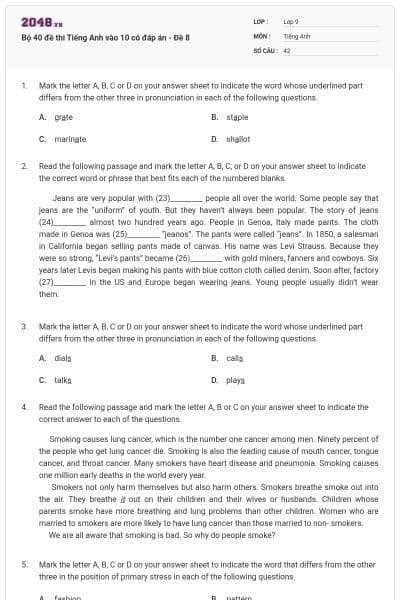
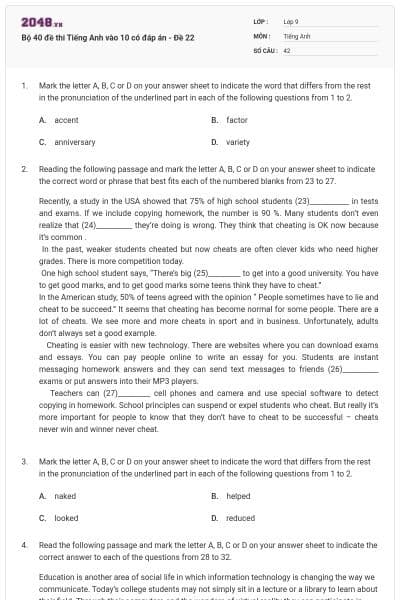
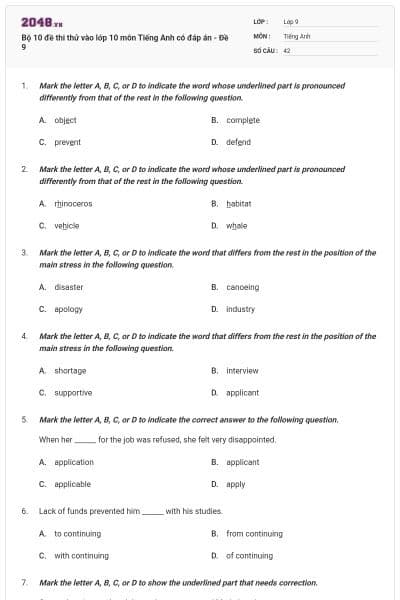
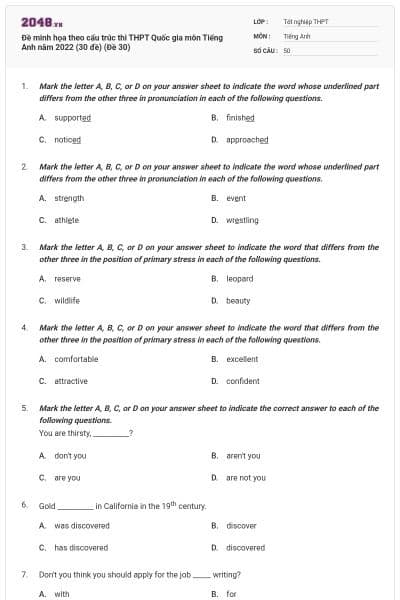
40 câu hỏi
Runs
Stands
Sleeps
Sprays
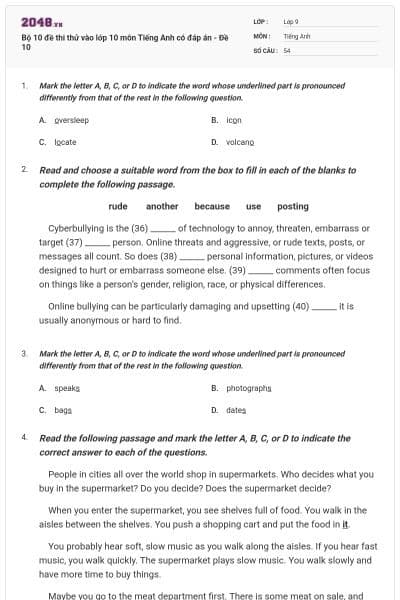
Đáp án C
Enjoyed
Walked
Watched
Practiced
Đáp án A
Money
Student
Music
Enjoy
Đáp án D
Nation
Mention
Federation
Option
Đáp án C
of whom
is parked
front of
a famous pop star
Đáp án
D
Made
Completely from
In
Eighteeth
Đáp án
A
Listening
To music
Dance with
Friends
Đáp án
C
waiting
wait
to wait
to waiting
Đáp án
A
were
weren't
is
wasn't
Đáp án
A

Học thông minh hơn mỗi ngày
Xem toàn bộ 40 câu hỏi và nhiều hơn nữa với tài khoản miễn phí
comfort
uncomfortable
C comfortable
comfortably
Đáp án
C
have been
will be
were
are
Đáp án
A
out
over
of
on
Đáp án: C
Giải thích:
be tired of doing something: mệt mỏi với việc làm gì
Dịch: Chúng tôi quá mệt mỏi khi phải rửa bát sau bữa ăn.
so as to
so that
so as
in order that
Đáp án
A
however
although
because
so
Đáp án
A
taking
to play
being taken
took
Đáp án
D
a
an
the
∅
Đáp án
D
Yes, I’d love to.
Yes, I do
I agree with you
Yes, it is
Đáp án: A
Giải thích:
Kiến thức: Tình huống giao tiếp
Cách trả lời “Would you like” đểể đáp lại lời đề nghị hay lời mời một cách lịch sự, chúng ta không thể chỉ trả lời ngắn gọn Yes hay No được mà nên trả lời theo cách sau đây:
Chấp nhận lời mời/ đề nghị:
+ Yes, I would.
+ Yes, please.
+ Yes, I'd love to.
Dịch: Jane mời Mary đi xem phim.
Jane: “Bạn có muốn đi xem phim với tôi vào cuối tuần này không?”
Mary: “Có, mình rất thích.”
No, I don’t
I don’t wait
Certainly, sir
No, thanks.
Đáp án
C
casual
significant
promiscuous
aggressive
Đáp án: B
Giải thích:
Kiến thức: Từ vựng – Từ đồng nghĩa
prominent (adj): nổi bật, xuất chúng, dễ nhận thấy
Xét các đáp án:
A. casual (adj): bình thường, thông thường
B. significant (adj): quan trọng, nổi bật
C. promiscuous (adj): bừa bãi
D. aggressive (adj): hung hăng, hiếu chiến
→ prominent = significant
Dịch: Ralph Nader là nhà lãnh đạo nổi bật nhất của phong trào bảo vệ người tiêu dùng ở Hoa Kỳ.
record
shine
categorize
diversify
Đáp án
C
holding at
holding back
holding to
holding by
Đáp án
B
explicit
implicit
obscure
odd
Đáp án
A
Make
Making
To make
Made
Đáp án
C
In
Into
On
To
Đáp án
B
Collected
Chosen
Selected
Elected
Đáp án
A
Spoil
Spoils
Spoiling
Spoiled
Đáp án
D
It was set up in the 18th century.
Europe had it as the first settlement in Australia.
Now Sydney is the capital of Australia.
Today it has a population of nearly 4 million people.
Đáp án
C
within continents
into continents
out of continents
between continents
Đáp án
D
International film festivals are held here.
This place hosts live modern music programs.
Plays are not performed here.
This building makes Sydney famous.
Đáp án
B
each year
every year
yearly
all year round
Đáp án
C
on New Year’s Eve, 1791
in April, 1789
in October, 1790
in January, 1788
Đáp án
D
Đáp án
My brother said that he wanted to be a pilot.
Đáp án
She said that she wanted to send her son to a university in the UK.
Đáp án
Students should be educated to preserve traditional values by teachers.
Đáp án
She wishes she knew how to get access to the Internet
Đáp án
I haven’t seen Peter since he attended the school meeting
Đáp án: The poem which he read to us yesterday has been translated into several languages.
Giải thích:
Kiến thức: Mệnh đề quan hệ
Dùng đại từ quan hệ “which” để thay cho danh từ chỉ vật “poem”.
Dịch: Ông ấy đã đọc bài thơ cho chúng tôi nghe ngày hôm qua. Bài thơ đã được dịch sang nhiều thứ tiếng.
→ Bài thơ mà ông đọc cho chúng ta nghe ngày hôm qua đã được dịch sang nhiều thứ tiếng.
Đáp án
If Mr. Ba were not too old, he could continue the work
Đáp án
In spite of its appearance, the new restaurant doesn't appear to attract much business.
Đáp án: The sea was too rough for the children to go swimming.
Giải thích:
Cấu trúc "too + adj + for somebody to do something" diễn tả một điều gì đó quá mức đối với ai đó để họ có thể làm một việc gì đó.
Ở đây, "too rough" mô tả biển quá sóng dữ, khiến cho việc đi bơi không thể thực hiện được.
Câu này kết hợp hai câu lại bằng cách sử dụng "too" theo đúng cấu trúc ngữ pháp.
Dịch: Trẻ em không thể đi bơi vì biển động quá.
→ Biển quá sóng dữ để những đứa trẻ có thể đi bơi.
Bạn có thích hoạt động này không?
Hãy lưu hoặc chia sẻ nội dung này đến mọi người.
Gợi ý cho bạn

Ý tưởng của bạn, bài học của bạn
Tự thiết kế đề thi, bài giảng hoặc flashcard theo cách riêng.