Đề thi Học kì 1 Tiếng Anh 12 Thí điểm (Đề 2)
50 câu hỏi
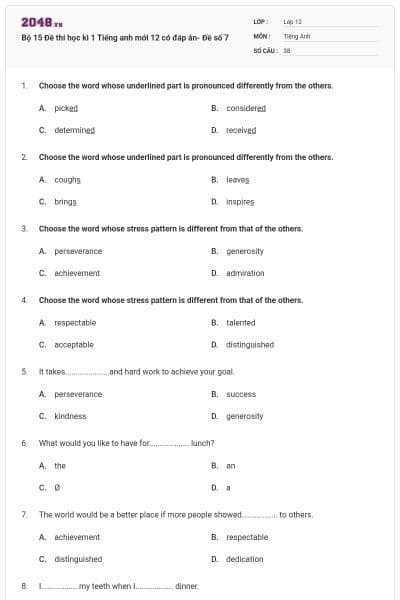
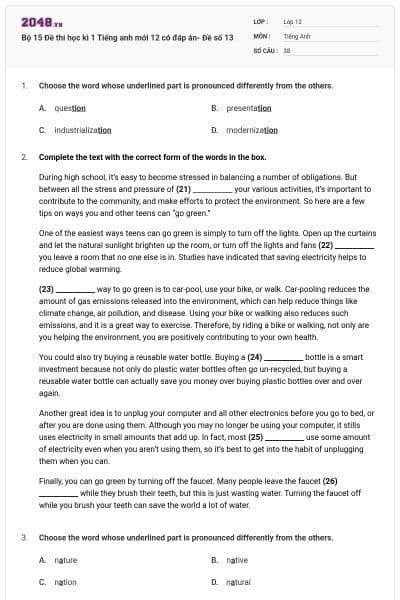
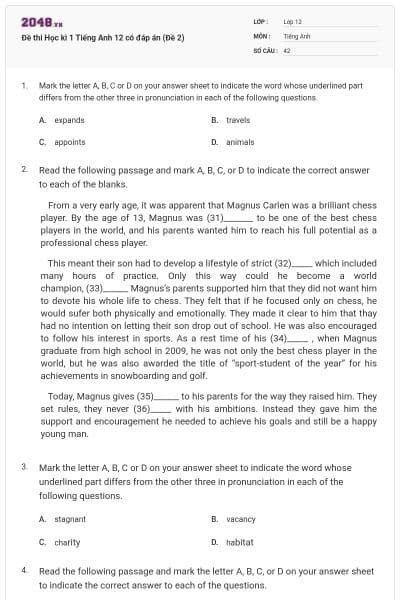
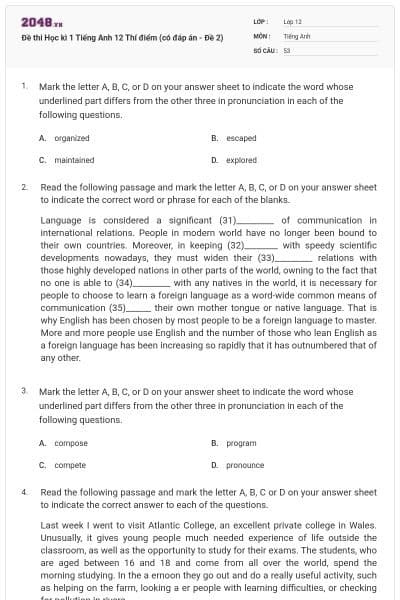
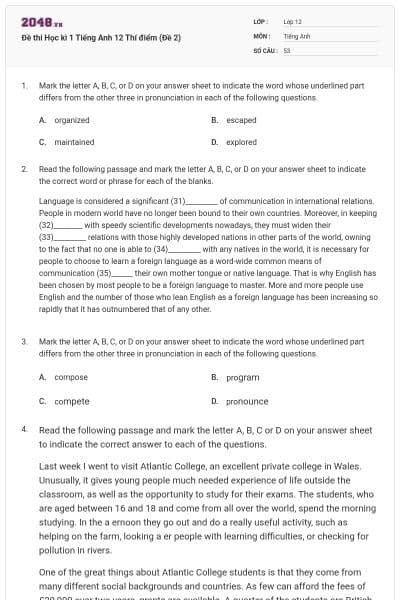
organized
escaped
maintained
explored
Đáp án B
compose
program
compete
pronounce
Đáp án B
village
purpose
police
student
Đáp án C
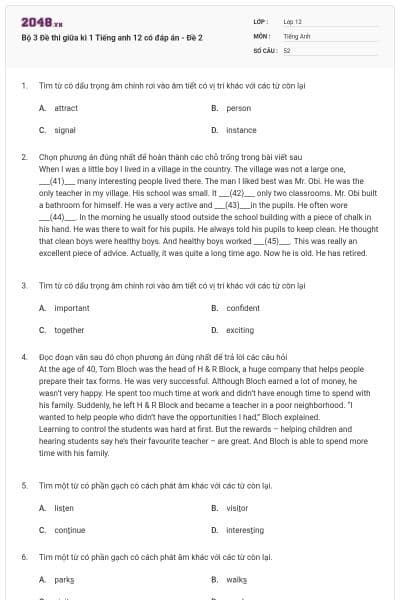
engineer
entertain
national
Vietnamese
Đáp án C
0
an
the
a
Đáp án C
Time
intention
purpose
my mind
Đáp án: C
Giải thích:
A. on time: đúng giờ
B. Không có “on intention”
C. on purpose: cố ý
D. on my mind: trong suy nghĩ của tôi
Dựa vào nghĩa, chọn C.
Dịch: Tôi xin lỗi. Tôi không cố ý làm vỡ cái bình.
Took out
gave out
gave up
took up
Đáp án C
Was seeing
have seen
see
saw
Đáp án D
Had better
should
would rather
may
Đáp án D

Học thông minh hơn mỗi ngày
Xem toàn bộ 50 câu hỏi và nhiều hơn nữa với tài khoản miễn phí
Provided they arrive
if they arrived
if they arrive
had they arrived
Đáp án B
Which
whom
that
who
Đáp án C
Giải thích
Dùng that để thay thế chủ ngữ bao gồm cả người và vật
To have gone
to go
go
going
Đáp án D
Considers
is being considered
is considering
considered
Đáp án B
Pleased
please
pleasant
pleasure
Đáp án D
Droughts
wind
floods
snow
Đáp án C
Mission
depression
floods
development
Đáp án B
Don’t mentiong it. That’s the least thing I could do.
Me too
Long time no see
So long.
Đáp án: A
Giải thích:
Kiến thức: Tình huống giao tiếp
Dịch: Harry đang nói chuyện với Judy sau khi Judy đã giúp Harry.
- Harry: Cảm ơn vì sự giúp đỡ của bạn.
- Judy: ___________.
A. Đừng nhắc đến chuyện đó nữa. Đó là điều tối thiểu tôi có thể làm
B. Tôi cũng vậy
C. Lâu quá không gặp
D. Lâu quá
A là câu trả lời phù hợp để đáp lại lời cảm ơn.
Do not say anything about it.
I am glad you like it.
Not at all.
With pleasure.
Đáp án: B
Giải thích:
Dịch: John đang khen Jane và chiếc váy mới của cô ấy.
- John: Bạn trông thật tuyệt trong chiếc váy mới này.
- Jane: ____________
A. Đừng nói gì về nó cả.
B. Tôi vui vì bạn thích nó.
C. Không hề.
D. Rất vui lòng.
Đáp án B dùng để đáp lại lời khen.
Abundon
accommodate to
invade
live in
Đáp án D
Be related to
express
pay attention to
be interested in
Đáp án C
optional
depended
divided
compulsory
Đáp án A
disagreement
demand
dislike
support
Đáp án D
Child
are
basic
history
Đáp án B
Urban areas
financial
are found
the most
Đáp án B
To be
that
has been said
the most
Đáp án A
It’s the first time I will ever have talked to the headmaster.
It’s the first time I had ever talked to the headmaster.
It’s the first time I ever talked to the headmaster.
It’s the first time I have ever talked to the headmaster.
Đáp án: D
Giải thích:
It’s the first time + S + have/has + ever + V3/V-ed → Dùng để diễn tả lần đầu tiên ai đó làm gì trong đời.
Trong câu gốc, "I have never talked to the headmaster before" có nghĩa là chưa từng nói chuyện với hiệu trưởng trước đây. Khi chuyển sang dạng It’s the first time, ta dùng thì hiện tại hoàn thành để nhấn mạnh trải nghiệm mới xảy ra.
Xét các đáp án:
A. It’s the first time I will ever have talked to the headmaster. → Sai, vì "will ever have talked" không đúng ngữ pháp trong cấu trúc này.
B. It’s the first time I had ever talked to the headmaster. → Sai, vì "had ever talked" là thì quá khứ hoàn thành, chỉ dùng khi có một mốc quá khứ khác để so sánh.
C. It’s the first time I ever talked to the headmaster. → Sai, vì "ever talked" dùng quá khứ đơn không đúng với cấu trúc chuẩn.
D. It’s the first time I have ever talked to the headmaster. → Đúng, vì phù hợp với cấu trúc It’s the first time + thì hiện tại hoàn thành.
Dịch: Đây là lần đầu tiên tôi nói chuyện với hiệu trưởng.
He apologized for having to leave early.
He apologized that he has to leave early.
He apologized to have to leave early.
He apologized to have left early.
Đáp án A
Apologize for doing something: xin lỗi vì đã làm gì
Even though it rained, I came to your party.
If it did not rain, I would come to your party.
Suppose it did not rain, I would come to your party.
It was the rain that prevented me from coming to your party.
Đáp án D
I don’t remember the man whom you met at the canteen last week.
I don’t remember the man whom you met him at the canteen last week.
I don’t remember the man that you met him at the canteen last week.
I don’t remember the man whose you met at the canteen last week.
Đáp án A
The more they spent money, the harder work they had.
The more money they spent, the more harder they had to work.
The more they spent money, the more hard work they had to work.
The more money they spent, the harder they had to work.
Đáp án D
equipment
means
method
way
Đáp án B
Means of communication (n): phương tiện giao tiếp
concerned
on
informed
safe
Đáp án C
cooperative
conflicting
hostile
diplomatic
Đáp án A
communicate
agree
deal
contact
Đáp án A
besides
additional
beside
moreover
Đáp án A
The cassroom
life
Atlantic College
experience
Đáp án C
She is more confident than her sister.
She prefers her new friends to her family.
She knows a lot about ther countries.
She finds it easier to get on with people.
Đáp án D
what the British education system is like.
what kind of programme Atlantic College offers.
what the British education system is like.
how to become a student at Atlantic College.
Đáp án B
Quarreled
regarded
respected
admired
Đáp án A
Chance
lucky
respect
idea
Đáp án A
It doesn't allow students enough study time.
It doesn't give good value for money.
Its way of teaching is successful
Students are taught to like each other.
Đáp án C
givean opinion about a particular student.
describe the activities students do in their free time.
describe his own experience of education
give an opinion about a special type of education.
Đáp án D
latchkey children’s parents
empty houses
latcthey children
all American children
Đáp án C
Talking to the Longs
Hiding somewhere
lying under a TV
having a shower
Đáp án B
delivering questionaires
visiting their homes
interviewing their parents
talking to them
Đáp án D
They had to use the key to enter their houses when they came home.
Schools didn’t allow them to wear jewelry, so they wore keys instead.
They were fully grown and had become independent.
They had to use the keys to enter their houses when they came home.
Đáp án D
suffer a lot from being left alone
are growing in numbers
watch too much television during the day
are also found in middle-class families
Đáp án A
a house with no people inside
a house with nothing inside
a house with no furniture
a house with too much space
Đáp án A
Tiredness
Fear
Boredom
Lonliness
Đáp án B
are locked inside houses with latches and keys
like to carry latches and keys with them everywhere
look after themselves while their parents are not at home
close doors with keys and watch TV by themselves
Đáp án C
Bạn có thích hoạt động này không?
Hãy lưu hoặc chia sẻ nội dung này đến mọi người.
Gợi ý cho bạn

Ý tưởng của bạn, bài học của bạn
Tự thiết kế đề thi, bài giảng hoặc flashcard theo cách riêng.