Bộ 40 đề thi Tiếng Anh vào 10 có đáp án - Đề 26
40 câu hỏi
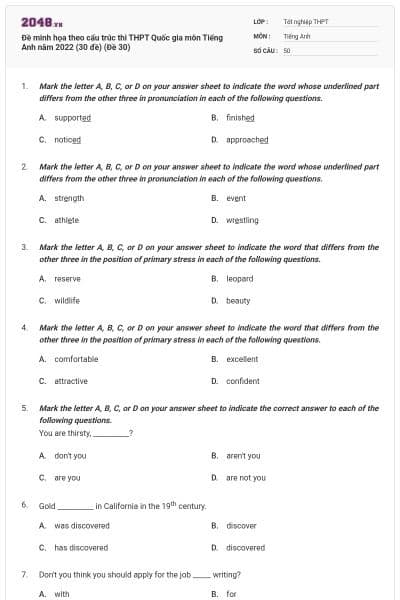
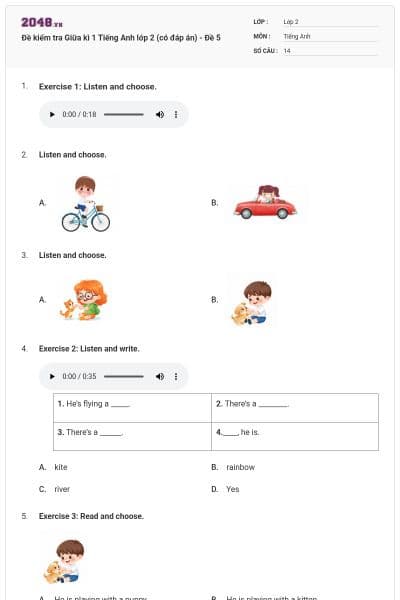
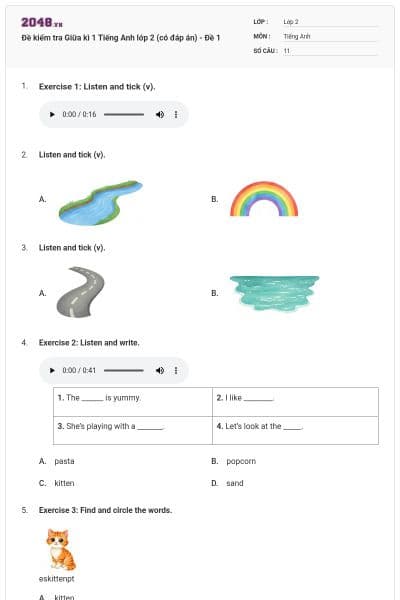
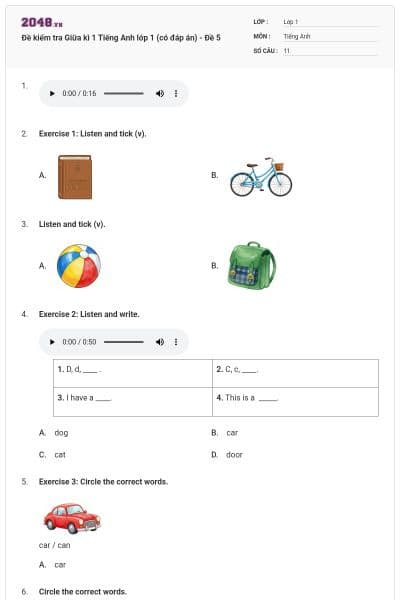
adolescence
multicultural
metropolita
limestone
Đáp án D
bamboo
coffee
career
chinese
Đáp án B
bilingual
dialect
simmer
pile-up
Đáp án C
attraction
exhibition
multinational
question
Đáp án D
whom
which
who
whose
Đáp án D
do you
do we
will you
won't you
Đáp án C
I came there last night
I came there by train
The train is so crowded
Is it far from there?
Đáp án B
take off
put on
get off
take on
Đáp án A
at
on
in
by
Đáp án D

Học thông minh hơn mỗi ngày
Xem toàn bộ 40 câu hỏi và nhiều hơn nữa với tài khoản miễn phí
bought
didn't buy
would buy
wouldn’t buy
Đáp án: D
Giải thích:
Kiến thức: Câu điều kiện
Cấu trúc câu điều kiện loại 2:
Dùng để diễn tả tình huống giả định không có thật ở hiện tại hoặc tương lai.
Cấu trúc:
If + S + V (quá khứ đơn), S + would/could/might + V (nguyên mẫu)
Động từ "to be" luôn dùng "were" cho tất cả các chủ ngữ.
Chọn D.
Dịch: Nếu tôi là bạn, tôi sẽ không mua chiếc áo khoác đó. Nó quá đắt.
putting
puting
to put
Đáp án A
has worked
was working
had worked
works
Đáp án C
moulded
cast
carved
knitted
Đáp án B
Congratulations
Yes, I’d love to
That’s a good idea
It’s nice of you to say so
Đáp án: C
Giải thích:
Dịch:
- “Tôi nghĩ chúng ta nên sử dụng ít giấy hơn để có thể cứu cây trong rừng.”
- “________.”
A. Xin chúc mừng
B. Vâng, tôi rất muốn
C. Đó là một ý kiến hay
D. Thật tốt khi bạn nói vậy
Dựa vào nghĩa câu, chọn C.
authentic
forger
faulty
original
Đáp án A
wet
dry
windy
hot
Đáp án A
turned off
put off
sold off
taken off
Đáp án B
is in good condition
remains for good
stands in life
remains in effect
Đáp án D
long
length
wide
will
Đáp án B
Railway
Road
Route
Way
Đáp án A
seriously
importantly
serious
very
Đáp án A
recalled
known
considered
renamed
Đáp án D
buyers
visitors
passengers
attendants
Đáp án C
Teachers from learning centres will give them help through live video conferencing.
They will meet their teachers in person for help with problems with the subject.
They will telephone the teachers who are staying at the school to seek their help.
Schools will organise a live video conference for teachers to help students with problems.
Đáp án A
learn all subjects
play with their friends
use computers
learn social skills
Đáp án D
providing students with knowledge
guiding students to learn computers
helping students with group projects
organising live video conferences
Đáp án C
going to school every day
taking online classes
working in international businesses
doing volunteer work
Đáp án D
Kids won’t have to go to school in the future.
Computers will change education in the future.
All classes will be taught online in the future.
Teachers will help students from home in the future.
Đáp án B
country
significant
since
came
Đáp án B
has
sense of time
makes
laugh
Đáp án B
didn't buy
bought
had bought
hadn't bought
Đáp án D
more than they used to be
as many as they used to
as much as they used to
more than they do now
Đáp án C
We didn’t arrive enough early to see the first film
We didn’t arrive early enough to see the first film
We didn’t arrive late enough to see the first film
We didn’t arrive too early to see the first film
Đáp án: B
Giải thích:
Kiến thức: Cấu trúc "too…to" và "not…enough to"
too + adj + to do sth ↔ not + adj + enough + to do sth (cùng diễn tả một điều gì đó không thể xảy ra vì mức độ không phù hợp).
Xét các đáp án:
A. We didn’t arrive enough early → Sai ngữ pháp (trạng từ "early" phải đứng trước "enough").
B. We didn’t arrive early enough → Đúng cấu trúc và đúng nghĩa.
C. We didn’t arrive late enough → Sai nghĩa hoàn toàn.
D. We didn’t arrive too early → Sai nghĩa (diễn tả đến sớm quá, không phù hợp ngữ cảnh).
Dựa vào nghĩa, chọn B.
Dịch: Chúng tôi đã không đến đủ sớm để xem bộ phim đầu tiên.
Peter apologized to breaking the glass
Peter apologized for breaking the glass
Peter apologized on breaking the glass
Peter apologized with breaking the glass
Đáp án: B
Giải thích:
apologize for (doing) something: xin lỗi vì điều gì
Dịch: “Tôi xin lỗi vì đã làm vỡ chiếc ly,” Peter nói.
→ Peter xin lỗi vì đã làm vỡ chiếc ly.
If he hadn’t save me, I would have been downing
If he had saved me, I would have been downing
If he hadn’t saved me, I would have been downing
If he hadn’t saved me, I wouldn't have been downing
Đáp án C
Nobody is cleverer than Sally in the class
Nobody is more cleverer than Sally in the class
Nobody is cleverer as Sally in the class
Nobody is cleverest than Sally in the class
Đáp án A
This is the more romantic story I have ever read
This is the romantic story I have ever read
This is the most romantic story I have never read
This is the most romantic story I have ever read
Đáp án D
The car is too expensive for me to buy
The car is so expensive for me to buy
The car is too expensive for me to buy it.
The car is too expensive for I to buy.
Đáp án: A
Giải thích:
S + V + too + adj/adv (+ for somebody) + to do something: cái gì đó quá… (cho ai) làm gì
= S + V + so + adj/adv + that + S + V
Loại B vì sai cấu trúc.
Loại C vì thừa “it” ở cuối câu.
Loại D vì sau “for” không dùng “I” (“I” chỉ đứng làm chủ ngữ)
Đáp án A đúng nghĩa và ngữ pháp.
Dịch: Chúng tôi không đủ khả năng mua chiếc xe đó.
→ Chiếc xe này quá đắt để tôi có thể mua.
He was made study hard for the exams
He made to study hard for the exams
He was made to study hard for the exams
He was made to studying hard for the exams
Đáp án C
We have been cooked for the party for four hours
We have been cooking for the party since four hours
We have cooking for the party for four hours
We have been cooking for the party for four hours
Đáp án D
Bạn có thích hoạt động này không?
Hãy lưu hoặc chia sẻ nội dung này đến mọi người.
Gợi ý cho bạn

Ý tưởng của bạn, bài học của bạn
Tự thiết kế đề thi, bài giảng hoặc flashcard theo cách riêng.