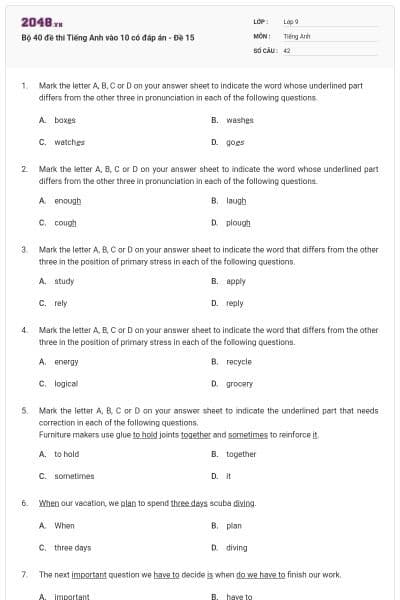
Bộ 40 đề thi Tiếng Anh vào 10 có đáp án - Đề 15
40 câu hỏi
boxes
washes
watches
goes
Đáp án D
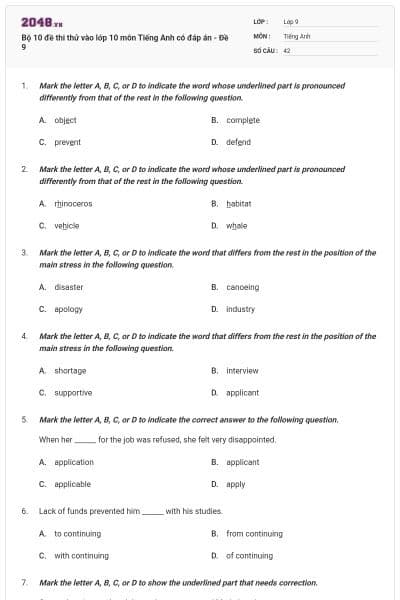
enough
laugh
cough
plough
Đáp án D
study
apply
rely
reply
Đáp án A
energy
recycle
logical
grocery
Đáp án B
to hold
together
sometimes
it
Đáp án D
When
plan
three days
diving
Đáp án A
important
have to
is
do we have to
Đáp án D
miss
take
catch
go
Đáp án C
on
in
by
at
Đáp án A


Học thông minh hơn mỗi ngày
Xem toàn bộ 40 câu hỏi và nhiều hơn nữa với tài khoản miễn phí
in mind
in heart
of mind
by heart
Đáp án D
even
also
too
so
Đáp án C
because
and
so
but
Đáp án C
look for
look up
look into
look after
Đáp án B
are
is
were
been
Đáp án B
enjoy
enjoyable
enjoyment
enjoyably
Đáp án B
lookers
watchers
viewers
seers
Đáp án C
shall we
will we
do we
should we
Đáp án A
solve
solved
solving
to solve
Đáp án B
No, you can’t
All right
You’re welcome
You needn’t do that
Đáp án B
I think so
Yes, I could
I’m afraid not
I’m afraid so
Đáp án C
put on
went off
got out
kept up
Đáp án B
satisfied
encouraged
pleased
disappointed
Đáp án D
Neglecting
Overlooking
Watching
Noticing
Đáp án D
punish
reward
congratulate
pray
Đáp án B
Was born
Born
Is born
Be born
Đáp án B
pen name
surname
name
real name
Đáp án A
where
who
whose
which
Đáp án D
ships
trains
boats
planes
Đáp án C
Benefits of kids' TV shows
Effects of television on kids
Why kids love TV
Why kids shouldn't watch TV
Đáp án B
cause weight problems in children
cause children to be more famous
cause children to get better grades
cause students to study more
Đáp án A
programs
experts
kids
problems
Đáp án C
TV is always bad for children.
TV is only good for entertainment.
Kids should watch only educational shows.
Television has some benefits along with problems.
Đáp án D
This film is as interesting as that one.
That film is not as interesting as this one.
This film isn’t as interesting as that one.
That film is as interesting as this one.
Đáp án B
Mary said that she doesn’t know what Fred is doing.
Mary said that she didn’t know what Fred is doing.
Mary said that she doesn’t know what Fred was doing.
Mary said that she didn’t know what Fred was doing.
Đáp án D
Unless he hadn’t been wearing a seat-belt, he wouldn’t have been injured.
If he had been wearing a seat-belt, he wouldn’t have been injured.
If he wasn’t wearing a seat-belt, he would have been injured.
Were it not for a seat-belt, he wouldn’t have been injured.
Đáp án B
I wish he wasn’t a liar.
I regret that he is a liar.
I wish I had known that he was a liar.
I regret to beileve him and what he said.
Đáp án C
Nam, who studied well,won the scholarship.
Nam, that studied well,won the scholarship.
Nam who studied well won the scholarship.
Nam won the scholarship,so he studied well.
Đáp án: A
Giải thích:
Kiến thức: Mệnh đề quan hệ
Đây là dạng câu phức có mệnh đề quan hệ, dùng để giải thích lý do Nam giành được học bổng là vì học giỏi.
Câu gốc: Nam won the scholarship; he studied well.
→ Ta nối hai mệnh đề bằng mệnh đề quan hệ:
Nam, who studied well, won the scholarship.
Trong đó:
who studied well là mệnh đề quan hệ giải thích thêm, nên phải có dấu phẩy
who thay thế cho Nam (chủ ngữ người) → đúng
Cấu trúc này ngụ ý: Vì học tốt, nên Nam đã đạt được học bổng.
Dựa vào cấu trúc mệnh đề quan hệ, chọn A.
Dịch: Nam giành được học bổng, anh ấy học rất giỏi.
→ Nam, người đã học giỏi, đã giành được học bổng.
A new bridge across the river have been built.
A new bridge has built across the river.
A bridge has been built new across the river.
A new bridge has been built across the river.
Đáp án D
He worked as an engineer 5 years ago.
He had worked as an engineer for 5 years.
He didn't work as an engineer any more.
He has worked as an engineer for 5 years.
Đáp án D
The bank opened at nine and the department store at ten.
The bank closed at nine and the department store at ten.
The bank opened at nine,and the department store closed at ten.
The bank closed at nine,and the department store opened at ten.
Đáp án B
Bạn có thích hoạt động này không?
Hãy lưu hoặc chia sẻ nội dung này đến mọi người.
Gợi ý cho bạn

Ý tưởng của bạn, bài học của bạn
Tự thiết kế đề thi, bài giảng hoặc flashcard theo cách riêng.