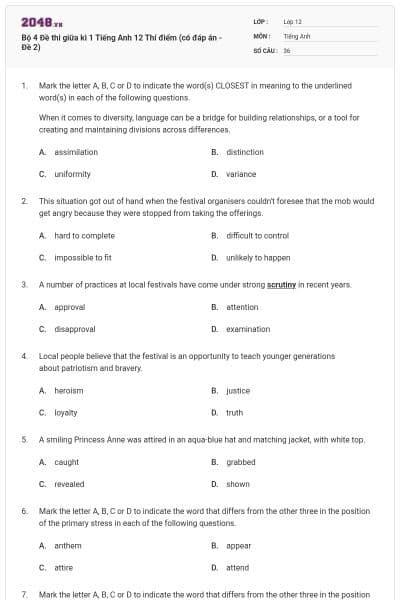
Bộ 4 Đề thi giữa kì 1 Tiếng Anh 12 Thí điểm (có đáp án - Đề 2)
35 câu hỏi
assimilation
distinction
uniformity
variance
Đáp án D
Giải thích
Diversity (n): sự đa dạng
hard to complete
difficult to control
impossible to fit
unlikely to happen
Đáp án B
Giải thích
Out of hand: Không kiểm soát được
= difficult to control
approval
attention
disapproval
examination
Đáp án D
Giải thích:
A. approval (n): sự tán thành
B. attention (n): sự chú ý
C. disapproval (n): sự không đồng tình
D. examination (n): sự khám xét kỹ, sự xem xét kỹ
→ scrutiny (n): sự xem xét, giám sát kỹ lưỡng, chặt chẽ = examination
Dịch: Nhiều tập tục tại các lễ hội địa phương đã được giám sát chặt chẽ trong những năm gần đây.
heroism
justice
loyalty
truth
Đáp án C
Patriotism (n): Lòng yêu nước
caught
grabbed
revealed
shown
Đáp án B
anthem
appear
attire
attend
Đáp án A
unify
unique
uniqueness
unite
Đáp án A
assimilate
diagnose
festival
scenery
Đáp án A
diversity
endanger
geography
opposite
Đáp án D

Học thông minh hơn mỗi ngày
Xem toàn bộ 35 câu hỏi và nhiều hơn nữa với tài khoản miễn phí
circumstance
considerate
community
identity
Đáp án A
has you been knowing
has you know
have you been knowing
have you known
Đáp án D
has Charles been visiting
has Charles visited
have Charles been visiting
have Charles visited
Đáp án B
has been learning
has been learnt
has learnt
have been learning
Đáp án: A
Giải thích:
Kiến thức: Thì của động từ
Chủ ngữ “She” là ngôi thứ ba số ít, loại D.
Xét về nghĩa câu, cần dùng dạng chủ động, loại B.
“for hours”: hàng giờ đồng hồ → câu nhấn mạnh vào sự tiếp diễn của hành động, kết hợp với mệnh đề sau “but she still doesn’t remember all of them” thể hiện sự việc kéo dài liên tục đến thời điểm hiện tại. Do đó chọn thì hiện tại hoàn thành tiếp diễn. Chọn A.
Cấu trúc thì hiện tại hoàn thành tiếp diễn (diễn tả một hành động bắt đầu trong quá khứ, kéo dài và tiếp diễn tới hiện tại): have/has been V-ing
Dịch: Cô ấy đã học tiếng Pháp hàng giờ, nhưng cô ấy vẫn không nhớ hết chúng.
has never smoked
have never smoked
has never been smoking
have never been smoking
Đáp án A
has been burning
has burnt
has burned
have burning
Đáp án: A
Giải thích:
Kiến thức: Thì của động từ
Xét ngữ cảnh, thấy câu diễn đạt một hành động đã và đang xảy ra, nhấn mạnh vào tính tiếp diễn của hành động, ta dùng thì hiện tại hoàn thành tiếp diễn.
Dịch: Ôi trời, đèn đã sáng suốt đêm rồi.
hasn't seen
haven't seen
haven't been seeing
haven't been see
Đáp án B
has been making
have been making
have been made
have made
Đáp án D
Have you ever been hearing
Have ever you been hearing
Have you ever heard
Have you ever heared
Đáp án C
Has you ran?
Have you been runned?
Have you ran?
Have you been running?
Đáp án D
has shining
has shined
has shone
has been shining
Đáp án D
How
Which
Why
What
Đáp án D
institution
foundation
organization
principle
Đáp án B
relate
relating
related
to relate
Đáp án A
in
for
of
to
Đáp án B
especial
special
specific
typical
Đáp án C
find
look
search
seek
Đáp án C
by which
how
when
where
Đáp án D
long
much
soon
well
Đáp án D
any longer
any more
no longer
no more
Đáp án C
at once
once
one time
for once
Đáp án B
goes
flies
passes
walks
Đáp án A
pronouncing
pronounce
pronounced
been pronouncing
Đáp án C
Linguists find hard to draw the line between languages and dialects.
Linguists find it hard drawing the line between languages and dialects.
Linguists find it hard to draw the line between languages and dialects.
Linguists find it is hard to draw the line between languages and dialects
Đáp án C
Giải thích
Find it adj to Vnt: Cảm thấy làm gì như thế nào
Never before cultural changes have been as accelerated as they are now during the globalization.
Never before cultural have changes been as accelerated as they are now during the globalization.
Never before have been cultural changes as accelerated as they are now during the globalization.
Never before have cultural changes been as accelerated as they are now during the globalization.
Đáp án D
Many immigrants do not want their children to speak dominant language as worse as they did.
Many immigrants want their children to speak dominant language better than they did.
Many immigrants want their children to speak dominant language as well as they did.
Many immigrants want to speak dominant language as well as their children can
Đáp án B
Bạn có thích hoạt động này không?
Hãy lưu hoặc chia sẻ nội dung này đến mọi người.
Gợi ý cho bạn

Ý tưởng của bạn, bài học của bạn
Tự thiết kế đề thi, bài giảng hoặc flashcard theo cách riêng.