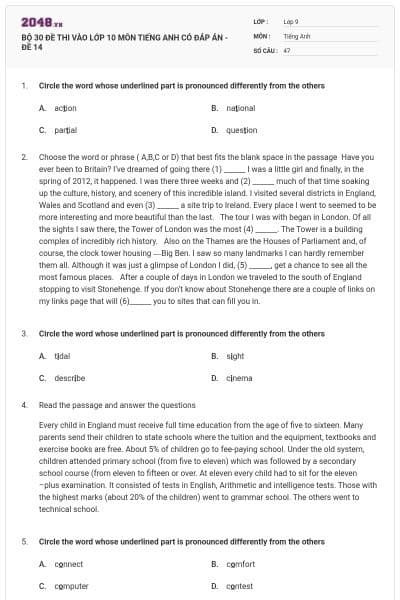
BỘ 30 ĐỀ THI VÀO LỚP 10 MÔN TIẾNG ANH CÓ ĐÁP ÁN - ĐỀ 14
45 câu hỏi
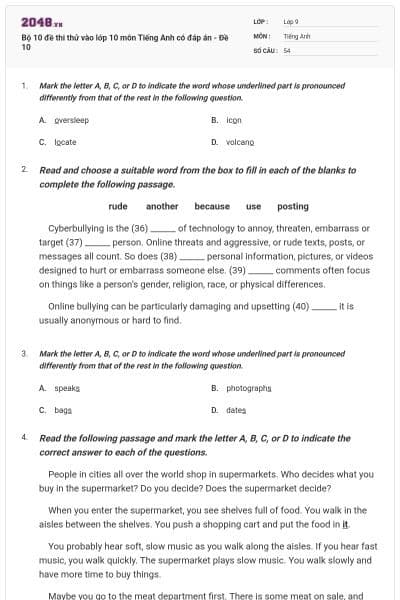
action
national
partial
question
ĐÁP ÁN C
tidal
sight
describe
cinema
ĐÁP ÁN D
connect
comfort
computer
contest
ĐÁP ÁN A
cough
though
rough
tough
ĐÁP ÁN A
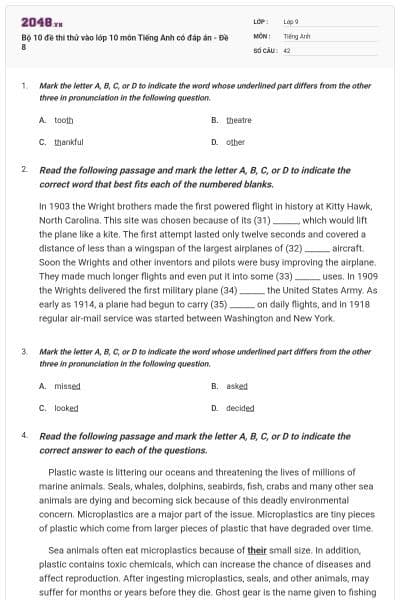
pleased
erased
increased
amused
ĐÁP ÁN B
Yes, that‘s fine
No, I don‘t want to go
Wait a minute
Sounds interesting
ĐÁP ÁN A
finish
destroy
provide
defeat
ĐÁP ÁN B
attendance
intention
convention
attention
ĐÁP ÁN D
sense
kind
means
form
ĐÁP ÁN A
No, thanks. I‘m fine.
Yes, that‘s kind of
Yes, sure
Yes, thank you
ĐÁP ÁN C
speak
speaking
to speak
for speaking
ĐÁP ÁN B
pair
bunch
bucket
tube
ĐÁP ÁN C
Will
Shall
Do
Should
ĐÁP ÁN A
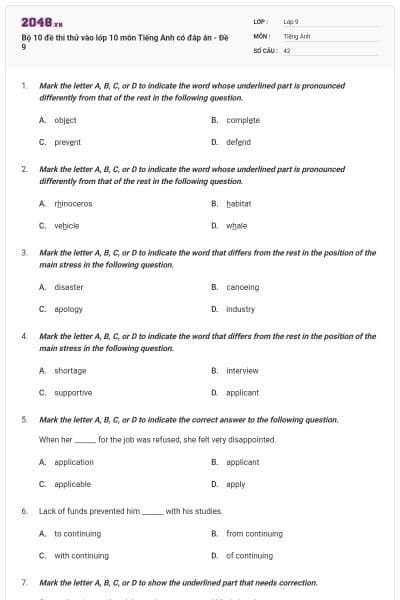
make
makes
making
to make
Đáp án: D
Giải thích:
Rút gọn mệnh đề quan hệ khi có số thứ tự (first, second, last,…), dùng dạng to V.
Dịch: Người chiến thắng là người tạo ra được lửa đầu tiên.
who
whom
which
whose
ĐÁP ÁN A
have (you) been
playing
The guests (arrive) while I (still / cook).
arrived/was still cooking
The rice-cooking festival (hold) every two years.
is held
climbed
Two miles (be) enough for her to go jogging every morning.
is
to be admitted
for
while
since
because
ĐÁP ÁN C
spent
took
did
used
ĐÁP ÁN A
did
got
spent
made
ĐÁP ÁN D
interesting
interested
interest
interestingly
ĐÁP ÁN A
at first
at all
at least
at that
ĐÁP ÁN C
reach
take
make
send
ĐÁP ÁN B
Read the passage and answer the questions
Every child in England must receive full time education from the age of five to sixteen. Many parents send their children to state schools where the tuition and the equipment, textbooks and exercise books are free. About 5% of children go to fee-paying school. Under the old system, children attended primary school (from five to eleven) which was followed by a secondary school course (from eleven to fifteen or over. At eleven every child had to sit for the eleven –plus examination. It consisted of tests in English, Arithmetic and intelligence tests. Those with the highest marks (about 20% of the children) went to grammar school. The others went to technical school.
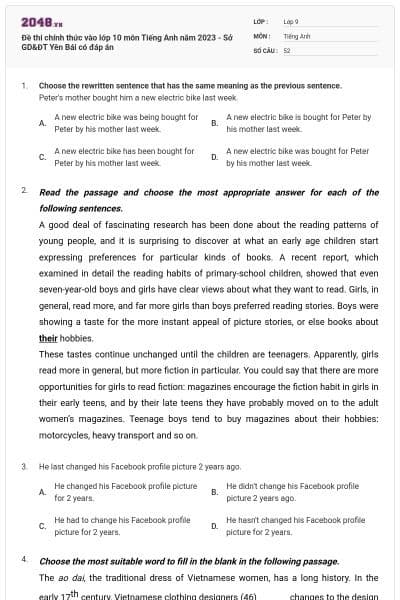
I sent my friend a letter in London last week.
A letter _____________________________________________.
I last saw him when I was a student.
I haven‘t _________________________________________________.
Đáp án: I haven’t seen him since I was a student.
Giải thích:
Kiến thức: Viết lại câu thì quá khứ đơn – thì hiện tại hoàn thành
Cấu trúc thì hiện tại hoàn thành: have/has VpII
since + mốc thời gian: kể từ khi nào
for + khoảng thời gian: đã được bao lâu
Dịch: Lần cuối tôi gặp anh ấy là khi tôi còn là sinh viên.
→ Tôi đã không gặp anh ấy kể từ khi tôi còn là sinh viên.
―Don‘t forget to bring your passports with you when you go abroad.
She reminded ______________________________________________.She reminded me to bring my passports with me when I went abroad.
Smoking is not allowed in the ward.
Would you __________________________________________________?Would you mind not smoking in the ward?
He failed the exam because of his laziness.
Because he__________________________________________________.Instead / reuse / plastic bags / we / use / cloth bags.