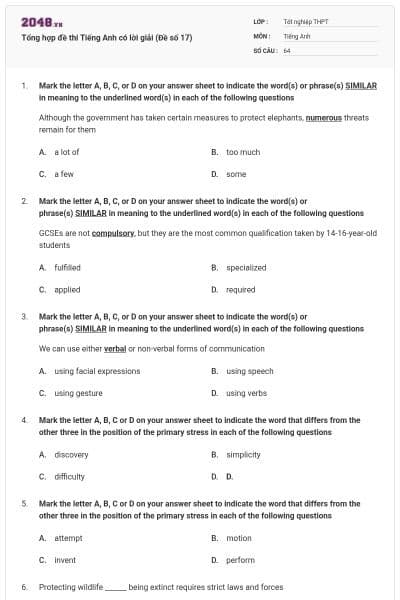
Tổng hợp đề thi Tiếng Anh có lời giải (Đề số 17)
64 câu hỏi
a lot of
too much
a few
some
Đáp án : A
Numerous = a lot of = nhiều
fulfilled
specialized
applied
required
Đáp án : D
Compulsory = required = mang tính bắt buộc, bị bắt buộc
using facial expressions
using speech
using gesture
using verbs
Đáp án : B
Verbal = using speech = bằng lời, sử dụng lời nói
discovery
simplicity
difficulty
Đáp án : C
Câu C trọng âm từ rơi vào âm tiết thứ 1, các từ còn lại rơi vào âm tiết thứ 2
attempt
motion
invent
perform
Đáp án : B
Câu B trọng âm từ rơi vào âm tiết thứ 1, các từ còn lại rơi vào âm tiết thứ 2
from
at
on
over
Đáp án : A
Protect smb/smt from smb/smt = Bảo vệ ai/cái gì khỏi ai/cái gì
when
what
where
which
Đáp án : C
“several places” là cụm chỉ địa điểm nên đại từ quan hệ thay thế cho nó trong mệnh đề quan hệ phải là “where”
Have a good day
Thank you
Cheers
You are welcome
Đáp án : D
Peter cảm ơn Mary vì món quà, Mary đáp lại câu cảm ơn của Peter: “You are welcome.” => Không có gì.
“Have a good day.” => Chúc một ngày tốt lành
“Cheers” => Dùng khi cụng ly trong một bữa tiệc hay liên hoan
of his intelligence
his intelligence
he was intelligent
of he was intelligent
Đáp án : A
In spite of + danh từ/cụm danh từ = Despite + danh từ/cụm danh từ = Mặc dù cái gì

Học thông minh hơn mỗi ngày
Xem toàn bộ 64 câu hỏi và nhiều hơn nữa với tài khoản miễn phí
held
paid
handed
cut
Đáp án : D
To cut off (power,supply,…) = Ngắt, ngừng cung cấp
The books more / the knowledge more
The most books / the most knowledge
The more books / the more knowledge
More and more books / more and more knowledge
Đáp án : C
Cấu trúc “càng…, càng…” gồm 2 so sánh hơn (The more/The adjective-er…, the more/the adjective-er…
difference is
is a difference
difference
difference that
Đáp án : C
Động từ chính trong câu là “lies” nên chỗ cần điền chỉ cần 1 danh từ => difference.
“the difference between smt and smt” = sự khác biệt giữa cái gì và cái gì
damaged
grown
declined
estimated
Đáp án : D
To estimate = ước lượng, ước tính, dự đoán
It is estimated that… = Người ta ước tính rằng…
calling
getting
laying
looking
Đáp án : B
“How are you getting on with your work?” = Công việc dạo này thế nào?
To get on with smt => để nói về cách ai đó làm việc với cái gì
thoughtless
thinking
thoughtful
thought
Đáp án : C
Thoughtful = suy nghĩ thấu đáo, chu đáo >< thoughtless = it bận tâm suy nghĩ, thiếu chu đáo
satisfaction
Information
qualifications
requirements
Đáp án : D
Meet the requirements = đạt được những yêu cầu, thỏa mãn được những điều kiện
slow and clearly
slow and clear
slowly and clear
slowly and clearly
Đáp án : D
“speak” là động từ thường, để bổ ngữ cho nó cần trạng từ => slowly and clearly
that he realized
that he didn’t realize
did he realize
didn’t he realize
Đáp án : C
Cấu trúc “Not until…” => mệnh đề sau phải đảo ngữ
Không chọn câu D vì nghĩa phủ định đã được thể hiện ở cụm “not until” nên mệnh đề đó phải là khẳng định => did he realize
needn't
should
may
ought to
Đáp án: A
Giải thích:
Xét các đáp án:
Kiến thức: Động từ khuyết thiếu
A. needn't: không cần
B. should: nên
C. may: có thể
D. ought to: nên
Dựa vào nghĩa, chọn A.
Dịch: Anh không cần đi ra cửa hàng đâu. Em đã mua sữa rồi.
Science
Fiction
Reference
Dictionary
Đáp án : B
Fiction = Viễn tưởng (sách hay truyện về những người và sự kiện tưởng tượng, không phải sách về người và sự kiện thật)
Reference = sách tham khảo
Science = khoa học, sách khoa học
Dictionary = từ điển
spoke
to speak
speaking
speak
Đáp án : C
Practice + Ving = luyện tập làm gì
I didn’t come home yesterday
I used to write home once a week
My hometown is a coastal province
Oh, I miss my hometown so much
Đáp án : B
“How often” là câu hỏi về tần suất của một hoạt động
“How often did you write home?” = Bao lâu thì bạn viết thư về nhà?
“I used to write home once a week?” = Tôi thường viết thư về nhà một lần một tuần
in / with
about / at
for / from
for / on
Đáp án : A
Interest in smt = sự hứng thú về cái gì
Help smb with smt = giúp ai cái gì
arrangement
appointment
impression
decision
Đáp án : C
To make an impression on smt = gây ấn tượng cho cái gì
behaving cleverly
behaving nice
behaving improperly
good behavior
Đáp án : C
Well-behaved = ngoan ngoãn, cư xử tốt, đúng mực >< behaving improperly = cư xử không tốt
Being courteous
Being cheerful
Being efficient
Being late
Đáp án : D
Punctuality = sự đúng giờ >< being late = muộn
make
do
something
useful
Đáp án : A
Can’t stand + Ving = không thể chịu đựng việc làm gì => making
to some people
a
but others
reading
Đáp án : C
Although + mệnh đề, mệnh đề => đã dùng “Although” thì mệnh đề sau không dùng “but”
Among
program
also
supports
Đáp án : B
“many other…” là số từ chỉ số nhiều nên danh từ theo sau phải là số nhiều => programs
In 2030
we will provide
needs
over 8 billion
Đáp án : B
Câu hỏi trong thì tương lai đơn thì “will” phải được đảo lên trước chủ ngữ => will we provide
also
enough
bicycle riders
whom
Đáp án : D
“whom” là đại từ quan hệ chỉ thay thế cho tân ngữ trong mệnh đề quan hệ; để thay thế cho “others” (trong mệnh đề quan hệ đóng vai trò chủ ngữ) phải dùng đại từ quan hệ “who
heavy
head
weather
easy
Đáp án : D
Câu D “ea” được phát âm là /i:/; các từ còn lại phát âm là /e/
buses
houses
watches
gestures
Đáp án : D
Câu D “es” được phát âm là /z/ ; các từ còn lại phát âm là /iz/
decline
hide
ivory
continent
Đáp án : D
Câu D “i” được phát âm là /ɪ/; các từ còn lại phát âm là /aɪ/
why
when
where
that
Đáp án : C
“if you don’t know where the organization is located” = nếu bạn không biết tổ chức đó ở đâu
To be located in/on/at somewhere = nằm ở đâu, được đặt tại đâu => thay thế cho “in/on/at somewhere” (khi chưa biết) phải là từ để hỏi “where”
with
in
on
for
Đáp án : B
In advance = trước
expected
unexpected
unexpectedly
expectedly
Đáp án : B
Unexpected events = những sự kiện không mong muốn, không dự đoán trước được
you
your
yours
yourself
Đáp án : D
“Give yourself the time to read your resume one more time,..” = Cho chính bạn thời gian đọc lại hồ sơ cá nhân của bạn một lần nữa => nhấn mạnh vào chính bản thân bạn => yourself
pleasant
happy
disappointed
excited
Đáp án : A
Pleasant = dễ dàng, thoải mái
attentions
attendances
impressions
pressures
Đáp án : C
“first impressions” = những ấn tượng đầu tiên
Attention = sự chú ý
Attendance = sự tham gia, tham dự
Pressure = áp lực
avoid
suggest
enjoy
mind
Đáp án : A
Avoid + Ving = tránh làm gì
too
also
either
so
Đáp án : B
“It is also important that…” = Cũng rất quan trọng rằng…
a
an
the
no article
Đáp án : B
Tính từ “informal” bắt đầu bằng nguyên âm “i” nên mạo từ cần dùng là “an”
as if
why
unless
if
Đáp án : D
“Regardless, you can never be overdressed if you are wearing a tailored suit.” = Bất kể thế nào, bạn sẽ không bao giờ là quá chải chuốt nếu bạn đang mặc một bộ com lê đặt may
Emotions and colors are closely related to each other.
Colorful clothes can change your mood.
Colors can help you become healthy.
Colors are one of the most exciting
Đáp án : A
Ý chính của đoạn văn tập trung nhấn mạnh mối quan hệ mật thiết giữa cảm xúc và màu sắc
Your appetite
Your friend's feelings
Your mood
Your need for thrills
Đáp án : C
Đoạn 1: “Color directly affects your emotions.” => màu sắc ảnh hưởng trực tiếp đến cảm xúc, tâm trạng (your mood)
Anyone
The people around you are more influenced
You are more influenced
Your family
Đáp án : C
Câu đầu đoạn 2: “The colors that you wear affect you much more than they affect the people around you.” => Màu mà bạn mặc ảnh hưởng tới bạn nhiều hơn hẳn nó ảnh hưởng tới mọi người xung quanh bạn.
They are all related to health
They are all forms of motion
They all affect the cells of the body
None is correct
Đáp án : D
Câu đầu đoạn 3: “Color, sound, and emotions are all vibrations.” => Màu sắc, âm thanh và tâm trạng đều là sự dao dộng
Câu B sai vì chúng không phải đều là “forms of motion” (dạng của chuyển động), chúng là những thứ khác nhau nhưng giống nhau ở chỗ đều chứa sự dao động, chuyển động.
Ignoring your emotions
Exposing yourself to bright colors
Being open to your emotions
Wearing the color black
Đáp án : A
Câu cuối đoạn: “the fastest way to create disease is to inhibit your emotions.” => Cách nhanh nhất để mắc bệnh là giữ kín cảm xúc của bạn (ignoring your emotions)
closely
obviously
simply
clearly
Đáp án : A
Intimately = closely = một cách mật thiết, gắn bó
emotions
colors
people
none of these
Đáp án : B
Câu đầu đoạn 2: “The colors that you wear affect you much more than they affect the people around you.” => Màu mà bạn mặc ảnh hưởng tới bạn nhiều hơn hẳn nó ảnh hưởng tới mọi người xung quanh bạn. (nó = màu mà bạn mặc) => colors
Because they both affect how we feel
To show how color can affect energy levels in the body
To prove the relationship between emotions and color
Because vibrations make you healthy
Đáp án : B
Đoạn 3: “Color, sound, and emotions are all vibrations. Emotions are literally energy in motion; they are meant to move and flow. This is the reason that real feelings are the fastest way to get your energy in motion.” = Màu sắc, âm thanh và cảm xúc đều là sự dao động. Cảm xúc thực chất là năng lượng đang chuyển động; chúng chuyển động và chảy. Đây chính là lý do cảm xúc thật là cách tốt nhất để làm cho năng lượng của bạn chuyển động
=> Đề cập đến mối quan hệ giữa màu sắc và cảm xúc để cho thấy màu sắc có khả năng ảnh hưởng tới cảm xúc
bored with
covered with
lacking in
in need of
Đáp án : B
Saturated with = covered with = bị bao trùm bởi cái gì
To persuade the reader that colors can influence emotions and give a person more energy
To give an objective account of how colors affect emotions
To show that colors are important for a healthy life
To prove the relationship between color and emotion
Đáp án : A
Mục đích chính của bài viêt là thuyết phục người đọc rằng màu sắc có thể ảnh hưởng tới tâm trạng và cho người ta nhiều năng lượng hơn.
The New York Times publishes the best fiction by American writers
The New York Times became highly respected throughout the world
The New York Times broadcasts its news to TV stations via satellite
The New York Times lost its prestige after the Vietnam War
Đáp án : B
Ý chính của bài viết tập trung vào làm rõ New York Times đang trở nên có uy tín trên toàn thế giới
not the largest in the world
not the best in the world
the smallest in the world
the worst in the world
Đáp án : A
Câu cuối đoạn 1: “it has never been the largest newspaper in terms of circulation.” = Nó chưa bao giờ là tờ báo lớn nhất tính về lượng phát hành
Put in prison
In handcuffs
Without education
With self-control
Đáp án : D
Restrained = with self-control = được kiểm soát, có kiềm chế
Other newspapers were more colorful
Other newspapers had better reporters.
Other newspapers added a Sunday magazine
Other newspapers were better managed
Đáp án : A
Đoạn 2: “…in the late nineteenth century, it came into competition with more popular, colorful, if not lurid, newspapers in New York City.” = đến cuối thế kỷ 19, nó (New York Times) gặp phải sự cạnh tranh với những tờ báo phổ biến và nhiều màu sắc hơn, nếu không muốn nói là màu mè, ở thành phố New York
=> Dẫn đến sự giảm doanh thu của New York Times: “Despite price increases, the time was losing £1,000 a week when Adolph Simon Ochs bought it in 1896.”
Van Anda
Reporters
News of the day
International news
Đáp án : A
“Van Anda placed greater stress than ever on full reporting of the news of the day, and his reporters maintained and emphasized existing good coverage of international news.” = Van Anda nhấn mạnh hơn hết việc tường thuật toàn bộ tin tức trong ngày, và những tường thuật của anh ấy vẫn giữ và nhấn mạnh độ phủ sóng tốt của tin tức quốc tế hiện hành
made the best of
increased
reduced
made worse
Đáp án : B
Enhance = increase = cải thiện, gia tăng
emphasized good coverage of international news
added a Sunday magazine section
increased the number of lurid stories, even if they were not true
eliminated fiction from the paper
Đáp án : C
Câu A: “Van Anda placed greater stress than ever on full reporting of the news of the day, and his reporters maintained and emphasized existing good coverage of international news.”
Câu B và câu D: “The management of the paper decided to eliminate fiction from the paper, added a Sunday magazine section, and reduced the paper’s price back to a penny.”
decreased when it lowered its price to a penny
grew because Adolph Ochs bought it in 1896
increased because of its coverage of the Titanic’s sinking
decreased because it could not compete with other New York papers
Đáp án : C
Đoạn 3: “In April 1912, the paper took many risks to report every aspect of the sinking of the Titanic. This greatly enhanced its prestige…” => Vào tháng 4 – 1912, tờ báo đối mặt với nhiều nguy cơ khi tường thuật mọi khía cạnh của vụ đắm tàu Titanic. Điều này đã gia tăng đáng kể uy tín của nó…
The Times
“The pentagon Papers
The Report
The Constitution
Đáp án : A
Đoạn cuối: “In 1971, the Times was given a copy of the so-called “Pentagon Papers,” a secret government study of U.S. involvement in the Vietnam war. When it published the report, it became involved in several lawsuits. The U.S. Supreme Court found that the publication was protected by…” = Vào năm 1917, the Times đã được đưa một bản sao của cái được gọi là “Hồ sơ Lầu Năm góc”, một nghiên cứu chính phủ bí mật của sự can thiệp Mỹ vào chiến tranh Việt Nam. Khi nó (the Times) phát hành bản thảo, nó trở nên liên quan đến vài vụ kiện. Tòa án tối cao Mỹ cho rằng sự xuất bản đã được bảo vệ bởi… => publication chỉ sự xuất bản của The Times
protected by the Supreme Court
printed in the form of a Sunday magazine
shipped by train and air transport daily
transmitted by satellite to regional printing plants
Đáp án : D
Câu cuối đoạn: “…Arthur Ochs Sulzberger, introduced sweeping changes in the organization of the newspaper and its staff and brought out a national edition transmitted by satellite to regional printing plants.”
Bạn có thích hoạt động này không?
Hãy lưu hoặc chia sẻ nội dung này đến mọi người.
Gợi ý cho bạn

Ý tưởng của bạn, bài học của bạn
Tự thiết kế đề thi, bài giảng hoặc flashcard theo cách riêng.

Học liệu phổ biến Tốt nghiệp THPT
Tốt nghiệp THPT
Bài tập vừa sức, đúng lớp
Chọn nội dung phù hợp và tạo hoạt động cho lớp của bạn.