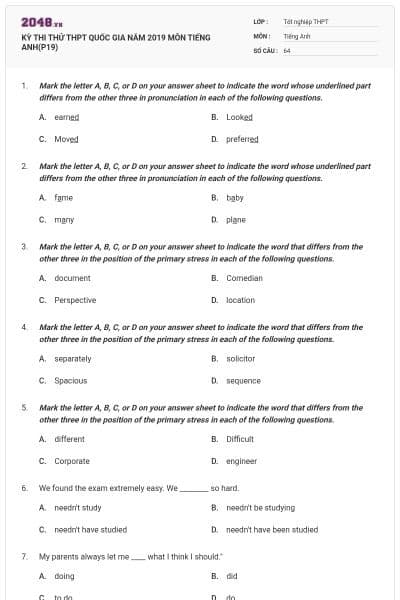
KỲ THI THỬ THPT QUỐC GIA NĂM 2019 MÔN TIẾNG ANH(P19)
64 câu hỏi
earned
Looked
Moved
preferred
B
A./d/ B./t/ C./d/ D./d/
fame
baby
many
plane
C
A./ei/ B./ei/ C./e/ D./ei/
document
Comedian
Perspective
location
A
Phần A trọng âm rơi vào âm tiết thứ nhất, còn lại là thứ 2
separately
solicitor
Spacious
sequence
B
Phần B trọng âm rơi vào âm tiết thứ 2, còn lại là thứ nhất
different
Difficult
Corporate
engineer
D
Phần D trọng âm rơi vào âm tiết thứ 3, còn lại là thứ nhất
needn't study
needn't be studying
needn't have studied
needn't have been studied
C
“need”: cần, “needn’t”: không cần, ở đây được dùng như động từ khuyết thiếu
“need/needn’t” + V nguyên thể
Nếu chỉ hành động trong quá khứ, “need/needn’t” + have + động từ phân từ II
doing
did
to do
do
D
Cấu trúc “let sb do st”: cho phép ai đó làm gì
cold and cold
the coldest and coldest
more and more cold
colder and colder
D
“adj+er and adj+er hoặc more and more + long-adj”: mang tính nhất mạnh, nghĩa là ngày càng….
It gets colder and colder: Trời càng ngày càng lạnh
That the woman was
The woman was
What the woman was
What was the woman
C
What the woman was saying was so important that….: Điều người phụ nữ ấy nói quan trọng đến nỗi…
Phía sau có to be was, vì thế ta cần một danh từ làm chủ ngữ, chủ ngữ ở đây là “what”

Học thông minh hơn mỗi ngày
Xem toàn bộ 64 câu hỏi và nhiều hơn nữa với tài khoản miễn phí
deep-seated
significant
Dependent
intellectual
Đáp án: A
Giải thích:
deep-seated (adj): ăn sâu, lâu đời
significant (adj): nổi bật
dependent (adj): phụ thuộc
intellectual (adj): thuộc về trí tuệ
→ A deep-seated problem, feeling, or belief is difficult to change because its causes have been there for a long time.
Dịch: Một vấn đề, cảm giác, hoặc niềm tin đã ăn sâu thì rất khó thay đổi bởi vì nguyên nhân của nó đã tồn tại từ lâu.
don't
shall
won't
will
B
Câu hỏi đuôi của “Let’s….” luôn là “shall we?”
has John gone out
John has gone out
had John gone out
have John gone out
C
Cấu trúc đảo ngữ với No sooner: “No sooner + had + S + động từ phân từ II+…+than+ mệnh đề quá khứ đơn”
how cold it was
how was it cold
how cold was it
how it was cold
A
Câu cảm thán với how: “how + adj + S + be”
weren't taking
hadn't taken
wouldn't take
didn't take
B
Câu điều kiện hỗn hợp giữa loại 3 và loại 2:
“If + mệnh đề quá khứ hoàn thành (loại 3), S + would/could…+ V+… (loại 2)”
Chỉ một hành động trong quá khứ có liên quan đến hiện tại
travelling
has travelled
to travel
travelled
C
Cụm “the first/second/third… one/person/…+ to do st”: ai/ cái gì là người đầu tiên/thứ 2…làm việc gì
civilize
civilization
Civility
civil
B
Ở đây ta cần một danh từ, vì phía trước có từ that
“civilization” (n): nền văn minh, sự văn minh
Disaster
Famine
Poverty
Flood.
B
“Famine” (n): nạn đói, số lượng lớn người có ít hoặc không có đồ ăn, và rất nhiều người trong số đó chết
Ø / the
the / Ø
a / the
the / the
Đáp án: B
Giải thích:
Kiến thức: Mạo từ
Vị trí đầu đi liền với số thứ tự, dùng mạo từ xác định “the”.
Vị trí thứ hai có số đếm + danh từ đếm được số nhiều, không cần dùng mạo từ.
Dịch: Tại SEA Games lần thứ 22, Việt Nam giành được 158 huy chương vàng.
broke in
broke into
broke down
broke away
C
“break down” trong ngữ cảnh này được mang nghĩa là suy sụp, sụp đổ (tinh thần, sức khoẻ)
damage
disruption
devastation
disturbance
C
“devastation”: sự tàn phá
“damage”: tổn thương, thiệt hại
“disruption”: sự phá vỡ, đập vỡ
“disturbance”: sự náo động
Ok, your time
Sure, go ahead, please
Yes, you’re welcome
Not now. Thanks anyway
D
- “Có gì tôi có thể giúp không, thưa ngài?”
- “Không phải bây giờ, dù sao cũng cảm ơn.”
At your service.
What can I do for you?
What’s the matter?
Just a minute, please.
D
- “Xin chào, tôi muốn đặt một phòng cho 2 đêm ngày 18 và 19.”
- “Xin ngài chờ một lát.”
inform
Information
Informative
informatively
C
Ở đây ta cần một tính từ vì phía trước có động từ to be và trạng từ really
“informative”: có nhiều thông tin bổ ích
had been studying
were studying
have been studying
are studying
Đáp án B
Dùng thì quá khứ tiếp diễn vì một hành động quá khứ chen vào 1 hành động đang xảy ra trong quá khứ
Dịch nghĩa: Tôi gặp cô ấy lần đầu tiên cách đây hai năm khi chúng tôi đang học tại Đại học Oxford.
treated
dedicated
helped
started
D
“initiate” = “start” hoặc “begin”: bắt đầu, khởi đầu
out of order
out of work
run out of
torn down
A
“not in working condition” = “out of order”: hỏng hóc, không hoạt động
TRánh nhầm lẫn với out of work: thất nghiệp, không việc làm
contagious
Powerful
Abundant
impure
B
“potent” = “powerful”: rất mạnh, hiệu quả
Much
like to
their
painted with
B
“much” -> “many”
Much dùng với danh từ không đếm được, children là danh từ đếm được, số nhiều (số ít là child) nên phải dùng many
Between
the
me
one
A
“Between” -> “Among”
Between là thể hiện sự so sánh giữa 2 sự vật, sự việc.
Nếu có nhiều sự vật, sự việc hơn thì phải dùng among
written
was translatin
into
by my sister
D
“was translating” -> “was translated”
Chủ ngữ là the letter – vật, nên câu phải dùng thì bị động
Some bacteria
extremely harmful
regular use
producing foods
Đáp án: C
Giải thích:
Ta dùng trạng từ để bổ sung nghĩa cho động từ.
Sửa: regular used → regularly used
Dịch: Một số vi khuẩn cực kì độc hại, nhưng một số thì được sử dụng thường xuyên trong việc chế biến thức ăn.
are
ways
mine
best goo
D
“best good” -> “best”
Trong câu cần một so sánh nhất, best chính là dạng so sánh nhất của good, vì thế không cần good nữa
optimist
feminist
hobbyist
activist
A
“pessimist”: người bi quan
Trái nghĩa là optimist: người lạc quan
put forward
look up
slow down
turn down
C
“speed up” (v): tăng tốc
Trái nghĩa là “slow down”: chậm lại
more
as
than
more than
C
Cụm “rather than”: hơn là, thay vì
the marriage between a man and woman represented the joining of two families, rather than the joining of two individuals: hôn nhân giữa nam và nữ biểu thị sự liên kết giữa 2 gia đình thay vì sự liên kết giữa 2 cá nhân
often called
was often called
is often called
has often called
B
Câu trước đang có sử dụng “in former days” – thì quá khứ, vì thế câu sau cũng dùng ở thì quá khứ.
Chủ ngữ là the event, nên câu sẽ chia ở dạng bị động.
Đáp án phù hợp là was often called
elaborate
Elaboration
elaborately
elaborateness
A
Phía trước dùng tính từ long, nên ở đây cũng phải dùng một tính từ
“elaborate” (adj): tỉ mỉ, công phu, chi tiết
predictions
situations
Evaluations
attentions
A
“predictions”: sự dự đoán trước
Lý do chọn từ này là vì phía sau có: about the couple's future life together. (về cuộc sống tương lai của cặp đôi khi ở cùng nhau)
in
for
on
from
A
“teens”: tuổi thanh thiếu niên
“teens” đi với giới từ in
ago
before
then
soon
B
“before”: trước khi
“before + doing st”: trước khi làm việc gì
participants
contests
examiners
competitors
A
“participants”: những người tham gia (cuộc lễ kết hôn)
If only
As though
As
Although
D
Although (mặc dù) + mệnh đề
Câu này thể hiện sự trái ngược giữa Hàn quốc và các nước phương Tây
ancient
old
traditional
antique
C
Phía trước có viết: “Koreans have kept several aspects of the traditional ceremony”
Vì thế ở đây tiếp tục sử dụng traditional
grip
catch
hold
keep
D
Cụm “ keep sb/st alive”: giữ cho ai/ cái gì còn sống/tồn tại
The information contained in pheromones
The mass migration of ants
How ants mark and follow a chemical trail
Different species of ants around the world
C
Topic phù hợp nhất cho đoạn văn là How ants mark and follow a chemical trail
Trong đó, đoạn 1 là giới thiệu về pheromone – thành phần tạo nên a chemical trail; đoạn 2 là cách kiến đánh dấu vết và đoạn cuối là cách chúng lần theo, đi theo dấu vết đó
look up
search for food
walk toward
revolve around
B
"forage" = “search for food”: đi săn, đi tìm kiếm thức ăn
incorrectly
rapidly
periodically
roughly
C
"intermittently" = “periodically”: một cách đứt quãng, từng giai đoạn
dead ant
message
Species
food trail
B
"the one" được thay thế cho message trong: “Unlike some other messages, such as the one arising from....”
To protect their trail from other species.
To reduce their sensitivity to some chemicals.
To attract different types of ants.
To indicate how far away the food is.
A
Thông tin ở câu đầu của đoạn số 2: “a food trail has to be kept secret from members of other species.”: dấu vết thức ăn phải được giữ bí mật với các thành viên của loài khác = A. To protect their trail from other species.
how little pheromone is needed to mark a trail
the different types of pheromones ants can produce
that certain ants can produce up to one milligram of pheromone
a type of ant that is common in many parts of the world
A
Thông tin ở câu cuối đoạn số 2: “Investigators working with the trail pheromone of the leafcutter ant Attatexana calculated that one milligram of this substance would suffice to lead a column of ants three times around Earth.” (...1 mg hợp chất này cũng đã đủ để dẫn đầu/làm đầu mối cho một toán kiến 3 lần quanh trái đất)
Tức là how little pheromone is needed to mark a trail: chỉ cần một lượng hợp chất nhỏ cũng đủ để đánh dấu vết
They sense the vapor through their antennae.
They avoid the vapor spaces by moving in a straight line.
They follow an ant who is familiar with the trail.
They concentrate on the smell of food.
A
Thông tin ở câu đầu đoạn 3: “the ant detects this signal with receptors in its antennae.”: Kiến phát hiện ra tín hiệu nhờ cơ quan thụ cảm ở trong râu = They sense the vapor through their antennae.
include
cover
select
provide
D
"furnish" = “provide”: cung ứng, cung cấp
falling
starting
swinging
depositing
C
"oscillating" = “swinging”: dao động, lắc lư
in the receptors of the ants
under the soil along the trail
in the source of food
just above the trail
D
Thông tin ở câu thứ 2 đoạn số 3: “A trail pheromone will evaporate to furnish the highest concentration of vapor right over the trail” = just above the trail: ngay phía trên dấu vết
How schools are changing to reflect the economy
Types of graduate degrees
Jobs on Wall Street
Changes in enrollment for MBA schools
D
Đoạn văn này tập trung hầu hết về Changes in enrollment for MBA schools (những thay đổi trong việc đăng ký trường quản trị kinh doanh)
Đoạn đầu tiên đã giới thiệu về MBA và số lượng giảm trong việc đăng kí vào những người đào tạo MBA
Đoạn thứ 2 giải thích tại sao có sự thay đổi này
20 years
100 years
10 years
50 years
A
“two decades”: 2 thập kỷ = “20 years”
Nurturing
success
Education
surplus
B
“prosperity” = “success”: sự thịnh vượng, thành công, phát đạt
Princeton
Stanford and Princeton
Stanford
Harvard
D
Thông tin ở câu số 2 đoạn đầu tiên: “Only Harvard’s MBA School has shown a substantial increase in enrollments in recent years.” Chỉ có trường MBA của Harvard có sự gia tăng đáng kể trong số lượng đăng ký học
reluctance of
movement toward
extraction from
drawback to
B
“trend of ” = “movement toward”: xu hướng, sự vận động về...
pursuing
seizing
avoiding
examining
A
“seeking” = “pursuing”: tìm kiếm, theo đuổi
seeking an MBA degree: tìm kiếm, theo đuổi một tấm bằng MBA
A shopping district
A major financial centre
A neighborhood in New York
A centre for international affairs
B
Thông tin ở đoạn cuối cùng: “an MBA degree does not guarantee a plush job on Wall Street or in other financial districts of major American cities.” (tấm bằng MBA không bảo đảm 1 công việc sang trọng ở Wall Street hay các quận tài chính khác của các thành phố lớn ở Mỹ) tức là Wall Street cũng là một thành phố/trung tâm tài chính lớn, chủ yếu ở Mỹ (A major financial centre)
Low salary and foreign competition
Declining population and economic prosperity
Fewer MBA schools and fewer entry-level jobs
Lack of necessity for an MBA and an economic recession
D
Thông tin ở những câu cuối đoạn 2:
- Students have asked the question, “Is an MBA degree really what I need to be best prepared for getting a good job?” ( tấm bằng MBA có thực sự cần thiết để đạt được công việc tốt?), tức là thiếu sự cần thiết của tấm bằng MBA (Lack of necessity for an MBA)
- The second major factor has been the cutting of American payrolls and the lower number of entry-level jobs being offered. (cắt giảm bảng lương và số lượng các công việc đòi hỏi trình độ cao giảm) : sự suy thoái về kinh tế (an economic recession)
A current trend affecting the nation’s business schools
Two decades of hard times for business schools
factors contributing to the decline in MBA students
The difference between Harvard, Princeton, and Stanford
A
Thông tin ở câu cuối đoạn 1: “the trend of lower enrollment rates is expected to continue.” = “A current trend affecting the nation’s business schools”
Đoạn 1 nói về 1 xu hướng có ảnh hưởng đến các trường ở Mỹ
plunging
starting
striving
evolving
C
“struggling” = “striving”: cố gắng, nỗ lực, chật vật
Bạn có thích hoạt động này không?
Hãy lưu hoặc chia sẻ nội dung này đến mọi người.
Gợi ý cho bạn

Ý tưởng của bạn, bài học của bạn
Tự thiết kế đề thi, bài giảng hoặc flashcard theo cách riêng.

Học liệu phổ biến Tốt nghiệp THPT
Tốt nghiệp THPT
Bài tập vừa sức, đúng lớp
Chọn nội dung phù hợp và tạo hoạt động cho lớp của bạn.