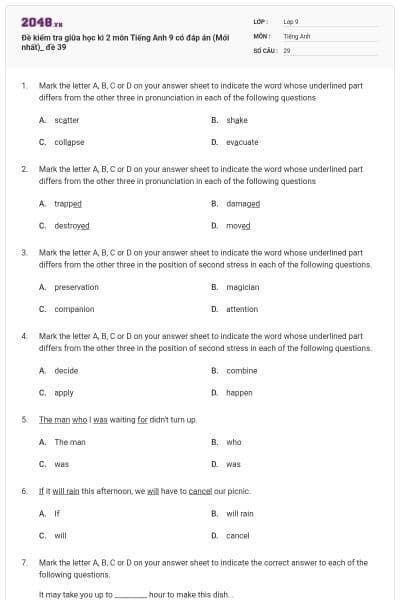
Đề kiểm tra giữa học kì 2 môn Tiếng Anh 9 có đáp án (Mới nhất)_ đề 39
28 câu hỏi
Mark the letter A, B, C or D on your answer sheet to indicate the word whose underlined part differs from the other three in pronunciation in each of the following questions
scatter
shake
collapse
evacuate
Đáp án đúng là: B
Giải thích: đáp án B phát âm là /eɪ/, các đáp án còn lại phát âm là /æ/
Mark the letter A, B, C or D on your answer sheet to indicate the word whose underlined part differs from the other three in pronunciation in each of the following questions
trapped
damaged
destroyed
moved
Đáp án đúng là: A
Giải thích: đáp án A phát âm là /t/, các đáp án còn lại phát âm là /d/
Mark the letter A, B, C or D on your answer sheet to indicate the word whose underlined part differs from the other three in the position of second stress in each of the following questions.
preservation
magician
companion
attention
Đáp án đúng là: A
Giải thích: đáp án A có trọng âm rơi vào âm tiết thứ 3, còn lại rơi vào âm tiết thứ 2
Mark the letter A, B, C or D on your answer sheet to indicate the word whose underlined part differs from the other three in the position of second stress in each of the following questions.
decide
combine
apply
happen
Đáp án đúng là: D
Giải thích: đáp án D có trọng âm rơi vào âm tiết thứ nhất, còn lại rơi vào âm tiết thứ 2
The man who I was waiting for didn't turn up.
The man
who
was
was
Đáp án đúng là: B -> whom
Giải thích: đại từ quan hệ đóng vai trò là tân ngữ nên cần dùng whom chứ không phải who
Dịch: Người đàn ông mà tôi đợi đã không xuất hiện.
If it will rain this afternoon, we will have to cancel our picnic.
If
will rain
will
cancel
Đáp án đúng là: B -> rains
Giải thích: Câu điều kiện loại 1, mệnh đề điều kiện cần chia ở thì hiện tại đơn.
Dịch: Nếu chiều nay trời mưa, chúng tôi sẽ phải hủy chuyến picnic.
Mark the letter A, B, C or D on your answer sheet to indicate the correct answer to each of the following questions.
It may take you up to _________ hour to make this dish. .
a
an
the
x
Đáp án đúng là: B
Giải thích: up to… đi với số từ ở phía sau. Hour có âm h câm nên đi với an chứ không phải a
Dịch: Có thể mất tới 1 tiếng để làm món này.
Do we have _________ money to buy a new carpet? This one is too old
a
an
the
any
Đáp án đúng là: D
Giải thích: Money là danh từ không đếm được, và đây là câu hỏi (có chút nào không), vì vậy chọn any
Dịch: Chúng ta còn chút tiền nào để mua thảm mới không? Cái này cũ quá rồi.
The bus _________ before I reached the bus-stop.
left
had left
was leaving
will leaving
Đáp án đúng là: B
Giải thích: thì quá khứ hoàn thành dùng để diễn tả một sự kiện đã kết thúc trước khi một sự kiện khác xảy ra trong quá khứ.
Dịch: Xe bus đã đi trước khi tôi kịp đến điểm dừng.
If I had enough money, I _________ abroad to improve my English.
will go
would go
went
should have go to
Đáp án đúng là: B
Giải thích: câu điều kiện loại 2 diễn tả sự việc không có thực ở hiện tại, mệnh đề điều kiện chia quá khứ đơn, mệnh đề chính chia would/could/should + V
Dịch: Nếu tôi có đủ tiền thì tôi đã đi nước ngoài để cải thiện vốn tiếng AnhThe hotter the weather is, _________
more tired we feel
we will feel more tired
more and more we feel tired
the more tired we feel
Đáp án đúng là: D
Giải thích: cấu trúc so sánh kép: the + so sánh hơn, the + so sánh hơn: càng… càng…
Dịch: thời tiết càng nóng, chúng tôi càng thấy mệt.
Her friend suggested that they _________ more exercise.
can do
will do
might do
should do
Đáp án đúng là: D
Giải thích: suggest (that) somebody + V/should V: đề nghị ai làm gì
Dịch: Bạn cô ấy đề nghị rằng họ nên tập thêm bài tập.
If it _________ fine tomorrow, we will go to the coast.
will be
was
is
being
Đáp án đúng là: C
Giải thích: câu điều kiện loại 1, mệnh đề điều kiện chia ở thì hiện tại đơn.
Dịch: Nếu ngày mai trời đẹp, chúng ta sẽ đi đến bờ biển.
Because of the weather, there were no _________ from the airport this morning.
take-offs
take-over
take-up
take into
Đáp án đúng là: A
Giải thích: take-off (n): chuyến bay cất cánh
Dịch: Vì thời tiết, đã không có chuyến bay nào cất cánh từ sân bay sáng nayI’m from Viet Nam. My _________ language is Vietnamese
A first
foreign
second
third
Đáp án đúng là: A
Giải thích: first language: ngôn ngữ mẹ đẻ
Dịch: Tôi đến từ Việt Nam. Ngôn ngữ mẹ đẻ của tôi là tiếng Việt
Can you go to the convenience store and buy me a _________ of rice?
bag
tin
cup
glass
Đáp án đúng là: A
Giải thích: bag: túi. Theo quy cách đóng gói của gạo thì túi là hợp nghĩa nhất
Dịch: Bạn có thể ra cửa hàng tiện lợi và mua cho tôi một túi gạo không?
Mark the letter A, B, C or D on your answer sheet to indicate the most suitable response to complete each of the following exchanges.
Shall we eat out this evening?” - “_________”
Yes, we shall
How do you do?
Yes, let's!
You’re welcome.
Đáp án đúng là: C
Giải thích: “Yes, let’s” là cách phản hồi lại câu hỏi “Shall we…” khi bạn đồng ý.
Dịch: “Chúng ta sẽ ăn ngoài tối nay chứ?” - “Được thôiNo, not at all.
My pleasure.
Yes, why not?
Don't mention it.
Đáp án đúng là: A
Giải thích: “No (I don’t mind)” là cách phản hồi lại câu hỏi “Do you mind” khi bạn cảm thấy không phiền.
Dịch: “Bạn có phiền không nếu tôi ngồi đây?” - “Không, không phiền chút nào.”
Mark the letter A, B, C or D on your answer sheet to indicate the word(s) CLOSEST in meaning to the underlined word(s) in each of the following question.
Fallout trom a nuclear power station damaged in the tsunami may endanger vegetation.
stimulate
harm
inhibit
benefit
Đáp án đúng là: B
Giải thích: endanger (v): đe dọa; harm (v): làm tổn hại
Dịch: Bụi phóng xạ từ trạm năng lượng hạt nhân bị phá hủy trong trận sóng thần có thể đe dọa thực vật.
Hypertension is one of the most widespread and potential dangerous diseases.
colossal
popular
common
scattered
Đáp án đúng là: B
Giải thích: widespread (a): được lan truyền rộng rãi, popular (a): phổ biến, nổi tiếng
Dịch: Huyết áp cao là một trong những bệnh phổ biến và tiềm ẩn nhiều nguy hiểm nhất.
Mark the letter A, B, C or D on your answer sheet to indicalé the words OPPOSITE in meaning to the underlined word(s) in each of the following question.
Mr. Brown is a very generous old man. He has given most of his wealth to a charity organization.
hospitable
honest
kind
mean
Đáp án đúng là: D
Giải thích: generous (a): rộng lượng >< mean (a): ác độc
Dịch: Ông Brown là một ông lão rất rộng lượng. Ông ấy đã quyên góp phần lớn tài sản cho một tổ chức từ thiện.
Rapid run-off would cause frequent floods and leave little water during dry seasons.
sometimes
unusual
irregular
little
Đáp án đúng là: B
Giải thích: frequent (a): thường xuyên >< unusual (a): bất thường
Dịch: Nước chảy xiết có thể gây lũ lụt thường xuyên và chỉ để lại ít nước trong mùa khô.
We sometimes think of writing as more real than speech because _________.
it has become very important in our culture.
human beings have been writing for at least 5000 years.
writing is secondary to language.
people have been writing since there have been human beings.
Đáp án đúng là: A
Giải thích: Dựa vào câu: “Because writing has become so important in our culture, we sometimes think of it as more real than speech.”
Dịch: Bởi vì viết lách đã trở nên quá quan trọng trong văn hóa của chúng ta, thỉnh thoảng ta nghĩ nó thực hơn lời nói.
all languages should have a written form.
writing has become too important in today’s society.
everyone who learns to speak must learn to write.
speech is more basic to language than writing.
Đáp án đúng là: D
Giải thích: Dựa vào câu: “Human beings have been writing (as far as we can tell from surviving evidence) for at least 5000 years, but they have been talking for much longer, doubtless ever since there have been human beings.”
Dịch: Loài người đã biết viết (theo những gì có thể suy đoán từ các bằng chứng sót lại) được ít nhất 5000 năm, nhưng họ đã nói chuyện từ xa xưa hơn nhiều, không nghi ngờ từ khi bắt đầu có con người.
learn to talk after learning to write.
learn to write before learning to talk.
learn to write and to talk at the same time.
learn to talk before learning to write.
Đáp án đúng là: D
Giải thích: Dựa vào câu: “Furthermore, we all learn to talk well before we learn to write; any human child who is not severely handicapped physically or mentally will learn to talk: a normal human being cannot be prevented from doing so.”
Dịch: Thêm vào đó, chúng ta đều học nói tốt trước khi học viết, mọi đứa trẻ loài người không bị khuyết tật nghiêm trọng về thể chất hoặc trí lực đều sẽ học nói: một con người bình thường không thể bị ngăn cản làm điều đó.
In order to show that learning to write requires effort, the author gives the example of _________.
severely handicapped children.
people who learn the rudiments of speech.
intelligent people who couldn't write.
people who speak many languages.
Đáp án đúng là: C
Giải thích: Dựa vào câu: “In the past many intelligent and useful members of society did not acquire the skill, and even today many who speak languages with writing systems never learn to read or write, while some who learn the rudiments of those skills do so only imperfectly.”
Dịch: Trong quá khứ nhiều thành viên thông minh và hữu dụng trong cộng đồng đã không học được kĩ năng, và đến ngày nay có nhiều người nói những ngôn ngữ có chữ viết nhưng không bao giờ học đọc hay viết, trong khi một số người học quy tắc của những kĩ năng này lại không thể làm hoàn hảo.
skill
rudiments
domination
benefit
Đáp án đúng là: D
Giải thích: advantage (n): lợi thế; benefit (n): ích lợi
Dịch: Một lợi thế của chữ viết so với lời nói là nó tồn tại lâu hơn và tạo nên những bản ghi mà mọi nền văn minh phải có.
Which of the following is NOT true?
It is easy to acquire the writing skill.
Writing has become so important in our culture
Writing represents speech, but not perfectly.
Speech is essential but writing has important benefits.
Đáp án đúng là: A
Giải thích: Dựa vào câu: “On the other hand, it takes a special effort to learn to write.”
Dịch: Mặt khác, cần một nỗ lực đặc biệt để học viết.