(Viên chức Mầm non) 5000+ câu trắc nghiệm Ngoại ngữ có đáp án - Test 1
55 câu hỏi
I. PRONUNCIATION
Choose the word that has the main stress placed differently from that of the others.
commit
common
communist
country
Choose the word that has the main stress placed differently from that of the others.
reform
reduce
renovate
restructure
Choose the word that has the main stress placed differently from that of the others.
stagnant
subsidy
dominate
substantial
Choose the word that has the main stress placed differently from that of the others.
economic
eliminate
agricultural
intervention
Choose the word that has the main stress placed differently from that of the others.
policy
enterprise
government
minority
II. LANGUAGE FOCUS
a. Choose the one word or phrase - a, b, c or d - that best completes the sentences or substitutes for the underlined part.
on
in
for
of
about
in
over
out
to
at
on
for
policy
political
politics
politician
reargued
reenacted
reaffirmed
reminded
standard
cost
level
mode
partnership
co-operation
association
alliance .
moved
continued
changed
encouraged
renovation
economy
inflation
development
redundant
ruin
storage
lack
B. Choose the one word or phrase - a, b, c or d - that best completes the sentences.
because
if
although
whereas
Despite
Although
While
Whenever
Doctors‘ salaries have risen substantially, _______ nurses‘ pay has actually fallen.
however
since
despite
whereas
despite
however
even though
as though
Although
Because
While
When
Despite
Because
Since
Because of
Although
Owing to
But for
In spite of
Nevertheless
Due to
Despite
Although
as
while
yet
since
because
in case
although
as long as
As
Although
While
Due to
Since
Though
Because
If
because of
despite
owing to
but for
even though
due to
because of
in spite of
Even though - because of
although - despite
Because - in spite of
If - because of
C. Identify the one underlined word or phrase - A, B, C or D - that must be changed for the sentence to be correct.
Disgusting although it looked, it was actually quite tasty.
A B C D
Air pollution, together with littering, are causing many problems in our largeindustrial cities today.
A B C D
During a depression, economic conditions are far worst than they areduring a recession.
A B C D
Economical reform is the most important measure to be taken to promote the development of a country.
A B C D
Some people think Harry succeeded in business in spite of his charming personality rather than his business skills.
A B C D
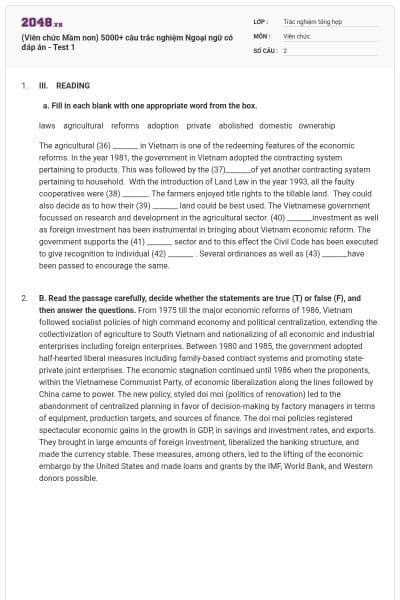
III. READING
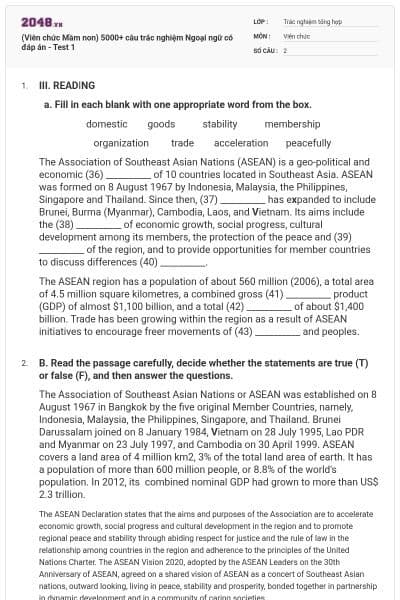
a. Fill in each blank with one appropriate word from the box.
laws agricultural reforms adoption private abolished domestic ownership
True or false?
From 1975 to 1985, the Vietnamese economy was not growing or developing.
Answer the Questions.
When was Doi Moi officially initiated?
What were the achievements of Vietnam economic reform?
IV. WRITING
From the words or phrases - a, b, c or d - choose the one that best completes the sentences.
due to their initial objections
despite their initial objections
though we initially objected them
but they initially objected us.
Although many people
In spite of many people
Because many people
Many people
With hard work
Only with hard work
Only if he worked hardly
In spite of his hard work
Rich as he was
Rich as was he
He was rich though
As he was so rich
Although she has saved for a long time, ______________ .
and she can afford that house
so she can afford that house
but she is not able to afford that house
she is not able to afford that house.