(Viên chức Mầm non) 500 câu trắc nghiệm Điền từ Tiếng Anh có đáp án - Phần 17
20 câu hỏi
Read the following passage and mark the letter A, B, C or D
on your answer sheet to indicate the correct word or phrase that best fits
each of the numbered blanks:
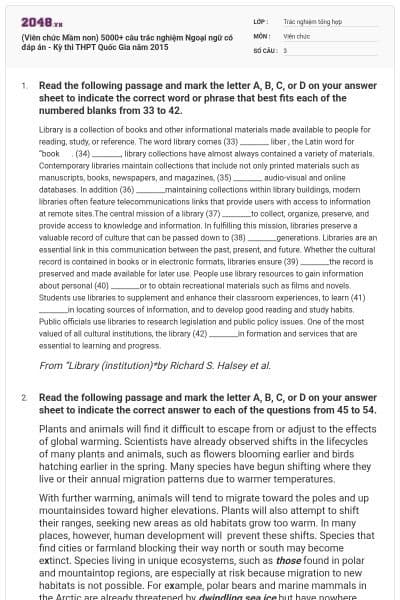
A tiny village school is soon to celebrate its 110th birthday – against all expectations. Five years ago it seemed certain to close, but parents and other villagers fought the local education authority and raised funds to keep it (1) ______. It is now ending its first term as a school (2) ______ by the village community, and the villagers are just proud of their achievement. They were furious when education chiefs tried to make them send the village children to other schools further away because the number of pupils at the village school was too (3) ______. The villagers started a huge campaign to (4) ______ money. They collected enough to hire a teacher and begin to help with school cleaning, lunch supervision and lessons. Now the school is doing well and it seems (5) ______ it will continue to run in the future.
open
opened
to opening
opening
Giải thích: Keep st open: giữ cái gì đó ở trong trạng thái mở
Dịch: Năm năm trước, nó dường như chắc chắn phải đóng cửa nhưng cha mẹ và dân làng khác đấu tranh với cơ quan giáo dục địa phương và gây quỹ để giữ nó mở cửa.
run
running
has run
to run
Giải thích: Run ở đây là động từ phân từ II. Nó được hiểu là “which is run by...”
Dịch: Nó bây giờ kết thúc kỳ đầu tiên như là một trường học vận hành bởi cộng đồng làng xã và dân làng tự hào về thành tích của họ.
little
less
few
small
Giải thích: Little: ít, dùng cho danh từ không đếm được
Less: ít hơn, dùng trong so sánh, danh từ ko đếm được
Few: ít, dùng với danh từ đếm được
Small: nhỏ, thấp (chỉ hình dáng)
Dịch: Vì số học sinh ở trường làng là quá ít.
rise
raise
pay
deal
Giải thích: Pay: trả
Deal: giải quyết
Khác biệt giữa rise và raise: sau rise không cần tân ngữ, nhưng sau raise bắt buộc phải có tân ngữ
Raise money: quyên tiền, gây quỹ
Dịch: Những người dân làng bắt đầu một chiến dịch lớn để quyên tiền
In case
Even though
As if
If only
Giải thích: In case: trong trường hợp
Even though: mặc dù
As if: như thể, như là
If only ~ wish: nếu có thể, giá như
Dịch: Bây giờ nhà trường đang làm tốt và nó có vẻ như nó sẽ tiếp tục phát triển trong tương lai.
Read the following passage and mark the letter A, B, C or D on your answer sheet to indicate the correct word or phrase that best fits each of the numbered blanks:
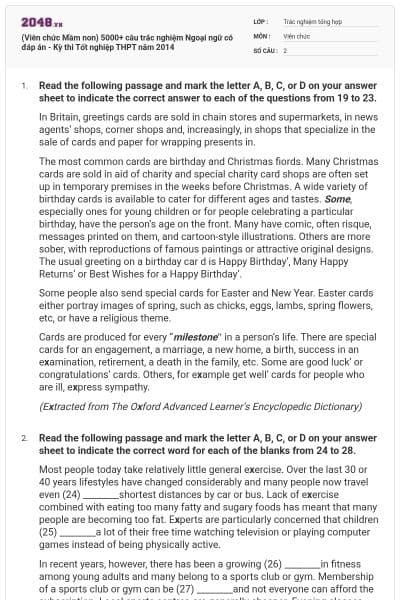
In summary, for most visitors, the Japanese are (1) ______ and difficult to understand. The graceful act of bowing, is the traditional greeting. However, they have also adopted the western custom of shaking hands, but with a light grip. Meanwhile, to (2) ______ respect for their customs, it would flatter them to offer a slight bow when being introduced. Avoid hugging and kissing when greeting. It is considered rude to stare. Prolonged direct eye contact is considered to be (3) ______ or even intimidating. It is rude to stand with your hand or hands in your pockets, especially when greeting someone or when addressing a group of people. The seemingly simple act of exchanging business cards is more complex in Japan (4) ______ the business card represents not only one's identity but also his (5) ______ in life. Yours should be printed in your own language and in Japanese. The Japanese are not a touch-oriented society; so avoid open displays of affection, touching or any prolonged form of body contact.
simply
easy
cheap
complex
Giải thích: "In summary, for most visitors, the Japanese are complex and difficult to understand." (Nói tóm tắt thì đối với hầu hết các du khách, người Nhật rất phức tạp và khó hiểu.)
Lưu ý: Ta thấy sau chỗ trống cần điền có liên từ 'and' mang ý nghĩa liệt kê, nối những từ có ý nghĩa, chức năng ngữ pháp tương đương nhau. > Ta chọn 1 từ có nghĩa gần với difficult.
show
point
draw
pay
Giải thích: "Meanwhile, to show respect for their customs...."
Show respect: thể hiện sự tôn trọng (collocation)
impoliteness
politely
impolitely
impolite
Giải thích: "Prolonged direct eye contact is considered to be impolite or even intimidating." (Một cái nhìn sâu trực tiếp vào mặt thì bị coi là bất lịch sự, thậm chí là mang tính đe dọa đối phương.)
Lưu ý: trước chỗ trống cần điền là 'to be', sau đó ta có tính từ 'intimidating' => Ta phải chọn 1 tính từ để bảo đảm cấu trúc ngữ pháp và sự tương đương với tính từ theo sau.
though
because
even if
unless
Giải thích: Because: bởi vì, even if: ngay cả khi, unless: nếu không, though: mặc dù, chúng ta chọn B để phù hợp với nghĩa của câu.
location
status
place
stand
Giải thích: "..... the business card represents not only one's identity but also his status in life.” (danh thiếp không chỉ thể hiện thông tin cá nhân của 1 người mà còn thể hiện địa vị xã hội của người đó.)
Read the following passage and mark the letter A, B, C or D on your answer sheet to indicate the correct word or phrase that best fits each of the numbered blanks:
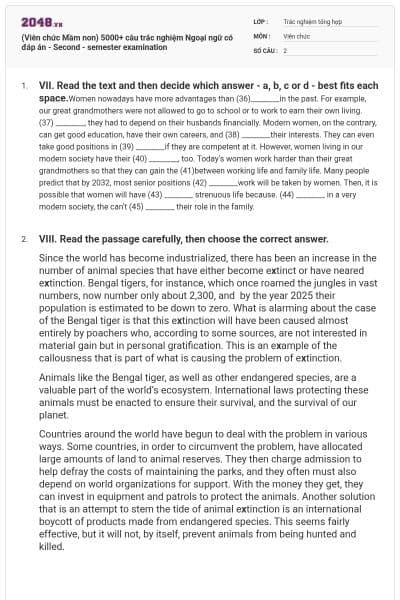
Over the next 20 to 50 years, it will become harder to tell the (1) ______ between the human and the machine. All body (2) ______ will be replaceable. Computers will function like the human brain with the ability to recognize feelings and respond in a feeling way. They will then produce fake people. We will then be able to create a machine duplicate of ourselves so we will appear to be alive long after we are dead. Maybe a few decades later, a way will be found to transfer our spirit, including our (2) ______ and thoughts, to the new body. Then we can choose to live for as long as we want. It might be expensive. When it becomes possible to do a spirit transfer, they will figure out (3) ______ to do them automatically.
difference
change
variety
appearance
Giải thích: the difference between sth and sth: sự khác biệt giữa cái gì và cái gì
experience
health
memories
actions
Giải thích: experience: kinh nghiệm; memories: ký ức; actions: hành động; health: sức khỏe.
what
when
how
why
swallow
vomit
chew
drink
notice
observe
watch
diagnose
Read the following passage and mark the letter A, B, C or D on your answer sheet to indicate the correct word or phrase that best fits each of the numbered blanks:
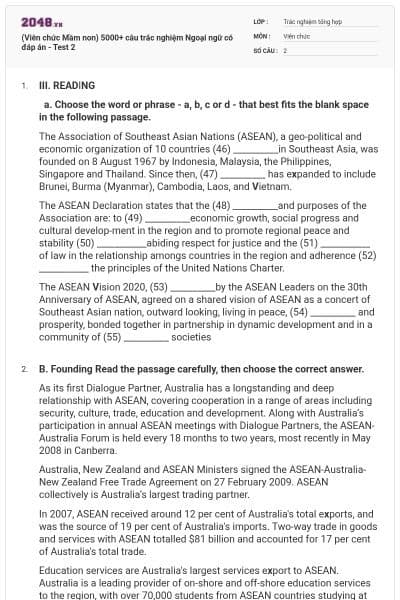
When the weather is cold, it is not very much fun to (1) ______ a bus. People have to stand at a bus-stop for minutes or even hours. They talk about the bus and (2) ______ about the weather. Most of them feel cold. Some have to drink coffee to stay warm. Traveling by buses (3) ______ pollution, but people often would rather drive their cars. Many people are not used to the bus schedules, and they do not like to wait.
search
look for
stand for
wait for
Giải thích: wait for a bus: chờ đợi xe bus
search: tìm kiếm ai/ cái gì, mà ở đây là chờ đợi xe buýt tại trạm xe bus (a bus-stop)
look for: tìm kiếm ai/ cái gì (giống phương án A)
stand for: dùng để cho tên đầy đủ của 1 từ viết tắt
tell
complain
comment
judge
Giải thích: Cấu trúc: complain about something: than phiền về cái gì
cuts
reduces
stops
eliminates
Giải thích: To reduce something: làm cái gì giảm về lượng, kích thước, mức độ, tầm quan trọng.... Reduce pollution: làm giảm sự ô nhiễm (về mức độ)
cut something: làm cho cái gì ngắn hơn, thấp hơn
stop something: ngưng 1 hoạt động
eliminate something: lấy đi, mang đi cái gì
looking
waiting
getting
taking
Giải thích: take the bus/ the train.... : đi đến đâu bằng 1 phương tiện giao thông nhất định
end
last
addition
conclusion
Giải thích: In addition: ngoài ra (được dùng để chỉ sự nói thêm cho ý trước)