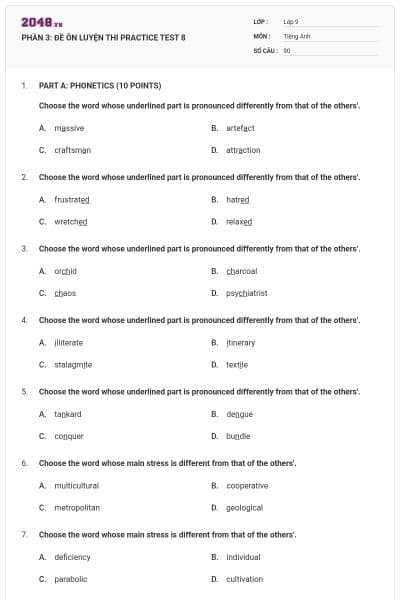
PHẦN 3: ĐỀ ÔN LUYỆN THI PRACTICE TEST 8

86 câu hỏi
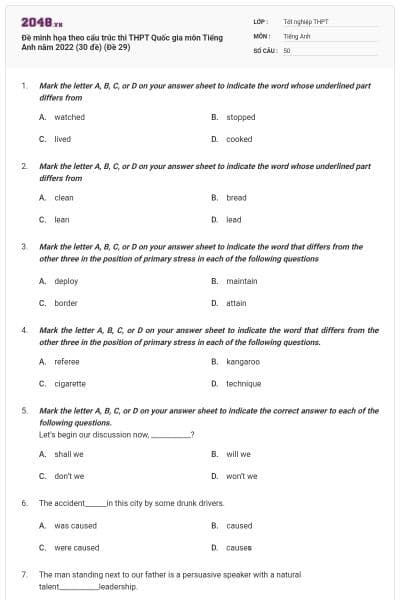
massive
artefact
craftsman
attraction
Chọn C
frustrated
hatred
wretched
relaxed
Chọn D
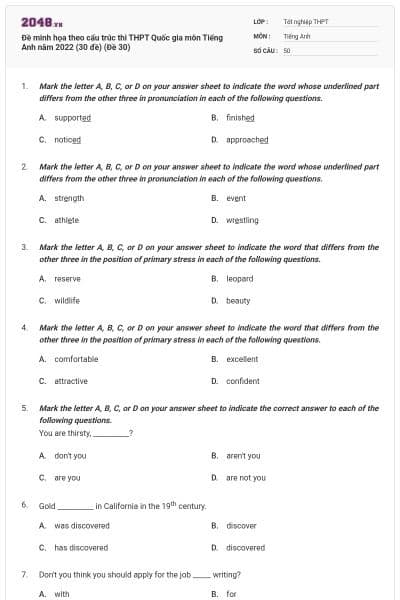
orchid
charcoal
chaos
psychiatrist
Chọn B
illiterate
itinerary
stalagmite
textile
Chọn A
tankard
dengue
conquer
bundle
Chọn D


Học thông minh hơn mỗi ngày
Xem toàn bộ 86 câu hỏi và nhiều hơn nữa với tài khoản miễn phí
multicultural
cooperative
metropolitan
geological
Chọn B
deficiency
individual
parabolic
cultivation
Chọn A
conspicuous
administer
hesitancy
imperial
Chọn C
astronomy
facilitate
spectacular
moisturizer
Chọn D
concentrate
contestant
authentic
compartment
Chọn A
of
for
behind
with
Chọn C
along with
together with
on with
away with
Chọn A
line
fence
border
edge
Chọn B
enlarged
expanded
excepted
extended
Chọn D
spoiled
dysfunctional
destructive
malfunctional
Chọn B
twice as much as
twice more than
twice as more as
twice higher than
Chọn A
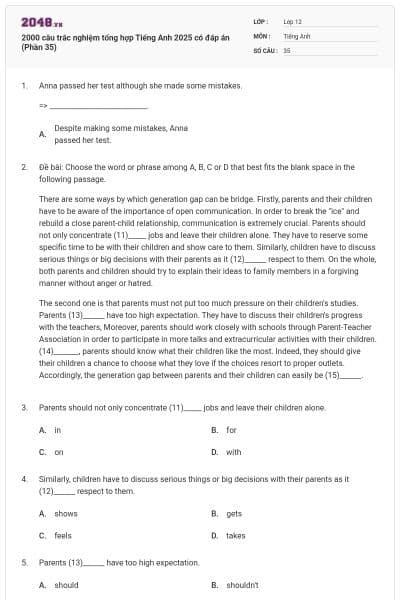
are filled
to fill
are filling
are to fill
Đáp án: D
Giải thích:
Loại B vì không đúng ngữ pháp.
Xét các đáp án khác:
A. được điền (không phù hợp nghĩa)
C. đang điền (không phù hợp nghĩa)
D. cần điền (phù hợp)
Cách dùng: be to V: cần làm gì
Dịch: Để nộp đơn xin thị thực Hoa Kỳ, bạn phải điền vào mẫu đơn DS-160 và nộp trực tuyến.
future
perspective
prospect
potential
Chọn C
favourite
preferential
sensible
influential
Chọn B
are appeared
appear
are appearing
have appeared
Chọn B
shrink
diminish
downsize
decrease
Chọn C
had rehearsed
have rehearsed
has been rehearsing
had been rehearsing
Chọn D
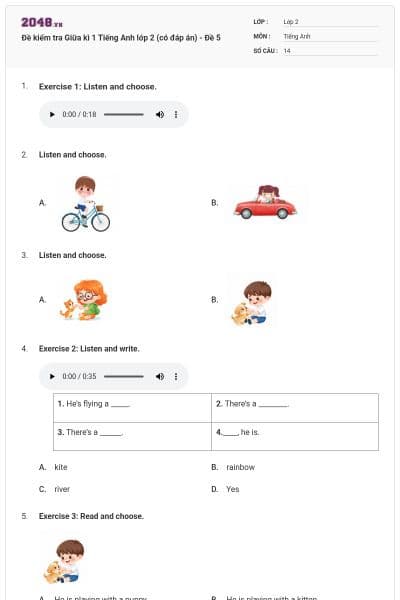
cat
crab
cow
dog
Chọn A
swing
seesaw
roller coaster
slide
Chọn C
Until then
Not yet
Recently
As yet
Chọn D
beat
slam
slap
shut
Chọn B
a long way
into bloom
forward
towards light
Chọn A
dismissed
discharged
expelled
suspended
Chọn D
sadly
nearly
pitifully
regrettably
Chọn C
Mustn’t
Oughtn’t
Shouldn't
Hadn't
Chọn D
blunder
haste
failure
misfortune
Chọn A
distracted
injured
dignified
intelligent
Chọn C
contemptible
huge
reasonable
ludicrous
Chọn D
compulsory
optional
superior
imperative
Chọn B
hinder
stop
destroy
minimize
Chọn A
C → despite the fact that/ although/ though
sience
distract
increase
in
is
tried to destroy the lower and middle classes using etiquette
discriminated against the lower classes using etiquette
tried to teach etiquette to the lower and middle-classes
put the middle and working classes into fenced enclosures
Chọn B
have always followed the French attitude to the lower classes
accept the newly rich in spite of their lower-class manners
publish books on etiquette for the newly rich
seem to accept a newly rich person provided he makes some attempt to adjust to upper-class life
Chọn D
practical rules, optional moral duties and formal compliment
formal compliments, basis moral duties and practical rules
optional moral duties, optional practical rules and artificial graces
rules, regulations and requirements
Chọn B
the ancient Egyptians
parts of Tanzania
England, about a century ago
all societies
Chọn B
are the same all over the world
sometimes vary according to time and circumstance
became unnecessary with the invention of the knife and fork
are not liable to change
Chọn B
has been typical of rich and leisured societies
advocates that women are the same as men
began in nineteenth-century Provence
looks down on extremely refined behaviour
Chọn A
a knight should never have physical relationships with women
a knight should inspire his lady to valiant deeds
a knight should dedicate his valiant deeds to a woman
romantic people should influence literature
Chọn C
were chiefly concerned with the correct use of one’s sword or handkerchief
were practised by the majority of society
did not apply to a large section of society
were fairly simple to follow
Chọn C
spent all his life outdoors
spent all his life in his own poor hut
had better social manners than workers today
was unlikely to have possessed a sword
Chọn D
the essential basis of all systems of good manners
not a universal feature of etiquette
taught to the lower classes by the upper classes
often neglected by polite society
Chọn A
C. Flat races take place in the summer months and are generally run over shorter distances than jump races. The emphasis is totally on speed.
E. Even though jockeys are well aware of the dangers involved, they are usually keen to return to racing as soon as possible, even when their injuries have been very painful and serious.
B. “Jockeys are paid for every time they ride,” said a race course doctor. “If I tell an injured jockey that he cannot ride in the following race, he loses money.”
G. She had been riding in a race at Huntingdon and her horse had been jumping perfectly but then fell badly at the next-to-last fence. Gee managed to get up and walk to the ambulance but was taken straight to hospital where she stayed for the next month.
F. In spite of this, the most famous horse race in Britain is a jump race called the Grand National. This takes place at Aintree in Liverpool every spring and attracts people from all over the world.
Suggested essay:
Nowadays, it cannot be denied that whenever we turn on the television, we are likely to see images of cruelty and violence. The effects these unpleasant images have on children are definitely negative. However, there are certain measures that can be taken in order to deal with this issue.
To begin with, the situation could be improved if we all complained to our local TV stations about the unsuitable programs and the hours that they are shown for children. In this way, the stations would be convinced to produce more appropriate shows and broadcast them earlier during the day for young people, while specific ones with violent scenes should be cut down and aired only late at night. Accordingly, children would have less chance to get exposed to the growing proliferation of violent and aggressive content on TV.
Secondly, it would be a good idea for parents to constantly check the TV guide and select programs which are proper for children. By doing this, they could make sure their children would watch only educational and non-violent programs. Furthermore, parents are also advised to build a close relationship with their children and help them solve any problems and conflicts through effective communication instead of using their fists. It should be agreed that children who are well-nurtured, feel loved and secure are less inclined to be negatively affected by whatever shown on television. Therefore, parents play a key role in protecting their children from any harm caused by TV violence.
To sum up, there are many steps that we can take to ensure violence on TV does not have a negative influence on children. The thing is all of US including television producers and parents should be responsible for the children's well-being.
Bạn có thích hoạt động này không?
Hãy lưu hoặc chia sẻ nội dung này đến mọi người.
Gợi ý cho bạn

Ý tưởng của bạn, bài học của bạn
Tự thiết kế đề thi, bài giảng hoặc flashcard theo cách riêng.