Đề thi giữa học kì 2 môn Tiếng Anh lớp 12 có đáp án - Đề số 38
40 câu hỏi
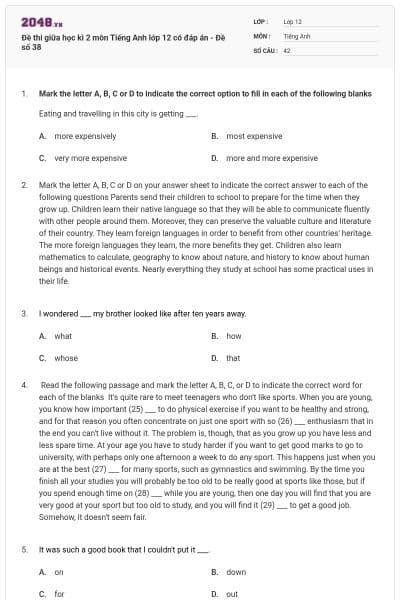
Mark the letter A, B, C or D to indicate the correct option to fill in each of the following blanks
Eating and travelling in this city is getting ___.
more expensively
most expensive
very more expensive
more and more expensive
Đáp án đúng: D
Giải thích: Cấu trúc: S + be getting + more and more adj: cái gì đang ngày càng trở nên
Dịch: Ăn uống và du lịch ở thành phố này đang ngày càng đắt
what
how
whose
that
Đáp án đúng: A
Giải thích:Câu gián tiếp của câu hỏi “what does my brother look like?”
Dịch: Tôi tự hỏi anh trai tôi trông như thế nào sau mười năm xa cách
on
down
for
out
Đáp án đúng: B
Giải thích: put sth down: bỏ thứ gì xuống
Dịch: Đó là quyển sách hay đến nỗi tôi không thể bỏ xuống
on
by
for
with
Đáp án đúng: A
Giải thích:do sth + by someone’s own: tự mình làm gì đó
Dịch: Anh ấy tự làm hết tất cả công việc
with
for
from
to
Đáp án đúng: D
Giải thích: introduce to: giới thiệu tới ai đó
Dịch:Tôi có nên giới thiệu bạn tới Ông Ba?
Câu 6:
bored/ tired
boring /tiring
boring / tired
bored/ tiring
Đáp án đúng: C
Giải thích:
- Tính từ đuôi –ing đi với chủ ngữ chỉ vật
- Tính từ đuôi –ed đi với chủ ngữ chỉ người
Dịch: Đó là công việc nhàm chán nên bạn sẽ thấy mệt mỏi với nó
go / fly
to go / fly
going / flying
to go / to fly
Đáp án đúng: A
Giải thích: Cấu trúc: S + would rather + V + than + V: tôi thà … còn hơn …
Dịch: Tôi thà đi tàu còn hơn đi máy bay
has she
does she
hasn't she
doesn't she
Đáp án đúng: A
Giải thích: Cấu trúc câu hỏi đuôi: “has never been” mang nghĩa phủ định, nên câu hỏi đuôi dùng “has she”
Dịch: Cô Hoa chưa bao giờ tới London trước đây có phải không?
that
when
which
what
Đáp án đúng: C
Giải thích: Đại từ quan hệ “which” thay thế cho cả mệnh đề đứng trước đó: “the poor … yesterday”
Dịch: Cậu bé tội nghiệp đã đến lớp ngày hôm qua, điều này thật bất thường đối với cậu ấy
will get
got
will have gotten
gets
Đáp án đúng: D
Giải thích: Thì tương lai đơn: S + will V + O, S + V tomorrow có tomorrow là tín hiệu chỉ thời gian trong tương lai
Dịch: Ngày mai khi dì tôi xuống sân bay, tôi sẽ đi làm nên không thể đón bà được.
to do
do
doing
did
Đáp án đúng: C
Giải thích: Cấu trúc: do you mind + Ving…?: bạn có phiền làm gì đó
Dịch: Bạn có phiền đi mua sắm với tôi không?
are protected
would protect
be protected
will protect
Đáp án đúng: A
Giải thích: Cấu trúc câu bị động: S + be Ved/p2 + by …
Dịch: Động vật nguy cấp được bảo vệ bởi Quỹ Động vật Hoang dã Thế giới
so old
old enough
enough old
as old
Đáp án đúng: B
Giải thích:S + be(not) + adj enough + to V: ai đó đủ/không đủ … để làm gì
Dịch: Họ chưa đủ tuổi để tham gia chương trình này của Tổ chức Y tế Thế giới.
Mark the letter A, B, C or D on your answer sheet to indicate the word whose underlined part is pronounced differently from that of the rest in each of the following questions.
stayed
stopped
walked
laughed
Đáp án đúng: A
Giải thích: Đáp án A phát âm là /d/, còn lại phát âm là /t/
watches
washes
misses
goes
Đáp án đúng: D
Giải thích: Đáp án D phát âm là /s/, còn lại phát âm là /iz/
prefer
promise
Đáp án đúng: D
Giải thích: Đáp án D trọng âm rơi vào âm 1, còn lại trọng âm rơi vào âm 2
computer
telephone
calculator
television
Đáp án đúng: A
Giải thích: Đáp án A trọng âm rơi vào âm 2, còn lại trọng âm rơi vào âm 1
used to
going to
a lot of parties
when he was
Đáp án đúng: B
Giải thích: used to + V => used to go to
Dịch: Tim từng đến rất nhiều bữa tiệc khi còn là học sinh
apologized
with
for
late
Đáp án đúng: B
Giải thích: apologize someone for doing sth: xin lỗi ai đó vì làm gì => bỏ “with”
Dịch: Anh ấy xin lỗi tôi vì đến muộn
He has learned French for six years.
It was six years ago did he start learning French.
He hasn't learnt French for six years.
It is six years since he has learned French.
Đáp án đúng: A
Giải thích: Cấu trúc thì hiện tại hoàn thành: S + has/have p3 + O + for khoảng thời gian
Dịch: Anh ấy đã học tiếng Pháp được 6 năm rồi
If John doesn't eat so many chips, he will not be fat.
If John didn't eat so many chips, he would not be fat.
John is fat though he eats so many chips.
Being fat, John eats so many chips.
Đáp án đúng: B
Giải thích: Cấu trúc câu điều kiện loại 2: If S + didn’t V/Ved + O, S + would(not) V
Dịch: Nếu John không ăn nhiều khoai chiên như vậy thì anh ấy sẽ không béo
Tom asked Mary to believe in what the boy said.
Tom asked Mary if she believed in what the boy said.
Tom said that Mary believed in what the boy said.
Tom asked Mary whether she believes in what the boy says.
Đáp án đúng: B
Giải thích: Chuyển đổi câu tường thuật: S1 + asked + O+ if/whether S2 + V (lùi thì)
Dịch: Tom hỏi Mary liệu rằng cô ấy có tin lời cậu bé nói
He is said that he won a lot of money on the lottery.
He won a lot of money on the lottery, it is said.
He is said to have won a lot of money on the lottery.
He was said to win a lot of money on the lottery.
Đáp án đúng: C
Giải thích:
- Chủ động: People/they + say that + S + Ved
=> Bị động: S + is said + to have V3
Dịch: Anh ấy được cho là đã thắng rất nhiều tiền vé số
She is learning English so that she gets a better job.
She is learning English so as she gets a better job.
She is learning English in order she can get a better job.
She is learning English so that she will be able to get a better job.
Đáp án đúng: A
Giải thích: Dựa vào nghĩa của câu
Dịch: Cô ấy đang học tiếng Anh để có thể kiếm việc tốt hơn
It's quite rare to meet teenagers who don't like sports. When you are young, you know how important (25) ___ to do physical exercise
this is
you are
it is
things are
Đáp án đúng: C
Giải thích: how important it is: nó quan trọng như thế nào
Dịch: bạn biết tầm quan trọng của việc tập thể dục
keen
many
great
much
Đáp án đúng: D
Giải thích: enthusiasm là danh từ không đếm được => much
Dịch:bạn thường chỉ tập trung vào một môn thể thao với sự nhiệt tình đến mức cuối cùng bạn không thể sống thiếu nó
stage
age
period
time
Đáp án đúng: B
Giải thích: at the best age: ở độ tuổi đẹp nhất
Dịch: Điều này chỉ xảy ra khi bạn ở độ tuổi tốt nhất cho nhiều môn thể thao, chẳng hạn như thể dục dụng cụ và bơi lội
training
practice
exercise
sporting
Đáp án đúng: A
Giải thích:
- Spend time on + Ving: dành thời gian làm gì
- Dựa vào nghĩa của câu: training: luyện tập
Dịch: nhưng nếu bạn dành đủ thời gian cho việc tập luyện khi còn trẻ, thì một ngày nào đó bạn sẽ thấy rằng bạn rất giỏi trong môn thể thao của mình…
impractical
unlikely
improbable
impossible
Đáp án đúng: C
Giải thích: find sth impossible to: thấy điều gì là bất khả thi
Dịch: nhưng nếu quá già để học, bạn sẽ không thể kiếm được một công việc tốt
Parents send their children to school to ___.
learn English
lay better
prepare for their future
Đáp án đúng: D
Giải thích: Dựa vào thông tin: “Parents send their children to school to prepare for the time when they grow up”
Dịch: Cha mẹ cho con đi học để chuẩn bị cho thời kỳ con khôn lớn.
To communicate fluently with other people around them.
To learn foreign languages.
To know about nature.
To benefit from foreign countries' heritage.
Đáp án đúng: A
Giải thích: Dựa vào thông tin: “Children learn their native language so that they will be able to communicate fluently with other people around them”
Dịch: Trẻ em học ngôn ngữ mẹ đẻ của mình để có thể giao tiếp trôi chảy với những người xung quanh
the mankind
people and historical events
practical uses in life
events of the history
Đáp án đúng: B
Giải thích: Dựa vào thông tina: “Children also learn… history to know about human beings and historical events”
Dịch: Trẻ em học... lịch sử để biết về con người và các sự kiện lịch sử
How many school subjects are mentioned in the passage?
4
7
5
6
Đáp án đúng: A
Giải thích: foreign languages, mathematics, geography, history
have some practical uses
are useless
have no use
are not necessary
Đáp án đúng: A
Giải thích: Dựa vào thông tin: “Nearly everything they study at school has some practical uses in their life”
Dịch: Gần như mọi thứ họ học ở trường đều có một số công dụng thiết thực trong cuộc sống của họ.
Mark the letter A, B, C or D to indicate the sentences which is closest in meaning to the given one
"I will visit my grandparents tomorrow". She said ___
she visits her grandparents the next day.
she will visit her grandparents the next day.
she would visit her grandparents the next day.
she would visits her grandparents the next day.
Đáp án đúng: D
Giải thích: Chuyển đổi câu tường thuật: lùi 1 thì so với câu gốc: “will” – “would”; “tomorrow” - “the next day”
Dịch: Cô ấy sẽ thăm bà vào ngày mai
A bike is bought by me yesterday.
A bike were bought by me yesterday.
A bike has been bought by me yesterday.
A bike was bought by me yesterday
Đáp án đúng: D
Giải thích: Cấu trúc câu bị động: S + was/were Vp2/Ved + by …
Dịch:một xe đạp đã được tôi mua hôm qua
We won't miss the train unless we hurry up.
We won't miss the train if we hurry up.
We will miss the train unless we don't hurry up.
We will miss the train unless we hurry up.
Đáp án đúng: D
Giải thích: Câu điều kiện loại 1:
- If S + don’t/doesn’t V = Unless S + V
Dịch: Chúng ta sẽ lỡ tàu nếu không nhanh lên
Because of Bill was ill, he didn't go to school.
Because Bill is ill, he doesn't go to school.
Because Bill was ill, he didn't go to school.
Bill didn't go to school because he isill.
Đáp án đúng: C
Giải thích:
- because of + N = because mệnh đề
- Thì quá khứ => C
Dịch: Vì Bill bị ốm nên anh ấy đã không đi học
What about go for a walk?
What about going for walk?
What about going a walk?
Đáp án: C
Giải thích:
Dịch: Chúng ta sẽ đi dạo một lát chứ? = C. Đi dạo một lát thì sao?
Cấu trúc đưa ra lời gợi ý: Shall we/I + V-inf = What about + V-ing
Đáp án A sai vì sau “What about” là V-ing.
Đáp án B sai vì thiếu “a”.
Đáp án D sai vì thiếu “for”.
Before tomorrow morning we will probably know the result of the elections.
Tomorrow morning is probably the earliest that anyone will know the result of the selection.
The results of the elections will most likely be made known before tomorrow morning.
We will probably not be told the results of the elections tomorrow morning.
Đáp án đúng: B
Giải thích: Dựa vào nghĩa của câu
Dịch: Sáng mai có lẽ là sớm nhất mà bất cứ ai cũng biết kết quả của cuộc tuyển chọn.
Bạn có thích hoạt động này không?