Trắc nghiệm tổng hợp Tiếng anh có đáp án 2023 (Phần 64)
111 câu hỏi
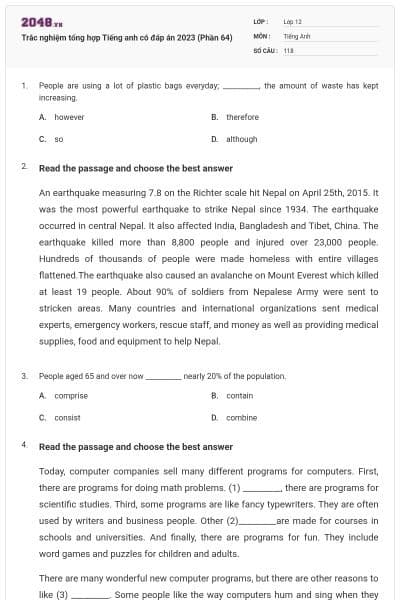
People are using a lot of plastic bags everyday; __________, the amount of waste has kept increasing.
however
therefore
so
although
Đápán: B
Giảithích:
A. however: tuynhiên
B. therefore: do đó
C. so: vìvậy (“so” khôngbịngăncáchbởidấuphẩy => loại C)
D. although: mặcdù
Dịch: Mọingườiđangsửdụngrấtnhiềutúinhựahàngngày; do đó, lượngrácthảingàycàngtăng.
People aged 65 and over now __________ nearly 20% of the population.
comprise
contain
consist
combine
Đápán: A
Giảithích:
A. chiếm
B. chứa
C. bao gồm
D. kếthợp
Dịch: Sốngườitừ 65 tuổitrởlênhiệnchiếmgần 20% dânsố.
Possibly he isn't the captain of Star Trek. (may)
=> ___________________________________.
Đápán: He may not be the captain of Star Trek.
Giảithích: may + (not) + V-inf: cólẽ/ cólẽkhông
Dịch: Anh ấycólẽkhôngphảilàđộitrưởngcủa Star Trek.
The most fascinating change happening to women is their increasing involvement in education and employment.
participation
roles
power
detachment
Đápán: D
Giảithích:involvement: sựthamgia
A. participation:sựthamgia
B. roles:vaitrò
C. power:quyềnlực
D. detachment: sựtáchrời
=> involvement >< detachment
Dịch: Sựthayđổihấpdẫnnhấtxảyravớiphụnữlàsựthamgiangàycàngtăngcủahọvàogiáodụcvàviệclàm.
Speech is the fastest method of ____________between people.
communicate
communicates
communicated
communication
Đápán: D
Giảithích: method of communication: phươngthứcgiaotiếp
Dịch: Lờinóilàphươngthứcgiaotiếpnhanhnhấtgiữa con ngườivớinhau.
Read the passage and choose the best answer
An earthquake measuring 7.8 on the Richter scale hit Nepal on April 25th, 2015. It was the most powerful earthquake to strike Nepal since 1934. The earthquake occurred in central Nepal. It also affected India, Bangladesh and Tibet, China. The earthquake killed more than 8,800 people and injured over 23,000 people. Hundreds of thousands of people were made homeless with entire villages flattened.The earthquake also caused an avalanche on Mount Everest which killed at least 19 people. About 90% of soldiers from Nepalese Army were sent to stricken areas. Many countries and international organizations sent medical experts, emergency workers, rescue staff, and money as well as providing medical supplies, food and equipment to help Nepal.
What hit Nepal on April 25th, 2015?
A tsunami
A tornado
An earthquake
A forest fire
How many countries are affected by the earthquake?
Two
Three
Four
Five
What is the number of people injured?
8,800
23,000
88,000
2,300
What happened to Kathmandu Burbar Square?
It was safe.
It was destroyed.
It was moved away.
It wasn’texist.
Which sentence is TRUE according to the passage?
The earthquake occurred in the north of Nepal.
It is the most powerful earthquake in the world.
Most of soldiers from Nepalese Army were sent to stricken areas.
Very few countries and international organizations helped Nepal.
The interviewer asked me why I ________learning English.
like
will like
liked
would like
Đápán: C
Giảithích:
- Khi chuyển sang câugiántiếpphảilùi 1 thì => loại A, B
- Xétvềnghĩađápán D: “Ngườiphỏngvấnhỏitôitạisaotôisẽthíchtiếnganh” => khôngphùhợp => loại D
=> chọnđápán C
Dịch: Ngườiphỏngvấnhỏitôitạisaotôithíchhọctiếng Anh.
The policeman stopped my car because the engine _______ heavy smoke.
gave away
gave up
gave out
gave off
Đápán: D
Giảithích:
A. gave away: phânphát
B. gave up: từbỏ
C. gave out: phânphát
D. gave off: tạora (mùi, nhiệt, ánhsáng …)
Dịch: Cảnhsátchặnxetôilạivìđộngcơbốckhóidàyđặc.
“There was an accident outside the supermarket”- said Joanna.
Joanna said there has been an accident outside the supermarket.
Joanna said there were an accident outside the supermarket.
Joanna said there had been an accident outside the supermarket.
Joanna said there has an accident outside the supermarket.
Đápán: C
Giảithích:
-Câugiántiếpdạngcâukể: S + said + (that) + S + V
- Khi chuyển sang câugiántiếpphảilùi 1 thì so vớicâugốc => câutrựctiếpthìquákhứđơnchuyển sang câugiántiếpthìquákhứhoànthành
Dịch: Joanna chobiếtđãcómộtvụ tai nạnxảyrabênngoàisiêuthị.
There were so a lot of people trying to leave the burning building that the police had a great deal of trouble controlling them.
There were
a lot of
the burning
great deal
Đápán: B
Giảithích: “so” đivới “many” hoặc “much”,khôngđivới “a lot of” => sửa “a lot of” thành “many” do “people” làdanhtừđếmđượcsốnhiều
Dịch: Córấtnhiềungườicốgắngrờikhỏitòanhàđangcháykhiếncảnhsátgặprấtnhiềukhókhăntrongviệckiểmsoáthọ.
They have worked in that factory since 2001.
=>They started _____________________________.
Đápán: They started working in that factory in 2001.
Giảithích: started + Ving + in + time = have/has + Vp2 + O + for/since + time
Dịch: Họbắtđầulàmviệctạinhàmáyđóvàonăm 2001.
Read the passage and choose the best answer
Today, computer companies sell many different programs for computers. First, there are programs for doing math problems. (1) _________, there are programs for scientific studies. Third, some programs are like fancy typewriters. They are often used by writers and business people. Other (2)_________are made for courses in schools and universities. And finally, there are programs for fun. They include word games and puzzles for children and adults.
There are many wonderful new computer programs, but there are other reasons to like (3) _________. Some people like the way computers hum and sing when they (4) _______. It is a happy sound, like the sounds of toy and childhood. Computers also have lights and pretty pictures. And computers even seem to have personalities. That may sound strange, but computers seem to have feelings. Sometimes they seem happy, sometimes they seem angry. It is easy (5) _________ they are like people.
Two
Second
Twice
Double
programs
people
students
typewriters
A. programs: chươngtrình
B. people: mọingười
C. students: sinhviên
D. typewriters: ngườiđánhmáy
Chọn A
programs
reasons
games
computers
A. programs: chươngtrình
B. reasons: lí do
C. games: tròchơi
D. computers: máytính
Chọn D
work
have worked
are working
worked
-Cấutrúckếthợpgiữahiệntạiđơnvàhiệntạitiếpdiễnvới “when”:
S1 + V(s/es) + O + when + S2 + is/am/are + Ving: diễntảmộthànhđộngđangdiễnratạithờiđiểmnóivàbịmộthànhđộngkhác xen vào
+ Hành động đang xảy ra chia hiệntạitiếp diễn
+ Hành động xen vào chia hiệntại đơn
- Hànhđộnghọlàmviệcđangdiễnra => chia ở hiệntạitiếpdiễn
Chọn C
to think
thinking
for thinking
that thought
There were so a lot of people trying to leave the burning building that the police had a great deal of trouble controlling them.
There were
a lot of
the burning
great deal
Đápán: B
Giảithích: “so” đivới “many” hoặc “much”,khôngđivới “a lot of” => sửa “a lot of” thành “many” do “people” làdanhtừđếmđượcsốnhiều
Dịch: Córấtnhiềungườicốgắngrờikhỏitòanhàđangcháykhiếncảnhsátgặprấtnhiềukhókhăntrongviệckiểmsoáthọ.
They have worked in that factory since 2001.
=>They started _____________________________.
Đápán: They started working in that factory in 2001.
Giảithích: started + Ving + in + time = have/has + Vp2 + O + for/since + time
Dịch: Họbắtđầulàmviệctạinhàmáyđóvàonăm 2001.
Tom learned to drive when he was nineteen.
=> Tom has _______________________________.
Đápán: Tom has been able to drive since he was nineteen.
Giảithích: S + studied/learned + to V-inf + when + S + V = S + have/has + been + able + to V-inf + since + S + V: ai đóđãhọc/cóthểlàmgìtừkhinào
Dịch: Tom đãcóthểláixetừkhianhấymườichíntuổi.
What about ________ to Hue on Sunday?
to go
go
going
goes
Đápán: C
Giảithích: What about/ How about + Ving: gợi ý làmgìđó
Dịch:ĐiHuếvàochủnhậtthìsao?
I am really ___________ with how this drama ended.
annoyed
annoying
Đápán: A
Giảithích:
- Khi môtảđặcđiểm, tínhchấtcủangười -> adj-ed
- Khi môtảđặcđiểm, tínhchấtcủasựvật -> adj-ing
Dịch: Tôithựcsựkhóchịuvớicáchkếtthúcbộphimnày.
Viếtlạicâusửdụngtừcósẵn:
Yesterday/ the plane/ take/ off/ early/ than/ I/ expect.
=> _______________________________________.
Đápán: Yesterday the plane took off earlier than I expected.
Giảithích:
-Trongcâucó “Yesterday” => dấuhiệunhậnbiếtthìquákhứđơn
- So sánhhơnvớitínhtừngắn: adj-er + than
Dịch: Hôm qua máy bay cấtcánhsớmhơntôidựkiến.
Viếtlạicâusửdụngtừcósẵn:
you / better / eat / too / candies / because / they / not good / your teeth/ .
=> ___________________________________________________________.
Đápán: You had better not eat too many candies because they are not good for your teeth.
Giảithích: S + had better/‘d better + (not) + V-inf: dùngđểđưaralờikhuyênnên/khôngnênlàmgì
Dịch: Tốtnhấtbạnkhôngnênănquánhiềukẹovìchúngkhôngtốtchorăngcủabạn.
Đápán: expressionless
Giảithích: sautrạngtừcần 1 tínhtừbổnghĩa => expressionless: vôcảm
Dịch: Côấyđứngđóhoàntoànvôcảmnêntôikhôngbiếtcôấyđangnghĩgì.
Read the passage and choose the best answer
Sydney is the (1) ________of the state New South Wales in Australia. It is thelargest, oldest, and perhaps the (2)_______ beautiful city in Australia. Sydney hasa population of 4.5 million. Its harbour is one of the largest in the world, andfamous (3)________ the Harbour Bridge and the Opera House. The streets in thecity centre are narrow (4)________ many art galleries, restaurants, pubs, but thestreets in Paddington are (5)________ and the houses are big.
Dịch:
Sydney làthủphủcủa bang New South Wales ở Úc. Đâylàthànhphốlớnnhất, lâuđờinhấtvàcólẽlàđẹpnhất ở Úc. Sydney códânsố 4,5 triệungười. BếncảngcủanólàmộttrongnhữngbếncảnglớnnhấtthếgiớivànổitiếngvớiCầuCảngvàNhàhátlớn. Đườngphố ở trungtâmthànhphốchậthẹpvớinhiềuphòngtrưngbàynghệthuật, nhàhàng, quánrượu, nhưngđườngphố ở Paddington lạirộngvànhữngngôinhà to lớn.
home
site
capital
village
A. home: nhà
B. site: địađiểm
C. capital: thủđô
D. village: làng
Chọn C
less
more
fewer
most
for
with
at
in
at
to
with
on
narrow
long
short
wide
A. narrow: hẹp
B. long: dài
C. short: ngắn
D. wide: rộng
Chọn D
The robbers made the bank manager hand over on the money.(was)
=> __________________________________________________.
Đápán: The bank manager was made to hand over on the money by the robbers.
Giảithích:
-Câubịđộngthìquákhứđơn: S + was/were + Vp2 + (by O)
- tobe made to V-inf: bịéplàmgì
Dịch: Giámđốcngânhàngbịbọncướpépgiaotiền.
Đápán: cultural
Giảithích: trướcdanhtừcần 1 tínhtừbổnghĩa => cultural: thuộcvềvănhóa
Dịch: Sựgiánđoạnliênlạcgiữahaingườitừcácquốcgiakhácnhaucóthểxảyra do sựkhácbiệtvềvănhóa.
Read the passage and answer the below questions.
Andrew studies tribes around the word. He like mountain- climbing. He'll go to Sa Pa. Mary loves VN and she wants to travel by train to see as much of the country as possible. She also wants to visit an oceanic institute in VN. She'll go to Nha Trang. John is interested in the history of VN. He wants to visit the place where President Ho Chi Minh left VN in 1911. He'll go to Nha Rong Harbor in Ho Chi Minh City. Jane likes swimming and sunbathing. She has been to VN twice and she has visited Nha Trang already. She'll go to Ha Long Bay. Donna love flowers. She has a flower shop in Los Angeles. She is thinking of importing from VN. She'll go to Da Lat.
Dịch:
Andrew nghiêncứucácbộlạcxungquanhthếgiới. Anh ấythíchleonúi. Anh ấysẽđi Sa Pa. Mary yêu VN vàcôấymuốnđi du lịchbằngtàuhỏađểkhámphácàngnhiềuđấtnướccàngtốt. Côcũngmuốnđếnthămmộtviệnhảidươnghọc ở VN. CôấysẽđiNha Trang. John quantâmđếnlịchsử VN. Anh ấymuốnđếnthămnơiChủtịchHồ Chí Minh rời VN năm 1911. Anh ấysẽđếnCảngNhàRồng ở Thành phốHồ Chí Minh. Jane thíchbơilộivàtắmnắng. Côấyđãđến VN hailầnvàcôấyđãđếnthămNha Trang rồi. CôấysẽtớiVịnhHạ Long. Donna yêuhoa. Côấycómộtcửahànghoa ở Los Angeles. Côấyđangnghĩđếnviệcnhậpkhẩutừ VN. CôấysẽđiĐàLạt.
From the clink of dishes one can tell that supper (prepare) __________.
is being prepared
have beingprepared
are being prepared
am being prepared
Đápán: A
Giảithích:
- “supper” làchủngữsốít => độngtừ chia ở sốít => chọn A
-Cấutrúcbịđộngthìhiệntạitiếpdiễn: S + is/am/are + being + Vp2
Dịch: Nghe tiếngbátđĩakêulengkeng, người ta cóthểbiếtbữatốiđangđượcchuẩnbị.
Tìmvàsửalỗisai:
Furniture makers use glue to hold joints together and sometimes to reinforce it.
to hold
together
sometimes
it
Đápán: D
Giảithích: tânngữ ở đâythaythếcho “joints” làdanhtừđếmđượcsốnhiều => sửa “it” thành “them”
Dịch: Các nhàsảnxuấtđồnộithấtsửdụngkeođểgiữcácmốinốilạivớinhauvàđôikhiđểgiacốchúng.
He started English when he was 18.
=> He _____________________________.
Đápán: He has learnt English since he was 18.
Giảithích: Khi “since” nóivềmộtsựviệcxảyratrongquákhứ, chúng ta sửdụngthìquákhứđơntheosau “since” vàthìhiệntạihoànthành ở mệnhđềchính:
S + have/has + Vp2 + since + S + Vqk
Dịch: Anh ấyđãhọctiếng Anh từnăm 18 tuổi.
I've been invited to the wedding _______14 February.
for
in
on
at
Đápán: C
Giảithích: trướcngàythángdùnggiớitừ “on”
Dịch: Tôiđãđượcmờiđếndựđámcướivàongày 14 tháng 2.
Hoàn thànhsửdụngdạng so sánhhơncủatừchosẵn:
I prefer living in the countryside to living in big cities as the countryside is (tranquil)__________.I really enjoy peaceful moments of life.
Đápán: more tranquil
Giảithích: so sánhhơnvớitínhtừdài: more + adj
Dịch: Tôithíchsống ở nôngthônhơnsống ở cácthànhphốlớnvìmiềnquêyêntĩnhhơn. Tôithựcsựtậnhưởngnhữnggiâyphútbìnhyêncủacuộcsống.
Tìmvàsửalỗisai:
If she has drivenall that waysincethis morning, she will tired and hungry.
has driven
all that day
since
will tired and hungry
Đápán: D
Giảithích:
-Câuđiềukiệnloại 1:
If + S + V(hiệntạiđơn, hiệntạihoànthành) + O, S + will/can/might… + V-inf + O: diễntảgiảthiếtcóthật ở hiệntại, cóthểxảyra ở hiệntạihoặctươnglai
- will + be + adj => sửa “will tired and hungry” thành “will be tired and hungry”
Dịch: Nếucôấyláixesuốtquãngđườngđótừsáng nay, côấysẽmệtvàđói.
Đápán: traditionally
Giảithích: sauđộngtừtobevàtrước Vp2 cần 1 trạngtừ => traditionally: theotruyềnthống
Dịch: Ở Anh, gàtâyđượcăntheotruyềnthốngvàongàyGiángsinh.
his
friends
goes
enjoy
Đápán: C
Giảithích: “Lam and his friends” làchủngữsốnhiều => độngtừphải chia ở sốnhiều => sửa “goes” thành “go”
Dịch: Lâm vàbạnbèthườngđếnrạpđểthưởngthứcnhữngbộphimmới.
Tìmtừtráinghĩavớitừgạchchân:
“Mary, of course you’re overweight. You eat too much junk food. Even worse, you exercise infrequently.”
in the open
at a gym
nearly every day
quite often
Đápán:
Giảithích: infrequently: khôngthườngxuyên
A. in the open: ngoàitrời
B. at a gym: tạiphòng gym
C. nearly every day: gầnnhưmỗingày
D. quite often: kháthườngxuyên
=> infrequently >< quite often
Dịch: “Mary, tấtnhiênlàbạnthừacânrồi. Bạnănquánhiềuđồănvặt. Tệhơnnữalàbạnkhôngtậpthểdụcthườngxuyên.”
ead the passage and choose the best answer
Rice is eaten by Vietnamese people every day. It often grows in tropical countries such as Vietnam, Thailand and Malaysia. People (1) ________ been growing rice for thousands of years. The seeds are planted in special beds to grow into young rice plants. Then they are (2) _______ to fields covered with muddy water called paddies. The fields or rice look very (3) ________. After 3 or 5 months, the rice is ready to be picked. People often drain away before collecting rice. Eating rice is (4) _______ special action in the world. They don’t use spoons or folks to enjoy bowls of rice. However, they use two short sticks known (5) ________ chopsticks to put rice into their mouths.
Dịch:
Cơmđượcngười Việt Nam ănhàngngày. Nóthườngmọc ở cácnướcnhiệtđớinhư Việt Nam, Thái Lan và Malaysia. Người ta đãtrồnglúahàngngànnăm nay. Hạtgiốngđượcgieovàoluốngđặcbiệtđểpháttriểnthànhcâylúa non. Sau đó, họđượcđưađếnnhữngcánhđồngđầynướcbùngọilàruộnglúa. Nhữngcánhđồng hay lúatrôngrấtđẹp. Sau 3 hoặc 5 tháng, lúađãsẵnsàngđểthuhoạch. Ngườidânthườngđểráonướctrướckhithulúa. Ăncơmlàmộthànhđộngđặcbiệttrênthếgiới. Họkhôngdùngthìa hay ngườiđểthưởngthứcbátcơm. Tuy nhiên, họlạidùnghaichiếc que ngắngọilàđũađểđưacơmvàomiệng.
has
have
had
having
- Trong câucó “for thousand years” làdấuhiệuthìhiệntạihoànthành => loại C, D
- Chủngữ “People” làdanhtừsốnhiều => chọn B
take
taking
to take
taken
beauty
beautify
beautiful
beautifully
a
an
the
x
with
as
of
like
She needs to travel to Kyoto on business. (TRIP)
=> ____________________________________.
Đápán: She needs to go on a business trip to Kyoto.
Giảithích: travel on business = go on a business trip: đicôngtác
Dịch: Côấycầnphảiđicôngtác ở Kyoto.
She needs to travel to Kyoto on business. (TRIP)
=> ____________________________________.
Đápán: She needs to go on a business trip to Kyoto.
Giảithích: travel on business = go on a business trip: đicôngtác
Dịch: Côấycầnphảiđicôngtác ở Kyoto.
Tìmvàsửalỗisai:
She wishes her parentswill come here tomorrow.
wishes
parents
will
here
Đápán: C
Giảithích: Cấutrúccâuước ở tươnglai: S + wish(es) + (that) + S + would/could + V-inf: dùngđểthểhiệnmongướcmộtviệcnàođóxảyrahoặcmộtđiềugìđótốtđẹptrongtươnglai. => sửa “will” thành “would”
Dịch: Côướcbốmẹcôsẽđếnđâyvàongàymai.
Đápán: ability
Giảithích: sau “the” cần 1 danhtừ => ability: khảnăng
Tìm từ có phần gạch chân phát âm khác với những từ còn lại.
sure
saw
send
sit
Đápán: A
Giảithích: Đápán A phátâmlà /ʃ/, cácđápáncònlạiphátâmlà /s/
Dịch:
A. chắcchắnrồi
B. đãthấy
C. gửi
D. ngồi
The last time I saw him was in June.
=> I haven't _________________________.
Đápán: I haven't seen him since June.
Giảithích:
The last time + S + Vqk + was + time = S + have/has + not + Vp2 + since/for + time: Lầncuốicùng ai đólàmgìlàkhinào/ Ai đóđãkhônglàmgìtừkhinào/được bao lâu
Dịch: TôiđãkhônggặpanhấykểtừthángSáu.
The last time Lan went to the zoo was two years ago.
=> Lan __________________________________________.
Đápán: Lan hasn't gone to the zoo for two years.
Giảithích: The last time + S + Vqk + was + time = S + have/has + not + Vp2 + since/for + time: Lầncuốicùng ai đólàmgìlàkhinào/ Ai đóđãkhônglàmgìtừkhinào/được bao lâurồi
Dịch: Lan đãkhôngđếnsởthúđượchainămrồi.
The train journey from London to Bristol takes two hours.
It is a two-hours train journey from London to Bristol.
It is a two-hour train journey from London to Bristol.
It is a two-hour train of journey from London to Bristol.
It is the two-hour train journey from London to Bristol.
Đápán: B
Giảithích:tínhtừkép: a + sốlượng-danhtừđếmđượcsốít
Dịch: Đólàmộtchuyếnđitàukéodàihaigiờtừ London đến Bristol.
The weather in winter is worse than in summer. People get ______colds in summer than in winter.
more
fewer
less
Đápán: A
Giảithích:
A. nhiềuhơn
B. íthơn
C. íthơn
Dịch: Thờitiếtmùađôngtệhơnmùahè. Mọingườibịcảmlạnhvàomùahènhiềuhơnvàomùađông.
Đápán: came – had finished
Giảithích: Cấutrúcvới “after”: S + Vqk + O +after + S + had + Vp2 + O: dùngđểnóivềmộtsựviệcđượcdiễnrasaukhiđãkếtthúcmộthànhđộng hay sựviệckhác.
Dịch: Họtrởvềnhàsaukhihoànthànhcôngviệc.
Tìmvàsửalỗisai:
They played so good gameof tennis last night that they surprised their audience.
so good game
of tennis
that
surprised
Đápán: A
Giảithích:
- Cấutrúc“so…that”và “such … that” vớitínhtừ:quá … đếnnỗimà
+ “so…that”: so + adj + that:
+ “such…that”: such + a/an + adj + N
=> sửa “so good game” thành “such a good game”
Dịch: Đêm qua họđãchơimộttrận tennis hay đếnmứckhiếnkhángiảngạcnhiên.
They've been getting along well with each other so far. (UP)
=> ______________________________________________.
Đápán: Up to now, they have gotten along well with each other.
Giảithích: Up to now, S + have/has + Vp2 + …= S + have/has + Vp2 + … + up to now: chođến nay
Dịch: Tínhđếnthờiđiểmhiệntại, họđãrấtthânthiếtvớinhau.
Tourists coming to Sapa usually visit ___________where the ethnic minorities lives.
tribes
districts
villages
hamlets
Đápán: A
Giảithích:
A. tribes: bộlạc
B. districts:huyện
C. villages: làng
D. hamlets:thôn
Dịch: Khách du lịchđến Sapa thườngđếnthămcácbộlạcnơisinhsốngcủacácdântộcthiểusố.
Đápán: is now moving
Giảithích: “now” làdấuhiệunhậnbiếtthìhiệntạitiếpdiễn => is now moving
Dịch: Bão Ketsana hiệnđang di chuyểnvềphía Tây, cónguycơđổbộvàomiền Trung Việt Nam trongnhữngngàytới.
When he was 8 years old, he had an accident and broke _______leg.
mine
he
his
him
Đápán: C
Giảithích: trướcdanhtừ “leg” cần 1 tínhtừsởhữubổnghĩa => tínhtừsởhữucủa “he” là “his”
Dịch: Năm 8 tuổi, anhbị tai nạnvàgãychân.
Who will take _________your position when you are on parental leave?
up
after
over
off
Đápán: C
Giảithích:
A. take up: tiếptụcviệcgìđóbịbỏdở
B. take after: trônggiống ai đó
C. take over: đảmnhận
D. take off: cấtcánh
Dịch: Ai sẽđảmnhậnvịtrícủabạnkhibạnnghỉsinh con?
Đápán: excited
Giảithích:
- look + adj: trôngnhưthếnào
+ Môtảđặcđiểm, tínhchấtcủangười -> adj-ed
+ Môtảđặcđiểm, tínhchấtcủasựvật -> adj-ing
=> Câuđangmôtảtínhchấtcủangười => dùng “excited”
Dịch: Sao trôngbạncóvẻhàohứngthế?
Mark help 2 children to ______ from his first marriage.
require
support
grow
affect
Đápán: B
Giảithích:
A. require: yêucầu
B. support: nuôinấng, chu cấp
C. grow: pháttriển
D. affect: ảnhhưởng
Dịch: Mark chu cấpcho 2 đứa con từcuộchônnhânđầutiên.
Read the passage and choose the best answer
Graphic novels, as the name suggests, are books written and illustrated in the style of a comic book. Adults mayfeel that graphic novels do not help children become good readers. They believe that this type of reading material somehow prevents "real" reading. (1) ________, many quality graphic novels are now being seen as a method of storytelling on the same level as novels, films or audiobooks. Many librarians and teachers are now accepting graphic novels as proper literature for children as they (2) _______young people and motivate them to read. This has been especially true with children who are not (3) ________to read, especially boys.
Language learners are also motivated by graphic novels because the pictures provide clues to the meaning of the words. Therefore, they will (4) _________new vocabulary more quickly. Many teachers have reported great success when they used graphic novels with their students, especially in the areas of English, social studies and art. The idea that graphic novels are too simple to be regarded as serious reading is no longer valid. Reading them can, undoubtedly, help students develop the skills (5) _________are necessary to read more challenging works.
Dịch:
Tiểuthuyếtđồhọa, nhưtênchothấy, lànhữngcuốnsáchđượcviếtvàminhhọatheophongcáchtruyệntranh. Ngườilớncóthểcảmthấyrằngtiểuthuyếtbằngtranhkhônggiúptrẻemtrởthànhngườiđọcgiỏi. Họ tin rằngloạitàiliệuđọcnàyphầnnàocảntrởviệcđọc “thựcsự”. Tuy nhiên, nhiềutiểuthuyếtđồhọachấtlượnghiệnđangđượccoilàmộtphươngphápkểchuyệnnganghàngvớitiểuthuyết, phimhoặcsáchnói. Nhiềuthủthưvàgiáoviênhiệnđangchấpnhậntiểuthuyếtđồhọanhưmộttácphẩmvănhọcphùhợpchotrẻemvìchúngthuhútgiớitrẻvàkhuyếnkhíchhọđọc. Điềunàyđặcbiệtđúngvớinhữngđứatrẻkhôngsẵnsàngđọcsách, đặcbiệtlàcácbétrai.
Ngườihọcngônngữcũngbịthúcđẩybởitiểuthuyếtđồhọavìhìnhảnhcungcấpmanhmốivề ý nghĩacủatừ. Vìvậy, họsẽhọctừvựngmớinhanhhơn. Nhiềugiáo
Therefore
Otherwise
In addition
However
A. Therefore: vìvậy
B. Otherwise: nếukhôngthì
C. In addition: thêmvàođó
D. However: tuynhiên
=> Xéttheonghĩacủacâuchọn D
attractive
attractively
attract
attraction
willing
careful
able
active
know
take
learn
accept
A. know: biết
B. take: lấy
C. learn: học
D. accept: chấpnhận
=> Xéttheonghĩacủacâuchọn C
She needs to travel to Kyoto on business. (TRIP)
=> ____________________________________.
Đápán: She needs to go on a business trip to Kyoto.
Giảithích: travel on business = go on a business trip: đicôngtác
Dịch: Côấycầnphảiđicôngtác ở Kyoto.
Tìmvàsửalỗisai:
She wishes her parentswill come here tomorrow.
wishes
parents
will
here
Đápán: C
Giảithích: Cấutrúccâuước ở tươnglai: S + wish(es) + (that) + S + would/could + V-inf: dùngđểthểhiệnmongướcmộtviệcnàođóxảyrahoặc
Đápán: success
Giảithích: bring sth: manglạithứgì => sau “bring” cần 1 danhtừ => success: sựthànhcông
Dịch: Sựchămchỉluônmanglạithànhcông.
Đápán: Despite being a millionaire, he hates spending money.
Giảithích: Although + S + V = In spite of/ Despite + N/Ving: mặcdù
Dịch: Mặcdùlàtriệuphúnhưnganhấyghéttiêutiền.
Viếtlạicâusửdụngđạitừquanhệ:
The boys were arrested. They have been released.
=> _____________________________________.
Đápán: The boys who were arrested have been released.
Giảithích: Đạitừquanhệ “who” thaythếchodanhtừchỉngười “The boys” trướcnó
Dịch: Nhữngcậubébịbắtvừađượcthả.
Đápán: the cleverest
Giảithích: so sánhhơnnhấtvớitínhtừngắn: the + adj-est
Dịch: Anh ấylàhọcsinhthôngminhnhấttrongnhómcủatôi.
I want to sign up __________ the Music Club this year.
in
at
for
by
Đápán: C
Giảithích: sign up for: thamgia, đăngký
Dịch: TôimuốnđăngkývàoCâulạcbộÂmnhạcnăm nay.
Read the passage and choose the best answer
I believe in the old saying: “healthy body, healthy mind”; it really has a place for me. For anyone that has had personal experiences with (1) _______ health, it is so true that by keeping active and keeping fit, you feel stronger not just in your body but so much stronger in your (2) _______ as well. By keeping active. I’ve personally found that I now sleep much better and can (3) _______ my daily activities with so much more (4) _______ and less stress. I have also had a boost to my own self-confidence (5) _______ I have managed to lose a considerable amount of weight.
Dịch:
Tôi tin vàocâunóixưa: “Thân khỏe, tâmkhỏe”;nóthựcsựcómộtnơidànhchotôi. Đốivớibấtkỳ ai đãtừngtrảinghiệmcánhânvềsứckhỏetâmthần, điềuđúnglàbằngcáchduytrìhoạtđộngvàgiữdáng, bạnsẽcảmthấymạnhmẽhơnkhôngchỉvềcơthểmàcònmạnhmẽhơnrấtnhiềuvềtâmtrí. Bằngcáchduytrìhoạtđộng. Cánhântôinhậnthấyrằnggiờđâytôingủngonhơnnhiềuvàcóthểgiảiquyếtcáchoạtđộnghàngngàycủamìnhmộtcáchdễdànghơnvàítcăngthẳnghơn. Tôicũngcảmthấytự tin hơnvìđãgiảmđượccânnặngđángkể.
mental
brain
mind
physical
heart
mental
brain
mind
A.heart (n): tráitim
B. mental (n): tinhthần
C. brain (n): não
D. mind (n): tâmtrí
Chọn D
deal
deal with
solve
achieve
A. cope (v): đốiphóđươngđầu
B. deal with (v): giảiquyết
C. solve (v): làmsángtỏ
D. achieve (v): đạtđược
Chọn B
ease
easy
easily
easier
- Trong câuxuấthiệnliêntừ “and” => cấutrúc song song
- “stress” làdanhtừ => chỗtrốngcầnđiền 1 danhtừ => ease: sựdễchịu
Chọn A
if
when
as
although
A. if: nếu
B. when: khi
C. as: vì
D. although: mặcdù
Chọn C
Mr. Nam is the teacher in _______ we have much confidence.
whom
him
that
which
Đápán: A
Giảithích: Đạitừquanhệ “whom” thaythếchodanhtừchỉngười “the teacher” trướcnó
Dịch: Thầy Nam làngườithầymàchúngemrất tin tưởng.
Đápán: limitation
Giảithích: sautínhtừsởhữucần 1 danhtừ => limitation: sựhạnchế
Dịch: Đólàmộtchiếcxetốt, nhưngnócóhạnchế.
Ask her to come and see me as soon as she _______ her work.
finish
finishing
has finished
finished
Đápán: C
Giảithích: Cấutrúcthìhiệntạihoànthành: S + have/has + Vp2: nhấnmạnhvàosựhoàntấtcủahànhđộng, hànhđộngvừaxảyraxongvàđểlạikếtquả ở hiệntại
Dịch: Bảo côấyđếngặptôingaysaukhicôấylàmxongcôngviệc.
Christopher Columbus was an Italian ________ who discovered the Americas.
founder
explorer
archaeologist
inventor
Đápán: B
Giảithích:
A. nhàsánglập
B. nhàthámhiểm
C. nhàkhảocổhọc
D. nhàphátminh
Dịch: Christopher Columbus làmộtnhàthámhiểmngười Ý đãkhámphárachâuMỹ.
The twin towers are __________ height.
in the same
the same of
the same with
of the same
Đápán: D
Giảithích:
- “of”dùngđểđứngtrướcmộtdanhtừhoặcmộtcụmtừ
- the same + N: cùngcáigìđó
Dịch: Tòathápđôicócùngchiềucao.
Look at the black clouds in the sky. It _____________.
is going to rain
has rained
rains
is raining
Đápán: A
Giảithích: Thìtươnglaigần (to be going to): S + be going to + V-inf: dùngđểdựđoán 1 sựviệcsẽxảyratrongtươnglaidựatrêncácquansát, dấuhiệucủahiệntại.
Dịch: Hãynhìnnhữngđámmâyđentrênbầutrời. Trờisắpmưa.
Day of the Dead is celebrated _________November 1st in Mexico.
on
in
at
during
Đápán: A
Giảithích: trướcngàythángdùnggiớitừ “on”
Dịch: Ngàycủangườichếtđượctổchứcvàongày 1 tháng 11 tại Mexico.
The traffic lights turned red,but he didn't stop his car.
=> Though _______________________________________.
Đápán: Though the traffic lights turned red, he didn't stop the car.
Giảithích: Though/ Although + S + V: mặcdù
Dịch: Dùđèngiaothôngđãchuyển sang màuđỏnhưnganhvẫnkhôngdừngxe.
He studied very well though his life was hard at that time.
=>In spite of _________________________________________.
Đápán: In spite of his hard life at that time, He studied very well.
Giảithích: Though/ Although + S + V = In spite of/ Despite + N/Ving: mặcdù
Dịch: Mặcdùcuộcsốnglúcđókhókhănnhưnganhấyhọcrấtgiỏi.
His life is hard. He is determined to study well.
=> No matter ________________________________.
Đápán: No matter how hard his life is, he is determined to study well.
Giảithích: Cấutrúc “No matter how”: No matter how + adj/adv + S + V, S + V: dùchothếnàođichăngnữa
Dịch: Dùcuộcsốngcókhókhănđếnmấy, cậuvẫnquyếttâmhọctậpthậttốt.
I checked the answers. Two of __________ were wrong.
them
which
it
that
Đápán: A
Giảithích: Chỗtrốngcầnđiềnmộttânngữthaythếcho “the answers” => chọn “them”
Dịch: Tôiđãkiểmtracâutrảlời. Hai trongsốchúngđãsai.
I shall be glad when he _______.
had gone
did go
went
has gone
Đápán: D
Giảithích:
- Cấutrúcthìhiệntạihoànthành: S + have/has + Vp2: nhấnmạnhvàosựhoàntấtcủahànhđộng, hànhđộngvừaxảyraxongvàđểlạikếtquả ở hiệntại
-Hànhđộnganhấyđidiễnratrướcvàhànhđộngtôivuimừngdiễnrasau⇒chọn “has gone”
Dịch: Tôisẽvuimừngkhianhấyđi.
“I was waiting for the bus when he arrived”, She said.
=> She said that ___________________________________.
Đápán: She said that she had been waiting for the bus when he had arrived.
Giảithích:
-Câugiántiếpdạngcâukể: S + said + (that) + S + V
- Khi chuyển sang câugiántiếpphảilùi 1 thì so vớicâugốc:
+ Câutrựctiếpquákhứtiếpdiễn => câugiántiếpquákhứhoànthànhtiếpdiễn
+ Câutrựctiếpquákhứđơn => câugiántiếpquákhứhoànthành
Dịch: Côấynóirằngcôấyđãđợixebuýtkhianhấyđến.
I’m busy right now, so I can’t help you.
=> If _________________________________.
Đápán: If I weren't busy now, I could help you.
Giảithích: Câuđiềukiệnloại 2: If S + Vqk + O, S + would/could + Vinf: dùngđểdiễntảsựviệc hay điềukiện “khôngthể” xảyra ở hiệntại.
Dịch: Nếubâygiờtôikhôngbận, tôicóthểgiúpbạn.
I ________ my friend for dinner after work tomorrow.
meet
will meet
am meeting
will be meeting
Đápán: C
Giảithích: Thìhiệntạitiếpdiễn: S + is/am/are + Ving + O: dùngđểdiễntảmộthànhđộngsắpxảyratrongtươnglaigần, thườngdiễntảmộtkếhoạchđãlênlịchsẵn
Dịch: Tôisẽgặpbạntôiđểăntốisaugiờlàmviệcvàongàymai.
Đápán: independent
Giảithích: tobe + independent + of + N: khôngphụthuộcvào ai/cáigì
Dịch: John đãđủlớnđểtựlậpkhỏi cha mẹ.
Mr.Miller said“I can't come to the meeting on Sunday.”
=> Mr. Miller said (that) ______________________________.
Đápán: Mr. Miller said (that) he couldn't come to the meeting on Sunday.
Giảithích:
- Khi chuyển sang câugiántiếpphảiđổingôivàlùithì:
+ Đôingôi I => He
+ can’t => couldn’t
Dịch: Ông Miller nói (rằng) ôngấykhôngthểđếncuộchọpvàoChủnhật.
Chuyểncâusau sang dạngcâuchẻ:
The boy hit the dog in the garden.
=> It ______________________.
Đápán: It was the dog that the boy hit in the garden.
Giảithích:
Cấutrúccâuchẻnhấnmạnhtânngữ: It + is/was + O + that/ who/ which + S + V
Dịch: Đólà con chómàcậubéđánhtrongvườn.
Đápán: hospitable
Giảithích: sau “tobe” cần 1 tínhtừ => hospitable: hiếukhách
Dịch: Ngườidânđịaphươngrấthiếukháchvớichúngtôi.
Đápán: festive
Giảithích: look + adj: trôngnhưthếnào => festive: lễhội
Dịch: Văn phòngtrôngrấtlễhộivớicâythông Noel.
When I last saw him, he _______ in London.
has lived
is living
was living
has been living
Đápán: C
Giảithích:
-Cấutrúckếthợpgiữaquákhứđơnvàquákhứtiếpdiễn:
When S1 + Vqk + O, S2 + was/were + Ving: diễntảmộthànhđộngđangdiễnratrongquákhứvàbịmộthànhđộngkhác xen vào
+ Hành động đang xảy ra chia quá khứ tiếp diễn
+ Hành động xen vào chia quá khứ đơn
Dịch: Lầncuốicùngtôigặpanhấy, anhấyđangsống ở London.
Tìmvàsửalỗisai:
While Angela cleaned the room, she found her lost earring.
While
cleaned
found
lost
Đápán: B
Giảithích:
-Cấutrúckếthợpgiữaquákhứđơnvàquákhứtiếpdiễnvới “while”:
While + S1 + was/were + Ving+ O, S2 +Vqk + O: diễntảmộthànhđộngđangdiễnratrongquákhứvàbịmộthànhđộngkhác xen vào
+ Hành động đang xảy ra chia quá khứ tiếp diễn
+ Hành động xen vào chia quá khứ đơn
=> sửa “cleaned” thành “was cleaning”
Dịch: Khi Angela đangdọnphòng, côtìmthấychiếcbông tai bịmấtcủamình.
Đápán: will we have
Giảithích: Cấutrúccâuhỏithìtươnglaiđơn: Wh-questions + will + S + V-inf + O?:dùngđểdiễntảmộtquyếtđịnhngaytạithờiđiểmnói
Dịch: Tối nay chúng ta sẽăngì?
Bạn có thích hoạt động này không?