
Đề kiểm tra Tiếng Anh 12 iLearn Smart World Unit 4 có đáp án
40 câu hỏi
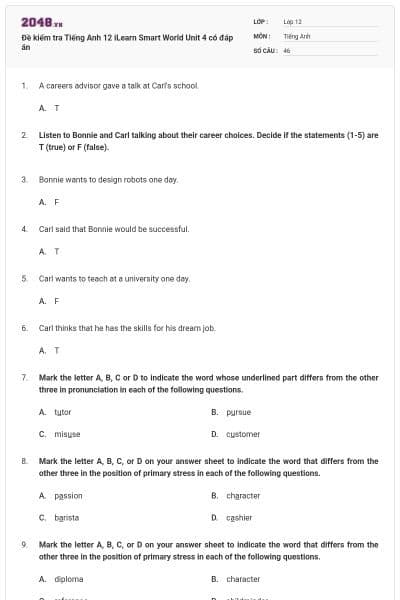
Listen to Bonnie and Carl talking about their career choices. Decide if the statements (1-5) are T (true) or F (false).
Đáp án đúng: T
Đáp án đúng: F
Đáp án đúng: T
Đáp án đúng: F
Đáp án đúng: T
Nội dung bài nghe:
Bonnie: Hi Carl! Did you enjoy the talk the careers advisor gave at school today?
Carl: Yes, Bonnie. It was really interesting to learn about different jobs.
Bonnie: I thought so, too. I really enjoyed learning about robotic surgeons.
Carl: Do you want to work as a surgeon with robots one day?
Bonnie: Yes. I think it's exciting to work with such amazing technology. I just hope I have the qualities I need to do the job.
Carl: Well, you need to be patient and careful. I think with time, study and practice, you will be successful.
Bonnie: Thanks, Carl. What do you want to do as a career in the future?
Carl: I want to be a computer engineer. That's what I'm going to study at university one day.
Bonnie: I didn't know that. Why did you decide to become a computer engineer?
Carl: Well, computer engineering is really interesting. I also have strong IT skills, so I think it's the perfect career for me.
Bonnie: You need to have excellent problem- solving skills and time management skills to be a computer engineer, right?
Carl: Yes, and I think I do.
Hướng dẫn dịch:
Bonnie: Chào Carl! Bạn có thích buổi nói chuyện của cố vấn nghề nghiệp ở trường hôm nay không?
Carl: Vâng, Bonnie. Thật sự rất thú vị khi được tìm hiểu về các công việc khác nhau.
Bonnie: Tôi cũng nghĩ vậy. Tôi thực sự thích tìm hiểu về các bác sĩ phẫu thuật robot.
Carl: Bạn có muốn làm bác sĩ phẫu thuật với robot một ngày nào đó không?
Bonnie: Vâng. Tôi nghĩ thật thú vị khi được làm việc với công nghệ tuyệt vời như vậy. Tôi chỉ hy vọng mình có đủ phẩm chất cần thiết để làm công việc này.
Carl: Vâng, bạn cần phải kiên nhẫn và cẩn thận. Tôi nghĩ rằng với thời gian, học tập và thực hành, bạn sẽ thành công.
Bonnie: Cảm ơn, Carl. Bạn muốn làm nghề gì trong tương lai?
Carl: Tôi muốn trở thành kỹ sư máy tính. Đó là chuyên ngành tôi sẽ theo học tại trường đại học một ngày nào đó.
Bonnie: Tôi không biết điều đó. Tại sao bạn quyết định trở thành kỹ sư máy tính?
Carl: Vâng, kỹ thuật máy tính thực sự rất thú vị. Tôi cũng có kỹ năng CNTT mạnh mẽ, vì vậy tôi nghĩ đó là nghề nghiệp hoàn hảo dành cho tôi.
Bonnie: Bạn cần có kỹ năng giải quyết vấn đề và kỹ năng quản lý thời gian tuyệt vời để trở thành một kỹ sư máy tính, đúng không?
Carl: Đúng vậy, và tôi nghĩ là tôi có.
Mark the letter A, B, C or D to indicate the word whose underlined part differs from the other three in pronunciation in each of the following questions.
tutor
pursue
misuse
customer
Đáp án đúng: D
Đáp án D phát âm là /ʌ/. Các đáp án phát âm là /uː/
Mark the letter А, B, C, or D on your answer sheet to indicate the word that differs from the other three in the position of primary stress in each of the following questions.
passion
character
barista
cashier
Đáp án đúng: C
Đáp án C phát âm là /ɑː/. Các đáp án phát âm là /æ/.
Mark the letter А, B, C, or D on your answer sheet to indicate the word that differs from the other three in the position of primary stress in each of the following questions.
diploma
character
reference
childminder
Đáp án đúng: A
Đáp án A trọng âm số 2. Các đáp án còn lại trọng âm số 1
Mark the letter А, B, C, or D on your answer sheet to indicate the word that differs from the other three in the position of primary stress in each of the following questions.
recruiter
barista
pharmacist
adviser
Đáp án đúng: C
Đáp án C trọng âm số 1. Các đáp án còn lại trọng âm số 2
Mark the letter А, B, C, or D on your answer sheet to indicate the correct answer to each of the following questions.
automated
passionate
fascinating
obsolete
Đáp án đúng: B
Giải thích: “passionate about” = đam mê, nhiệt huyết với điều gì đó.
Dịch nghĩa: Không giống như những thiếu niên cùng tuổi, James rất đam mê làm công việc tình nguyện.
gain
pursue
match
adapt
Đáp án đúng: D
Giải thích: “adapt to” = thích nghi với môi trường mới.
Dịch nghĩa: Chúng tôi ngạc nhiên khi thấy anh ấy có thể nhanh chóng thích nghi với môi trường xung quanh mới.
specialty
path
position
applicant
Đáp án đúng: A
Giải thích: “specialty” = sở trường, chuyên môn (về món ăn, lĩnh vực).
Dịch nghĩa: Sở trường của anh ấy là chế biến các món chay ngon miệng từ nguyên liệu địa phương.
to
during
on
behind
Đáp án đúng: C
Giải thích: look down on somebody = coi thường ai đó.
Dịch nghĩa: Đừng coi thường bất kỳ ai ở nơi làm việc, vì một ngày nào đó bạn có thể cần sự giúp đỡ của họ.
take
make
say
get
Đáp án đúng: B
Giải thích: make up for something = bù đắp cho điều gì đó.
Dịch nghĩa: Anh ấy quyết định làm thêm giờ để bù lại khoảng thời gian đã nghỉ việc.
Read the following advertisement/ announcement and mark the letter A, B, C or D on your answer sheet to indicate the correct option that best fits each of the numbered blanks from 15 to 20.
Welcome to our workshop!
Here you can discover various career paths and learn how to identify your interests and strengths.
CV Writing: get tips (15) _________ creating a professional cv that highlights your skills and experiences.
Networking Skills: develop effective networking strategies to expand your professional connections and opportunities.
Goal Setting: learn how to set (16) _________ achievable career goals and create a roadmap for your future success.
Personalised Guidance: receive (17) _________ advice and support from experienced career coaches.
Welcome to our vocational school!
Here we can unlock your potential: Discover exciting career opportunities with our vocational programs.
Hands-On Training: Gain practical skills and experience through (18) ____________ learning methods.
Industry-Experienced Instructors: Learn from professionals (19) ____________ bring real-world expertise to the classroom.
Affordable Tuition: Invest in your future (20) _________ breaking the bank with our competitive tuition rates.
Diverse Programs: Explore a wide range of vocational courses in fields such as healthcare, technology, business, and more.
in
on
with
of
Đáp án đúng: B
Giải thích: tips on doing something = mẹo về việc làm gì.
Dịch nghĩa: Mẹo về việc tạo một CV chuyên nghiệp làm nổi bật kỹ năng và kinh nghiệm của bạn.
a
an
the
Ø (no article)
Đáp án đúng: A
Giải thích: set a goal: đặt ra một mục tiêu → dùng a (không phải an, vì "achievable" bắt đầu bằng âm /ə/ nhưng vẫn dùng a theo quy ước trước từ bắt đầu bằng phụ âm âm).
Dịch nghĩa: Học cách đặt ra một mục tiêu nghề nghiệp khả thi và tạo lộ trình cho thành công trong tương lai.
individualised
individual
individualise
individualing
Đáp án đúng: A
Giải thích: individualised advice = lời khuyên được cá nhân hóa.
Dịch nghĩa: Nhận được những lời khuyên và sự hỗ trợ được cá nhân hóa từ các huấn luyện viên nghề nghiệp giàu kinh nghiệm.
interaction
interacted
interactive
interact
Đáp án đúng: C
Giải thích: Cần tính từ đứng trước danh từ “learning methods” → interactive learning methods = phương pháp học tương tác.
Dịch nghĩa: Rèn luyện kỹ năng và kinh nghiệm thông qua các phương pháp học tương tác.
which
who
whom
where
Đáp án đúng: B
Giải thích: who dùng cho người và làm chủ ngữ của mệnh đề quan hệ.
Dịch nghĩa: Học hỏi từ những chuyên gia mang kiến thức thực tế vào lớp học.
in
with
without
out
Đáp án đúng: C
Giải thích: without breaking the bank = không tốn quá nhiều tiền (thành ngữ).
Dịch nghĩa: Đầu tư cho tương lai của bạn mà không tốn quá nhiều chi phí với mức học phí cạnh tranh của chúng tôi.
Read the text carefully then answer the following questions from 21 to 28.
If you’re asking yourself, “what are employability skills?” STEMNET (Science, Technology, Engineering, and Mathematics Network) defines this term as “transferable skills needed by an individual to make them employable.” Employability relates to your knowledge, skills, and attitudes, how you use those assets, and how you present them to employers in today’s context.
Today, your education and experience may only be enough to qualify for a job, but to be successful in most roles in the field of emerging technologies, you will need soft skills like communication, teamwork, and problem-solving. These soft skills that will equip you to carry out your role in the company to the best of your ability are also referred to as employability skills.
The building blocks of any career, these skills are what make you employable across various roles, sectors, and industries. Employers usually want to see that you already have these soft skills before hiring, because they are much harder to teach.
Personal characteristics, habits, and attitudes influence how you interact with others. Employers value employability skills because they regard these as indications of how you get on with other team members and customers, and how efficiently you are likely to handle your job performance and career success.
Employers value these unique qualities in their potential employees because they have always been necessary for an effective and smoothly functioning workforce. Enterprises spend a large amount of time and money developing these foundational and work-readiness skills. But in today’s world, where jobs are limited, employers enjoy more options and would like to hire a technical expert who also displays well- rounded employability skills.
The Importance of STEM Education
Enhancing Employability Skills in Today’s Job Market
The Role of Skills in Career Development
The Evolution of Employment Criteria
Đáp án đúng: B
Giải thích: Toàn bài nói về tầm quan trọng của employability skills (kỹ năng có thể chuyển đổi và mềm) trong thị trường việc làm hiện đại.
They are not necessary.
They are required for job qualification.
They ensure success in most roles.
They hinder career growth.
Đáp án đúng: C
Giải thích:
Dựa vào câu: Today, your education and experience may only be enough to qualify for a job, but to be successful in most roles in the field of emerging technologies, you will need soft skills like communication, teamwork, and problem-solving. (Ngày nay, trình độ học vấn và kinh nghiệm của bạn có thể chỉ đủ để đủ điều kiện xin việc, nhưng để thành công trong hầu hết các vai trò trong lĩnh vực công nghệ mới nổi, bạn sẽ cần các kỹ năng mềm như giao tiếp, làm việc nhóm và giải quyết vấn đề.)
inevitable
stable
falling
developing
Đáp án đúng: D
Giải thích: emerging = đang phát triển, mới nổi lên.
blocks
employers
skills
roles
Đáp án đúng: C
Giải thích:
Dựa vào câu: Employers usually want to see that you already have these soft skills before hiring, because they are much harder to teach. (Nhà tuyển dụng thường muốn thấy rằng bạn đã có những kỹ năng mềm này trước khi tuyển dụng, vì chúng khó dạy hơn nhiều.)
They are easy to teach.
They indicate how you get along with others.
They are irrelevant to job performance.
They hinder career success.
Đáp án đúng: B
Giải thích:
Dựa vào câu: Employers value employability skills because they regard these as indications of how you get on with other team members and customers. (Các nhà tuyển dụng đánh giá cao các kỹ năng làm việc vì họ coi đây là dấu hiệu cho thấy bạn có thể hòa hợp với các thành viên khác trong nhóm và khách hàng như thế nào.)
employers
others
skills
habits
Đáp án đúng: C
Giải thích:
Dựa vào câu: Employers value these unique qualities in their potential employees because they have always been necessary for an effective and smoothly functioning workforce. (Các nhà tuyển dụng đánh giá cao những phẩm chất độc đáo này ở những nhân viên tiềm năng của họ vì chúng luôn cần thiết cho một lực lượng lao động hiệu quả và hoạt động trơn tru.)
positive
ignored
secondary
essential
Đáp án đúng: D
Giải thích: foundational skills = kỹ năng nền tảng, tức là “essential” (thiết yếu).
What is the current trend in hiring practices mentioned in the passage?
Employers focus solely on technical expertise.
Enterprises invest less in soft skills development.
Jobs are abundant, leading to fewer options for employers.
Employers prefer candidates with both technical and employability skills.
Đáp án đúng: D
Giải thích:
Dựa vào câu: Employers enjoy more options and would like to hire a technical expert who also displays well-rounded employability skills. (Các nhà tuyển dụng có nhiều lựa chọn hơn và muốn thuê một chuyên gia kỹ thuật cũng thể hiện các kỹ năng làm việc toàn diện.)
Dịch bài đọc:
Nếu bạn đang tự hỏi "kỹ năng tuyển dụng là gì?" STEMNET (Mạng Khoa học, Công nghệ, Kỹ thuật và Toán học) định nghĩa thuật ngữ này là "những kỹ năng chuyển giao cần thiết của một cá nhân để họ có thể được tuyển dụng". Khả năng tuyển dụng liên quan đến kiến thức, kỹ năng và thái độ của bạn, cách bạn sử dụng những tài sản đó và cách bạn thể hiện chúng với nhà tuyển dụng trong bối cảnh hiện nay.
Ngày nay, trình độ học vấn và kinh nghiệm của bạn có thể chỉ đủ để đủ điều kiện cho một công việc, nhưng để thành công trong hầu hết các vai trò trong lĩnh vực công nghệ mới nổi, bạn sẽ cần các kỹ năng mềm như giao tiếp, làm việc nhóm và giải quyết vấn đề. Những kỹ năng mềm này sẽ trang bị cho bạn để thực hiện vai trò của mình trong công ty một cách tốt nhất có thể cũng được gọi là kỹ năng tuyển dụng.
Là nền tảng của bất kỳ sự nghiệp nào, những kỹ năng này là yếu tố giúp bạn có thể được tuyển dụng ở nhiều vai trò, lĩnh vực và ngành nghề khác nhau. Nhà tuyển dụng thường muốn thấy rằng bạn đã có những kỹ năng mềm này trước khi tuyển dụng, vì chúng khó đào tạo hơn nhiều.
Đặc điểm cá nhân, thói quen và thái độ ảnh hưởng đến cách bạn tương tác với người khác. Nhà tuyển dụng coi trọng các kỹ năng làm việc vì họ coi đây là dấu hiệu cho thấy bạn hòa đồng với các thành viên khác trong nhóm và khách hàng như thế nào, cũng như khả năng bạn xử lý hiệu suất công việc và thành công trong sự nghiệp.
Nhà tuyển dụng coi trọng những phẩm chất độc đáo này ở những nhân viên tiềm năng vì chúng luôn cần thiết cho một lực lượng lao động hiệu quả và vận hành trơn tru. Các doanh nghiệp dành rất nhiều thời gian và tiền bạc để phát triển những kỹ năng nền tảng và sẵn sàng làm việc này. Tuy nhiên, trong thế giới ngày nay, khi việc làm còn hạn chế, nhà tuyển dụng có nhiều lựa chọn hơn và muốn tuyển dụng một chuyên gia kỹ thuật cũng thể hiện các kỹ năng làm việc toàn diện.
Read the text carefully then answer the following questions from 29 to 33.
One of the most common options after leaving school is going to college or university. Both options are a great way to gain knowledge and skills for a specific career path. It also allows you to fully immerse yourself in the subject and gain valuable experience.
If you’ve already decided on your career path, pursuing a course you love at a top- rated university or college can be a great way to explore your interests and discover new career paths. Even if you haven’t made up your mind, choosing a subject that you are passionate about and excels in, can be a pathway to opening doors to various career opportunities. When you study at a top university, you will have access to excellent resources, experienced lecturers and tutors, and a wide range of industry connections that can help you build a solid foundation for your future career. So don’t be afraid to throw yourself into a course you love - it could lead to exciting and fulfilling career paths you may have never considered before.
Studying at college or university provides students with a broad education in a variety of subjects, rather than focusing on specific job skills, like vocational courses do. In college and university, students are encouraged to explore different areas of study, develop critical thinking skills, and engage in academic research. This makes them a lot more theory-based and require a higher level of academic rigour, in preparation for careers that require advanced knowledge and critical thinking skills.
Benefits of College and University Education
Making Choices After Leaving School
Advantages of Studying for Career Development
Learning Skills in Universities and Colleges
Đáp án đúng: A
Giải thích: Bài viết tập trung trình bày những lợi ích và cơ hội mà giáo dục đại học và cao đẳng mang lại.
career
course
foundation
yourself
Đáp án đúng: B
Giải thích:
Dựa vào câu: So don’t be afraid to throw yourself into a course you love - it could lead to exciting and fulfilling career paths you may have never considered before. (Vì vậy, đừng ngại theo đuổi khóa học mà bạn yêu thích - nó có thể dẫn bạn đến những con đường sự nghiệp thú vị và bổ ích mà bạn chưa từng nghĩ đến trước đây.)
study
story
qualification
strictness
Đáp án đúng: D
Giải thích: rigour = sự nghiêm ngặt, khắt khe (mức độ học thuật cao, đòi hỏi tư duy sâu).
developing vocational skills
encouraging exploration and critical thinking
providing limited subject choices
offering job-specific training
Đáp án đúng: B
Giải thích:
Dựa vào câu: In college and university, students are encouraged to explore different areas of study, develop critical thinking skills, and engage in academic research. (Ở trường cao đẳng và đại học, sinh viên được khuyến khích khám phá các lĩnh vực nghiên cứu khác nhau, phát triển kỹ năng tư duy phản biện và tham gia nghiên cứu học thuật.)
College and university courses focus on developing broad education in various subjects.
Pursuing a course at a well-ranking university or college can limit career opportunities.
Studying at a top university provides access to excellent resources and industry connections.
Studying in university requires more theory-based knowledge than vocational courses.
Đáp án đúng: B
Giải thích: Đoạn 2 nói ngược lại: theo học tại một trường đại học tốt mở ra nhiều cơ hội nghề nghiệp, không phải hạn chế chúng.
Dịch bài đọc:
Một trong những lựa chọn phổ biến nhất sau khi tốt nghiệp phổ thông là học lên cao đẳng hoặc đại học. Cả hai lựa chọn này đều là cách tuyệt vời để tích lũy kiến thức và kỹ năng cho một con đường sự nghiệp cụ thể. Nó cũng cho phép bạn đắm mình hoàn toàn vào lĩnh vực chuyên môn và tích lũy kinh nghiệm quý báu.
Nếu bạn đã quyết định con đường sự nghiệp của mình, việc theo đuổi một khóa học bạn yêu thích tại một trường đại học hoặc cao đẳng hàng đầu có thể là một cách tuyệt vời để khám phá sở thích và tìm kiếm những con đường sự nghiệp mới. Ngay cả khi bạn chưa quyết định, việc chọn một ngành học mà bạn đam mê và xuất sắc có thể là con đường mở ra cánh cửa đến với nhiều cơ hội nghề nghiệp khác nhau. Khi học tại một trường đại học hàng đầu, bạn sẽ được tiếp cận với các nguồn tài nguyên tuyệt vời, đội ngũ giảng viên và trợ giảng giàu kinh nghiệm, cùng với mạng lưới quan hệ rộng khắp trong ngành, những yếu tố có thể giúp bạn xây dựng nền tảng vững chắc cho sự nghiệp tương lai. Vì vậy, đừng ngại dấn thân vào một khóa học mà bạn yêu thích - nó có thể dẫn bạn đến những con đường sự nghiệp thú vị và viên mãn mà bạn có thể chưa từng nghĩ đến trước đây.
Học tập tại trường cao đẳng hoặc đại học cung cấp cho sinh viên một nền giáo dục toàn diện về nhiều môn học, thay vì chỉ tập trung vào các kỹ năng công việc cụ thể như các khóa học nghề. Ở bậc cao đẳng và đại học, sinh viên được khuyến khích khám phá các lĩnh vực học tập khác nhau, phát triển kỹ năng tư duy phản biện và tham gia nghiên cứu học thuật. Điều này khiến họ có nền tảng lý thuyết vững chắc hơn và đòi hỏi trình độ học vấn cao hơn, để chuẩn bị cho những nghề nghiệp đòi hỏi kiến thức chuyên sâu và kỹ năng tư duy phản biện.
Mark the letter A, B, C or D on your answer sheet to indicate the correct arrangement of the sentences to make a meaningful paragraph/ letter in each of the following questions.
a. Furthermore, vocational training may not always provide opportunities for advancement or career growth beyond a certain point, especially in rapidly evolving industries where new skills are constantly in demand.
b. Firstly, it can sometimes be considered as limiting, as it focuses primarily on specific skill sets related to certain trades or professions, potentially narrowing future career options.
c. Secondly, vocational programs may not always offer the same level of theoretical knowledge as traditional higher education, which could be a disadvantage in certain industries that prioritise academic knowledge.
d. Vocational education, while valuable for many, also comes with its drawbacks.
e. Lastly, the practical nature of vocational education might not suit everyone’s learning style, as some individuals may thrive in more traditional classroom settings.
d-c-e-a-b
d-b-c-a-e
c-d-a-e-b
b-d-c-e-a
Đáp án đúng: B
Giải thích:
d mở đoạn: Giới thiệu “vocational education có nhược điểm”.
b nêu nhược điểm thứ nhất → giới hạn cơ hội nghề nghiệp.
c nhược điểm thứ hai → thiếu kiến thức lý thuyết.
a nhược điểm thứ ba → khó phát triển sự nghiệp trong ngành thay đổi nhanh.
e nhược điểm cuối → không phù hợp với mọi phong cách học tập.
Dịch nghĩa:
d. Giáo dục nghề nghiệp, dù có giá trị với nhiều người, nhưng cũng đi kèm với một số hạn chế.
b. Thứ nhất, nó đôi khi bị xem là hạn chế vì chủ yếu tập trung vào các kỹ năng cụ thể của một số nghề, có thể thu hẹp lựa chọn nghề nghiệp trong tương lai.
c. Thứ hai, các chương trình đào tạo nghề có thể không cung cấp lượng kiến thức lý thuyết như giáo dục đại học truyền thống, điều này có thể gây bất lợi trong những ngành yêu cầu tính học thuật cao.
a. Hơn nữa, đào tạo nghề không phải lúc nào cũng mang lại cơ hội thăng tiến hay phát triển sự nghiệp, đặc biệt trong các ngành thay đổi nhanh, nơi luôn cần những kỹ năng mới.
e. Cuối cùng, tính thực hành của giáo dục nghề có thể không phù hợp với phong cách học tập của mọi người, vì một số người phát triển tốt hơn trong môi trường học thuật truyền thống.
a. I would appreciate it if we could schedule a meeting to discuss my interests, strengths, and potential career options.
b. Dear Ms. Chi,
I hope this letter finds you well. As I approach the end of my high school journey, I find myself uncertain about my future career path.
c. Yours sincerely,
d. I value your guidance and expertise, which is why I’m reaching out to seek your advice on what steps I should take next.
e. Your insights would greatly help me make informed decisions about my future.
f. Thank you for your time and support.
b-d-a-e-f-c
b-d-e-f-a-c
b-a-d-f-e-c
b-f-e-d-a-c
Đáp án đúng: A
Giải thích:
b mở thư đúng form (Dear…, giới thiệu lý do viết thư).
d giải thích lý do cần tư vấn.
a yêu cầu chính: xin buổi gặp để được hướng dẫn.
e khẳng định tầm quan trọng của lời khuyên.
f lời cảm ơn.
c kết thư (Yours sincerely).
Dịch nghĩa:
b. Cô Chi kính mến,
Em hy vọng cô vẫn khỏe. Khi em sắp kết thúc những năm học phổ thông, em nhận ra rằng mình vẫn chưa chắc chắn về con đường nghề nghiệp tương lai.
d. Em rất trân trọng sự hướng dẫn và kinh nghiệm của cô, vì vậy em viết thư này để xin lời khuyên về những bước tiếp theo em nên thực hiện.
a. Em sẽ rất biết ơn nếu cô có thể sắp xếp một buổi hẹn để trao đổi về sở thích, điểm mạnh và những lựa chọn nghề nghiệp phù hợp với em.
e. Những chia sẻ của cô sẽ giúp em đưa ra quyết định đúng đắn cho tương lai.
f. Em cảm ơn cô vì đã dành thời gian và luôn hỗ trợ em.
Read the following passage and mark the letter A, B, C or D on your answer sheet to indicate the correct option that best fits each of the numbered blanks from 36 to 40.
COVID-19, the sustainable revolutions and technology improvements have disrupted work and made digital skills critical for people to prepare for the future. Businesses are forced (36) _______ work remote, digitise, and automate most of the operations and processes.
Automation, digitization and rapid change will bring with it (37) _______ whole host of new job roles, particularly around data analysis, process automation and information security. In contrast, we will see the decline of roles focusing on data entry and factory work and stock-keeping, many of (38) ________ will be replaced by automated processes.
While the loss of certain job roles may seem (39) _________, it’s not all doom and gloom. In fact, if you’re working in a role likely to be affected by the impact of automation, digitization and the changing world of work, there are plenty of skills you can work on right now to help you stay (40) _______, ranging from technical skills to problem solving and soft skills.
making
make
to making
to make
Đáp án đúng: D
Giải thích: “force + someone + to V”: buộc ai đó phải làm gì.
Dịch nghĩa: Các doanh nghiệp buộc phải làm việc từ xa, số hóa và tự động hóa hầu hết các hoạt động và quy trình.
an
a
the
Ø (no article)
Đáp án đúng: B
Giải thích: “A host of …” = một loạt, rất nhiều. Cấu trúc cố định: a host of + danh từ số nhiều
Dịch nghĩa: Tự động hóa, số hóa và sự thay đổi nhanh chóng sẽ mang đến một loạt vai trò công việc mới…
what
whom
which
who
Đáp án đúng: C
Giải thích: “many of which…” dùng để thay thế cho danh từ chỉ vật đứng trước (roles).
Dịch nghĩa: … nhiều vị trí trong số đó sẽ bị thay thế bởi các quy trình tự động.
optional
alarming
discouraging
demanding
Đáp án đúng: B
Giải thích: “alarming” = đáng báo động, phù hợp với ngữ cảnh nói về việc mất việc do tự động hóa.
Dịch nghĩa: Mặc dù sự mất đi của một số vị trí có thể đáng báo động, nhưng không phải tất cả đều tồi tệ.
relevant
active
sedentary
indifferent
Đáp án đúng: A
Giải thích: “stay relevant” = vẫn phù hợp/thích nghi trong thị trường lao động.
Dịch nghĩa: … có rất nhiều kỹ năng bạn có thể rèn luyện để giúp bạn giữ được sự phù hợp, từ kỹ năng kỹ thuật đến giải quyết vấn đề và các kỹ năng mềm.
Dịch bài đọc:
COVID-19, các cuộc cách mạng về phát triển bền vững và những cải tiến công nghệ đã làm gián đoạn cách thức làm việc và khiến các kỹ năng số trở nên vô cùng quan trọng để mọi người chuẩn bị cho tương lai. Các doanh nghiệp buộc phải làm việc từ xa, số hóa và tự động hóa hầu hết các hoạt động và quy trình.
Tự động hóa, số hóa và sự thay đổi nhanh chóng sẽ mang đến một loạt các vai trò công việc mới, đặc biệt là những vị trí liên quan đến phân tích dữ liệu, tự động hóa quy trình và bảo mật thông tin. Ngược lại, chúng ta sẽ chứng kiến sự suy giảm của các công việc tập trung vào nhập liệu, lao động nhà máy và quản lý kho — nhiều vị trí trong số đó sẽ được thay thế bằng các quy trình tự động.
Mặc dù sự mất đi của một số công việc có thể gây lo ngại, nhưng mọi thứ không hoàn toàn tồi tệ. Thực tế là, nếu bạn đang làm trong một lĩnh vực có khả năng bị ảnh hưởng bởi tự động hóa, số hóa và sự thay đổi của thế giới việc làm, vẫn có rất nhiều kỹ năng mà bạn có thể rèn luyện ngay từ bây giờ để giúp mình luôn phù hợp — từ các kỹ năng kỹ thuật, kỹ năng giải quyết vấn đề đến những kỹ năng mềm quan trọng khác.